Welding Training by Type: Complete Guide to Every Welding Process
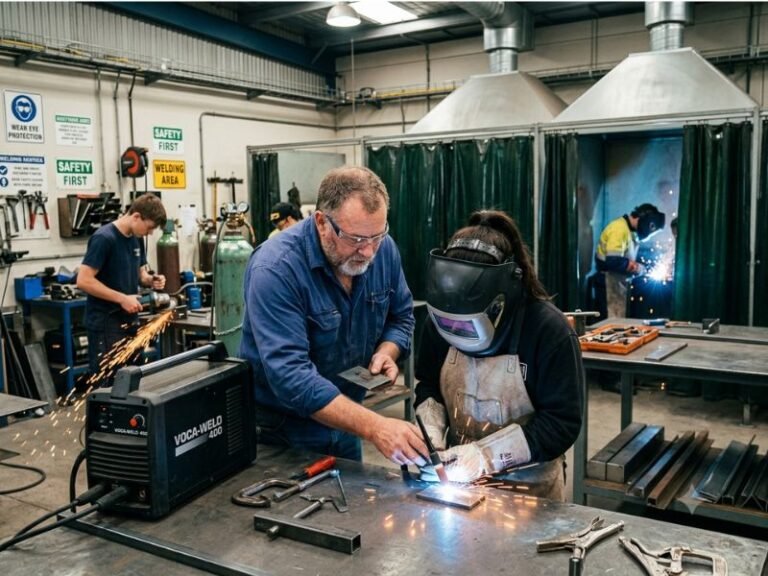
Welding is not a one-size-fits-all skill. From manufacturing cars and constructing skyscrapers to repairing pipelines and building aircraft, different industries rely on different welding processes to meet their specific strength, precision, and productivity requirements. That’s why there isn’t a single welding training program that prepares you for every job. Instead, welders choose specialized training based on the welding process they want to master and the career path they plan to pursue.
Each type of welding uses unique equipment, techniques, materials, and safety procedures. For example, MIG welding is widely recommended for beginners because it’s relatively easy to learn and highly productive, while TIG welding requires greater precision and is commonly used for stainless steel, aluminum, and aerospace applications.
Other processes, such as Stick welding, Flux-Cored Arc Welding (FCAW), Submerged Arc Welding (SAW), and Underwater welding, are designed for specific environments and industrial needs.
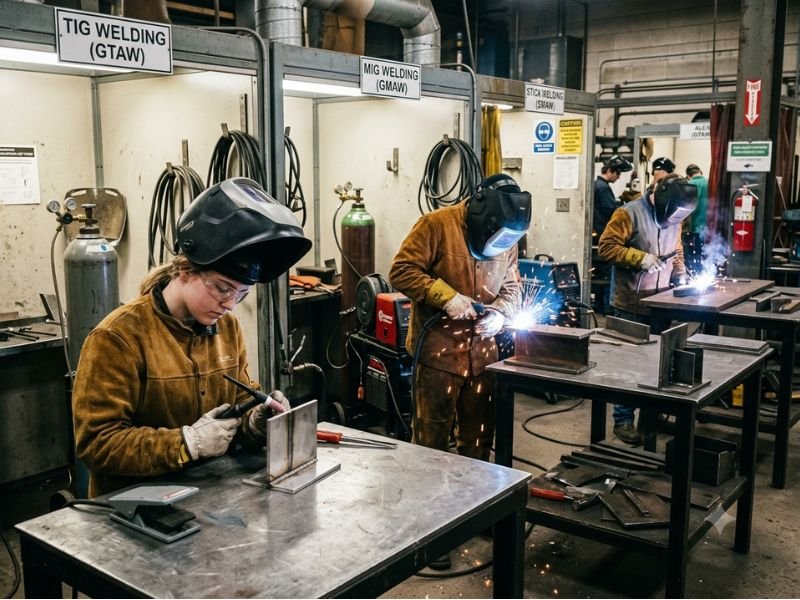
Choosing the right welding training can significantly influence your career opportunities. Some welding processes are better suited for construction and structural fabrication, while others open doors to specialized industries like shipbuilding, oil and gas, automotive manufacturing, robotics, or offshore maintenance.
Learning the process that aligns with your career goals can help you develop in-demand skills and prepare for industry-recognized certifications.
In this comprehensive guide, we’ll explain the major types of welding training, how each process works, who it’s best suited for, and where it’s commonly used.
You’ll also find an overview of every welding training type covered on our website, along with links to detailed guides that explore training requirements, certifications, costs, career opportunities, and more.
Whether you’re just starting your welding journey or looking to expand your skills, this guide will help you understand which welding process is the right fit for your future.
What Is Welding Training by Type?
Welding training by type refers to learning a specific welding process rather than studying welding as a general trade. Instead of covering every welding method in depth, these training programs focus on developing the skills, techniques, equipment knowledge, and safety practices required for one particular welding process, such as MIG, TIG, Stick, FCAW, or Resistance welding.
This specialized approach allows students to become proficient in the welding methods most relevant to their career goals and the industries they want to work in.
Why Are There Different Types of Welding Training?
No single welding process is suitable for every material, project, or work environment. Different industries have different requirements, so they use welding methods that best meet their needs.
For example:
- Automotive manufacturers often use MIG and Resistance welding for fast, high-volume production.
- Aerospace companies rely on TIG welding because of its precision and clean welds.
- Construction projects frequently use Stick welding due to its versatility and ability to perform well outdoors.
- Shipbuilding and heavy fabrication commonly use Submerged Arc Welding (SAW) for welding thick steel sections.
- Offshore industries require Underwater welding for repairing structures below the water’s surface.
Because each process serves a different purpose, training programs are designed to teach the specific skills needed for that method.
What Will You Learn During Welding Training?
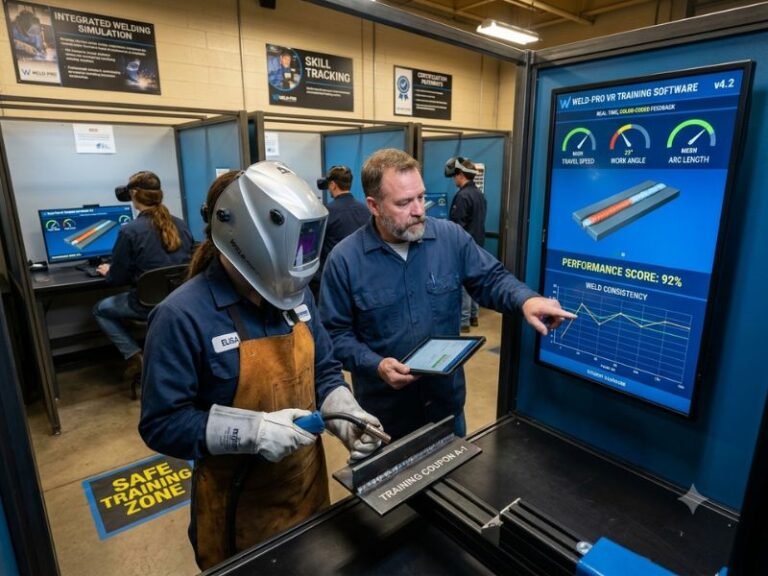
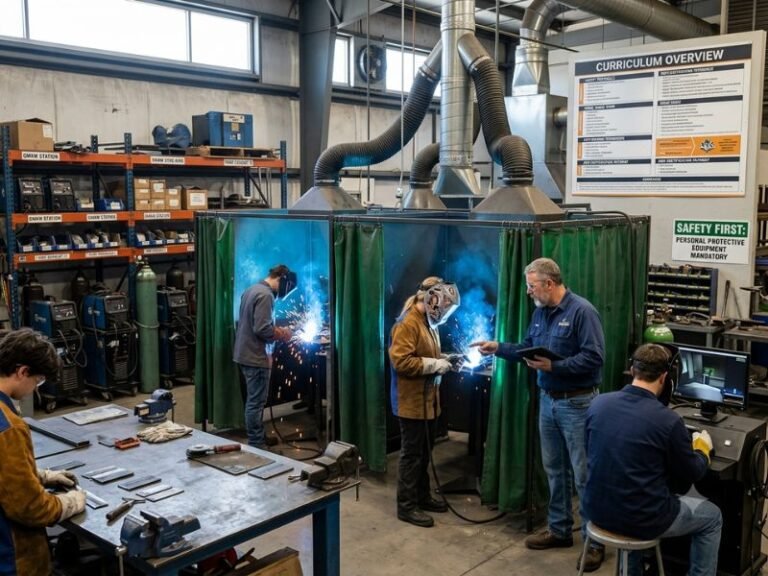
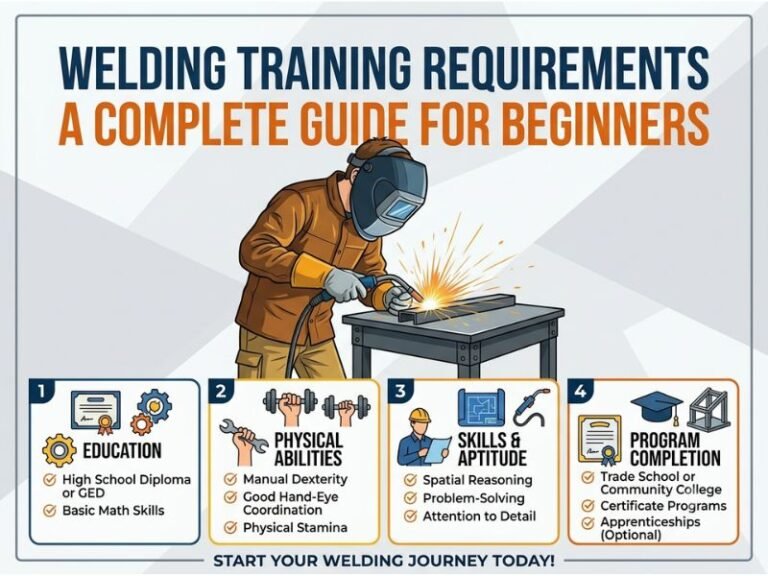
Although every welding process has its own techniques, most training programs cover several core topics before moving into process-specific instruction.
You’ll typically learn:
- Welding safety and personal protective equipment (PPE)
- Welding equipment setup and operation
- Metal identification and preparation
- Welding symbols and blueprint reading
- Welding positions
- Joint design and fit-up
- Weld quality and defect prevention
- Basic inspection techniques
- Hands-on welding practice
After mastering these fundamentals, the training focuses on the selected welding process and its unique applications.
How Are Welding Training Programs Different?
Each welding process requires different equipment, consumables, techniques, and levels of skill. As a result, the training experience can vary significantly.
Some programs emphasize:
- High-speed production welding
- Precision welding for thin metals
- Heavy structural fabrication
- Pipe welding
- Outdoor field welding
- Automated and robotic welding
- Specialized industrial applications
For example, a TIG welding course spends more time developing torch control and precision, while an FCAW program focuses on productivity and welding thicker materials.
Can You Learn More Than One Welding Process?
Absolutely. Many professional welders begin with one welding process and expand their skills as their careers progress.
A common learning path might look like this:
- Learn MIG welding to build confidence and develop basic welding skills.
- Add Stick welding for construction and outdoor applications.
- Advance to TIG welding for precision work.
- Learn specialized processes such as FCAW, SAW, or Underwater welding based on career goals.
Mastering multiple welding processes makes you more versatile, increases your value to employers, and opens the door to a wider range of job opportunities.
Why Choosing the Right Training Matters
Selecting the right welding training isn’t just about learning a new skill—it’s about preparing for the type of work you want to do. The welding process you choose today can influence the industries you qualify for, the certifications you pursue, and the career opportunities available in the future.
In the next section, we’ll look at how to choose the right welding training based on your experience level, career goals, preferred industries, and long-term professional ambitions.
How to Choose the Right Welding Training
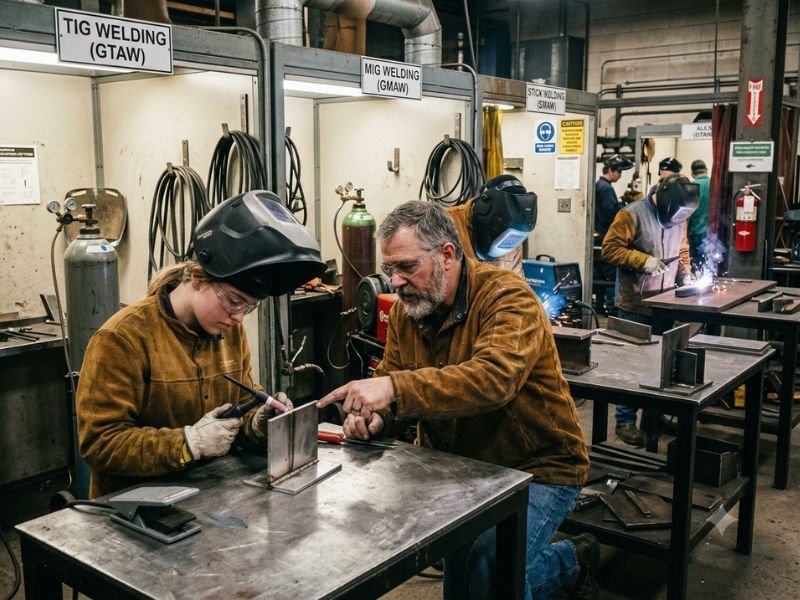
With so many welding processes available, choosing the right training can feel overwhelming. The best option depends on your career goals, experience level, the industries you want to work in, and the materials you’ll be welding. Starting with the right training helps you build relevant skills and prepares you for the certifications employers value.
Before enrolling in any welding program, consider the following factors.
Your Career Goals
Think about where you want to work after training.
- Manufacturing → MIG or Resistance Welding
- Construction → Stick or FCAW
- Aerospace → TIG Welding
- Pipeline → Combination or Stick Welding
- Shipbuilding → Submerged Arc Welding
- Offshore → Underwater Welding
Your Experience Level
If you’re a beginner, start with a process that’s easier to learn, such as MIG welding or Stick welding. More advanced processes like TIG welding or Underwater welding usually require stronger welding fundamentals.
Materials You’ll Be Welding
Different welding processes are better suited for different materials.
- Mild steel
- Stainless steel
- Aluminum
- Thick structural steel
- Thin sheet metal
Choose a training program that matches the materials commonly used in your target industry.
Certification Requirements
Some industries require welders to hold certifications for specific welding processes. Before choosing a course, research which certifications are preferred by employers in your desired field.
Job Opportunities
Finally, consider the demand for each welding process in your area or the region where you plan to work. Learning an in-demand welding process can improve your chances of finding employment and advancing your career.
The next section provides an overview of the most common types of welding training, with links to detailed guides for each welding process.
Types of Welding Training
There are many types of welding training, and each focuses on a specific welding process, technique, or application. While all welding programs teach fundamental skills such as safety, equipment setup, and weld quality, each process requires different tools, techniques, and levels of expertise.
Below is an overview of the most common welding training types. Think of this section as your starting point—each overview links to a dedicated guide where you’ll learn about training requirements, certifications, costs, career opportunities, and more.
MIG Welding Training
MIG (Gas Metal Arc Welding or GMAW) is one of the easiest and most popular welding processes to learn, making it an excellent choice for beginners. MIG welding training teaches you how to set up MIG equipment, adjust welding parameters, select the correct wire and shielding gas, and produce clean, consistent welds. Because of its speed and ease of use, MIG welding is widely used in automotive manufacturing, fabrication shops, metalworking, and general manufacturing. If you’re looking for a beginner-friendly welding process with strong job opportunities, MIG welding is often the best place to start.
TIG Welding Training
TIG (Gas Tungsten Arc Welding or GTAW) is known for producing precise, high-quality welds on materials such as stainless steel, aluminum, and titanium. TIG welding training focuses on torch control, filler rod techniques, weld quality, and precision welding. Although it has a steeper learning curve than MIG welding, it’s highly valued in industries such as aerospace, motorsports, food processing, and custom metal fabrication where appearance and accuracy are critical.
TIG Welding Training Course
A TIG welding training course provides structured instruction for students who want to master GTAW welding. Most courses combine classroom theory with extensive hands-on practice, covering topics such as equipment setup, shielding gases, joint preparation, welding positions, and troubleshooting common defects. Depending on the training provider, courses may also prepare students for welding certification exams and advanced industrial applications.
Underwater Welding Training
Underwater welding training prepares experienced welders for one of the industry’s most specialized career paths. These programs combine commercial diving skills with advanced welding techniques used to repair ships, offshore oil platforms, bridges, pipelines, and marine infrastructure. Because of the challenging work environment, underwater welding requires additional safety training, physical fitness, and specialized certifications beyond standard welding education.
Stick Welding Training
Stick welding, also known as Shielded Metal Arc Welding (SMAW), remains one of the most versatile welding processes used today. Stick welding training teaches students how to weld using consumable electrodes without external shielding gas, making it ideal for outdoor construction, structural steel, farm equipment repair, and pipeline work. Its ability to perform well in windy and harsh environments makes it a valuable skill for many field welders.
FCAW Welding Training
Flux-Cored Arc Welding (FCAW) training teaches welders how to use a continuously fed tubular wire filled with flux to create strong, high-quality welds. FCAW is faster than many other welding processes and performs well on thick materials, making it popular in structural steel fabrication, shipbuilding, heavy equipment manufacturing, and construction. Many employers value FCAW skills because the process offers high productivity in both shop and field environments.
GMAW Welding Training
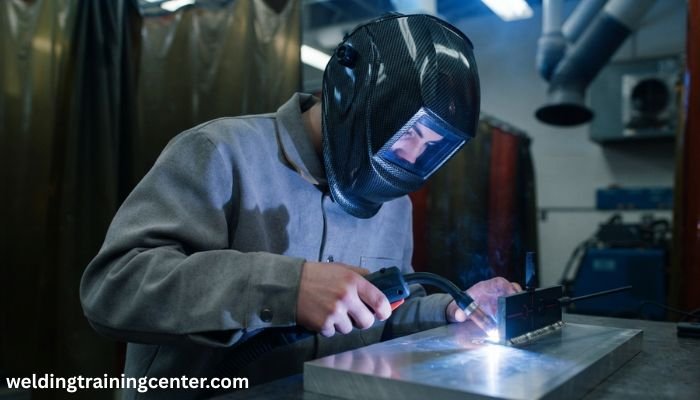
Gas Metal Arc Welding (GMAW) training focuses on the technical aspects of the GMAW process, including equipment setup, wire selection, shielding gases, welding parameters, and weld quality. Although MIG welding is a type of GMAW, some training programs use the technical term “GMAW,” especially in industrial and certification settings. This training is commonly used in manufacturing, fabrication, and production welding.
Gas Welding Training
Gas welding training teaches students how to join metals using a fuel gas flame, most commonly oxygen and acetylene. While modern industries rely more on arc welding processes, gas welding remains useful for metal repair, maintenance, plumbing, artistic metalwork, and educational training. Students learn flame adjustment, heat control, filler rod techniques, and safe handling of gas cylinders.
Arc Welding Training
Arc welding training introduces students to the broad family of welding processes that use an electric arc to generate heat for joining metals. Rather than focusing on one specific method, this training explains the fundamentals of arc welding and may include processes such as SMAW, GMAW, FCAW, and GTAW. It’s an excellent starting point for understanding how modern welding technologies work.
Shielded Metal Arc Welding (SMAW) Training
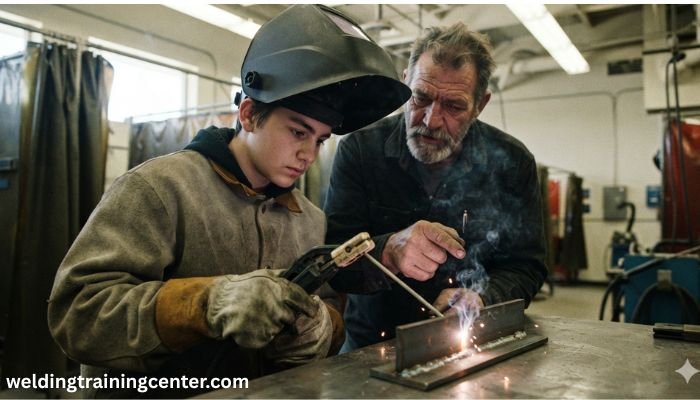
Shielded Metal Arc Welding (SMAW) training provides detailed instruction on one of the most widely used welding processes in construction, maintenance, and industrial fabrication. Students learn electrode selection, machine settings, welding techniques, joint preparation, and defect prevention. Because SMAW equipment is portable and doesn’t require shielding gas, it’s ideal for outdoor and remote job sites.
Flux Core Welding Training
Flux Core Welding training focuses on using flux-cored wire to produce strong, deep-penetrating welds with high deposition rates. While closely related to FCAW, this training emphasizes practical techniques, equipment setup, wire selection, and troubleshooting for both self-shielded and gas-shielded applications. It’s commonly chosen by welders working in structural fabrication, construction, shipbuilding, and heavy manufacturing.
Oxy-Acetylene Welding Training
Oxy-acetylene welding training teaches students how to weld and cut metal using a flame produced by oxygen and acetylene gases. The course covers torch operation, flame adjustment, brazing, soldering, metal cutting, and safety procedures for handling gas cylinders. Although it’s less common in modern production welding, oxy-acetylene skills remain valuable for repair work, maintenance, and metal fabrication.
Resistance Welding Training
Resistance welding training focuses on joining metal using heat generated by electrical resistance and pressure instead of a filler material. This process is widely used in high-volume manufacturing, particularly in the automotive and appliance industries. Training covers machine operation, weld quality, electrode maintenance, process control, and production safety.
Spot Welding Training
Spot welding training is a specialized form of resistance welding used to join overlapping sheet metal quickly and efficiently. Students learn machine setup, electrode alignment, welding parameters, quality inspection, and safety procedures. Spot welding is commonly used in automotive manufacturing, HVAC production, furniture manufacturing, and sheet metal fabrication.
Submerged Arc Welding (SAW) Training
Submerged Arc Welding (SAW) training prepares welders to work with one of the most productive welding processes for thick steel sections. The welding arc is protected beneath a layer of granular flux, resulting in deep penetration and high-quality welds. SAW is widely used in shipbuilding, pressure vessel manufacturing, pipeline fabrication, and heavy industrial construction.
Sub Arc Welding Training
Sub Arc Welding training covers the same welding process commonly known as Submerged Arc Welding (SAW). Many employers and training providers use the shortened term “Sub Arc.” Students learn how to operate automatic or semi-automatic SAW equipment, select the appropriate flux and wire, optimize welding parameters, and produce high-quality welds on thick materials. This training is ideal for careers in heavy fabrication, bridge construction, pressure vessels, and shipbuilding.
Fusion Welding Training
Fusion welding training introduces welders to welding processes that join metals by melting the base materials, with or without filler metal. Instead of focusing on a single technique, this training explains the principles behind common fusion welding methods such as MIG, TIG, Stick, and Submerged Arc Welding. It’s a great choice for anyone who wants to understand the science and applications of fusion-based welding technologies.
Combination Welding Training
Combination welding training prepares welders to work with multiple welding processes rather than specializing in just one. A typical program may include MIG, TIG, Stick, and Flux-Cored Arc Welding, allowing students to build a broader skill set for different industries and job roles. Combination training is especially valuable for those pursuing careers in fabrication, construction, pipe welding, or industrial maintenance, where employers often prefer welders who can perform multiple welding processes.
Beginner-Friendly Welding Training Types
If you’re new to welding, it’s best to start with a process that’s easy to learn and widely used in the industry. Beginner-friendly welding training focuses on developing core skills such as arc control, joint preparation, safety, and equipment handling before moving on to more advanced techniques.
Here are the best welding training options for beginners:
MIG Welding
MIG welding is often considered the easiest welding process to learn. Its continuous wire feed, simple setup, and fast welding speed make it ideal for first-time welders. It’s commonly used in manufacturing, automotive repair, and general fabrication.
Stick Welding (SMAW)
Stick welding is another excellent choice for beginners. It teaches strong welding fundamentals and performs well outdoors, making it popular in construction, maintenance, and repair work.
Flux Core Welding (FCAW)
Flux Core welding is similar to MIG welding but offers deeper penetration and works well on thicker materials. It’s a good option for students interested in structural steel, heavy equipment, and construction.
Gas Welding
Although less common in modern manufacturing, gas welding is still taught in many welding schools because it helps students understand heat control, puddle management, and metal behavior—skills that transfer to other welding processes.
Which One Should You Start With?
For most beginners, MIG welding is the easiest starting point because of its simple learning curve and wide range of job opportunities. After gaining confidence, many welders expand their skills by learning Stick, TIG, or other specialized welding processes.
Advanced Welding Training Types
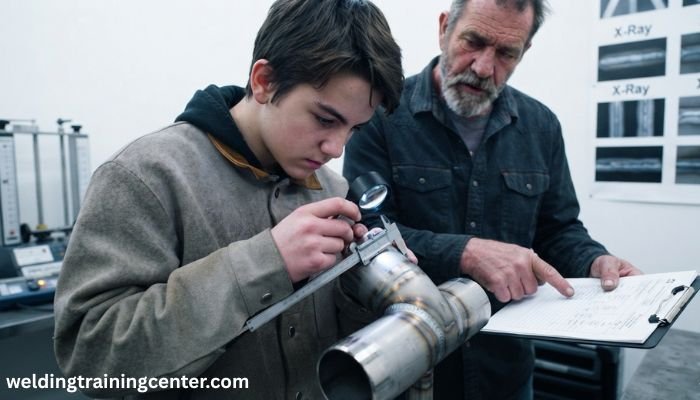
Once you’ve mastered the fundamentals, advanced welding training allows you to develop specialized skills for higher-level positions and more demanding industries. These programs typically require greater precision, technical knowledge, and hands-on experience.
Some of the most advanced welding training options include:
- TIG Welding – Ideal for precision welding in aerospace, food-grade fabrication, and aluminum work.
- Underwater Welding – Combines commercial diving with welding for offshore and marine industries.
- Submerged Arc Welding (SAW) – Used for heavy industrial fabrication, pipelines, and shipbuilding.
- Combination Welding – Trains welders in multiple welding processes to increase versatility and employability.
If your goal is to work in specialized industries or qualify for higher-paying positions, advanced welding training can help you expand your expertise and career opportunities.
Which Welding Training Pays the Most?
Salary depends on more than just the welding process you learn. Your experience, certifications, industry, location, and willingness to work in demanding environments all have a significant impact on your earning potential. However, some types of welding training can open the door to higher-paying career opportunities because they prepare you for specialized work.
Here are some of the welding training types that are commonly associated with higher-paying careers.
Underwater Welding
Underwater welding is one of the most specialized areas of the welding industry. It combines commercial diving with advanced welding skills to repair offshore structures, ships, bridges, and pipelines. Due to the challenging working conditions and specialized training required, experienced underwater welders can earn competitive salaries.
TIG Welding
TIG welding requires exceptional precision and attention to detail. It’s widely used in industries such as aerospace, motorsports, food-grade manufacturing, and high-end fabrication, where weld quality is critical. Skilled TIG welders are often in demand for projects requiring clean, high-quality welds.
Combination Welding
Combination welding training prepares you to perform multiple welding processes, such as MIG, TIG, Stick, and FCAW. Employers often value multi-process welders because they can handle a wider range of projects, making them more versatile and increasing their career opportunities.
Submerged Arc Welding (SAW)
SAW is commonly used in heavy industries, including shipbuilding, pressure vessel manufacturing, structural steel fabrication, and pipeline construction. Welders with SAW experience are often sought after for large-scale industrial projects.
Stick and FCAW Welding
Stick and FCAW welders frequently work in construction, structural steel, pipeline, and industrial maintenance. These industries often offer strong earning potential for experienced welders, particularly on large infrastructure and energy projects.
Focus on Skills, Not Just Salary
Rather than choosing a welding process based solely on earning potential, consider the type of work you enjoy and the industry you’d like to join. Building strong skills, earning recognized certifications, and gaining practical experience will have a greater impact on your long-term career success than selecting a process based on salary alone.
The best-paying welders are typically those who continue learning, master multiple welding processes, and specialize in industries with high technical standards and strong demand for skilled professionals.
Which Industries Use Each Welding Process?
Different industries rely on different welding processes based on the materials they use, production requirements, and quality standards. Understanding where each welding method is commonly applied can help you choose a training program that aligns with your career goals.
| Welding Process | Common Industries |
| MIG (GMAW) | Automotive, manufacturing, metal fabrication, repair shops |
| TIG (GTAW) | Aerospace, aviation, food processing, pharmaceutical equipment, custom fabrication |
| Stick (SMAW) | Construction, structural steel, pipelines, maintenance, farm equipment repair |
| FCAW | Shipbuilding, heavy fabrication, structural steel, construction |
| Gas Welding | Metal repair, maintenance, plumbing, artistic metalwork |
| Resistance Welding | Automotive manufacturing, appliance production, electronics |
| Spot Welding | Automotive assembly, sheet metal fabrication, HVAC, furniture manufacturing |
| Submerged Arc Welding (SAW) | Shipbuilding, pressure vessels, bridge construction, heavy equipment |
| Combination Welding | Industrial fabrication, pipeline projects, maintenance, construction |
| Underwater Welding | Offshore oil and gas, marine construction, bridge repair, ship maintenance |
Which Welding Process Is Best for Your Career?
There’s no single “best” welding process. The right choice depends on the industry you want to work in.
- Choose MIG welding if you want a career in manufacturing or general fabrication.
- Learn TIG welding if you’re interested in aerospace, stainless steel, or precision fabrication.
- Pick Stick or FCAW welding for construction, structural steel, and field work.
- Consider Submerged Arc Welding for heavy industrial manufacturing and shipbuilding.
- Pursue Underwater welding if you’re looking for a specialized offshore career.
- Choose Combination welding if you want to become a versatile welder capable of working across multiple industries.
Selecting a welding process that matches your career goals will help you develop relevant skills, earn industry-recognized certifications, and improve your long-term job opportunities.
Frequently Asked Questions (FAQs)
1. What is welding training by type?
Welding training by type focuses on learning a specific welding process, such as MIG, TIG, Stick, FCAW, or Resistance welding. Each program teaches the equipment, techniques, safety practices, and applications related to that particular welding method.
2. Which welding training is best for beginners?
MIG welding is generally considered the best choice for beginners because it’s easy to learn, produces clean welds, and is widely used in manufacturing and fabrication. Stick welding is another good option for learning fundamental welding skills.
3. Which welding process is the hardest to learn?
TIG welding is often considered one of the most challenging welding processes because it requires precise torch control, filler rod coordination, and attention to detail. Underwater welding is also highly demanding due to the specialized environment.
4. Which welding training pays the most?
Specialized training such as Underwater Welding, TIG Welding, Combination Welding, and Submerged Arc Welding can lead to higher-paying career opportunities. However, salary also depends on experience, certifications, industry, and location.
5. Can I learn multiple welding processes?
Yes. Many professional welders begin with one process, such as MIG or Stick welding, and later expand their skills by learning TIG, FCAW, SAW, or other specialized welding methods.
6. Do I need certification for every welding process?
Not always. Some entry-level jobs provide on-the-job training, while many employers require certifications for specific welding processes or code-regulated work. Certification requirements vary by industry and employer.
7. How long does welding training take?
The length of training depends on the welding process, the training provider, and your learning goals. Basic courses may take only a few weeks, while comprehensive training programs can last several months.
8. Which welding process is used in the automotive industry?
The automotive industry primarily uses MIG (GMAW) and Resistance Spot Welding because they’re fast, efficient, and well suited for high-volume production.
9. What’s the difference between MIG and TIG welding?
MIG welding is faster and easier to learn, making it ideal for beginners and production work. TIG welding offers greater precision and cleaner welds, making it suitable for aerospace, aluminum, stainless steel, and high-quality fabrication.
10. Which welding process is best for construction?
Stick Welding (SMAW) and Flux-Cored Arc Welding (FCAW) are commonly used in construction because they perform well outdoors and on thick structural steel.
Final Thoughts
Learning the right welding process is one of the most important decisions you’ll make as a welder. Each type of welding training prepares you for different industries, materials, and career opportunities. While beginners often start with MIG or Stick welding, experienced professionals may expand into TIG, FCAW, Submerged Arc, Underwater, or Combination welding to increase their versatility and earning potential.
This guide provides an overview of the most common welding training types, but each process has its own techniques, equipment, certifications, and career paths. Use the internal links throughout this article to explore our in-depth guides on every welding training type and choose the one that best fits your goals. Whether you’re starting your first welding course or advancing your professional skills, selecting the right training today can help build a successful welding career for years to come.