Welding Inspection & Quality Assurance Training: Complete Guide
Every weld has the potential to affect the safety, reliability, and lifespan of a structure or product. A single defective weld in a bridge, pressure vessel, pipeline, or industrial machine can lead to equipment failure, costly repairs, production downtime, or even serious accidents. That’s why welding inspection and quality assurance (QA) are just as important as the welding process itself. Before a welded component is approved for service, it must be inspected to verify that it meets the required codes, specifications, and quality standards.
As industries continue to demand higher levels of quality and safety, the need for qualified welding inspection professionals continues to grow.
Manufacturers, construction companies, oil and gas operators, aerospace organizations, shipyards, and power plants all rely on trained inspectors and quality assurance personnel to ensure every weld is completed correctly. T
These professionals help prevent defects, reduce rework, maintain regulatory compliance, and protect both workers and equipment.
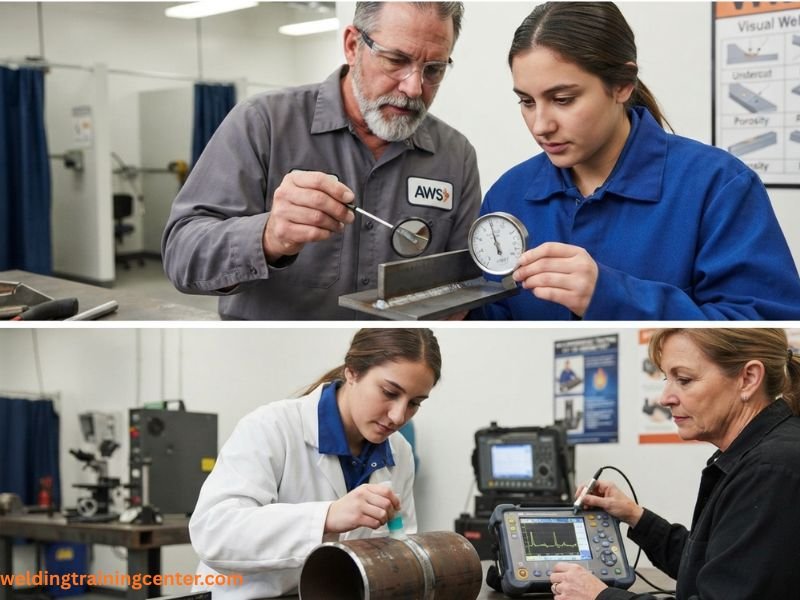
Unlike welders, who create the welds, inspection and QA professionals are responsible for evaluating weld quality, reviewing welding procedures, identifying defects, preparing inspection reports, and ensuring compliance with industry standards.
Depending on your career goals, you can pursue training as a Welding Inspector, Certified Welding Inspector (CWI), Welding QC Inspector, Welding NDT Technician, Certified Welding Supervisor, or Certified Welding Engineer. Each training path prepares you for a different role within the welding quality and inspection field.
In this guide, I’ll provide a complete overview of the most common welding inspection and quality assurance training programs, explain who each program is designed for, the skills you’ll learn, and the career opportunities they can lead to.
I’ll also briefly introduce every training program covered on this website and link you to detailed guides where you can learn more about certifications, eligibility requirements, training costs, salaries, and career paths.
Whether you’re an experienced welder looking to transition into inspection or someone exploring a career in welding quality management, this guide will help you find the training that best matches your goals.
What Is Welding Inspection & Quality Assurance Training?
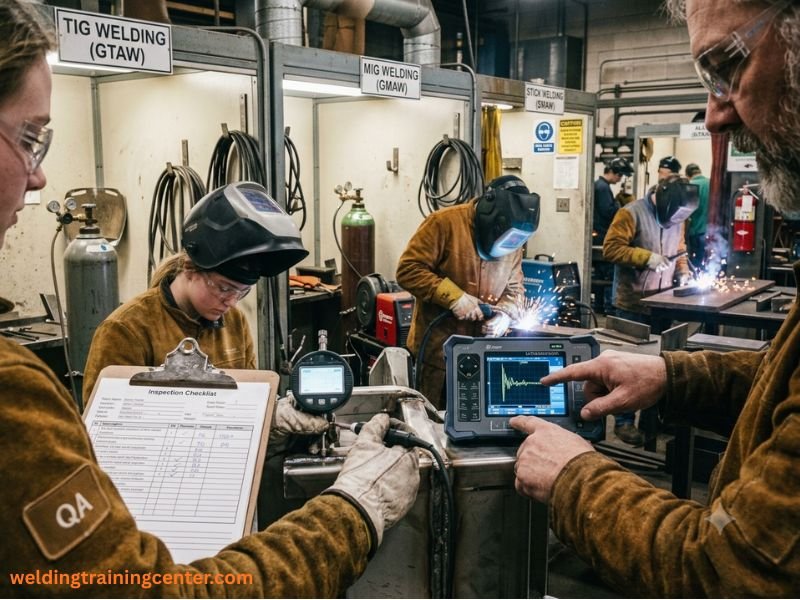
Welding Inspection & Quality Assurance (QA) training prepares professionals to evaluate, monitor, and maintain the quality of welded products throughout the manufacturing or construction process. Instead of teaching you how to make welds, these training programs focus on ensuring that welds are safe, meet industry standards, and comply with engineering specifications.
Depending on the training program, you’ll learn how to inspect welds, identify defects, interpret welding drawings and symbols, understand welding codes, review welding procedures, prepare inspection reports, and verify that fabrication work meets quality requirements. Some programs also introduce Non-Destructive Testing (NDT) methods used to examine welds without damaging the material.
Although the terms Quality Assurance (QA) and Quality Control (QC) are often used together, they have different responsibilities.
- Quality Assurance (QA) focuses on preventing welding defects by establishing proper procedures, standards, and quality management systems.
- Quality Control (QC) focuses on inspecting completed work to verify that welds meet the required specifications.
- Welding Inspection involves examining welds through visual inspection and testing to identify defects and ensure code compliance.
These skills are essential in industries where weld quality directly affects safety and performance, including construction, structural steel fabrication, manufacturing, oil and gas, pipelines, shipbuilding, aerospace, power generation, and heavy equipment manufacturing.
Whether your goal is to become a Welding Inspector, Certified Welding Inspector (CWI), QC Inspector, Welding Supervisor, or Welding Engineer, inspection and QA training provides the technical knowledge needed to ensure welded components meet the highest quality standards.
Why Welding Inspection & Quality Assurance Are Important
High-quality welding is critical in industries where equipment, structures, and public safety depend on strong, reliable welds. Even a small welding defect can reduce the strength of a component and lead to expensive repairs, production delays, or safety hazards. That’s why companies invest heavily in welding inspection and quality assurance professionals.
Here are some of the main reasons welding inspection and QA are essential:
Ensure Safety
Proper inspection helps identify welding defects before a product is put into service, reducing the risk of structural failures and workplace accidents.
Meet Industry Codes and Standards
Many industries require welds to comply with standards such as AWS, ASME, or ISO. Inspection professionals verify that welding work meets these code requirements.
Improve Product Quality
Quality assurance procedures help maintain consistent welding quality throughout production, resulting in stronger, more reliable products.
Reduce Rework and Costs
Finding welding problems early is far less expensive than repairing or replacing defective components after installation. Effective QA and QC processes save both time and money.
Increase Customer Confidence
Customers expect welded products to meet strict quality standards. Proper inspection and documentation demonstrate that the work has been completed correctly and professionally.
Support Regulatory Compliance
Industries such as oil and gas, aerospace, shipbuilding, and power generation must comply with strict regulations. Welding inspection helps companies meet legal, contractual, and safety requirements.
Whether you’re inspecting pipelines, structural steel, pressure vessels, or manufacturing equipment, welding inspection and quality assurance play a vital role in ensuring every weld is safe, reliable, and fit for its intended purpose.
Career Paths in Welding Inspection & Quality Assurance
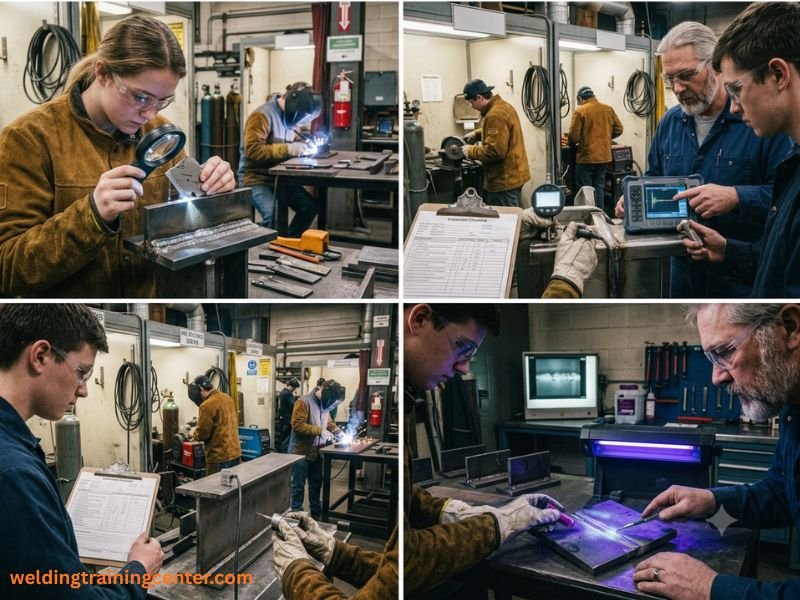
Welding inspection and quality assurance offer a variety of career opportunities beyond traditional welding. Depending on your experience, education, and certifications, you can specialize in inspection, quality control, supervision, engineering, or non-destructive testing (NDT). Each role has different responsibilities, but all focus on ensuring weld quality and compliance with industry standards.
Below are the most common career paths in this field.
Welding Inspector
A welding inspector examines welded joints, identifies defects, verifies compliance with welding codes, and prepares inspection reports. This is one of the most common career paths for experienced welders moving into quality assurance.
Welding QC Inspector
Quality Control (QC) inspectors monitor welding activities during production and inspect completed welds to ensure they meet project specifications and quality requirements.
Certified Welding Inspector (CWI)
A Certified Welding Inspector (CWI) is a highly qualified professional who has earned an industry-recognized certification. CWI certification can open doors to more advanced inspection roles and leadership opportunities.
Certified Welding Supervisor
Welding supervisors oversee welding teams, coordinate production activities, ensure proper welding procedures are followed, and help maintain quality throughout the fabrication process.
Certified Welding Engineer
Welding engineers focus on welding design, procedure development, material selection, quality planning, and solving complex welding challenges. They often work on large industrial or infrastructure projects.
Welding NDT Technician
NDT (Non-Destructive Testing) technicians inspect welds using testing methods such as ultrasonic, radiographic, magnetic particle, or liquid penetrant testing. These methods help detect internal and surface defects without damaging the welded component.
No matter which path you choose, specialized training and professional certifications can improve your technical knowledge, expand your career opportunities, and increase your value to employers. In the next section, I’ll introduce the most common welding inspection and quality assurance training programs, with links to detailed guides for each one.
Types of Welding Inspection & Quality Assurance Training
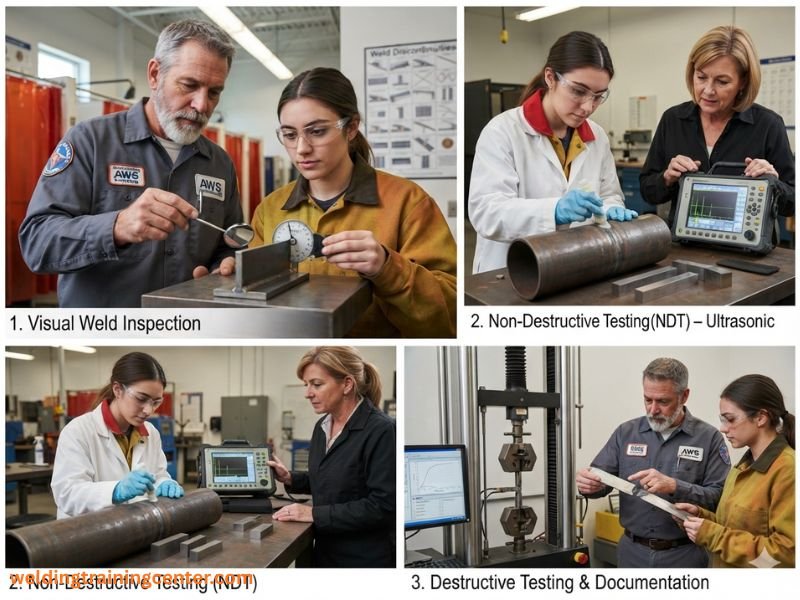
Welding inspection and quality assurance cover several specialized training programs, each designed for a different role within the welding industry. Some programs focus on inspecting weld quality, while others prepare professionals for quality control, supervision, engineering, or non-destructive testing (NDT). Choosing the right training depends on your current experience, career goals, and the industry you want to work in.
Below, I’ll provide a brief overview of the most common welding inspection and QA training programs. Each section introduces the purpose of the training and links to a dedicated guide where you can learn more about eligibility requirements, certification, costs, career opportunities, and salaries.
Welding Inspector Training
Welding Inspector Training is designed for professionals who want to inspect welded joints and ensure they meet industry codes, engineering drawings, and project specifications. The training typically covers visual weld inspection, welding symbols, weld defects, welding procedures (WPS), inspection documentation, and basic quality control practices. It’s an excellent starting point for experienced welders looking to transition into inspection or for anyone interested in a career focused on welding quality. Many programs also prepare students for industry-recognized certification exams.
Certified Welding Inspector (CWI) Training
Certified Welding Inspector (CWI) Training prepares candidates for one of the most respected welding inspection certifications in the industry. The program focuses on welding codes, inspection techniques, qualification standards, welding procedures, metallurgy, documentation, and exam preparation. Earning a CWI certification can significantly improve career opportunities in construction, manufacturing, oil and gas, shipbuilding, and other industries that require qualified inspection professionals.
AWS Welding Inspector Training
AWS Welding Inspector Training helps candidates prepare for welding inspection certifications and standards developed by the American Welding Society (AWS). Students learn about AWS welding codes, inspection methods, weld quality evaluation, acceptance criteria, and industry best practices. This training is ideal for professionals seeking AWS-recognized qualifications or working with projects that follow AWS standards.
Welding QC Inspector Training
Welding QC (Quality Control) Inspector Training focuses on monitoring welding activities throughout the fabrication process to ensure every weld meets quality requirements. Training covers inspection planning, welding documentation, material verification, weld defect identification, dimensional inspection, reporting, and quality control procedures. QC inspectors play a key role in preventing defects and maintaining consistent product quality across manufacturing and construction projects.
Welding NDT Training
Welding NDT (Non-Destructive Testing) Training introduces inspection methods used to evaluate weld quality without damaging the material. Depending on the course, students may learn visual testing (VT), ultrasonic testing (UT), radiographic testing (RT), magnetic particle testing (MT), and liquid penetrant testing (PT). NDT professionals are highly valued in industries where detecting hidden weld defects is essential for safety and reliability.
Certified Welding Supervisor Training
Certified Welding Supervisor Training prepares experienced welders and team leaders to oversee welding operations, manage welding personnel, and maintain quality throughout production. The training covers welding procedures, workflow planning, quality control, safety management, productivity improvement, and team supervision. Certified welding supervisors play an important role in ensuring projects are completed efficiently while meeting industry standards and customer requirements.
Certified Welding Engineer Training
Certified Welding Engineer Training is designed for engineering professionals responsible for planning, designing, and improving welding operations. The program covers welding metallurgy, material selection, welding procedure development, quality assurance, code compliance, failure analysis, and production optimization. Welding engineers often work closely with inspectors, supervisors, and fabrication teams to ensure welding processes are safe, efficient, and technically sound.
Skills You’ll Learn in Welding Inspection & Quality Assurance Training
Although each training program focuses on a different career path, most welding inspection and quality assurance courses teach a common set of technical and practical skills. These skills help professionals evaluate weld quality, maintain compliance with industry standards, and ensure welded products are safe and reliable.
Depending on the training you choose, you’ll typically learn:
- Visual weld inspection to identify common welding defects.
- Welding symbols and blueprint reading to interpret engineering drawings accurately.
- Welding codes and standards such as AWS, ASME, and other industry requirements.
- Welding Procedure Specifications (WPS) and Procedure Qualification Records (PQR).
- Weld defect identification, including cracks, porosity, undercut, incomplete fusion, and slag inclusions.
- Quality assurance and quality control (QA/QC) principles used in fabrication and manufacturing.
- Inspection documentation and reporting to record inspection findings and maintain traceability.
- Basic NDT methods, such as visual testing and an introduction to other non-destructive testing techniques.
- Communication and problem-solving skills for working with welders, supervisors, engineers, and project managers.
The exact skills you’ll develop depend on your chosen training program. For example, a Welding Inspector course emphasizes inspection techniques, while Certified Welding Engineer training focuses more on welding design, engineering principles, and process optimization. Likewise, Welding NDT Training concentrates on advanced inspection methods used to detect defects that cannot be seen with the naked eye.
Building these skills not only helps you perform inspections more effectively but also prepares you for advanced certifications and long-term career growth in the welding industry.
Which Welding Inspection & QA Training Is Right for You?
The best training program depends on your current experience and long-term career goals. Some programs are ideal for experienced welders who want to move into inspection, while others are designed for professionals interested in quality control, engineering, or management.
Use the table below as a quick guide to help you choose the training path that best fits your career objectives.
| Career Goal | Recommended Training |
| Become a Welding Inspector | Welding Inspector Training |
| Earn an industry-recognized inspection certification | Certified Welding Inspector (CWI) Training |
| Work with AWS welding codes and standards | AWS Welding Inspector Training |
| Build a career in quality control | Welding QC Inspector Training |
| Learn non-destructive testing methods | Welding NDT Training |
| Lead welding teams and production | Certified Welding Supervisor Training |
| Design and improve welding processes | Certified Welding Engineer Training |
Remember, you don’t have to stop with one qualification. Many professionals begin with welding inspection training and continue expanding their expertise by earning additional certifications in quality control, supervision, engineering, or NDT. Developing multiple skills can increase your value to employers and create more opportunities for career advancement.
Industries That Hire Welding Inspection & QA Professionals
Qualified welding inspection and quality assurance professionals are needed wherever welded structures, equipment, or components must meet strict quality and safety standards. As industries continue to emphasize compliance and reliability, the demand for skilled inspectors, QC personnel, supervisors, and welding engineers remains strong.
Some of the industries that regularly hire welding inspection and QA professionals include:
- Construction – Inspecting structural steel, commercial buildings, bridges, and infrastructure projects.
- Manufacturing – Ensuring consistent weld quality in machinery, equipment, and production facilities.
- Oil and Gas – Inspecting pipelines, pressure vessels, storage tanks, and processing equipment.
- Shipbuilding and Marine – Verifying weld quality in ships, offshore platforms, and marine structures.
- Aerospace – Maintaining strict quality standards for aircraft and aerospace components.
- Power Generation – Inspecting boilers, pressure systems, power plants, and energy infrastructure.
- Automotive – Monitoring welding quality during vehicle and component manufacturing.
- Heavy Equipment Manufacturing – Inspecting welds on construction, mining, and agricultural equipment.
- Pipeline and Industrial Fabrication – Ensuring welds meet project specifications and applicable codes.
Because nearly every industry that relies on welding also requires quality assurance, professionals with inspection skills often have a wide range of career opportunities. By combining practical welding knowledge with inspection training and recognized certifications, you can qualify for roles that offer greater responsibility and long-term career growth.
Frequently Asked Questions (FAQs)
1. What is welding inspection and quality assurance training?
Welding inspection and quality assurance (QA) training teaches professionals how to evaluate weld quality, identify defects, verify compliance with welding codes, and ensure welded products meet industry standards and project specifications.
2. Do I need welding experience to become a welding inspector?
It depends on the training program and certification. Many advanced inspector certifications require prior welding experience, while some introductory courses are suitable for beginners who want to learn the fundamentals of welding inspection.
3. What’s the difference between QA and QC in welding?
Quality Assurance (QA) focuses on preventing defects by developing procedures and quality systems, while Quality Control (QC) focuses on inspecting completed work to verify that it meets required standards and specifications.
4. What is a Certified Welding Inspector (CWI)?
A Certified Welding Inspector (CWI) is a professional who has earned an industry-recognized certification demonstrating knowledge of welding inspection, welding codes, quality control, and inspection procedures.
5. Is welding inspection training the same as welding training?
No. Welding training teaches you how to perform welding, while welding inspection training teaches you how to evaluate weld quality, identify defects, and ensure compliance with industry standards.
6. What skills will I learn during welding inspection training?
Most programs cover visual weld inspection, welding symbols, blueprint reading, welding codes, weld defect identification, documentation, quality control procedures, and inspection reporting. Some courses also introduce non-destructive testing (NDT) methods.
7. Can I take welding inspection training online?
Many training providers offer online theory courses, but some certifications may require in-person classes, practical assessments, or proctored examinations. Requirements vary depending on the training provider and certification body.
8. Which industries hire welding inspection professionals?
Welding inspection professionals work in construction, manufacturing, oil and gas, pipelines, shipbuilding, aerospace, automotive, power generation, heavy equipment manufacturing, and many other industries where weld quality is critical.
9. Which welding inspection certification is best?
The best certification depends on your career goals. For many professionals, the Certified Welding Inspector (CWI) credential is one of the most widely recognized, while other certifications may be better suited for quality control, supervision, or engineering roles.
10. Is welding inspection a good career?
Yes. Welding inspection offers strong career opportunities for professionals who enjoy quality assurance, problem-solving, and technical work. With experience and additional certifications, inspectors can advance into senior inspection, quality management, supervision, or engineering positions.
Final Thoughts
Welding inspection and quality assurance are essential to ensuring that welded structures and components are safe, reliable, and compliant with industry standards. While welders create the welds, inspectors, QC professionals, supervisors, and engineers help ensure those welds meet the quality requirements expected by employers, customers, and regulatory bodies.
This guide serves as your starting point for understanding the different welding inspection and QA training pathways. Whether your goal is to become a Welding Inspector, earn a Certified Welding Inspector (CWI) credential, specialize in Welding QC, explore Welding NDT, or advance into supervision or engineering, each training program offers unique career opportunities.
Use the internal links throughout this guide to explore our detailed articles on each training program. These in-depth resources cover eligibility requirements, certifications, training costs, course duration, career paths, and salary information, helping you choose the training that best supports your long-term professional goals.