GMAW Welding Training: Skills, Costs, Courses, and Careers
GMAW welding training helps students learn Gas Metal Arc Welding (GMAW), one of the most widely used welding processes in manufacturing, fabrication, automotive, construction, and industrial production.
GMAW is commonly known as MIG welding. It uses a continuously fed wire electrode and shielding gas to create strong, consistent welds. Because the process is efficient, versatile, and relatively easy to automate, it is widely used by both small fabrication shops and large manufacturing companies.
However, professional GMAW welding requires more than simply pulling a trigger on a welding gun. A skilled welder must understand machine settings, wire selection, shielding gas, joint preparation, welding positions, defect prevention, and quality standards.
In this guide, I will explain what GMAW welding training includes, how long courses take, expected costs, certification options, safety requirements, and how to choose the right welding program in the United States.
What Is GMAW Welding Training?
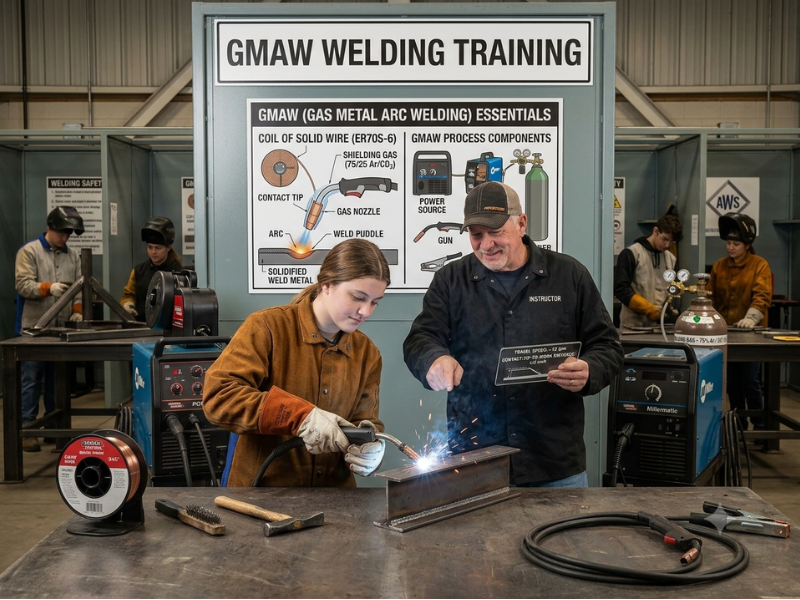
GMAW welding training is professional instruction in Gas Metal Arc Welding, a semi-automatic welding process that uses a continuously supplied wire electrode and an external shielding gas.
During the process, an electric arc forms between the wire electrode and the base metal. The heat generated by the arc melts the wire and the workpiece, creating a weld pool. Shielding gas protects the molten metal from atmospheric contamination.
The process is commonly called MIG welding, although GMAW is the technical term used in industrial and educational settings.
A complete GMAW training program teaches students how to:
- Operate welding equipment
- Select wire and shielding gas
- Adjust machine parameters
- Prepare materials
- Control the welding gun
- Produce quality welds
- Inspect and correct defects
GMAW is considered beginner-friendly compared with some other welding processes, but becoming a professional welder requires extensive hands-on practice and a strong understanding of welding fundamentals.
Why Learn GMAW Welding?
GMAW is one of the most popular welding processes because it combines speed, versatility, and productivity.
One major advantage is its continuous wire feeding system. Unlike stick welding, where the welder must frequently replace electrodes, GMAW allows the welder to maintain a more continuous operation.
This makes it valuable for production environments where efficiency and consistency are important.
GMAW is commonly used for:
- Automotive manufacturing
- Metal fabrication
- Equipment manufacturing
- Structural components
- Sheet metal work
- Industrial repair
- General manufacturing
Another advantage is its ability to weld different material thicknesses. With the correct wire, shielding gas, and machine settings, GMAW can be used for thin sheet metal as well as heavier components.
Learning GMAW also provides a strong foundation for understanding modern welding systems, including robotic welding and automated manufacturing processes.
What Do You Learn in GMAW Welding Training?
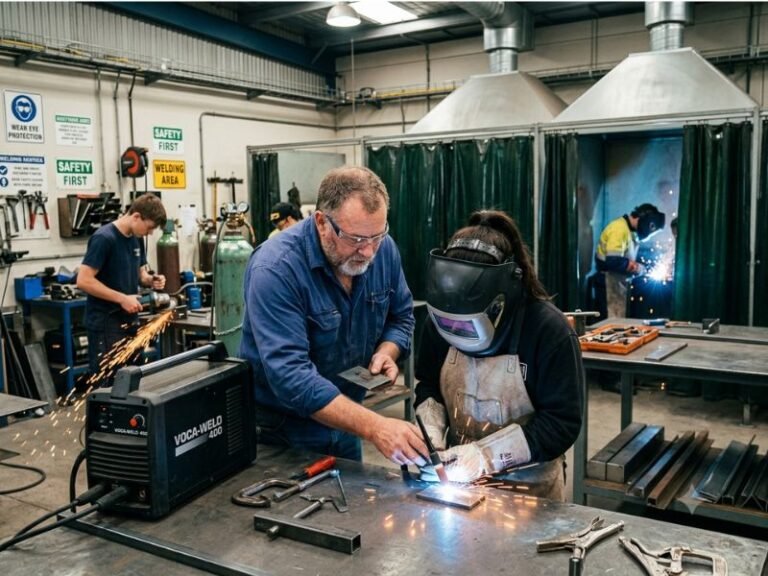
A quality GMAW training program covers equipment operation, welding techniques, material preparation, safety, inspection, and troubleshooting.
Students learn both the theory behind the process and the practical skills required in real workplaces.
Welding Safety and Workplace Practices
Safety is the first part of professional GMAW training.
Although GMAW does not use open flames like some cutting processes, it still creates hazards including:
- Intense ultraviolet radiation
- Hot metal
- Welding fumes
- Electrical hazards
- Sparks
- Fire risks
Students learn how to safely operate equipment while protecting themselves and coworkers.
Proper personal protective equipment usually includes:
- Welding helmet
- Safety glasses
- Welding gloves
- Flame-resistant clothing
- Protective footwear
- Respiratory protection when required
Training also covers ventilation, electrical safety, fire prevention, gas-cylinder handling, and workplace hazard awareness.
Good weld quality begins with good safety habits.
Understanding GMAW Equipment
Learning the equipment is an essential part of GMAW welding training.
A typical GMAW system includes:
- Welding power source
- Wire feeder
- Welding gun
- Contact tip
- Gas nozzle
- Drive rolls
- Welding wire
- Shielding gas cylinder
- Regulator and flowmeter
- Work clamp
Students learn how each component affects welding performance.
For example, incorrect drive-roll pressure can create wire-feeding problems. A damaged contact tip can create unstable arcs. Incorrect gas flow can cause porosity and poor weld quality.
Training helps students understand not only how to operate equipment but also how to troubleshoot problems.
GMAW Machine Settings and Welding Parameters
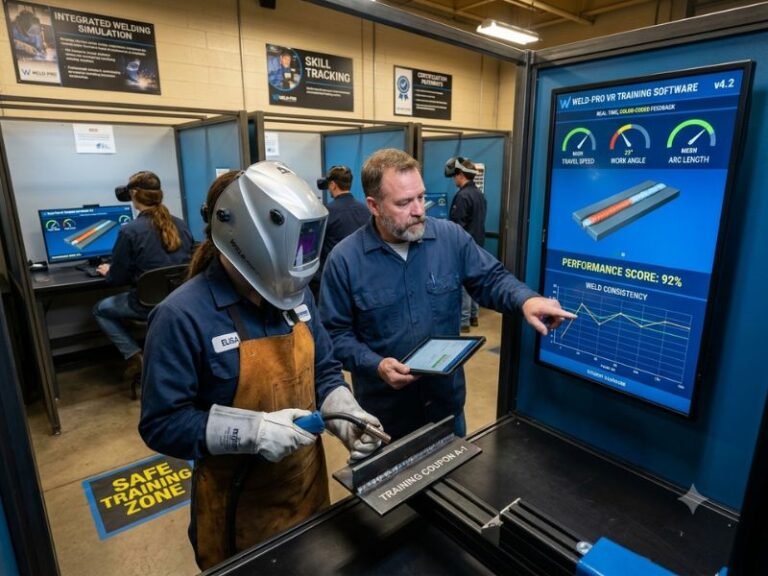
One of the most important parts of GMAW training is learning how machine settings influence the weld.
Voltage
Voltage affects arc length and weld characteristics.
Incorrect voltage settings may cause:
- Excessive spatter
- Poor penetration
- Irregular bead shape
- Unstable arc performance
Wire Feed Speed
Wire feed speed controls how quickly electrode wire enters the weld pool.
It affects:
- Welding current
- Deposition rate
- Penetration
- Arc behavior
Students learn how to balance wire feed speed and voltage for different materials and thicknesses.
Travel Speed
Travel speed affects the size and quality of the weld bead.
Moving too quickly may create incomplete fusion, while moving too slowly may produce excessive heat and buildup.
Shielding Gas
Shielding gas protects the weld pool from contamination.
Common gases include:
- Carbon dioxide
- Argon-carbon dioxide mixtures
- Argon-based blends
The correct gas depends on the material, wire type, welding application, and desired weld characteristics.
GMAW Welding Wire Selection
Unlike stick welding, GMAW uses a continuously fed wire electrode.
Students learn how to select wire based on:
- Base metal
- Material thickness
- Welding position
- Strength requirements
- Application
Common wire considerations include:
- Wire diameter
- Classification
- Surface condition
- Storage
- Compatibility with shielding gas
Using the wrong wire can reduce weld strength, increase defects, and create poor arc performance.
GMAW Welding Techniques
Professional GMAW training focuses heavily on developing proper welding technique.
Gun Angle
The angle of the welding gun affects:
- Penetration
- Weld shape
- Shielding coverage
- Heat distribution
Students learn correct work angles and travel angles for different joints.
Contact Tip to Work Distance
Maintaining the correct distance between the contact tip and workpiece helps control arc stability and heat input.
Too much distance can create poor penetration and unstable welding. Too little distance can increase the risk of contact-tip damage.
Travel Speed Control
Students practice maintaining consistent movement while watching the weld puddle.
Good control produces:
- Uniform bead appearance
- Proper fusion
- Consistent weld size
Push vs. Pull Technique
GMAW training often introduces pushing and pulling techniques.
A pushing technique generally provides better visibility and a flatter bead profile, while pulling may increase penetration in some applications.
The correct choice depends on the procedure, material, position, and desired result.
GMAW Welding Positions
Professional welders need to work in different positions depending on the project.
Flat Position
The flat position is usually the starting point for beginners.
Students learn:
- Machine adjustment
- Gun control
- Bead consistency
- Proper travel speed
Horizontal Position
Horizontal welding requires better control because gravity affects the molten metal.
Students practice maintaining bead shape and preventing excessive buildup.
Vertical Position
Vertical welding requires careful control of heat and travel speed.
Students learn techniques to manage the weld pool while moving upward or downward.
Overhead Position
Overhead welding is more challenging because molten metal moves toward the welder.
Training focuses on safety, control, and maintaining consistent weld quality.
GMAW Joint Types
GMAW training usually includes several common joint designs.
Butt Joints
Students learn how to join two pieces positioned edge-to-edge.
Training may include:
- Joint preparation
- Alignment
- Penetration control
- Multiple passes
Fillet Welds
Fillet welds are common in fabrication and manufacturing.
Students practice:
- T-joints
- Lap joints
- Corner joints
They learn how to control weld size, shape, and fusion.
Groove Welds
Advanced training may include groove welding for applications requiring deeper penetration and stronger joints.
Common GMAW Welding Defects
Understanding defects is essential for producing professional welds.
Porosity occurs when gas becomes trapped in the weld. Causes may include contamination, poor gas coverage, drafts, or incorrect settings.
Excessive spatter may result from incorrect voltage, wire speed, poor grounding, or unstable wire feeding.
Lack of fusion occurs when weld metal does not properly bond with the base metal. Incorrect settings, poor preparation, or improper technique may contribute.
Burn-through happens when excessive heat melts through thin material.
Undercut occurs when the weld removes material along the edge of the joint.
Professional training teaches students how to identify causes and adjust their process instead of simply correcting visible problems.
GMAW Welding Training Options in the United States
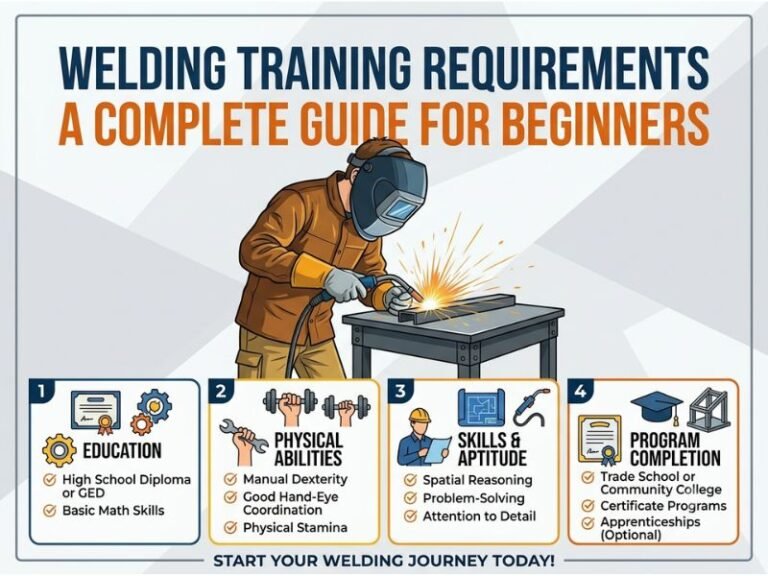
Students can choose different training paths depending on their career goals.
Trade Schools and Technical Institutes
Trade schools provide focused welding education with practical shop experience.
Programs often include:
- GMAW
- FCAW
- SMAW
- GTAW
- Blueprint reading
- Fabrication
- Inspection
- Welding safety
This option is suitable for students seeking direct entry into welding careers.
Community College Welding Programs
Community colleges often offer welding certificates and technical programs.
Benefits may include:
- Experienced instructors
- Modern facilities
- Financial aid opportunities
- Flexible class schedules
Some programs also include general fabrication and manufacturing skills.
Short-Term GMAW Courses
Short courses can help beginners learn basic MIG welding skills.
They may cover:
- Equipment setup
- Safety
- Machine settings
- Basic joints
- Welding techniques
However, professional skill requires more than a short introduction. Students need repeated practice and feedback.
Apprenticeships and Employer Training
Apprenticeships combine classroom education with workplace experience.
Students learn production standards, equipment operation, safety procedures, and industry expectations.
Employer training can also be valuable because it teaches company-specific welding requirements.
Online GMAW Training
Online courses can teach:
- Welding theory
- Equipment basics
- Safety
- Troubleshooting concepts
However, welding is a hands-on trade. Online learning cannot replace actual welding practice and instructor correction.
How Long Does GMAW Welding Training Take?
The timeline depends on the type of program and the student’s goals.
A beginner course may teach basic machine operation and simple welds. Career-focused programs may take several months and include multiple processes, fabrication, inspection, and qualification preparation.
Factors affecting learning speed include:
- Previous experience
- Practice frequency
- Instructor feedback
- Material type
- Welding position
- Required quality standards
I recommend choosing a program based on practical welding hours rather than only course length.
How Much Does GMAW Welding Training Cost?
Training costs vary depending on school type, location, program duration, and included materials.
Students should consider:
- Tuition
- Lab fees
- Welding wire
- Safety equipment
- Tools
- Books
- Testing fees
Before enrolling, ask whether the program includes:
- Practice materials
- Equipment access
- Certification testing
- Additional fees
- Open lab time
The cheapest program is not always the best option. A program with more practice time and better equipment may provide greater long-term value.
GMAW Certification and Qualifications
Completing a GMAW course does not automatically qualify someone for every welding position.
A completion certificate shows that a student completed training. A welding qualification demonstrates that the welder successfully passed a practical test under specific conditions.
Qualification requirements may depend on:
- Material
- Thickness
- Wire type
- Welding position
- Joint design
- Applicable standards
The American Welding Society (AWS) provides welding certification programs, and many employers conduct their own welding tests.
A welder qualified for one application may need additional testing for another job.
How to Choose a GMAW Welding Training Program
Choosing the right program requires careful evaluation.
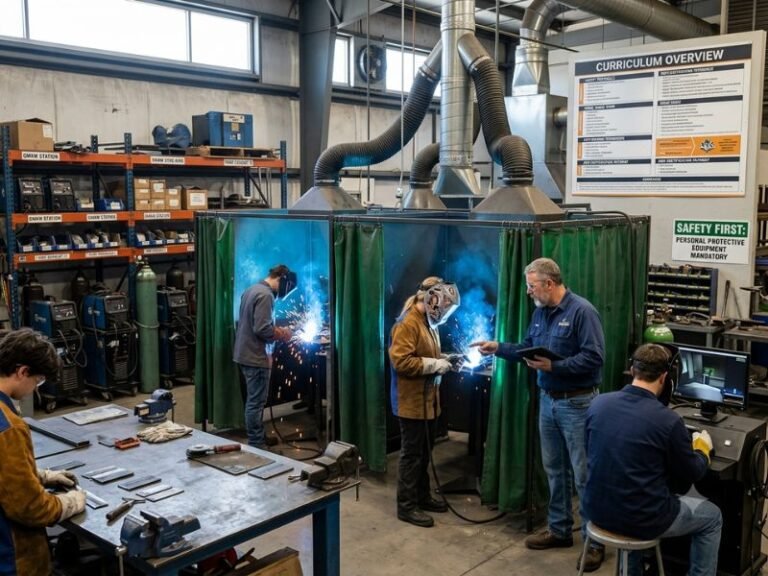
Start by reviewing the curriculum. A strong GMAW program should include safety, equipment setup, machine settings, wire selection, welding positions, inspection, and practical projects.
Compare hands-on training hours because welding skill develops through repetition.
Evaluate instructor experience and teaching ability. Good instructors help students identify mistakes and improve faster.
I recommend visiting the facility before enrolling. Look at welding machines, booths, ventilation systems, safety practices, and available materials.
Finally, understand the total cost and the credential you receive after completion.
GMAW Welding Career Opportunities
GMAW skills are valuable across many industries.
Common job roles include:
- MIG welder
- Production welder
- Fabrication welder
- Manufacturing welder
- Structural welder
- Maintenance welder
Industries using GMAW include:
- Automotive manufacturing
- Metal fabrication
- Equipment production
- Construction
- Shipbuilding
- Industrial manufacturing
- Repair operations
Additional skills such as blueprint reading, fabrication, robotics, inspection, TIG welding, and FCAW can improve career opportunities.
Advantages and Challenges of a GMAW Career
GMAW offers several advantages.
The process is efficient, widely used, and suitable for many industries. Because it can be automated, GMAW knowledge can also support careers involving robotic welding systems.
However, welding careers also have challenges.
Workers may face heat, fumes, physical demands, repetitive tasks, and strict quality requirements. Some positions require overtime, shift work, or production environments.
Long-term success depends on technical ability, safety awareness, reliability, and continuous learning.
Common GMAW Training Mistakes
One common mistake is focusing only on machine operation. Professional welders need to understand why settings work and how defects develop.
Another mistake is avoiding hands-on practice. Welding skills improve through repetition and correction.
Some beginners also ignore preparation. Dirty materials, poor fit-up, and incorrect setup can create problems before welding even begins.
Finally, rushing through training can create weak fundamentals. Strong welders build skills gradually through consistent practice.
Frequently Asked Questions
Is GMAW welding easy to learn?
GMAW is often considered beginner-friendly because it uses continuous wire feeding, but producing professional-quality welds still requires practice and technical knowledge.
What is the difference between GMAW and MIG welding?
GMAW is the technical name for the process commonly called MIG welding. In most everyday welding conversations, the terms are used interchangeably.
How long does GMAW training take?
Basic skills may be introduced quickly, but professional welding ability usually requires weeks or months of structured practice.
Do I need welding school to become a GMAW welder?
Not always. Some welders learn through apprenticeships or employer training, but formal programs provide structured skill development.
Can I learn GMAW welding online?
Online training can explain concepts, but hands-on practice is necessary to develop real welding ability.
What certification is best for GMAW welding?
The best qualification depends on the employer, industry, material, welding position, and job requirements.
Conclusion
GMAW welding training provides valuable skills for students interested in manufacturing, fabrication, construction, and industrial welding careers.
A strong program should teach more than basic machine operation. It should develop understanding of equipment, wire selection, welding parameters, safety, inspection, and practical problem-solving.
I recommend comparing programs based on instructor quality, hands-on training hours, equipment, curriculum, and certification opportunities.
With proper training and consistent practice, GMAW welding can become a valuable trade skill that creates long-term career opportunities in the welding industry.