Welding Training Courses: Skills, Types & Career Guide
Welding is one of the most valuable skilled trades used across industries such as construction, manufacturing, automotive, aerospace, shipbuilding, and energy. As companies continue to search for qualified welding professionals, proper training has become essential for anyone who wants to build a successful career in this field.
Welding training courses provide a structured way to learn both the technical knowledge and practical skills required for professional welding work. These courses help students understand welding processes, operate different types of equipment, follow safety procedures, read technical drawings, and produce high-quality welds according to industry standards.
Whether someone is a complete beginner looking to enter the welding industry or an experienced worker wanting to improve their skills, the right welding training program can provide valuable career opportunities. Modern welding courses are available in different formats, including short-term programs, certification courses, advanced technical training, and hands-on workshop-based education.
In this complete guide, we will explore different types of welding training courses, what students learn, course duration, costs, certification options, and career paths after completing training. Understanding these options can help you choose the right welding course based on your goals, skill level, and future career plans.
What Are Welding Training Courses?
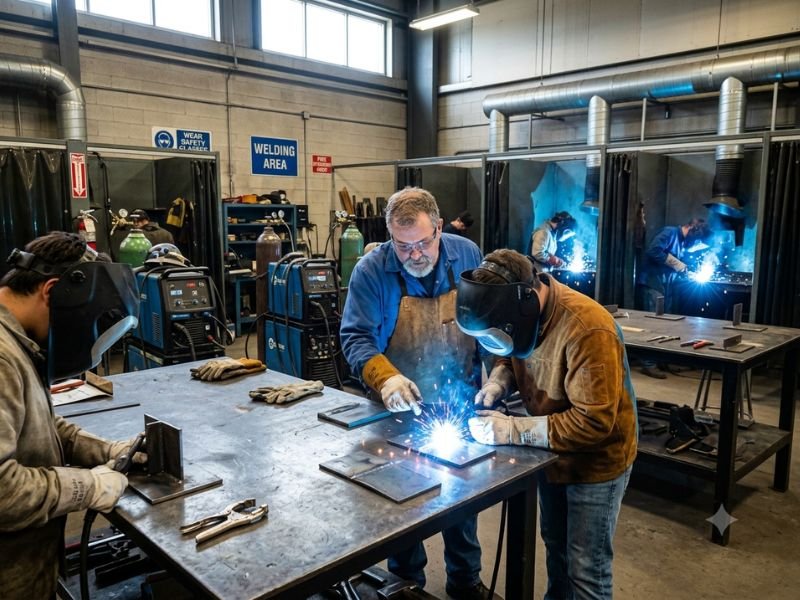
Welding training courses are structured educational programs designed to teach individuals the knowledge and practical skills required to perform professional welding work. These courses combine welding theory with hands-on practice so students can understand how different welding processes work and how to apply them in real workplace situations.
Unlike informal learning methods, professional welding courses follow a planned curriculum that covers essential areas such as welding techniques, equipment operation, material preparation, safety procedures, and quality control. Students learn not only how to create welds but also how to choose the right welding method, adjust equipment settings, and identify common welding problems.
Welding training courses are offered by different types of educational institutions, including technical schools, trade centers, community colleges, and specialized welding training facilities. Some programs focus on basic skills for beginners, while others are designed for experienced welders who want to improve their abilities or prepare for professional certifications.
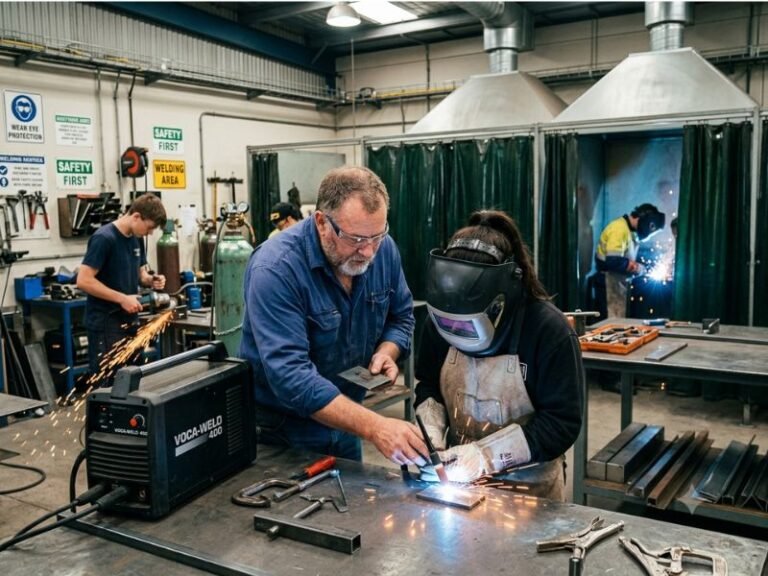
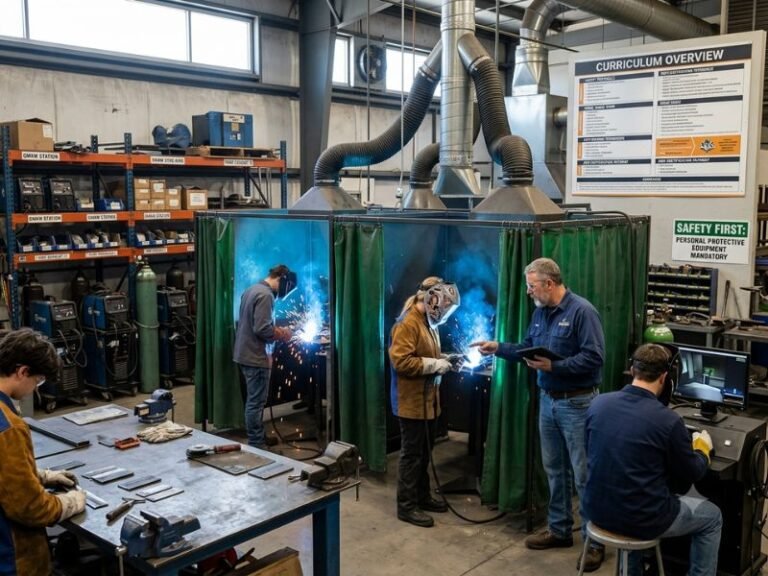
A typical welding course includes both classroom instruction and workshop practice. The classroom portion helps students understand welding principles, industry standards, and safety requirements. The practical portion allows them to work with real welding machines, metals, and tools under instructor supervision.
These courses are available for different career goals. A beginner may choose an introductory welding course to learn basic techniques, while an experienced welder may select advanced training in areas such as pipe welding, TIG welding, robotic welding, or welding inspection.
The main purpose of welding training courses is to prepare students for real job environments. By developing technical skills, safety awareness, and practical experience, these programs help learners become more confident and qualified for welding careers.
Why Are Welding Training Courses Important?
Welding is a technical skill where accuracy, experience, and proper techniques directly affect the quality and safety of the final product. Without proper training, welders may struggle with poor weld quality, equipment problems, safety risks, and limited career opportunities.
Welding training courses provide a structured learning environment where students can develop skills correctly from the beginning. Experienced instructors guide learners through different welding processes and help them understand the reasons behind each technique.
One of the biggest benefits of professional training is improved welding quality. A trained welder understands how factors such as heat control, material type, welding speed, and machine settings affect the final result. This knowledge helps create stronger and more reliable welds.
Safety is another major reason why welding education is important. Welding involves heat, electricity, sparks, fumes, and heavy equipment. Training programs teach students how to use protective equipment, maintain a safe workspace, and follow proper procedures to reduce workplace risks.
Welding courses also improve employment opportunities. Many employers prefer candidates who have completed formal training because they are more likely to understand industry standards and workplace expectations. Completing a recognized course can also help students prepare for welding certifications that demonstrate their skills.
Another important advantage is career growth. Welding training provides the foundation needed to move into specialized fields such as pipeline welding, aerospace welding, welding inspection, or welding supervision. With additional experience and certifications, trained welders can continue advancing throughout their careers.
For anyone interested in entering the welding industry or improving existing skills, professional welding training courses provide the knowledge, confidence, and practical experience needed for long-term success.
Types of Welding Training Courses
Welding training courses are available in different formats to match the needs of beginners, experienced welders, and professionals who want to specialize in specific areas. Choosing the right type of course depends on a person’s current skill level, career goals, and the type of welding work they want to perform.
Some courses focus on basic welding knowledge, while others provide advanced technical training for industries that require specialized skills. A good training program helps students gradually improve their abilities and prepare for professional welding careers.
Beginner Welding Courses
Beginner welding courses are designed for individuals who have little or no previous welding experience. These programs introduce students to the fundamentals of welding and help them develop basic skills before moving into advanced techniques.
Students usually learn about welding safety, equipment operation, metal preparation, and basic welding processes. The main goal of beginner training is to create a strong foundation so learners can understand how welding works and practice proper techniques.
These courses often include practical sessions where students work with welding machines and complete simple projects. Through repeated practice, beginners develop better control, accuracy, and confidence.
Beginner welding courses are suitable for people who want to start a welding career, explore welding as a skill, or prepare for more advanced training programs.
Advanced Welding Courses
Advanced welding courses are designed for individuals who already have basic welding knowledge and want to improve their technical abilities. These programs focus on more complex welding methods, specialized materials, and industry-specific applications.
Advanced training may include precision welding, advanced fabrication techniques, welding inspection concepts, and preparation for specialized roles.
Experienced welders often choose these courses to improve their career opportunities, qualify for higher-level positions, or move into industries that require advanced welding skills.
Professional Certification Courses
Professional certification courses focus on preparing welders for industry-recognized qualifications. These programs help students understand certification requirements, welding procedures, and performance testing standards.
Certification-focused training is valuable because many employers use certifications as proof that a welder has the required skills and knowledge to perform professional work.
These courses usually combine technical lessons with practical welding tests, allowing students to improve their performance before completing official certification examinations.
MIG Welding Training Courses
MIG welding training courses are among the most popular welding programs because MIG welding is widely used in manufacturing, automotive repair, fabrication, and industrial production.
MIG welding, also known as Gas Metal Arc Welding (GMAW), uses a continuous wire electrode and shielding gas to create strong weld joints. Because of its versatility and relatively easy learning process, it is often one of the first welding methods taught to beginners.
During MIG welding training, students learn how to set up welding machines, adjust welding parameters, select suitable wire types, and control welding techniques for different materials.
The practical part of MIG courses helps students develop skills in creating clean and consistent welds. They learn how welding speed, torch angle, and heat settings affect weld quality.
MIG training also teaches students how to identify common welding problems such as excessive spatter, poor penetration, and uneven weld appearance. Understanding these issues helps welders produce better results in professional environments.
After completing MIG welding training, graduates can pursue opportunities in areas such as metal fabrication, automotive manufacturing, structural welding, and general production work.
MIG welding skills are highly valuable because many industries require welders who can work efficiently with different metals and production requirements. A strong foundation in MIG welding can also make it easier to learn other welding processes in the future.
TIG Welding Training Courses
TIG welding training courses focus on developing precision welding skills required for high-quality and detailed welding applications. TIG, or Gas Tungsten Arc Welding (GTAW), is known for producing clean and accurate welds, making it an important process in industries where quality and appearance are critical.
Compared to some other welding methods, TIG welding requires greater control and practice. Welders need to manage the torch, filler material, heat input, and welding speed carefully to achieve strong and consistent results.
During TIG welding training, students learn the complete process from equipment setup to final weld inspection. They are introduced to TIG machines, tungsten electrode selection, shielding gas settings, and techniques for controlling the welding arc.
A major part of TIG training involves working with different metals. Students practice welding materials such as stainless steel, aluminum, and other alloys that require precise heat management.
Practical training helps students improve hand coordination and develop the patience needed for detailed welding work. They learn how to create smooth weld beads, maintain proper penetration, and avoid common welding defects.
TIG welding skills are valuable in industries where accuracy is essential. Aerospace manufacturing, automotive performance parts, food processing equipment, and specialized fabrication companies often require welders with TIG expertise.
Although TIG welding can take longer to master compared to some other processes, it provides excellent career opportunities because skilled TIG welders are valued for their ability to produce high-quality welds.
Stick Welding Training Courses
Stick welding training courses teach students how to use Shielded Metal Arc Welding (SMAW), one of the oldest and most widely used welding processes. Stick welding remains popular because it is versatile, reliable, and suitable for many outdoor and heavy-duty applications.
This type of training is especially useful for individuals interested in construction, structural welding, pipeline work, and industrial repair. Stick welding equipment is commonly used in environments where portability and durability are important.
During stick welding courses, students learn how to operate welding machines, select the correct electrodes, and adjust settings based on material thickness and project requirements.
The training focuses on developing control over important welding techniques, including maintaining the correct arc length, travel speed, and electrode angle. These skills help students create strong welds in different positions.
Students also practice welding various joint types and positions, including flat, horizontal, vertical, and overhead welding. This experience is important because professional welders often work in challenging conditions where flexibility is required.
Stick welding courses also cover common welding challenges such as slag removal, weld defects, and proper preparation before welding. Understanding these areas helps students improve weld quality and efficiency.
Because stick welding is commonly used in construction and repair industries, trained welders with SMAW skills can find opportunities in structural projects, equipment maintenance, shipbuilding, and heavy fabrication.
Learning stick welding also provides a strong foundation for welders who want to develop additional skills in other welding processes later in their careers.
Flux-Cored Welding Training Courses
Flux-Cored Arc Welding (FCAW) training courses teach students how to perform welding using a tubular wire electrode filled with flux. This welding process is widely used in heavy fabrication, construction, shipbuilding, and industrial manufacturing because it provides strong welds and works effectively with thicker materials.
FCAW training helps students understand how this welding method differs from MIG welding and when it is the better choice for specific applications. The process can be performed with or without external shielding gas, making it suitable for both indoor and outdoor environments.
During flux-cored welding training, students learn how to operate FCAW equipment, select the correct welding wire, adjust machine settings, and control welding techniques for different materials. Proper control of voltage, wire feed speed, and travel speed is essential for producing strong and consistent welds.
Practical training focuses on developing skills needed for real industrial work. Students practice different welding positions, joint types, and fabrication tasks while learning how to maintain proper weld quality.
The course also covers common FCAW problems, such as excessive slag, poor penetration, and weld defects. Understanding these issues helps welders improve their technique and produce reliable results.
FCAW skills are highly valuable in industries where strong and efficient welding is required. Construction companies, shipyards, manufacturing facilities, and heavy equipment industries often need welders who understand flux-cored welding techniques.
For welders interested in industrial careers, FCAW training provides important skills that can lead to opportunities in large-scale fabrication and structural welding projects.
Online Welding Training Courses
Online welding training courses provide a flexible way to learn welding concepts, safety practices, and technical knowledge from any location. These programs are especially useful for beginners who want to understand welding fundamentals before starting hands-on training.
Online courses usually focus on theoretical aspects of welding, including welding processes, equipment information, material properties, safety procedures, and industry terminology. They allow students to study at their own pace and review lessons whenever needed.
One major advantage of online welding training is flexibility. Students who have work responsibilities or limited access to training centers can learn important concepts without following a fixed classroom schedule.
Online programs can also help experienced welders refresh their knowledge or learn about new welding technologies. Topics such as welding symbols, blueprint reading, and safety standards can be effectively taught through digital lessons.
However, online training has limitations because welding is a practical skill. Watching demonstrations cannot replace the experience of using real welding equipment and practicing under instructor supervision.
For this reason, many learners combine online education with hands-on workshop training. This approach allows students to build theoretical knowledge while developing the physical skills required for professional welding work.
A combination of online lessons and practical experience can create a more complete learning pathway and help students become better prepared for real welding environments.
Hands-On Welding Training Courses
Hands-on welding training courses focus on practical skill development by allowing students to work directly with welding equipment, materials, and real workshop environments. Since welding is a skill-based profession, practical experience is one of the most important parts of becoming a professional welder.
While theory helps students understand welding principles, actual practice helps them develop the control, accuracy, and confidence needed to perform quality welds. Working with real machines allows learners to understand how different settings, materials, and techniques affect the final result.
During hands-on training, students practice different welding processes under the guidance of experienced instructors. They learn how to prepare materials, set up equipment, perform welding operations, and inspect completed work.
Practical sessions usually include projects that simulate real workplace situations. Students may work on metal fabrication tasks, structural joints, repair projects, and other exercises that help them apply their knowledge.
One of the biggest advantages of hands-on training is immediate feedback. Instructors can identify mistakes, explain improvements, and help students develop better welding habits. This guidance is especially important for beginners because incorrect techniques can become difficult to change later.
Hands-on courses also teach workplace skills that are difficult to learn online. Students become familiar with workshop safety, equipment handling, time management, and professional welding practices.
For individuals who want to enter the welding industry, practical training provides the experience employers often look for. A welder who has spent significant time practicing with real equipment is usually better prepared for professional job environments.
Welding Certification Training Courses
Welding certification training courses are designed to help welders prepare for professional certification tests and meet industry qualification standards. Certification provides proof that a welder has the required technical ability and knowledge to perform welding tasks according to recognized guidelines.
Many employers prefer certified welders because certification demonstrates skill, consistency, and commitment to professional standards. In industries where welding quality directly affects safety and performance, certified workers are often given more career opportunities.
Certification training usually focuses on improving welding techniques, understanding welding procedures, and preparing students for practical performance tests. These courses help learners become familiar with the requirements they need to meet before taking official certification exams.
During certification preparation, students practice specific welding positions, materials, and techniques required by the certification program. They also learn how to maintain weld quality, avoid common defects, and follow industry-approved procedures.
Professional certification can be valuable for welders working in construction, manufacturing, energy, and specialized industries. It can help improve employment opportunities and provide a pathway toward advanced roles.
Some experienced welders also use certification training to move into positions such as welding inspector, supervisor, or quality control specialist. Additional qualifications can help expand career options beyond traditional welding jobs.
Choosing a welding training course that includes certification preparation can provide long-term benefits because it combines practical skill development with recognized professional credentials. For many welders, certification becomes an important step toward career advancement and higher-level opportunities.
Welding Training Courses for Different Industries
Welding is used in almost every industry that involves metal construction, manufacturing, repair, or fabrication. Because different industries have different requirements, welding training courses are often designed to prepare students for specific workplace applications.
A welder working in construction may need different skills compared to someone working in aerospace or automotive manufacturing. Industry-focused training helps students understand the techniques, materials, safety requirements, and quality standards needed for their chosen career path.
Construction Welding Training
Construction welding courses focus on preparing students for structural welding projects involving buildings, bridges, pipelines, and heavy metal structures. This type of welding requires strong technical skills because weld quality directly affects the strength and safety of structures.
Students learn how to work with structural steel, read construction drawings, and perform welding in different positions. Training also focuses on outdoor welding conditions, equipment handling, and safety practices required on construction sites.
Construction welders often work on large projects where accuracy and reliability are essential. Proper training helps them understand welding procedures, material preparation, and inspection requirements used in the construction industry.
These courses are suitable for individuals interested in careers related to structural fabrication, infrastructure projects, and industrial construction.
Automotive Welding Training
Automotive welding courses teach students how welding is used in vehicle manufacturing, repair, and customization. The automotive industry requires precision because many components involve thin metals and detailed fabrication work.
Training usually covers metal joining techniques, repair methods, fabrication processes, and equipment operation. Students learn how to work with materials commonly found in vehicles, including steel and aluminum.
Automotive welding skills are useful for careers in vehicle repair shops, manufacturing facilities, custom fabrication businesses, and restoration projects.
With additional experience, automotive welders can specialize in areas such as performance fabrication, custom metalwork, or advanced vehicle manufacturing.
Industrial Welding Training
Industrial welding courses prepare students for work in manufacturing plants, factories, and equipment production facilities. These programs focus on creating strong, consistent welds for industrial products and machinery.
Students learn production welding techniques, quality control procedures, equipment operation, and workplace safety practices. Industrial welders often need to follow strict specifications because their work affects product performance and durability.
Industries such as machinery manufacturing, metal fabrication, and equipment production rely heavily on trained industrial welders.
Pipeline and Energy Welding Training
Pipeline welding courses focus on advanced welding skills required for oil, gas, power generation, and energy infrastructure projects. These programs often require higher levels of accuracy because pipeline welds must meet strict safety standards.
Students learn pipe welding techniques, welding positions, inspection requirements, and industry-specific procedures. Many pipeline welding careers also require additional certifications because of the critical nature of the work.
Pipeline and energy welding can provide strong career opportunities for skilled welders who have the required training, experience, and qualifications.
Welding Training Course Duration
The duration of welding training courses depends on the type of program, the skill level of the student, and the career goals involved. Some courses are designed to provide basic skills quickly, while others require longer periods of study to develop advanced professional abilities.
Shorter programs are usually focused on fundamental welding techniques, while longer programs provide more comprehensive training that includes multiple welding processes, fabrication skills, and certification preparation.
Short-Term Welding Courses
Short-term welding courses can range from several weeks to a few months. These programs are generally designed for beginners who want to learn basic welding skills or start an entry-level career.
Students usually learn welding fundamentals, safety practices, equipment operation, and basic practical techniques. These courses provide a starting point for individuals who want to explore welding before committing to advanced training.
Certificate and Diploma Programs
Certificate and diploma welding programs usually take several months to two years, depending on the curriculum and training intensity.
These programs provide deeper education by combining classroom learning with extensive hands-on practice. Students develop skills in multiple welding processes, blueprint reading, fabrication, and workplace procedures.
Longer programs are beneficial for individuals who want stronger career preparation and better opportunities in competitive welding industries.
Factors That Affect Course Duration
Several factors influence how long it takes to complete welding training. The chosen welding specialization, training schedule, previous experience, and certification requirements can all affect the timeline.
Advanced areas such as pipe welding, robotic welding, and inspection training usually require additional learning time because they involve more specialized knowledge and skills.
The amount of practical training also affects skill development. Since welding ability improves through repetition and experience, programs with more workshop hours often provide better preparation for professional work.
Cost of Welding Training Courses
The cost of welding training courses can vary depending on the type of program, training provider, location, equipment availability, and level of specialization. While welding education requires an investment, the skills gained through proper training can provide valuable career opportunities in many industries.
Compared to many traditional education paths, welding courses often require less time to complete while providing practical skills that can lead to employment. The total cost depends on whether a student chooses a short-term course, certification program, diploma program, or advanced specialized training.
Tuition and Training Expenses
The main cost of a welding training course is usually the program tuition. Basic welding courses are generally more affordable because they focus on fundamental skills, while advanced programs may cost more due to specialized equipment, materials, and instructor expertise.
Students should also consider additional expenses related to welding education. These may include safety equipment, learning materials, welding tools, and certification testing fees.
Safety gear is an important investment because welders need proper protection when working with heat, sparks, fumes, and electrical equipment. Many training programs require students to have their own protective equipment for workshop practice.
Factors That Influence Welding Course Costs
Several factors affect the overall price of welding training. Programs with modern facilities, experienced instructors, and advanced equipment may have higher fees because they provide more comprehensive learning opportunities.
The type of welding specialization also influences cost. Basic MIG welding courses are often less expensive compared to advanced programs focused on pipeline welding, aerospace welding, or robotic welding.
The training location can also impact pricing. Different regions may have different education costs based on demand, available facilities, and industry requirements.
Ways to Reduce Welding Training Costs
Students can explore different options to make welding education more affordable. Some training centers offer financial assistance, payment plans, or scholarship opportunities.
Employer-sponsored training and apprenticeship programs can also reduce education costs while allowing students to gain valuable workplace experience.
Free online resources can support learning by providing additional information about welding theory, safety, and techniques. However, practical workshop training remains essential for developing professional welding skills.
Read More About : Free Welding Training: How to Learn Welding Skills Without Paying
Skills You Gain From Welding Training Courses
Welding training courses help students develop a combination of technical abilities, problem-solving skills, and professional workplace knowledge. These skills prepare learners to handle real welding tasks safely and efficiently.
A trained welder needs more than the ability to join metals. Professional welding requires an understanding of materials, equipment, quality standards, and workplace procedures.
Technical Welding Skills
Technical skills are the foundation of every welding career. Training programs teach students how to operate different welding machines, select proper techniques, and create strong weld joints.
Students develop skills related to welding process selection, machine setup, material preparation, and weld inspection. They learn how different metals respond to heat and how welding settings affect the final result.
Practical experience helps welders improve accuracy, consistency, and control. These abilities are essential for producing welds that meet industry requirements.
Blueprint Reading and Technical Understanding
Many welding jobs require workers to understand technical drawings and project specifications. Welding training courses often include blueprint reading and welding symbols so students can follow professional instructions.
This knowledge helps welders understand measurements, joint designs, material requirements, and fabrication plans.
Quality Control and Inspection Skills
Welding quality is an important part of professional work. Training programs teach students how to identify common welding defects, evaluate weld appearance, and maintain consistent standards.
Understanding quality control helps welders produce reliable work and reduces the chances of failure in important applications.
Workplace and Professional Skills
In addition to technical knowledge, welding courses help students develop professional skills needed in industrial environments.
Students learn the importance of communication, teamwork, time management, and following workplace procedures. These skills help welders work effectively with supervisors, engineers, and other team members.
A combination of technical ability and professional behavior allows welders to build stronger careers and adapt to different workplace situations.
How to Choose the Right Welding Training Course
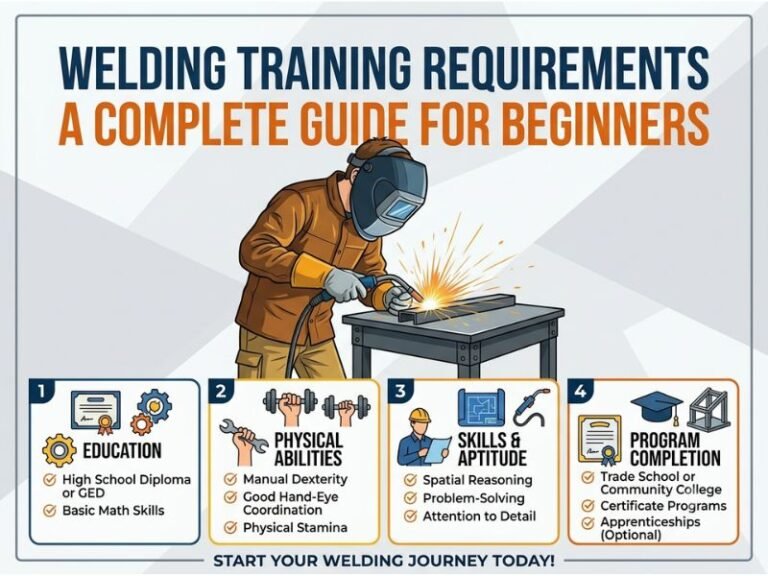
Choosing the right welding training course is an important step because the quality of education can directly affect future career opportunities. A suitable program should provide the right combination of technical knowledge, practical experience, safety training, and career preparation.
With many different welding courses available, students should consider their goals, preferred welding specialization, budget, and future career plans before making a decision.
Consider the Course Curriculum
A good welding training course should have a well-structured curriculum that covers both basic concepts and practical skills. The program should teach the welding processes that match the student’s career goals.
A quality curriculum usually includes welding fundamentals, equipment operation, safety procedures, material preparation, welding techniques, and inspection basics.
Students should also check whether the course includes enough workshop practice. Welding skills improve through repetition, so programs with more hands-on training often provide better preparation for professional work.
Evaluate Instructor Experience
The experience and knowledge of instructors can make a significant difference in welding education. Skilled instructors can provide practical guidance, explain difficult techniques, and help students correct mistakes.
Experienced trainers often bring real industry knowledge into the classroom. They can teach workplace practices, common challenges, and professional techniques that students may not learn from textbooks alone.
Before choosing a course, students should research instructor backgrounds and training quality.
Check Equipment and Training Facilities
Modern welding equipment and a proper workshop environment are important parts of effective training. Students should choose programs that provide access to equipment similar to what is used in professional workplaces.
Training facilities should support practical learning with different welding machines, safety equipment, and suitable workspace conditions.
Learning with updated equipment helps students become more comfortable when they enter the workforce.
Look for Certification Support
Certification can improve employment opportunities, so choosing a course that supports certification preparation can be beneficial.
Programs that include practical testing, welding standards, and certification guidance can help students become better prepared for professional qualifications.
A course that combines skill development with certification preparation provides stronger long-term career value.
Career Opportunities After Welding Training Courses
Completing a welding training course can open many career opportunities across different industries. Skilled welders are needed wherever metal structures, equipment, and components are manufactured, repaired, or maintained.
A welding career can begin with entry-level positions and grow into specialized roles through experience, additional training, and professional certifications.
Professional Welder Careers
Many graduates start their careers as professional welders working in manufacturing, construction, fabrication, or repair industries.
These roles involve preparing materials, operating welding equipment, following technical drawings, and producing welds according to industry requirements.
With experience, welders can improve their skills and qualify for more advanced positions with greater responsibility.
Specialized Welding Careers
Some welders choose to specialize in areas that require advanced knowledge and additional training. Specialized welding careers often provide opportunities to work on complex and high-value projects.
Examples include pipe welding, underwater welding, aerospace welding, robotic welding, and precision fabrication.
These fields usually require stronger technical skills because welders must work with specialized materials, strict safety standards, and detailed specifications.
Welding Inspection and Quality Roles
Experienced welders can also move into inspection and quality control positions. These roles focus on checking weld quality, ensuring standards are followed, and identifying potential problems.
Welding inspectors review completed work, examine welding procedures, and help maintain safety and quality requirements in industrial projects.
Moving into inspection can provide career growth opportunities for welders who want to use their technical knowledge in a different role.
Welding Business Opportunities
Some experienced welders choose to start their own welding businesses. A small fabrication or repair service can provide opportunities to work independently and serve local customers.
Business owners may provide services such as metal fabrication, equipment repair, custom welding projects, and maintenance work.
With strong technical skills, experience, and business knowledge, welding professionals can create long-term career opportunities beyond traditional employment.
Future Trends in Welding Training Courses
The welding industry is continuously changing as new technologies, automation systems, and advanced manufacturing methods become more common. Welding training courses are also evolving to prepare students for modern workplace demands.
Future welders will need traditional welding skills combined with knowledge of digital tools, automated systems, and advanced production techniques. Training programs are adapting by including new learning methods and technology-focused education.
Technology in Welding Education
Modern welding training is becoming more technology-driven. Many training centers are using advanced tools to help students understand welding concepts and improve practical skills.
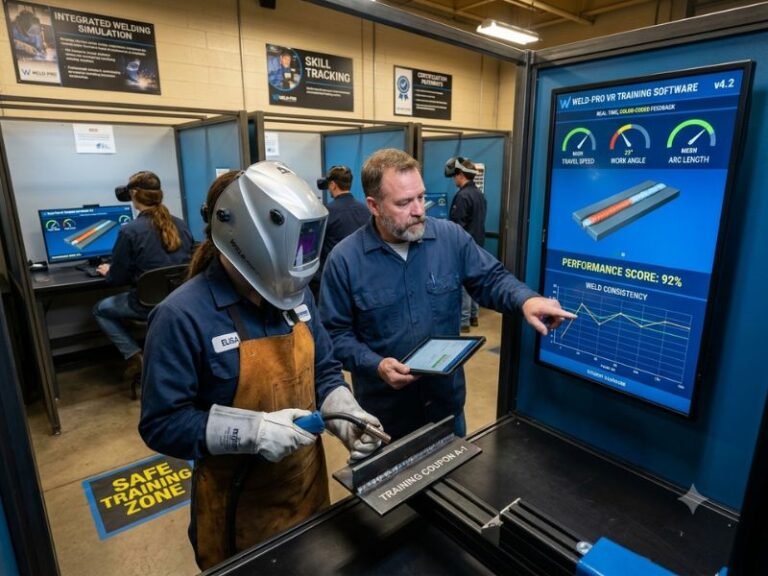
Welding simulators and digital learning systems allow students to practice techniques in a controlled environment before working with real materials. These tools help learners understand welding movements, equipment settings, and common mistakes.
Technology-based training can improve learning efficiency because students can practice repeatedly and receive feedback without wasting large amounts of material.
Virtual reality welding training is also becoming more popular. It provides a realistic experience where students can practice welding positions, safety procedures, and techniques in a simulated environment.
Although these technologies are useful, they work best when combined with traditional hands-on workshop training.
Growth of Robotic and Automated Welding
Automation is becoming an important part of modern manufacturing. Many companies now use robotic welding systems to increase production speed, improve consistency, and reduce errors.
Because of this change, welding professionals are increasingly expected to understand automated systems. Future welding training courses may include basic robotic welding operation, programming concepts, and automated equipment maintenance.
Instead of replacing skilled welders completely, automation is creating new opportunities for workers who can operate, monitor, and maintain advanced welding systems.
Professionals with both manual welding skills and automation knowledge can become more valuable in modern industrial environments.
Increasing Demand for Skilled Welders
Despite technological changes, skilled welders will continue to be needed across many industries. Construction projects, manufacturing growth, infrastructure development, and energy production all require qualified welding professionals.
Companies often need workers who can handle complex tasks, solve problems, and maintain quality standards. This means practical welding skills combined with proper training will remain highly valuable.
For individuals entering the welding industry, learning modern techniques along with traditional welding methods can create stronger career opportunities.
Final Thoughts: Are Welding Training Courses Worth It?
Welding training courses provide one of the most practical pathways for individuals who want to develop a skilled trade career. These programs help students gain technical knowledge, hands-on experience, and workplace skills needed to become professional welders.
The right training course can make a significant difference in career success. Instead of learning through trial and error, students receive structured education from experienced instructors and develop proper welding techniques from the beginning.
Welding courses are valuable because they prepare individuals for a wide range of career opportunities. Graduates can work in construction, manufacturing, automotive, energy, fabrication, and many other industries that depend on skilled welding professionals.
However, completing a course is only the first step. Long-term success in welding requires continuous practice, gaining workplace experience, and improving skills through advanced training and certifications.
Choosing a program that offers quality instruction, modern equipment, practical training, and certification preparation can provide a strong foundation for career growth.
For anyone interested in a hands-on profession with strong industry demand, welding training courses can be a worthwhile investment. With dedication, proper skills, and ongoing learning, a trained welder can build a stable and rewarding career in the welding industry.