Free Welding Training: How to Learn Welding Skills Without Paying
When I started researching how beginners enter the welding field, one thing became clear: many skilled welders did not begin with expensive training programs or advanced equipment. They started by learning the fundamentals through free resources, practicing basic techniques, and gradually building their skills.
Today, free welding training is more accessible than ever, with online lessons, community programs, manufacturer resources, and hands-on opportunities helping beginners take their first step into this skilled trade.
Welding continues to be an essential skill in industries such as construction, manufacturing, automotive repair, shipbuilding, and metal fabrication.
According to the U.S. Bureau of Labor Statistics, thousands of welding-related job openings become available every year due to industry demand and the need to replace retiring workers. This makes welding an attractive career option for people looking for a practical skill with long-term opportunities.

The good news is that you do not always need to spend thousands of dollars to start learning welding. Free welding training can help you understand welding processes, safety procedures, equipment basics, and essential techniques before investing in formal classes or certifications.
In this guide, I will explain where to find reliable free welding training, what skills you can learn without paying, the limitations of free education, and how to use these resources to build a strong foundation for your welding career.
You Can Also Read : Paid Welding Training: Complete Guide to Get Paid While Learning
Can You Really Learn Welding for Free?
Yes, you can learn the basics of welding for free, but it is important to understand what free training can and cannot provide. Welding is a hands-on trade, which means watching videos and reading guides can teach you important concepts, but developing professional-level skills requires regular practice with real welding equipment.
Free welding training is an excellent starting point for beginners who want to understand how welding works before spending money on classes or tools. Through free resources, you can learn fundamental topics such as welding safety, different welding processes, equipment operation, metal preparation, and basic welding techniques.
Many experienced welders recommend learning the theory first because it helps you avoid common mistakes when you begin practicing. Understanding concepts like heat control, electrode selection, welding positions, and joint preparation can make your hands-on learning process much easier.
However, free training has some limitations. You may not receive personalized feedback from an instructor, access to professional welding machines, or structured practice sessions. Welding requires muscle memory and hand control, which can only be developed through repeated practice.
For example, you can learn how MIG welding works by watching free lessons online, but creating consistent weld beads, controlling your travel speed, and adjusting machine settings require actual practice.
Free welding training is best viewed as the first step in your journey. It can help you build knowledge, prepare for formal training, and decide which area of welding interests you before making a larger investment.
What Is Included in Free Welding Training?

Free welding training can cover many of the same basic concepts taught in beginner welding classes. While it may not replace professional education, it can provide a strong foundation for anyone interested in learning this trade.
Here are the main areas you can learn through free welding resources:
1. Welding Safety Training
Safety is the first and most important part of learning welding. Even basic welding creates risks from intense heat, sparks, fumes, ultraviolet radiation, and electrical hazards.
Free welding training usually teaches:
- Proper personal protective equipment (PPE)
- Welding helmet selection and shade ratings
- Fire prevention practices
- Safe handling of gas cylinders
- Ventilation and welding fume awareness
- Electrical safety precautions
Learning safety before touching a welding machine helps beginners avoid dangerous mistakes and develop good habits from the beginning.
2. Welding Fundamentals
Before creating a weld, beginners need to understand the basic principles behind the process. Free training resources often explain:
- How welding creates a permanent metal joint
- Different types of welding joints
- Welding positions
- Heat control
- Travel speed
- Welding terminology
These fundamentals help beginners understand why welds succeed or fail. For example, too much heat can damage thin materials, while insufficient heat may create weak welds.
3. Introduction to Different Welding Processes
There are several welding methods used in different industries. Free welding training can help beginners understand the purpose, advantages, and applications of each process.
The most common welding processes include:
MIG Welding (Gas Metal Arc Welding):
MIG welding is often recommended for beginners because it is relatively easy to learn and commonly used in automotive repair, fabrication, and general manufacturing.
TIG Welding (Gas Tungsten Arc Welding):
TIG welding requires more skill and control but produces high-quality welds, especially on stainless steel and aluminum.
Stick Welding (Shielded Metal Arc Welding):
Stick welding is widely used in construction, repair work, and outdoor environments because it works well in challenging conditions.
Flux-Cored Arc Welding:
Flux-cored welding is popular in heavy fabrication and construction because it provides good penetration and works well on thicker materials.
Understanding these processes helps beginners choose the right direction and focus their learning efforts on the welding style that matches their career goals.
Best Sources for Free Welding Training
Finding reliable free welding training is easier today than it was in the past. Beginners have access to many learning resources, from online courses and videos to community programs and industry organizations. However, the quality of free resources can vary, so it is important to choose sources that provide accurate information, emphasize safety, and are created by experienced welders or professionals.
Below are some of the best places where beginners can start learning welding without paying.
1. Free Online Welding Courses
Online welding courses are one of the easiest ways to learn welding fundamentals from home. Many websites and educational platforms provide free lessons covering everything from basic welding concepts to advanced techniques.
Free online training can help you learn:
- How welding machines work
- Differences between MIG, TIG, Stick, and Flux-Cored welding
- Proper machine settings
- Welding safety practices
- Common welding mistakes
- Basic troubleshooting techniques
Video-based training is especially useful because welding is a visual skill. Watching an experienced welder demonstrate hand movements, torch angles, and machine adjustments can help beginners understand techniques more clearly.
When choosing online welding resources, look for instructors who:
- Have professional welding experience
- Demonstrate real welding projects
- Explain safety procedures
- Show practical examples instead of only theory
Online learning is a great way to build knowledge before practicing with actual equipment.
2. Community Colleges and Trade School Programs
Many people think welding schools only offer expensive programs, but some community colleges and trade organizations provide free or low-cost opportunities for beginners.
Depending on your location, you may find:
- Free welding workshops
- Workforce development programs
- Government-funded trade training
- Beginner welding demonstrations
- Career exploration classes
These programs are often designed to help people enter skilled trades, especially industries that need qualified workers.
Community-based training has an advantage because it may provide access to welding equipment and instructors. Even a short introductory class can help you understand whether welding is the right career path before committing to a full program.
To find opportunities near you, check:
- Local community colleges
- Workforce development centers
- Adult education programs
- Trade organizations
- Manufacturing companies offering training
3. Welding Manufacturers’ Free Training Resources
Many welding equipment manufacturers provide free educational materials because they want users to understand their products and welding processes correctly.
Manufacturer resources often include:
- Welding guides
- Setup instructions
- Process explanations
- Equipment tutorials
- Maintenance tips
- Troubleshooting information
These resources are valuable because they are usually created by professionals who understand welding equipment and industry requirements.
For beginners, manufacturer training can help explain important topics such as:
- Choosing the right welding process
- Selecting consumables
- Adjusting welding settings
- Maintaining equipment properly
Using these resources alongside practical training can help you develop a stronger understanding of welding.
4. Apprenticeships and Employer Training Programs
One of the most effective ways to learn welding for free is through apprenticeship or employer-sponsored training programs.
Many companies train entry-level workers because skilled welders are needed in industries such as:
- Construction
- Manufacturing
- Automotive fabrication
- Metal repair
- Industrial production
An apprenticeship allows beginners to learn while gaining real workplace experience. You can develop practical skills under the guidance of experienced welders while earning income.
Benefits of apprenticeship-based learning include:
- Hands-on welding practice
- Professional mentorship
- Exposure to industry standards
- Understanding workplace safety requirements
- Potential career opportunities
For many successful welders, workplace training was an important step in developing professional skills.
Free Welding Training Resources for Beginners
For beginners, the biggest challenge is often knowing where to start. Welding involves many different skills, tools, and techniques, which can feel overwhelming at first. Fortunately, free resources can help you build a strong foundation before investing in expensive equipment or formal training.
The best approach is to combine different learning methods. Use online lessons to understand concepts, study welding guides to improve your knowledge, and practice whenever you have access to welding equipment.
Here are some useful free welding training resources beginners can use:
Free Welding Videos and Tutorials
Video training is one of the most popular ways to learn welding because it allows you to see the process in action. A good welding video can demonstrate techniques that are difficult to understand through text alone.
Beginners can learn topics such as:
- How to set up a welding machine
- Proper welding positions
- Correct torch or electrode movement
- How to create consistent weld beads
- Common beginner mistakes
- Equipment maintenance
When watching free welding videos, avoid focusing only on the final weld. Pay attention to the welder’s preparation process, including cleaning the metal, choosing settings, positioning the material, and checking the finished weld.
Learning from experienced welders can help you develop better habits and avoid mistakes that many beginners make.
Free Welding Guides and Educational Articles
Written resources are useful for understanding welding theory and technical information. While videos show you how welding looks, guides help explain why certain techniques work.
Free welding articles and guides can teach you about:
- Welding terminology
- Types of welding joints
- Welding symbols
- Metal properties
- Welding defects
- Welding equipment
Understanding these topics will make your practical training more effective because you will know what to look for when something goes wrong.
For example, if a weld has cracks, porosity, or poor penetration, basic welding knowledge can help you identify possible causes and improve your technique.
Free Welding Practice Opportunities
Reading and watching videos are important, but welding is a skill that improves through practice. The more time you spend creating welds, the better your control and confidence become.
Some ways beginners can find free or low-cost practice opportunities include:
- Practicing with scrap metal
- Joining local maker communities
- Asking experienced welders for guidance
- Participating in community workshops
- Volunteering with fabrication projects
Scrap metal practice is especially useful because beginners can experiment without worrying about wasting expensive materials.
Start with simple exercises, such as:
- Creating straight weld beads
- Practicing different travel speeds
- Learning proper arc length
- Testing different machine settings
Consistent practice is more valuable than trying to create complex projects too early.
What Welding Skills Can You Learn Without Paying?
Free welding training can teach many important skills, especially at the beginner level. While advanced certifications and professional qualifications usually require formal testing, beginners can learn a surprising amount without spending money.
The key is understanding which skills can be developed through self-learning and which require professional instruction.
Beginner Welding Skills You Can Learn Free
With the right resources and practice opportunities, beginners can learn:
Welding Safety
Safety knowledge is one of the most important skills you can develop through free training. This includes understanding protective equipment, workplace hazards, and safe welding practices.
Basic Equipment Knowledge
You can learn how welding machines work, including:
- Different machine types
- Basic controls
- Power requirements
- Consumables
- Equipment maintenance
Welding Process Basics
Free training can help you understand the differences between:
- MIG welding
- TIG welding
- Stick welding
- Flux-cored welding
You can learn when each process is used and what materials they work best with.
Basic Welding Techniques
Through practice, beginners can develop skills such as:
- Maintaining proper hand movement
- Controlling travel speed
- Creating consistent weld beads
- Preparing metal surfaces
Skills That Usually Require Formal Training
Although free training is valuable, some advanced welding skills are difficult to master without professional instruction and testing.
These include:
- Certified welding procedures
- Code-compliant welding
- Pressure vessel welding
- Aerospace welding
- Advanced pipe welding
Professional industries often require welders to prove their skills through certification tests and practical evaluations.
Free training is best used as a foundation. It can help you develop basic knowledge, prepare for future education, and make your transition into professional welding easier.
Free Welding Training vs Paid Welding School
When deciding how to learn welding, many beginners wonder whether free training is enough or if they should attend a paid welding school. The answer depends on your goals, budget, and how quickly you want to develop professional skills.
Free welding training can be an excellent starting point, especially for people who are exploring welding as a hobby or considering it as a career. However, paid welding programs usually provide structured education, professional equipment, and direct feedback from experienced instructors.
Understanding the differences between these two options can help you choose the right path.
| Free Welding Training | Paid Welding School |
| Little to no cost | Requires tuition fees |
| Learn at your own pace | Structured learning schedule |
| Mostly online or self-guided | Instructor-led training |
| Good for learning basics | Designed for career preparation |
| Limited access to equipment | Regular hands-on practice |
| No direct instructor feedback | Professional guidance available |
| May not include certification preparation | Often prepares students for welding tests |
Advantages of Free Welding Training
Free training has several benefits, especially for beginners who are just starting their welding journey.
Low Financial Risk:
You can explore welding without spending thousands of dollars on classes. This allows you to decide whether welding is something you genuinely enjoy before making a major investment.
Flexible Learning:
Online resources allow you to learn whenever you have time. You can study welding theory, watch demonstrations, and review lessons at your own pace.
Strong Foundation Building:
Free resources are often enough to teach important basics, including safety, welding processes, equipment knowledge, and terminology.
For many beginners, free training is the first step before purchasing equipment or enrolling in formal education.
Advantages of Paid Welding Schools
Paid welding schools offer benefits that are difficult to replace with free resources.
Hands-On Training:
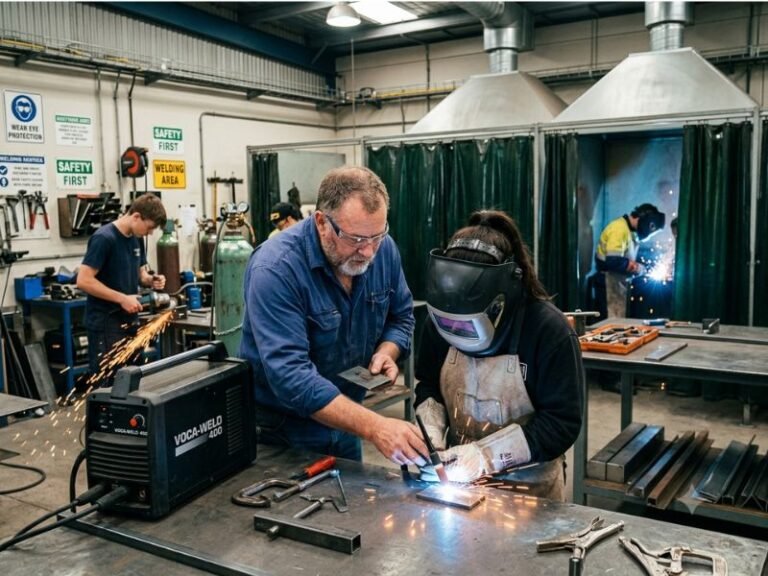
Professional welding programs provide access to welding machines, materials, and practice environments. This is important because welding is a physical skill that requires repetition.
Expert Feedback:
An experienced instructor can identify mistakes in your technique and help you improve faster.
Certification Preparation:
Many welding schools prepare students for industry-recognized tests and qualifications, which can improve employment opportunities.
Career Support:
Some programs help students with job placement, resume preparation, and connections with local employers.
Which Option Should Beginners Choose?
For most beginners, the best approach is to combine both methods.
Start with free welding training to learn:
- Welding fundamentals
- Safety practices
- Equipment basics
- Different welding processes
Once you understand the basics and know that welding is the right career choice, investing in formal training can help you develop professional-level skills.
Free training is not a replacement for hands-on education, but it can save money and make paid training more effective.
Can You Get a Welding Certification for Free?
Many beginners search for free welding certification programs because certification can improve job opportunities and earning potential. However, it is important to understand the difference between free training and official welding certification.
Free training helps you learn welding skills, but most recognized certifications require testing, evaluation, and fees.
For example, professional welding certifications usually involve:
- Written knowledge assessments
- Practical welding tests
- Qualified testing facilities
- Evaluation by certified inspectors
Organizations such as the American Welding Society (AWS) provide widely recognized welding certifications, but candidates typically need to complete formal testing requirements.
While you may not be able to receive a professional certification completely free, free training can help you prepare for certification exams by teaching:
- Welding terminology
- Safety requirements
- Welding procedures
- Equipment operation
- Common industry practices
Some employers and workforce programs may offer financial assistance, scholarships, or sponsored training that covers certification costs. Beginners should check local trade programs, community organizations, and employer training opportunities.
The smartest approach is to use free resources to build your knowledge first, then pursue certification when you are ready to enter the professional welding field.
How Long Does It Take to Learn Welding for Free?
The time required to learn welding for free depends on your learning method, practice opportunities, and the level of skill you want to achieve. Welding is a hands-on trade, so progress is usually determined by how much time you spend practicing rather than how quickly you complete lessons.
A beginner can understand basic welding concepts within a few weeks by studying free resources regularly. During this stage, you can learn welding terminology, safety procedures, equipment basics, and how different welding processes work.
However, becoming comfortable with actual welding requires practical experience. Many beginners need several months of consistent practice to improve their hand control, create cleaner welds, and understand how different materials react to heat.
A general timeline may look like this:
First Few Weeks: Understanding the Basics
During the beginning stage, focus on:
- Welding safety
- Types of welding processes
- Equipment knowledge
- Basic terminology
- Metal preparation
At this point, your goal is to build knowledge before focusing heavily on technique.
One to Six Months: Developing Basic Welding Skills
With regular practice, beginners can start improving:
- Weld bead consistency
- Travel speed control
- Electrode or torch movement
- Machine adjustments
- Basic joint welding
Practice frequency makes a major difference. Someone practicing several times per week will usually improve much faster than someone only studying occasionally.
Six Months and Beyond: Building Job-Ready Skills
Becoming ready for professional welding work often takes longer because professional welders need experience with different materials, positions, and welding requirements.
At this stage, learners may focus on:
- Advanced welding techniques
- Blueprint reading
- Weld inspection basics
- Industry standards
- Certification preparation
The important thing is not rushing the process. Strong welding skills come from developing good habits, practicing consistently, and learning from mistakes.
Read More About : Welding Training Jobs: How to Start a Successful Welding Career
Tips to Learn Welding Successfully Without Spending Money
Learning welding for free requires discipline and a smart approach. Without a paid instructor guiding you, you need to create your own learning system and focus on building skills step by step.
Here are some practical tips that can help beginners make better progress.
1. Learn Welding Safety Before Anything Else
Safety should always be your first priority. Before practicing welding, understand the risks involved and learn how to protect yourself.
Study:
- Proper welding PPE
- Ventilation requirements
- Fire safety
- Electrical hazards
- Safe equipment handling
A strong safety foundation helps prevent accidents and creates professional habits from the beginning.
2. Focus on One Welding Process First
Many beginners try to learn every welding method at the same time, which can slow progress.
Instead, choose one process and build your fundamentals.
For example:
- MIG welding is often easier for beginners
- TIG welding requires more precision
- Stick welding is useful for outdoor and industrial applications
Mastering one process first will make it easier to understand others later.
3. Practice as Often as Possible
Welding is learned through repetition. Reading and watching videos can provide knowledge, but your hands need practice to develop control.
Try to practice:
- Straight weld beads
- Different joint types
- Various material thicknesses
- Different welding positions
Regular short practice sessions are usually more effective than occasional long sessions.
4. Learn From Experienced Welders
One of the fastest ways to improve is by getting feedback from someone with welding experience.
Experienced welders can help you identify:
- Incorrect technique
- Poor machine settings
- Safety mistakes
- Weld quality problems
Joining welding communities, forums, or local groups can provide valuable advice.
5. Document Your Progress
Keeping track of your learning journey can help you see improvement over time.
Take notes about:
- Machine settings
- Materials used
- Problems you encountered
- Techniques that worked
Taking pictures of your welds can also help you compare your progress and identify areas for improvement.
6. Build Small Projects
Once you understand basic techniques, start creating simple projects. Small projects help you apply your skills and gain confidence.
Beginner-friendly projects may include:
- Simple brackets
- Metal stands
- Small frames
- Repair projects
Projects teach practical skills that basic practice exercises cannot always provide.
Common Mistakes Beginners Make When Learning Welding Free
Free welding training can be a great way to start learning, but beginners often make mistakes that slow down their progress. Without a formal instructor, it is easier to develop incorrect habits or misunderstand important concepts.
Knowing these common mistakes can help you avoid frustration and improve your welding skills faster.
1. Ignoring Welding Safety
One of the biggest mistakes beginners make is focusing on creating welds before learning proper safety practices.
Welding involves intense heat, sparks, harmful fumes, and bright ultraviolet radiation that can damage your eyes and skin. Beginners should always understand:
- Proper personal protective equipment (PPE)
- Safe workspace setup
- Ventilation requirements
- Fire prevention
- Electrical safety
A good welder does not only create strong welds; they also know how to work safely.
2. Learning From Unreliable Sources
The internet provides thousands of free welding tutorials, but not every source provides accurate information.
Some beginners follow advice from inexperienced creators and develop poor techniques that are difficult to correct later.
When choosing free welding resources, look for:
- Experienced welders or instructors
- Clear explanations
- Real demonstrations
- Safety-focused content
- Professional recommendations
Learning from reliable sources helps you build correct fundamentals from the beginning.
3. Buying Equipment Before Learning the Basics
Many beginners make the mistake of purchasing expensive welding machines and tools before understanding what they actually need.
Before buying equipment, learn:
- Which welding process suits your goals
- What materials you will work with
- Which tools are essential
- What safety equipment is required
Starting with knowledge first can prevent wasting money on equipment that does not match your needs.
4. Expecting Perfect Welds Immediately
Welding requires practice, patience, and repetition. Many beginners become discouraged because their first welds do not look professional.
Common early problems include:
- Uneven weld beads
- Excessive spatter
- Poor penetration
- Incorrect travel speed
- Inconsistent movement
These problems are normal during the learning process. Improvement comes from analyzing mistakes and practicing consistently.
5. Skipping Welding Theory
Some beginners want to practice immediately and ignore the technical side of welding. While hands-on practice is essential, understanding welding principles makes learning much easier.
Important topics include:
- Heat control
- Metal properties
- Welding positions
- Joint design
- Welding symbols
- Equipment settings
Theory helps you understand why a weld succeeds or fails.
6. Trying Advanced Techniques Too Early
Another common mistake is attempting complex welding projects before mastering basic skills.
Beginners should first focus on:
- Creating consistent weld beads
- Controlling movement
- Preparing metal correctly
- Understanding machine settings
Advanced techniques become easier once the fundamentals are strong.
Frequently Asked Questions About Free Welding Training
Is Free Welding Training Worth It?
Yes, free welding training is worth it for beginners who want to explore welding or build foundational knowledge. It can teach important concepts such as safety, welding processes, equipment basics, and terminology.
However, free training alone may not be enough for someone who wants to become a professional welder. Real welding ability requires hands-on practice and, in many cases, formal training or certification.
Can I Become a Welder Without Going to School?
Yes, some people become welders without attending a traditional welding school. Many learn through apprenticeships, employer training programs, self-study, and practical experience.
However, attending a welding program can make the learning process faster by providing structured lessons, equipment access, and instructor feedback.
Where Can I Learn Welding Online for Free?
You can learn welding online through:
- Free welding videos
- Manufacturer training resources
- Educational websites
- Welding communities
- Trade organization materials
Online resources are especially useful for learning theory, safety, and basic techniques before getting hands-on experience.
Can YouTube Teach Me Welding?
YouTube can teach many welding fundamentals, including equipment setup, safety, and basic techniques. Many experienced welders share valuable demonstrations and tips.
However, watching videos cannot replace real practice. Welding is a physical skill that requires developing hand control, timing, and experience with actual materials.
How Should Beginners Start Learning Welding?
Beginners should start by learning welding safety, understanding different welding processes, and studying basic equipment. After building foundational knowledge, they should practice simple welds and gradually move toward more advanced projects.
A combination of free education, hands-on practice, and guidance from experienced welders is the best way to develop strong welding skills.
Conclusion: Start Your Welding Journey With Free Training
Free welding training is a practical way to begin learning one of the world’s most valuable skilled trades. With online resources, community programs, and practice opportunities, beginners can build a strong foundation without spending a large amount of money.
While free training may not replace professional welding education or certification, it can help you understand the basics, develop confidence, and prepare for future career opportunities.
The key to success is consistency. Learn the fundamentals, practice regularly, follow proper safety procedures, and continue improving your skills. With dedication and the right resources, free welding training can be the first step toward becoming a skilled welder.