Union Welder Salary: Essential Information and Useful Advice
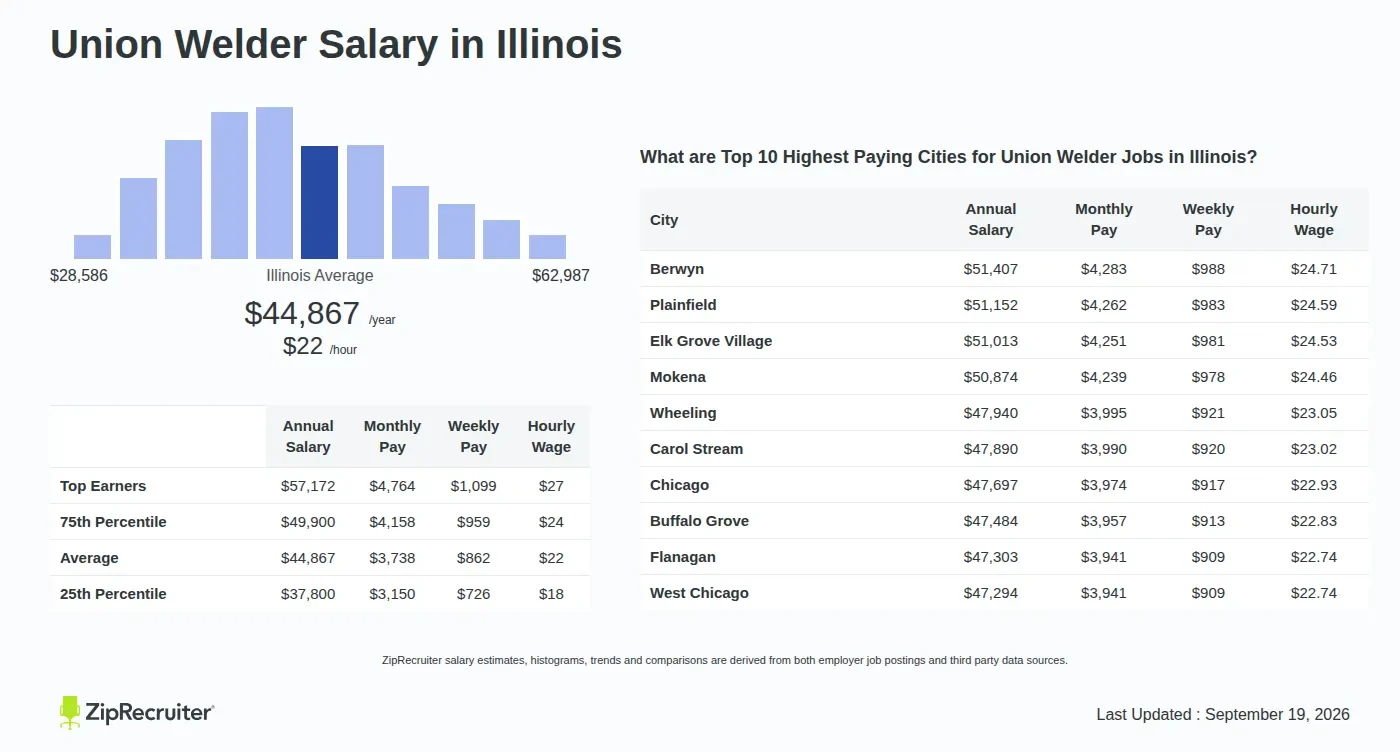
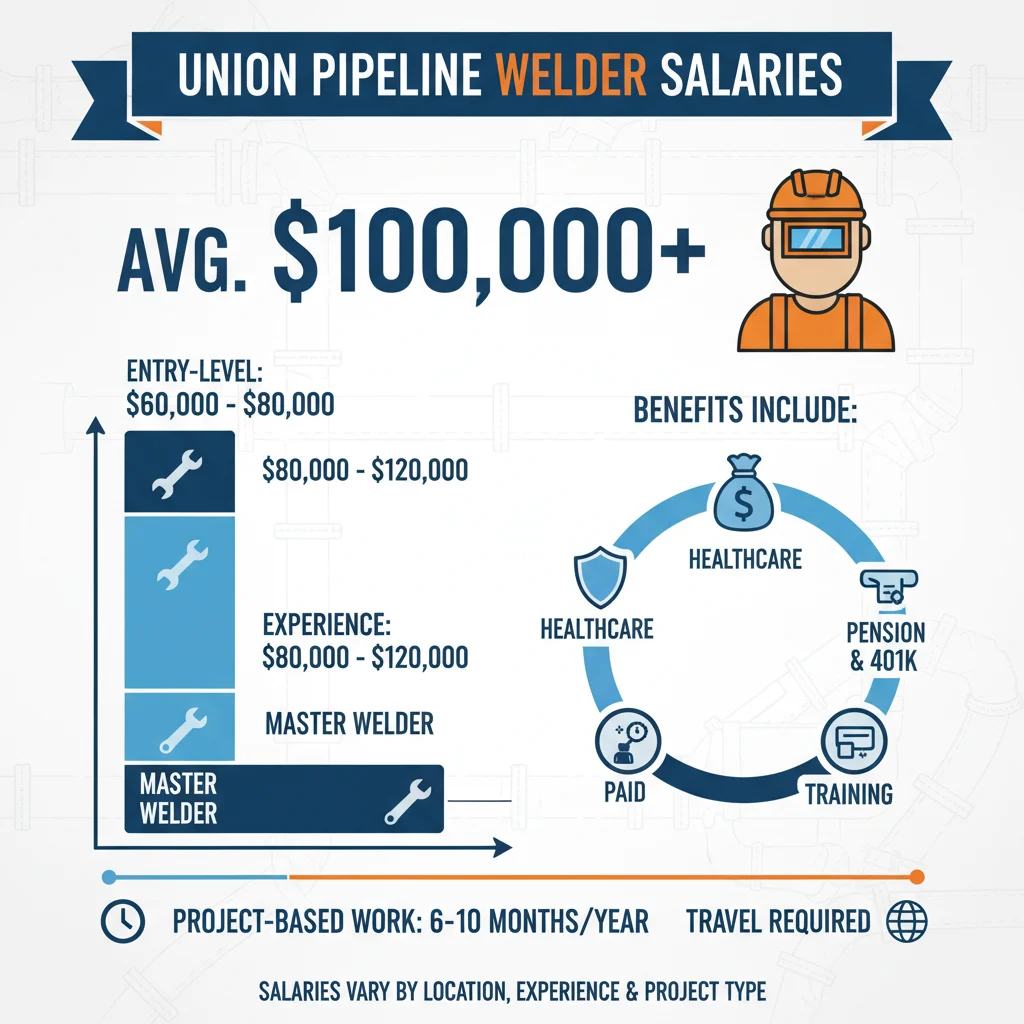
A union welder in the United States may earn roughly $45,000 to more than $100,000 annually, depending on trade, location, experience, overtime, and benefits.
Union welder salary is not one fixed number. A first-year apprentice in a lower-cost area may earn far less than a certified journeyperson working shutdowns, heavy industrial projects, or sustained overtime in a high-wage market.
Are you comparing a union apprenticeship with a nonunion offer or deciding whether a posted hourly rate is truly enough for your household This guide explains how wage.
You will learn how to read a union wage package estimate take-home pay without confusing gross and total compensation compare locations and specialties identify common assumptions that lead.
- ✓Union welding pay is usually governed by a local agreement, classification, experience level, and project type rather than a national rate.
- ✓Apprentices generally earn a defined percentage of journeyperson wages while receiving structured training and benefits.
- ✓Overtime, per diem, travel, shift premiums, and steady work can raise annual earnings substantially, but they are not guaranteed.
- ✓Total compensation includes health coverage, retirement contributions, paid leave where offered, and other employer-paid benefits.
- ✓The best offer is the one that combines a credible wage, reliable hours, safe conditions, and benefits you can actually use.
How Union Welder Salary Is Actually Set
Union welding pay is typically established through a collective bargaining agreement between a local union and signatory contractors. The agreement may define minimum hourly rates for apprentices, journeypersons, forepersons, specialty classifications, and particular types of work.
That structure makes union compensation more predictable than an informal promise from an individual employer but it does not make every union welder s paycheck identical A pipe.
- Base wage: The hourly amount paid directly to the worker before taxes, dues, and other deductions.
- Classification: The job category that determines whether you are paid as an apprentice, journeyperson, foreperson, specialist, or another level.
- Package value: Employer-paid health, pension, annuity, training, and other contributions added to the wage.
- Work rules: Provisions covering overtime, holidays, shift differentials, travel, call-outs, and minimum reporting pay.
Local agreements can also separate wages by geographic zone A contractor may pay one rate inside a metropolitan.
Why national salary averages can mislead
Online salary estimates often combine employees with different titles industries and experience levels A general welder average may.
Union figures can be difficult to compare with those averages because a union posting may show only the wage while the employer also contributes to a pension and.
For a useful comparison, separate three figures: cash wage, annual gross pay, and total compensation. Those numbers answer different questions and should not be treated as interchangeable.
Union Welder Salary by Career Stage
Career stage is one of the clearest influences on pay. Union apprentices normally progress through a formal training schedule, while journeypersons receive the negotiated top rate for their classification after meeting program requirements.
An apprentice may spend part of the year in classroom or lab training and part of the year.
- Entry apprentice: Lower starting wages are balanced by structured instruction, supervised work, and a path toward recognized credentials.
- Advanced apprentice: Pay generally rises as skill, logged hours, classroom performance, and responsibility increase.
- Journeyperson: The worker has completed the applicable training requirements and can usually perform qualified work with less direct supervision.
- Lead or foreperson: Additional responsibility may bring a premium for coordinating crews, interpreting drawings, managing production, or overseeing safety and quality.
Apprenticeship pay and the first-year reality
Apprentices should evaluate more than the first hourly rate. A lower starting wage can be reasonable if the program provides quality instruction, progressive increases, recognized credentials, consistent work opportunities, and benefits that begin early.
However you will eventually make the top rate is not enough by itself Ask how many hours apprentices.
Apprentices should also budget for tools, transportation, work clothing, certification tests, union dues, and periods between assignments. These expenses can make the first year feel much less profitable than the posted wage suggests.
Journeyperson and senior earnings
A journeyperson s normal annual income depends heavily on hours worked For example an hourly rate can look attractive on paper but produce a modest annual total if.
Senior welders can improve their earnings by developing scarce skills qualifying for difficult processes passing employer or project tests taking lead responsibilities or becoming reliable across multiple work.
Still a higher rate does not automatically mean a better career Long travel night shifts hazardous conditions and extended rotations can affect health family obligations and the ability.
What Raises or Lowers Union Welder Salary?
Several variables can move a welder s annual earnings by thousands of dollars without changing the worker s.
Two welders with similar technical ability may earn different amounts because one works a busy industrial shutdown and the other is waiting for a commercial project to begin.
- Specialty: Pipe, pressure-vessel, aerospace, shipbuilding, structural, and other demanding work may have different rates and testing requirements.
- Location: Wage scales often reflect local construction costs, contractor demand, prevailing project rates, and labor availability.
- Hours: Annual earnings rise with steady scheduling, overtime, call-outs, and shutdown work, but hours can fluctuate.
- Credentials: Process qualifications, safety training, blueprint skills, and documented experience can improve access to higher-paying assignments.
Specialty and process qualifications
Welding is a broad occupation. Skills in shielded metal arc welding, gas tungsten arc welding, flux-cored arc welding, gas metal arc welding, and specialized pipe or structural procedures may lead to different opportunities.
Employers may test a welder for a specific position material thickness joint design or process A certificate by itself does not guarantee a premium its value comes from. This is an important consideration for union welder salary.
Pipe and pressure-related work often demands careful fit-up position control code compliance inspection awareness and the ability to pass practical tests Structural work may emphasize production layout prints.
Overtime, shifts, and shutdowns
Overtime can substantially increase annual gross pay because it is often paid at a premium after a defined number of hours. Night shifts, weekends, holidays, and emergency call-outs may also carry different rules under the agreement.
Shutdowns and turnarounds can create intense periods of work at industrial sites They may offer long days travel allowances and per diem but the assignment can end quickly.
Do not build a household budget around the maximum overtime scenario A sound estimate should include a normal-hours.
Travel, per diem, and remote work
Travel assignments may look highly lucrative because they combine wages with per diem mileage lodging or other allowances.
Ask who pays for lodging how travel time is handled whether you must share accommodations and what happens when weather or material delays stop production Also calculate the.
A distant job can produce a larger annual number while leaving less usable money than a local job with consistent hours. Compare the full arrangement rather than focusing on the headline hourly rate.
Hourly Wage, Annual Pay, and Total Compensation
Many compensation misunderstandings begin with a simple multiplication: hourly rate multiplied by 2,080 hours. That estimate assumes 40 paid hours every week for 52 weeks, which may not match a construction or industrial career.
Union welders may experience layoffs, weather interruptions, project gaps, unpaid travel, training periods, or seasonal slowdowns. Some may work substantially more than 2,080 hours through overtime, while others may not receive a full year of scheduled work.
- Cash wages: Multiply the regular rate by realistic paid hours, then add only overtime you reasonably expect to work.
- Deductions: Account for taxes, union dues, insurance premiums if applicable, retirement deductions, and other payroll items.
- Employer benefits: Add the value of health, pension, annuity, training, and other contributions, but do not treat them as spendable cash.
- Reliability: Reduce optimistic estimates for likely gaps between projects, seasonal work, or uncertain overtime.
A practical calculation
Suppose a worker earns a regular hourly rate and expects a realistic number of straight-time hours plus some overtime. The estimate should be calculated separately:
- Multiply regular hours by the regular hourly rate.
- Multiply expected overtime hours by the applicable overtime rate.
- Add taxable allowances or premiums only if the agreement and assignment make them reasonably likely.
- Subtract expected unpaid gaps, if you are estimating annual income rather than a full-year theoretical wage.
- Review the result against actual pay records or typical hours reported by the local.
This produces an estimate of annual gross wages, not take-home pay. Taxes and deductions vary by state, filing situation, benefits elections, and retirement contributions, so a gross figure should never be presented as money available for spending.
Why benefits matter
Employer-paid health coverage can reduce the amount a worker would otherwise spend on premiums and eligible medical costs. Retirement contributions may also be significant, especially when a plan receives employer payments for each covered hour.
Benefits have conditions though A health plan may require a minimum number of hours or a self-payment during.
When comparing offers request the current benefit breakdown in writing Ask whether the stated package is paid on.
Regional Differences in Union Welding Pay
Location strongly affects compensation because union wages reflect local labor markets and project economics. Large metropolitan areas, ports, energy centers, manufacturing corridors, and regions with significant infrastructure spending may offer stronger rates or more frequent specialty work.
Higher wages do not automatically create a higher standard of living Housing transportation taxes insurance childcare and food may cost much more in a high-wage city A lower.
- Find the correct local: Confirm which union local and agreement cover the actual job, not merely the city where a recruiter is located.
- Compare living costs: Estimate rent or mortgage, commuting, utilities, taxes, and family expenses before treating a higher wage as better.
- Measure work continuity: Ask whether projects follow one another or whether workers commonly travel or wait for dispatch.
- Check jurisdiction rules: Traveling into another area may involve referral procedures, permits, or different benefit arrangements.
Prevailing wage projects can also affect the local market Public construction and certain federally connected projects may require specified wage and benefit levels under applicable rules The exact. These practical limitations also matter for union welder salary.
Relocation and commuting decisions
Before moving for a higher rate, calculate the break-even point. Include moving costs, deposits, licensing or testing expenses, lost work during the transition, travel home, and the possibility that the project ends earlier than expected.
Commuting can create a similar problem A long drive consumes fuel vehicle maintenance unpaid time and personal energy A job that pays several dollars more per hour may.
How to Evaluate a Union Welding Job Offer
A credible offer should explain more than a wage number. You need to know the classification, expected schedule, agreement, benefit package, worksite, duration, and conditions under which the assignment may change.
Verbal descriptions can be incomplete because a recruiter may quote the top rate a gross package or the.
- Confirm classification: Make sure the rate matches the welding duties, required tests, and level of responsibility.
- Request the package: Separate direct wages from health, retirement, training, and other employer contributions.
- Clarify hours: Ask about start date, expected weekly hours, overtime frequency, project duration, and layoff practices.
- Understand travel terms: Verify per diem, lodging, mileage, travel time, parking, and reporting requirements.
Questions worth asking before accepting
- Is this a permanent placement, a project assignment, or a temporary shutdown?
- Which agreement governs the position, and when does the wage schedule expire or change?
- What is the current rate for my exact classification?
- Are benefits paid for every hour worked, and when does coverage begin?
- How often do workers experience gaps between assignments?
- Are tools, consumables, protective equipment, and testing costs supplied or deducted from the worker?
- What are the normal shift, overtime expectations, and weekend requirements?
- Who handles dispatch, and what happens if the contractor reduces the crew?
Red flags in compensation discussions
Be cautious when someone advertises an annual salary without stating expected hours. A large number may assume constant overtime that is unavailable during ordinary weeks.
Another warning sign is combining base wage benefits per diem and overtime into one figure without identifying each.
Unclear deductions, pressure to pay unusual recruiting fees, unsafe work expectations, missing written terms, or refusal to identify the contractor should also receive serious attention. A strong opportunity should withstand reasonable questions about pay and working conditions.
Improving Long-Term Earnings as a Union Welder
Higher earnings usually come from becoming useful in more situations, not simply collecting credentials. Contractors value welders who can read drawings, fit accurately, maintain production, document work, respond to inspection findings, and work safely without constant correction.
Reliability is especially important in project-based industries. Showing up prepared, maintaining tools, communicating problems early, and following procedures can improve a worker’s reputation and increase access to desirable calls.
- Build complementary skills: Strengthen blueprint reading, layout, fit-up, rigging awareness, inspection basics, and digital documentation.
- Track qualifications: Keep copies of tests, training records, safety cards, logged hours, and employment details.
- Choose training strategically: Prioritize credentials that local contractors actually request rather than collecting unrelated certificates.
- Protect your work capacity: Use appropriate protective equipment, follow ventilation requirements, and address injuries before they become career-limiting problems.
Certifications and testing
Certification can open a door, but practical performance keeps it open. A welder may need to pass a test for a particular process and position even after completing a general training program.
Ask the local or contractor which qualifications are in demand before paying for preparation Training that matches nearby.
Moving into leadership
Forepersons and leads may earn more because they coordinate people sequence work solve field problems review drawings communicate with supervisors and help maintain safety and quality Leadership can.
The trade-off is greater accountability. A lead may spend less time welding and more time handling schedule changes, documentation, material issues, crew questions, and production pressure. It is not automatically a better fit for every experienced welder.
Common Mistakes When Estimating Pay
Estimating earnings becomes unreliable when workers use the highest advertised rate, assume 52 paid weeks, or ignore the value and limitations of benefits. A careful estimate should reflect the job’s actual schedule and the worker’s likely circumstances.
- Using the top rate for an apprentice: Apprentices usually progress through wage steps rather than starting at the journeyperson rate.
- Counting overtime as guaranteed: Overtime depends on project demand, weather, staffing, and contract rules.
- Ignoring downtime: Gaps between assignments can reduce annual gross income even when the hourly rate is strong.
- Comparing package to paycheck: Employer benefits may be valuable but are not cash wages available for immediate expenses.
Another mistake is ignoring taxes and deductions when planning a household budget A gross annual figure is useful.
Finally avoid assuming that a specialty will remain in demand everywhere Welding markets can change with plant closures construction cycles energy investment public spending and contractor.
FAQ About Union Welder Salary
What is a typical union welder salary in the United States?
A broad estimate may range from about 45 000 to more than 100 000 in annual gross wages.
Location, paid hours, overtime, benefits, and project type matter as much as the job title. The applicable local wage sheet is more useful than a national average.
Do union welders make more than nonunion welders?
They can particularly when the union package includes strong health and retirement contributions premium overtime rules and access.
Compare the complete arrangement: base pay, total benefits, hours, safety, travel, advancement, and job stability. There is no universal winner based on union status alone.
How much do union welding apprentices make?
Apprentices generally earn a percentage of the negotiated journeyperson wage, with increases as they complete training and accumulate qualifying hours. The starting percentage and progression differ by local, trade, and agreement.
Ask for the complete wage schedule rather than an estimated endpoint. Also confirm whether classroom hours, benefits, tools, and required testing create costs that reduce your early take-home pay.
Can overtime double a union welder’s annual income?
In an unusually busy year, extensive overtime can produce a major increase, especially during shutdowns or urgent industrial work. It should not be treated as a normal guarantee because projects, weather, staffing, and contractor budgets can change.
Build your primary budget around expected straight-time work and use overtime for savings, debt reduction, or specific goals whenever possible.
Does a union wage package include health insurance and retirement?
Many union agreements include employer contributions toward health coverage, pension plans, annuities, training, or related funds, but the combination varies. Some benefits may require a minimum number of hours or may change during a work gap.
Request the current written breakdown and ask what portion is paid directly to you. This prevents confusion between cash wages and total compensation.
What type of welding pays the most in a union?
Higher-paying opportunities are often associated with difficult qualifications, specialized materials or positions, industrial maintenance, pressure-related work, major infrastructure, shipbuilding, or demanding travel assignments. The highest rate in one region may not be the highest practical opportunity in another.
Demand, testing, work conditions, and available hours determine actual earnings. A specialty that pays more per hour but offers only short assignments may produce less annual income than steady work at a lower rate.
How can I verify a quoted union welding wage?
Identify the union local, contractor, project classification, and agreement that apply. Then request the current wage sheet or compensation schedule from the local hall, apprenticeship program, hiring office, or authorized contractor representative.
Verify the base wage, benefit contributions, overtime rules, travel terms, and expected hours separately. Do not rely on a single total number presented without a written breakdown.
Conclusion
Union welder salary is best understood as a compensation range shaped by local agreements career stage specialty hours travel overtime and benefits The most realistic estimate separates direct.
Before accepting a position verify the classification wage sheet benefit rules project duration travel costs and likely gaps.
Contact the applicable union local and request the current wage-and-benefit schedule, then calculate three scenarios—low hours, normal hours, and overtime—before comparing the offer with your living costs.