What Does a Welder Do — A Clear Definition with Real Examples
A welder joins metal parts by applying heat, pressure, or both, then inspects the finished joint for strength and accuracy. Welders work in manufacturing, construction, repair, fabrication, and many other industries.
Understanding what does a welder do starts with more than the image of someone holding a torch. The job combines metal preparation, equipment setup, blueprint reading, controlled hand movement, inspection, and careful decisions about heat, materials, and joint design.
The practical stakes are significant A sound weld can keep a structural frame aligned prevent a leak in a pipe or help a machine operate safely for years.
This guide explains the daily responsibilities major welding methods workplace differences tools qualifications safety practices quality checks and realistic examples that define the occupation By the end you.
- ✓Welders create permanent joints by controlling heat, pressure, filler metal, and movement.
- ✓The job includes preparation, measurement, interpretation of drawings, inspection, and documentation—not just making an arc.
- ✓Process choice depends on the metals, joint design, thickness, location, production speed, and required appearance.
- ✓Safety depends on ventilation, protective equipment, fire control, electrical awareness, and safe handling of materials.
- ✓Good weld quality is judged by fit, penetration, profile, cleanliness, strength, and compliance with job requirements.
What Does a Welder Do on a Typical
A welder prepares metal components and joins them according to a drawing work order procedure or repair requirement The work may involve steel stainless steel aluminum nickel alloys.
Before striking an arc the welder identifies the material checks dimensions cleans the joint area selects the appropriate process and confirms that the pieces are positioned correctly During.
- Prepare the joint: Cut, bevel, fit, clamp, clean, and align parts so the weld can fuse them correctly.
- Interpret requirements: Read drawings, symbols, measurements, material specifications, and welding procedures.
- Control the process: Set equipment and maintain consistent heat, movement, shielding, and filler-metal placement.
- Verify the result: Inspect the bead, measure the assembly, correct problems, and record required information.
Preparation is part of welding
Much of a welder s success is determined before the equipment is turned on A dirty oily painted or rusty surface can introduce contamination An incorrect gap can.
Preparation can include using a band saw chop saw plasma cutter oxyfuel torch grinder drill or machining tool The welder may mark cut lines remove burrs create a.
Welding is controlled joining, not simply melting metal
The operator creates a small molten pool at the joint and moves it so the base metals and when needed a filler metal fuse together Shielding gas or.
Too little heat may produce an incomplete bond Too much heat can burn through thin material distort the assembly enlarge the heat-affected zone or damage properties of the.
Inspection and cleanup complete the job
Once the joint cools the welder may remove slag spatter discoloration or sharp edges Visual inspection can reveal undercut cracks overlap excessive reinforcement poor tie-in pinholes and inconsistent.
A welder may repair a defective area by grinding it out and welding it again but repair is not always the best answer If the cause is incorrect.
Which Welding Processes Do Welders Use?
No single welding method is best for every job. Process selection depends on metal type, thickness, joint position, required strength, appearance, production volume, available equipment, and the environment where the work will occur.
The most familiar processes use an electric arc but welders may also use gas flame resistance laser or.
- Material: Carbon steel, stainless steel, aluminum, and specialty alloys respond differently to heat and shielding.
- Thickness: Thin sheet may require precise low heat, while heavy plate may need multiple passes and preheating.
- Access: Tight corners, overhead joints, outdoor locations, and long seams influence equipment choice.
- Production needs: A repair may favor flexibility, while a factory may favor speed, repeatability, or automation.
| Process | How it works | Common strengths | Typical applications |
|---|---|---|---|
| Shielded metal arc welding | A flux-coated electrode creates an arc and provides filler metal. | Portable, versatile, useful outdoors | Construction, repair, structural steel |
| Gas metal arc welding | A continuously fed wire electrode and shielding gas create the arc. | Fast, productive, relatively easy to automate | Fabrication, vehicles, production work |
| Gas tungsten arc welding | A nonconsumable tungsten electrode creates the arc; filler may be added separately. | Clean, precise, excellent control | Stainless steel, aluminum, thin or visible work |
| Flux-cored arc welding | A tubular wire containing flux produces the weld; shielding may come from flux or gas. | High deposition, good outdoor capability | Heavy fabrication, construction, structural work |
| Resistance welding | Pressure and electrical resistance heat join overlapping parts. | Fast and repeatable for sheet metal | Automotive and high-volume manufacturing |
Stick welding: flexible and portable
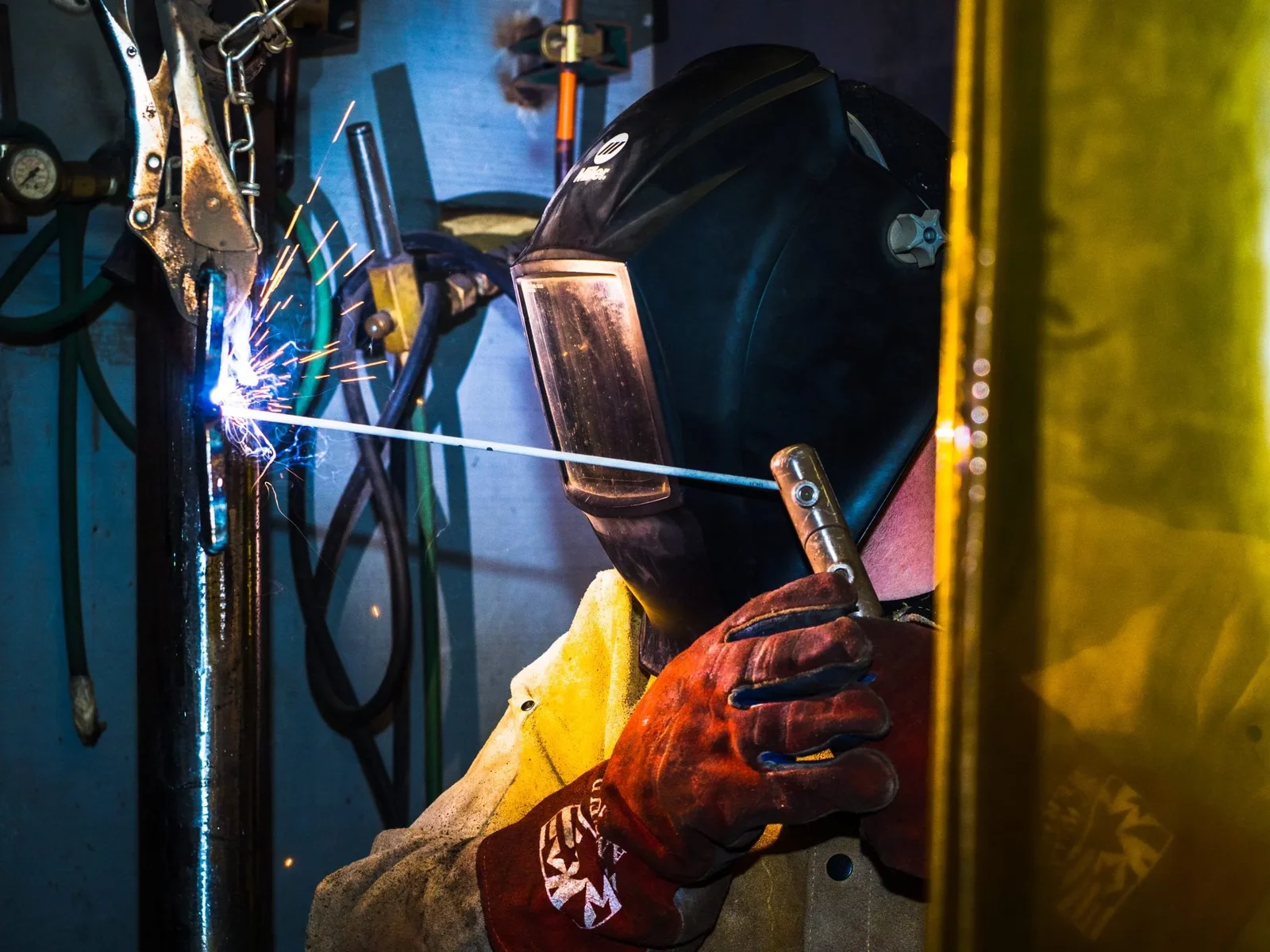
Shielded metal arc welding, commonly called stick welding, uses individual electrodes. The coating produces shielding as it burns and leaves slag that must be removed after the weld cools.
Stick equipment can be practical at a construction site or repair location because it does not require a continuous external shielding-gas supply It handles many outdoor conditions well.
MIG and flux-cored welding: productivity and reach
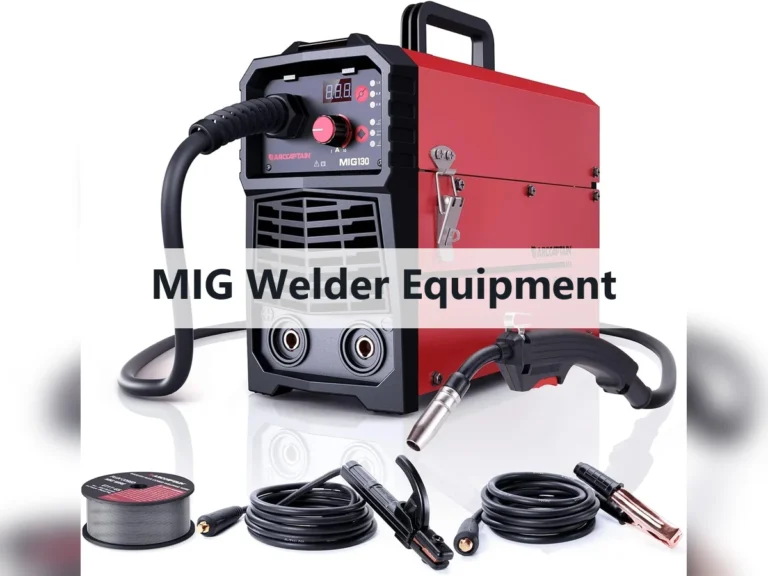
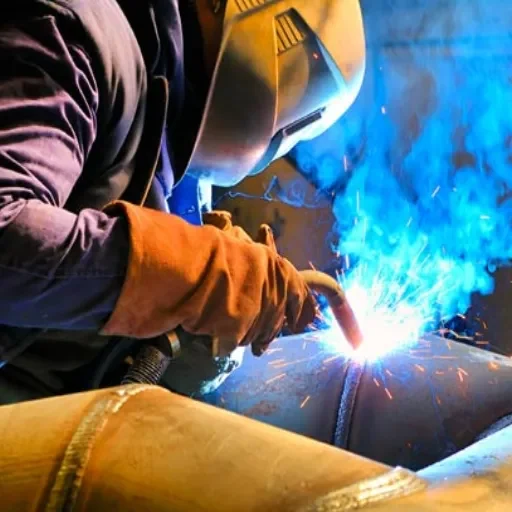
Gas metal arc welding is often called MIG welding. It feeds a solid wire through a gun while shielding gas protects the weld pool. The process can be productive and is common in shops, vehicle work, equipment repair, and manufacturing.
Flux-cored arc welding uses a tubular wire. Some flux-cored wires are self-shielded and useful outdoors, while others use an external gas. The process can deposit metal quickly, but it may create slag and more smoke than a solid-wire setup.
TIG welding: precision and appearance
Gas tungsten arc welding, or TIG, uses a tungsten electrode that does not normally become part of the weld. The welder can add filler rod separately, making it possible to control the size and shape of the bead with great precision.
TIG welding is valued for clean, attractive joints and control on thin materials or corrosion-resistant alloys. It is usually slower and more demanding than higher-productivity processes, so it may not be the economical choice for every long seam or heavy assembly.
Automation changes the operator’s role
Robotic welding does not eliminate the need for welding knowledge A skilled worker may load parts verify fit-up select wire and shielding program or adjust motion monitor the.
Where Do Welders Work?
Welders work in environments ranging from climate-controlled manufacturing plants to outdoor construction sites and confined repair areas. The setting changes the pace, hazards, tools, documentation, and level of precision expected.
In a production shop a welder may repeat the same joint hundreds of times while meeting cycle-time and quality targets In field work the welder may spend more.
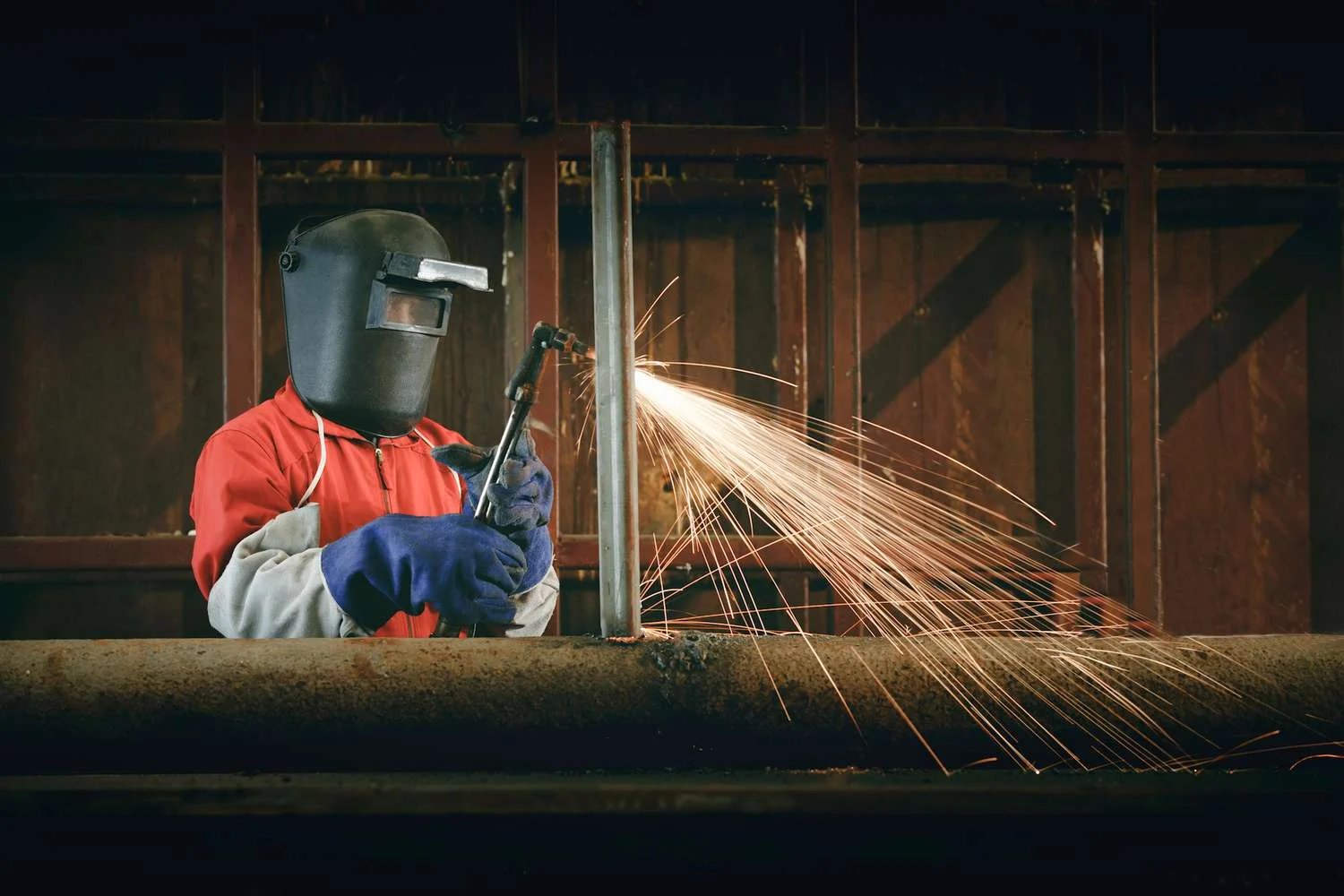
- Fabrication shop: Repeated assemblies, fixtures, powered cutting tools, and dimensional quality checks are common.
- Construction site: Position, weather, access, lifting, fire prevention, and coordination with other trades matter greatly.
- Repair operation: Diagnosis comes first because the original failure may involve fatigue, corrosion, overload, or poor design.
- Specialty facility: Cleanliness, traceability, procedure control, and inspection requirements may be especially strict.
Construction and structural welding
Construction welders may join beams, columns, braces, stairs, platforms, handrails, or reinforcing components. They often work at height, in awkward positions, or around other crews, so communication and work-area control are as important as arc technique. This distinction matters when answering “what does a welder do”.
Structural work typically requires close attention to approved procedures, joint preparation, weld size, sequence, and inspection. The finished connection must fit the design rather than merely look acceptable from a distance.
Manufacturing and fabrication
Manufacturing welders may build frames, cabinets, tanks, trailers, agricultural equipment, appliances, or industrial machinery. They often use jigs and fixtures that make positioning faster and improve repeatability.
The job can involve production quotas, but speed cannot replace quality. Excessive rework, warped parts, inconsistent dimensions, or frequent consumable changes can cost a company more than a slower, controlled operation.
Maintenance and repair
Repair welders work on damaged equipment, cracked brackets, worn shafts, leaking components, and altered assemblies. They must determine whether welding is suitable before adding metal. Some parts may be contaminated, heat-sensitive, hardened, pressurized, or unsafe to repair without disassembly.
A repair can fail again if the original cause remains. For example, welding a cracked support without correcting overload, vibration, misalignment, or corrosion may restore the appearance but not the reliability.
What Tools and Skills Does a Welder Need?
A welder uses more than a welding machine. The work may require hand tools, power tools, measuring instruments, lifting equipment, consumables, clamps, fixtures, and inspection devices. Tool selection affects accuracy, productivity, and personal safety.
The most important skill is controlled consistency. A welder must coordinate vision, hand movement, body position, sound, arc behavior, and changing conditions while following a defined requirement.
- Measurement: Use a tape, rule, square, caliper, angle gauge, or other device to verify size and alignment.
- Drawing literacy: Understand weld symbols, dimensions, notes, views, tolerances, and material callouts.
- Material awareness: Recognize how thickness, alloy, cleanliness, and heat affect the joint.
- Physical control: Maintain stable positioning, consistent travel, and safe handling of tools and workpieces.
Common tools and equipment
- Welding power source, leads, ground connection, torch, gun, or electrode holder
- Wire, electrodes, filler rods, shielding gas, flux, tips, nozzles, and related consumables
- Grinders, wire brushes, chipping hammers, files, clamps, magnets, and fixtures
- Saws, drills, plasma cutters, oxyfuel equipment, and layout tools
- Squares, levels, calipers, gauges, templates, and measuring rules
- Ventilation equipment, screens, fire extinguishers, and approved material-handling devices
Blueprints, weld symbols, and procedures
Drawings tell the welder where a joint belongs, how large it should be, which side receives the weld, and whether the weld is continuous, intermittent, grooved, fillet, plug, or another type. Notes may specify material, preparation, sequence, finish, or inspection.
A welding procedure may define the process, electrode or wire, shielding, position, electrical range, preheat, interpass temperature, and number of passes. The welder does not necessarily choose these details independently; the assignment may require following an established procedure.
Communication and judgment
Welders coordinate with fitters, fabricators, engineers, inspectors, supervisors, crane or forklift operators, and other trades. A question asked before welding can prevent a costly mistake, especially when a drawing, part, or procedure appears inconsistent.
Judgment is also needed when conditions change A joint may be inaccessible a part may arrive warped or a surface may reveal unexpected corrosion The safe response is to stop evaluate and.
How Is Weld Quality Judged?
Weld quality means the joint meets its intended requirements, not simply that the bead looks attractive. The correct standard depends on the part’s function, design, material, procedure, and inspection plan.
Visual appearance still matters because it can reveal process problems but appearance alone cannot prove internal soundness A smooth bead may hide lack of fusion incomplete penetration or.
- Fit and alignment: Confirm that the parts remain within required dimensions after welding.
- Fusion and penetration: Check that the weld bonds appropriately with the base metal and reaches the intended joint depth.
- Surface condition: Look for cracks, undercut, overlap, excessive spatter, crater defects, and visible porosity.
- Documentation: Record material, process, inspection, repair, or traceability information when the job requires it.
Common weld defects and their causes
| Problem | What it may indicate | Possible contributing factors |
|---|---|---|
| Porosity | Gas pockets in or near the weld | Contamination, moisture, inadequate shielding, drafts, or poor technique |
| Undercut | A groove melted along the edge of the weld | Excessive heat, incorrect angle, high travel speed, or poor manipulation |
| Lack of fusion | Weld metal did not bond properly with the sidewall or previous pass | Low heat, contamination, incorrect angle, or excessive travel speed |
| Cracking | A fracture in the weld or nearby metal | Stress, restraint, unsuitable procedure, contamination, or improper cooling |
| Distortion | Parts move or warp from uneven heating and cooling | Heat concentration, poor sequence, insufficient fixturing, or thin material |
Destructive and nondestructive testing
Visual testing is often the first inspection because it is immediate and inexpensive Other nondestructive methods can find defects without destroying the component Dye penetrant can reveal surface-breaking.
Ultrasonic testing uses sound waves to evaluate internal conditions, and radiographic testing creates an image that can show certain internal features. These methods require appropriate equipment, training, and interpretation; they are not interchangeable or suitable for every material and geometry.
Why distortion deserves attention
Welding adds heat unevenly, causing metal to expand and contract. If the sequence is poorly planned, a frame may pull out of square, a plate may bow, or a flange may no longer align with its mating part.
Welders control distortion through fit-up, tack placement, clamping, balanced sequence, heat management, and sometimes planned restraint. The best solution is usually prevention because straightening a distorted component can damage finishes, consume time, or introduce additional stress.
What Safety Risks Does Welding Involve?
Welding combines heat, electricity, bright ultraviolet and infrared radiation, compressed gases, fumes, sparks, heavy materials, and sometimes hazardous coatings. Safe work therefore requires more than wearing a helmet.
Required controls depend on the process and workplace. A worker should follow site procedures, equipment instructions, hazard communication requirements, and applicable regulations. Critical work may also require permits, atmospheric testing, fire watches, lockout procedures, or confined-space controls.
- Protect the eyes and skin: Use the correct helmet shade, safety glasses, gloves, clothing, boots, and coverage for the process.
- Control fumes: Use local exhaust or suitable ventilation and avoid welding unknown coatings or residues.
- Prevent fires: Remove combustibles, shield nearby workers, control sparks, and keep suitable extinguishing equipment available.
- Manage energy: Inspect leads and connections, secure cylinders, and isolate equipment when required.
Fumes and coatings
Welding fumes vary with the base metal coating electrode flux and process Paint plating galvanized surfaces degreasers and unknown residues can create additional hazards when heated Cleaning or. Keep these limitations in mind when considering “what does a welder do”.
Positioning the head out of the plume, using effective local exhaust, and selecting respiratory protection when required can reduce exposure. Respirators are not a substitute for proper ventilation or hazard assessment.
Fire, explosion, and confined spaces
Sparks and hot metal can travel farther than expected ignite hidden materials or remain hot after the job appears complete Welding on tanks drums pipes or containers that.
Confined spaces add risks involving oxygen deficiency, toxic atmospheres, restricted escape, and accumulation of shielding gas. These situations require specific workplace controls and should never be treated as ordinary shop welding.
Real Examples of a Welder’s Work
Examples make the role clearer because welding can mean very different work from one day to the next In each case the welder is responsible for more than.
Example: fabricating a steel equipment frame
A fabrication welder receives cut square tubing and a drawing for a machine frame. The welder checks lengths, removes burrs, lays out the parts, verifies diagonals, and places tack welds while checking that the frame remains square.
The welder then completes the joints in a planned sequence to limit distortion After cleaning the welds the operator checks dimensions looks for visible defects and confirms that.
Example: repairing a cracked bracket
A maintenance welder finds a crack in a bracket supporting a conveyor component Before welding the operator identifies why the crack formed checks whether the part is loaded.
The crack may need to be fully excavated, and the repair may require a specific filler, preheat, controlled sequence, or reinforcement. If the bracket failed because of inadequate design or repeated overload, simply filling the crack may provide only a temporary result.
Example: joining thin aluminum panels
A welder assembling thin aluminum panels must manage heat carefully because aluminum conducts heat quickly and can distort or burn through Cleanliness is particularly important and the operator.
The welder controls fit-up, travel speed, shielding, and heat input while watching for warping. A successful result may be judged by leak resistance, appearance, dimensions, and the absence of cracks or contamination—not just by bead size.
Example: robotic production cell
In a production cell a welder may load parts into a fixture verify orientation inspect wire and gas settings monitor the robot and check sample welds If the.
The human role includes process awareness, quality verification, troubleshooting, and safe response to alarms or equipment problems. Automation changes the workflow but does not remove responsibility for the joint.
How Does Someone Become a Welder?
People enter welding through high school programs technical schools community colleges employer training apprenticeships military experience or supervised shop work The most useful path depends on the desired.
Training commonly covers welding processes, blueprint reading, metallurgy basics, shop math, equipment setup, cutting, fit-up, safety, and inspection. Practice is essential because the operator must develop repeatable control rather than memorize settings alone.
- Build fundamentals: Learn joint types, positions, materials, process controls, measurement, and safe equipment use.
- Practice under supervision: Correct feedback helps identify poor travel, arc length, angle, fit-up, and cleaning habits.
- Choose a direction: Structural, pipe, fabrication, maintenance, aerospace, automotive, and production work have different expectations.
- Keep records: Document training, work samples, qualifications, and process experience when appropriate.
Certification and qualification
Some employers require welders to pass performance tests for specific processes, materials, positions, and procedures. A qualification is not a universal license to weld every joint; it generally applies to defined conditions and may have continuity or renewal requirements.
Requirements vary by employer, project, industry, and jurisdiction. A candidate should ask which process, material, position, thickness range, and code or procedure the job uses rather than assuming one credential covers all welding work.
Physical and workplace demands
Welding can involve standing, kneeling, climbing, lifting, reaching, working in awkward positions, and wearing protective equipment for extended periods. Some jobs are noisy, hot, dirty, outdoors, or shift-based.
Good hand-eye coordination and attention to detail help but safe habits and willingness to inspect work are equally important The occupation can offer varied career paths yet it.
Frequently Asked Questions About What Does a Welder Do
Does a welder only join metal?
No. Welders also prepare, fit, cut, clean, position, inspect, repair, and sometimes finish metal components. They may read drawings, set up machines, select consumables, document work, and troubleshoot defects.
What is the difference between a welder and a fabricator?
A welder specializes in joining materials, while a fabricator may handle the broader sequence of measuring, cutting, forming, drilling,