Welder Education Requirements: Clear Overview and Expert Insights
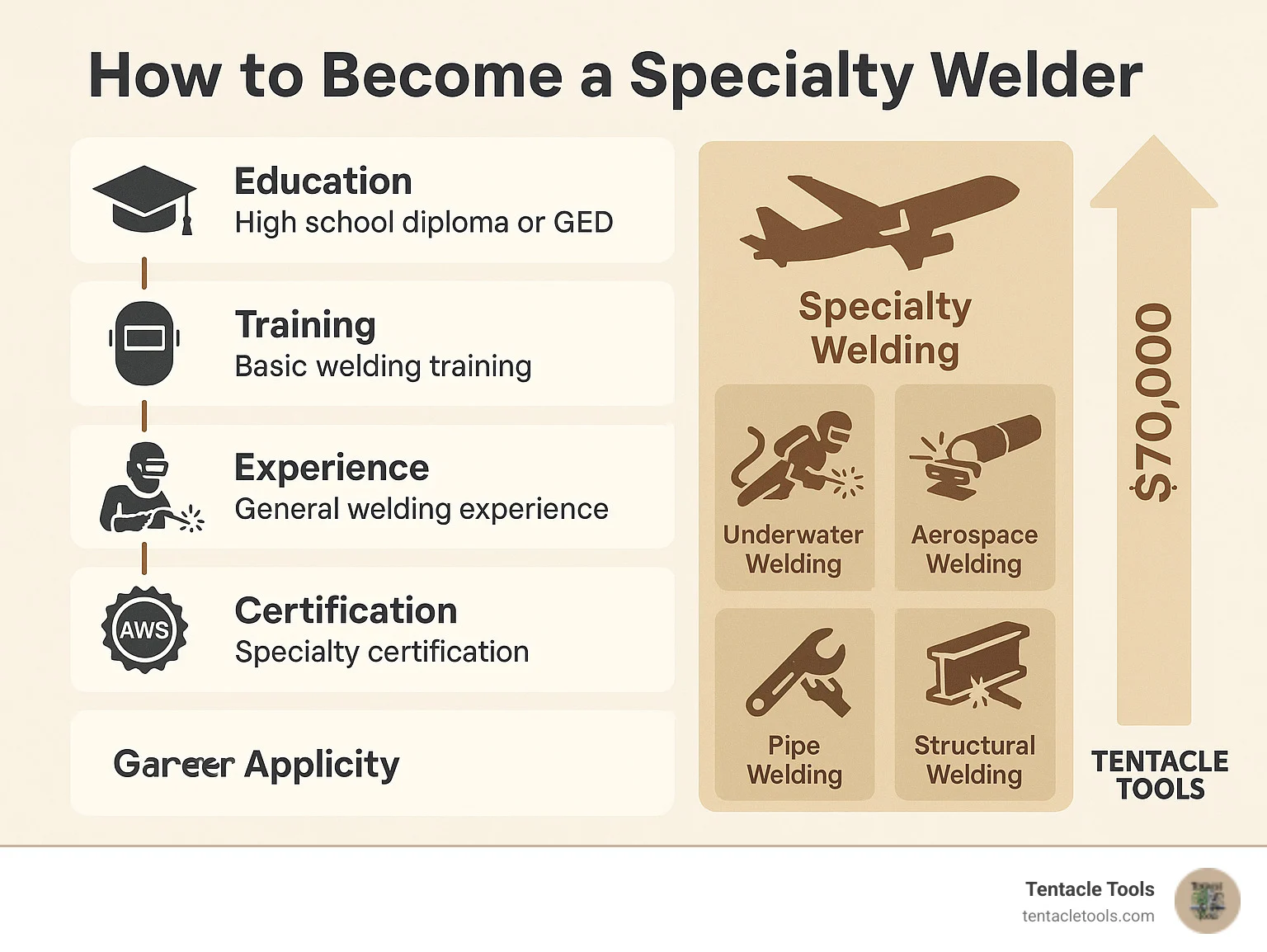
Most U.S. welding jobs require a high school diploma or equivalent, hands-on training, and process-specific skill verification; college is usually optional.
Welder education requirements vary by employer welding process worksite and industry A fabrication shop may hire someone who completed a technical certificate and passed a practical test while.
The stakes are practical Choosing the shortest training route can save time and tuition but inadequate preparation can lead to failed qualification tests rejected welds injuries or limited.
This guide explains the education levels employers commonly recognize how trade school compares with apprenticeships and community college when certification matters and which subjects make a new welder.
- ✓A diploma or equivalent is commonly preferred, but practical welding ability often matters more than a four-year degree.
- ✓Trade programs, apprenticeships, community colleges, and employer training can all lead to entry-level welding work.
- ✓Certification is usually process- and position-specific; completing school does not automatically qualify someone for every job.
- ✓Blueprint reading, measurement, safety, inspection, and communication are as important as arc control.
- ✓The best program matches the target industry, available equipment, testing requirements, and expected cost.
What Welder Education Requirements Usually Include
There is no single national license that every welder must hold before working in the United States. Employers generally evaluate a combination of education, hands-on practice, testing, work history, and the ability to follow a qualified welding procedure.
At the entry level a hiring manager may look for a high school diploma or GED basic mathematics mechanical aptitude and evidence of training Some shops hire beginners.
- Education foundation: A high school diploma or equivalent is frequently preferred, especially for apprenticeships, public employers, and larger contractors.
- Hands-on ability: Employers may inspect sample welds or administer a practical test using a specific process, material, joint, position, and thickness.
- Work readiness: Reliable attendance, reading ability, measurement skills, and willingness to follow procedures affect hiring decisions.
- Safety awareness: Candidates should understand ventilation, fire prevention, electrical hazards, protective clothing, and the limits of their training.
Formal education can range from a short introductory course to a two-year associate degree. The credential itself is not a substitute for practice: welding requires coordinated hand movement, visual judgment, heat control, and repeatable technique that develop through supervised work.
Conversely, practical experience does not eliminate every education need. A welder who can make a clean bead but cannot interpret a drawing, identify a material, or understand inspection criteria may struggle in a production environment.
Choosing a Training Path
Prospective welders usually choose among a vocational program, community college, apprenticeship, employer-sponsored training, or gradual self-directed practice. The right route depends on the desired industry, available money, schedule, and whether the learner needs a broad foundation or a fast introduction.
Programs should provide access to appropriate machines consumables metals ventilation protective equipment and instructors who can observe technique.
- Trade school: Often offers concentrated instruction in common welding processes and may prepare students for entry-level shop work in a relatively short period.
- Community college: Can combine welding labs with blueprint reading, metallurgy, math, inspection, and general education; longer programs may award a certificate or associate degree.
- Apprenticeship: Blends paid or structured on-the-job training with classroom instruction, but openings can be competitive and may be tied to a union, contractor, or regional program.
- Employer training: Provides job-specific instruction and may be affordable, though it can limit exposure to processes or industries outside that company.
Trade school and certificate programs
A certificate program is often the most direct formal route for an adult changing careers Depending on the school the curriculum may cover shielded metal arc welding gas.
Before enrolling ask how many lab hours students receive whether materials and protective equipment are included which positions are practiced and whether the school administers recognized qualification tests A program s advertised length matters less than the.
Community college programs
Community colleges may offer a broader academic base and more flexible scheduling than private schools. Students can often begin with an introductory course, earn a certificate, and later continue toward an associate degree or advanced coursework.
This route can be useful for people considering inspection, welding technology, engineering support, teaching, or supervisory work. The trade-off is time: general education and broader technical classes may delay entry into full-time employment compared with a narrowly focused certificate.
Apprenticeships and paid training
An apprenticeship can be an efficient way to build experience because learning occurs around real production or construction work. Apprentices typically receive structured instruction, progressively harder assignments, and feedback tied to workplace expectations.
Applicants should verify the wage progression, training schedule, tool expenses, travel requirements, classroom location, and process coverage. An apprenticeship centered on structural steel may not provide the stainless-steel or precision TIG experience sought by a food-processing or aerospace employer.
Self-taught and informal practice
Self-directed practice can introduce a person to welding and help build familiarity before formal school. It is rarely a complete substitute for supervised training because beginners may not recognize porosity, lack of fusion, excessive penetration, distortion, unsafe electrical setups, or contaminated materials.
Home practice also carries serious fire, fume, compressed-gas, and electrical risks. Anyone using welding equipment should follow the machine instructions, maintain suitable ventilation and fire controls, and obtain competent instruction rather than treating online demonstrations as a safety qualification.
Subjects a Strong Welding Program Should Teach
Welding education is more than learning how to start an arc. A well-designed program connects process control to joint design, material behavior, inspection, production quality, and safe work habits.
Students should leave with enough technical vocabulary to understand a work order and enough practical repetition to produce consistent results They should also know when a weld is.
- Processes: Instruction should match the equipment and jobs the student hopes to pursue, such as MIG, TIG, stick, or flux-cored welding.
- Positions and joints: Flat, horizontal, vertical, and overhead work place different demands on puddle control and travel technique.
- Technical reading: Students need exposure to blueprints, welding symbols, dimensions, tolerances, joint details, and basic work instructions.
- Quality fundamentals: Training should explain visual inspection, discontinuities, distortion, fit-up, cleaning, and the difference between appearance and soundness.
Welding processes and equipment
Each process has different controls consumables advantages and limitations MIG can be productive for many shop applications TIG offers precise control but usually demands more coordination stick welding.
Beginners do not need mastery of every process immediately. They do need a clear understanding of why a process is selected and how amperage, voltage, wire speed, shielding gas, electrode choice, travel speed, and joint preparation affect the result.
Blueprints, math, and measurement
Welders routinely work with dimensions, fractions, decimals, angles, material thicknesses, and tolerances. Basic algebra may be useful for setup calculations, while geometry helps with fit-up, bevels, and joint alignment.
Blueprint reading includes recognizing views, section details, weld symbols, reference lines, dimensions, notes, and revision information. A technically attractive weld can still be wrong if it is placed in the wrong location or made larger or smaller than the drawing requires.
Metallurgy and material identification
Heat changes metal. Students should learn how carbon steel, stainless steel, aluminum, and other alloys respond to heat, contamination, cooling, and incorrect filler selection. They should also understand that similar-looking materials may require different preparation or procedures.
Material identification reduces the chance of mixing incompatible filler metals or using an unsuitable process. It also helps welders recognize when preheating, interpass temperature control, post-weld treatment, or special cleaning is required by the job specification.
Inspection and quality control
Entry-level welders commonly begin with visual inspection but quality programs may also use dye penetrant magnetic particle ultrasonic or radiographic examination Welders do not necessarily perform every test. This is an important consideration for welder education requirements.
Training should emphasize prevention rather than repair. Clean surfaces, correct fit-up, proper settings, controlled technique, and careful adherence to the applicable procedure generally produce better results than relying on grinding and rewelding after a defect appears.
Safety and health practices
Welding hazards include ultraviolet radiation hot metal sparks fumes gases electrical energy noise fire explosions and awkward working positions The exact controls depend on the process and workplace.
Protective equipment may include a correctly shaded helmet, safety glasses, flame-resistant clothing, gloves, hearing protection, and suitable footwear. Personal protective equipment is important, but it does not replace eliminating combustible materials, controlling fumes, inspecting equipment, or following site rules.
How Certification and Qualification Fit In
Certification and qualification are related but not identical. A training certificate usually shows that a person completed a course. A welder qualification test demonstrates that the person produced an acceptable weld under specified conditions.
Many employers care most about whether an applicant can pass the test associated with the actual job The test may specify the welding process base metal filler metal.
- Read the scope: A credential may apply only to particular processes, positions, materials, thickness ranges, or procedures.
- Separate school from testing: Completing a class does not necessarily create an employer-recognized qualification.
- Check continuity: Some qualifications depend on documented ongoing work or periodic renewal requirements.
- Match the target: Ask the employer which standards, tests, and records are accepted before paying for an unrelated credential.
What a practical test measures
A practical test may evaluate fit-up, machine setup, electrode or torch control, travel angle, travel speed, starts and stops, cleaning between passes, and final appearance. It may also include destructive or nondestructive examination rather than visual review alone.
Preparation should focus on the exact test conditions when they are known. Practicing only flat-position fillet welds will not fully prepare someone for a vertical groove weld on thicker material with a different process.
When certification has the greatest value
Certification or documented qualification can be especially valuable in structural work, pressure-related applications, shipbuilding, pipelines, transportation, utilities, and other settings where weld failure can threaten safety or cause expensive damage. Contractors may also need records to satisfy project specifications.
In some small fabrication shops, a supervisor may rely primarily on an in-house test and observed performance. That does not make formal credentials useless; it means their hiring value depends on the local market and the work being performed.
Cost, Time, and Return on Training
The cost of becoming employable varies widely. A short introductory class may cost far less than a multi-semester program, while an apprenticeship may reduce tuition but require a competitive application and a long-term commitment.
Tuition is only one part of the budget Students may also need a helmet jacket gloves boots eye protection tools transportation books test fees and time away from.
- Ask for the full estimate: Include tuition, fees, supplies, protective equipment, transportation, and retesting.
- Compare lab access: More scheduled practice may produce better value than a shorter course with limited machine time.
- Confirm outcomes: Look for transparent information about completion, job placement practices, employer partnerships, and available processes.
- Protect flexibility: Choose a program whose schedule and credential can support the next step if the first job is not the final goal.
Time to employment depends on prior experience dexterity attendance local demand and the process being learned A student may become ready for an entry-level production role after a.
The strongest return usually comes from training that combines practical repetition with skills that transfer between employers. Blueprint reading, measurement, safety, inspection awareness, and disciplined setup remain valuable even when the machine, material, or product changes.
Employer, State, and Industry Differences
Welder education requirements can change substantially from one workplace to another. A private manufacturing shop may train entry-level employees internally, whereas a public infrastructure contractor may impose project-specific qualifications and documentation.
State rules also vary depending on the work. Welding itself is not governed by one universal state license, but local building codes, contractor licensing rules, transportation regulations, public-works specifications, and workplace requirements may affect who can perform or supervise certain tasks.
- Manufacturing: Repetition, print reading, production pace, quality records, and comfort with fixtures may matter most.
- Construction: Mobility, outdoor conditions, elevated work, site safety, and position-specific testing can be central.
- Pipe and pressure work: Tight fit-up, specialized procedures, demanding positions, and rigorous inspection may be expected.
- Aerospace or precision fabrication: Cleanliness, documentation, traceability, fine control, and strict tolerances may outweigh speed.
Job postings are useful but should be read carefully Certified welder may mean a formal qualification an employer test or simply demonstrated competence depending on the company Applicants.
Common Mistakes When Planning Welding Education
Many beginners choose a program based only on length or advertised job claims. That approach can overlook the equipment, process coverage, instructor access, and testing conditions that determine whether training transfers to real work.
Another common mistake is assuming that one successful weld proves readiness. Welding performance is variable at first, and employers need consistency across joints, positions, materials, and production conditions—not an isolated attractive bead.
- Chasing a credential: Paying for a certificate without confirming that local employers recognize or value it.
- Ignoring the target process: Training primarily on MIG when the desired jobs require TIG, stick, or flux-cored welding.
- Underestimating fundamentals: Treating math, drawings, fit-up, cleaning, and inspection as secondary subjects.
- Skipping safety instruction: Practicing in poorly ventilated or fire-prone spaces because the weld appears successful.
- Overlooking physical demands: Failing to consider lifting, kneeling, climbing, heat, awkward positions, visual strain, and required protective equipment.
Programs should also be evaluated for accessibility and support. Ask whether instructors correct individual technique, whether students can repeat difficult exercises, and how the school handles missed lab time or failed practical assessments.
Building Qualifications After Entry-Level Training
Initial education is a starting point rather than a permanent ceiling. Welders often advance by adding processes, learning new materials, qualifying for more positions, improving blueprint interpretation, or moving into inspection, supervision, estimating, or welding technology.
Experience should be documented carefully. Keep records of employers, processes used, materials, positions, project types, training dates, qualification tests, and continuity where applicable. Accurate records can make it easier to demonstrate capability when changing jobs.
- Add strategically: Choose the next process or qualification based on local job demand and a realistic target role.
- Study defects: Learn why porosity, undercut, lack of fusion, cracking, distortion, and incomplete penetration occur and how to prevent them.
- Improve communication: Practice reporting material issues, unclear drawings, unsafe conditions, and quality concerns promptly.
- Seek broader exposure: Experience with fit-up, cutting, layout, tack welding, inspection, and repair increases usefulness in many shops.
Advanced credentials may help experienced welders move into quality control or inspection, but those roles typically require more than additional welding practice. They may involve code knowledge, documentation, measurement, examination methods, and the ability to interpret technical requirements independently.
FAQ About Welder Education Requirements
Do you need a college degree to become a welder?
No. Most entry-level welding jobs do not require a four-year college degree. A high school diploma or GED, technical training, an apprenticeship, or demonstrated skill may be enough for initial employment.
A certificate or associate degree can still be useful for broader technical knowledge and advancement, particularly for people interested in inspection, supervision, welding technology, or engineering support.
Can you become a welder with no experience?
Yes, but beginners usually need a realistic entry point. Some employers hire trainees for basic production work, while others expect completion of a short welding program or evidence of supervised practice.
Without experience, emphasize attendance, mechanical ability, safety habits, relevant technical work, and willingness to take an employer-administered practical test. Do not claim qualifications you have not earned.
Is welding school required for most welding jobs?
No universal rule requires welding school for every job. However, formal training can make it easier to learn safe equipment operation, understand drawings, practice multiple processes, and qualify for positions that require documented preparation.
Employer training and apprenticeships can provide alternatives. The important question is whether the route gives enough supervised practice and prepares you for the tests used by target employers.
Which welding certification should a beginner get first?
There is no single best first certification for everyone. The appropriate qualification depends on local employers and the process, material, position, and industry you want to enter.
Ask several target employers what they test before selecting a program or paying a testing fee. A qualification aligned with actual openings is generally more useful than a credential chosen only because it sounds advanced.
How long does it take to meet basic welding qualifications?
A focused introductory program may prepare a diligent student for entry-level applications in a matter of months, but readiness varies widely. Skill development depends on lab time, attendance, instructor feedback, prior mechanical experience, and the complexity of the desired work.
Specialized pipe, structural, field, aerospace, and pressure-related work usually requires additional practice and qualification beyond basic training.
Do employers care more about education or experience?
They often use both to reduce hiring risk. Education can show that a candidate learned fundamentals, while experience demonstrates that the candidate can apply them consistently under real production conditions.
For a beginner, a strong practical test and credible training may offset limited work history. For a more advanced role, documented experience and relevant qualifications commonly carry greater weight than a general certificate.
Can online welding courses replace hands-on training?
Online lessons can explain terminology, safety concepts, blueprint symbols, and process theory, but they cannot fully replace supervised practice. Welding depends on visual and physical feedback that must be developed with actual equipment and materials.
Use online study as a supplement, not as proof that you are ready to weld professionally or work safely in a hazardous environment.
Conclusion
The most useful way to evaluate welder education requirements is to connect them to a specific job target A diploma or equivalent structured hands-on practice safety knowledge blueprint.
Requirements can differ by employer, state, project, and welding procedure, so verify the exact test and documentation before investing time or money. Safety training and competent supervision remain essential, especially when working with fumes, heat, electricity, pressure, elevated locations, or combustible materials.
Choose two local welding jobs you want, compare their stated qualifications, and select training that directly prepares you for their processes, practical tests, and safety expectations.