What Is a Welder: Everything You Need to Know and Understand
A welder is a skilled professional who joins metal or thermoplastic parts using heat, pressure, or both. The word can also describe the machine used to perform that joining process.
Understanding what is a welder means separating the person from the equipment and the process A welding professional reads drawings selects a suitable method prepares the joint controls.
The quality of that joint determines whether a repair holds a structure stays aligned or a product survives vibration pressure and repeated loading Material type thickness joint design.
This guide explains the difference between a welder and a welding machine how the main welding processes work what welders do in real workplaces and how to recognize.
- ✓A welder may mean the person who joins materials or the machine that produces the welding energy.
- ✓The best process depends on the metal, thickness, joint design, location, production speed, and required appearance.
- ✓Strong welds require proper preparation, heat control, shielding, technique, and inspection.
- ✓Welding involves serious hazards, so ventilation, eye protection, flame-resistant clothing, and training are essential.
- ✓Equipment selection should follow the work rather than price alone.
What Is a Welder and What Does
In everyday American English a welder commonly refers to a person who joins metal parts by welding In equipment catalogs and casual conversation it can also mean a.
Welding creates a permanent or semi-permanent joint by bringing adjoining surfaces to a suitable temperature adding filler metal when needed applying pressure in some processes or combining these.
- Person: A welder prepares, aligns, joins, inspects, and sometimes repairs materials.
- Machine: A welder may supply current, control an arc, feed wire, or generate another form of joining energy.
- Process: Welding is a family of techniques, not one single operation or tool.
- Result: A good joint must meet the strength, size, appearance, and service requirements of the application.
How Welding Works
Welding works because energy changes the condition of the materials at the joint. An electric arc, gas flame, resistance current, laser, friction, or another energy source creates heat or mechanical action. The surfaces then soften, melt, deform, or bond, depending on the process.
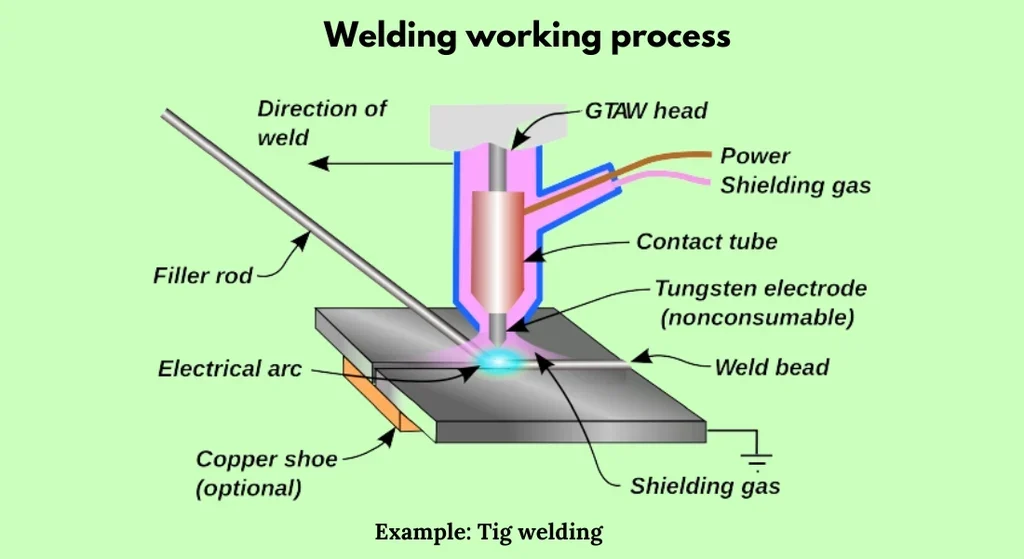
In many arc-welding methods an electrode carries current across a small gap to the workpiece The resulting arc produces intense heat Some electrodes melt and become filler metal.
The molten region is called the weld pool As the welder moves along the joint the pool cools and solidifies The surrounding metal may not melt but it.
- Heat input: Too little heat can cause lack of fusion; too much can burn through thin material or create distortion.
- Shielding: Contaminated or interrupted shielding can trap gas and produce porosity or surface oxidation.
- Travel speed: Moving too quickly may create a narrow, weak bead, while moving too slowly can produce excessive buildup.
- Joint preparation: The gap, bevel, fit-up, and cleanliness determine how completely the joint can fuse.
Fusion, filler metal, and pressure
Fusion welding melts the base material at the joint often along with a filler metal Arc welding gas welding and laser welding are examples Other processes join parts.
Filler metal is not always necessary Thin sheets may be joined by resistance welding and some precisely fitted edges can fuse without added material When filler is used.
Why surface preparation matters
Oil, paint, rust, mill scale, moisture, and dirt interfere with heat transfer and fusion. They may also release hazardous fumes when heated. Cleaning and correctly fitting the parts therefore improve both weld quality and workplace safety.
Preparation can include degreasing, grinding, wire brushing, removing scale, cutting a bevel, setting a root gap, and securing the pieces with clamps or tack welds. The exact preparation depends on the process, material, thickness, access, and required penetration.
Major Types of Welders and Welding Processes
There is no universally best welder Each process balances speed control portability appearance material compatibility and operating cost differently A process that is excellent for a production line may.
The main choices in the United States are shielded metal arc welding, gas metal arc welding, gas tungsten arc welding, and flux-cored arc welding. Resistance welding, oxyfuel welding, and specialized processes also remain important in manufacturing, repair, fabrication, and construction.
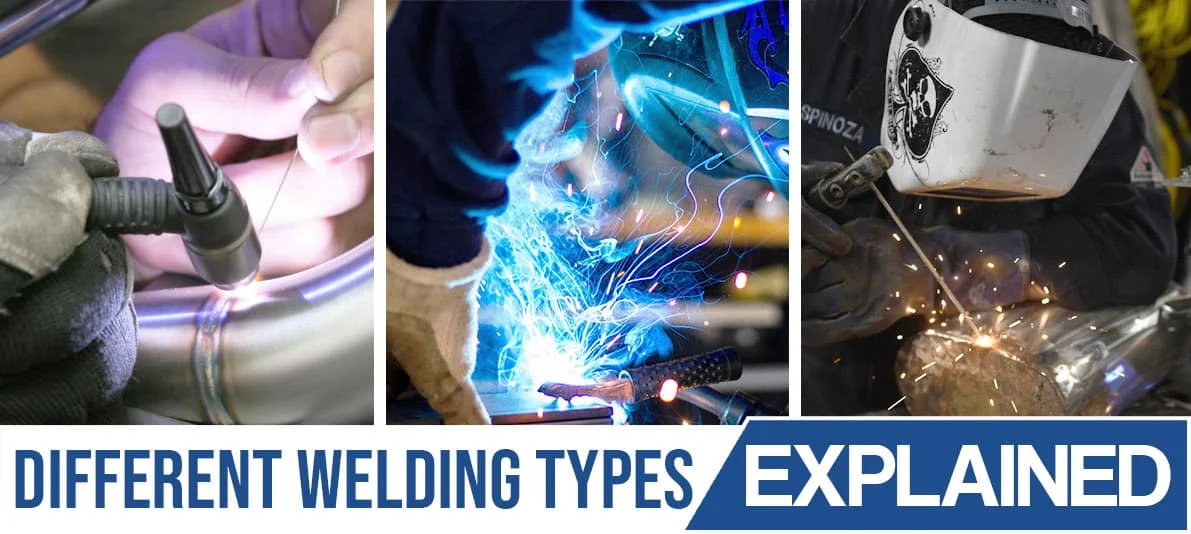
- Stick welding: Portable and practical outdoors, but it produces slag and requires frequent electrode changes.
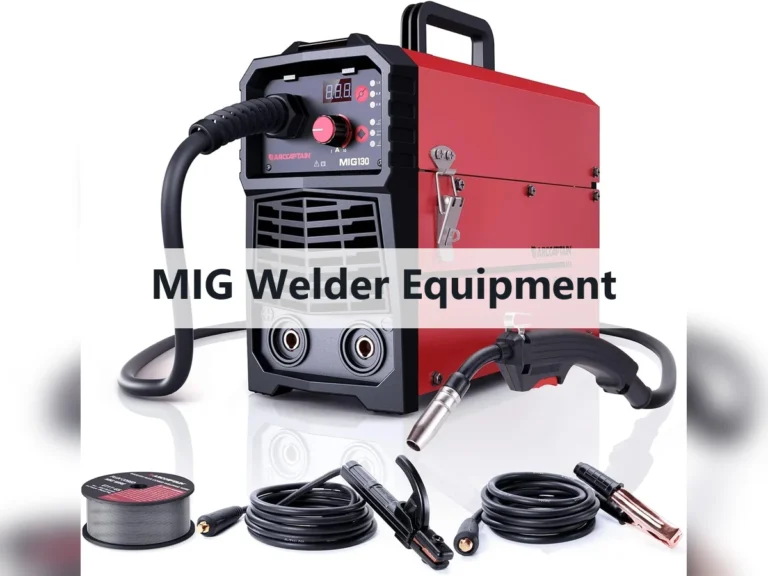
- MIG welding: Fast and approachable for many shop projects, especially mild steel, stainless steel, and aluminum with suitable setup.
- TIG welding: Offers excellent control and clean-looking welds, but it is slower and demands more coordination.
- Flux-cored welding: Delivers high productivity and useful outdoor capability, depending on whether the wire requires shielding gas.
| Process | How it works | Common strengths | Typical limitations |
|---|---|---|---|
| Stick (SMAW) | A flux-coated electrode creates an arc and supplies filler. | Portable, inexpensive, useful outdoors and on thicker steel. | Slag removal, lower productivity, and less convenient on thin sheet. |
| MIG (GMAW) | A continuous wire electrode feeds through a gun with shielding gas. | Fast, easy to automate, productive, and relatively easy to learn. | Wind can disrupt gas shielding; equipment is less convenient in remote locations. |
| TIG (GTAW) | A nonconsumable tungsten electrode creates the arc; filler may be added separately. | Precise control, clean welds, and strong performance on thin or specialized materials. | Slower, more expensive in labor, and technically demanding. |
| Flux-cored (FCAW) | A tubular wire contains flux; some versions also use external shielding gas. | High deposition rates and good performance on structural or outdoor work. | Produces slag and fumes; wire selection and polarity are important. |
| Resistance welding | Pressure and electrical resistance generate heat between overlapping parts. | Very fast and repeatable for sheet-metal production. | Needs specialized equipment and access to the joint from appropriate sides. |
Stick welding
Stick welding, formally shielded metal arc welding, uses individual flux-coated electrodes. The coating forms shielding gases and slag as it burns. The operator must maintain a suitable arc length, angle, and travel speed while allowing for the electrode’s changing length.
This process is valued for field repairs structural work farm equipment pipelines and heavy steel because many machines are portable and do not require a separate shielding-gas cylinder.
MIG and flux-cored welding
MIG welding uses a continuously fed wire, making it productive and convenient for fabrication shops, automotive work, equipment repair, and general manufacturing. The machine controls wire feed and voltage, while the operator guides the gun and maintains the correct distance from the work.
Flux-cored wire can be self-shielded or gas-shielded Self-shielded wire is useful outdoors because it does not depend on a gas cloud that wind can blow away The trade-off.
TIG welding
TIG welding uses a nonconsumable tungsten electrode and usually a separate filler rod Argon or another suitable shielding gas protects the weld pool Because the operator can control.
That control requires coordination between both hands and sometimes a foot pedal. TIG is slower than wire-fed processes, and contamination of the tungsten or weld area can quickly affect arc stability and appearance. This distinction matters when answering “what is a welder”.
Other welding methods
Oxyfuel welding combines fuel gas and oxygen to create a flame. It is still useful for heating, brazing, cutting, and some repair work, although electric processes dominate many modern welding applications.
Resistance spot welding joins overlapping sheet metal between electrodes It is common in vehicle and appliance manufacturing because many identical spots can be produced rapidly Laser plasma arc.
What Does a Welder Do on the Job?
A professional welder does much more than hold a torch or welding gun. The job often begins with a drawing, work order, weld symbol, material specification, or procedure. The welder identifies the joint, confirms dimensions, prepares the parts, selects consumables, and sets the equipment.
During welding, the operator controls arc length, torch or gun angle, travel speed, work angle, filler addition, and interpass temperature when required. Afterward, the welder removes slag or spatter, checks dimensions and appearance, and may perform repairs or prepare the part for inspection.
- Interpretation: Read drawings, symbols, measurements, and written procedures.
- Preparation: Cut, fit, clean, clamp, bevel, and tack parts accurately.
- Execution: Use the approved process, consumable, polarity, shielding, and settings.
- Inspection: Look for visible defects, distortion, incomplete fusion, and dimensional problems.
- Documentation: Record work, materials, repairs, or inspection information when the job requires it.
Where welders work
Welders work in fabrication shops, construction, shipyards, manufacturing plants, utilities, transportation, agriculture, maintenance departments, and repair businesses. Some work indoors at fixed stations; others work outdoors, at height, in confined spaces, or around large equipment.
Working conditions affect process selection. A shop may favor MIG, TIG, automation, or resistance welding because power, gas, ventilation, and fixtures are readily available. A field repair may favor stick or self-shielded flux-cored welding because the equipment travels more easily and is less sensitive to wind.
Welder, fabricator, and welding engineer
A welder primarily performs joining and related preparation. A fabricator may also lay out, cut, form, drill, fit, and assemble parts before welding. A welding engineer or welding technician may develop procedures, choose materials, qualify processes, analyze defects, and support production.
These roles can overlap in smaller businesses, but they require different levels of design responsibility and technical decision-making. A person who can produce a clean bead is not automatically qualified to design a pressure-bearing assembly or approve a critical weld.
How to Recognize a Good Weld
Visual appearance provides useful clues but it does not prove that a weld is structurally sound A weld can look attractive while containing internal lack of fusion cracks.
Visible checks commonly examine bead continuity, profile, width, reinforcement, undercut, overlap, spatter, crater treatment, arc strikes, and surface cracking. The inspector also checks whether the parts stayed within required dimensions and whether the weld is located correctly.
- Surface: Look for cracks, open craters, excessive undercut, overlap, and unusual holes.
- Fusion clues: Confirm that the bead ties smoothly into both sides of the joint rather than sitting on top.
- Dimensions: Compare weld size, length, location, and assembly alignment with the job requirements.
- Hidden defects: Use appropriate nondestructive or destructive testing when visual inspection is insufficient.
Common welding defects
Porosity consists of gas pockets in the weld metal Moisture contamination inadequate shielding excessive arc length or incorrect settings can contribute to it Undercut is a groove melted.
Lack of fusion occurs when the weld metal does not properly bond to the base metal or a previous pass Incomplete penetration means the weld does not extend.
Inspection methods
Visual testing is the first level of inspection for many jobs. Dye penetrant testing can reveal surface-breaking flaws in suitable nonporous materials. Magnetic particle testing can locate certain surface and near-surface discontinuities in ferromagnetic metals.
Radiographic and ultrasonic methods can examine internal conditions without cutting the part apart, while destructive testing evaluates a sample by bending, breaking, sectioning, or otherwise stressing it. The required method depends on the material, joint, service risk, governing specification, and qualified inspection plan.
Welder Safety: Hazards and Essential Controls
Welding combines intense heat, ultraviolet radiation, electricity, compressed gases, fumes, sparks, and sometimes confined spaces. The safest approach is to identify the hazards before striking an arc rather than treating protective equipment as the only safeguard.
Fumes vary with the base metal, coatings, flux, filler, shielding gas, and cleaning chemicals. Stainless steel, galvanized coatings, painted surfaces, and unknown materials deserve particular caution. Good ventilation or local exhaust reduces exposure, but it does not make every material safe to weld without additional controls.
- Eye and face protection: Use the correct welding helmet shade and suitable safety glasses underneath.
- Skin protection: Wear flame-resistant clothing, gloves, high-top boots, and clothing that covers exposed skin.
- Ventilation: Control fumes at the source and avoid breathing the plume directly.
- Fire prevention: Remove combustibles, control sparks, and inspect the area after hot work ends.
- Electrical and gas safety: Check leads, grounding, regulators, cylinders, hoses, and connections before use.
Fire, explosion, and confined-space risks
Sparks and hot metal can travel farther than expected especially through openings cracks and floor penetrations Welding on tanks drums pipes or containers that held flammable substances can. Keep these limitations in mind when considering “what is a welder”.
Confined spaces add risks from oxygen deficiency, toxic gases, restricted escape, and heat buildup. A welding helmet cannot protect against a dangerous atmosphere. Work in such locations requires a site-specific plan, monitoring, ventilation, communication, and emergency arrangements.
Why coatings and unknown metals matter
Paint, plating, oil, and galvanizing can produce hazardous fumes when heated. Removing coatings may reduce exposure, but removal itself can create dust or other hazards. The material should be identified before work begins, and the appropriate safety information and controls should be used.
Never assume that a familiar-looking piece is harmless. A small repair can become dangerous when the part is enclosed, contaminated, pressurized, energized, or connected to fuel, chemicals, or electrical systems.
Choosing a Welder or Welding Process
Choose the process from the job requirements backward. Start with the base metal and thickness, then consider joint position, access, location, appearance, production volume, available power, operator skill, and inspection requirements. Buying a powerful machine does not compensate for an unsuitable process or poor preparation.
For occasional mild-steel repairs in a shop, a MIG machine may offer convenience and speed. For outdoor work on heavier steel, stick or self-shielded flux-cored equipment may be more practical. For thin stainless, aluminum, or visible precision joints, TIG may justify its slower operating speed.
- Material: Confirm that the machine and consumables support steel, stainless, aluminum, or the actual alloy being joined.
- Thickness: Match output range and process capability to the thinnest and thickest work.
- Power: Verify the available voltage, circuit capacity, duty cycle, and extension-cord limitations.
- Location: Account for wind, portability, access, ventilation, and whether shielding gas can be used.
- Workload: A hobby machine may not withstand continuous production duty.
Important machine features
Amperage range indicates the current the machine can deliver but the useful range depends on process electrode material and duty cycle Duty cycle describes how long equipment can.
Other useful features may include adjustable inductance, pulsed output, spool-gun compatibility, AC capability for certain aluminum work, remote controls, built-in wire settings, thermal protection, and multiple process modes. These features matter only when they solve a real requirement.
Consumables and accessories
Welding systems may require electrodes, wire, filler rods, shielding gas, regulators, contact tips, nozzles, tungsten, liners, clamps, and grinding or cleaning tools. Consumable diameter and composition must match the process and base material.
Budgeting only for the power source can lead to an incomplete setup. Proper leads, a reliable ground connection, ventilation, protective equipment, and suitable storage for gas cylinders are part of the practical cost of welding.
Maintenance and Troubleshooting
Routine maintenance prevents many welding problems before they become repairs Keep the work area and machine vents clean inspect cables and hoses check connectors replace worn contact tips.
Follow the equipment manufacturer’s instructions for inspection, cooling, service intervals, and electrical work. Disconnect power before servicing internal components, and do not bypass thermal protection or repair damaged cables with improvised methods.
- Porosity: Check gas flow, leaks, wind, nozzle blockage, contamination, and the cleanliness of the joint.
- Excessive spatter: Review polarity, voltage, wire speed, arc length, and material cleanliness.
- Poor penetration: Check joint gap, bevel, current, travel speed, and whether the work angle directs heat into both sides.
- Unstable arc: Inspect the ground connection, contact tip, liner, electrode condition, and power supply.
- Distortion: Reduce unnecessary heat, improve fixturing, balance the weld sequence, or use intermittent welds where permitted.
A practical troubleshooting sequence
- Stop and make the area safe before changing settings or handling hot parts.
- Identify whether the problem is visual, dimensional, electrical, gas-related, or material-related.
- Check simple causes first: grounding, polarity, consumable condition, shielding, and cleanliness.
- Confirm settings against the process, material thickness, electrode or wire, and joint design.
- Make a controlled test weld on compatible material before returning to the production part.
- Remove defective weld metal completely when necessary; do not simply cover a known defect with another pass.
Welder Careers, Training, and Qualifications
People enter welding through technical schools, community colleges, apprenticeships, employer training, military experience, or supervised on-the-job learning. A useful foundation includes blueprint reading, measurement, metallurgy, equipment setup, joint preparation, welding positions, and safety.
Qualification is usually specific to a process, material, position, thickness range, joint type, and procedure. Being experienced with MIG on shop steel does not automatically qualify someone for TIG aluminum, structural work, pressure equipment, or specialized alloy repairs.
- Build fundamentals: Learn safe setup, fit-up, arc control, and defect recognition before chasing speed.
- Practice deliberately: Keep variables controlled so changes in technique can be connected to results.
- Read drawings: Weld symbols, dimensions, tolerances, and notes are central to professional work.
- Document qualifications: Keep records of training, tests, processes, and work experience.
Skills that improve long-term performance
Hand control matters, but so do observation and judgment. A strong welder notices joint fit-up, heat behavior, arc sound, puddle shape, distortion, and changes in material condition. Communication is equally important when a drawing is unclear or a requested repair appears unsafe.
Advanced opportunities may involve robotic welding, inspection, pipe welding, aerospace or power-generation work, fabrication supervision, welding procedure development, or quality control. Each path adds technical, documentation, and responsibility requirements.
Frequently Asked Questions About What Is a Welder
Is a welder a person or a machine?
It can mean either one. A welder is a person who performs welding, while “welder” may also describe a machine that produces the energy needed to join materials.
What does a welder actually join?
Most welders join metals such as carbon steel, stainless steel, aluminum, and copper alloys. Specialized processes can also join certain thermoplastics and dissimilar materials when the joint design and process are compatible.
Is welding the same as soldering or brazing?
No. Welding generally melts the base materials at the joint, although some welding processes use pressure without full melting. Soldering and brazing use a filler that melts at a lower temperature while the base materials remain solid.
What is the easiest type of welder for a beginner?
Many beginners find MIG welding approachable because a continuous wire feeds automatically and settings can be adjusted for common steel projects