Underwater Welder Salary: Essential Information and Useful Advice
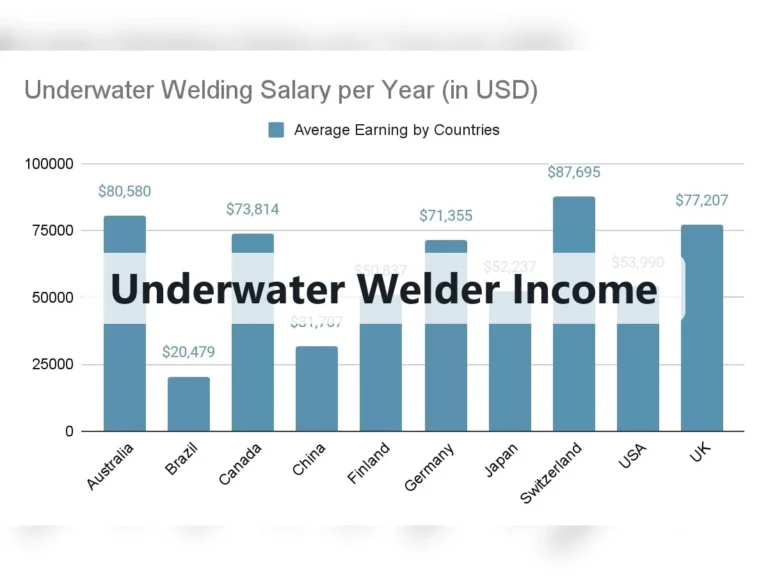
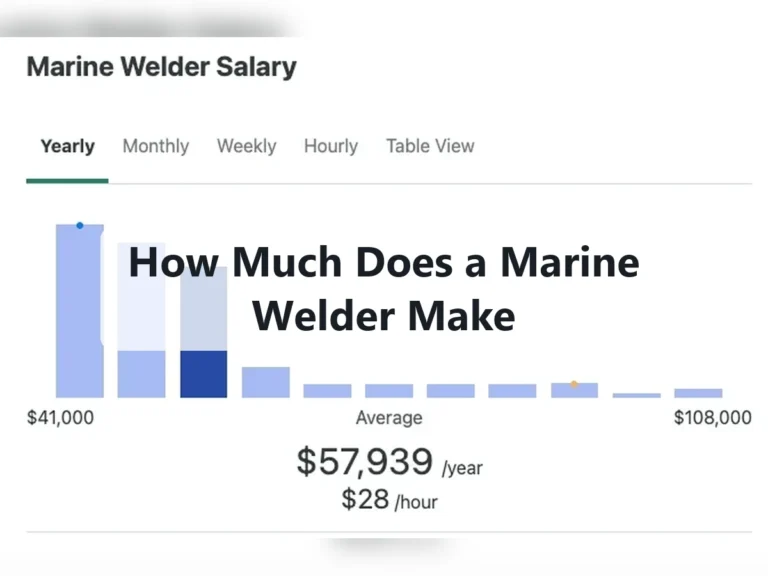
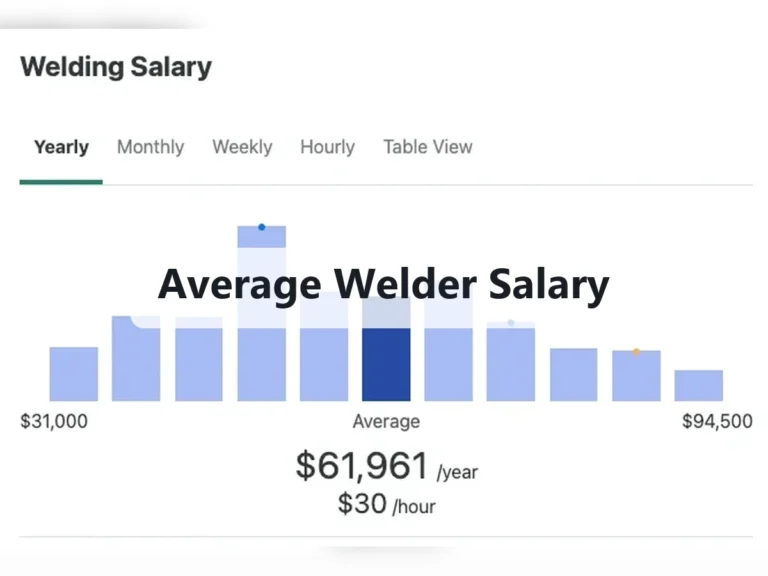
In the United States, underwater welders commonly earn about $40,000 to $100,000 annually, while experienced commercial divers on demanding projects may earn more.
Underwater welding combines commercial diving welding industrial construction and hazardous-work controls so pay varies far more than a single national average suggests A beginner working near shore may.
One easily overlooked detail is that advertised pay may describe a project rate daily rate or total compensation package rather than a dependable year-round salary Travel time weather. This guide explains underwater welder salary, including the practical details and important limitations.
This guide explains the main salary ranges how experience and certifications affect earnings why offshore and saturation work pay more and which costs reduce take-home income You will.
- ✓Pay depends on commercial-diving experience, welding ability, location, project type, depth, and schedule—not just the welding task.
- ✓Entry-level workers should budget for modest initial earnings and irregular employment while they build logged dives and relevant credentials.
- ✓Offshore, deep-water, emergency, and specialized industrial work can pay more but usually involves greater risk, travel, isolation, and stricter qualifications.
- ✓A strong job comparison uses guaranteed pay, overtime rules, travel compensation, benefits, downtime, and out-of-pocket costs together.
What Determines Underwater Welder Salary?
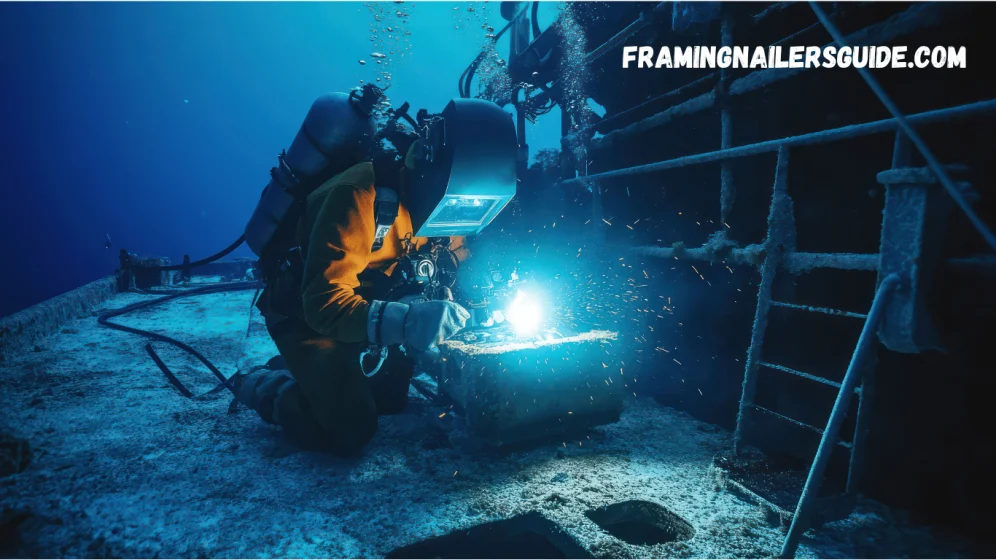
Underwater welding is usually performed within the broader occupation of commercial diving The worker may weld cut inspect.
That distinction explains why two people with similar welding skills can receive very different offers An employer also considers the diver s training medical clearance dive records equipment.
The underwater welder salary in one job posting may therefore reflect the entire project environment A short repair performed in a controlled harbor is not financially equivalent to.
- Skill combination: Employers value proven welding technique plus commercial-diving competence, underwater communication, inspection ability, and job-site discipline.
- Work availability: A high daily rate does not guarantee full-year employment. Seasonal contracts and project delays can lower annual earnings.
- Risk premium: Difficult access, cold water, strong currents, depth, contaminated water, and remote locations may increase pay because they increase planning and hazard exposure.
- Compensation structure: Hourly wages, day rates, overtime, travel pay, per diem, bonuses, and benefits can produce very different total packages.
Experience and responsibility
New commercial divers generally start by supporting more experienced crews. They may handle tools, lines, air systems, communications, equipment checks, and basic underwater tasks before receiving the most technically demanding welding assignments.
With experience a diver may become responsible for dive planning work-site coordination equipment selection quality control or supervision.
Location and local demand
Pay can differ by region because marine construction ship repair bridge maintenance energy infrastructure ports and inland utilities are not distributed evenly A coastal area may offer more.
Cost of living matters but it should not be used alone to judge an offer A lower local.
Typical Pay Ranges by Career Stage
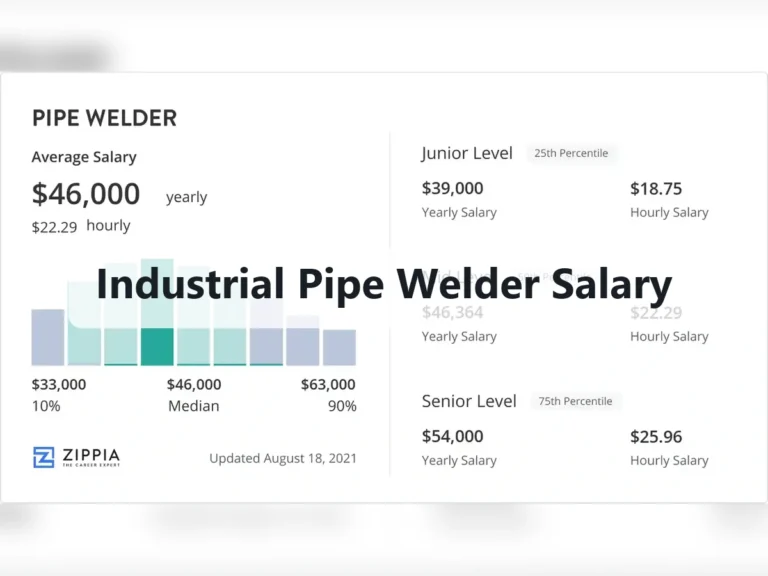
There is no single official figure that accurately represents every underwater welding job. Public salary estimates often combine different occupations, while industry advertisements may quote short-term rates, gross project pay, or unusually demanding assignments.
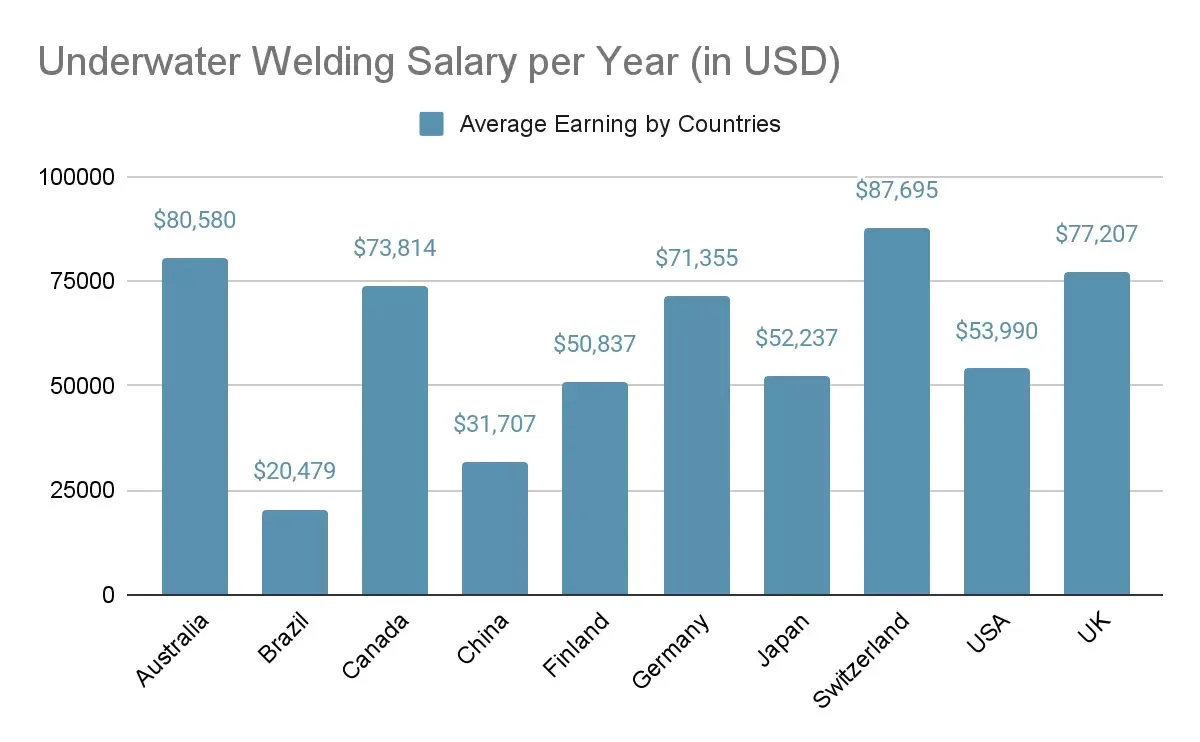
The ranges below are practical planning bands for the United States rather than guarantees. They are intended to show how earnings may develop as a worker gains qualifications, logged dives, specialized experience, and access to better-paying contracts.
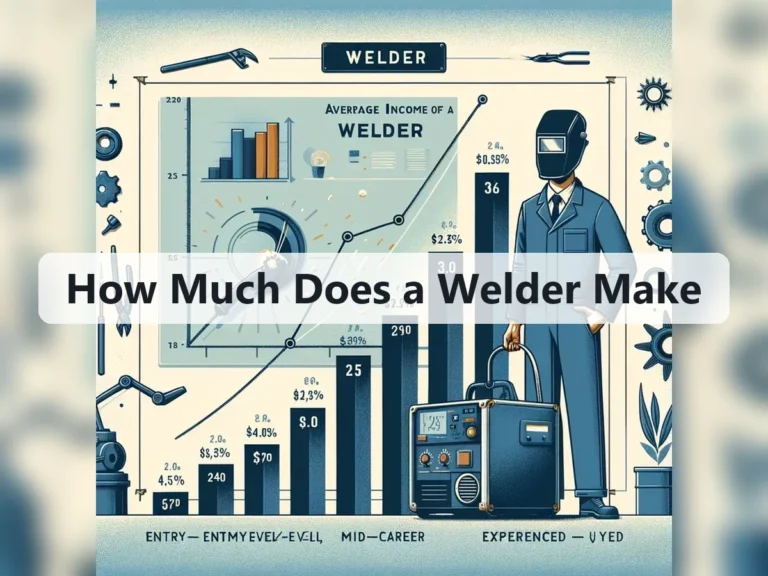
- Entry level: Roughly $35,000 to $55,000 in a first period of commercial employment, with variation caused by location, hours, and available projects.
- Developing professional: About $50,000 to $80,000 after building experience in commercial diving, welding, inspection, and job-site operations.
- Experienced diver: Approximately $70,000 to $110,000 when the worker consistently qualifies for complex industrial, offshore, or specialized assignments.
- High-end projects: Some offshore, emergency, supervisory, or saturation-related work can exceed these bands, but it may be irregular and should not be treated as a normal baseline.
Why entry-level estimates can be misleading
Training graduates may expect to step directly into the highest-paying work but employers often want more than a diploma They may look for commercial-diving experience logged bottom time.
The first year can also include job searches, travel, equipment purchases, medical examinations, refresher training, and waiting for weather-sensitive projects. A theoretical annual rate becomes less useful if the worker is paid only when actively assigned to a dive crew.
What experienced workers are paid to do
Higher-paid divers are often trusted with complicated environments and less supervision. They may work on ship hulls, offshore structures, pipelines, dams, intake systems, bridge components, docks, or industrial assets where an error can create expensive delays.
Some also progress into roles such as dive supervisor, inspection technician, project coordinator, or safety lead. These jobs may involve less hands-on welding but more planning, documentation, crew management, and responsibility for compliance.
| Career situation | Likely earning pattern | What to verify |
|---|---|---|
| New graduate or trainee | Lower wages, limited assignments, possible seasonal work | Guaranteed hours, training pay, travel costs, and advancement path |
| Regular commercial diver | More consistent hourly or project income | Overtime, benefits, dive pay, and annual work volume |
| Offshore or specialized diver | Higher rates for difficult or remote assignments | Rotation length, standby rules, lodging, travel, and safety systems |
| Supervisor or senior specialist | Higher total compensation and greater responsibility | Administrative duties, liability, credential requirements, and schedule |
How Type of Diving Changes Pay
The work setting is one of the strongest predictors of compensation Underwater welding may take place in relatively shallow inland water a busy harbor a shipyard an offshore.
Inland work can include bridge inspections dam maintenance water-intake repairs sewer or treatment-facility work and submerged construction It.
Offshore assignments may pay more because workers travel to vessels or platforms remain away from home work in difficult weather and support expensive assets However offshore income often.
- Inland diving: Often provides regional work and shorter travel, but rates may be lower and projects can be seasonal.
- Harbor and shipyard work: May provide recurring demand and varied repairs, with noise, vessel traffic, confined areas, and tight schedules.
- Offshore diving: Can offer stronger rates and rotations, but requires extended travel, strict logistics, and comfort with remote living.
- Saturation work: May command premium compensation because of depth, specialized systems, long deployments, and demanding decompression procedures.
Why deep and saturation work pays more
Depth affects gas management equipment communication decompression planning emergency response and the amount of support required on the surface Saturation diving adds a specialized living and work system.
These assignments are not simply regular underwater welding at a greater depth They require additional qualifications medical suitability extensive team coordination and a willingness to accept a demanding.
Emergency and specialty work
Urgent repairs can pay more when an asset is shut down and the client needs a rapid response Yet emergency work can also involve poor visibility unstable structures.
Other specialties that may improve earning potential include underwater inspection, nondestructive testing support, marine construction, habitat work, rigging, salvage, and remotely operated vehicle operations. Combining several useful capabilities can make a worker more employable than focusing on welding alone.
Education, Certifications, and Skills That Raise Earnings
A reputable commercial-diving program is usually the foundation, but training is only the beginning. Employers want evidence that a worker can operate safely as part of a professional dive team and produce acceptable work under real marine or industrial conditions.
Welding credentials can strengthen a diver’s profile, especially when they match the materials, processes, and positions used by local employers. The exact qualification needed depends on the employer, contract, governing standard, and type of structure being repaired.
- Commercial-diving foundation: Learn surface-supplied diving, communications, emergency procedures, equipment care, and professional dive-team roles.
- Welding range: Develop reliable technique in relevant processes and materials instead of assuming one general welding credential covers every job.
- Inspection ability: Add knowledge of visual inspection, measurements, documentation, and defect recognition where employers use those skills.
- Operational judgment: Become dependable with pre-dive checks, hazard identification, work permits, tool control, and stop-work decisions.
Credentials are valuable only when they match the job
A long list of certificates does not automatically produce a high salary A credential has practical value when it is recognized by the employer current for the assignment.
Before paying for an additional course review job postings from the type of companies you want to join Look for repeated requirements ask training providers how graduates obtain. This is an important consideration for underwater welder salary.
Transferable skills that affect promotion
Technical ability matters, but communication and reliability often determine who receives repeat assignments. A diver who reports equipment concerns early, keeps accurate records, follows instructions, and communicates clearly underwater may be more valuable than someone with slightly faster welding technique.
Mechanical aptitude is also useful because commercial-diving crews handle pumps, compressors, hydraulic tools, electrical equipment, communications systems, lifting gear, and specialized welding equipment. Basic computer skills help with reports, work orders, inspection records, and project documentation.
Costs, Benefits, and Real Take-Home Pay
Gross compensation is only one part of the decision. Commercial-diving training can be expensive, and workers may also pay for medical evaluations, transportation, personal protective equipment, tools, renewals, lodging between assignments, and continuing education.
Some employers provide equipment, travel, meals, lodging, health insurance, retirement contributions, or paid training. Others offer a higher day rate but fewer benefits. Comparing those structures requires converting everything into an estimated annual value.
- Guaranteed time: Ask whether the employer pays for travel, mobilization, standby, weather delays, training, and required meetings.
- Expenses: Confirm who covers transportation, lodging, meals, medical examinations, equipment, and credential renewals.
- Overtime: Determine when overtime begins and whether dive pay or hazard pay is added separately.
- Benefits: Include health coverage, retirement contributions, paid leave, disability protection, and workers’ compensation provisions in your comparison.
A simple annual-income calculation
To estimate realistic income, multiply the ordinary paid rate by expected paid hours or days, then add dependable overtime and bonuses. Subtract unpaid gaps and personal work expenses before comparing the result with a conventional full-time job.
- Write down the base hourly, daily, or project rate.
- Estimate the number of paid days you can reasonably expect, not the number promised for a best-case season.
- Add overtime, dive premiums, travel pay, per diem, and bonuses only if the contract makes them reasonably predictable.
- Subtract taxes, insurance premiums, training, transportation, equipment, lodging, and unpaid downtime.
- Compare the resulting annual figure with the schedule, risk, travel, and benefits involved.
For example a day rate that looks impressive may produce modest annual income if the worker is paid for only part of each month Conversely a lower hourly.
Taxes and irregular income
Contract workers may need to manage estimated taxes, business expenses, insurance, and retirement savings themselves. Even employees should plan for irregular income when assignments depend on weather, vessel schedules, construction progress, or industry demand.
Keep records of every work-related expense and confirm tax treatment with a qualified professional. Do not assume that a per diem or travel payment is automatically equivalent to extra take-home pay; its treatment can depend on the arrangement and applicable rules.
Risks, Lifestyle, and Career Sustainability
Higher compensation should be evaluated alongside the hazards of the work. Commercial diving can involve drowning, decompression illness, contaminated water, electrical hazards, entanglement, pressure-related injuries, equipment failure, cold stress, poor visibility, and unstable structures.
Underwater welding adds electrical and thermal hazards to an already demanding environment. Professional work depends on carefully controlled equipment, qualified supervision, appropriate procedures, reliable communications, and the authority to stop when conditions are unsafe.
- Never trade caution for speed: A deadline or premium rate does not justify skipping a pre-dive check, communications test, or hazard review.
- Know the water: Contamination, current, entanglement, vessel movement, and visibility can change the risk profile before welding begins.
- Protect long-term health: Fatigue, repeated travel, cold exposure, and poor recovery can affect judgment as seriously as a single obvious hazard.
- Use qualified systems: Training, supervision, equipment maintenance, emergency planning, and medical fitness are essential parts of the job—not optional extras.
The lifestyle trade-off
Some workers value rotational schedules because they can spend extended periods at home between assignments. Others find that travel, unpredictable callouts, shared accommodation, and long deployments place strain on relationships and routines.
Ask how often workers are away, how much notice they receive, whether rotations actually remain stable, and what happens when a project ends early. A salary is less attractive if the schedule prevents you from meeting family, financial, or health commitments.
Physical longevity
The work can be physically demanding even when a diver is highly skilled. Repeated lifting, awkward positioning, cold water, long travel, and extended concentration may influence how long someone wants to remain in hands-on diving.
Planning a second-stage career can improve sustainability. Inspection, supervision, estimating, training, project management, equipment service, and marine construction coordination may allow an experienced diver to use industry knowledge with less exposure to bottom time.
How to Evaluate a Job Offer
A job offer should be treated as a complete operating arrangement rather than a headline number. Before accepting, ask for the pay structure in writing and identify which parts are guaranteed, conditional, reimbursed, or discretionary.
Compare offers over a likely year, not over the best day on the schedule. If an employer cannot explain how workers are paid during mobilization, weather delays, training, or standby, the advertised rate may not tell you much about actual earnings.
- Ask about work volume: How many paid days did comparable workers receive during the previous year, and what caused gaps?
- Clarify the assignment: Confirm location, depth, water conditions, vessel or facility type, rotation, expected tasks, and supervision.
- Check deductions: Find out whether equipment, lodging, transportation, meals, insurance, or administrative costs are deducted from pay.
- Review advancement: Look for a credible path toward more responsibility, specialized work, inspection, supervision, or higher-value projects.
Warning signs
Be cautious when a recruiter emphasizes extraordinary earnings but avoids discussing training work volume safety systems written terms or who pays for required expenses Vague promises that a.
Another warning sign is pressure to purchase expensive training or equipment immediately without a clear connection to actual employer requirements. Legitimate opportunities should allow time to verify credentials, duties, pay practices, and safety expectations.
Questions worth asking
- Is this an employee position or an independent-contractor arrangement?
- How are travel, mobilization, standby, weather delays, and decompression time paid?
- What qualifications and logged experience are required before welding independently?
- Who supplies the dive system, welding equipment, personal protective equipment, and replacement parts?
- How are emergencies handled, and who has authority to stop the job?
- What percentage of the crew’s work is local, offshore, seasonal, or short-term?
Ways to Increase Long-Term Earning Potential
The most reliable way to improve income is to become useful across several connected parts of a project. Welding skill is important, but a worker who can inspect, document, rig, troubleshoot equipment, and communicate with supervisors may qualify for more assignments.
Build experience deliberately instead of chasing every premium-rate job. A difficult assignment is valuable when it provides recognized experience, strong references, better technical judgment, or a path to future work—not merely when it offers a large short-term payment.
- Track your experience: Keep accurate records of dives, environments, tasks, depths, tools, materials, and responsibilities.
- Protect your reputation: Arrive prepared, communicate problems early, and treat documentation and equipment care as part of the craft.
- Study the market: Compare recurring requirements in shipyards, marine construction, inspection, utilities, and offshore employers.
- Develop a second specialty: Inspection, nondestructive testing support, rigging, hydraulic tools, or supervision can broaden your options.
Networking and references
Commercial diving is a relationship-driven field because employers need people they can trust around expensive assets and serious hazards Instructors experienced divers supervisors equipment technicians and reputable contractors.
References should describe more than welding quality. Reliability, safety behavior, teamwork, communication, equipment care, and the ability to work under instruction can strongly influence whether a worker receives repeat assignments.
FAQ: Underwater Welder Salary
What is the average underwater welder salary in the United States?
A practical broad estimate is about $40,000 to $100,000 per year, with many workers falling somewhere in the middle. The actual figure depends on commercial-diving experience, location, project volume, specialization, and whether the quoted amount includes overtime or allowances.
Can underwater welders make six figures?
Yes, some experienced divers can exceed $100,000, particularly on offshore, emergency, supervisory, specialized, or saturation-related assignments. Six-figure income is not automatic, however, and may reflect long deployments, premium project rates, substantial overtime, or irregular work rather than a guaranteed base salary.
Do underwater welders earn more offshore?
Often but not universally Offshore work can pay more because it involves remote locations travel difficult logistics specialized equipment and extended time away from home Compare annual paid.
How much does an entry-level underwater welder make?
An entry-level worker may earn roughly 35 000 to 55 000 during the early commercial-diving period although local conditions and available assignments can move that range The first.
Does underwater welding pay more than ordinary welding?
It can, because it combines welding with commercial diving and hazardous industrial work. The premium reflects the complete skill set, difficult conditions, specialized support, and responsibility—not simply the fact that the weld is performed underwater.
What certifications help increase pay?
Relevant commercial-diving training, current welding qualifications, inspection capabilities, and specialty credentials can improve access to better assignments. The best credential depends on the employer and project, so review real job requirements before spending money on additional training.
Is underwater welding a good career financially?
It can be financially worthwhile for someone who accepts travel, irregular schedules, physical demands, and serious safety responsibilities. It is a weaker choice for someone seeking predictable hours, low physical risk, or a guaranteed high salary immediately after training.
Conclusion
Underwater welder salary is best understood as a range shaped by experience commercial-diving qualifications location project difficulty work volume and compensation structure The highest reported rates usually come.
Before enrolling in training or accepting an offer calculate realistic annual income verify employer requirements account for expenses and downtime and evaluate whether the work environment fits your.
Collect several current job postings, record their qualifications and complete pay terms, then compare the realistic annual package—not just the advertised underwater welder salary.