Average Welder Salary: Essential Information and Useful Advice
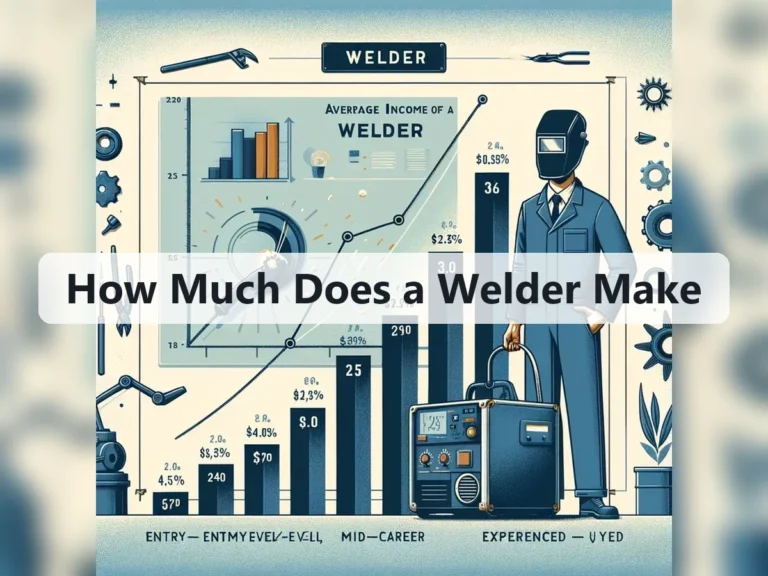
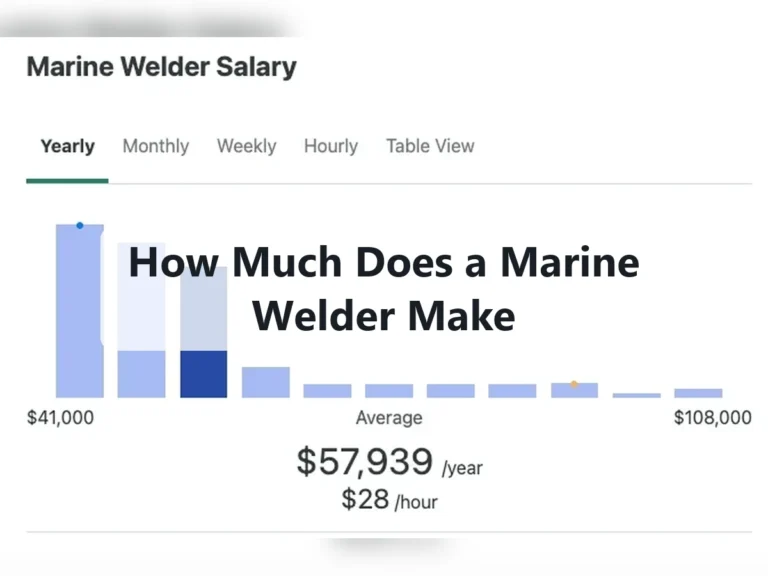
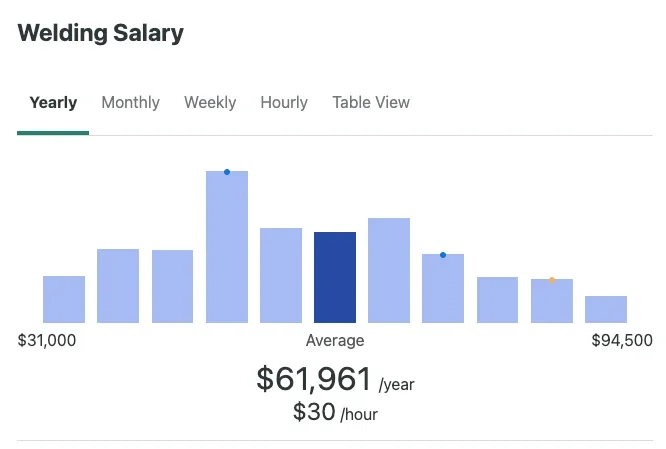
The average welder salary in the United States is roughly $45,000 to $60,000 per year, with experienced, specialized, or traveling welders often earning more.
Choosing welding as a career does not require perfect salary information on day one but early research can.
The right time to compare pay is before accepting training costs relocating or turning down an entry-level opportunity This guide explains how wages are measured why advertised rates.
- ✓U.S. welding pay commonly falls between the mid-$40,000s and upper-$50,000s, but the range is wide.
- ✓Location, overtime, industry, certification, and shift schedule can change total compensation significantly.
- ✓Specialized work in pipelines, aerospace, power generation, shipbuilding, and industrial maintenance may command higher rates.
- ✓Compare base wage, guaranteed hours, overtime rules, travel requirements, benefits, and working conditions—not just the hourly number.
- ✓Hands-on practice, blueprint reading, inspection awareness, and reliable work habits can improve advancement prospects.
What the Average Welder Salary Really Measures
The phrase average welder salary usually describes a broad national estimate rather than a guaranteed paycheck. Government wage data, job boards, staffing companies, and employer advertisements may measure different groups of workers, so their figures will not always match.
For example one source may report a median wage for employees classified as welders cutters solderers and brazers Another may calculate an average from current job postings which.
- Average versus median: An average can be pulled upward by a smaller number of high earners, while the median identifies the midpoint of reported workers.
- Hourly versus annual: A stated annual salary may assume full-time work, while seasonal schedules or layoffs can reduce actual yearly income.
- Base pay versus total pay: Overtime, per diem, bonuses, shift premiums, and benefits may be separate from the advertised hourly rate.
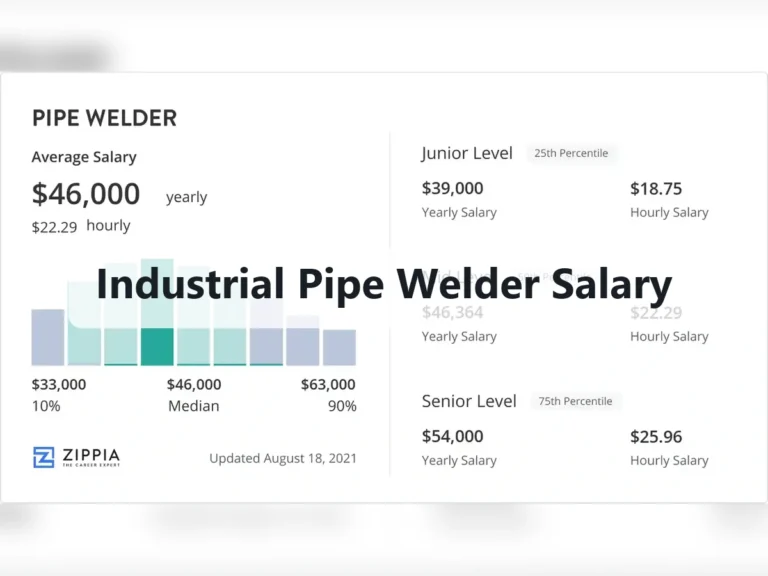
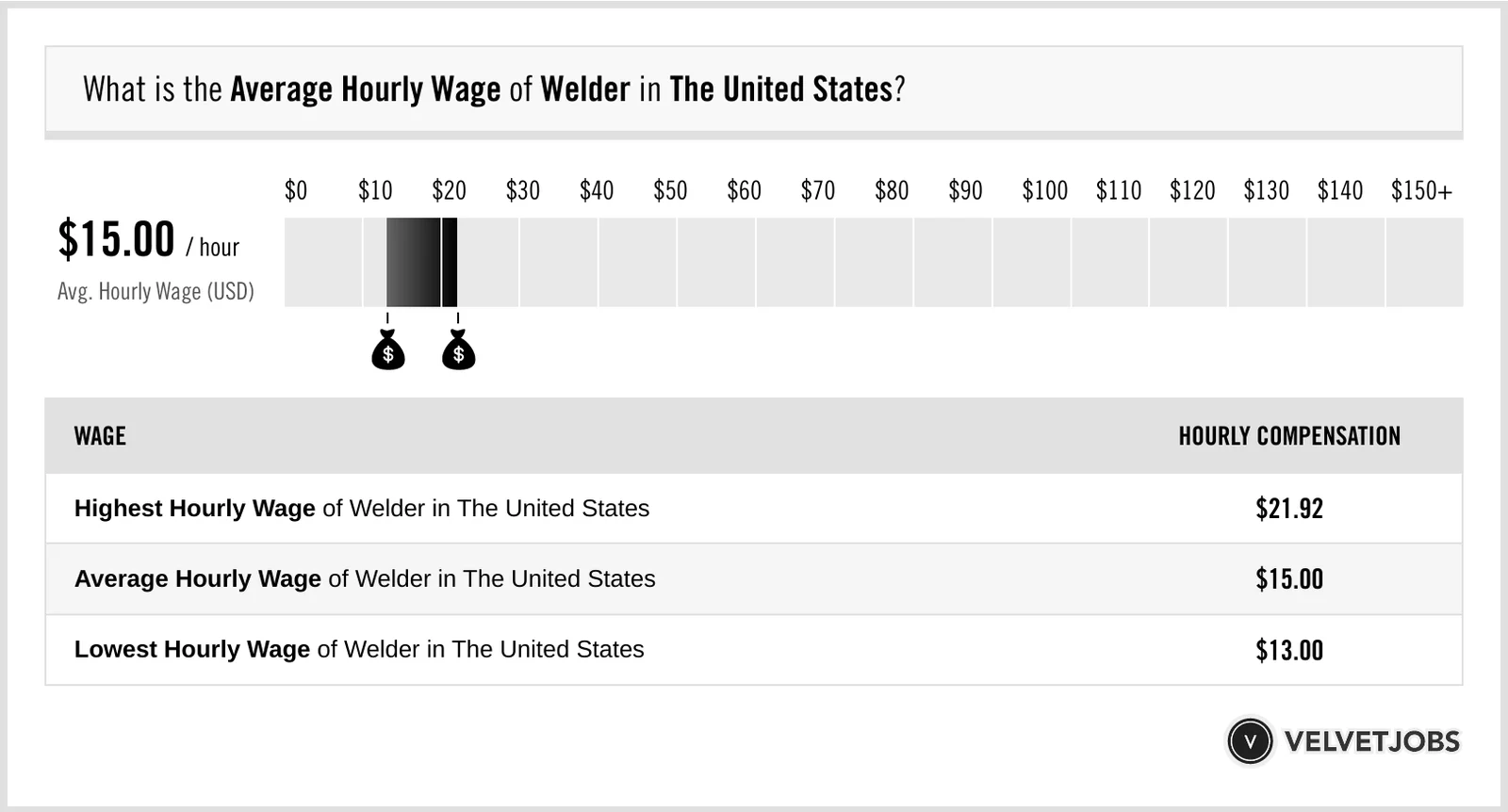
A useful national planning range is approximately 22 to 29 per hour for many employed welders equivalent to about 46 000 to 60 000 annually at 40 hours.
Entry-level workers may begin below that range particularly while building speed and passing qualification tests Welders with several years of dependable production experience specialized certifications or difficult working.
Average Welder Salary by Experience Level
Experience affects welding pay because employers are purchasing more than the ability to strike an arc. They are also paying for consistent quality, safe work, production speed, equipment judgment, and the ability to recognize problems before they cause rework.
A new welder may know the basics of one or more processes but still need close supervision An experienced welder can often interpret drawings select settings prepare joints.
- Entry level: Often approximately $17 to $23 per hour, depending on training, region, and whether the role is production-based.
- Developing welder: Commonly around $22 to $30 per hour after building reliable shop or field experience.
- Experienced welder: Frequently $28 to $38 per hour when the worker handles complex materials, positions, or specifications.
- Highly specialized roles: May exceed those figures, especially when travel, overtime, difficult access, or regulated work is involved.
Entry-level welding pay
Beginning wages are often lower in general fabrication, small repair shops, and production environments that provide on-the-job training. Employers may value attendance and trainability nearly as much as a long list of certificates at this stage.
School credentials can help but they do not automatically produce a higher wage A graduate who can demonstrate clean welds safe machine setup accurate measurement and basic blueprint.
Mid-career earning potential
After several years welders may qualify for higher-paying work by learning additional processes such as flux-cored arc welding gas tungsten arc welding or specialized shielded metal arc welding.
At this stage the most valuable question is not simply how many years someone has worked It is.
Senior and lead responsibilities
Senior welders may earn more when they train coworkers, coordinate jobs, inspect fit-up, troubleshoot defects, or help manage production flow. Some move into welding inspector, foreman, estimator, welding supervisor, or quality-control roles.
These positions can raise income but may reduce the amount of hands-on welding. A worker who prefers fabrication may choose premium field assignments instead, while someone interested in planning and leadership may benefit from learning documentation, scheduling, and quality systems.
Where Welders Earn the Most
Geography is one of the strongest influences on pay. States with energy production, shipyards, major construction projects, manufacturing centers, aerospace facilities, or high living costs may show higher wages than rural areas with fewer industrial employers.
However a larger paycheck is not necessarily a better financial outcome Housing transportation insurance taxes and the cost of maintaining tools can offset a higher hourly wage A.
- Industry concentration: Regions with shipbuilding, refineries, heavy manufacturing, or power projects often have more specialized welding opportunities.
- Local competition: A large pool of trained welders can limit entry wages, while a shortage may encourage employers to raise rates.
- Living costs: Compare real purchasing power rather than judging an offer by its gross wage alone.
- Project cycles: Construction and shutdown work can pay well temporarily but may not provide year-round employment.
Urban markets may offer more opportunities and higher posted wages while smaller markets may offer lower living expenses and faster advancement A local employer with steady hours paid.
Before relocating, compare at least three items: the expected hourly wage, realistic weekly hours, and typical local expenses. Also ask whether the advertised rate applies immediately or only after a qualification period.
How Welding Specialty and Industry Change Pay
Welding is not one uniform occupation. A production welder assembling repetitive parts works under different conditions from a pipe welder joining components in a power plant or a maintenance welder repairing equipment in the field.
Higher pay often reflects a combination of technical difficulty consequences of failure limited labor supply uncomfortable conditions and the cost of sending a qualified worker to a remote.
- General fabrication: Offers a broad entry point and steady skill development, though repetitive production roles may have modest wage ceilings.
- Pipe and pressure work: Can pay more because fit-up, position, procedure compliance, and inspection requirements are demanding.
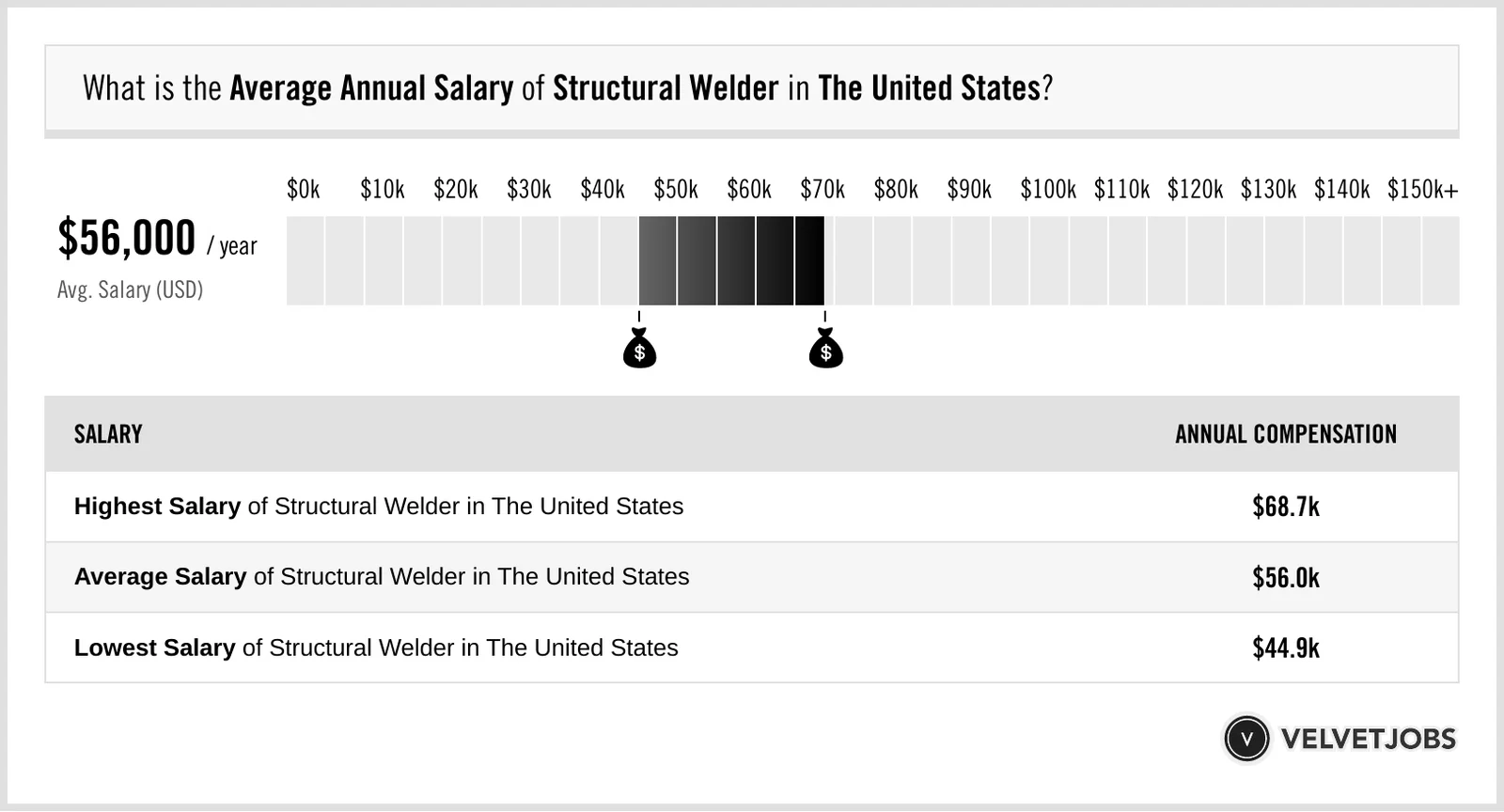
- Structural and industrial construction: May include strong overtime potential, travel, heights, weather exposure, and project-based employment.
- Aerospace and precision fabrication: Often values tight tolerances, documentation, clean work, and specialized materials.
- Maintenance and repair: Rewards troubleshooting and adaptability because every job may involve different equipment or access limitations.
Pipeline and industrial shutdown work
Pipeline refinery power-generation and shutdown projects can produce impressive weekly earnings because workers may receive overtime travel pay.
Do not compare a shutdown paycheck with a normal 40-hour shop paycheck without separating base wages from overtime and allowances. A short project can produce a high annualized figure on paper but less dependable income across a full year.
Manufacturing and fabrication shops
Manufacturing employers may offer more predictable schedules, indoor work, training, and benefits. Pay varies widely based on whether the job involves simple repetitive welds or complex assemblies requiring multiple processes and close dimensional control.
Production targets can also influence the experience. A steady shop may be financially valuable for a new welder who needs practice, even if the initial wage is not the highest available.
Union and public-sector opportunities
Union contracts and public-sector employers may provide structured wage progression, health insurance, retirement contributions, paid leave, and overtime rules. The starting wage may not always be the highest local offer, but the total package can be stronger.
Applicants should review eligibility requirements, apprenticeship terms, dues, probationary periods, and the schedule for raises. A written wage scale is more useful than a vague promise that pay will increase later.
What Raises a Welder’s Earning Potential?
The most useful career improvements are those that make a welder more capable, more reliable, or harder to replace. Employers generally pay more for work that reduces rework, protects schedules, passes inspection, and solves problems without extensive supervision. This is an important consideration for average welder salary.
Weld quality is central, but it is not the only factor. Accurate layout, joint preparation, fit-up, distortion control, documentation, and safe work habits all influence how much responsibility a worker can handle.
- Build process range: Add useful processes gradually instead of collecting training that you cannot perform confidently.
- Learn drawings: Blueprint reading, symbols, tolerances, and weld callouts help you qualify for less repetitive work.
- Protect quality: Track recurring defects and understand their causes rather than simply correcting them after inspection.
- Document results: Keep records of qualifications, materials, processes, positions, and successful project experience.
Certifications and qualification tests
Certifications can open doors but their value depends on whether local employers actually need them A qualification connected.
Ask employers which qualifications are required, whether they pay for testing, and how continuity or renewal is handled. Never claim a qualification that has expired or does not cover the work being performed.
Blueprint reading and fit-up
Welders who can understand drawings and prepare accurate joints often contribute earlier in the production process. Poor fit-up can create excessive gaps, distortion, lack of fusion, or unnecessary grinding, so a worker who prevents those issues saves time.
Basic math, measurement, angles, and material identification are practical skills with direct workplace value. They can also support advancement into fabrication, inspection, or lead roles.
Reliability and communication
Attendance punctuality safe behavior and clear communication may sound less technical than welding but they strongly affect employability A skilled worker who misses deadlines or ignores procedure changes can create more risk than a.
When asking for a raise, connect your request to measurable contributions: additional processes, fewer defects, independent assignments, training support, improved production, or successful work in difficult conditions.
How to Compare a Welding Job Offer
The hourly rate is only the starting point. Two offers with the same wage can have very different annual value if one provides regular overtime, paid holidays, health coverage, retirement contributions, tools, or a short commute.
Ask for the complete compensation picture in writing. If the employer cannot guarantee hours, calculate income using a conservative schedule rather than assuming every available shift will continue.
- Guaranteed schedule: Confirm expected weekly hours, seasonal interruptions, and whether the position is temporary or permanent.
- Overtime: Ask when overtime begins, whether it is common, and whether weekend or night premiums apply.
- Benefits: Compare health insurance costs, retirement contributions, paid leave, disability coverage, and holiday pay.
- Travel terms: Clarify mileage, lodging, per diem, travel time, rotation schedules, and who pays for transportation.
| Offer detail | Why it matters | Question to ask |
|---|---|---|
| Hourly wage | Determines regular gross pay | Is this the starting rate or the post-probation rate? |
| Weekly hours | Shows whether annual pay is realistic | How many hours did workers average recently? |
| Overtime | Can significantly change total income | Is overtime voluntary, seasonal, or expected? |
| Benefits | May add substantial compensation | When do benefits begin, and what do they cost? |
| Work conditions | Affects health, comfort, and retention | How much is indoors, outdoors, elevated, or confined? |
Annualizing an hourly wage
To estimate a basic annual figure multiply the hourly wage by expected weekly hours and the number of weeks actually worked At 25 per hour 40 hours per.
Overtime should be treated as potential income unless the employer can show that it is consistently available. Likewise, per diem should not be treated as ordinary wages because it may compensate for travel expenses rather than increase disposable income.
Questions that reveal hidden trade-offs
Ask why the position is open, how long current employees stay, and what causes work interruptions. Also ask how performance is measured and what a successful worker can expect after six or twelve months.
These questions can uncover excessive turnover, unstable project schedules, or unrealistic production demands. They can also identify a strong employer that offers genuine training and a clear progression path.
Common Mistakes When Estimating Welder Pay
Salary research becomes misleading when workers compare unlike jobs or assume the best possible schedule. A careful estimate should separate dependable income from income that depends on travel, overtime, bonuses, or temporary market conditions.
It is also easy to overlook physical demands A higher wage may reflect heat noise fumes awkward positions heavy lifting outdoor exposure or a greater risk of injury.
- Using one national number: National figures cannot replace local research because wages and living costs vary by market.
- Counting overtime as guaranteed: A strong project may end, leaving ordinary base hours.
- Ignoring benefits: A lower wage with health coverage and retirement contributions may be worth more overall.
- Paying for unnecessary training: Verify that a certificate is recognized and requested by employers before spending money.
Another mistake is assuming that more certificates automatically lead to higher pay. Employers may prefer one well-qualified worker with excellent fit-up and inspection results over someone with several unrelated credentials.
Finally do not accept unsafe work because the wage looks attractive Welding requires adequate ventilation eye and skin.
Planning a Welding Career for Higher Income
A practical career plan combines technical development with market awareness. Start by identifying the employers and industries within a reasonable travel distance, then examine the skills they repeatedly request.
That approach is more efficient than taking every available class. If local manufacturers need aluminum TIG work, while regional contractors need structural flux-cored welding, the better choice depends on your interests, transportation, tolerance for travel, and desired schedule.
- First stage: Build safe fundamentals, consistent weld quality, measurement skills, and reliable attendance.
- Second stage: Add a process or material that local employers actively need.
- Third stage: Seek harder positions, independent fit-up, inspection exposure, or documented production responsibility.
- Long-term stage: Consider supervision, inspection, estimating, teaching, or specialized field work if it fits your goals.
Choosing between school and work
A training program may provide structured practice, foundational theory, and access to qualification tests. Direct employment may provide income, production experience, and exposure to real deadlines sooner.
The best route depends on current skill level and the local hiring market Compare tuition tools transportation lost wages graduation outcomes and whether employers recruit from the program.
When travel is worth considering
Traveling work can raise gross earnings, particularly for shutdowns, large construction projects, and remote industrial sites. It may also accelerate experience because workers encounter varied materials, positions, procedures, and job conditions.
The trade-off is time away from home, uncertain project duration, physical fatigue, and possible gaps between assignments. Before accepting, calculate the net value after transportation, meals, housing, unpaid travel time, and time away from family.
Average Welder Salary FAQ
These questions address the most common pay decisions for people researching welding as a career or evaluating a current offer. The answers are intentionally framed as ranges and comparisons because individual markets differ.
What is a good starting salary for a welder?
A starting wage around $18 to $24 per hour can be reasonable in many U.S. markets, although local conditions may place it higher or lower. Training, test performance, blueprint skills, and the type of employer all affect the starting point.
Evaluate the raise schedule and training opportunity as carefully as the initial number. A position that builds useful experience may improve long-term earning power faster than a slightly higher but repetitive job.
Can welders make over $100,000 a year?
Yes, some welders can exceed $100,000 in gross annual income, but it is not typical for ordinary 40-hour entry-level work. Such totals often involve substantial overtime, travel, specialized qualifications, remote projects, union scales, hazardous conditions, or a combination of those factors.
Ask whether the figure represents base wages or a temporary period with extensive overtime. Gross income also differs from take-home pay after taxes, insurance, retirement deductions, travel costs, and unpaid time.
Do certified welders earn more?
Certification can improve access to higher-paying assignments when it matches an employer’s actual requirements. It does not guarantee a raise by itself, especially if the worker cannot produce consistent quality in the required process and position.
The strongest combination is a relevant qualification plus dependable field performance, code awareness, documentation, and the ability to pass employer testing.
Which welding specialty pays the most?
There is no single highest-paying specialty in every market. Pipe, pressure, industrial maintenance, power generation, shipbuilding, aerospace, and specialized construction can all offer strong wages under the right conditions.
The highest posted rate may also carry the greatest travel, schedule, inspection, or safety demands. Compare total compensation and working conditions rather than choosing by specialty name alone.
Is welding a good career without college?
Welding can provide a solid career path without a four-year college degree. Many workers enter through vocational school, apprenticeships, employer training, military experience, or supervised shop work.
Progress depends on developing skills employers can verify. Blueprint reading, math, multiple processes, inspection awareness, safe work habits, and reliable production are more important than simply avoiding college.
How much do welders make per hour?
Many U.S. welders earn approximately $22 to $29 per hour, while entry-level workers may earn less and experienced specialists may earn considerably more. Overtime and shift premiums can raise the effective hourly rate during busy periods.
When comparing hourly offers, confirm whether the rate includes a temporary premium, a night-shift differential, or a qualification increase that applies only after testing.
Does location affect welder pay more than experience?
Location can have a major effect, particularly when comparing a rural fabrication market with a major industrial region. Experience still matters because it determines which jobs you qualify for and how independently you can perform.
The strongest earning potential usually comes from combining useful experience with a location or industry that has sustained demand. Relocation is worth considering only after comparing living costs and dependable annual hours.
Conclusion
The average welder salary is best understood as a flexible range rather than a promise. Your actual income will depend on experience, specialty, location, qualifications, schedule, overtime, benefits, and whether the work is steady throughout the year.
Use wage data to establish a baseline then evaluate the complete offer and the skills it will help you build Never trade away ventilation protective equipment training or.
Compare three local welding openings by base wage, guaranteed hours, benefits, working conditions, and requested skills, then choose the training or qualification that closes the most valuable gap.