How to MIG Weld Cast Iron: Setup Steps and Troubleshooting Tips
You can MIG weld cast iron for repairs, but success depends on clean metal, controlled heat, suitable filler wire, and very slow cooling.
The uncertainty usually starts before the arc: a crack, porous casting, or contaminated surface can look like a simple weld failure even when the actual problem is hidden inside the metal. Cast iron’s carbon content, brittleness, and uneven heat response make appearance an unreliable guide.
Learning how to mig weld cast iron means more than choosing a wire and pulling a bead. You must identify the cast iron, determine whether the part is repairable, remove oil and graphite-rich contamination, control preheat and interpass temperature, and prevent the repaired area from cooling too quickly.
This guide explains the practical setup joint preparation filler choices welding sequence cooling methods and troubleshooting checks that matter most By the end you will be able to.
- ✓Most cast-iron MIG repairs require short, controlled welds rather than one long bead.
- ✓Cleaning must remove oil and embedded contamination, not merely visible dirt.
- ✓Nickel-based wire is generally preferred when the weld must remain machinable or tolerate cast iron’s movement.
- ✓Preheat, low heat input, peening, and slow cooling reduce cracking risk but cannot overcome severely damaged or unsuitable castings.
- ✓Always test the repair and inspect for cracks before returning a safety-critical part to service.
How to MIG Weld Cast Iron
Cast iron is not one uniform material Gray iron is common in engine blocks machine bases housings and older equipment while ductile malleable and alloy cast irons behave.
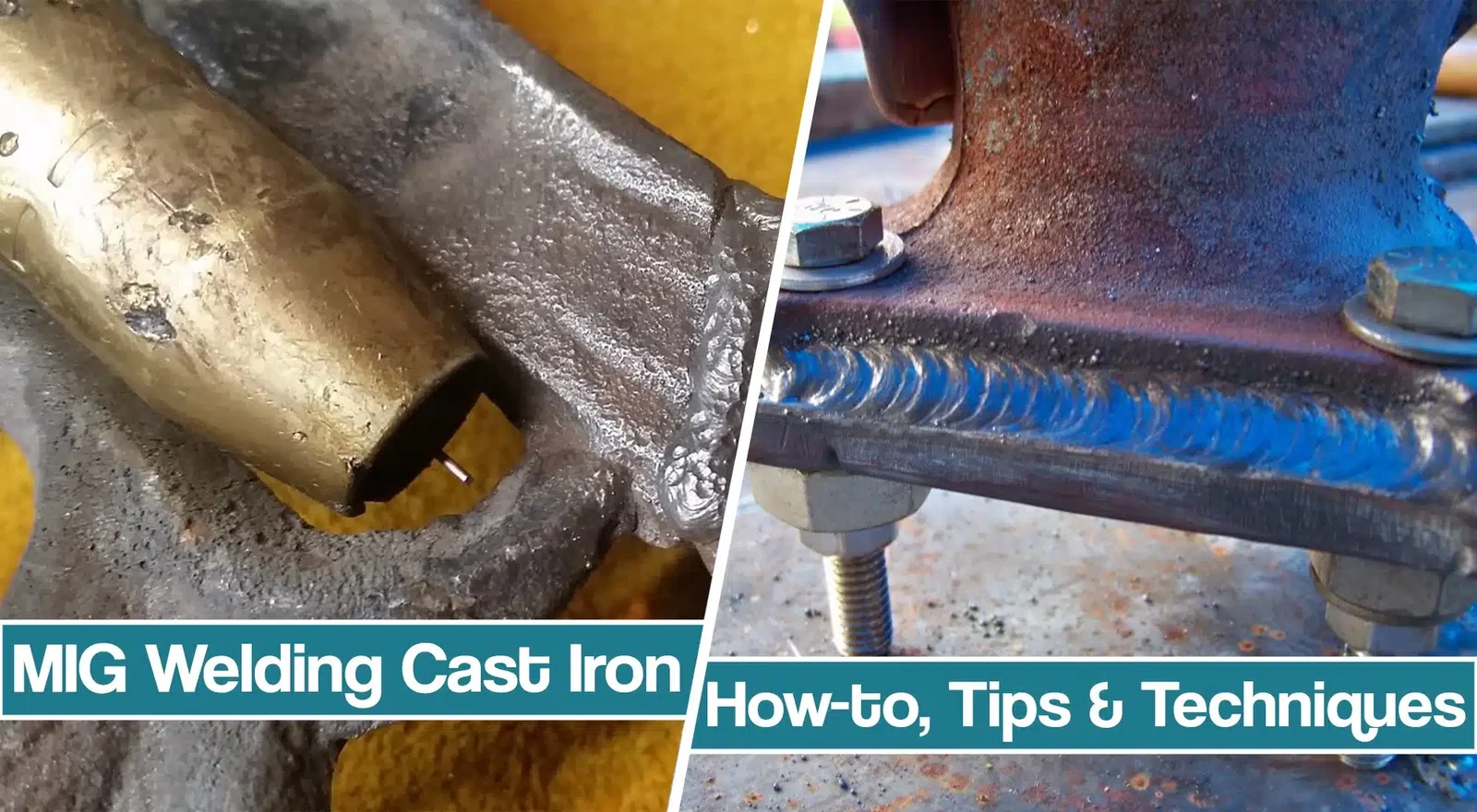
The casting may also contain years of absorbed oil, coolant, grease, carbon, rust, and cleaning chemicals. Heat draws these contaminants toward the weld pool, where they create bubbles, pinholes, inclusions, and unstable arc behavior. A repair that looks solid on top may therefore be porous below the surface.
- Part function: Avoid treating a brake, pressure, lifting, steering, or highly loaded component as a routine weld repair.
- Iron type: A magnet, spark observation, fracture appearance, or service history can provide clues, but positive identification may require material testing.
- Damage pattern: A clean, accessible crack is more repairable than a shattered mounting ear, oil-soaked fracture, or section missing from a stressed casting.
- Machining needs: Decide whether the finished weld must be drilled, tapped, bored, or machined before selecting filler.
Why cast iron cracks so easily
When steel is heated, it can often stretch enough to accommodate welding shrinkage. Cast iron has much less tolerance for that movement. The weld metal contracts as it cools, while the cooler casting resists it; the resulting stress can create cracks beside the weld or through the heat-affected zone.
Rapid cooling makes the problem worse. A hard, brittle zone can form near the weld, particularly if the base metal is chilled by a large mass, cold shop air, water, or a wet fixture. The first bead may look acceptable while a crack develops several minutes later.
When MIG is a poor choice
MIG can be useful for small repairs, buildup, and noncritical castings, but it is not automatically the best process. A low-hydrogen stick process with nickel electrodes, TIG with suitable nickel filler, oxyfuel brazing, or professional furnace repair may offer better control for a particular part.
Do not rely on a home repair for components whose failure could cause injury or release stored pressure. If the casting is part of a pressure vessel, lifting system, vehicle control system, or critical machine structure, obtain an assessment from a qualified welding or repair professional.
Choose the MIG Wire, Gas, and Polarity
Wire selection determines more than bead appearance The filler must wet the casting without forcing excessive heat into it and it should have enough ductility to accommodate the.
For many repair situations a nickel-bearing MIG wire is the more appropriate option Nickel-based deposits are typically more forgiving and more machinable than ordinary steel deposits although exact.
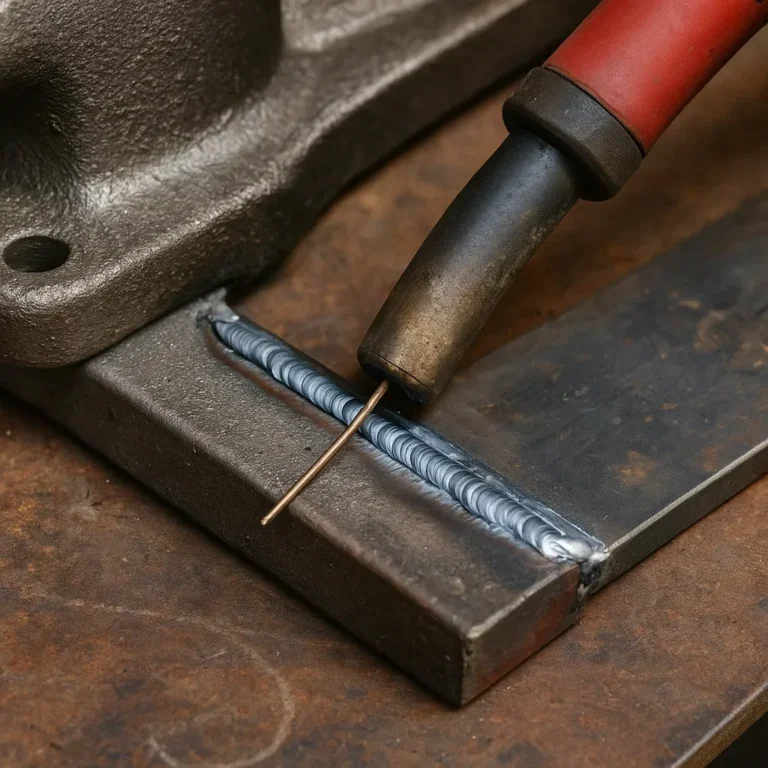
- Nickel wire: Usually the preferred direction for repair work because the deposit can be more ductile and machinable.
- Stainless wire: Sometimes used for specialized buildup, but it is not a universal cast-iron solution and may create an unsuitable hardness or corrosion pairing.
- Mild-steel wire: Acceptable only for limited, low-consequence repairs where brittleness and machining are not major concerns.
- Shielding gas: Use the gas recommended for the selected wire; an argon-rich mixture is commonly chosen for controlled MIG transfer, while excessive carbon dioxide can increase spatter and heat.
Wire diameter and machine capability
A smaller wire can help limit heat input and make short stitch welds easier provided your machine feeds it consistently A larger wire may be appropriate for heavier.
Set the machine using the wire maker s starting range rather than guessing from mild-steel settings Cast iron usually benefits from a controlled relatively cool arc but a.
Polarity and shielding
Many solid MIG wires use direct-current electrode positive, but the correct polarity depends on the specific wire. Verify the spool or technical data before welding. Incorrect polarity can cause excessive spatter, unstable transfer, weak penetration, or a sooty-looking deposit.
Shielding gas must flow smoothly around the arc Keep the nozzle close enough to protect the puddle but not so close that it drags through the joint or.
Prepare the Casting and Control Heat
Preparation is often the difference between a repair that survives and one that fails beside the bead Remove paint rust scale oil and loose graphite from a broad. This distinction matters when answering “how to mig weld cast iron”.
Use mechanical cleaning first followed by a suitable solvent that leaves no residue Allow the part to dry fully Solvent trapped in a crack or porous casting can.
- Stop the crack: If appropriate for the part, drill small stop holes at crack ends before grinding, but do not drill a safety-critical component without a qualified repair procedure.
- Open the joint: V-groove the crack with a grinder or suitable cutter until sound metal is reached, leaving a manageable root rather than a razor-thin edge.
- Remove oil: Heat-cleaning may draw oil out of the casting, but it must be done with ventilation and controlled temperature; flaming contamination is not a substitute for cleaning.
- Support the part: Position it so the joint is accessible and free from unnecessary restraint that would increase contraction stress.
Preheating without overheating
Moderate even preheat reduces the temperature difference between the weld and the surrounding casting The exact temperature depends on the alloy thickness geometry and filler so use the.
Do not heat only the crack while leaving a large surrounding mass cold. A local hot spot expands against cold metal and can create the very stress you are trying to avoid. Warm a broad area around the repair, and keep the temperature consistent during welding.
Joint design and restraint
A narrow, deep groove encourages excessive penetration and concentrated shrinkage. A wider, well-blended groove allows access and distributes the deposit. Remove sharp corners where practical, but avoid grinding away sound material unnecessarily.
Clamps can hold a loose piece in alignment, yet rigid restraint can make cracking more likely. Let the repair contract as naturally as the application allows. If the damaged part must remain aligned, use support that controls movement without locking the entire casting into a highly restrained condition.
MIG Welding Procedure for Cast Iron
The safest general approach is a series of short welds separated by cooling intervals. Do not attempt to fill a long crack in one continuous pass. A long bead concentrates heat, increases shrinkage, and can raise the casting temperature unevenly.
Before welding, practice the motion on scrap steel or an expendable area if available. Set wire stick-out, travel angle, and machine response before approaching the casting. The arc should be stable, the puddle visible, and the bead narrow enough that you can control where heat enters the base metal.
- Inspect the groove: Confirm that the crack is open, clean, dry, and free of sharp unblended edges.
- Bring the part to temperature: Heat the casting evenly and confirm that it is not cold at the far side of the repair.
- Make short stitches: Deposit small beads, often only a fraction of an inch to about an inch depending on the joint and procedure.
- Alternate locations: Skip around the repair instead of progressing continuously in one direction, allowing earlier stitches to moderate.
- Peen carefully: While a deposit is hot and malleable, light rounding taps can reduce contraction stress; do not hammer a brittle or already-cooling bead aggressively.
- Brush and inspect: Remove spatter and slag-like surface residue if present, then check each stitch before adding the next.
- Cool slowly: Bury the part in dry insulating material or cover it so heat leaves gradually and evenly.
Arc length, travel, and bead shape
Keep a consistent arc length and avoid excessive weaving. A slight work angle can help place the bead against both sides of the groove, but broad side-to-side motion adds heat without necessarily improving fusion. Short, controlled movements are easier to repeat than a long sweeping pass.
A sound bead should blend into the prepared edges without a sharp undercut or tall cold ridge If the bead sits on top like a rope increase heat.
Interpass control and peening
Allow the area to cool between stitches until it is warm but not excessively hot. The correct interval depends on the part and procedure; the important principle is preventing the casting from accumulating uncontrolled heat. Avoid using water or compressed air to force cooling.
Light peening can help a ductile deposit accommodate shrinkage, but it is not a cure for poor preparation or incompatible filler. Use a rounded tool and controlled taps. Heavy blows can introduce dents, detach a weak bead, or crack a hardened heat-affected zone.
- One continuous bead: It creates a large thermal cycle and often cracks beside the weld.
- Cold starts: Beginning on contaminated, cold metal traps porosity and produces poor wetting.
- Excessive grinding: Removing a large amount of material can weaken a thin casting and increase the volume that must be filled.
- Forced cooling: Water and compressed air create steep temperature gradients that encourage cracking.
Inspect the Repair and Diagnose Failure
Inspection should continue after the weld appears finished. Cast iron may crack during cooling, after unclamping, or when the part is placed back under load. Clean the repair and examine the bead, toes, ends of the original crack, and nearby casting under strong light.
Keep these limitations in mind when considering “how to mig weld cast iron”.
For important repairs, use an appropriate nondestructive examination method such as dye penetrant or magnetic particle inspection, provided the material and surface condition make that method suitable. A visual inspection cannot reliably reveal tight cracks beneath paint, into the joint root, or at the end of a weld.
- Pinholes or bubbles: Suspect oil, moisture, inadequate shielding, a dirty nozzle, gas leaks, or excessive arc length.
- Crack beside the bead: Check cooling speed, preheat, restraint, bead length, filler compatibility, and whether the original crack was fully removed.
- Bead sitting high: Look for cold settings, fast travel, poor joint access, or a groove contaminated with graphite and oxide.
- Crack at the bead end: Improve crater filling, stagger stops and starts, and avoid ending every stitch at a crack tip.
Porosity versus poor fusion
Porosity appears as small holes or cavities in the weld. It often traces back to contamination or shielding, but cast iron can continue releasing oil from its pores after repeated heating. Clean again, extend the cleaned area, check gas flow, and discard contaminated wire if necessary.
Poor fusion is different the bead may be intact but fail to bond properly to one or both groove walls The usual causes are insufficient heat excessive travel.
Hard spots and machining problems
A repair can weld successfully yet become difficult to machine Rapidly chilled cast iron near the fusion boundary may form a hard zone while unsuitable filler can produce.
Do not assume a smooth grinding finish proves structural quality. Grinding can hide a surface crack temporarily while leaving the defect beneath it. Inspect after final machining and again after the casting has fully cooled.
When to Use Nickel, Brazing, or Another Process
MIG is attractive because it is fast and widely available but process convenience should not outweigh repair reliability A nickel electrode used with a suitable low-hydrogen stick procedure.
Brazing is another option when lower process temperature and reduced base-metal melting are valuable. It may be appropriate for some noncritical cracks or attached pieces, but brazed joints have different strength, service-temperature, and machining characteristics. The right choice depends on load, temperature, joint design, and required appearance.
| Repair situation | Potentially suitable direction | Main caution |
|---|---|---|
| Small, accessible, noncritical crack | Controlled MIG stitch repair | Still requires cleaning, preheat, and slow cooling |
| Machinable structural buildup | Nickel-based filler or qualified repair procedure | Confirm deposit hardness and compatibility |
| Thin or delicate casting | Brazing or a low-heat specialized method | Verify service temperature and joint strength |
| Pressure, lifting, or safety-critical part | Professional assessment and documented procedure | Do not rely on an improvised home repair |
Repairability decision
A casting is a stronger candidate when the crack is fully accessible the surrounding metal is sound the part can be cleaned thoroughly and the repair is not.
If the casting has already cracked after an earlier repair, do not simply grind out the newest visible line and repeat the same procedure. The failure may indicate unsuitable filler, excessive restraint, hidden damage, incorrect preheat, or a design load the repair cannot withstand.
Safety Practices for Cast-Iron MIG Repairs
Welding cast iron creates the ordinary hazards of arc welding plus risks from old coatings absorbed oils unknown residues and hot brittle fragments Wear a properly rated helmet.
Grinding can expose sharp edges and throw fragments, while preheating can release fumes from paint or oil that were not obvious before heating. Stop if the casting gives off unusual smoke, odor, or flame. Identify and remove hazardous coatings before welding rather than trying to burn through them.
- Stored energy: Depressurize, drain, and isolate machinery before repairing housings, tanks, cylinders, or hydraulic components.
- Hot metal: Mark or barricade the part while it cools; castings can remain dangerously hot long after the arc stops.
- Fume control: Do not depend on a small fan that blows fumes across your breathing zone; use ventilation that captures contaminants safely.
- Final service: Do not return a repaired safety-critical part to use without appropriate inspection or professional approval.
Frequently Asked Questions About MIG Welding Cast Iron
Can ordinary MIG wire weld cast iron?
Ordinary mild-steel wire can deposit metal on cast iron, but it is not automatically a reliable repair filler. The deposit and heat-affected area may be too hard or brittle, especially where the joint carries load or must be machined.
For repair work, choose filler based on the casting, service conditions, and required finish. Nickel-based wire is often a better starting point, but the specific product data and procedure still matter.
Does cast iron need to be preheated before MIG welding?
Preheating is commonly helpful because it reduces the temperature difference between the weld and the surrounding casting. It can lower thermal shock and slow the cooling rate.
The required temperature is not universal. Heat the part evenly according to the material and filler guidance, and avoid creating a small hot spot surrounded by cold metal.
Why did my cast-iron MIG weld crack after it cooled?
Common causes include rapid cooling, long welds, excessive heat input, rigid restraint, incompatible filler, inadequate crack removal, and contamination that weakened the deposit. The crack may also be a continuation of the original defect outside the visible groove.
Inspect the entire repair, not just the bead. Review preparation, preheat, stitch length, cooling method, and the casting’s service load before attempting another repair.
Can you weld cast iron without preheating?
Some very small repairs are attempted with minimal or no preheat, but the risk of cracking is generally higher. A cold, massive casting pulls heat rapidly from the puddle and creates a steep thermal gradient.
If the part cannot be heated safely or evenly, consider whether MIG is the right process. Lower-heat brazing or a qualified specialized repair may be more suitable for the application.
Should you peen a cast-iron MIG weld?
Light peening of a hot, ductile deposit can help reduce contraction stress. It must be controlled and performed while the weld metal can still respond without shattering.
Do not strike a cold bead heavily, and do not use peening to compensate for poor cleaning, excessive weld length, or the wrong filler. Those underlying problems must be corrected first.
How do you stop porosity when MIG welding cast iron?
Grind to clean, sound metal and remove oil from a broad area around the repair. Confirm that the part is dry, the shielding gas is correct and leak-free, the nozzle and diffuser are clean, and the wire is not contaminated.
If porosity continues, stop welding and investigate absorbed oil or coatings in the casting. Repeatedly covering porous welds usually hides rather than fixes the defect.
Is MIG welding cast iron as strong as the original casting?
Not necessarily. A weld can restore function in a suitable low-consequence repair, but the weld metal, heat-affected zone, and surrounding casting do not behave exactly like the original material.
Strength depends on joint design, casting quality, filler, procedure, loading, and inspection. Treat safety-critical repairs as engineering decisions rather than cosmetic fixes.
Conclusion
Successful cast-iron MIG work depends on controlling the entire repair identify the casting clean deeply select compatible filler preheat evenly use short stitches manage interpass temperature and cool the part slowly Nickel-based wire may improve ductility and machinability but no filler can.
Before deciding how to mig weld cast iron, consider the component’s consequences if it fails. For noncritical, accessible repairs, a carefully controlled procedure can be practical; for pressure-bearing, structural, or safety-related parts, professional evaluation and inspection are the safer limitation.
Before welding, open the crack to sound metal, clean beyond the visible damage, confirm the filler and machine settings, and plan short stitches with slow cooling.