Can All MIG Welders Weld Aluminium: Clear Answers and Key Facts
You’ve got a project in mind, maybe a custom automotive part, a boat repair, or some intricate fabrication, and aluminum is the material of choice. It’s lightweight, strong, and corrosion-resistant, making it incredibly popular across many industries. Naturally, you might be looking at your trusty MIG welder, wondering if it’s up to the task. It handles steel and stainless steel with ease, but aluminum feels like a different beast entirely.
The question isn’t just about whether a MIG welder can weld aluminum, but whether can all MIG welders weld aluminium effectively and reliably. The short answer is no, not all MIG welders are equally suited for aluminum, and some simply aren’t designed for it at all. Welding aluminum presents unique challenges that require specific equipment configurations and techniques.
My goal with this article is to demystify the process and help you understand precisely what it takes to MIG weld aluminum. I’ll explain why aluminum is different, what specific features and accessories your MIG welder needs, and what adjustments you’ll have to make. By the end, you’ll know whether your current setup is capable, what upgrades you might need, and how to approach your aluminum welding projects with confidence.
Understanding Why Aluminum Welding is Different
Before diving into equipment specifics, it’s crucial to grasp why aluminum behaves so differently under the welding arc compared to steel. These fundamental properties dictate the specialized requirements for MIG welding aluminum.
High Thermal Conductivity
Aluminum dissipates heat much faster than steel. This means you need significantly more heat input to establish and maintain a molten puddle. If your welder can’t deliver enough power, or if you’re not moving fast enough, the heat will spread too quickly, leading to poor penetration and cold laps.
Low Melting Point
While it needs more heat, aluminum also has a relatively low melting point (around 1220°F or 660°C). This combination of high thermal conductivity and low melting point makes it prone to “burn-through” if the heat is concentrated too long in one spot, especially on thinner gauges. It’s a delicate balance.
Softness and Wire Feeding Challenges
Aluminum filler wire is much softer and more pliable than steel wire. This characteristic makes it highly susceptible to kinking, bird-nesting, and tangling within the welding gun’s liner and drive rollers. Standard steel wire feeders are often inadequate for reliably pushing soft aluminum wire.
Oxide Layer Formation
Aluminum rapidly forms a tenacious, high-melting-point oxide layer on its surface when exposed to air. This oxide layer melts at a much higher temperature (around 3700°F or 2037°C) than the base metal itself. If not properly dealt with, this oxide can contaminate the weld, leading to porosity, lack of fusion, and a weak joint. AC TIG welding uses an alternating current to clean this oxide layer, but MIG welding relies on other methods.
Porosity Susceptibility
Aluminum is highly prone to porosity. Hydrogen, often introduced by moisture on the base metal, filler wire, or in the shielding gas, readily dissolves into molten aluminum. As the weld cools and solidifies, the hydrogen comes out of solution, forming gas bubbles (pores) in the weld metal. Proper cleaning and dry conditions are paramount.
Essential Equipment for MIG Welding Aluminum
Given the unique challenges, a standard MIG welder configured for steel simply won’t cut it for aluminum. Here’s a breakdown of the specialized equipment and modifications required.
Spool Gun or Push-Pull Gun
This is arguably the most critical component for successful aluminum MIG welding. Because aluminum wire is so soft, pushing it long distances through a standard MIG gun liner is problematic. Both spool guns and push-pull guns address this issue by minimizing the distance the wire is pushed.
- Spool Gun: A spool gun has a small spool of aluminum wire mounted directly on the welding gun itself. This means the wire only travels a few inches from the spool to the contact tip, virtually eliminating feeding issues. Most modern MIG welders designed for aluminum will have a port for a spool gun, or it can be added as an accessory.
- Push-Pull Gun: A push-pull gun features a motor in the gun that “pulls” the wire, working in conjunction with the standard drive rollers in the welder that “push” it. This synchronized action provides much better control over the soft wire, allowing for longer cable lengths than a spool gun. Push-pull systems are typically found on higher-end industrial machines.
Without one of these specialized guns, you’ll likely experience constant wire feeding problems, leading to frustration and poor weld quality. Some experienced welders can get away with very short standard MIG gun liners (e.g., 6-8 feet) and specific drive roller setups for aluminum, but it’s generally not recommended for consistent results, especially for beginners.
Appropriate Drive Rollers
If you’re using a push-pull gun or attempting to feed aluminum wire through a very short standard liner, you’ll need specific drive rollers:
- U-Groove Drive Rollers: These rollers have a U-shaped groove that cradles the soft aluminum wire without deforming it. V-groove rollers, designed for harder steel wire, will flatten and deform aluminum wire, causing feeding issues.
- Smooth (Knurled-Free) Rollers: Knurled (toothed) rollers, common for flux-cored wire, will chew up soft aluminum wire, creating shavings and causing blockages. Ensure your rollers are smooth.
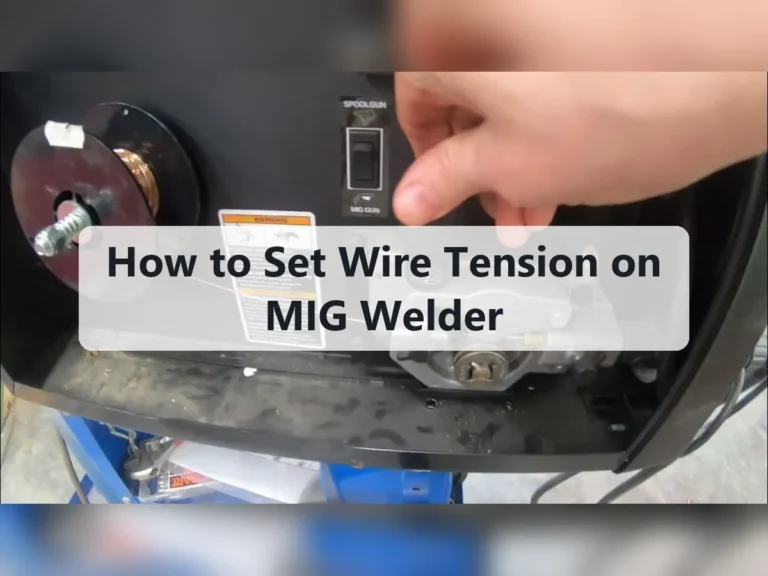
Always adjust the drive roll tension carefully. Too much tension will deform the wire, while too little will cause slippage.
Teflon or Nylon Liner
The standard steel liner in your MIG gun creates too much friction for soft aluminum wire. It will abrade the wire, causing shavings and blockages. You need to replace it with a low-friction Teflon, nylon, or other plastic liner. These liners are specifically designed to allow aluminum wire to glide smoothly through the gun cable.
100% Argon Shielding Gas
Unlike steel, which often uses C25 (75% Argon / 25% CO2) or pure CO2, aluminum requires 100% pure argon shielding gas. Argon provides a stable arc, excellent penetration, and helps to displace atmospheric contaminants, minimizing porosity. Mixtures containing CO2 are not suitable for aluminum as CO2 will react with the molten aluminum, leading to poor weld quality and excessive soot.
Correct Aluminum Filler Wire
Choosing the right aluminum filler wire is crucial for both weldability and the final properties of the joint. The most common types are:
- ER4043: This is the most widely used aluminum filler wire. It contains 5% silicon, which improves fluidity, reduces solidification cracking, and results in bright, clean welds. It’s excellent for general-purpose welding of 3003, 5052, 6061, and 6063 alloys. However, 4043 welds are not heat-treatable for strength and can turn dark gray when anodized.
- ER5356: Containing 5% magnesium, 5356 provides higher tensile strength and better ductility than 4043. It’s often preferred for marine applications due to its corrosion resistance and is suitable for welding 5XXX series alloys (like 5052, 5083, 5086) and 6061. Unlike 4043, 5356 welds can be anodized to match the base metal color. However, it’s more prone to solidification cracking on some alloys and can be more difficult to feed due to its stiffness.
Always match the filler wire to the base metal alloy and the intended application. Consult a filler metal selection chart if you’re unsure.
Larger Contact Tip
Aluminum wire expands more when heated than steel wire. To prevent the wire from sticking or fusing to the contact tip, you’ll need a contact tip that is one size larger than the nominal wire diameter. For example, if you’re using 0.035-inch aluminum wire, use a 0.040-inch contact tip. This provides the necessary clearance for expansion.
MIG Welder Capabilities and Specifications
Beyond the accessories, the core capabilities of your MIG welder itself play a significant role in its suitability for aluminum.
Sufficient Amperage Output
As mentioned, aluminum requires more heat. Your MIG welder needs to have enough amperage output to provide the necessary power for the thickness of aluminum you plan to weld. Thicker aluminum will demand higher amperages. A small 120V “hobby” welder might struggle with anything beyond very thin aluminum (e.g., 1/8 inch or less) due to limited power output.
Duty Cycle
Welding aluminum often involves higher amperages and longer continuous beads. A good duty cycle is important to prevent the machine from overheating and shutting down frequently. Look for a welder with a duty cycle that matches your intended use.
Inductance Control (Desirable but Not Always Essential)
Some advanced MIG welders offer inductance control. Inductance affects the “crispness” or “fluidity” of the arc. Adjusting inductance can help fine-tune the arc characteristics for aluminum, improving bead profile and reducing spatter. While not strictly mandatory, it’s a beneficial feature for optimizing aluminum welds.
Pulse MIG Capability (Advanced)
For the absolute best results, especially on thinner aluminum or critical applications, a MIG welder with pulse welding capabilities is ideal. Pulse MIG delivers short, high-current pulses followed by a lower background current. This allows for better heat control, reduced burn-through, improved penetration, and significantly less spatter. Pulse MIG machines are typically more expensive and geared towards professional or industrial use.
Can All MIG Welders Weld Aluminium? The Verdict.
So, to directly answer the question: no, not all MIG welders can weld aluminum effectively or reliably.
- Basic 120V MIG Welders (without spool gun capability): These are generally NOT suitable for aluminum. Their power output is often insufficient, and without a spool gun or push-pull system, feeding soft aluminum wire through a standard liner is an exercise in frustration. You might get very poor, inconsistent welds on extremely thin aluminum, but it’s not a practical solution.
- 120V/240V Dual Voltage MIG Welders (with spool gun capability): Many modern “prosumer” or light industrial MIG welders, especially those with dual voltage input, are designed to accept an optional spool gun. With the correct spool gun, 100% argon, and appropriate wire/tips, these machines can be quite effective for welding aluminum, particularly up to 1/4 inch thickness. This is often the sweet spot for hobbyists and small workshops.
- Industrial 240V+ MIG Welders (with push-pull or pulse capability): High-end industrial MIG welders, especially those with push-pull guns or pulse MIG functionality, are fully capable of welding aluminum across a wide range of thicknesses and applications with excellent control and quality. These are professional-grade machines.
In essence, the limiting factor isn’t just the “MIG welder” itself, but its ability to be properly configured for aluminum’s unique demands, primarily through a dedicated wire feeding system (spool gun or push-pull) and sufficient power.
Setting Up Your MIG Welder for Aluminum
Once you have the right equipment, proper setup is critical for success. Here’s a step-by-step guide:
1. Install the Spool Gun or Push-Pull Gun
If your welder accepts a spool gun, connect it according to the manufacturer’s instructions. This usually involves plugging in a power cable, a control cable, and sometimes a gas line directly to the gun or through an adapter.
2. Load Aluminum Wire
Load the appropriate aluminum filler wire (e.g., ER4043 or ER5356) onto the spool gun or into the main wire feeder (if using a push-pull system). Ensure the wire diameter matches your contact tip and drive rollers.
3. Install U-Groove Drive Rollers (if applicable)
If you’re using a push-pull gun or attempting a short standard liner setup, make sure you have U-groove, smooth drive rollers installed in your main wire feeder.
4. Install Teflon/Nylon Liner (if applicable)
If you’re using a standard MIG gun with a very short liner, replace the steel liner with a Teflon or nylon one.
5. Use a Larger Contact Tip
Install a contact tip that is one size larger than your aluminum wire diameter (e.g., 0.040″ tip for 0.035″ wire).
6. Connect 100% Argon Shielding Gas
Attach your regulator to a cylinder of 100% pure argon. Set the flow rate to typically 20-30 cubic feet per hour (CFH). Aluminum welding often benefits from slightly higher gas flow rates than steel to ensure adequate coverage.
7. Set Polarity
For MIG welding aluminum, you will use DC Electrode Positive (DCEP), also known as Reverse Polarity. This is the standard polarity for most MIG welding applications, but it’s always good to double-check.
8. Adjust Drive Roll Tension
Carefully adjust the drive roll tension. It should be just enough to feed the wire smoothly without slipping, but not so tight that it deforms or crushes the soft aluminum wire. Test by feeding the wire into a gloved hand; it should stop with gentle pressure.
9. Set Welding Parameters (Voltage and Wire Feed Speed)
Aluminum welding typically uses higher wire feed speeds (WFS) and voltages than steel of comparable thickness. You’ll often hear the phrase “hot and fast” for aluminum. Start with recommended settings from your welder’s manual or a reliable welding chart for your wire diameter and material thickness. Be prepared to fine-tune.
- Voltage: Controls arc length and bead width. Too low, and the arc will be unstable; too high, and you’ll get excessive spatter and a wide, flat bead.
- Wire Feed Speed (WFS): Directly controls amperage. Too slow, and you’ll get a cold, lumpy weld; too fast, and the wire will stub into the puddle.
Techniques for MIG Welding Aluminum
Even with the right equipment, aluminum requires specific welding techniques to achieve quality results.
Cleanliness is Paramount
This cannot be stressed enough. Any contaminants—oil, grease, dirt, moisture, or the tenacious oxide layer—will lead to porosity and weak welds. Always:
- Brush: Use a dedicated stainless steel wire brush (never used on steel) to remove the oxide layer from the joint area and about an inch on either side. Brush only in one direction.
- Degrease: Wipe the area with a solvent like acetone or denatured alcohol. Allow it to fully evaporate before welding.
- Store Properly: Keep your aluminum filler wire in a clean, dry environment.
Push Angle Technique
Unlike steel, where you might use a slight drag angle, aluminum is almost always welded with a push angle (forehand technique). This pushes the shielding gas ahead of the arc, preheating the base metal, improving gas coverage, and helping to clean the oxide layer. Aim for a 10-15 degree push angle.
Travel Speed: Hot and Fast
As mentioned, aluminum dissipates heat quickly. You need to move relatively fast to outrun the heat and prevent it from spreading too much, which can lead to burn-through or excessive distortion. A faster travel speed also helps to minimize the heat-affected zone (HAZ).
Arc Length
Maintain a consistent and relatively short arc length. A longer arc can lead to instability, increased spatter, and poor shielding.
Stick Out
Keep your wire stick out (the length of wire extending from the contact tip) relatively short, typically 3/8 to 1/2 inch. This helps maintain a stable arc and good gas coverage.
No Weaving (Generally)
For most aluminum MIG welding, a straight stringer bead is preferred. Excessive weaving can introduce too much heat, lead to burn-through, and increase the risk of porosity. If you need to fill a wider gap, make multiple stringer passes.
Preheating (for Thicker Sections)
For aluminum thicker than about 1/4 inch, preheating the base metal to around 200-250°F (93-121°C) can be beneficial. This reduces the thermal shock, helps prevent cracking, and makes it easier to establish a molten puddle. Use a temperature crayon or infrared thermometer to monitor preheat temperature.
Crater Fill
At the end of a weld, rapidly pulling the gun away can leave a crater that is prone to cracking. Some welders use a technique called “crater fill” where they pause momentarily or slightly reduce wire feed speed at the end of the bead to fill the crater before breaking the arc.
Common Problems and Troubleshooting
MIG welding aluminum can be finicky. Here are some common issues and how to address them:
Wire Feeding Problems
- Issue: Kinking, bird-nesting, erratic feeding.
- Solution: Ensure you’re using a spool gun or push-pull gun. Check drive roll tension (not too tight, not too loose). Verify U-groove, smooth drive rollers. Ensure you have a Teflon/nylon liner. Check for a clogged contact tip or one that’s too small.
Porosity
- Issue: Small holes or bubbles in the weld bead.
- Solution: Thoroughly clean the base metal (brush and degrease). Ensure your shielding gas is 100% argon and the flow rate is adequate (20-30 CFH). Check for drafts in your welding area that could disrupt gas coverage. Ensure your filler wire is clean and dry. Check for leaks in your gas line.
Burn-Through
- Issue: Hole blown through the base metal, especially on thin material.
- Solution: Reduce voltage or wire feed speed. Increase travel speed. Use a push angle. Consider using a copper backup bar for very thin material.
Lack of Penetration / Cold Laps
- Issue: Weld bead sits on top of the base metal, poor fusion.
- Solution: Increase voltage or wire feed speed. Decrease travel speed slightly (but still “fast”). Ensure proper cleaning of the base metal. Consider preheating for thicker material.
Excessive Spatter
- Issue: Molten metal droplets expelled from the weld puddle.
- Solution: Adjust voltage and wire feed speed; often a sign of incorrect settings. Ensure proper arc length. Check for contaminants on the base metal.
Sooty Weld
- Issue: Black, powdery residue on or around the weld.
- Solution: This often indicates insufficient shielding gas coverage or contaminants. Increase gas flow. Check for drafts. Ensure the base metal is clean.
Geographic Considerations for Aluminum Welding
While the technical aspects of aluminum welding are universal, geographical factors can subtly influence your projects and material access.
Local Industry and Material Availability
In regions with strong manufacturing, aerospace, marine, or automotive industries (e.g., the Pacific Northwest for aerospace, the Gulf Coast for marine, the Midwest for automotive), you might find a wider variety of aluminum alloys and stock sizes readily available from local suppliers. This can make sourcing specific types of aluminum, like 5052 for marine applications or 6061 for structural components, much easier and potentially more cost-effective.
Climate and Storage
Humidity is a significant enemy of aluminum welding. In humid climates (e.g., the Southeast U.S. or coastal areas), proper storage of aluminum filler wire and base materials becomes even more critical to prevent moisture absorption, which leads to porosity. Investing in climate-controlled storage or keeping wire in sealed containers can save a lot of headaches.
Local Welding Supply Stores and Expertise
Areas with a high concentration of industrial activity often have well-stocked welding supply stores with knowledgeable staff. These stores can be invaluable for getting advice on specific aluminum alloys, troubleshooting equipment issues, or finding specialized consumables like spool guns, Teflon liners, and specific filler wires. In more rural or less industrialized areas, you might need to rely more on online suppliers and self-education.
Training and Education
Welding schools and community colleges in regions with strong manufacturing bases are more likely to offer advanced courses in aluminum welding, including MIG and TIG techniques. If you’re looking to hone your skills, seeking out these educational opportunities in relevant geographic areas can be highly beneficial.
FAQ About MIG Welding Aluminum
Can a 120V MIG welder weld aluminum?
A basic 120V MIG welder without a spool gun or push-pull capability is generally not suitable for welding aluminum. Even with a spool gun, its limited power output will restrict you to very thin aluminum (e.g., 1/8 inch or less) and may struggle with consistent, quality welds due to insufficient heat. For reliable aluminum welding, especially on thicker material, a 240V or dual-voltage machine with a spool gun is highly recommended.
What kind of gas do you use for MIG welding aluminum?
You must use 100% pure argon shielding gas for MIG welding aluminum. Unlike steel, aluminum does not react well with CO2, which is found in common steel welding gas mixtures like C25 (75% Argon / 25% CO2). Using anything other than pure argon will result in poor weld quality, excessive soot, and porosity.
Do I need a spool gun to MIG weld aluminum?
Yes, a spool gun (or a push-pull gun for industrial applications) is almost always necessary for successful MIG welding of aluminum. Aluminum filler wire is very soft and prone to kinking and bird-nesting when pushed long distances through a standard MIG gun liner. A spool gun places a small spool of wire directly on the gun, minimizing the distance the wire needs to be fed and eliminating most feeding issues.
What size contact tip do I use for aluminum MIG wire?
Always use a contact tip that is one size larger than the nominal diameter of your aluminum wire. For example, if you are using 0.035-inch aluminum wire, you should use a 0.040-inch contact tip. This accounts for the greater thermal expansion of aluminum wire, preventing it from sticking or fusing inside the tip.
Can I use my steel drive rollers for aluminum wire?
No, you should not use standard V-groove or knurled steel drive rollers for aluminum wire. Aluminum wire is soft and will be deformed by V-groove rollers or chewed up by knurled rollers, leading to feeding problems and wire shavings. You need smooth, U-groove drive rollers specifically designed to cradle the soft aluminum wire without deforming it.
Why do my aluminum MIG welds have porosity?
Porosity in aluminum MIG welds is very common and usually caused by hydrogen contamination. Common culprits include moisture on the base metal, filler wire, or in the shielding gas; inadequate shielding gas coverage (due to drafts or insufficient flow); or contaminants like oil, grease, or the aluminum oxide layer. Thorough cleaning, using 100% pure argon, and ensuring good gas coverage are key to preventing porosity.
Conclusion
While the idea of using your existing MIG welder for aluminum might seem straightforward, the reality is that can all MIG welders weld aluminium is a question with a nuanced answer. The fundamental properties of aluminum demand specific equipment and techniques that differ significantly from welding steel. You absolutely need a specialized wire feeding system, primarily a spool gun or push-pull gun, along with 100% argon shielding gas, appropriate drive rollers, and a Teflon liner. Without these critical components, your efforts to weld aluminum with a standard MIG setup will likely result in frustration, poor quality welds, and wasted material.
However, with the right accessories and a willingness to learn the proper techniques—focusing on cleanliness, a push angle, and a “hot and fast” approach—many modern MIG welders can be successfully adapted for aluminum. Understanding these requirements will empower you to make informed decisions about your equipment and confidently tackle your aluminum welding projects.