Inspector Welder Salary: Practical Guide and Important Details
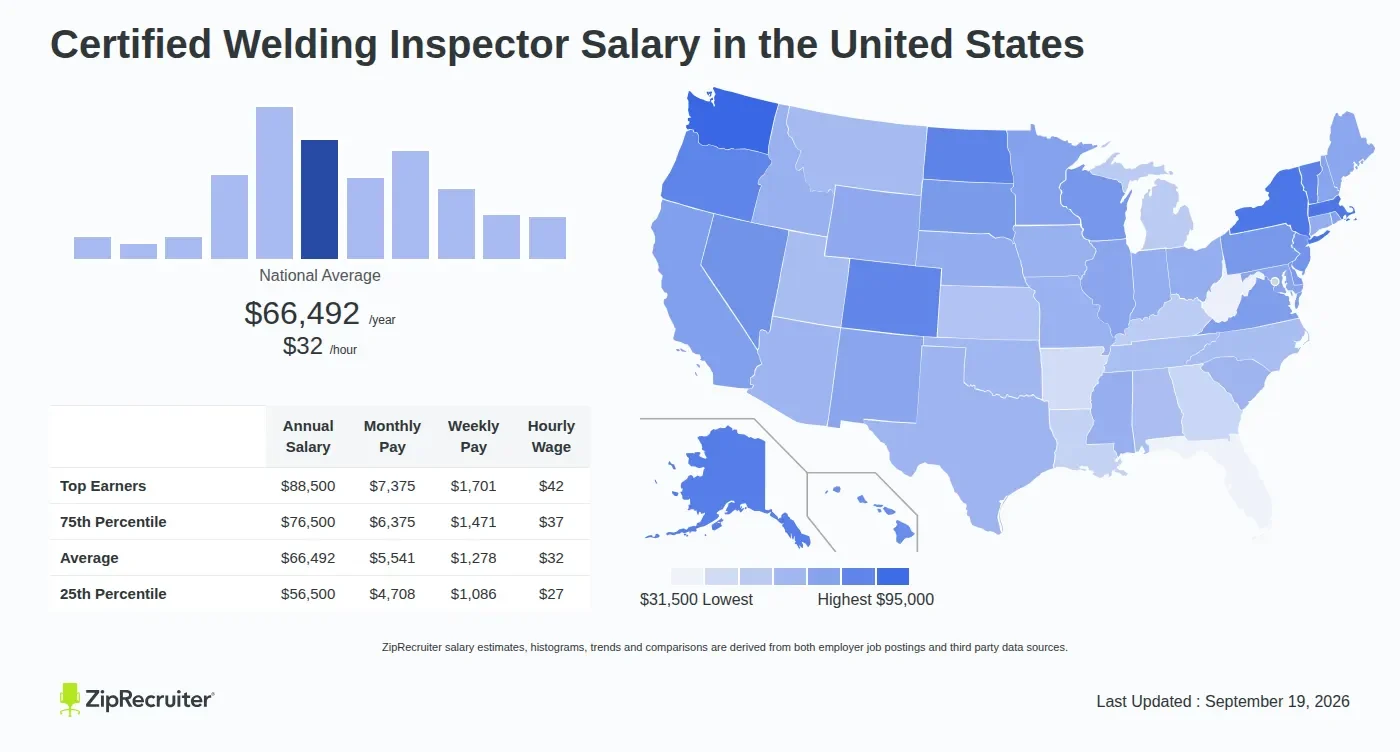
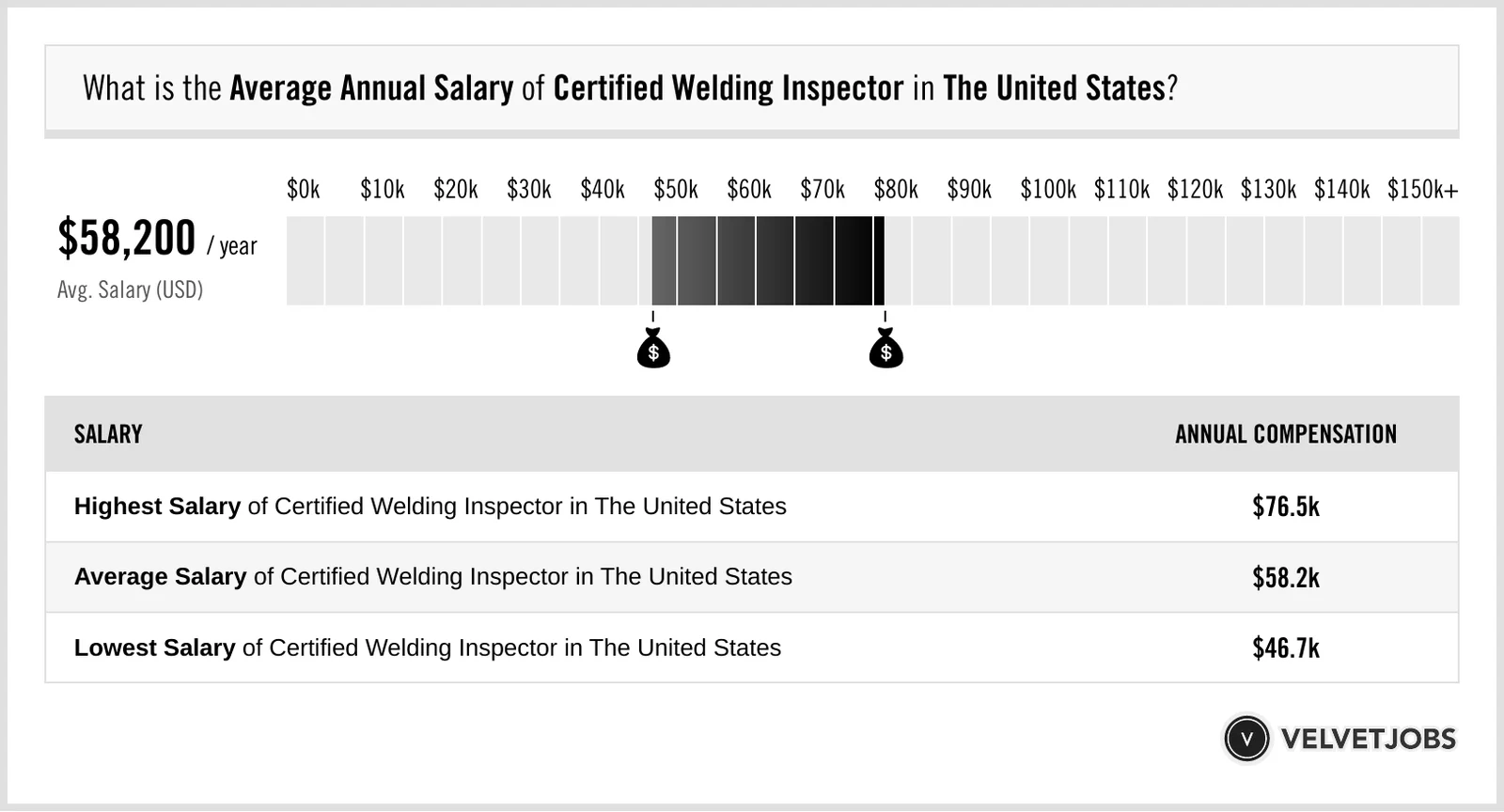
An inspector welder in the United States commonly earns about $55,000 to $95,000 annually, with senior, specialized, or high-overtime roles reaching above that range.
Inspector welder salary is not a single standardized figure because the job combines two skill sets: producing sound welds and verifying that welding work meets drawings, codes, and quality requirements.
Think of the role like being both the builder and the referee on a construction project. A person who can weld, interpret specifications, document results, and recognize defects is usually more valuable than someone who performs only one part of the work.
Pay depends on certification industry location shift schedule travel inspection methods union status and whether compensation is based on a stable hourly job or project-driven contract work This.
- ✓U.S. pay commonly falls in a broad middle range, but overtime, travel, and specialized inspection skills can change total earnings substantially.
- ✓Certified Welding Inspector credentials, code knowledge, and experience with nondestructive testing can improve access to higher-paying roles.
- ✓Salary comparisons should include shift premiums, per diem, benefits, travel time, contract length, and overtime expectations.
- ✓Heavy industry, energy, aerospace, infrastructure, and shutdown work may pay more while demanding greater mobility, documentation, or schedule flexibility.
How to interpret inspector welder salary figures
The title inspector welder can describe several different jobs Some employers want a hands-on welder who performs visual inspection of personal work Others want a welding inspector who.
Those differences make online salary averages difficult to use without context. A lower-paid production welding position may include limited inspection duties, while a quality-control position may require certification, independent judgment, extensive reporting, and responsibility for multiple crews or contractors.
- Job scope: Confirm whether the position is primarily welding, quality inspection, or an even split between the two.
- Pay basis: Compare hourly wages, annual salary, guaranteed hours, overtime rules, bonuses, and contract length.
- Authority level: Determine whether you only record observations or have responsibility to stop work and approve repairs.
- Travel demands: Ask how often travel occurs, whether travel time is paid, and how lodging and meals are handled.
Typical U.S. pay bands
A reasonable planning range for many U S inspector-welder jobs is approximately 55 000 to 95 000 per year Entry-level workers with welding experience but limited inspection responsibility may fall below that range particularly in lower-cost areas or jobs with.
Hourly rates often provide a clearer comparison than annualized figures. A position paying $30 per hour at a dependable 40-hour week produces a different result from a $38-per-hour shutdown job that lasts only several months. The second job may produce more cash during the project but less predictable annual income.
| Role profile | Approximate annual planning range | Typical pay influences |
|---|---|---|
| Junior welding quality role | $45,000–$65,000 | Limited inspection experience, close supervision, basic documentation |
| Working inspector-welder | $55,000–$85,000 | Several years of welding, code familiarity, visual inspection, reports |
| Certified or specialized inspector | $70,000–$105,000+ | Recognized credentials, complex projects, advanced examination methods |
| Travel, shutdown, or senior contract role | Highly variable | Overtime, per diem, project scarcity, travel, and contract risk |
These are planning estimates rather than a promise or official occupational average. A job advertised at $80,000 may have lower base pay but extensive overtime, while a $70,000 salaried position may offer paid holidays, health insurance, retirement contributions, and a predictable schedule.
What determines inspector welder salary?
Employers pay for more than the ability to identify a visible weld defect. They pay for accurate decisions, traceable records, knowledge of applicable requirements, and the ability to prevent costly rework or unsafe release of a component.
For that reason, two people with the same years of welding experience can receive very different offers. One may have broad fabrication experience but little documentation practice; the other may understand welding procedure specifications, qualification records, inspection hold points, and nonconformance control.
- Technical judgment: Recognizing when an indication is acceptable, rejectable, or in need of further examination increases responsibility and value.
- Documentation: Clear inspection reports, traceability records, and repair tracking separate a dependable inspector from an informal checker.
- Industry exposure: Experience in regulated, safety-critical, or highly documented work can raise the ceiling on compensation.
- Availability: Willingness to work nights, weekends, shutdowns, or travel assignments can increase total earnings but may reduce lifestyle stability.
Experience and responsibility
Early-career candidates often enter through welding, fabrication quality control, or assistant inspection roles. At this stage, employers usually evaluate practical weld knowledge, blueprint reading, measurement skills, safety habits, and the ability to follow an established inspection plan.
Mid-career workers may inspect several welding processes, review procedure qualifications, coordinate examination technicians, communicate with clients, and investigate recurring defects. Senior inspectors may manage quality systems, supervise inspectors, interpret contract requirements, or serve as the primary quality representative on a project.
Responsibility matters because an inspector’s decision can affect schedule, warranty exposure, regulatory compliance, and public safety. The more independent and consequential the decision, the stronger the justification for higher compensation.
Credentials and inspection methods
A widely recognized welding-inspection credential can help an applicant pass an employer’s screening process, especially when a project or client specifies a particular qualification. Certification does not replace experience, but it signals familiarity with inspection principles, terminology, and examination requirements.
Additional value may come from knowledge of visual testing, liquid penetrant testing, magnetic particle testing, ultrasonic testing, or radiographic testing. The exact credential and authorization needed depend on the employer, the governing code, and the work being inspected.
Workers should verify what a posting actually requires. Some employers use “certified inspector” loosely, while others require a current credential, documented experience, employer authorization, or examination qualifications. Paying for training without confirming the target job’s requirements can produce an expensive credential with limited immediate value.
Industry and project complexity
Structural steel, general fabrication, manufacturing, shipbuilding, pipelines, pressure equipment, power generation, aerospace, and chemical processing do not carry identical pay structures. A position involving critical welds, extensive traceability, customer audits, or difficult access may pay more than a routine shop inspection role.
Project-based work can also produce unusually high weekly earnings. Shutdowns and commissioning projects may need inspectors immediately and schedule long shifts. However, the higher rate may compensate for temporary employment, irregular hours, travel, exposure to difficult conditions, or a gap between assignments.
This is an important consideration for inspector welder salary.
Salary differences by industry, location, and schedule
Geography affects compensation in two ways: employers in some regions pay more for scarce technical labor, and the cost of living changes what the paycheck can actually buy. A higher nominal wage is not automatically a better financial outcome if housing, transportation, taxes, and insurance are substantially more expensive.
Industrial concentration is another major factor. Areas with refineries, shipyards, large infrastructure programs, energy facilities, aerospace manufacturing, or heavy equipment plants may offer more inspection work than regions with mostly small fabrication shops.
- Local shop work: Often offers steadier schedules and less travel, but may have a lower ceiling than specialized field inspection.
- Industrial field work: Can pay more through overtime, premiums, and per diem, while requiring mobility and tolerance for changing conditions.
- Union employment: May provide structured wage steps, benefits, and clear overtime rules; entry requirements and availability vary by local agreement.
- Contract work: Can offer a high hourly rate but may shift responsibility for taxes, insurance, downtime, or retirement savings to the worker.
Hourly, salaried, and contract compensation
Hourly employment is often attractive when overtime is frequent and properly paid. Ask whether overtime starts after eight hours in a day, after 40 hours in a week, or under another arrangement. Also clarify whether travel, training, meetings, and report writing count as paid time.
Salaried positions can be valuable when they include reliable benefits, paid time off, employer retirement contributions, and a manageable workload. The main risk is a nominal salary paired with frequent long days, weekend work, or travel without additional compensation.
Contract roles should be evaluated using an annualized after-cost figure rather than the headline rate. Include unpaid gaps, credential renewals, transportation, lodging not covered by the employer, health coverage, retirement savings, and tax obligations before deciding that a contract is better.
Travel, per diem, and overtime
Per diem is generally intended to cover travel-related expenses, not to replace wages. A job with a generous daily allowance may still be unattractive if the worker spends significant unpaid time commuting, shares lodging, or pays for transportation between remote sites.
Overtime can materially increase annual income, but it should not be treated as guaranteed unless the employer can document the expected schedule. A useful comparison is to calculate compensation at normal hours first, then calculate a second scenario using realistic—not maximum—overtime.
For example, a $34-per-hour role with consistent overtime may outperform a $40-per-hour role that provides only 30 hours during slow periods. The stronger offer is the one that remains acceptable under both busy and ordinary conditions.
Qualifications that can raise earning potential
There is no single credential that guarantees a high salary. The strongest profile usually combines sound welding fundamentals, inspection training, code literacy, practical documentation, and a record of making consistent decisions.
Employers also value inspectors who can communicate difficult findings without creating unnecessary conflict. Rejecting defective work is only part of the job; the inspector must explain the basis, identify the required next action, and preserve an accurate record.
- Start with fundamentals: Strengthen blueprint reading, weld symbols, joint design, measurement, and common discontinuities before pursuing advanced credentials.
- Match training to target work: Select education and certifications that appear repeatedly in the industrial sectors you want to enter.
- Build evidence: Keep organized records of processes, materials, inspection duties, reports, and project environments.
- Develop writing skills: Concise, factual reports can distinguish candidates who have similar hands-on backgrounds.
Welding experience
Hands-on welding experience gives an inspector practical insight into fit-up, access, preheat, distortion, contamination, consumable control, and repair difficulty. That knowledge helps an inspector identify causes rather than merely record symptoms.
Experience should be broad enough to match the market being pursued. Structural and pipe welding may involve different processes, positions, materials, and acceptance criteria. A candidate does not need to master every process, but should describe accurately what has actually been performed and inspected.
Codes, standards, and specifications
Inspection decisions are made against requirements, not personal preference. Inspectors may need to navigate drawings, welding procedure specifications, project specifications, acceptance criteria, and applicable construction or manufacturing codes.
Understanding how documents relate is more valuable than memorizing isolated numbers. A strong inspector knows which document controls a decision, when clarification is needed, and how to avoid approving work based on an outdated revision.
Non-destructive examination knowledge
Visual inspection is central to many roles, but familiarity with other examination methods can expand opportunities. An inspector who understands the strengths and limitations of ultrasonic, radiographic, magnetic particle, and liquid penetrant methods can coordinate testing and interpret reports more effectively. These practical limitations also matter for inspector welder salary.
Do not claim authorization to perform or interpret a method without the appropriate training and employer approval. Inspection carries safety and liability consequences, and credentials must match the actual task.
How to compare a job offer accurately
The most useful salary comparison converts every offer into a common format. Begin with guaranteed base compensation, then add realistic overtime, shift premiums, bonuses, per diem that you will actually retain, and employer-paid benefits. Subtract predictable costs and account for unpaid travel or downtime.
This process prevents a common error: comparing a stable local job with a temporary travel assignment solely by looking at the hourly rate. The travel job may win financially, but only if the duration, expenses, and working conditions support the advertised earnings.
- Guaranteed income: Identify the normal schedule, minimum hours, and whether the employer can reduce hours without notice.
- Total benefits: Assign a reasonable value to health coverage, paid leave, retirement contributions, bonuses, and training.
- Working conditions: Ask about heat, weather, confined areas, protective equipment, lifting, noise, and exposure controls.
- Exit risk: Determine what happens when the project ends and whether reassignment or unemployment is likely.
A practical comparison formula
Use this simplified calculation:
- Multiply the base hourly rate by dependable annual hours.
- Add only overtime that the employer can support with a realistic schedule.
- Add the value of employer-paid benefits and any guaranteed bonus.
- Subtract unpaid travel, work-related expenses, credential costs, and expected gaps between projects.
- Compare the resulting figure with your cost of living and personal schedule requirements.
For salaried roles, divide annual pay by the hours you realistically expect to work. A $78,000 salary based on 2,080 hours is about $37.50 per hour before benefits; if the role routinely requires 2,600 hours, the effective hourly value is much lower.
Questions to ask before accepting
Ask who signs inspection records, which standards govern the work, whether the role includes hands-on welding, and how disagreements over acceptance are resolved. Clarify the reporting structure because independence is important when quality findings conflict with production targets.
Also ask about certification costs, required tools, vehicle use, travel-time pay, shift rotation, overtime approval, and the expected duration of the assignment. Written answers are preferable when compensation depends on allowances or project conditions.
Common mistakes that reduce earning potential
Many workers focus on collecting credentials while overlooking the habits that determine whether employers trust them with responsibility. A certificate may open an interview, but poor records, inconsistent decisions, or weak communication can prevent advancement.
Another mistake is accepting the highest visible rate without examining the schedule. A role that pays well only because it requires extreme overtime may not be sustainable, and fatigue can increase the chance of missed defects or unsafe decisions.
- Overstating experience: Claiming familiarity with a code, process, or examination method can damage credibility when questioned.
- Ignoring documentation: Incomplete reports and weak traceability can outweigh strong welding ability.
- Confusing per diem with pay: Reimbursement for travel expenses is not the same as taxable wages or guaranteed income.
- Failing to verify scope: A posting may use “inspector” while expecting production, supervision, testing coordination, or extensive travel.
Safety and professional judgment
An inspector should never approve work that has not been adequately examined or that does not meet the applicable requirements. Production pressure does not change an acceptance criterion, and an inspector should escalate uncertainty rather than guess.
Safety also affects salary decisions. A higher-paying job is not a good opportunity if the employer cannot explain fall protection, confined-space controls, respiratory protection, hot-work procedures, or access to appropriate personal protective equipment.
Career path and long-term earning potential
A typical progression may begin with welder, welding quality technician, or junior inspector work. With documented experience, a worker can move into certified welding inspection, field quality control, lead inspection, vendor inspection, or quality-supervision roles.
Long-term growth often comes from combining technical depth with project awareness. Employers need people who understand how inspection affects procurement, fabrication sequence, repair rates, schedule, turnover packages, and customer acceptance.
Management can increase pay but may reduce hands-on work. Some workers prefer a specialist path involving difficult materials, advanced examination, or high-consequence projects. Others prefer coordination, audits, and quality-system leadership.
The best path depends on whether you want technical specialization, authority, travel, or schedule stability.
- More independent decisions: Progress from following checklists to planning inspection coverage and resolving ambiguous findings.
- Broader project knowledge: Learn how drawings, materials, procedures, examinations, repairs, and turnover records connect.
- Reliable communication: Become the person who can explain a problem clearly to welders, supervisors, engineers, and clients.
- Documented results: Track measurable contributions such as reduced rework, improved record accuracy, or successful audits without exaggerating outcomes.
FAQ about inspector welder salary
What is a good starting inspector welder salary?
A starting target often falls around $45,000 to $65,000 annually, depending on welding experience, location, inspection duties, and benefits. Candidates with a recognized inspection credential or industrial experience may qualify for more.
Can an inspector welder earn more than $100,000?
Yes, but it is not automatic. Senior responsibility, specialized industries, extensive overtime, travel assignments, union terms, difficult project locations, or contract work can push total annual earnings above $100,000.
Does certification guarantee a higher salary?
No. Certification can improve eligibility and credibility, but pay also depends on experience, code knowledge, job scope, industry, and the employer’s compensation structure. A credential has the greatest value when it matches a real hiring requirement.
Do travel jobs pay more than local inspector-welder jobs?
They often offer higher total compensation through overtime, premiums, or per diem, but not always. Compare guaranteed wages, paid travel, lodging, project duration, and unpaid time before deciding that the travel position is financially superior.
Which industries tend to pay inspector welders the most?
Specialized industrial, energy, infrastructure, shipbuilding, aerospace, and heavy manufacturing projects may offer stronger compensation than routine fabrication. The premium usually reflects greater technical demands, documentation, safety responsibility, scarcity, or schedule pressure.
Is inspector welder salary usually hourly or salaried?
Both structures are common. Field and production positions are often hourly, while quality engineers, supervisors, and long-term project representatives may be salaried. The better structure depends on overtime, benefits, expected hours, and job stability.
What skills should I develop to increase my pay?
Prioritize welding fundamentals, blueprint and weld-symbol interpretation, inspection reporting, code literacy, visual inspection, and the examination methods relevant to your target industry. Strong communication and accurate documentation often determine whether technical skills lead to advancement.
Conclusion
Inspector welder salary can range widely because the title covers different combinations of welding, inspection, documentation, certification, travel, and supervisory responsibility. A realistic U.S. planning range is about $55,000 to $95,000, with higher totals possible when specialized credentials, overtime, difficult projects, or senior authority are involved.
Use the base wage as a starting point, not the final answer. Compare guaranteed hours, benefits, travel obligations, safety conditions, contract stability, and the qualifications required before deciding whether an offer supports your financial and professional goals.
Write down your target industry, current inspection credentials, dependable annual hours, and minimum acceptable total compensation, then use that list to evaluate your next inspector welder salary offer.