Underwater Welder Life Expectancy: Key Facts and Helpful Guidance
Underwater welders do not have a fixed life expectancy; outcomes depend on diving hazards, training, health, work conditions, and safety practices.
Questions about underwater welder life expectancy usually combine two different concerns: how long a person may live and how long they can safely remain in the trade. Those are not the same measurement. Commercial divers may leave underwater welding because of physical limitations, changing career goals, injury, or the demanding schedule long before an occupational hazard determines their overall lifespan.
The work is genuinely high risk but the popular idea that every underwater welder has a dramatically shortened life is too simple A diver s exposure varies with depth current water quality equipment welding method.
- ✓There is no dependable universal age or lifespan assigned to underwater welders as a group.
- ✓Occupational risk comes from the combined demands of commercial diving, welding, underwater work, and difficult rescue conditions.
- ✓Career longevity often depends on medical fitness, exposure history, work quality, and the ability to move into supervision or surface-based roles.
- ✓Formal training, a strong safety culture, maintained equipment, and conservative dive planning can reduce avoidable risk.
What Underwater Welder Life Expectancy Really Means
There is no single authoritative number that can accurately predict how long an underwater welder will live. Public mortality data generally do not isolate “underwater welder” as a clean category, and workers have different job histories. One person may spend years on shallow inspection and repair projects, while another may repeatedly perform deep, complex, or emergency work in severe conditions.
The phrase also hides a useful distinction between life expectancy and career expectancy. Life expectancy concerns total lifespan. Career expectancy concerns how long someone can continue performing demanding commercial-diving work safely and competitively.
A diver can have a long life after leaving the field, while another may have to change occupations earlier because of hearing problems, musculoskeletal strain, respiratory concerns, decompression-related illness, or a non-work health condition.
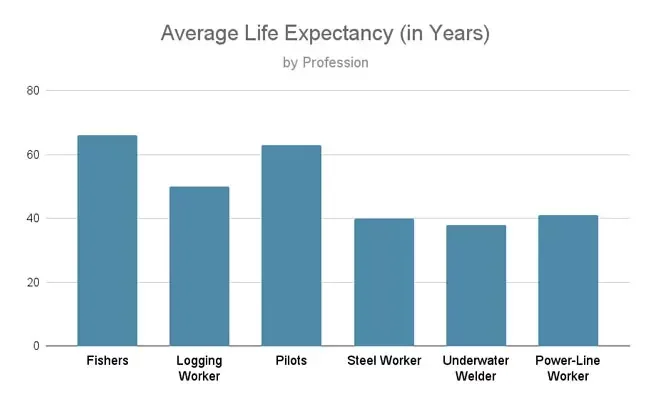
- No fixed prediction: Age at death cannot be calculated from the job title alone.
- Two timelines: A career may end before a person’s expected lifespan because the physical demands become unsuitable.
- Exposure matters: Repeated deep, cold, contaminated, or poorly controlled dives create a different risk profile from occasional shallow work.
- Data limits: Anecdotes about individual accidents cannot establish the average lifespan of an entire occupation.
It is also important not to confuse a dangerous job with an automatically short life. Many hazardous occupations have serious potential consequences, yet outcomes are strongly affected by training, supervision, equipment, fatigue management, emergency readiness, and the quality of decisions made before a task begins. Risk is real, but it is not destiny.
Why the Work Can Be Dangerous
Underwater welding combines two demanding activities: commercial diving and industrial welding. Each has its own hazards; together, they create a complicated work environment in which a small error can have more than one consequence. The diver must manage breathing gas, buoyancy, communications, visibility, depth, currents, tools, heat, and the work itself, often while wearing restrictive equipment.
Electricity is one of the most recognizable concerns. Underwater welding equipment is designed for wet work, but safe operation still depends on correct procedures, insulation, grounding, power control, equipment inspection, and coordination between the diver and surface team. An electrical fault, unintended current path, damaged cable, or poor isolation can cause severe injury or loss of consciousness in a location where self-rescue may be difficult.
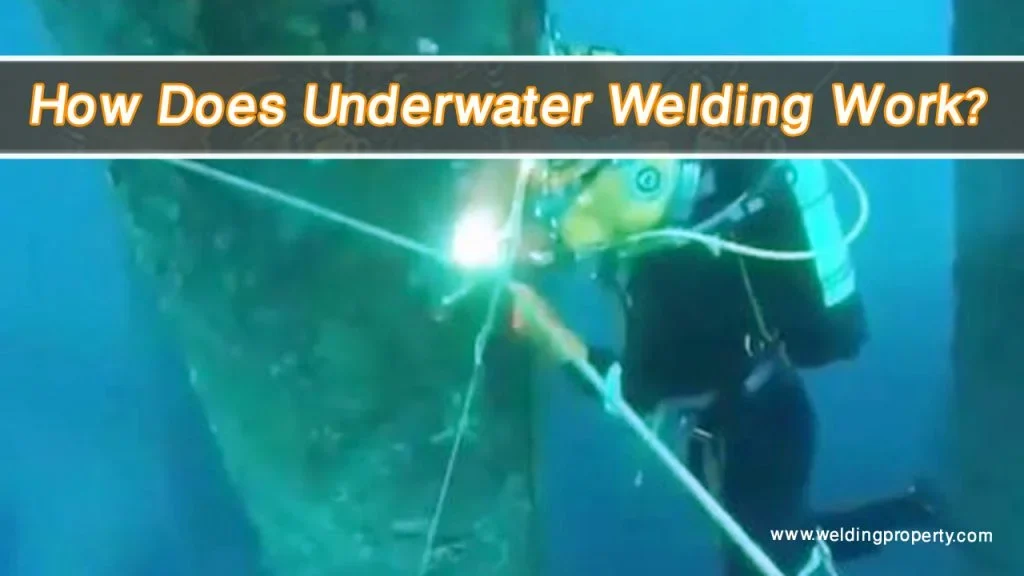
- Drowning: Hose, helmet, regulator, communication, entanglement, or buoyancy problems can become life-threatening quickly.
- Electrical exposure: Welding current and damaged or poorly controlled equipment can create shock hazards.
- Decompression stress: Pressure changes require disciplined dive profiles and appropriate procedures.
- Visibility and entanglement: Silt, structure, lines, cables, and confined spaces can limit orientation and escape.
Pressure, decompression, and breathing gas
As depth increases, pressure changes affect gas behavior and the diver’s body. Ascending too quickly or failing to follow the required decompression plan can contribute to decompression illness. Nitrogen narcosis and other depth-related effects can also impair judgment, coordination, or awareness, depending on the dive and breathing mixture.
These risks are managed through planning, correct gas selection, monitoring, communication, decompression procedures, and medical protocols. They cannot be eliminated simply because a diver is experienced. Familiarity can improve performance, but it can also encourage complacency if a worker treats a routine-looking job as automatically safe.
Heat, cold, fatigue, and physical strain
Protective clothing reduces exposure to cold, yet long dives, cold water, heavy equipment, and difficult body positions still place substantial stress on the diver. Welding and cutting may require sustained concentration while the worker is kneeling, suspended, braced against a structure, or working against current.
Fatigue matters because it affects judgment and fine motor control. A tired diver may be slower to identify a changing current, a damaged hose, an unstable structure, or a problem with a tool. Repeated shifts, travel, irregular sleep, and pressure to complete a job can compound that problem.
Contaminated water and confined structures
Harbors, treatment facilities, industrial sites, ship interiors, and other work areas may contain biological, chemical, or physical contaminants. The hazard is not limited to what the diver can see. Water quality, industrial residues, sharp surfaces, stored energy, and unexpected discharge can all change the risk assessment.
Confined or obstructed spaces add another layer. A diver may have restricted access to the surface, limited visibility, complicated umbilical routing, and fewer options if a helmet, tool, or line becomes trapped. In such settings, rescue planning must be specific to the structure rather than based on a generic emergency response.
How Safety Practices Influence Long-Term Outcomes
Safety is not one item of personal protective equipment. It is a system that begins with deciding whether the job should be done at all and continues through planning, equipment checks, surface support, communication, medical readiness, and post-dive monitoring. The system is strongest when every person can stop work after noticing a danger.
A qualified commercial-diving operation should identify the task, depth, water conditions, energy sources, access points, tools, breathing-gas needs, decompression requirements, and rescue method before the diver enters the water. The plan should account for foreseeable changes, such as rising current, deteriorating visibility, equipment failure, or a structure shifting under load.
- Before entry: Confirm the job hazard analysis, dive plan, equipment condition, communications, and emergency arrangements.
- During the dive: Maintain reliable communication, monitor the diver and environment, and stop when conditions differ from the plan.
- After surfacing: Report symptoms promptly, follow post-dive observation requirements, and document equipment or procedural problems.
- At the organizational level: Look for a workplace that rewards accurate reporting rather than speed at any cost.
Surface support is especially important. A standby diver, tender, supervisor, and appropriate medical or rescue resources are not decorative additions; they form part of the control system. The exact staffing, equipment, and procedures depend on the work and applicable rules, but a lone diver improvising an industrial repair is a major warning sign.
Training and certification are only the starting point
Training should cover commercial-diving fundamentals, underwater tools, welding processes, gas management, decompression principles, emergency response, communications, and the hazards of the specific worksite. Credentials may help establish a baseline, but a certificate cannot replace task-specific competence or sound supervision.
A new diver should gain experience through progressively challenging work rather than being placed immediately into the deepest, most isolated, or most time-sensitive assignments. Mentoring matters because many dangerous conditions are recognized through context: a suspicious vibration, a confusing line route, an unstable member, or a change in water behavior that may not appear in a checklist.
Equipment maintenance and inspection
Diving helmets, masks, regulators, umbilicals, harnesses, communications equipment, breathing-gas systems, welding leads, power supplies, and cutting tools all require inspection and maintenance. The work environment is hard on equipment, and corrosion, abrasion, contamination, leaks, or damaged insulation may not be obvious during a rushed check.
Maintenance records are useful because they show whether the employer treats reliability as a planned responsibility. A company that cannot explain inspection intervals, defect reporting, replacement decisions, or emergency equipment readiness deserves careful scrutiny.
- Clear authority: Divers can stop a job without retaliation when conditions become unsafe.
- Documented planning: The company uses written procedures tailored to the site and task.
- Reliable gear: Equipment is inspected, maintained, and removed from service when defective.
- Realistic scheduling: Production targets do not encourage skipped checks, excessive fatigue, or rushed decompression.
Health Factors That Affect a Diver’s Career
Underwater welder life expectancy is influenced by more than the hazards encountered on a single dive. General health affects how well a person tolerates exertion, pressure changes, cold, heavy equipment, and emergencies. Medical fitness is therefore both a safety issue and a career-planning issue.
Commercial divers commonly need periodic medical evaluation under the rules, standards, or employer requirements that apply to their work. A proper evaluation is not a guarantee of safety, and it should not be treated as a formality. Its purpose is to identify conditions that may make diving unsafe, require follow-up, or call for restrictions and specialized advice.
This is an important consideration for underwater welder life expectancy.
- Cardiovascular fitness: The body must tolerate exertion, stress, cold, and emergency demands.
- Respiratory health: Breathing problems can become more consequential under pressure and while using diving equipment.
- Hearing and balance: Communication, orientation, and pressure-related ear problems can affect safety.
- Musculoskeletal capacity: Back, shoulder, knee, and hand problems may worsen under heavy equipment and awkward positioning.
Smoking, poor sleep, unmanaged stress, excessive alcohol use, and inadequate conditioning can increase vulnerability, even though none of these factors alone determines an individual outcome. Fitness does not make unsafe work safe, but good conditioning and recovery can improve the ability to respond to demanding conditions.
Symptoms after diving should never be minimized because a worker is experienced or because the dive felt normal. Unusual joint or limb pain, weakness, numbness, dizziness, difficulty breathing, confusion, severe fatigue, or other concerning changes require prompt attention through the operation’s medical and emergency procedures.
Age and physical capacity
Age itself is not a simple cutoff for career success. The more useful questions are whether the diver remains medically fit, can perform the essential tasks, recovers adequately, and can make sound decisions under pressure. Physical capacity can change at different rates, and an individual’s health history matters.
Some divers eventually move toward inspection, supervision, project management, instruction, equipment support, or surface-based welding and fabrication. That transition is not necessarily a failure. It can be a sensible way to preserve industry knowledge while reducing exposure to the most demanding dives.
Career Longevity Versus Total Lifespan
Searchers often want a number because a number feels decisive. In practice, the more useful question is usually, “What could shorten my safe time in the field, and how can I plan around it?” The answer includes injury, cumulative strain, medical restrictions, changing work availability, family priorities, and whether the diver develops skills that transfer beyond underwater welding.
Some people leave the field after a relatively short period because the travel and schedule are incompatible with their goals. Others remain active in diving for many years, then shift toward supervision or technical roles. Neither path proves that underwater welding has a universal career length.
- Build transferable skills: Add inspection, project coordination, technical writing, teaching, or surface fabrication abilities.
- Track your exposure: Keep accurate records of dives, conditions, incidents, symptoms, and training.
- Protect recovery time: Treat sleep, conditioning, and medical follow-up as part of professional readiness.
- Plan an exit route: Know which roles you could pursue if diving becomes medically unsuitable.
Income can also influence risk decisions. A worker who depends on overtime or accepts rushed assignments to avoid losing future work may be more likely to overlook fatigue or poor conditions. Financial planning and a willingness to decline an unsafe dive are practical parts of long-term career protection.
Common reasons divers change roles
Role changes may follow a significant incident, but they often happen for less dramatic reasons. Repeated pain, reduced tolerance for cold or heavy gear, hearing difficulties, family responsibilities, or the desire for more predictable work can all lead someone toward a surface position.
Employers benefit when experienced divers can progress into roles that use their knowledge without requiring the same level of exposure. A company that offers no path beyond physically demanding production work may make retention and long-term planning harder.
Myths and Misleading Claims
The strongest myth is that every underwater welder has a short life. That claim turns a serious hazard into a universal prediction and ignores differences in task, environment, training, and safety management. A dangerous occupation deserves respect, not exaggerated certainty.
Another misconception is that high pay proves high mortality. Compensation can reflect training requirements, travel, difficult conditions, irregular schedules, specialized liability, and the limited supply of qualified workers. Pay alone does not establish a lifespan or a personal risk level.
- “The job guarantees an early death”: No occupation-specific rule can make that prediction for every worker.
- “Experience eliminates danger”: Experience helps, but pressure, fatigue, equipment failure, and changing conditions remain.
- “More dives always mean more success”: Quantity is less important than controlled exposure, competence, and quality of work.
- “A strong swimmer needs little training”: Swimming ability does not replace commercial-diving, emergency, or welding competence.
It is equally misleading to claim that modern equipment makes the work safe by itself. Technology can improve communication, monitoring, insulation, navigation, and rescue capability, but only when selected correctly, maintained, and used by trained people within a workable plan.
How to Evaluate a Prospective Underwater Welding Job
If you are considering this career, investigate the operation rather than relying on dramatic videos or salary claims. Ask how new divers are introduced to the work, who supervises each dive, what happens when weather or water conditions change, and how the company handles equipment defects and near misses.
Pay attention to how the employer answers. A mature operation can describe its procedures without pretending that risk is absent. Vague assurances, pressure to work beyond training, reluctance to discuss rescue planning, or a culture of blaming divers for reporting hazards should be treated as serious warning signs.
- Training path: How are new workers supervised, and what tasks are they expected to perform first?
- Medical readiness: What evaluations and follow-up processes are required before and during employment?
- Emergency response: How are lost communications, air problems, entanglement, injury, or contamination handled?
- Work conditions: How often do projects involve deep, cold, contaminated, confined, or fast-moving water?
Also compare the job description with the actual work. “Underwater welding” may include inspection, cutting, rigging, concrete repair, hull work, salvage, pipeline support, or maintenance near energized systems. The risk profile changes substantially with the location and task.
Warning signs during recruitment
Be cautious if a recruiter focuses exclusively on earnings, promises rapid qualification, or suggests that safety rules are obstacles used by less ambitious workers. A responsible employer should discuss training, supervision, medical requirements, travel, fatigue, and the physical realities of the work.
Do not pay for training or accept an assignment without confirming what credential is recognized for the intended work, what practical experience is included, and whether the training provider’s claims can be independently verified. A short course marketed as a complete path into complex commercial diving may leave critical gaps.
FAQ About Underwater Welder Life Expectancy
What is the average life expectancy of an underwater welder?
No reliable universal average applies specifically to underwater welders. Available population data do not cleanly separate all underwater welding work from other commercial-diving and welding occupations, and individual exposure varies too widely.
Does underwater welding shorten your life?
It can expose workers to hazards that may cause fatal or disabling injuries, but the job title alone cannot predict whether a particular person will have a shorter life. Safety systems, health, work conditions, training, and personal decisions all affect risk.
How long do underwater welders usually stay in the field?
There is no standard career duration. Some leave after a few years, while others remain in diving or progress into supervisory, inspection, training, or project roles for much longer. Physical capacity, medical fitness, lifestyle, and available work all matter.
Is underwater welding more dangerous than regular welding?
It adds commercial-diving hazards to the normal risks of welding, including electrical exposure, fire or heat, fumes, equipment defects, and difficult work positions. Water, pressure, limited visibility, breathing equipment, and restricted access can make prevention and rescue more complicated.
Can an underwater welder work safely into older age?
Some may, if they remain medically fit and can meet the physical and technical demands of the work. Age should be considered alongside cardiovascular, respiratory, hearing, balance, musculoskeletal, and cognitive fitness rather than used as the only deciding factor.
What most improves an underwater welder’s long-term safety?
The strongest improvements usually come from competent training, conservative planning, maintained equipment, reliable surface support, medical follow-up, adequate recovery, and a workplace where anyone can stop a dangerous job.
Should a person avoid underwater welding because of the risks?
That is a personal decision, but it should be based on a realistic review of training requirements, medical suitability, working conditions, financial needs, and emergency procedures. Investigate the employer and training route before making a commitment.
Conclusion
Underwater welder life expectancy cannot be reduced to a guaranteed age or a dramatic industry slogan. The occupation carries serious hazards, but individual outcomes depend on exposure, health, training, supervision, equipment, planning, and the quality of the safety culture. Career length is a separate question and may end because of physical strain, medical restrictions, lifestyle choices, or a planned move into surface-based work.
The major limitation is the lack of a precise occupation-wide lifespan figure, so anyone promising a universal number is overstating what the evidence can show. Treat the work with respect, evaluate the operation carefully, and make medical and safety decisions conservatively.
Before pursuing an underwater welding job, compare the employer’s training, dive planning, emergency support, equipment maintenance, and career-development practices—not just its pay.