Underwater Welder Job Vacancy: Complete Guide and Practical Tips
An underwater welder job vacancy usually requires commercial-diving credentials, welding qualifications, documented experience, medical clearance, and a willingness to work in hazardous conditions.
Searching for an underwater welding position is more complicated than searching for an ordinary welding job because employers are hiring for two skilled trades at once You must.
The easily overlooked issue is that many advertisements use underwater welder as shorthand for a broader commercial diver role The actual work may involve inspection cutting rigging marine.
- ✓Commercial diving certification and medical fitness are foundational requirements; welding credentials alone are insufficient.
- ✓Job titles can hide a wider scope of diving, inspection, rigging, construction, and emergency-response duties.
- ✓Pay depends on project type, depth, travel, employment status, hazard exposure, and time actually spent underwater.
- ✓A credible employer should explain the work scope, dive system, safety procedures, training expectations, and compensation structure.
- ✓Never treat schedule pressure, informal equipment practices, or unclear credentials as minor hiring details.
What an Underwater Welder Job Vacancy Really Means
An underwater welder is generally a commercial diver who performs welding or related underwater construction tasks The title does not describe one standardized position A coastal contractor may.
Some assignments use wet welding in which the diver welds directly in the water with specialized electrodes and procedures Others use dry or hyperbaric welding where a habitat.
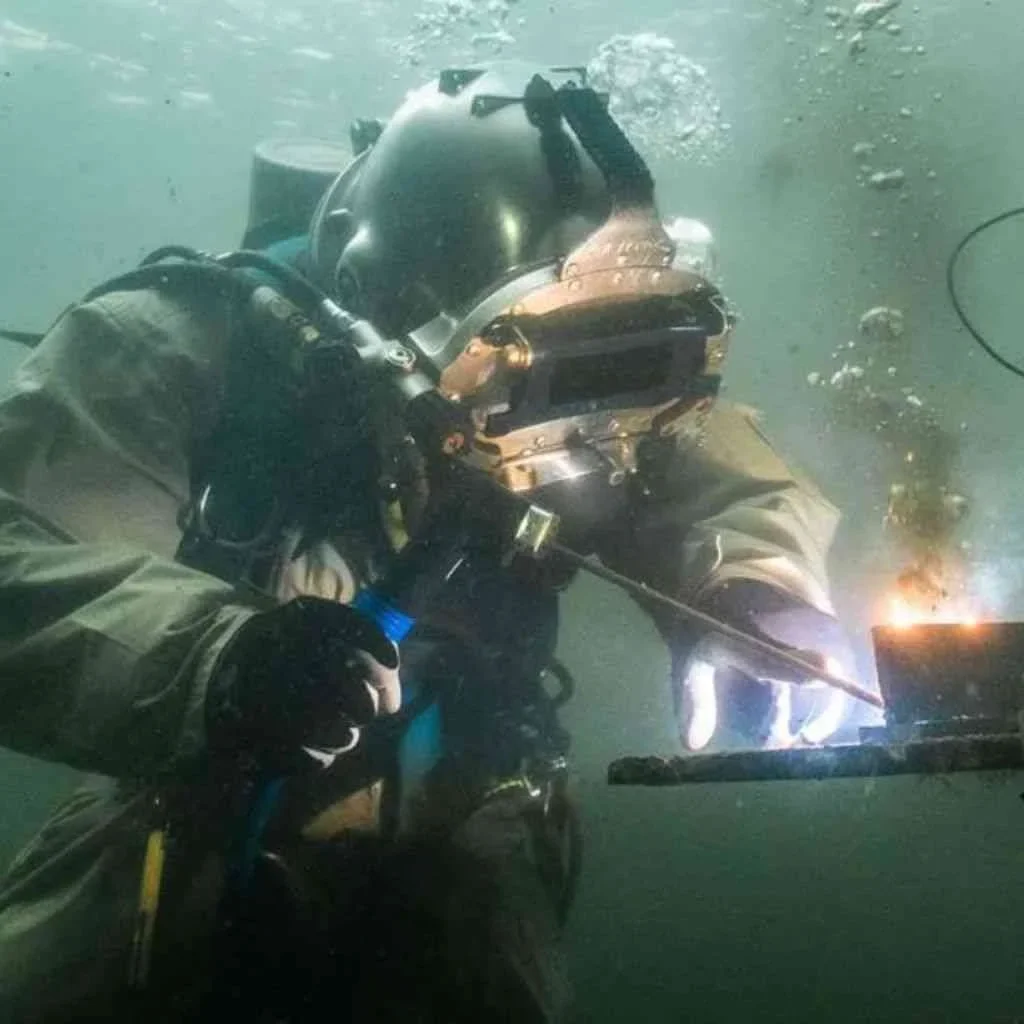
- Construction support: Cutting, burning, fitting, rigging, concrete work, and structural repair may be as important as welding.
- Inspection duties: Visual inspection, thickness measurement, corrosion assessment, and reporting are common in commercial diving.
- Marine maintenance: Ship hulls, docks, pilings, intake screens, and submerged infrastructure may require frequent travel or irregular schedules.
- Team responsibilities: Divers work with tenders, supervisors, engineers, weld inspectors, crane crews, and surface-supplied breathing systems.
Wet welding versus dry welding
Wet welding takes place in the surrounding water The diver uses equipment and procedures designed for underwater electrical work and the result can be affected by visibility current.
Dry welding separates the weld zone from the water using a habitat or chamber This may provide a more controlled environment but the operation remains a complex commercial.
Why job descriptions can be misleading
Some employers advertise for “underwater welders” because the phrase attracts applicants, even though most of the work is inspection or general diving. Others may expect a diver to handle several functions without clearly separating base pay, dive pay, travel pay, overtime, and project bonuses.
Read the duties section carefully. Look for the percentage of time spent diving, the kinds of structures involved, the expected depth range, the type of welding, the required travel, and whether the company provides training. These details tell you more than the title.
Qualifications Employers Commonly Look For
The normal pathway combines **commercial diver training**, occupational welding education, practical experience, and medical clearance. Exact requirements vary by employer and project, but a professional candidate should be able to document both safe diving ability and competent welding fundamentals.
Employers may also seek experience with surface-supplied air systems umbilicals underwater communications decompression procedures rigging hydraulic tools thermal cutting confined spaces and emergency response The more industrial the.
- Diving credentials: Confirm that your commercial-diving training is recognized for the work and region where you plan to apply.
- Welding proof: Keep records of welding school, employer qualifications, process experience, and any applicable performance tests.
- Medical status: Maintain a current commercial-diver medical evaluation and disclose conditions honestly to the appropriate medical professional.
- Field skills: Highlight rigging, cutting, inspection, equipment operation, confined-space work, and construction experience.
Commercial diving training
Commercial diving school typically covers dive physics, surface-supplied equipment, communications, emergency procedures, decompression, underwater tools, seamanship, and worksite safety. Training should prepare you for a supervised industrial environment rather than simply teaching you to breathe underwater.
Before enrolling investigate the school s recognition curriculum practical dive time instructor qualifications equipment condition placement claims and total cost Ask what credential graduates receive and whether employers in the sectors.
Welding qualifications and practical competence
A commercial diver may need to weld with processes such as shielded metal arc welding but employers can also value surface welding fabrication fitting blueprint reading metallurgy and.
Do not exaggerate underwater welding experience. If your background is primarily surface welding, describe it accurately and emphasize transferable skills while stating that you are seeking supervised commercial diving or diver-welder work. Misrepresenting qualifications in a high-risk occupation can endanger an entire dive team.
Physical and administrative requirements
Commercial diving is physically and mentally demanding Candidates may need to tolerate cold restricted movement heavy equipment long hours boat motion confined work areas and repetitive underwater tasks.
Medical fitness is not a box to bypass. A condition that is manageable in ordinary life may create additional risk under pressure or during emergency procedures. Discuss concerns with a qualified diving-medicine professional rather than relying on internet advice or an informal opinion from a recruiter.
How to Evaluate an Underwater Welder Job Vacancy
A job advertisement should help you understand the work not merely persuade you to submit an application When an underwater welder job vacancy provides a detailed scope named.
Vague postings are not automatically fraudulent contractors sometimes advertise before a project is fully awarded However uncertainty should lead to questions You should know who the employer is.
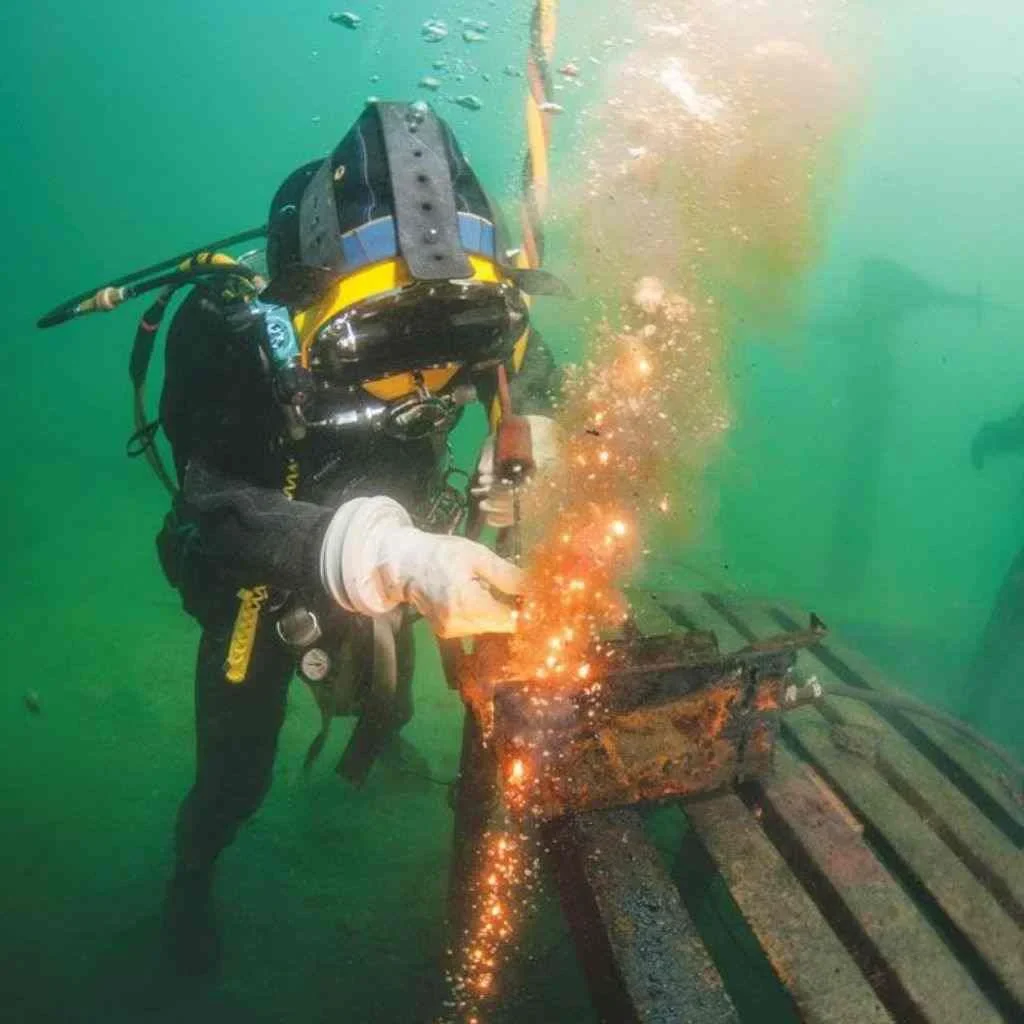
- Work scope: Identify whether the position focuses on welding, inspection, construction, salvage, maintenance, or a combination.
- Location and travel: Confirm the jobsite, mobilization point, offshore rotation, lodging, transportation, and time away from home.
- Employment terms: Ask about employee status, project duration, guaranteed hours, overtime, per diem, and payroll timing.
- Safety structure: Look for a named dive supervisor, written procedures, equipment inspections, emergency planning, and stop-work authority.
Questions that reveal the real position
Ask what proportion of the role is underwater, surface support, fabrication, or reporting. Ask whether the dive team uses surface-supplied equipment, what typical depths and water temperatures are, and whether the position includes contaminated water, strong currents, vessel traffic, or confined spaces.
Compensation questions should be specific Is the quoted amount an hourly wage a day rate a project total or a salary Is dive pay separate Are travel days.
Warning signs in recruitment
Be cautious if a recruiter promises unusually high earnings without describing the project demands a large upfront fee to secure a position refuses to identify the employer or.
Pressure to begin work before medical clearance, equipment orientation, or documented site training is another serious concern. In commercial diving, an urgent start date does not remove the employer’s responsibility to plan and control the operation.
Where Underwater Welders Find Work
Employment opportunities are connected to water-based infrastructure, marine transportation, energy, construction, and inspection. The best sector for you depends on your training, tolerance for travel, preferred environment, and willingness to develop skills beyond welding.
Work may be seasonal project-based or rotational A company that performs several types of diving can provide broader experience while a specialist contractor may offer deeper exposure to.
- Commercial marine: Ship repair, propeller work, hull inspection, dock maintenance, and port infrastructure.
- Inland construction: Bridges, dams, water systems, hydroelectric facilities, and submerged foundations.
- Offshore projects: Platforms, subsea structures, pipelines, and remote marine operations with demanding logistics.
- Inspection services: Underwater visual inspection, thickness gauging, corrosion documentation, and nondestructive testing support.
Marine and shipyard work
Marine contractors often work around ports, dry docks, barges, vessels, and floating equipment. Tasks can include hull patching, anode replacement, propeller clearance, underwater cutting, dock repair, and structural maintenance. The pace may change quickly because vessel schedules, tides, weather, and port access affect the job.
This environment rewards practical seamanship and strong communication. A diver who understands line handling, vessel movement, crane operations, and surface coordination can be more useful than someone who focuses narrowly on the weld itself.
Inland and infrastructure work
Inland jobs may occur in rivers, lakes, reservoirs, treatment facilities, power plants, and bridge sites. Water visibility can be poor, and the worksite may include entanglement hazards, intake currents, electrical systems, industrial contamination, or difficult access.
Employers may value inspection, concrete repair, rigging, and mechanical skills as much as welding. These jobs can provide steady regional work, but “inland” does not mean low risk or simple conditions.
Offshore and specialized work
Offshore work can offer larger projects and distinctive technical experience, but it may require extensive travel, strict medical and credential requirements, long rotations, and time away from family. Weather delays and mobilization changes can affect schedules. This is an important consideration for underwater welder job vacancy.
Specialized hyperbaric or saturation work generally demands additional training and experience. Treat it as a progression, not an automatic first job after completing a basic program.
Pay, Scheduling, and Career Trade-Offs
There is no single reliable salary for underwater welders. Earnings can differ substantially by region, employer, project complexity, depth, risk, credential level, union or nonunion status, overtime, and whether the work is paid hourly, daily, or by contract.
High advertised numbers may represent a short project, intensive overtime, or total compensation that includes allowances. A lower base wage with consistent hours, paid travel, strong benefits, and structured training may produce a better long-term outcome than a dramatic day rate with uncertain work.
- Pay basis: Determine whether the amount applies to work hours, standby time, travel, dive time, or the entire rotation.
- Allowances: Separate wages from per diem, lodging, transportation, hazard pay, and project bonuses.
- Downtime: Ask who pays when weather, vessel delays, equipment failure, or client changes stop the dive.
- Benefits: Compare health coverage, retirement contributions, paid leave, training support, and workers’ compensation arrangements.
Why dive time is not the same as paid time
A workday may include travel to the site, equipment checks, toolbox meetings, tending, decompression, surface preparation, documentation, and standby periods. The diver may be responsible for the task throughout that time even when not physically underwater.
Clarify how the company records hours. Some employers pay a normal hourly rate for the shift and add dive premiums; others use a day rate. Understanding this distinction prevents you from comparing two offers using numbers that measure different things.
Building a sustainable career
Early roles should help you develop documented experience, reliable references, and additional competencies. Inspection reporting, rigging, hydraulic tooling, welding procedures, and supervisory skills can make you more employable as physical demands increase.
Career longevity also depends on managing fatigue, maintaining fitness, protecting hearing and respiratory health, and refusing unsafe shortcuts. The highest-paying assignment is not necessarily the best career move if it provides poor supervision or leaves you without transferable experience.
How to Apply and Stand Out
A focused application should show that you understand the combined nature of the work. Employers need evidence that you can follow a dive plan, communicate clearly, work within a team, and perform technical tasks without turning production pressure into unsafe improvisation.
Customize your résumé for the project. A ship-repair contractor will care about marine experience and confined access, while an infrastructure contractor may prioritize rigging, concrete repair, inspection, or industrial maintenance.
- Credentials section: List commercial-diving training, welding qualifications, medical clearance status, first aid, and relevant technical training.
- Experience section: Describe structures, tools, materials, depths, water conditions, team roles, and the type of work completed.
- Safety evidence: Show experience with pre-dive checks, hazard assessments, lockout procedures, communications, and emergency drills.
- Availability: State travel readiness, rotation preferences, start date, and whether you can work offshore or in remote locations.
Writing stronger experience bullets
Weak résumé language says, “Performed underwater welding.” Stronger language explains the setting and responsibility without inventing numbers or results. For example, describe supporting commercial dive operations, preparing underwater surfaces, using approved tools, communicating with the surface team, documenting inspections, or assisting with repair work under supervision.
Use accurate process names and distinguish training from paid field experience. If you have completed practice welds but not production work, say so. Credibility matters because a supervisor may test your abilities immediately after hiring.
Preparing for interviews and skill checks
Expect questions about pre-dive planning, communication failure, lost air, entanglement, poor visibility, electrical isolation, current, decompression, and stop-work decisions. The best answers emphasize following the dive plan, notifying the supervisor, controlling the hazard, and using established emergency procedures.
You may also receive a surface welding test or be asked to explain joint preparation, electrode selection, inspection limitations, and defect causes. Review fundamentals rather than memorizing impressive-sounding terminology.
Safety and Professional Standards
Underwater welding combines diving hazards with electrical, thermal, mechanical, chemical, and structural hazards. Water can conceal sharp edges, unstable components, suction points, entanglement hazards, and changing conditions. A professional operation controls these risks through planning, isolation, supervision, equipment maintenance, communication, and emergency readiness.
Rules and recognized practices can vary by jurisdiction and job type, so candidates should follow the employer’s applicable procedures and the requirements of the relevant authorities. This article cannot replace formal commercial-diving training, a site-specific plan, or medical advice.
- Electrical control: Confirm the welding circuit, grounding, isolation, communications, and electrode procedures before entering the water.
- Energy isolation: Control vessel movement, pumps, intakes, hydraulic systems, propellers, cranes, and other stored or moving energy.
- Team discipline: Keep the diver, tender, supervisor, and communication system connected throughout the operation.
- Emergency planning: Know the retrieval method, backup breathing arrangements, first-aid resources, decompression support, and evacuation route.
Why communication and tending matter
The surface team is not passive support. Tenders manage the umbilical, watch for changes, maintain communication, and help the supervisor understand the diver’s condition and location. Poor tending can contribute to entanglement, lost communications, or delayed response.
As a candidate, demonstrate that you respect team roles. A diver who ignores instructions because the weld appears simple creates risk for everyone on the site.
Equipment and maintenance expectations
Commercial diving equipment must be inspected configured and maintained for the planned operation This includes helmets or masks breathing systems umbilicals communications harnesses gauges tools power sources and.
Report damage, unusual readings, communication problems, and equipment defects promptly. Maintenance records, pre-use checks, and clear defect reporting are indicators of a mature safety culture.
Common Mistakes When Chasing These Jobs
Many applicants focus on the welding label and overlook the employment and diving realities. The mistake is understandable: the work sounds specialized, and job advertisements often highlight dramatic earnings or difficult projects. A deliberate screening process protects your time and your safety.
Use each application as a two-way evaluation. The employer is assessing your readiness, but you are also assessing whether the operation has competent supervision, appropriate equipment, honest pay practices, and a realistic training pathway.
- Confusing scuba with commercial diving: Recreational certification does not demonstrate industrial dive competence.
- Chasing the biggest number: A high rate may hide unstable scheduling, unpaid travel, or missing benefits.
- Ignoring nonwelding duties: Refusing inspection, rigging, cutting, or tending work can limit your usefulness and advancement.
- Accepting verbal promises: Get project scope, pay terms, travel arrangements, and start conditions in writing.
When an entry-level role is the better choice
A supervised commercial-diving position may be a better starting point than a vacancy promising immediate independence. You can build experience with dive plans, equipment, site hazards, and team communication while gradually taking on more technical tasks.
Ask what training and supervision are actually provided. “Entry level” should not mean “unprepared worker sent alone into a dangerous environment.”
How to handle a missing qualification
If you lack one listed requirement, do not automatically withdraw. Separate mandatory credentials from preferred experience, then contact the employer with a concise question. They may accept an equivalent qualification, provide a pathway, or confirm that the requirement is nonnegotiable.
Do not claim a credential you have not earned. A transparent application can preserve trust and help you find a suitable role even when one particular project is not available.
FAQ: Underwater Welder Job Vacancy Questions
Can I apply for an underwater welder job vacancy with only a welding certificate?
Usually not for an independent commercial role. You will generally need recognized commercial-diving training, medical clearance, and the ability to meet the employer’s diving and safety requirements in addition to welding qualifications.
Is recreational scuba certification enough for underwater welding work?
No. Recreational scuba training is designed for sport diving, not industrial work with surface-supplied breathing systems, tenders, dive supervisors, tools, communications, and formal emergency procedures.
Do all underwater welders spend most of the day welding?
No. Many positions include inspection, rigging, cutting, fitting, cleaning, equipment checks, reporting, and general commercial diving. Ask the employer how much of the role is actual welding.
What should I ask before accepting an underwater welder job?
Ask about the work scope, depth and water conditions, equipment, supervision, schedule, travel, employee status, pay basis, overtime, allowances, training, medical requirements, and emergency procedures. Request important terms in writing.
Are underwater welding jobs always offshore?
No. Work can take place in ports, shipyards, rivers, lakes, dams, bridges, treatment plants, power facilities, and other inland locations. Inland work can still involve serious current, contamination, entanglement, and electrical hazards.
How can I tell whether a job advertisement is legitimate?
Look for an identifiable employer, a clear work scope, realistic qualifications, a named contact, understandable pay terms, and a professional safety process. Be cautious about large upfront fees, vague promises, pressure to skip credentials, or refusal to explain the project.
Is underwater welding a good long-term career?
It can be rewarding for people who accept travel, physical demands, irregular schedules, and strict safety discipline. Long-term success usually comes from expanding into inspection, rigging, construction, supervision, or specialized diving rather than relying on welding alone.
Conclusion
The right underwater welder job vacancy is more than a promise of high pay or exciting work It should match your commercial-diving credentials welding ability medical readiness experience.
Because no online guide can determine whether you are medically or technically ready for a specific dive, use formal training and qualified professional advice before entering the field. A careful application and a careful employer should both value safety over speed.
Before applying, prepare a credential-focused résumé and write down ten questions about the job’s dive scope, supervision, equipment, schedule, and pay.