Questions to Ask Welding School Visit: Practical Guide and Tips
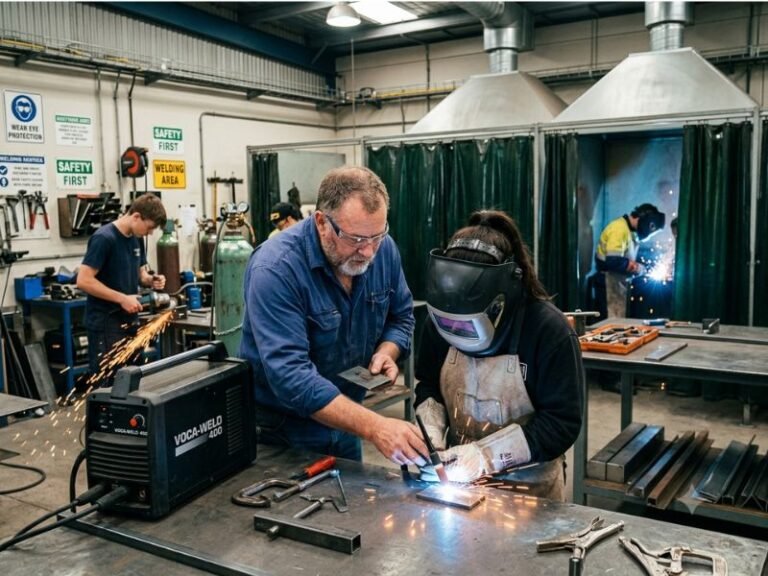
Walking into a welding school can answer questions that a website never will. You can see whether students are actually welding, inspect the condition of the booths, listen for how instructors explain difficult techniques, and notice whether the shop feels organized or improvised.
I would not treat a campus visit as a quick tour The right questions can reveal what you will learn how much time you will spend with equipment.
This guide explains the most useful Questions to ask welding school visit topics along with what to observe how to compare programs and which warning signs deserve closer.
Questions to Ask During a Welding School Visit
A strong visit should help you evaluate four things training quality shop access total cost and career value I recommend asking the questions below in a natural conversation.
What welding processes will I learn?
Ask which processes are included in the program and how much practice each one receives. Common processes include:
- SMAW, commonly called stick welding
- GMAW, commonly called MIG welding
- GTAW, commonly called TIG welding
- FCAW, or flux-cored arc welding
- Oxyfuel cutting, plasma cutting, and other thermal cutting methods
A school may advertise several processes but provide only brief exposure to some of them Ask whether each process is taught through demonstrations supervised practice performance testing or.
How much of the program is hands-on?
This is one of the most important questions on your list. Ask how many hours students typically spend welding, cutting, fitting, grinding, and preparing joints compared with time spent in lectures or online coursework.
Also ask whether students work individually or share booths and machines A program can have a long calendar length but offer limited arc time if too many students.
What projects and weld positions will I practice?
Find out whether training includes flat, horizontal, vertical, and overhead positions. Ask whether students practice butt joints, fillet welds, pipe joints, structural assemblies, and other work related to their intended career path.
Projects should gradually become more demanding Ask how the program moves a beginner from basic bead placement to joint preparation multi-pass welds blueprint interpretation and inspection If you.
How are students evaluated?
Ask whether instructors grade appearance only or evaluate deeper factors such as penetration, fusion, joint preparation, dimensions, distortion, cleanliness, and adherence to procedure. A useful program should explain what acceptable work looks like and give students a chance to correct problems.
Ask whether you will complete practical tests written exams weld samples or qualification tests You should also learn how failed assignments are handled A policy that allows reasonable.
Questions About Instructors, Class Size, and Support
What experience and credentials do instructors have?
Ask about each instructor’s background in welding, fabrication, inspection, or related industry work. Teaching ability matters just as much as production experience, so ask how instructors provide demonstrations, corrections, and individual feedback.
You can also ask whether instructors hold relevant certifications or have experience with the standards and equipment used in the program I would not judge a school solely.
What is the student-to-instructor ratio in the shop?
A low classroom ratio does not always mean students receive close supervision in the welding lab. Ask specifically about the shop ratio during hands-on work, especially during the first weeks when safety and basic technique require frequent correction.
Ask who supervises students when the primary instructor is absent. If assistants or substitute instructors work in the lab, find out what training they have and how safety decisions are handled.
How much individual feedback will I receive?
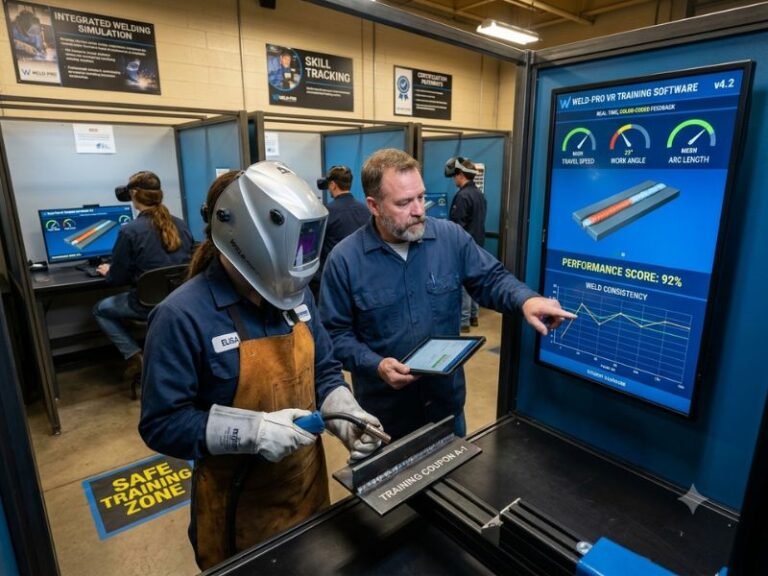
Welding skill develops through repeated correction. Ask how instructors inspect welds, whether they watch students weld in real time, and how feedback is documented. A school may provide strong equipment but weak instruction if students spend most of the day practicing mistakes without correction.
During the tour observe whether instructors circulate through the booths or remain at a desk I would also notice whether students appear comfortable asking questions A respectful learning.
What academic or student support is available?
Ask what happens if you struggle with math, blueprint reading, welding theory, or test preparation. Some students need help with measurements, fractions, decimals, angles, or technical vocabulary. Find out whether tutoring, office hours, study materials, or additional lab time are available.
If you need disability accommodations, transportation assistance, language support, or a schedule that fits family responsibilities, ask who handles those requests and when you must submit documentation. Getting a clear answer before enrollment can prevent avoidable problems later.
Questions About the Welding Shop and Equipment
How many students share each machine and booth?
Ask how many welding booths, power sources, positioners, tables, grinders, cutting machines, and other essential tools are available. Then ask how often equipment is unavailable because of maintenance or scheduling.
Sharing equipment is normal but excessive waiting reduces practice time Ask whether students reserve booths rotate on a fixed schedule or work whenever a machine opens I would.
What condition is the equipment in?
Look for machines that are clean labeled and maintained Cables should be intact connections should appear secure and work areas should not be crowded with scrap hoses cords.
Ask how often machines are serviced and how students report damaged equipment Find out whether the school uses modern equipment older machines or a combination Older equipment is.
What personal protective equipment must I provide?
Ask which items are supplied and which you must purchase. Typical requirements may include a welding helmet with the appropriate lens shade, safety glasses, hearing protection, flame-resistant clothing, gloves, leather footwear, sleeves, and respiratory protection when required.
Request a written equipment list and estimated cost Also ask whether the school requires a specific helmet or allows students to choose approved gear The goal is not.
How does the school manage ventilation and fire safety?
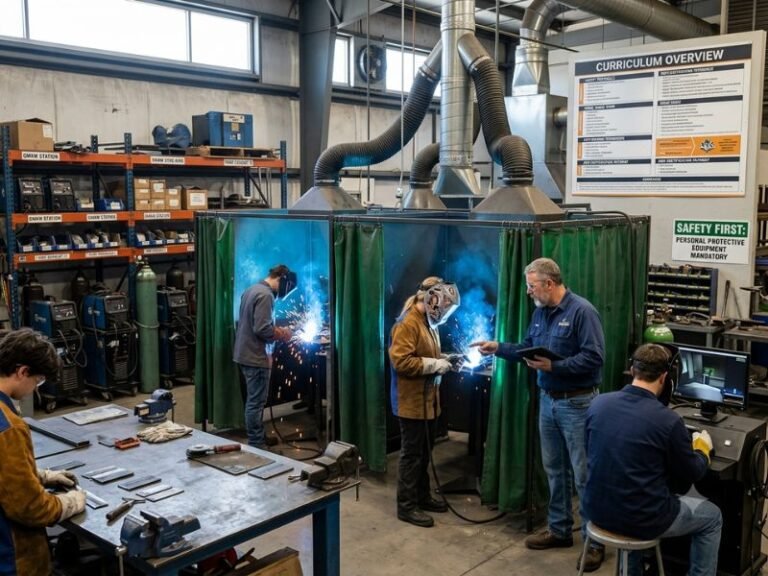
Ask about local exhaust ventilation general shop ventilation fume control fire extinguishers hot-work procedures gas cylinder storage and emergency response The staff should be able to describe how fumes are controlled and what students do.
During the visit, notice whether ventilation systems are operating, whether aisles are clear, and whether flammable materials are stored away from hot work. Safety posters alone are not enough. I would look for evidence that safety is part of daily shop behavior.
Questions About the Curriculum and Credentials
What does the curriculum cover beyond welding technique?
Good welding preparation usually includes more than striking an arc. Ask whether the curriculum covers blueprint reading, welding symbols, joint design, metallurgy, measuring, fit-up, distortion control, inspection, quality control, and workplace communication.
Students may also need basic math, print reading, tool identification, material handling, and safe use of cutting and grinding equipment. Ask how these subjects connect to shop assignments. A lesson is more useful when you can apply it to an actual weld or fabrication project.
Which credential will I earn?
Ask exactly what you receive after completion: a school certificate, diploma, college credential, or preparation for an industry certification. These terms are not interchangeable. Request the credential name in writing and ask who recognizes it.
If the school mentions the American Welding Society AWS ask whether the program itself is accredited whether it prepares students for a specific AWS certification or whether it.
Can I earn welder qualifications while enrolled?
Some employers want evidence that an applicant can pass a particular performance test. Ask whether the school offers qualification testing, what welding procedures are available, and whether an outside inspector or authorized test administrator is involved.
Find out whether testing is included in tuition or charged separately Ask what happens if a student does not pass on the first attempt You should also ask.
Can credits transfer to another program?
If you may later pursue an associate degree advanced manufacturing program inspection training or another credential ask whether credits transfer and to which institutions Get the answer from.
Questions About Schedule, Admissions, and Completion
What are the attendance and scheduling requirements?
Ask when classes meet, how long each session lasts, and whether the program is full-time, part-time, daytime, evening, or hybrid. Welding requires practice, so ask how missed lab hours are made up. A make-up lecture may not replace missed booth time.
Also ask about attendance thresholds, tardiness policies, holidays, breaks, and unexpected closures. If you work or care for family members, compare the actual schedule with your transportation and financial needs before you enroll.
What are the admission requirements?
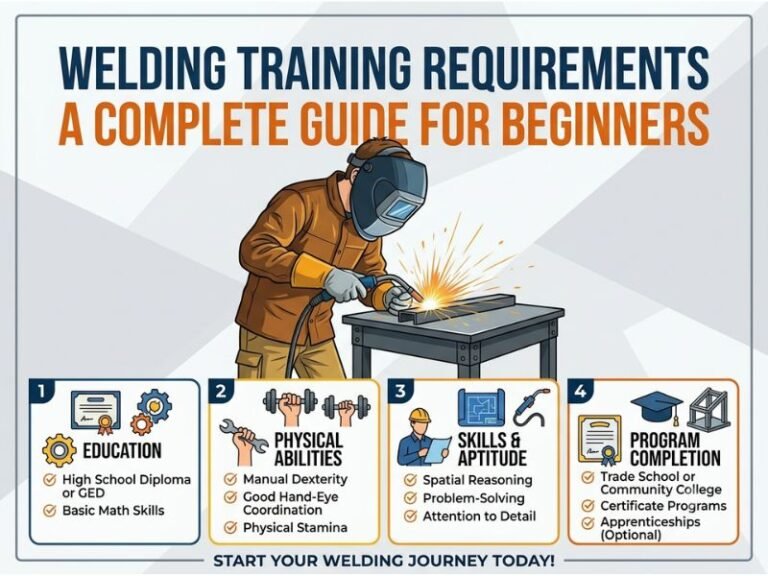
Find out whether the school requires a high school diploma, GED, placement test, interview, physical ability assessment, background check, drug screening, or prior welding experience. Ask whether beginner and advanced students enter the same lab and how the school determines starting level.
Do not be discouraged by reasonable entrance requirements, but make sure you understand them. Ask what documents you need, whether applications are reviewed continuously, and how long admission decisions usually take.
How long does completion usually take?
Ask for the scheduled program length and the typical time students need to finish. A published duration may not include breaks, retesting, missed lab hours, or prerequisites. Ask whether students can move faster, must follow a fixed sequence, or can pause and return later.
Completion rates can help you understand how realistic the program is, but ask what the school means by “completion.” Clarify whether the figure includes students who transfer, withdraw, change programs, or finish only part of the curriculum.
Questions About Cost and Financial Aid
What is the total cost from enrollment to completion?
Request an itemized estimate that includes tuition, registration, lab fees, books, tools, protective equipment, testing fees, uniforms, transportation-related costs, and any graduation or credential charges. Ask whether prices are fixed or may change during the program.
A low advertised tuition can be misleading if students must later pay substantial equipment or testing fees. I would ask for the likely cost of the first term and the full program, then compare those figures with other schools using the same categories.
What happens if I withdraw or need more time?
Ask about refund deadlines, payment plans, leave policies, transfer options, and charges for repeating a course or using additional lab time. If a student fails a practical test, find out whether tuition covers retraining or whether every repeat requires another fee.
These policies are not pleasant to discuss, but they affect the real financial risk of enrollment. Ask for written policies rather than relying only on a verbal explanation.
Which financial aid or funding options are available?
Ask whether the school participates in federal or state financial aid, veterans’ education benefits, workforce development funding, scholarships, employer sponsorships, or payment plans. Confirm which costs each option covers and whether funding is guaranteed or competitive.
If financial aid is important to your decision, ask to speak with the appropriate financial aid representative. A general admissions employee may not be able to explain eligibility, deadlines, satisfactory academic progress, or repayment responsibilities accurately.
Questions About Jobs and Employer Connections
What jobs do graduates commonly obtain?
Ask which industries hire graduates, such as construction, manufacturing, fabrication, maintenance, energy, transportation, or repair. Ask whether graduates typically begin as welders, fabricators, helpers, fitters, machine operators, or apprentices. Entry-level job titles can differ even when the work uses welding skills.
Ask for recent outcome information and how the school defines employment. A useful answer should distinguish between graduates who found welding-related work, graduates in other fields, continuing students, and people whose status is unknown.
How does the school help with job placement?
Ask whether career services include résumé reviews, interview practice, job leads, employer visits, apprenticeships, career fairs, or referrals. Find out whether placement assistance continues after graduation and whether students must meet specific requirements to receive it.
Employer relationships can be valuable, but I would ask how active those relationships are. “Employers know about me” is less informative than a description of recent hiring events, interviews, work-based learning, or documented partnerships.
Can I speak with current students or graduates?
Ask whether the school can connect you with current students or alumni. A brief conversation may reveal how much booth time students receive, how instructors respond to mistakes, what the workload feels like, and whether advertised support matches daily reality.
Listen for patterns rather than expecting every student to have the same opinion. One person’s experience may reflect a particular instructor, schedule, or career goal, so compare those comments with what you observe and what staff provide in writing.
What to Observe During the Visit
Questions are essential, but the physical tour supplies evidence. I would pay attention to the following details:
- Students are actively practicing instead of waiting most of the time.
- Instructors provide corrections and enforce safe procedures.
- Welding booths have adequate screens, lighting, ventilation, and space.
- Equipment appears maintained, and damaged tools are removed from service.
- Gas cylinders, cables, hoses, scrap, and hot work are managed safely.
- Students use appropriate protective clothing and eye protection.
- Work samples show progression from basic exercises to more advanced projects.
- Staff answer direct questions without exaggerating job guarantees or credentials.
- The schedule, costs, and completion requirements are explained consistently.
I would also ask to see a typical student work area, not only the most polished display area. A realistic tour gives you a better basis for comparison than a presentation designed solely for prospective students.
How to Compare Welding Schools After the Tour
Take notes during every visit and use the same categories for each program. A simple comparison sheet can include hands-on hours, processes taught, class size, equipment access, safety practices, instructor support, credentials, schedule, total cost, financial aid, and career services.
Rate each category using a consistent scale but do not let a numerical score replace judgment A school with the newest machines may not be the best choice.
I would give extra weight to the factors most connected to your goal Someone pursuing pipe work may prioritize pipe positions fit-up and testing Someone seeking fabrication work.
| Comparison category | What to record | Why it matters |
|---|---|---|
| Hands-on training | Lab hours, booth access, practice structure | Shows how much time you can spend developing technique |
| Curriculum | Processes, positions, print reading, inspection | Indicates whether training matches your target work |
| Instruction | Class size, feedback, instructor availability | Affects how quickly mistakes are identified and corrected |
| Cost | Tuition, tools, PPE, testing, fees | Reveals the actual financial commitment |
| Career preparation | Credentials, employer links, placement support | Shows how the program connects training with employment |
Red Flags to Notice During a Welding School Visit
A single concern does not automatically disqualify a school, but several concerns together deserve careful investigation. Be cautious if staff cannot explain how much hands-on time students receive or if they avoid giving a realistic student-to-machine ratio.
Be careful with promises of guaranteed employment, unusually high starting wages, or universal certification without clear conditions. Ask for definitions, documentation, and recent outcome information. A responsible school should explain that employment depends on skill, attendance, location, qualifications, job availability, and employer requirements.
Other warning signs include visibly unsafe shop conditions, inadequate protective equipment, equipment that is routinely unavailable, unclear fees, pressure to enroll immediately, inconsistent answers from different staff members, and a curriculum that does not match the program’s advertising.
I would also question a school that discourages you from observing the lab, speaking with students, reviewing policies, or comparing programs. A transparent school should expect prospective students to evaluate the decision carefully.
What to Bring and Do Before You Enroll
Bring a notebook a list of target careers your work or school schedule and any questions about financing or accommodations If you have previous welding experience bring details.
Before signing an enrollment agreement, request the current course catalog, tuition schedule, equipment list, attendance policy, refund policy, credential information, and career-service details. Read the documents at home rather than making a decision under tour-day pressure.
It can also help to contact several employers in your area and ask what entry-level welding skills credentials and schedule flexibility they value Their answers can help you.
FAQ: Questions to Ask on a Welding School Visit
What is the first question to ask at a welding school?
Ask how much hands-on welding time each student receives during a typical week. This answer helps you understand whether the program is built around actual practice or mostly classroom instruction. Follow up by asking how students share booths and equipment.
Should I ask about all welding processes?
Yes. Ask which processes are taught, how much time each receives, and whether practice includes meaningful assignments or only brief demonstrations. Confirm that the processes match your intended work, such as structural welding, fabrication, pipe welding, maintenance, or manufacturing.
What should I ask about welding school job placement?
Ask how the school defines job placement, which employers recruit graduates, what jobs graduates obtain, and whether recent outcome information is available. Also ask what career services provide, including résumé assistance, interviews, job leads, apprenticeships, and employer events.
Should I ask how much the welding program really costs?
Yes. Request the total estimated cost, including tuition, fees, books, tools, protective equipment, testing, uniforms, and possible retesting or extra lab charges. Ask for the refund policy and payment deadlines in writing.
What safety questions should I ask during the visit?
Ask how the school controls welding fumes, handles fire prevention, stores gas cylinders, responds to injuries, maintains equipment, and trains students before they enter the shop. Then compare the answers with what you observe in the lab.
Should I talk with current welding students?
Yes if the school permits it Ask students how much time they spend welding how instructors provide feedback whether equipment is available and what unexpected costs or challenges.
Conclusion
A welding school visit is your opportunity to verify the promises made in advertisements and enrollment materials I would focus on hands-on practice instructor feedback safe and functional. When I evaluate Questions to ask welding school visit, I apply these points to the specific situation instead of relying on a one-size-fits-all assumption.