Welding Training Equipment: Tools Every Welder Needs to Learn
Learning welding is not just about understanding how heat and metal work together. It is a hands-on skill where the right equipment can make the difference between struggling with basic techniques and developing professional-level confidence.
From welding machines and safety gear to advanced simulators and training materials, proper welding training equipment helps students practice safely, improve accuracy, and prepare for real workplace challenges.
While researching welding education methods and modern training facilities, I found that equipment quality plays a major role in how effectively students develop welding skills.
A beginner practicing with unreliable equipment may spend more time fighting machine problems than improving technique.
On the other hand, well-designed training equipment allows learners to focus on essential skills such as controlling heat, maintaining proper angles, and producing consistent welds.
The demand for skilled welders continues to grow as industries such as construction, manufacturing, energy, and fabrication rely on qualified welding professionals.
According to the U.S. Bureau of Labor Statistics, thousands of welding-related jobs are available every year, while many industries continue to face challenges finding workers with proper technical skills. This makes effective welding education and hands-on training more important than ever.
Modern welding training is also evolving beyond traditional machines. Today, many programs use technologies such as welding training simulators, mobile welding training trailers, and digital learning resources to give students more opportunities to practice.
In this guide, I will explain the different types of welding training equipment, essential tools for beginners, advanced equipment used by professional training facilities, and how to choose the right resources for building welding skills.
What Is Welding Training Equipment?
Welding training equipment refers to the tools, machines, materials, and learning resources used to teach students how to perform welding safely and effectively.
Unlike general welding equipment used mainly for production work, training equipment is selected to help learners understand welding fundamentals, practice techniques, and develop the skills required for professional welding jobs.
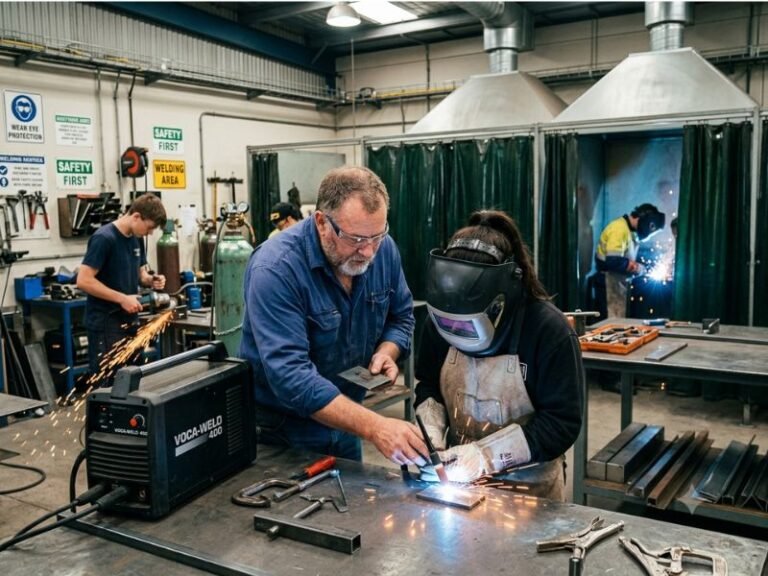
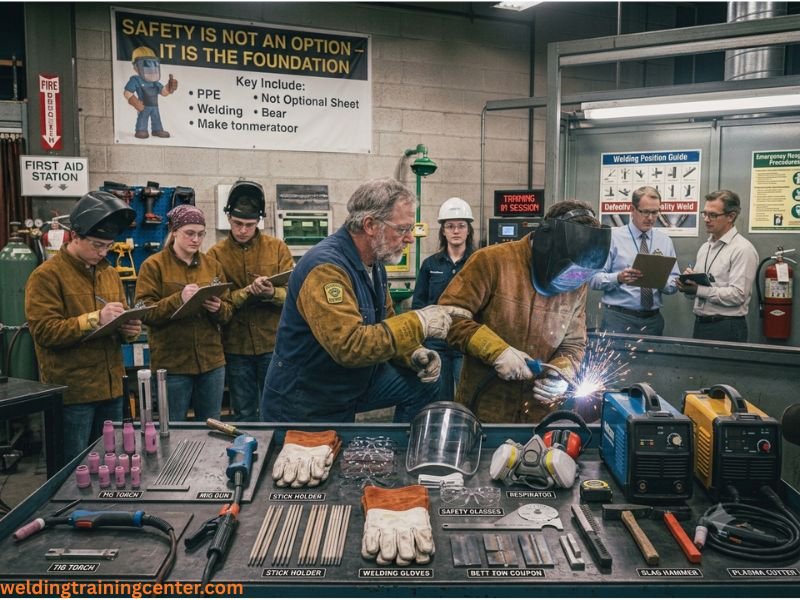
A complete welding training setup usually includes more than just a welding machine. Students need a combination of equipment that allows them to practice different welding processes, understand safety procedures, and evaluate the quality of their work.
Common welding training equipment includes:
- Welding machines such as MIG, TIG, and Stick welders
- Welding booths and workstations
- Safety equipment and protective gear
- Practice metals and welding materials
- Measuring and inspection tools
- Welding simulation technology
- Training manuals and educational resources
Each piece of equipment plays a specific role in helping students build confidence and improve their welding ability.
For example, a welding machine allows students to practice controlling the arc, heat input, and travel speed. However, without proper workstations, safety equipment, and inspection tools, students may not develop a complete understanding of professional welding practices.
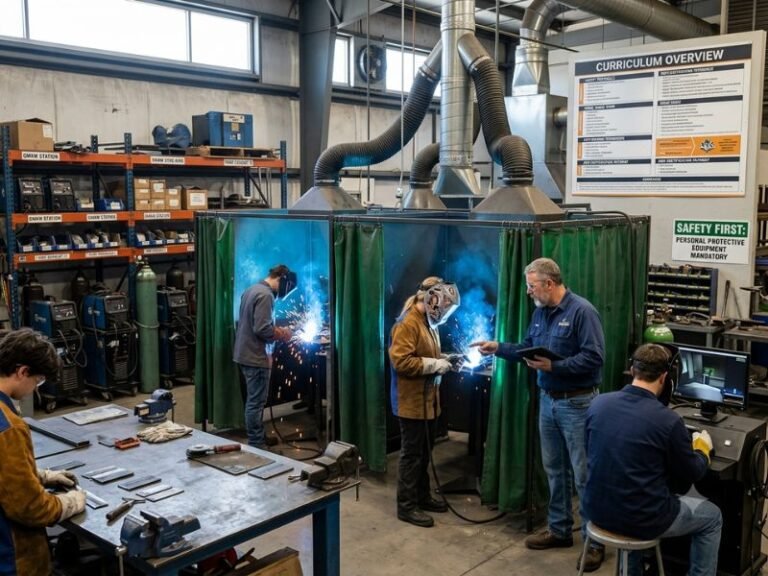
Welding schools, trade programs, and industrial training centers often design their equipment setups to match real workplace conditions. This helps students become familiar with the tools and procedures they will encounter after entering the workforce.
Modern welding training equipment also includes advanced technologies such as virtual welding simulators and digital learning systems. These tools allow students to practice certain skills in a controlled environment before working with real materials.
The purpose of welding training equipment is not only to help students create welds but also to teach them how to work safely, understand equipment settings, identify problems, and produce consistent results.
A well-equipped training environment gives beginners a stronger foundation and helps experienced welders improve specialized skills.
Why Is Welding Training Equipment Important?
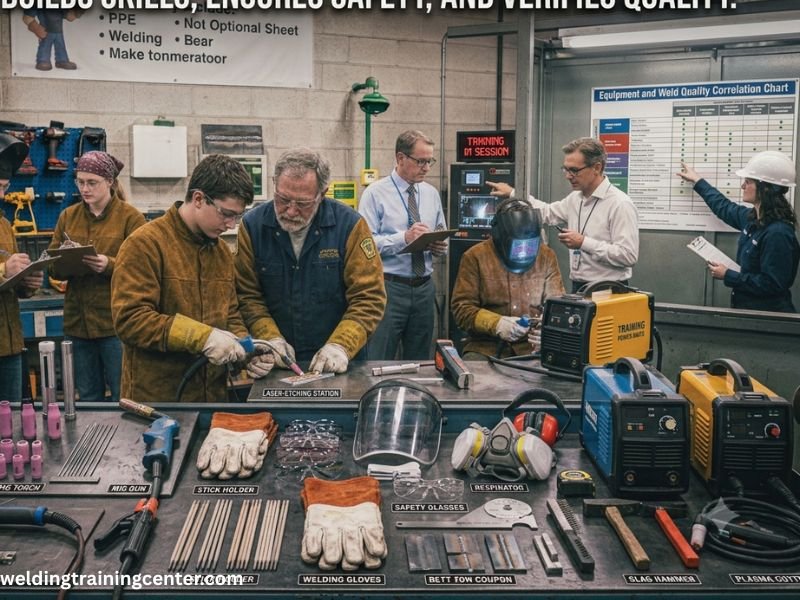
Welding is a practical trade where skill development depends heavily on repeated practice. Having the right welding training equipment allows students to gain hands-on experience and develop the muscle memory needed to perform quality welds.
A person can study welding theory through books or videos, but actual improvement comes from working with welding machines, materials, and tools. Proper equipment gives learners the opportunity to practice techniques, make mistakes safely, and improve through feedback.
Helps Develop Practical Welding Skills
The biggest advantage of quality training equipment is that it allows students to practice real welding techniques.
Using proper equipment helps learners improve:
- Hand control and movement
- Welding speed
- Machine adjustment skills
- Heat management
- Weld consistency
For example, a student learning MIG welding needs experience adjusting voltage, wire speed, and travel technique. This understanding develops through practice with an actual welding machine.
Prepares Students for Real Workplace Conditions
Professional welders work with specific equipment, procedures, and safety requirements. Training equipment helps students become familiar with the environment they will experience in actual jobs.
A properly equipped training facility allows students to practice:
- Setting up machines
- Preparing materials
- Following welding procedures
- Inspecting completed welds
This practical experience makes the transition from training to employment easier.
Improves Safety Awareness
Safety is a major part of welding education. Training equipment helps students learn safe working habits from the beginning.
Using proper equipment teaches students:
- How to operate machines correctly
- How to use protective equipment
- How to maintain a safe workspace
- How to recognize potential hazards
Developing safe habits early reduces the risk of accidents and helps create professional welders who understand workplace responsibilities.
Supports Certification and Career Preparation
Many welding careers require workers to demonstrate specific skills through qualification tests or certifications. The right training equipment helps students practice under conditions similar to professional testing environments.
Students can develop experience with:
- Different welding positions
- Various materials
- Multiple welding processes
- Quality inspection methods
A strong equipment foundation helps learners build the confidence needed to pursue welding certifications and career opportunities.
Reduces Learning Barriers for Beginners
Beginners often struggle when they do not have access to proper tools or guidance. Quality welding training equipment makes learning easier by providing a structured environment where students can understand how different factors affect weld quality.
With the right equipment, students can see the connection between:
- Machine settings
- Welding technique
- Material preparation
- Final weld results
This understanding creates a stronger foundation for long-term welding skill development.
Welding training equipment is an investment in education. The better the tools and resources available, the better prepared students become for real-world welding challenges.
Essential Welding Training Equipment for Beginners
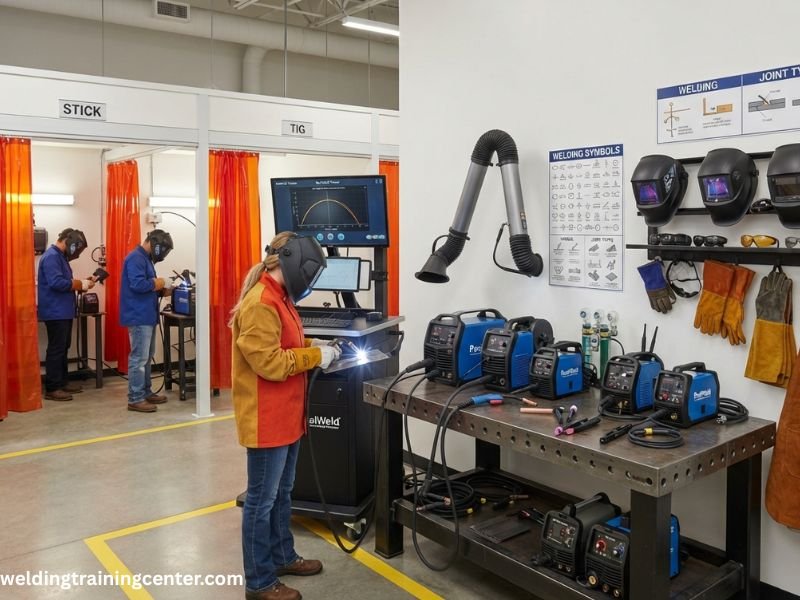
For someone starting a welding career, having the right equipment is one of the most important parts of the learning process. Beginners need tools that allow them to practice different welding techniques while maintaining safety and building proper habits.
A basic welding training setup does not need every advanced tool used in industrial facilities, but it should include essential equipment that helps students understand welding fundamentals and gain practical experience.
Welding Machines
The welding machine is the most important piece of equipment in any welding training environment. It allows students to practice controlling heat, managing the welding arc, and understanding how different settings affect weld quality.
Common welding machines used for training include:
MIG Welding Machines
MIG welding machines are often used for beginner training because they are relatively easy to learn and widely used in industries such as manufacturing and fabrication.
Students learn:
- Wire feed control
- Voltage adjustment
- Shielding gas selection
- Travel speed control
MIG training helps beginners develop confidence before moving to more advanced welding processes.
TIG Welding Machines
TIG welding machines are used to teach precision welding techniques. Although TIG welding requires more control, it helps students develop strong fundamentals.
Training focuses on:
- Torch movement
- Heat control
- Filler metal handling
- Welding thin materials
Stick Welding Machines
Stick welding remains an important skill for many industries, especially construction and maintenance work.
Students learn:
- Electrode selection
- Arc control
- Welding positions
- Outdoor welding techniques
Many welding programs teach multiple processes because professional welders often need the ability to work with different methods depending on the project.
Welding Workstations and Tables
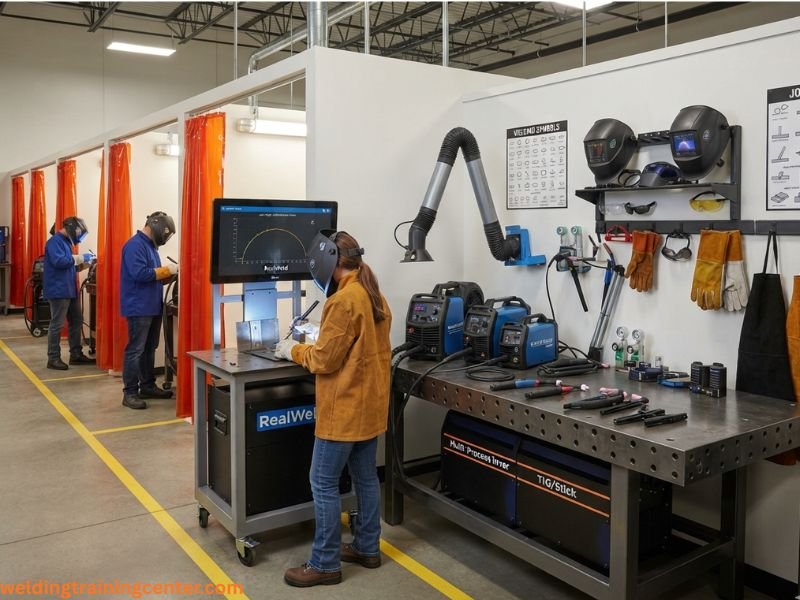
A proper welding workstation provides a safe and organized area where students can practice welding techniques.
Training workstations usually include:
- Welding tables
- Welding booths
- Clamps and fixtures
- Proper ventilation systems
A good workstation helps students learn correct positioning and improves safety by separating welding activities from other work areas.
For beginners, having a dedicated welding booth is especially important because it creates a controlled environment where they can focus on technique without unnecessary distractions.
Welding Safety Equipment
Safety equipment is a required part of every welding training setup. Students should learn proper protection from the beginning because safe habits become part of their professional workflow.
Essential safety equipment includes:
- Welding helmets
- Welding gloves
- Flame-resistant jackets
- Safety boots
- Safety glasses
- Hearing protection
Respiratory protection may also be needed depending on the welding process, materials, and ventilation conditions.
Learning to use safety equipment correctly during training helps students develop habits they will continue throughout their welding careers.
Welding Practice Materials
Beginners need suitable materials to practice welding techniques and understand how different metals respond to heat.
Common training materials include:
- Steel plates
- Metal coupons
- Pipes
- Welding rods
- Welding wire
Practice materials allow students to experiment with different settings and improve their ability to create consistent welds.
The amount of practice material available can significantly affect how quickly a student improves because welding skills develop through repetition.
Measuring and Inspection Tools
Learning how to evaluate weld quality is an important part of welding education. Inspection tools help students understand whether their welds meet expected standards.
Common tools include:
- Welding gauges
- Measuring tools
- Squares
- Inspection mirrors
These tools help students identify issues such as incorrect weld size, poor alignment, or inconsistent weld appearance.
Developing inspection skills early helps beginners understand that professional welding is not only about creating a weld but also about producing a weld that meets quality requirements.
A well-equipped beginner welding setup provides the foundation needed to develop safe and reliable welding skills. While advanced equipment can improve training opportunities, the most important factor is having the right combination of machines, safety gear, materials, and practice tools that allow students to learn effectively.
Advanced Welding Training Equipment Used in Professional Programs
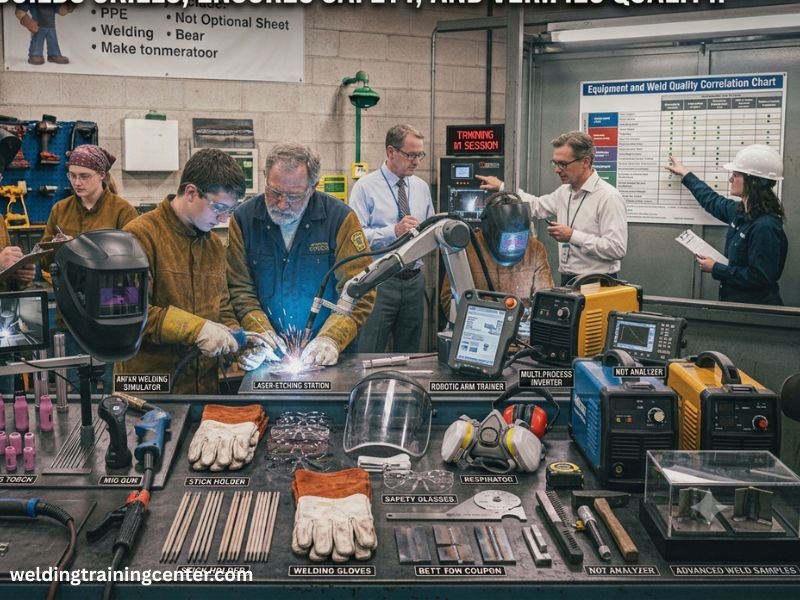
Professional welding training programs often use advanced welding training equipment to prepare students for real industrial environments. While beginners can develop basic skills with essential machines and tools, advanced equipment helps learners understand specialized welding applications, improve precision, and prepare for demanding career opportunities.
Trade schools, welding institutes, and company training centers often invest in advanced equipment because professional welders need experience with the same types of tools and systems used in modern workplaces.
Advanced Welding Machines
Professional training facilities typically provide access to advanced welding machines that allow students to practice multiple welding processes and applications.
These machines may include:
- Multi-process welding systems
- Industrial MIG and TIG machines
- Advanced Stick welding equipment
- Pulse welding machines
Advanced machines help students understand how different settings affect weld performance. They can practice adjusting parameters such as current, voltage, wire speed, and pulse settings to achieve better weld quality.
This experience is valuable because many industrial welding jobs require workers to operate different types of equipment depending on the project requirements.
Pipe Welding Training Equipment
Pipe welding is a specialized skill used in industries such as energy, construction, and manufacturing. Training facilities that prepare students for pipe welding careers often use dedicated equipment designed for pipe practice.
Pipe welding training equipment may include:
- Pipe stands
- Pipe sections for practice
- Positioning tools
- Pipe alignment equipment
These tools help students practice difficult welding positions and learn techniques required for professional pipe welding work.
Because pipe welding requires high precision, proper training equipment allows students to develop control before working on real projects.
Welding Positioners and Rotators
Welding positioners and rotators are commonly used in advanced training environments to improve efficiency and consistency.
These systems help welders:
- Rotate workpieces safely
- Maintain proper welding positions
- Improve weld accuracy
- Practice industrial welding methods
Learning to use these tools helps students understand how professional fabrication facilities handle large or complex components.
Welding Inspection Equipment
Professional welders need to understand how weld quality is evaluated. Advanced training programs often include inspection equipment to teach students basic quality control principles.
Inspection tools may include:
- Weld gauges
- Visual inspection tools
- Measurement equipment
- Testing devices
Using inspection equipment helps students identify defects and understand how professional standards affect welding quality.
This knowledge is especially useful for welders who want to advance into roles involving quality control, supervision, or inspection.
Welding Automation and Robotic Training Equipment
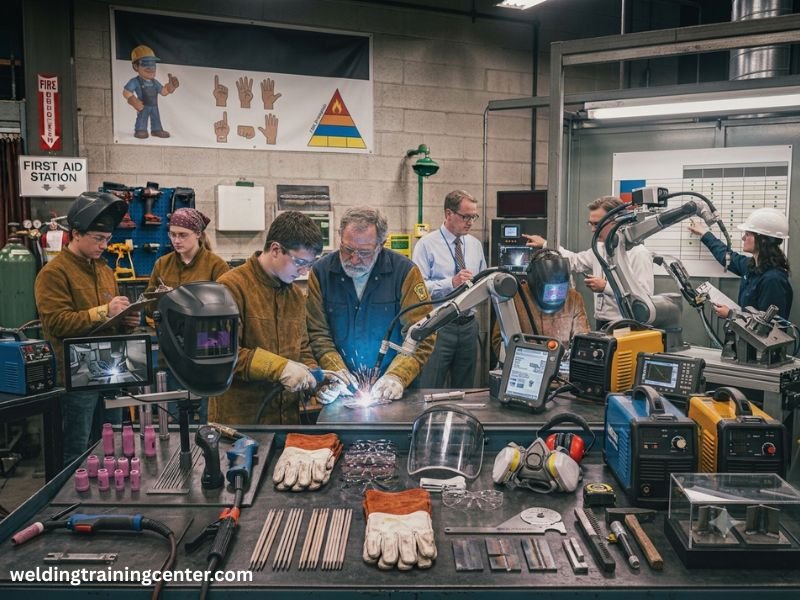
Modern manufacturing increasingly uses automation and robotic welding systems. Some advanced welding programs include robotic training equipment to introduce students to automated welding technology.
Training may cover:
- Robotic welding operation
- Programming basics
- Automated welding processes
- Production safety
Understanding automation can provide additional career opportunities because many industries are adopting advanced manufacturing systems.
However, manual welding skills remain important because many applications still require human control and decision-making.
Welding Simulation Technology
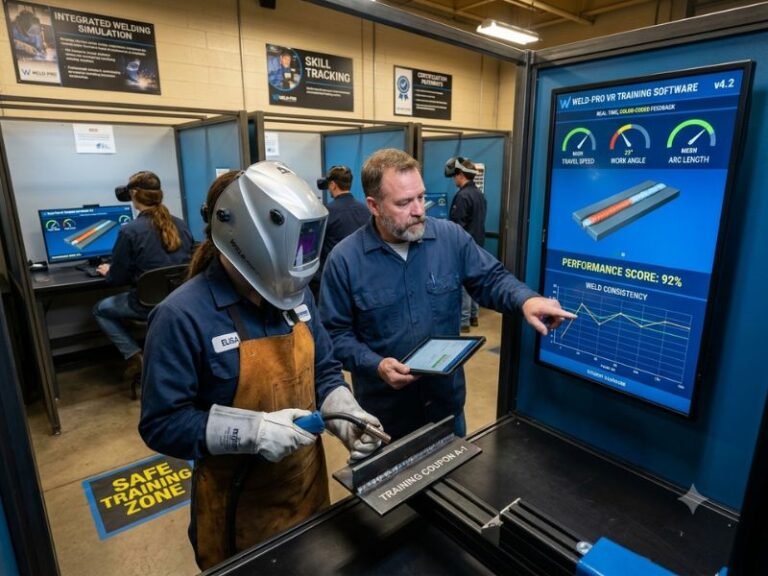
Welding simulators are another advanced training tool used in many modern programs. These systems allow students to practice welding movements, angles, and techniques in a digital environment.
They provide benefits such as:
- Immediate feedback
- Reduced material waste
- Safe practice conditions
- Performance tracking
While simulators cannot fully replace real welding practice, they are useful for helping students develop confidence before using actual welding equipment.
Why Advanced Equipment Matters in Welding Education
Advanced welding training equipment helps bridge the gap between classroom learning and professional work environments.
Students who train with modern equipment gain experience with:
- Industry-standard tools
- Complex welding applications
- Quality control procedures
- Modern fabrication techniques
For welding schools and training facilities, investing in advanced equipment creates better learning opportunities and helps students enter the workforce with stronger practical skills.
Welding Training Simulator
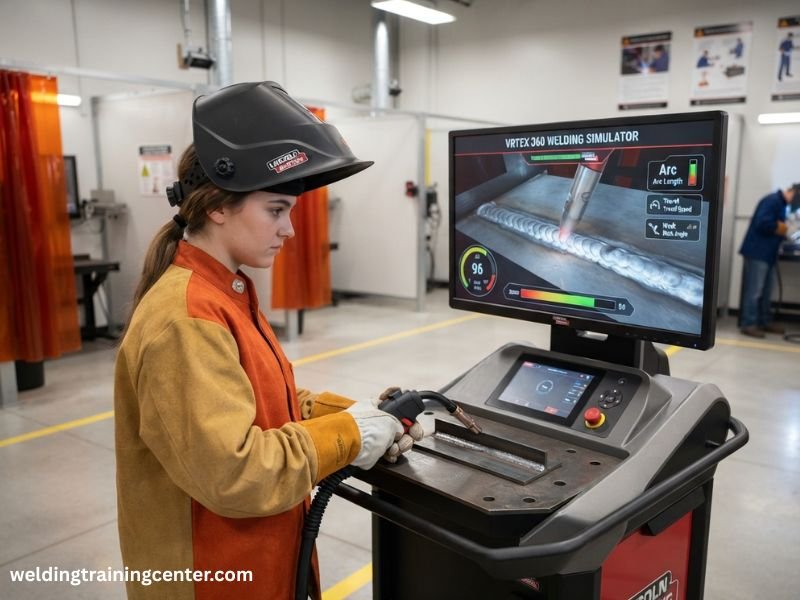
A welding training simulator is a modern educational tool that uses digital technology to help students practice welding techniques in a controlled environment. Instead of immediately using real welding equipment and consuming materials, students can first develop basic skills through simulated welding exercises.
Welding training simulators are becoming more common in technical schools, workforce development programs, and industrial training facilities because they allow students to practice repeatedly while receiving immediate feedback about their performance.
Although simulators cannot completely replace hands-on welding practice, they are valuable as a training supplement that helps students build confidence before moving to real welding equipment.
How Does a Welding Training Simulator Work?
A welding training simulator recreates the welding process using virtual reality, sensors, and specialized software.
Depending on the system, students may practice:
- Torch or electrode movement
- Welding angles
- Travel speed
- Work distance
- Welding position
Many advanced systems track the learner’s movements and provide feedback on areas that need improvement.
For example, if a student moves too quickly or holds an incorrect angle, the simulator can identify the mistake and explain how it affects weld quality.
Benefits of Using Welding Simulators in Training
Welding simulators provide several advantages for both students and instructors.
Reduces Material Waste
Traditional welding practice requires metal, welding wire, electrodes, and shielding gases. Beginners often create many imperfect welds while learning.
A simulator allows students to practice basic movements without using large amounts of physical materials, making training more cost-effective.
Provides a Safe Learning Environment
Beginners face several risks when learning welding, including sparks, heat, fumes, and equipment handling mistakes.
A simulator allows students to learn important concepts before working with real welding machines.
This helps reduce fear and allows beginners to focus on improving technique.
Offers Immediate Feedback
One of the biggest advantages of welding simulators is instant performance evaluation.
Students can receive feedback about:
- Welding speed
- Torch angle
- Position control
- Consistency
Immediate feedback helps learners correct mistakes faster compared to waiting for an instructor to review every practice weld.
Helps Instructors Track Student Progress
For welding schools and training centers, simulators provide useful information about student development.
Instructors can monitor:
- Practice time
- Skill improvement
- Common mistakes
- Areas requiring additional training
This allows instructors to create more personalized learning plans.
Limitations of Welding Training Simulators
Although welding simulators offer many benefits, they should be used as a supporting tool rather than a complete replacement for real welding practice.
Real welding involves factors that simulations cannot fully reproduce, such as:
- Heat from the welding arc
- Metal behavior
- Real weld puddle control
- Material differences
Students eventually need hands-on experience with actual welding equipment to develop professional-level skills.
Who Can Benefit From Welding Simulators?
Welding training simulators are useful for different types of learners, including:
- Beginner welding students
- Technical school students
- Apprentices
- Experienced welders learning new processes
They are especially helpful for beginners because they allow students to practice fundamental movements before dealing with the complexity of real welding.
The Future of Welding Training Simulators
As welding education continues to adopt new technology, simulators are becoming an important part of modern training programs.
They provide a combination of safety, efficiency, and measurable skill development that traditional training methods alone may not offer.
The most effective welding education combines simulation technology with real hands-on practice. By using both methods together, students can build confidence, improve technique, and become better prepared for professional welding careers.
Mobile Welding Training Trailer
A mobile welding training trailer is a portable welding classroom designed to bring welding education directly to students, communities, and workplaces. Instead of requiring learners to travel to a traditional welding school, these trailers allow training providers and organizations to deliver hands-on welding instruction in different locations.
Mobile welding training trailers are becoming increasingly useful for workforce development programs, rural training initiatives, employer-based education, and organizations looking to expand access to skilled trades training.
These portable units are equipped with welding machines, safety equipment, tools, and learning materials, creating a complete training environment that can operate outside a traditional facility.
What Is Included in a Mobile Welding Training Trailer?
A well-equipped mobile welding training trailer is designed to provide many of the same resources available in a permanent welding training facility.
Depending on the program, a trailer may include:
- MIG, TIG, and Stick welding machines
- Welding booths or workstations
- Welding safety equipment
- Practice materials
- Ventilation systems
- Welding tools and accessories
Some advanced mobile units may also include welding simulators, classroom areas, and digital learning technology.
The goal is to create a practical training environment where students can learn welding skills without needing a full-scale welding school nearby.
Benefits of Mobile Welding Training Trailers
Expands Access to Welding Education
One of the biggest advantages of mobile welding training trailers is that they bring education to areas where welding programs may not be easily available.
They can support:
- Rural communities
- Workforce development programs
- High school career programs
- Employer training initiatives
This makes welding education more accessible for people who may not have the ability to travel long distances for training.
Supports Workforce Development
Many industries continue to need skilled welders, and mobile training programs help organizations develop local talent.
Companies can use mobile welding trailers to provide:
- Employee skill development
- New worker training
- Safety education
- Process-specific instruction
This allows employers to train workers according to their specific needs.
Provides Hands-On Learning
A major advantage of mobile welding training trailers is that they focus on practical experience.
Students can learn:
- Welding machine operation
- Proper welding techniques
- Safety procedures
- Material preparation
Hands-on practice is essential because welding is a skill that improves through repetition and direct experience.
Who Uses Mobile Welding Training Trailers?
Mobile welding training trailers are used by different organizations, including:
- Welding schools
- Community training programs
- Manufacturing companies
- Construction companies
- Workforce development organizations
They are especially useful for organizations that want to provide training to multiple locations without building separate facilities.
Limitations of Mobile Welding Training Trailers
Although mobile welding trailers provide flexibility, they may have some limitations compared to permanent welding facilities.
For example:
- Space may be limited
- Advanced equipment options may vary
- Large-scale industrial training may require additional resources
However, for basic and intermediate welding education, mobile units can provide an effective solution.
Why Mobile Welding Training Trailers Matter
Mobile welding training trailers represent a flexible approach to modern welding education. They help remove barriers to training by bringing equipment, instructors, and practical learning opportunities closer to students.
As industries continue to search for qualified welding professionals, these portable training solutions can play an important role in developing the next generation of skilled welders.
Welding Machine Training
Welding machine training is an important part of welding education because understanding how to operate a machine correctly directly affects weld quality, safety, and productivity. A welder may understand welding techniques, but without proper knowledge of machine settings and operation, producing consistent welds can be difficult.
This type of training teaches students how different welding machines work, how to adjust settings for specific materials, and how to troubleshoot common problems. It is especially important because modern welding workplaces use a wide range of machines with different features and controls.
What Is Covered in Welding Machine Training?
Welding machine training focuses on helping learners understand both basic operation and advanced machine adjustments.
Students typically learn:
- How to set up welding machines
- How to adjust welding parameters
- How to select proper settings for materials
- How to maintain equipment
- How to identify machine-related problems
The goal is to help welders become comfortable working with different types of equipment rather than relying only on preset settings.
MIG Welding Machine Training
MIG welding is commonly used in manufacturing, fabrication, and automotive industries, making MIG machine training valuable for many welding careers.
Training usually covers:
- Voltage adjustment
- Wire feed speed
- Shielding gas selection
- Torch movement
- Material preparation
Students learn how small changes in machine settings can affect penetration, weld appearance, and overall quality.
For example, incorrect wire speed or voltage settings can create problems such as poor fusion, excessive spatter, or inconsistent welds.
TIG Welding Machine Training
TIG welding requires greater precision and control, so machine training plays an important role in developing proper technique.
Students learn about:
- Amperage control
- Pulse settings
- Tungsten selection
- Gas flow adjustment
- Foot pedal control
Understanding TIG machine settings helps welders produce cleaner and more precise welds, especially when working with materials such as stainless steel and aluminum.
Stick Welding Machine Training
Stick welding remains widely used in construction, maintenance, and outdoor applications.
Training focuses on:
- Current settings
- Electrode selection
- Arc control
- Welding positions
Because stick welding often requires adapting to different environments, understanding machine adjustments is essential for producing reliable welds.
Importance of Understanding Welding Parameters
One of the most important parts of welding machine training is learning how different parameters affect welding results.
Key factors include:
- Amperage
- Voltage
- Travel speed
- Wire feed speed
- Gas flow rate
A skilled welder understands that machine settings are not just numbers—they directly influence weld strength, appearance, and performance.
Welding Machine Safety and Maintenance
Machine training also includes proper equipment care and safety practices.
Students learn how to:
- Inspect machines before use
- Check cables and connections
- Maintain equipment properly
- Recognize signs of damage
Regular maintenance helps extend equipment life and reduces unexpected failures during welding operations.
Why Welding Machine Training Is Important for Career Growth
Employers often look for welders who can do more than operate a machine. They want workers who understand equipment, solve problems, and maintain consistent quality.
Welding machine training helps professionals:
- Work with different welding systems
- Improve weld quality
- Reduce mistakes
- Adapt to different workplace requirements
A welder who understands the equipment behind the process has greater confidence and more opportunities in the welding industry.
Welding Machine Repair Training
Welding machine repair training focuses on teaching students how to inspect, troubleshoot, maintain, and repair different types of welding equipment. While many welders learn how to operate machines, understanding how to diagnose equipment problems can be a valuable additional skill, especially in industrial environments where machine downtime can affect productivity.
Modern welding machines contain electrical components, control systems, and complex internal parts. Proper repair training helps technicians and experienced welders understand how these systems work and how to identify problems safely.
What Is Welding Machine Repair Training?
Welding machine repair training is a specialized program that teaches the technical skills needed to maintain and restore welding equipment.
The training usually covers:
- Welding machine components
- Electrical safety procedures
- Troubleshooting methods
- Preventive maintenance
- Component replacement
Students learn how different parts work together and how equipment failures can affect welding performance.
This knowledge is useful for welding technicians, maintenance workers, service professionals, and welders who want to expand their career skills.
Common Welding Machine Problems Covered in Training
A major part of repair training involves learning how to identify common equipment issues.
Examples include:
- Machine not powering on
- Inconsistent arc performance
- Overheating problems
- Wire feeding issues
- Gas flow problems
- Electrical connection failures
Understanding these problems helps technicians find the source of the issue instead of replacing parts unnecessarily.
Electrical Safety in Welding Machine Repair
Because welding machines operate using electrical power, safety is one of the most important parts of repair training.
Students learn about:
- Safe equipment inspection
- Electrical component handling
- Proper shutdown procedures
- Testing methods
Repair work should always be performed carefully because welding machines contain components that can create electrical hazards if handled incorrectly.
Preventive Maintenance Skills
Welding machine repair training also teaches preventive maintenance practices that help reduce equipment failures.
Maintenance tasks may include:
- Inspecting cables and connections
- Cleaning internal components
- Checking cooling systems
- Reviewing machine performance
Regular maintenance helps welding equipment operate more efficiently and can extend the lifespan of expensive machines.
Tools Used in Welding Machine Repair
Repair training introduces students to specialized tools used for diagnosing equipment problems.
These may include:
- Multimeters
- Testing equipment
- Hand tools
- Replacement components
Learning how to use these tools properly allows technicians to identify problems more accurately.
Career Benefits of Welding Machine Repair Training
Adding repair skills can create additional career opportunities in the welding industry.
Professionals with repair knowledge may work as:
- Welding equipment technicians
- Maintenance specialists
- Service representatives
- Workshop supervisors
Companies value workers who can reduce equipment downtime and keep production running efficiently.
Who Should Consider Welding Machine Repair Training?
This type of training can benefit:
- Experienced welders
- Welding instructors
- Maintenance technicians
- Fabrication professionals
- Equipment service workers
It is especially useful for individuals who want to move beyond basic welding tasks and develop a deeper understanding of welding technology.
Why Welding Machine Repair Training Matters
Welding equipment is a major investment for schools, companies, and professional welders. When machines fail, repairs can be costly and production may stop.
Welding machine repair training helps professionals understand equipment better, solve problems faster, and maintain reliable welding operations.
For welders who want to expand their technical skills, learning how welding machines work and how to maintain them can create valuable opportunities in the industry.
Welding Training Materials
Welding training materials are essential resources that support both classroom learning and hands-on welding practice. While welding equipment allows students to develop practical skills, training materials help them understand welding theory, safety procedures, technical concepts, and industry standards.
A complete welding education combines practical experience with reliable learning resources. Good training materials make it easier for students to understand complex topics such as welding processes, metallurgy, machine settings, and weld inspection.
What Are Welding Training Materials?
Welding training materials include educational resources used by welding schools, instructors, and students to improve learning outcomes.
These materials may include:
- Welding manuals and guides
- Practice worksheets
- Safety documents
- Welding charts
- Process diagrams
- Training videos
- Reference materials
The purpose of these resources is to support students before, during, and after hands-on welding practice.
For example, a student can use a welding chart to understand recommended settings for different materials before adjusting a welding machine.
Types of Welding Training Materials
Different types of materials are used depending on the learning level and training goals.
Welding Theory Materials
These resources explain the science behind welding, including:
- Welding processes
- Heat control
- Metal properties
- Joint design
- Welding terminology
Understanding theory helps students make better decisions during practical work.
Safety Training Materials
Safety resources are an important part of welding education because welding involves heat, electricity, fumes, and other hazards.
Safety materials may cover:
- Personal protective equipment
- Workplace procedures
- Hazard identification
- Emergency response
These resources help students develop safe habits before entering professional environments.
Welding Procedure Materials
Professional welding often requires following specific procedures to maintain quality and consistency.
Training materials may include information about:
- Welding parameters
- Material preparation
- Welding positions
- Quality requirements
Learning how to follow procedures helps students understand professional welding standards.
Importance of Visual Learning Materials
Welding involves many techniques that are easier to understand through visual examples.
Resources such as diagrams, illustrations, and videos help students understand:
- Correct welding angles
- Equipment setup
- Common welding defects
- Proper techniques
Visual learning is especially helpful for beginners because it allows them to see how theory applies to actual welding situations.
Welding Training Materials for Different Skill Levels
The type of materials needed depends on the learner’s experience.
Beginners usually need resources that explain:
- Basic welding concepts
- Safety procedures
- Equipment operation
Intermediate learners may focus on:
- Improving technique
- Understanding defects
- Learning advanced processes
Experienced welders may use technical resources related to:
- Welding inspection
- Codes and standards
- Specialized applications
How Welding Schools Use Training Materials
Professional welding programs use training materials to create structured learning plans.
Instructors use these resources to:
- Explain concepts before practice
- Support classroom lessons
- Evaluate student progress
- Prepare learners for certification exams
Combining educational materials with hands-on practice creates a more complete learning experience.
Choosing Quality Welding Training Materials
Good welding training materials should be accurate, easy to understand, and relevant to current industry practices.
When selecting resources, consider:
- Author expertise
- Industry relevance
- Updated information
- Practical examples
Reliable materials help students build stronger knowledge and become better prepared for real welding careers.
Why Welding Training Materials Matter
Welding is both a technical skill and a practical craft. Equipment teaches students how to weld, but training materials help them understand why certain techniques work.
By combining quality resources with hands-on practice, students can develop better skills, improve problem-solving ability, and prepare for professional welding opportunities.
Welding Books
Welding books are valuable learning resources that help students, beginners, and experienced welders understand the theory, techniques, and principles behind welding. Although welding is a hands-on trade, having a strong understanding of concepts such as metallurgy, welding processes, safety, and inspection methods can significantly improve practical skills.
Many professional welders use books as reference materials throughout their careers because they provide detailed explanations that may not always be covered during practical training sessions.
Why Are Welding Books Important?
Welding requires both practical ability and technical knowledge. A welder needs to understand how different materials react to heat, how welding parameters affect results, and why certain defects occur.
Welding books help learners understand topics such as:
- Welding processes and techniques
- Metal properties and behavior
- Welding symbols and terminology
- Safety procedures
- Quality control methods
This theoretical knowledge helps welders make better decisions when working with different materials and applications.
Types of Welding Books
Different welding books are designed for different learning levels and career goals.
Beginner Welding Books
Beginner books focus on introducing basic concepts and helping new learners understand the foundation of welding.
They usually cover:
- Basic welding equipment
- Safety practices
- Common welding processes
- Simple techniques
These books are useful for students who are starting their welding journey and want to understand the basics before or alongside hands-on practice.
Welding Process Books
Some books focus on specific welding processes such as MIG, TIG, Stick, or FCAW welding.
These resources provide deeper information about:
- Machine settings
- Welding techniques
- Material selection
- Common problems
Process-specific books can help welders improve their skills in areas that match their career goals.
Welding Certification and Inspection Books
For welders preparing for professional advancement, certification-focused books can be valuable.
These resources often cover:
- Welding codes and standards
- Inspection methods
- Welding symbols
- Qualification requirements
They are useful for individuals preparing for certification exams or moving into roles related to welding inspection and quality control.
How Welding Books Support Hands-On Training
Books cannot replace practical welding experience, but they can make hands-on training more effective.
For example, before practicing a welding technique, students can study:
- Proper machine settings
- Joint preparation methods
- Common mistakes
- Quality expectations
This helps learners understand what they should focus on during practice sessions.
Choosing the Right Welding Books
The best welding book depends on the learner’s experience level and goals.
Beginners should look for books that explain fundamentals clearly, while experienced welders may benefit from advanced technical references.
When selecting welding books, consider:
- Author experience
- Updated information
- Industry standards
- Practical examples
- Learning objectives
A good welding book should provide accurate information and support real-world skill development.
Welding Books for Career Growth
Welding knowledge continues to evolve as industries adopt new materials, technologies, and standards. Professional welders who continue learning can improve their skills and expand their career opportunities.
Books related to welding technology, inspection, automation, and advanced processes can help welders stay updated and develop specialized expertise.
While welding equipment provides the practice needed to improve technique, welding books provide the knowledge that helps professionals understand the science and decision-making behind quality welding.
Welding DVD Training
Welding DVD training is a learning resource that uses recorded demonstrations and instructional videos to teach welding techniques, safety procedures, and equipment operation. Before online learning platforms became widely available, DVDs were one of the most common ways for students and professionals to access visual welding lessons outside traditional classrooms.
Although many learners now use online video platforms, welding DVD training can still be useful because it provides structured lessons that allow students to study specific topics at their own pace.
What Does Welding DVD Training Include?
A welding training DVD usually contains step-by-step demonstrations from experienced welders or instructors. The lessons are often organized around specific welding processes, skills, or applications.
Topics may include:
- Basic welding techniques
- MIG, TIG, and Stick welding demonstrations
- Equipment setup
- Welding safety practices
- Common welding mistakes
- Advanced welding applications
Visual demonstrations help students understand movements and techniques that can be difficult to learn from written instructions alone.
Benefits of Welding DVD Training
Visual Learning Experience
Welding is a skill that depends heavily on hand movement, positioning, and technique. Watching an experienced welder perform a task allows students to observe details such as:
- Torch angle
- Travel speed
- Electrode movement
- Workpiece preparation
This visual learning approach can make technical concepts easier to understand.
Learn at Your Own Pace
One advantage of DVD-based training is that students can watch lessons repeatedly.
A learner can review specific sections to better understand:
- Machine settings
- Welding procedures
- Technique demonstrations
Repeated viewing helps reinforce important concepts before applying them during hands-on practice.
Supports Classroom Training
Welding DVDs can be useful as additional resources in welding schools and training programs.
Instructors can use them to:
- Introduce new topics
- Demonstrate techniques
- Review important safety points
- Support classroom discussions
They work best when combined with practical welding exercises.
Limitations of Welding DVD Training
While welding DVD training provides valuable visual instruction, it has limitations compared to modern interactive learning methods.
A DVD cannot provide:
- Real-time feedback
- Personalized corrections
- Hands-on equipment experience
- Instructor interaction
Students still need practical training with actual welding machines to develop professional-level skills.
Welding DVD Training vs Online Welding Training
Modern online welding training has replaced many traditional DVD resources because online platforms offer easier access and updated content.
Online training often provides:
- More recent information
- Mobile access
- Interactive lessons
- Community support
However, DVDs can still be useful for learners who prefer structured lessons or offline learning options.
Who Can Benefit From Welding DVD Training?
Welding DVD training can be helpful for:
- Beginners learning welding basics
- Students reviewing classroom lessons
- Hobby welders improving skills
- Experienced welders studying specific techniques
The value of these resources depends on how they are used. Watching demonstrations can improve understanding, but real improvement comes from practicing the techniques with proper welding equipment.
The Role of Welding DVD Training in Modern Education
Although technology has changed the way people learn welding, DVD training materials still represent an important part of welding education history. They introduced many learners to visual-based instruction and helped make welding knowledge more accessible.
Today, the best learning approach combines different resources, including books, videos, simulators, and hands-on welding practice. Together, these tools help students develop the knowledge and confidence needed for successful welding careers.
Welding Video Training
Welding video training has become one of the most accessible ways for students and professionals to learn welding techniques. With the growth of online education platforms, welders can now watch detailed demonstrations, learn from experienced instructors, and review specific techniques from almost anywhere.
Unlike traditional written resources, videos allow learners to see the complete welding process, including machine setup, hand movement, welding angles, and common mistakes. This makes video-based learning a valuable supplement to hands-on welding practice.
However, welding video training works best when combined with real equipment practice because welding is a skill that requires physical experience and repetition.
What Is Welding Video Training?
Welding video training consists of instructional videos designed to teach welding concepts, techniques, and procedures through visual demonstrations.
These videos may cover:
- Welding process fundamentals
- MIG, TIG, and Stick welding
- Machine setup and adjustments
- Safety procedures
- Welding repairs
- Advanced welding techniques
Many professional instructors use videos to break down complex skills into smaller steps, making it easier for learners to understand the process.
Benefits of Welding Video Training
Makes Complex Techniques Easier to Understand
Some welding concepts are difficult to explain using only text. Videos allow students to observe exactly how a skilled welder performs a task.
Learners can see important details such as:
- Torch or electrode movement
- Welding position
- Travel speed
- Workpiece preparation
This visual understanding helps students connect theory with practical application.
Allows Flexible Learning
One of the biggest advantages of welding video training is flexibility. Students can learn at their own pace and review lessons whenever needed.
A learner can:
- Pause difficult sections
- Replay demonstrations
- Compare techniques
- Practice after watching lessons
This makes video training useful for both beginners and experienced welders.
Supports Hands-On Practice
Welding videos are most effective when used alongside real welding practice.
For example, a student can watch a demonstration about MIG welding technique and then practice the same method using a welding machine.
This combination helps learners understand:
- Why certain techniques work
- How settings affect results
- How to correct mistakes
Types of Welding Videos Available
Different types of welding videos support different learning goals.
Beginner Welding Videos
These focus on basic concepts such as:
- Safety procedures
- Equipment introduction
- Basic welding techniques
They are useful for students who are just starting their welding journey.
Process-Specific Training Videos
These videos focus on specific welding methods, including:
- MIG welding
- TIG welding
- Stick welding
- Flux-cored welding
They help learners improve specific skills and understand process differences.
Advanced Welding Training Videos
Advanced videos may cover topics such as:
- Pipe welding
- Welding inspection
- Welding defects
- Industrial applications
These resources are useful for professionals who want to expand their expertise.
Limitations of Welding Video Training
Although welding videos are valuable learning resources, they cannot fully replace practical training.
Videos cannot provide:
- Physical experience with welding equipment
- Real-time instructor feedback
- Experience managing heat and weld puddle control
- Practice with different materials
A student may understand the technique visually but still need significant practice to perform it correctly.
How to Use Welding Video Training Effectively
To get the most benefit from welding videos, learners should combine watching with active practice.
A useful learning approach is:
- Study the technique through video instruction.
- Practice the same method using proper equipment.
- Review mistakes and compare results.
- Repeat the process to improve consistency.
This approach helps transform information into practical welding ability.
The Future of Welding Video Training
As online education continues to grow, welding video training will likely become an even bigger part of technical learning. New platforms are combining videos with interactive tools, simulations, and instructor support to create more complete training experiences.
When combined with quality welding training equipment, video education can help students build stronger skills, improve confidence, and prepare for professional welding careers.
How to Choose the Right Welding Training Equipment
Choosing the right welding training equipment is an important decision for students, instructors, welding schools, and companies that provide training. The best equipment depends on the learner’s skill level, training goals, available budget, and the type of welding career being targeted.
A beginner learning basic welding techniques will need different equipment compared to a professional training facility preparing students for industrial welding jobs. Selecting the right tools helps create a better learning environment and ensures students develop skills that match real workplace expectations.
Consider the Training Goals
The first step in choosing welding training equipment is understanding what skills the learner needs to develop.
For example:
- A beginner may need basic MIG, TIG, or Stick welding machines.
- A certification-focused student may need equipment that supports welding test preparation.
- An advanced training center may require pipe welding tools, simulators, and industrial machines.
Equipment should support the specific welding processes and career paths that students want to pursue.
Match Equipment With Skill Level
The complexity of welding equipment should match the learner’s experience.
Beginners usually benefit from equipment that is:
- Easy to operate
- Safe for learning
- Adjustable for different practice levels
Advanced students may need more professional equipment that allows them to practice complex techniques and industry-specific applications.
Providing equipment that is too advanced for beginners can make learning more difficult, while equipment that is too basic may limit skill development.
Focus on Quality and Durability
Welding training equipment often receives heavy use because students need repeated practice to improve their skills.
When selecting equipment, consider:
- Build quality
- Reliability
- Maintenance requirements
- Availability of replacement parts
Durable equipment may require a higher initial investment, but it can provide better long-term value for training programs.
Prioritize Safety Features
Safety should always be a major consideration when choosing welding training equipment.
A proper training setup should include:
- Quality welding helmets
- Proper ventilation systems
- Safe workstations
- Reliable electrical equipment
- Fire protection resources
Equipment should help students learn safe practices from the beginning because workplace safety is a major part of professional welding.
Consider Available Space
The available training area can influence equipment selection.
A large welding school may have space for:
- Multiple welding booths
- Industrial machines
- Pipe welding stations
- Advanced training systems
A smaller training environment may need compact equipment or mobile solutions that provide flexibility without requiring a large facility.
Evaluate Training Technology
Modern welding education includes more than traditional machines. Technology-based tools can improve learning efficiency and provide additional practice opportunities.
Consider including:
- Welding training simulators
- Digital learning systems
- Video training resources
- Online educational materials
These tools can support traditional hands-on training and help students understand concepts faster.
Balance Cost and Training Value
Budget is an important factor when purchasing welding training equipment, but the cheapest option is not always the best choice.
A quality training setup should provide:
- Reliable performance
- Safe operation
- Career-focused learning opportunities
For schools and companies, investing in the right equipment can improve student outcomes and reduce future replacement costs.
Choose Equipment That Matches Industry Needs
The best welding training equipment should prepare students for the type of work they want to perform.
Before purchasing equipment, consider:
- Local industry demands
- Common welding processes in the job market
- Employer expectations
- Certification requirements
Training students on industry-relevant equipment helps them transition more easily into professional welding roles.
Final Thoughts on Selecting Welding Training Equipment
The right welding training equipment creates the foundation for effective welding education. Whether building a small beginner setup or a complete professional training facility, equipment choices should focus on safety, quality, practicality, and career preparation.
A successful training environment combines reliable machines, proper safety tools, useful learning materials, and modern technology to help students become confident and skilled welders.
Welding Training Equipment Cost
The cost of welding training equipment can vary significantly depending on the type of training setup, the number of students, the welding processes being taught, and the quality of equipment selected. A beginner learning at home will need a much smaller investment compared to a professional welding school or industrial training facility.
Understanding the different cost factors helps students, instructors, and organizations create a training setup that provides the right balance between quality, safety, and budget.
Cost of Basic Welding Training Equipment
A basic welding training setup for beginners usually includes essential tools needed to learn fundamental skills.
The main costs typically come from:
- Welding machine
- Safety equipment
- Welding tools
- Practice materials
- Workstation setup
For beginners, a smaller setup can provide enough equipment to learn basic MIG, TIG, or Stick welding skills. However, investing in reliable equipment is important because poor-quality tools can make learning more difficult and create unnecessary safety concerns.
Cost of Professional Welding Training Equipment
Professional welding schools and training centers require more advanced equipment because they prepare students for real workplace environments.
A professional setup may include:
- Multiple welding machines
- Individual welding booths
- Ventilation systems
- Pipe welding equipment
- Inspection tools
- Welding simulators
- Classroom resources
The total investment can become significant because training facilities need equipment that can handle frequent student use and support different welding processes.
Factors That Affect Welding Training Equipment Cost
Several factors influence the overall cost of a welding training setup.
Type of Welding Process
Different welding processes require different equipment.
For example:
- MIG training requires welding machines, wire systems, and shielding gas equipment.
- TIG training may require more precise machines and accessories.
- Stick welding requires different electrodes and machine capabilities.
Teaching multiple welding processes increases equipment requirements.
Number of Students
The number of learners using the equipment directly affects cost.
A small training environment may only need a few machines, while a welding school may require multiple stations so students can practice efficiently.
More students usually require:
- Additional welding machines
- More safety equipment
- More practice materials
- Larger workspace
Equipment Quality and Features
Equipment with advanced features often costs more but may provide better learning opportunities.
Examples include:
- Digital controls
- Multi-process capabilities
- Advanced safety features
- Simulation technology
For professional training programs, higher-quality equipment can provide better long-term value because it is designed for frequent use.
Additional Costs Beyond Welding Machines
Many people focus only on the welding machine cost, but a complete training setup requires additional resources.
Other expenses may include:
- Welding helmets and protective clothing
- Gas cylinders and consumables
- Metal practice materials
- Maintenance tools
- Training books and videos
- Inspection equipment
These additional items are necessary because welding education involves both practical work and technical learning.
Ways to Reduce Welding Training Equipment Costs
Organizations and individuals can reduce costs by planning their purchases carefully.
Some cost-saving approaches include:
- Starting with essential equipment first
- Choosing multi-process welding machines
- Purchasing durable equipment
- Using simulators to reduce material waste
- Expanding equipment gradually
A well-planned setup allows learners to develop important skills without unnecessary spending.
Is Investing in Welding Training Equipment Worth It?
For anyone serious about learning or teaching welding, investing in proper equipment is valuable. Welding is a skill that improves through practice, and quality equipment creates more opportunities for hands-on learning.
The right equipment can help students develop stronger skills, improve safety awareness, and prepare for professional welding careers.
Whether building a small personal setup or a complete training facility, the goal should be choosing equipment that supports effective learning and long-term skill development.
Frequently Asked Questions About Welding Training Equipment
What equipment is needed for welding training?
A basic welding training setup usually requires a welding machine, safety equipment, a proper workstation, practice materials, and basic inspection tools. The exact equipment depends on the welding process being taught and the learner’s skill level.
For professional training facilities, additional equipment such as multiple welding machines, simulators, pipe welding setups, and advanced inspection tools may be required.
What is the best welding machine for training beginners?
The best welding machine for beginners depends on the type of welding skills they want to develop. MIG welding machines are often popular for beginners because they are relatively easier to learn and widely used in many industries.
However, learning multiple processes such as MIG, TIG, and Stick welding can provide broader career opportunities.
Are welding training simulators effective?
Yes, welding training simulators can be effective learning tools when combined with hands-on practice. They help students understand basic techniques, improve hand movement, and receive immediate feedback without using large amounts of materials.
However, simulators should support real welding practice rather than completely replace working with actual welding equipment.
Can you learn welding without expensive equipment?
It is possible to learn basic welding concepts with a limited budget, but practical skill development requires access to proper equipment. Welding is a hands-on trade, and students need real practice with machines, materials, and safety gear to build confidence.
Starting with essential equipment and gradually expanding the setup can be a practical approach for beginners.
What materials are used in welding training?
Welding training commonly uses practice metals such as steel plates, metal coupons, pipes, and other materials suitable for developing welding skills.
Students may also use consumables such as:
- Welding wire
- Electrodes
- Shielding gases
- Filler materials
The materials used depend on the welding process and training objectives.
How do welding schools choose training equipment?
Welding schools usually select equipment based on factors such as student needs, industry requirements, available space, and budget.
They often consider:
- Common industry welding processes
- Equipment durability
- Safety features
- Certification preparation requirements
The goal is to provide students with experience using tools similar to those found in professional workplaces.
Conclusion: Building Better Skills With the Right Welding Training Equipment
Welding training equipment plays an important role in developing skilled and confident welders. From basic welding machines and safety gear to advanced tools such as simulators and professional training systems, each piece of equipment contributes to the learning process.
The right equipment allows students to practice techniques, understand welding principles, improve safety awareness, and prepare for real workplace challenges.
A successful welding education is not built around machines alone. It requires a combination of practical equipment, quality training materials, experienced instruction, and consistent practice.
Whether you are a beginner learning welding for the first time, a school developing a training program, or a company improving workforce skills, investing in proper welding training equipment creates better opportunities for long-term success in the welding industry.