How to Choose a Good Welding Training School: Complete Guide
Choosing a welding school can feel like a high-stakes decision. A low-cost program may look attractive, but it can leave you without enough hands-on practice, recognized credentials, or the safety habits employers expect. A more expensive school is not automatically better, either.
I look at a welding training school as both an education provider and a career launch point. The right program should teach sound welding fundamentals, provide substantial practice time, explain industry credentials clearly, and prepare students for the type of work they actually want.
This guide explains How to choose a good welding training school by comparing accreditation, curriculum, equipment, instructors, safety, job preparation, cost, scheduling, and warning signs. It also includes a practical checklist and focused answers to common enrollment questions.
How to Choose a Good Welding Training School
A good welding training school combines qualified instruction, safe facilities, current equipment, meaningful shop time, and a clear path toward employment or further certification. It should be able to explain what students learn, how skills are evaluated, which credentials are available, and what graduates commonly do next.
I recommend evaluating schools in this order:
- Define the welding career or skill level you want.
- Verify the school’s approval, accreditation, and credential claims.
- Review the curriculum and the amount of hands-on practice.
- Inspect the shop, equipment, safety procedures, and class size.
- Compare instructors, schedule, total cost, and career services.
- Visit the school and ask specific questions before enrolling.
The best program for a beginner may not be the best program for an experienced worker seeking a specialized qualification. A short course can be useful for basic exposure, while a longer program may be necessary for structural, pipe, fabrication, or industrial welding.
Start With Your Welding Career Goal
Before comparing schools, decide what you want welding to do for you. Welding includes several processes, industries, materials, and work environments. A school should match its training to your intended direction.
Common welding paths
- Structural welding: Work on buildings, bridges, platforms, and other load-bearing structures. Training may emphasize structural steel, code requirements, and weld testing.
- Pipe welding: Focus on fixed-position welds, pipe preparation, fit-up, and demanding qualification tests. This path generally requires extensive practice.
- Fabrication and manufacturing: Covers production welding, blueprint reading, measuring, fixtures, and repeatable work with materials such as carbon steel, stainless steel, and aluminum.
- Automotive and collision repair: May include sheet metal, MIG welding, body repair, and specialized vehicle materials.
- Maintenance and repair: Often involves troubleshooting, repairs in varied positions, equipment maintenance, and adapting to different metals and conditions.
- Inspection or supervision: A person interested in quality control may need additional education in welding inspection, codes, documentation, and nondestructive testing.
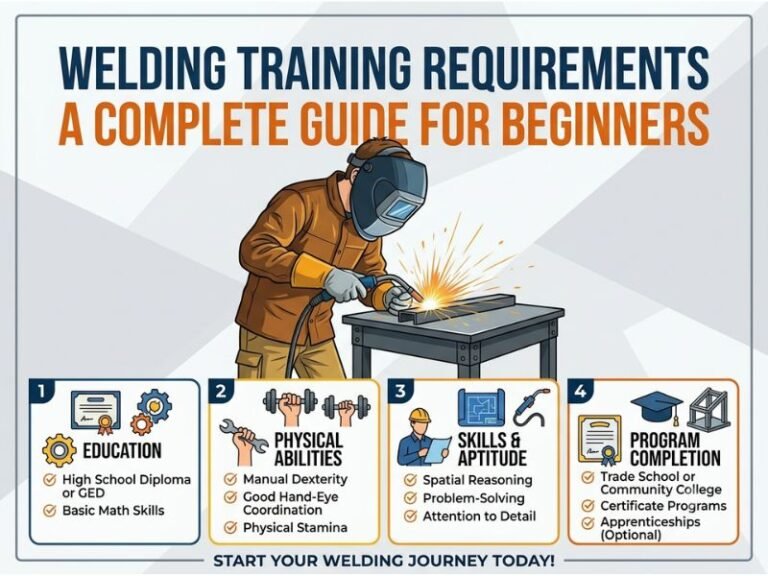
If you do not know your preferred specialty, select a school that offers broad foundational training before specialization. A useful beginner curriculum usually includes welding safety, shop math, blueprint reading, metallurgy basics, joint design, weld symbols, cutting, fit-up, and several welding processes.
Check Accreditation, Approval, and Credentials
Accreditation and approval are not interchangeable terms. Accreditation generally refers to an external review of an institution or program. State approval may confirm that a career school is legally permitted to operate. A school can have one, both, or neither, so ask exactly what each claim means.
Recognized organizations and credentials
Many welding programs prepare students for credentials connected with the American Welding Society (AWS), industry qualification tests, or employer-specific requirements. AWS certification is not the same as attending an AWS-related training program, so verify the precise credential available after graduation.
Some schools also use programs or curricula associated with the National Center for Construction Education and Research (NCCER), community colleges, technical colleges, unions, or state workforce agencies. These affiliations can be useful, but the name alone does not prove that a program fits your goals.
Ask these questions before relying on a credential:
- What exact certificate, diploma, or qualification does the student receive?
- Is the credential issued by the school, a third party, or an employer?
- Does the program prepare students for a performance qualification test?
- Are testing fees, retesting, and paperwork included in tuition?
- Which employers recognize the credential in the local market?
- Does the credential expire or require renewal?
I would be cautious if a school advertises “certification” without naming the issuing organization, test standard, process, position, or material covered. A completion certificate may show that you finished a course, but it may not prove that you passed an industry qualification test.
Examine the Curriculum
A credible curriculum should progress from safe basic operations to controlled welding practice and then to more demanding joints, positions, and materials. Students should understand not only how to make a bead, but also why a weld succeeds or fails.
Essential beginner subjects
- Personal protective equipment and welding fume safety
- Fire prevention, hot-work procedures, and emergency response
- Machine setup, polarity, amperage, voltage, and wire or electrode selection
- Gas cylinder handling and shielding gas basics
- Joint preparation, fit-up, tack welding, and distortion control
- Weld terminology, symbols, measurements, and shop math
- Visual inspection and common weld discontinuities
- Basic metallurgy and how heat affects metal
- Cutting methods, grinding, cleaning, and finishing
- Blueprint reading and basic fabrication layout
The main welding processes may include shielded metal arc welding, gas metal arc welding, flux-cored arc welding, and gas tungsten arc welding. No single student needs every process at the same depth, but the school should clearly state which processes are taught and how much practice each receives.
Look for progressive skill evaluation
Ask how instructors evaluate progress. Strong programs use practical demonstrations, weld samples, visual inspection, bend tests, written tests, projects, or qualification-style examinations. A student should not advance simply because a scheduled week has ended.
Find out if students practice flat horizontal vertical and overhead positions when relevant For pipe-focused training ask about fixed and rotating positions pipe diameters wall thicknesses open-root joints.
Prioritize Hands-On Welding Time
Welding is a practical trade. Classroom instruction matters, but students need repeated time under the hood to develop control, consistency, troubleshooting ability, and safe work habits.
Ask for a weekly breakdown of lecture, demonstration, lab, cleanup, testing, and independent practice. “Hands-on training” can mean several hours of actual welding or a short demonstration followed by limited access to equipment. Those experiences are not equivalent.
Questions about shop practice
- How many students share one welding booth or machine?
- Can students practice outside the instructor’s demonstrations?
- How much electrode, wire, shielding gas, plate, pipe, and scrap material is included?
- Can students repeat a failed weld without paying unexpected material fees?
- Are machines available during evening or weekend lab periods?
- How are practice welds inspected and discussed?
- Do students complete projects that resemble workplace assignments?
A school does not need brand-new machines to provide effective training. It does need equipment that is functional, properly maintained, suitable for the curriculum, and available in enough quantity for students to practice. Excessive waiting for a booth or machine can sharply reduce skill development.
Evaluate Safety Standards
Safety should be visible in the shop, not limited to a paragraph in the enrollment brochure. Welding produces heat, sparks, fumes, ultraviolet radiation, compressed-gas hazards, electrical risks, and potentially dangerous noise. A school’s safety culture often reveals the quality of its overall management.
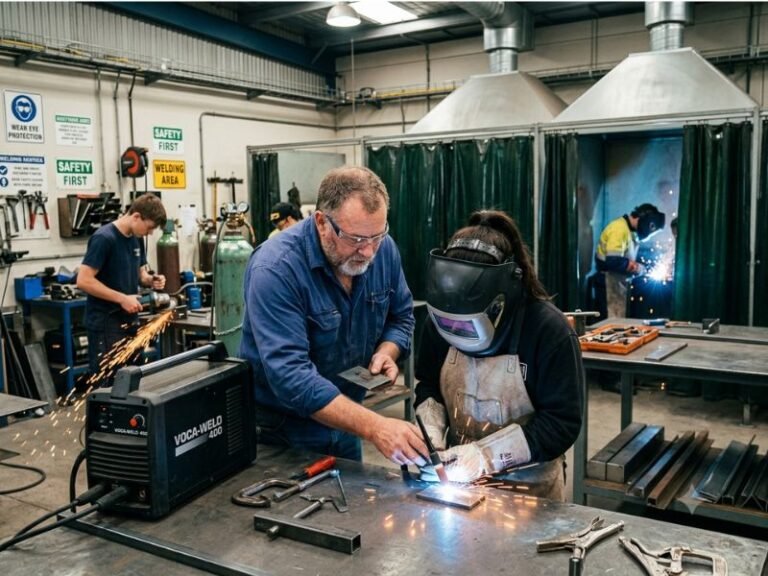
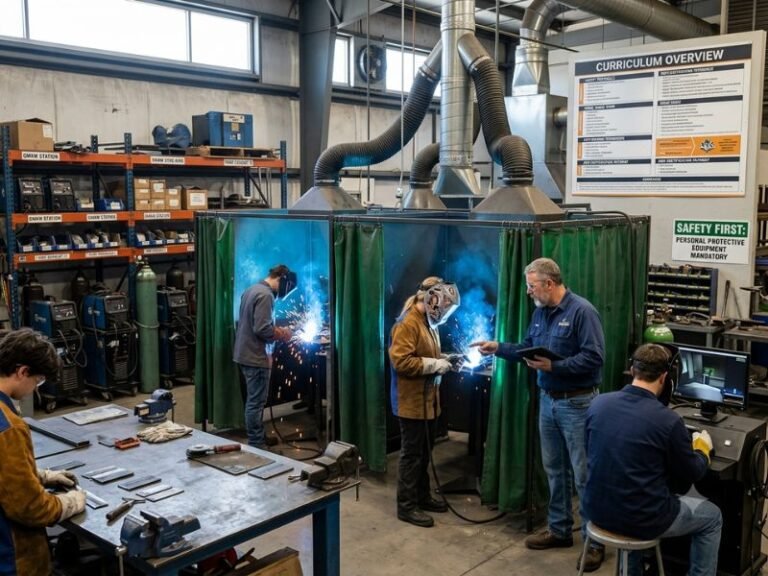
During a visit, look for functioning ventilation, welding curtains, fire extinguishers, clear walkways, proper storage of cylinders, grounded equipment, organized leads, and accessible first-aid supplies. Students should receive instruction on personal protective equipment, respirators when applicable, fire watches, hot-work permits, and emergency procedures.
Ask whether the school follows applicable Occupational Safety and Health Administration requirements and local fire codes. The answer should be specific rather than dismissive. A responsible program also explains what protective equipment students must supply, what the school provides, and how damaged equipment is replaced.
I would treat overcrowded booths, poor ventilation, loose cables, blocked exits, missing eye protection, and casual behavior around hot metal as serious warning signs. A school that tolerates unsafe habits can make it harder for graduates to adjust to professional workplaces.
Research the Instructors
Instructors influence both technical progress and confidence. A strong instructor can identify poor travel speed, incorrect angle, contamination, inadequate penetration, and setup problems, then explain how to correct them.
Review each instructor’s practical background, teaching experience, certifications, and specialties. Industry experience is valuable, but welding skill alone does not guarantee effective instruction. The best instructors can demonstrate a technique, break it into understandable steps, observe students closely, and provide specific feedback.
What to observe during a visit
- Does the instructor spend time at individual booths?
- Are corrections respectful, direct, and technically clear?
- Do students understand the reason behind each adjustment?
- Can the instructor answer questions about different processes and materials?
- Is there enough instructional staff for the number of students?
Ask how often students receive one-on-one feedback and who supervises open lab time. A large class may still work if the shop is properly staffed and organized, but a low instructor-to-student ratio usually makes skill correction easier.
Compare Class Size, Schedule, and Learning Format
Class size affects access to equipment, instructor attention, and practice time. A small class is not automatically superior, yet a crowded shop can create delays and safety concerns. Ask for the normal number of students rather than the maximum number printed in enrollment materials.
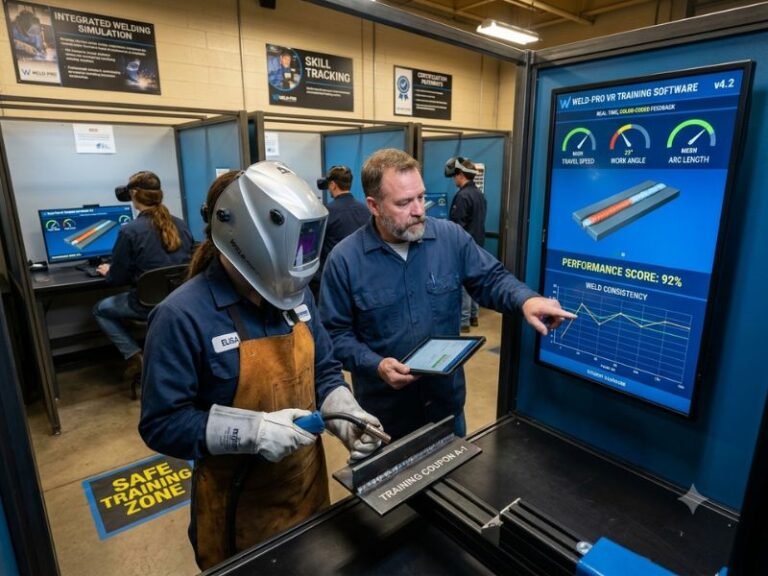
Welding programs may be offered full time, part time, evenings, weekends, or in blended formats. Online lessons can support terminology, theory, and safety preparation, but they cannot replace supervised welding practice. If a program advertises online welding training, confirm the exact in-person lab requirement.
Consider the schedule realistically. Missing practice sessions can slow progress, particularly in an accelerated program. Check attendance rules, makeup policies, holiday closures, lab hours, transportation, parking, and the time required for outside study.
Ask whether the school provides a flexible path for students who need extra practice. A rigid end date may be less useful than a program that allows supervised repetition before testing.
Assess Job Placement and Employer Connections
Career support should be specific and verifiable. A school may offer resume help, interview preparation, employer introductions, apprenticeship information, or recruiting events. Those services can reduce the gap between classroom training and the first job.
Ask for the school’s definition of job placement. Does it count temporary work, unrelated employment, self-employment, or any job obtained after graduation? Request the time period used for reporting and, if available, outcomes for the specific welding program rather than the entire institution.
Useful employer connections
- Local fabrication shops and manufacturers
- Construction and structural steel contractors
- Shipyards, energy companies, and industrial maintenance employers
- Union apprenticeship programs
- Staffing agencies that specialize in skilled trades
- Employers that conduct qualification testing or recruit directly from the school
A school should not guarantee a job unless it has a formal arrangement that clearly explains the conditions. I prefer programs that are transparent about starting wages, required experience, travel expectations, shift work, drug testing, physical demands, and the credentials employers request.
Calculate the Full Cost
Compare total program cost instead of tuition alone. Welding education may include fees for registration, tools, protective clothing, books, consumables, testing, transportation, and certification attempts.
Request a written cost sheet covering:
- Tuition and enrollment fees
- Helmet, jacket, gloves, boots, safety glasses, and hearing protection
- Textbooks, digital materials, and online access
- Wire, electrodes, gas, plate, pipe, and other consumables
- Testing, certification, and retesting charges
- Lab, technology, and equipment fees
- Refund rules and withdrawal deadlines
- Financial aid, grants, veterans’ benefits, payment plans, and workforce funding
A higher price can be reasonable if it buys substantially more lab time, smaller classes, stronger equipment access, and recognized testing. A low price may become expensive if it excludes essential tools or limits students to minimal practice. Compare the cost per useful training hour, not just the advertised tuition.
Visit the School Before Enrolling
A campus visit can answer questions that a website cannot. Ask to observe a normal class rather than a staged tour. Look at student welds, booth availability, equipment condition, ventilation, storage, and the pace of instruction.
Talk with current students if the school permits it. Ask what surprised them, how often they weld, whether fees appeared after enrollment, and how accessible instructors are. Student comments should not be treated as the only evidence, but consistent patterns are meaningful.
Use this short visit checklist:
- Inspect the welding booths and ventilation system.
- Count visible machines and compare them with the class size.
- Ask to see the curriculum, schedule, and grading standards.
- Confirm the exact credential and testing process.
- Request a complete written cost estimate.
- Ask for recent employer partners or graduate outcomes.
- Observe how instructors correct technique and enforce safety.
- Confirm what happens if additional practice is needed.
If staff avoid basic questions, pressure you to sign immediately, or refuse to provide written information, pause before paying a deposit.
Recognize Warning Signs
Some problems are easy to overlook when a school uses impressive marketing. Be cautious about these signs:
- Promises of guaranteed high pay or instant employment
- Vague claims about certification without naming the credential
- Very little information about shop hours or equipment access
- Large classes with few machines or instructors
- Outdated equipment that does not match advertised training
- No clear safety orientation or ventilation plan
- Pressure to enroll before reviewing costs and refund policies
- Unclear transfer rules or unexplained fees
- Job placement statistics that combine unrelated programs
- Courses that rely heavily on videos but provide little supervised practice
One isolated issue may have an explanation, but several together suggest that the program may be prioritizing enrollment over training quality.
Choose Between a Technical School, Community College, and Apprenticeship
Different education routes can lead to welding employment A private technical school may offer an accelerated schedule and a focused curriculum A community college may provide broader academic.
A union or employer-sponsored program can be a strong option for people who want a defined industry pathway. It may involve aptitude tests, interviews, physical requirements, drug screening, or a competitive application process.
Compare each route by training hours, pay during training, credential value, equipment access, travel requirements, completion time, and employer relationships. The best choice depends on your finances, current experience, schedule, and target occupation—not on the school category alone.
Questions to Ask Before Enrollment
I would bring a written list to every school visit. Direct questions make it easier to compare programs accurately.
- How many actual welding hours does the program include?
- Which welding processes, metals, positions, and thicknesses are taught?
- What credentials or qualification tests can students pursue?
- Who administers the test, and what costs are included?
- How many students typically share each machine?
- What safety training is completed before shop work begins?
- What are the instructors’ industry and teaching qualifications?
- What tools and protective equipment must I purchase?
- Can I repeat projects or practice after completing the required assignments?
- Which local employers hire graduates?
- How are job-placement results calculated?
- What happens if I withdraw, miss class, or need additional time?
Write down the answers and compare them side by side. A school that gives precise, consistent answers usually has a more organized program than one that relies on broad promises.
FAQ
What is the most important factor when choosing a welding school?
The most important factor is the quality and amount of supervised hands-on practice. Students need access to functioning equipment, suitable materials, qualified feedback, and enough time to repeat techniques. Credentials and job services matter, but limited shop time is difficult to overcome.
How long should a welding training program be?
There is no single ideal length. A basic introductory course may take weeks, while job-focused programs can take several months or longer. The right length depends on the processes, positions, materials, safety instruction, testing preparation, and practice hours included. Compare the curriculum and lab time rather than choosing by calendar length alone.
Should a beginner choose a school that teaches several welding processes?
Usually yes if the program still provides enough practice in each process A beginner benefits from learning foundational skills across common processes before choosing a specialty A short.
Is welding school accreditation required to get a welding job?
Accreditation is not always required by an employer, but recognized approval or accreditation can help confirm that a school follows defined standards and may support financial aid or credential transfer. Employers often care more about practical ability, safety, reliability, blueprint skills, and relevant qualification tests. Verify what local employers actually recognize.
Does a welding school certificate make someone a certified welder?
Not necessarily. A school certificate may document course completion. A certified or qualified welder has generally passed a specific performance test under a stated procedure, position, material, and standard. Ask the school to identify the exact credential and whether testing is included.
Can online welding training replace an in-person program?
Online training can teach terminology, theory, safety concepts, and preparation material, but it cannot replace supervised booth time. Anyone seeking job-ready welding skills should confirm the amount of in-person lab training, instructor feedback, and practical evaluation.
How can I compare welding school costs accurately?
Ask for the total cost, including tuition, fees, tools, protective equipment, consumables, lab charges, testing, transportation, and retesting. Then compare the total against actual lab hours, machine access, instructor support, and career services. The cheapest advertised tuition is not always the lowest overall cost.
What should I do if a school promises a guaranteed welding job?
Ask for the promise in writing and review its conditions. Find out whether the guarantee means an interview, a temporary assignment, or employment in a welding position. Confirm the employer, wage, location, schedule, and required qualifications. Treat vague guarantees as a marketing warning sign.
Conclusion
The best way to learn How to choose a good welding training school is to compare evidence rather than advertising Look for substantial supervised practice qualified instructors safe.