How to MIG Weld Aluminum Without Gas: Step-by-Step Instructions
You generally cannot make reliable aluminum MIG welds without shielding gas. Specialized self-shielded aluminum flux-cored wire may exist, but it is uncommon and usually produces inferior results.
Searching for how to mig weld aluminum without gas usually means you have a small welder, no argon cylinder, or a project that seems too simple to justify gas equipment. The obstacle is not merely the machine’s wire-feed setting: molten aluminum reacts quickly with oxygen, and its oxide layer melts at a much higher temperature than the base metal.
A rushed workaround can be like trying to seal a leaky pipe with tape while water is still running. The surface may look covered, yet the joint can contain porosity, oxide inclusions, lack of fusion, or contamination that only appears when the part is loaded.
This guide explains what “gasless MIG” can and cannot do for aluminum, how to identify compatible wire and equipment, how to test a specialized process safely, and when to switch to a gas-shielded MIG, TIG, or mechanical joint. By the end, you can decide whether your material, machine, and strength requirements justify an experiment—or whether the correct answer is to stop before wasting wire and aluminum.
- ✓Ordinary steel flux-core wire cannot weld aluminum, and standard aluminum MIG wire requires shielding gas.
- ✓Self-shielded aluminum flux-cored wire is a specialized exception, not a dependable substitute for a normal argon setup.
- ✓Clean aluminum, correct polarity, a short wire path, and controlled heat are essential because aluminum oxide and heat buildup cause most failures.
- ✓For structural, pressure-containing, safety-critical, or appearance-critical work, use a qualified gas-shielded process instead.
How to MIG Weld Aluminum Without Gas?
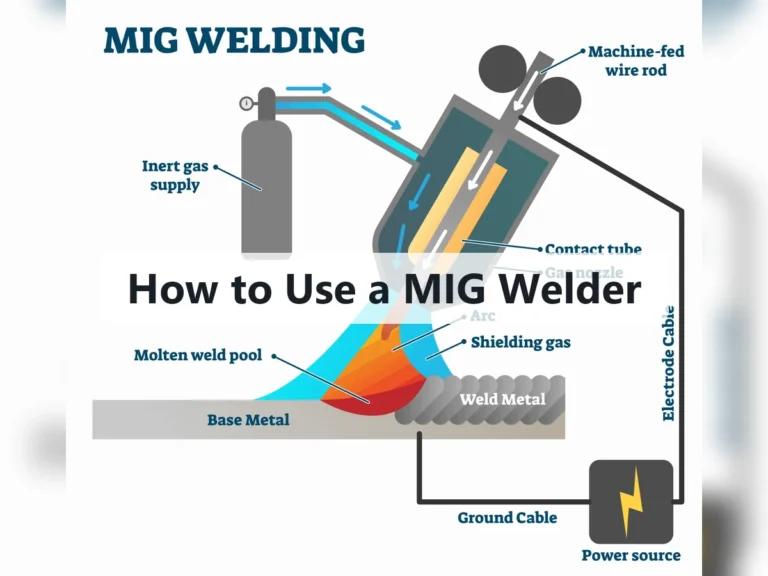
For most practical projects, the answer is no. Conventional MIG welding of aluminum uses a shielding gas—normally pure argon—to keep atmospheric oxygen and nitrogen away from the molten puddle. Without that protection, the weld can oxidize immediately and develop porosity, inclusions, unstable arc behavior, and weak fusion.
The phrase gasless MIG usually refers to self-shielded flux-cored arc welding With steel the flux inside the tubular wire creates protective gases and a slag layer as it.
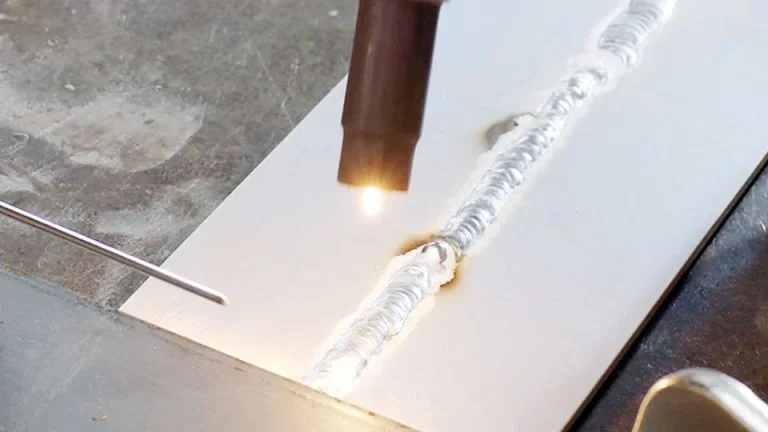
- Ordinary FCAW wire: Do not substitute steel flux-core wire for aluminum wire; it will not produce a sound aluminum joint.
- Specialty aluminum wire: Self-shielded aluminum wire may be available in limited markets, but compatibility, availability, and weld quality vary considerably.
- Strength requirements: A decorative tack or temporary repair is very different from a load-bearing bracket, trailer component, or pressure vessel.
- Reliable solution: A conventional aluminum MIG setup with pure argon remains the practical standard for repeatable results.
Why aluminum is unusually difficult
Aluminum forms a tough oxide film almost instantly. The oxide melts at a much higher temperature than the aluminum beneath it, so a welder can either fail to break through the film or overheat the base metal while trying to do so. The metal also conducts heat rapidly and expands the weld puddle quickly once it becomes hot.
Shielding gas does not remove every aluminum-welding problem, but it prevents the atmosphere from contaminating the puddle. The wire, polarity, arc characteristics, cleaning method, and travel speed still matter, yet gas provides the protective environment that a normal aluminum MIG process depends on.
What Equipment Would a Gasless Aluminum Attempt Require?
Before trying a no-gas process, identify the exact wire and the machine’s capabilities. A machine advertised as “MIG,” “flux-core,” or “gasless” may only be designed for mild steel. That label says little about whether it can feed aluminum wire, provide the correct polarity, or deliver a stable arc for a low-melting, highly conductive material.
The most important distinction is between a self-shielded aluminum flux-cored wire and ordinary aluminum solid wire Solid aluminum wire has no internal flux and therefore needs external shielding gas A self-shielded product must explicitly state that it is intended for aluminum and provide process information for the alloy diameter polarity and.
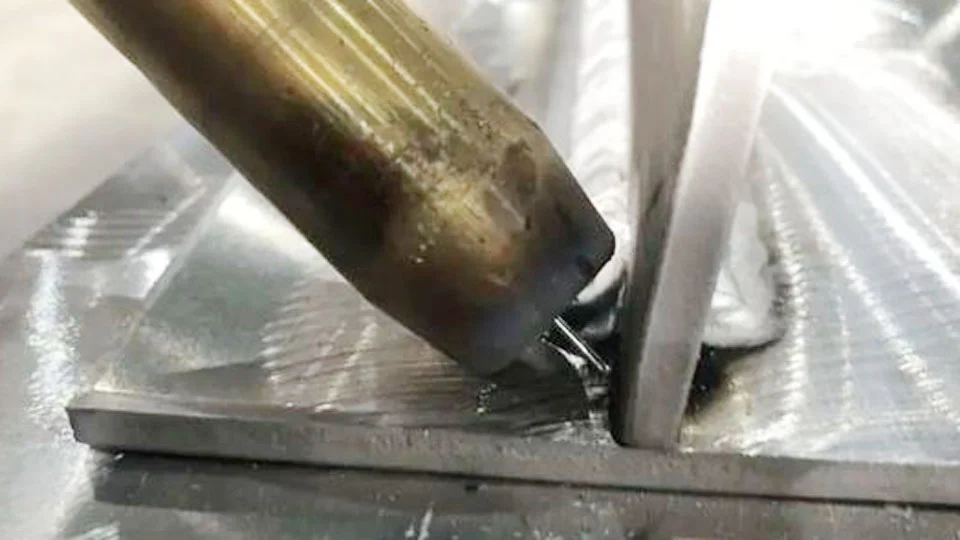
- Wire designation: Confirm that the wire is specifically made for self-shielded aluminum, not steel flux core or solid aluminum MIG wire.
- Polarity: Follow the wire manufacturer’s polarity instructions; the wrong polarity can cause severe arc instability and poor penetration.
- Feeder design: Aluminum wire is soft and can bird-nest in a standard V-groove drive system or long steel liner.
- Machine rating: Verify that the welder supports the wire diameter and current range without exceeding its duty cycle.
Wire-feeding problems
Aluminum is much softer than steel. A conventional feeder can deform it between the drive rolls and contact tip, especially when excessive roll pressure is used. A long gun cable, tight bends, a dirty liner, or the wrong contact-tip size can make feeding unreliable even with shielding gas; the problem is more frustrating when attempting an uncommon flux-cored wire.
A spool gun places the wire spool near the gun and greatly shortens the feeding path. It is commonly used for aluminum MIG, but it does not make the process gasless. The spool gun still normally requires an external argon supply, and it may not support a specialized self-shielded aluminum wire.
Surface preparation and accessories
Use a dedicated stainless-steel brush to remove aluminum oxide immediately before welding. Keep that brush away from steel, paint, oil, and general shop debris. Solvent cleaning can remove grease, but it does not replace brushing because a degreased oxide film is still an oxide film.
Useful equipment includes a stable work clamp, clean contact tips, appropriate drive rolls, a sharp metal file or scraper for joint preparation, leather gloves, a proper helmet, and ventilation. Avoid using chlorinated brake cleaner or unknown solvents near an arc; heat and ultraviolet radiation can convert some residues into highly dangerous gases.
How to Test a Gasless Aluminum MIG Process
If you have verified specialty self-shielded aluminum wire and still want to evaluate it, treat the first weld as a controlled test rather than a repair. Use clean scrap of the same alloy and similar thickness as the intended work. Aluminum alloy, temper, thickness, joint fit-up, and heat sinking all affect the result, so a test on unrelated scrap proves very little.
Do not begin with a critical joint. A gasless experiment may reveal whether the wire feeds and forms an arc, but a visible bead does not prove adequate strength. Cut, bend, or otherwise examine test pieces only with an appropriate qualification method for the job; if failure could injure someone or cause property damage, use a proven process instead of informal testing.
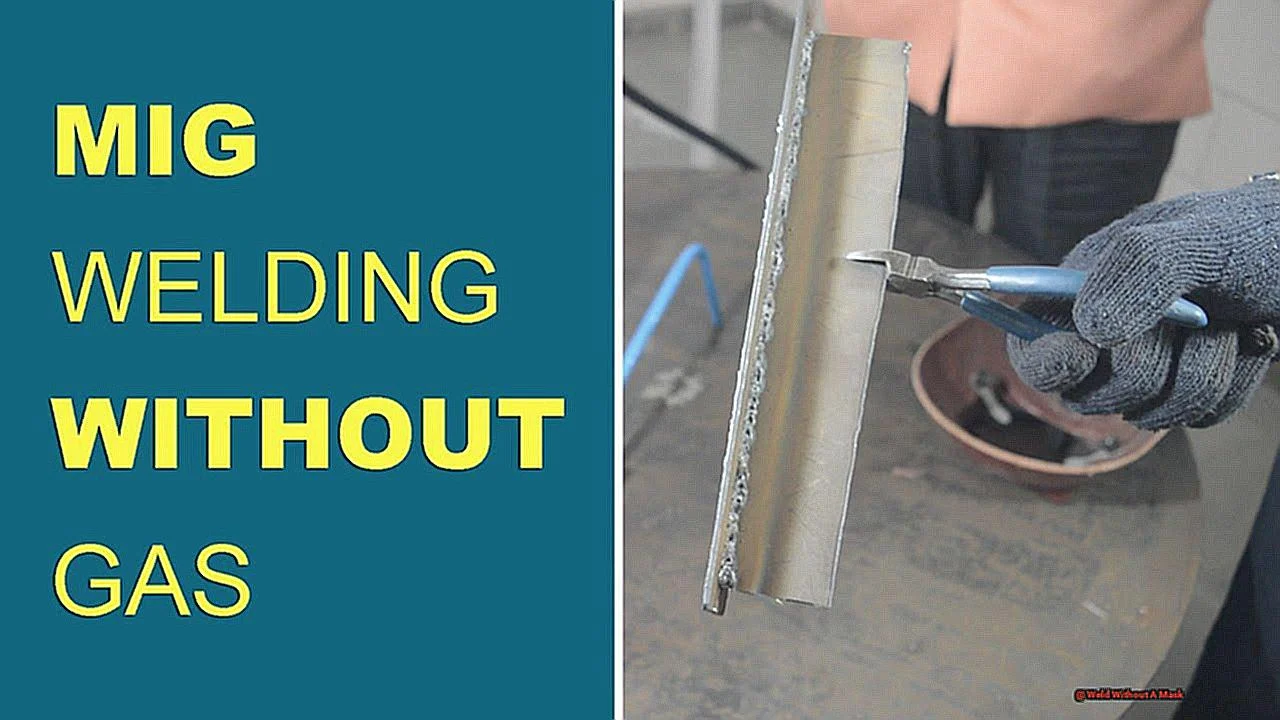
- Work area: Remove flammable materials, provide ventilation, and keep the arc away from combustible dust or vapors.
- Material: Use clean, bare aluminum with a tight, consistent joint and no paint, anodizing, oil, or sealant.
- Machine: Install the exact wire, set the specified polarity, and begin within the manufacturer’s recommended range.
- Sample size: Prepare several coupons so settings can be changed one variable at a time.
- Read the wire instructions. Record the recommended polarity, wire diameter, current range, voltage range, travel direction, and any notes about slag or cleaning. If those details are unavailable, the wire is not a sound basis for a controlled process.
- Prepare the joint. Remove oil with a suitable cleaner, allow the surface to dry, then brush the oxide with a dedicated stainless-steel brush. Clean both sides near the joint and avoid touching the prepared area with bare fingers.
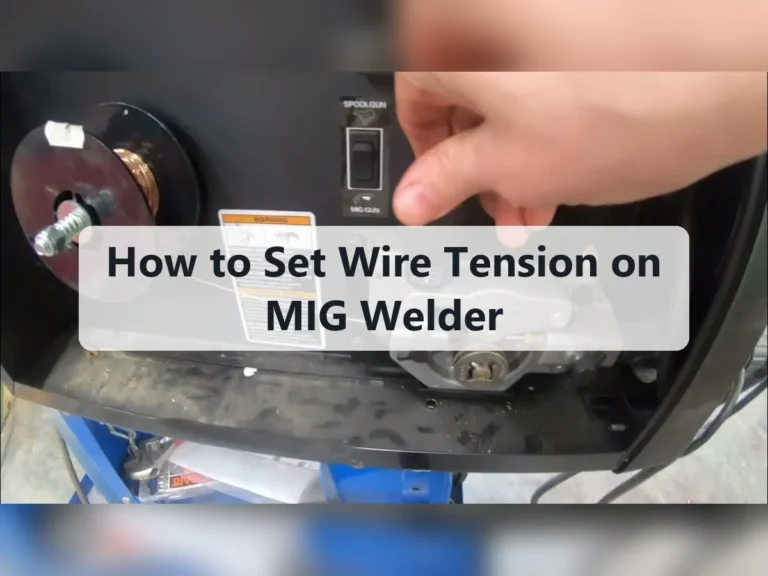
- Set up the feeder. Use the correct drive-roll profile, a suitable contact tip, and the lowest roll pressure that feeds consistently. Keep the gun cable as straight as practical and check for bird-nesting before striking an arc.
- Make short test beads. Start with brief runs rather than a long weld. Let the aluminum cool between passes so heat buildup does not hide the effect of each setting change.
- Inspect the bead and coupon. Look for pinholes, dark contamination, trapped slag, lack of wetting at the toes, excessive undercut, cracking, and a bead that sits on top without fusing.
- Change one variable. Adjust travel speed, voltage, wire-feed speed, or joint preparation separately. Changing everything at once makes the test impossible to interpret.
Direction, speed, and heat control
Aluminum quickly becomes hotter as a weld continues. A bead that starts acceptably may turn wide, sunken, or porous near the end. Use short welds, allow cooling, and consider staggered weld locations rather than building heat in one area.
Follow the wire instructions for travel direction. In many aluminum MIG applications, a push technique improves visibility and shielding, but a particular self-shielded wire may specify different handling. Keep a consistent stickout and gun angle; excessive distance changes the arc and can increase contamination or spatter.
How to judge a test bead
A smooth surface is not enough. Check whether the bead ties into both sides of the joint, whether the edges are undercut, and whether the surface contains pinholes or irregular dark areas. If practical, cut through the test and inspect the cross-section for internal voids and lack of fusion.
This distinction matters when answering “how to mig weld aluminum without gas”.
Be suspicious of a bead that looks acceptable but breaks easily during a simple bend test. Aluminum can hide poor fusion beneath a broad deposit, particularly when oxide remains between the filler and base metal. If the wire produces heavy slag, persistent porosity, or inconsistent feeding, the process is not suitable for dependable work.
Common Failure Modes and Their Causes
Gasless aluminum welding failures often begin before the arc starts. Contaminated material, the wrong wire, unsuitable polarity, and a feeder that damages the wire can overwhelm any adjustment to voltage or travel speed. Diagnose the process systematically instead of trying to compensate for an incompatible setup.
When people ask how to mig weld aluminum without gas, they may focus on finding a setting that produces a bead. The more useful question is whether the setup can create a clean, fused, repeatable joint. A machine that deposits metal but cannot control contamination or feeding is not performing a reliable welding process.
- Using steel wire: Steel flux-core wire cannot supply the correct aluminum filler metal or metallurgy.
- Skipping brushing: Degreasing alone leaves the refractory oxide layer in place.
- Overheating the joint: Long continuous passes make the puddle run and increase distortion or burn-through.
- Trusting appearance: Surface smoothness cannot reveal every pore, inclusion, or lack-of-fusion defect.
| Symptom | Likely causes | First checks |
|---|---|---|
| Wire bird-nests at the feeder | Too much roll pressure, excessive liner drag, tight cable bends, or soft wire deformation | Inspect the liner, straighten the cable, reduce pressure, and verify the correct drive rolls |
| Porous or pinholed bead | Contamination, unstable shielding action, moisture, excessive stickout, or incompatible wire | Reclean and rebrush the joint, shorten stickout, and confirm the wire specification |
| Bead sits on top | Oxide not removed, insufficient heat, poor joint fit-up, or incorrect polarity | Prepare fresh metal, check polarity, and compare settings with the wire instructions |
| Burn-through | Excessive heat, slow travel, thin material, or a gap that is too wide | Use shorter passes, improve fit-up, reduce heat, and allow cooling |
| Heavy spatter or unstable arc | Wrong wire, polarity, contact-tip size, drive tension, or machine incompatibility | Confirm every component against the wire and welder specifications |
Porosity and contamination
Porosity appears as holes in the bead or as cavities revealed after cutting. Aluminum’s thermal conductivity can draw moisture and contamination into the weld area, while an unstable or poorly protected puddle allows gas to remain trapped as the metal solidifies.
Clean material again, keep filler wire dry and protected, and avoid welding over fingerprints, marker residue, paint, adhesive, or anodizing. If porosity persists with a specialized wire, do not assume more cleaning will solve a fundamentally unsuitable no-gas process.
Lack of fusion and oxide entrapment
Lack of fusion occurs when filler metal does not properly melt and join the base material. Oxide entrapment can separate the deposited metal from the aluminum beneath it. These defects are especially concerning because the bead may look full while the actual joint is weak.
Better fit-up, correct heat input, proper travel, and immediate brushing can help, but they cannot turn ordinary steel flux core into aluminum filler. If the test requires extreme heat or very slow travel just to wet the surface, stop and reassess the process rather than forcing it.
When Gasless Is the Wrong Choice
A gasless aluminum attempt may be reasonable only for a low-consequence experiment when the correct specialty wire and compatible machine are available. Even then, the result should be treated as unproven until testing demonstrates the required performance. Convenience is not a valid substitute for joint qualification.
Choose another method when the part supports a person, vehicle load, lifting force, pressurized fluid, fuel, structural enclosure, or safety-related mechanism. The same caution applies when failure would be expensive, inaccessible, difficult to inspect, or likely to cause a secondary accident.
- Choose gas-shielded MIG: When you need productive aluminum welding with relatively high deposition and repeatable results.
- Choose TIG: When control, appearance, thin material, or precise heat management matters more than speed.
- Choose mechanical fastening: For a temporary or serviceable joint when welding equipment and qualification are unavailable.
- Stop the experiment: When the wire is not explicitly intended for aluminum or the machine cannot meet its requirements.
Why argon is usually the practical answer
Pure argon provides the stable shielding environment normally expected for aluminum MIG. It also works with a spool gun or push-pull feeder designed to handle soft aluminum wire. The cylinder, regulator, hose, and refilling cost add complexity, but that cost buys a process with far more established settings and consumables.
Do not substitute compressed air, carbon dioxide, or a random shielding-gas mixture. Aluminum MIG requires the gas specified for the process, and an incorrect gas can produce instability, contamination, excessive spatter, or poor weld quality.
When TIG makes more sense
TIG is often preferable for thin aluminum, visible seams, small repairs, and situations where careful puddle control is important. It still requires shielding gas and careful cleaning, and it is generally slower than MIG. It also demands more coordination because the operator controls the torch, filler, and often the current.
For a one-off repair, hiring a qualified welder or taking the part to a shop may be safer and cheaper than buying wire that cannot produce a dependable joint. The correct process depends on alloy, thickness, joint design, accessibility, and consequence of failure—not simply on whether a gas cylinder is convenient.
Safety Checks for Gasless and Aluminum Welding
Removing the gas cylinder does not remove the major hazards of welding. The arc produces intense ultraviolet radiation, hot metal, fumes, fire risk, and electrical hazards. Flux-cored processes may also create slag and additional fumes, so ventilation and respiratory protection decisions must follow the consumable’s safety information and the work environment.
Aluminum welding creates another practical danger: the bright surface and puddle can make heat difficult to judge. The part may look cool while retaining enough heat to cause burns or ignite nearby materials. Handle it with tools or gloves and mark hot parts clearly when others are nearby.
- Protect your eyes and skin: Use the correct helmet shade, flame-resistant clothing, gloves, and covered footwear.
- Control fumes: Use local exhaust or effective ventilation and avoid welding coatings or unknown residues.
- Prevent fire: Clear combustibles from the area and inspect the opposite side of the work for hidden ignition hazards.
- Handle cylinders correctly: If using gas for the better alternative, secure cylinders upright and use the correct regulator and fittings.
Frequently Asked Questions
Can I use regular flux-core wire to weld aluminum without gas?
No. Regular flux-core wire is generally made for steels and does not provide the correct filler metal or chemistry for aluminum. Using it can create a deposit that looks like a weld but does not form a sound aluminum joint.
Does aluminum flux-core wire eliminate the need for a gas cylinder?
A genuinely self-shielded aluminum flux-cored wire is intended to work without external shielding gas, but it is a specialized product with limited availability and equipment requirements. Confirm the wire’s instructions rather than assuming that any aluminum wire is self-shielded.
Can a small 120-volt welder weld aluminum without gas?
Voltage alone does not answer the question. The machine must support the specific wire, polarity, current range, duty cycle, and feeding arrangement; many small welders are designed only for steel flux-core wire.
Can I weld aluminum with a spool gun but no gas?
Usually no. A spool gun solves the problem of feeding soft aluminum wire, but conventional aluminum MIG wire still needs shielding gas. A spool gun is an accessory for a gas-shielded process, not a gasless conversion.
What happens if I try aluminum MIG without shielding gas?
The arc may be unstable, and the bead can contain porosity, oxide contamination, poor wetting, and lack of fusion. A bead that appears continuous on the surface may still be unsuitable for a loaded or safety-critical joint.
Is gasless aluminum welding strong enough for repairs?
Do not assume it is strong enough based on appearance. Strength depends on the alloy, filler, preparation, process control, and inspection, and a specialized no-gas process must be validated for the exact application.
Can I use CO2 or shielding-gas mix instead of argon?
Do not substitute a gas casually. Aluminum MIG normally uses pure argon, and the correct gas should be selected from the machine, wire, and process requirements.
Conclusion
For ordinary equipment, how to mig weld aluminum without gas does not have a dependable shortcut. Only a specifically designed self-shielded aluminum flux-cored system can make the attempt plausible, and its limited availability, feeding problems, contamination risk, and uncertain performance make gas-shielded aluminum MIG the better choice for most work.
Use a controlled scrap test only for a low-consequence project, and never rely on an unqualified bead for structural, pressure, vehicle, lifting, or safety-critical service. When in doubt, obtain the correct argon setup or use a qualified welding professional.
Check the wire package and welder manual today; if they do not explicitly support self-shielded aluminum, stop and plan for pure argon, TIG, or a non-welded joint.