How to Make Money with a MIG Welder: Step-by-Step Instructions
You can make money with a MIG welder by selling repair, fabrication, installation, and custom metalwork services that match your skills and local demand.
How to make money with a MIG welder depends less on owning an expensive machine than on choosing work with enough margin after steel wire gas electricity consumables.
A MIG welder is especially useful for mild-steel repairs and fabrication because it is comparatively fast accessible to learn and practical for many shop farm automotive trailer and.
This guide explains which services are realistic how to select a profitable niche what equipment and business basics matter how to price jobs and where beginners commonly lose.
- ✓Start with repeatable mild-steel services such as repairs, brackets, gates, racks, and small fabrication.
- ✓Price the complete job, not only arc time; include preparation, materials, travel, overhead, and a profit margin.
- ✓Build proof with clean photographs, accurate estimates, and small jobs before accepting structural or liability-sensitive work.
- ✓Safety, insurance, ventilation, fire prevention, and local business requirements are part of the cost of operating.
How to Make Money with a MIG Welder
The fastest path to revenue is usually a defined service rather than a vague offer to do welding Customers search for an outcome a broken gate that closes.
Begin by matching your current ability equipment and workspace to problems in your area A hobbyist working from a home garage may be well suited to small removable.
- Material: Focus first on clean, accessible mild steel rather than unknown alloys, contaminated parts, or materials your machine cannot weld properly.
- Job size: Favor work that fits your table, power supply, lifting ability, and available storage.
- Customer urgency: Breakdowns and simple repairs can command useful pricing when downtime matters.
- Repeat potential: A contractor, property manager, farm, or small business can be more valuable than a one-time custom buyer.
Small repairs and maintenance work
Repairs can include cracked brackets, broken carts, shop fixtures, handrails, non-critical gates, lawn-equipment frames, and simple supports. The value comes from restoring function without requiring the customer to replace an otherwise usable item.
Inspect the entire failure before quoting. A visible crack may be caused by thin metal, corrosion, poor original design, excessive load, or movement at an adjacent joint. Welding over the crack without correcting the cause can create a callback and a safety problem.
Custom fabrication
Small fabrication projects often offer better control than emergency repairs because you can measure cut fit weld clean and finish the work in your own sequence Useful examples.
Custom work becomes more profitable when you standardize designs. A repeatable rack or bracket can be quoted quickly, cut from a familiar material list, and improved after every order instead of redesigned from nothing.
Automotive, trailer, and equipment work
There is demand for exhaust-related brackets utility-trailer repairs ramps tie-down points and equipment modifications but these jobs require careful boundaries A component connected to braking steering suspension towing.
Do not promise that a weld is safe merely because it looks strong. Ask how the part is loaded, where it will be used, and whether failure could injure someone. When the consequences are serious, decline the work or obtain appropriate professional guidance.
Profitable MIG Welding Services to Test First
The most practical service menu combines quick jobs, higher-value projects, and repeatable products. Quick repairs can keep cash moving, while fabrication creates larger invoices and standardized products make marketing easier.
Use local conversations to validate demand before buying more equipment Search neighborhood groups visit small contractors speak with property managers and notice which businesses have damaged carts racks.
- Fast cash: Small brackets, carts, hinges, guards, and non-critical repairs can have short turnaround times.
- Higher ticket: Gates, racks, work tables, trailer accessories, and shop fixtures require more planning but can support larger invoices.
- Repeat orders: Standardized shelves, stands, signs, and brackets are easier to quote and produce in batches.
- Mobile convenience: On-site repairs can justify travel and service charges when the location is safe and accessible.
| Service type | Why customers buy it | Main profit risk | Good starting approach |
|---|---|---|---|
| Small repairs | Replacement is inconvenient or expensive | Hidden damage and uncertain scope | Inspect first and set a minimum charge |
| Custom fabrication | They need a specific size or function | Design changes and inaccurate measurements | Use sketches, deposits, and written approval |
| Batch items | Several identical pieces are needed | Setup time or inconsistent dimensions | Build a jig and quote by quantity |
| Mobile work | Moving the item is difficult | Travel, power, weather, and fire hazards | Charge a service call and pre-screen the site |
Farm and property-maintenance work
Rural customers may need repairs to gates, feeders, brackets, tool mounts, carts, and non-pressurized equipment. Durability and speed can matter more than a decorative finish, but the work still needs sound fit-up, adequate penetration, and protection from avoidable corrosion.
Property owners and maintenance companies may need gate adjustments, security-bar repairs, trash-enclosure components, sign frames, and storage solutions. These customers can become recurring accounts if you communicate clearly, arrive when promised, and document what was repaired.
Shop fixtures and organization products
Workbenches, shelves, welding tables, material carts, and tool stands are attractive because their purpose is easy to demonstrate with photographs. They also allow you to sell useful design choices such as casters, adjustable shelves, removable trays, or powder-coating preparation.
Do not underestimate finishing. Deburring, grinding, cleaning, paint preparation, and packaging can take as long as welding. List those operations separately in your internal costing even if the customer receives one combined price.
Decorative and custom household pieces
Firewood racks, plant stands, furniture bases, signs, and simple architectural features can bring higher prices when the design looks intentional. Buyers pay for proportion, finish, delivery, and convenience—not simply for the number of welds.
Decorative work is competitive, so develop a recognizable style or offer a practical customization advantage. A small product line with a few sizes is usually easier to sell than unlimited one-off designs.
Build the Right MIG Welding Setup Before Taking Paid Jobs
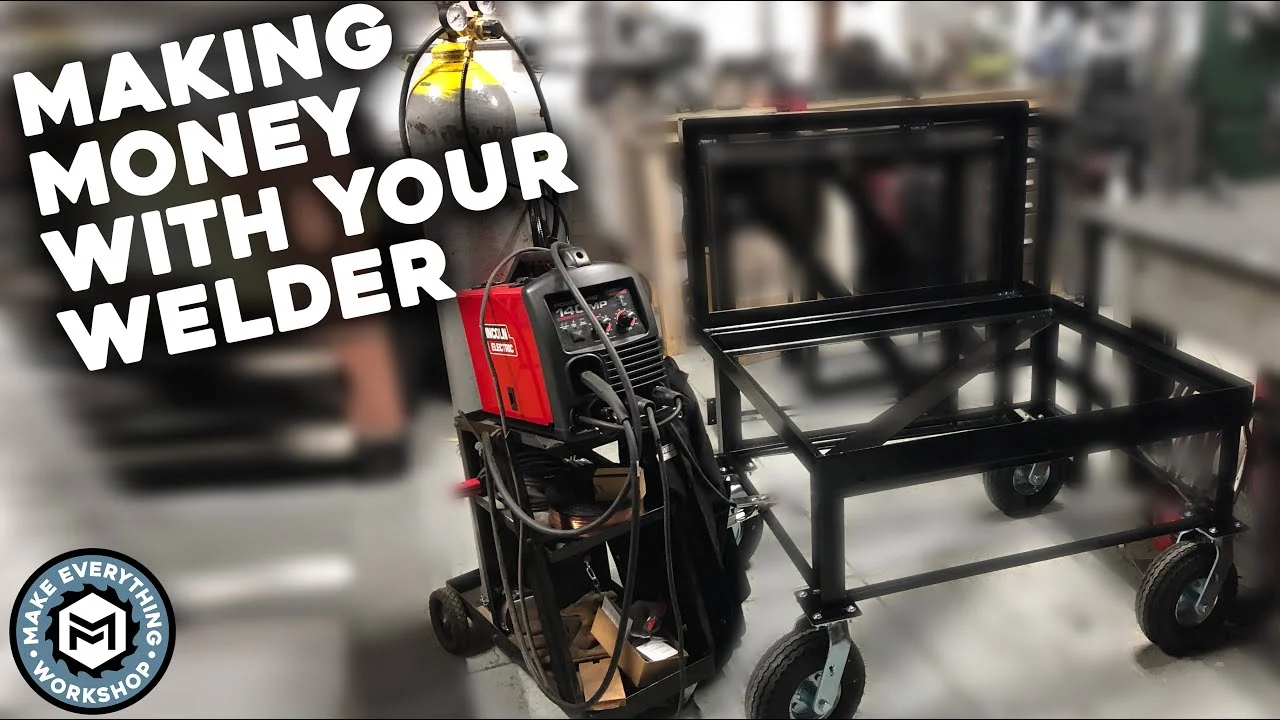
Your equipment should support the work you intend to sell not the other way around A welder with suitable output and duty cycle is important but the profitable.
For common mild-steel work solid wire with shielding gas often produces a clean productive process when the machine is adjusted correctly Flux-cored wire can be useful for certain. This distinction matters when answering “how to make money with a mig welder”.
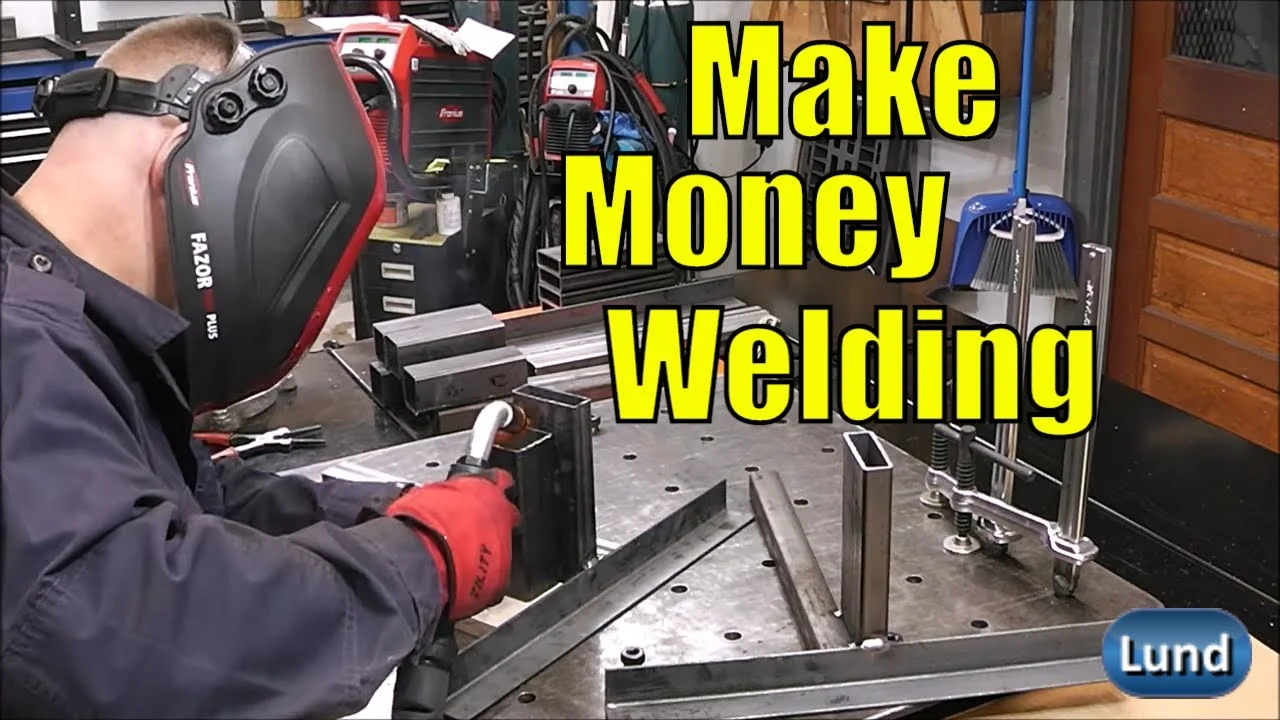
- Power: Confirm the available circuit can support the welder and other equipment without unsafe extension-cord arrangements.
- Work envelope: Make sure your table, clamps, lifting method, and storage can handle the largest item you plan to accept.
- Consumables: Keep compatible wire, contact tips, nozzles, gas, abrasives, and replacement parts on hand.
- Workspace: Separate sparks and hot work from fuel, dust, plastics, vehicles, and flammable building materials.
Essential equipment categories
A sturdy, reasonably flat table improves fit-up and repeatability. Clamps, magnetic squares, layout tools, a tape measure, combination square, soapstone, and temporary fixtures often save more time than a premium torch or cosmetic accessory.
You will also need a method to cut stock accurately such as a metal-cutting saw abrasive saw band saw or another suitable tool An angle grinder with appropriate.
For customer-facing work, add a deburring method, rust-inhibiting primer or appropriate coating system, packing materials, and a way to move finished pieces. Delivery damage and unfinished edges can erase the profit from an otherwise successful job.
Safety is a business requirement
Welding creates intense light heat fumes sparks hot metal and fire risk Use a properly rated helmet gloves protective clothing hearing protection suitable footwear and ventilation Keep fire-extinguishing.
Never weld containers, tanks, drums, fuel-system parts, or unknown coated metal without understanding the hazards and using an appropriate professional procedure. Paint, galvanized coatings, oils, solvents, and residues can create dangerous fumes or fire conditions.
- Control the area: Remove combustible materials, shield nearby people from arc flash, and prevent sparks from reaching hidden spaces.
- Control fumes: Use source ventilation and avoid welding coatings or residues that you cannot identify and manage safely.
- Control heat: Allow parts to cool before handling, packing, painting, or placing them near combustible surfaces.
- Control liability: Carry appropriate insurance and do not accept safety-critical work outside your competence.
How to Price MIG Welding Jobs for Real Profit
A profitable quote accounts for every activity required to deliver the result. Arc time is only one part of the job; cutting, setup, fitting, grinding, purchasing, messaging, travel, cleanup, and waiting for customer decisions all consume capacity.
Use a simple internal calculation even when you present a single project price Estimate labor hours material cost consumables travel overhead contingency and desired profit If the estimate feels too high for the market change the design scope process or customer not just your.
- Labor: Count inspection, design, preparation, welding, finishing, loading, delivery, and cleanup.
- Materials: Include steel, wire, gas, abrasives, fasteners, coatings, packaging, and reasonable waste.
- Overhead: Recover rent, utilities, equipment wear, insurance, software, maintenance, and advertising.
- Risk: Add allowance for uncertain dimensions, corrosion, access problems, and likely revisions.
A practical quote formula
One useful internal formula is: total price = labor charge + materials + consumables + travel or delivery + overhead allocation + contingency + profit. You can calculate labor from an hourly target or price a repeatable item from a tested batch cost.
For example suppose a rack requires two hours of layout and cutting three hours of fitting and welding and one hour of finishing and loading Add steel wire.
Use minimum charges and deposits
A minimum shop charge protects short jobs from consuming disproportionate time. A repair that takes ten minutes to weld may require an hour of travel, inspection, setup, and paperwork, so a tiny welding-only price is not sustainable.
For custom fabrication, request a deposit that covers committed materials and establishes customer commitment. Write down the dimensions, material, finish, delivery terms, payment schedule, and what happens if the customer changes the design.
Quote uncertainty honestly
Give a range only when the conditions truly cannot be inspected in advance, and state what would move the price. “Starting at” can attract inquiries, but it creates confusion if the visible starting price excludes preparation, materials, finishing, or travel.
Photographs help, but they do not reveal hidden corrosion, access restrictions, wall thickness, or load requirements. Ask for multiple angles, dimensions, intended use, location, and urgency before committing to a final number.
How to Get Customers for a Small Welding Business
Customers need evidence that you can solve their problem neatly and reliably. A basic portfolio with clear photographs, short descriptions, approximate dimensions, material information, and the completed use case is more persuasive than a long list of equipment.
Start with people and businesses that already encounter metalwork: small contractors, landscapers, mechanics, property managers, farmers, equipment rental companies, sign installers, and homeowners maintaining older properties. Explain the specific problems you handle instead of announcing that you weld anything.
- Show outcomes: Photograph the repaired gate, organized shop, or finished rack in useful context.
- Make contact easy: State your service area, typical project size, scheduling process, and preferred way to send measurements.
- Request reviews: Ask satisfied customers to describe punctuality, communication, fit, finish, and function.
- Follow up: Keep a simple list of past customers and contact business clients when seasonal maintenance may be due.
Build a portfolio without underpricing
Create a few demonstration projects that represent the work you want to sell They can be useful items for your own shop or home but record the time.
Do not promise professional results by displaying only close-ups of weld beads. Show fit-up, corners, finished surfaces, mounting details, and scale. Honest photographs also discourage customers from assuming that every project includes premium finishing at a bargain price.
Keep these limitations in mind when considering “how to make money with a mig welder”.
Use local partnerships
A contractor may need a bracket fabricated a mechanic may encounter a non-critical repair and a property manager may need recurring maintenance A clear referral arrangement can produce.
Be careful with referral work that involves structural, transportation, or regulated systems. A partner’s confidence does not transfer competence or liability. Confirm the scope before accepting the job.
Common Ways Beginners Lose Money
Many new operators focus on welding technique and overlook business friction. The most expensive mistakes often happen before the torch is turned on: incomplete measurements, unclear scope, missing material, poor access, or accepting a job that should have been declined.
Track estimated and actual time for every project. After several jobs, you will see which services consistently exceed estimates and whether the cause is cutting, fit-up, finishing, customer changes, travel, or rework.
- Underquoting: Charging for weld time while giving preparation and finishing away for free.
- Skipping inspection: Assuming the visible damage is the whole problem.
- Ignoring finish quality: Delivering sharp edges, spatter, scale, or unprotected steel when the customer expected a finished item.
- Accepting every material: Taking unknown alloys, contaminated parts, or safety-critical components without the right process or knowledge.
Rework and poor fit-up
Clean, properly fitted material generally improves consistency and reduces grinding. Gaps, distortion, mill scale, rust, paint, and inaccurate cuts can increase labor and weaken the finished result.
Use temporary tacks, measure diagonals on square frames, and check alignment before completing welds. For repeated products, make a simple jig or stop so every piece does not require a full layout.
Scope creep
A customer may ask for “one small change” that affects design, materials, finish, and delivery. Treat changes as a new decision: explain the impact, obtain approval, and update the price before continuing.
Written messages are often enough for small projects, but larger work deserves a straightforward estimate or work order. Keep records of measurements, customer approvals, deposits, and completion condition.
Cash-flow and purchasing problems
Buying a large inventory of steel ties up money and creates storage problems. Stock common sizes only after you know what your market uses, and price unusual materials after confirming availability and delivery cost.
Separate business funds from personal spending and record income and expenses. Consult a tax professional about your structure, sales tax obligations, deductible expenses, and recordkeeping because requirements vary by location and activity.
Improve Quality, Speed, and Repeatability
Profit improves when the same job takes less time without sacrificing quality. That comes from preparation, not rushing the weld. Organize consumables, label material, keep common tools within reach, and write down settings and sequences that work for recurring projects.
Standardize what can be standardized while preserving customer choice where it adds value. Offering three rack sizes or two bracket styles is easier to estimate than designing every order from a blank page.
- Batch operations: Cut and deburr all identical parts together before beginning assembly.
- Use fixtures: Stops and jigs improve alignment, reduce measuring, and make repeat orders faster.
- Photograph before delivery: Keep a record of completed condition and construction details.
- Review actual time: Adjust future estimates when a project repeatedly takes longer than planned.
Maintenance that protects earnings
Inspect cables, connections, torch components, ground clamps, regulators, hoses, and ventilation equipment regularly. Replace worn contact tips and damaged parts before they cause erratic arcs, poor penetration, or unnecessary troubleshooting.
Keep wire dry and protected from contamination, store cylinders securely according to applicable requirements, and check for leaks using an appropriate method. A small consumable problem can become expensive when it causes an entire finished piece to be rejected.
Know when to decline a job
Decline work when you cannot identify the material control the environment verify the intended load or produce the required quality You should also decline jobs that require processes.
A professional refusal can still preserve the relationship: explain the limitation, suggest that the customer contact a qualified specialist, and offer a safer adjacent service if one exists. Protecting your reputation is more valuable than one risky invoice.
FAQ: Making Money with a MIG Welder
Can a beginner make money with a MIG welder?
Yes, but begin with supervised practice and simple, non-critical mild-steel projects. You need consistent fit-up, sound welds, safe handling, accurate measurement, and the judgment to reject work beyond your ability.
What is the easiest MIG welding service to sell?
Small repairs and practical shop or property items are often easier to explain than artistic work. Gates, brackets, carts, racks, stands, and fixtures solve visible problems, but each job still requires inspection and appropriate safety limits.
How much should I charge for MIG welding?
Charge for the complete job, including labor, materials, consumables, travel, overhead, risk, and profit. A minimum charge is useful for small repairs because setup, inspection, and travel may exceed actual arc time.
Can I make money with a MIG welder from a home garage?
Often, yes, if local rules, insurance, zoning, ventilation, electrical capacity, fire prevention, noise, and customer access permit the activity. Limit work to projects your space can safely handle and confirm requirements before accepting paid jobs.
Is mobile MIG welding more profitable?
It can be, because customers pay for convenience and avoided transport. However, travel, site preparation, weather, power availability, fire hazards, and setup time must be included in the quote.
What materials should a new welding business avoid?
Avoid unknown or contaminated materials, sealed containers, fuel-related parts, and safety-critical structural, braking, steering, suspension, or lifting components unless you have the required knowledge, equipment, procedures, and approvals. Start with clean, identifiable mild steel and expand deliberately.
How do I find repeat welding customers?
Target businesses that routinely maintain equipment or property, such as contractors, farms, mechanics, rental operators, and property managers. Deliver on time, document completed work, communicate changes early, and follow up before recurring maintenance becomes urgent.
Conclusion
Learning how to make money with a MIG welder is mainly a process of selecting manageable problems quoting the entire job and delivering dependable results Start with clean.
The major limitation is that welding skill alone does not make every repair safe or insurable. Treat ventilation, fire prevention, protective equipment, material identification, business records, and professional boundaries as essential operating costs rather than optional extras.
Choose one repeatable service, complete a timed sample project, calculate its full cost, and show the finished result to five local potential customers.