Underwater Welder Fatality Rate: Key Facts and Helpful Guidance
There is no single, reliable national statistic for the underwater welder fatality rate. Risk is serious, but it varies sharply by task, environment, employer controls, training, and emergency readiness.
An unexpected danger in this question is that a seemingly precise percentage can encourage the wrong decision. A dramatic number may come from a tiny sample, combine commercial divers with underwater welders, or count incidents across years without showing how many people or working hours were actually exposed.
That does not make the work safe An underwater welder operates where electricity water pressure limited visibility entanglement heavy equipment currents and restricted access can interact within seconds.
This guide explains why the underwater welder fatality rate is difficult to calculate which hazards drive fatal outcomes how employers measure risk more honestly and what training equipment.
- ✓No authoritative national rate isolates underwater welders from the broader commercial-diving workforce.
- ✓Fatality risk depends heavily on exposure hours, dive conditions, equipment, task complexity, and emergency response.
- ✓Electrical shock is only one hazard; drowning, entanglement, pressure-related injuries, falling objects, and vessel operations also matter.
- ✓A credible safety assessment uses incident data, near misses, exposure hours, job-hazard analysis, and verified controls—not a dramatic percentage alone.
Why the Underwater Welder Fatality Rate Is Hard
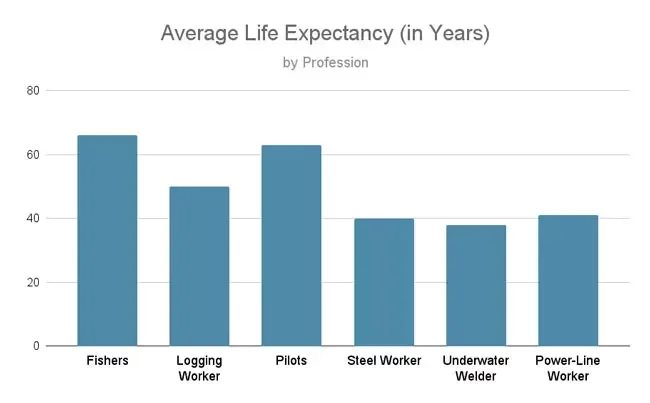
Underwater welder is a familiar job title but it is not always a separate statistical category A worker may be classified as a commercial diver construction worker shipyard employee marine technician or another occupational.
The denominator is another problem. A rate needs a meaningful measure of exposure, such as fatalities per number of workers, dives, or hours underwater. Those measures answer different questions.
A worker-based rate can obscure a diver who performs occasional work, while a per-dive rate can make short, repetitive dives look very different from long, complex saturation or construction assignments.
- Job classification: A fatal incident may be counted under commercial diving, marine construction, ship repair, or general labor.
- Exposure measurement: Annual worker counts do not show how many hours were spent underwater or in hazardous conditions.
- Small samples: A few incidents can create a large-looking rate when the population is limited.
- Reporting boundaries: Some datasets include occupational deaths only, while others may include contractors, trainees, or related marine workers differently.
For that reason, a claim such as “underwater welders have a fatality rate of X” should immediately prompt questions about the source, time period, population, denominator, and inclusion rules. A number without those details is not a dependable risk estimate.
Fatality rate versus fatality count
A fatality count tells you how many deaths were recorded. It can show that a hazard exists and may reveal recurring incident patterns. It does not tell you whether the occupation is more dangerous than another activity unless exposure and population are also known.
A fatality rate relates deaths to a defined population or amount of work. Common forms include deaths per 100,000 workers and deaths per 100,000 full-time-equivalent workers. Diving operations may also benefit from exposure measures such as fatalities per 100,000 dive hours, although collecting consistent dive-hour data is difficult.
Why commercial-diving data is not a perfect substitute
Commercial diving is a broader field that can include inspection, salvage, construction, maintenance, scientific support, offshore work, and emergency operations. Underwater welding is one task within that larger field, and the hazard profile changes with each assignment.
Using broad commercial-diving statistics can provide useful context, but it cannot prove the exact risk faced by a welder on a particular job. A short weld inside a controlled dry habitat is not equivalent to cutting near a vessel’s propeller, and neither is equivalent to a deep offshore repair with complex gas management.
What Actually Drives Fatal Risk Underwater
Fatal incidents usually result from a chain of failures rather than one isolated technical mistake. The diver may face a hazardous environment, an unsuitable procedure, equipment weakness, poor communication, and delayed rescue at the same time. Breaking that chain before the dive is more valuable than relying on a single protective device.
The most useful question is not simply whether underwater welding is dangerous. It is which hazards are present, how severe their consequences could be, how likely exposure is, and whether the team has a practical way to prevent or rapidly control the event.
- Control the energy: Isolate welding power and other electrical or mechanical energy whenever the diver is not actively authorized to use it.
- Protect the breathing system: Confirm gas supply, reserves, hose condition, breathing equipment, and an emergency plan before entry.
- Control movement: Manage lines, tools, currents, vessel motion, dropped objects, and structures that can trap or strike the diver.
- Plan recovery: Ensure the standby diver, supervisor, communications, and retrieval method can function in the actual conditions.
Electrical shock and welding current
Electricity in water is an obvious concern, but the risk is controlled through an entire system rather than the welding machine alone. The circuit, electrode holder, cables, switches, grounding arrangements, insulation, connections, and work procedure all matter. Accidental energization while the diver is changing electrodes, handling equipment, or being recovered can be especially dangerous.
Wet welding also involves a changing environment. Saltwater, damaged insulation, conductive structures, and unintended current paths can complicate electrical control. A competent diving supervisor should use an established procedure that specifies when power is enabled, who controls it, how communication is maintained, and how the circuit is isolated during interruptions.
“Waterproof” is not a complete safety argument. Equipment must be suitable for the operation, inspected, maintained, and used within its design limits. Improvised connections, worn cables, unverified repairs, and unclear authority over the power source are warning signs that deserve immediate correction.
Drowning and breathing-gas failure
Drowning can follow a damaged helmet, flooded breathing system, depleted supply, hose separation, entanglement, loss of orientation, incapacitation, or a communication breakdown. The initiating event may be minor; the outcome becomes fatal when the diver cannot breathe, cannot reach a safe area, or cannot receive effective assistance quickly.
Surface-supplied diving can provide a managed gas supply and communications link, but those benefits depend on the full system. Gas cylinders, compressors, hoses, helmets, non-return devices, control panels, and reserve arrangements must be compatible, inspected, and monitored. A standby diver cannot compensate for an absent or poorly rehearsed response plan.
Entanglement, entrapment, and restricted access
Welding often occurs around structural members, pilings, ship hulls, docks, intake systems, and other places where lines or umbilicals can snag. Visibility may be reduced by silt, bubbles, darkness, marine growth, or welding byproducts. A diver who becomes trapped may lose orientation or damage the breathing umbilical while trying to escape.
This is an important consideration for underwater welder fatality rate.
Before the dive, the team should identify line hazards, entry and exit routes, sharp edges, openings, suction points, moving machinery, and locations where the diver cannot be reached directly. “The diver can swim out” is not a rescue plan if the diver is unconscious, entangled, or unable to see.
Pressure, decompression, and gas-related hazards
Depth changes alter pressure and affect breathing gas, buoyancy, communication, and decompression obligations. A diver can suffer decompression illness or other pressure-related injury when the profile, gas, ascent, or medical response is not properly managed. Greater depth and longer exposure can increase complexity, but shallow work is not automatically safe.
Gas contamination, carbon dioxide buildup, oxygen-related problems, and incorrect gas handling can also become life-threatening. These hazards reinforce the importance of a documented dive plan, competent supervision, appropriate equipment, and medical arrangements that match the operation.
Vessels, currents, dropped objects, and structural failure
Underwater welding may take place near cranes, barges, ships, intake structures, pipelines, or construction equipment. Propellers, thrusters, suction, shifting loads, falling tools, unstable structures, and unexpected vessel movement can kill a diver without any welding defect.
Lockout and tagout, vessel coordination, load control, exclusion zones, current assessment, and communication with surface operators are therefore part of the diving safety system. A technically perfect weld is irrelevant if the worksite can move, collapse, energize, or release a load onto the diver.
How to Interpret Claims About Underwater Welder Fatality Rate
Online articles and career discussions often repeat a single percentage as if it were a settled fact. Many such claims cannot be verified because they do not identify the dataset, the years covered, the number of workers, or whether the figure describes welders specifically. Treating an unsupported estimate as a measurement can distort both career decisions and employer risk assessments.
A better approach is to examine how the figure was created. Ask whether it measures deaths or all serious incidents, whether it counts employees and contractors consistently, and whether the work includes offshore, inland, shipyard, or mixed operations.
- Find the denominator: Look for workers, full-time-equivalent workers, dives, dive hours, or another defined exposure measure.
- Check the population: Determine whether the figure covers underwater welders, all commercial divers, or a wider marine workforce.
- Check the period: A rate from one unusual year may not represent normal conditions.
- Check the method: Reliable analysis explains definitions, exclusions, uncertainty, and limitations.
Why a low rate can still hide a serious job
Rare catastrophic events may produce a low annual rate while still demanding strict controls. A worker can reasonably face a low probability of death on one carefully managed dive and still be exposed to consequences severe enough to require redundant systems, supervision, and emergency readiness.
Low frequency also makes trend interpretation difficult. If an organization has few workers, one event can sharply change its internal rate. Conversely, an absence of fatalities does not prove that controls are strong; near misses, equipment failures, and unreported unsafe conditions may be more informative leading indicators.
Why comparison with ordinary welding can mislead
Surface welding and underwater welding share processes such as arc generation, heat, fumes, and metal preparation, but the surrounding risk is different. An underwater welder adds diving physiology, breathing systems, limited access, water movement, and rescue complexity to the task.
Comparisons should therefore separate the welding method from the work environment. A safer comparison may examine similar exposure conditions, such as marine construction versus marine construction, rather than comparing a controlled shop with an underwater repair site.
How Employers Measure and Reduce the Risk
A responsible employer does not use a national fatality figure as a substitute for a job-specific assessment. The team identifies the worksite, task sequence, energy sources, environmental conditions, equipment, personnel, and emergency options before deciding whether the dive can proceed.
The assessment should be dynamic. Conditions can change when tides shift, visibility falls, a vessel moves, a storm develops, a gas supply changes, or the diver reports fatigue or discomfort. A plan that was reasonable at briefing time may become unacceptable later.
- Task sequence: Define preparation, entry, welding, pauses, electrode changes, inspection, shutdown, and exit.
- Hazard controls: Assign responsibility for electrical isolation, vessel control, line management, and atmospheric or gas checks.
- Communications: Establish primary and backup methods and specific words or signals for stop, emergency, and recovery.
- Rescue: Match standby personnel, equipment, access, and medical support to the worst credible event.
Training and competence
Training should cover more than welding technique. A competent diver needs skills appropriate to the work, including dive planning, equipment use, communications, emergency response, underwater orientation, decompression management, and the hazards of the specific site. Welding qualification alone does not establish diving competence.
These practical limitations also matter for underwater welder fatality rate.
Experience should also match the assignment. A newly trained worker may need supervised progression before performing complex work in current, depth, confined spaces, poor visibility, or around energized and moving systems. Employers should verify competence rather than assuming a credential automatically covers every task.
Equipment inspection and maintenance
Maintenance failures often begin as small defects: a damaged umbilical, a worn connector, a leaking valve, a compromised helmet seal, a faulty communication component, or an overdue inspection. Underwater equipment should be examined before use, after use where appropriate, and whenever conditions suggest damage.
Records matter because they reveal repeated defects and deferred repairs. A strong program does not simply check a box; it removes questionable equipment from service, identifies the cause of failure, and confirms that the repair was effective.
Communication and supervision
The diver, tender, supervisor, standby diver, and surface operators need a shared understanding of the plan. Communication should support routine updates as well as rapid stop instructions. If the diver cannot communicate reliably, the team may not know whether a pause is voluntary, equipment-related, or an emergency.
Supervision is not passive observation. The supervisor should monitor conditions, confirm that controls remain in place, enforce limits, and stop the operation when the risk changes. Production pressure is a serious warning sign when it discourages reporting, maintenance, or a needed delay.
Emergency readiness
Emergency plans fail when they are written for an ideal scenario rather than the actual site. Recovery may be difficult around a vessel, beneath a platform, inside a confined structure, or in strong current. The team should know how to locate, free, lift, treat, and transport an injured diver within the constraints of the worksite.
Drills can expose practical weaknesses in access, equipment placement, communications, staffing, and medical coordination. The goal is not to create a perfect rehearsal but to discover what will not work before a real emergency.
Warning Signs of an Unsafe Underwater Welding Job
No checklist can guarantee a safe dive, but certain conditions should prompt a pause and a documented review. These signs often indicate that the organization is relying on personal bravery instead of engineered and procedural controls.
- Unclear authority: Nobody can say who controls welding power, vessel movement, or the decision to abort.
- Unverified equipment: Cables, helmets, gas systems, communications, or lifting equipment have unknown inspection status.
- Weak rescue plan: A standby diver is unavailable, inexperienced for the task, or unable to reach the work area.
- Changed conditions: Visibility, current, weather, traffic, structure, gas supply, or communication quality has deteriorated.
Other warning signs include rushed briefings, missing permits, fatigue, inadequate staffing, unexplained pressure to continue, and a history of near misses that was never corrected. A worker should be able to raise a safety concern without being treated as an obstacle to production.
Stopping work is not the same as refusing every difficult assignment. It is a decision to obtain missing information, restore controls, or reassess whether the job remains within the team’s capability.
Choosing a Career or Evaluating a Diving Employer
Someone researching this occupation should look beyond a headline statistic. The quality of the employer’s safety system often matters more to day-to-day risk than a broad national average. Ask how the company plans dives, trains workers, maintains equipment, investigates near misses, and handles stop-work decisions.
Pay, travel, depth, schedule, and advancement are relevant career factors, but they should be weighed against exposure and support. A higher-paying assignment may involve more complex environments, longer deployments, or greater distance from emergency care.
| Question to ask | What a useful answer should address |
|---|---|
| How are dives planned? | Written job-hazard analysis, task limits, environmental review, and named supervision. |
| What happens when conditions change? | Clear stop-work authority and a process for reassessment. |
| How is equipment managed? | Inspection, maintenance, defect removal, records, and competent repair. |
| How are emergencies handled? | Standby capability, retrieval methods, communications, medical support, and drills. |
| How are incidents reviewed? | Attention to near misses and root causes rather than blame alone. |
Be cautious if answers are vague, if safety is described only as “common sense,” or if the company cannot explain how the diver will be recovered after a foreseeable emergency. A mature employer welcomes specific questions because clear answers strengthen planning.
Frequently Asked Questions About Underwater Welder Fatality Rate
Is underwater welding the most dangerous welding job?
It is among the most hazardous welding environments because welding hazards combine with commercial-diving and marine-work hazards. A universal ranking is difficult because risk varies by depth, location, task, equipment, exposure, and employer controls.
What is the exact underwater welder fatality rate in the United States?
No single authoritative national figure reliably isolates underwater welders across all work settings and exposure levels. Available occupational data may group these workers with commercial divers or other marine occupations, so an exact percentage should not be accepted without a transparent method.
Does underwater welding itself cause most deaths?
Not necessarily. Fatal events can involve drowning, breathing-gas failure, entanglement, vessel movement, dropped objects, structural collapse, pressure-related injury, or delayed rescue. Welding current is important, but it is only one part of the risk profile.
Is dry underwater welding safer than wet welding?
Dry or habitat welding can reduce direct water exposure around the weld and may improve working conditions, but it does not eliminate diving, pressure, gas, fire, access, structural, or emergency hazards. Its safety depends on the design, operation, monitoring, and rescue arrangements.
Can a certification guarantee a safe underwater welding career?
No. Certification can demonstrate training or qualification in a defined area, but it cannot control a poorly planned dive, defective equipment, unsafe vessel operations, fatigue, or inadequate supervision. Competence must match the specific job and remain supported by the employer.
What is a better safety metric than a fatality rate?
No single metric is sufficient. Useful information includes fatalities, serious injuries, near misses, equipment failures, inspection findings, training completion, corrective-action closure, and exposure hours, interpreted together and honestly.
Conclusion
The underwater welder fatality rate cannot be reduced to one trustworthy national percentage because the occupation is not consistently isolated in available data and because exposure varies dramatically between assignments. The more useful conclusion is that risk is real but changeable: planning, electrical control, breathing-gas reliability, communication, competent supervision, equipment maintenance, and rescue readiness can alter the outcome.
Use statistics as context, not as permission to ignore job-specific hazards. Whether you are considering the career or reviewing an employer, ask how risk is measured, who can stop the work, and whether the emergency plan works in the actual environment.
Before accepting or starting an underwater welding job, request the written hazard assessment and emergency plan, then verify that the controls match the site and task.