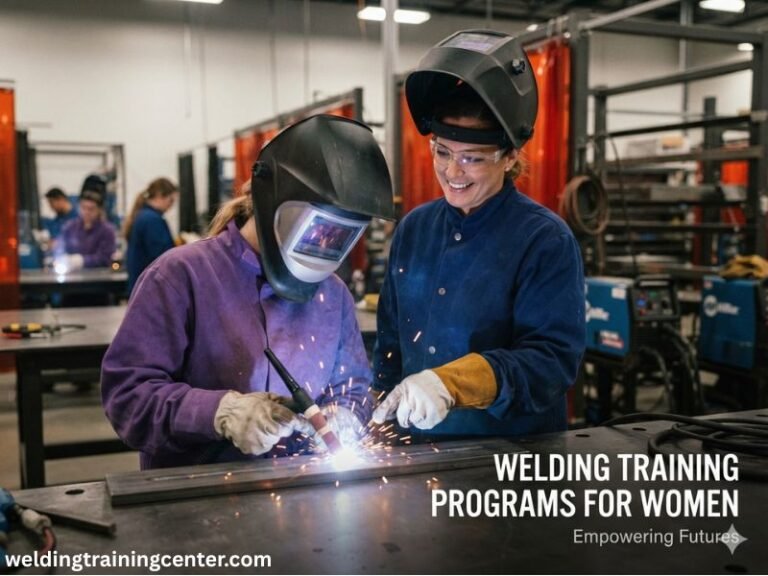
Welding Certification Training: How to Become Certified
A welding career is built on more than just knowing how to create a strong weld. In many industries, employers need proof that a welder can consistently produce quality work while following safety procedures and industry standards. This is where welding certification training becomes an important step for welders who want to improve their skills and increase their career opportunities.
When looking into the factors that help welders advance professionally, certification consistently appears as one of the key differentiators. A welder may have hands-on experience, but certification provides documented proof that their skills meet recognized industry requirements. This can be especially valuable when applying for jobs in industries where welding quality directly affects safety and performance.
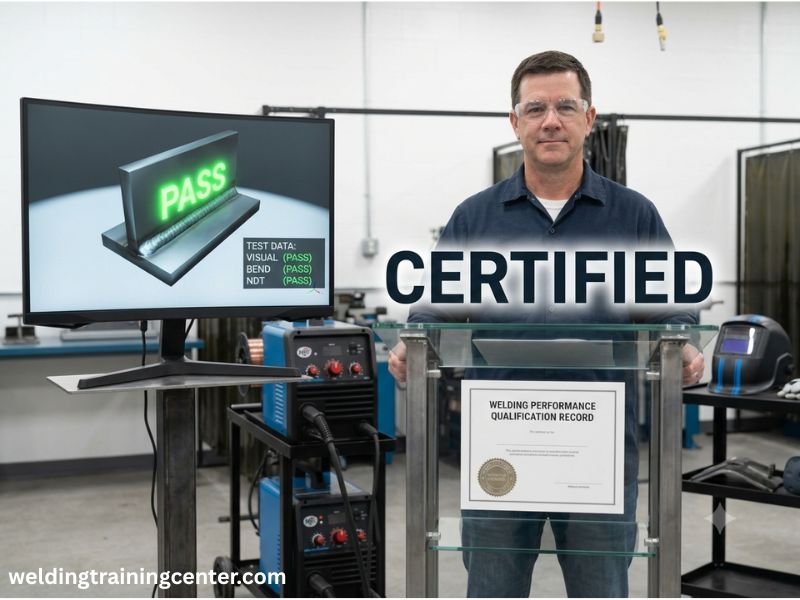
The demand for skilled welding professionals remains strong across industries. According to the U.S. Bureau of Labor Statistics, employment for welders, cutters, solderers, and brazers is projected to continue growing, with thousands of job openings expected each year due to workforce replacement needs and industrial demand. The American Welding Society has also highlighted that the welding industry faces a significant need for skilled workers as experienced welders retire and companies require new talent.
Welding certification training helps bridge the gap between basic welding knowledge and professional qualification. These programs prepare students and working welders for certification tests by teaching welding procedures, safety practices, blueprint reading, quality standards, and hands-on techniques required in real workplaces.
In this guide, I will explain what welding certification training includes, the different types of certifications available, how long training takes, costs involved, and how certification can help you build a successful welding career.
What Is Welding Certification Training?
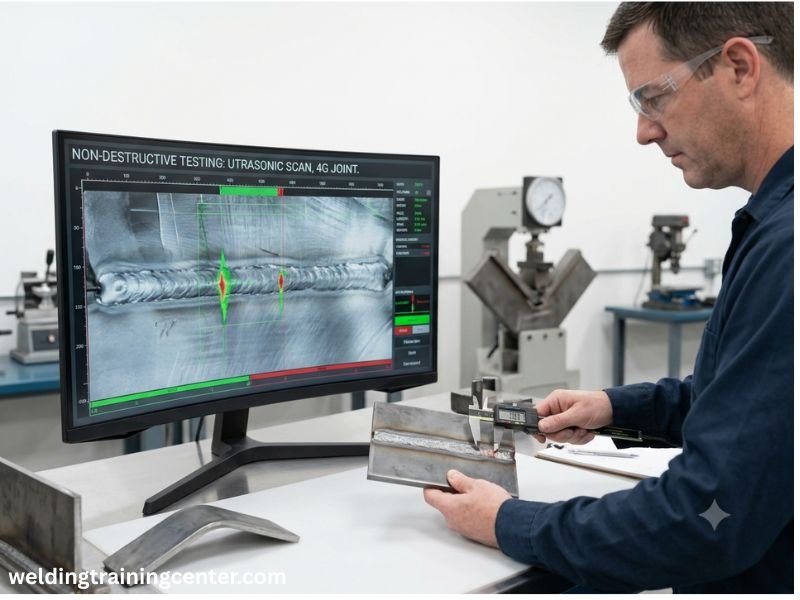
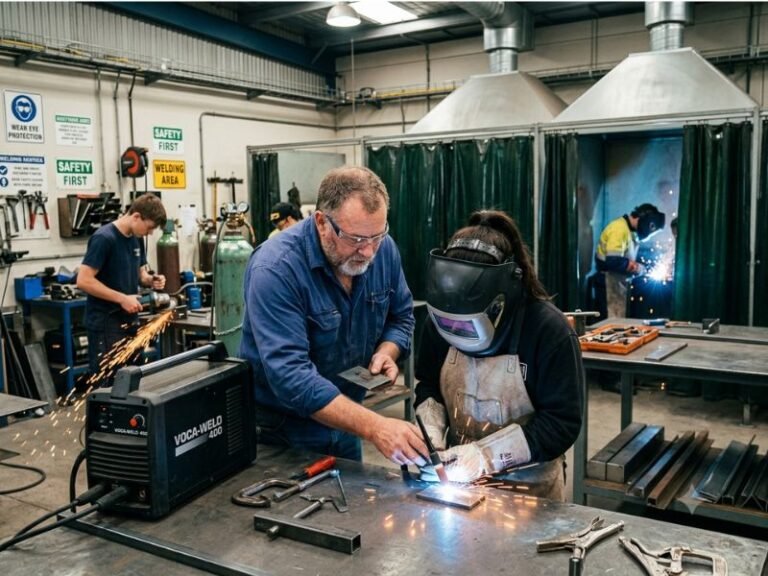
Welding certification training is a specialized program designed to prepare welders for professional qualification tests and industry-recognized certifications. Unlike basic welding courses that focus on learning general techniques, certification training focuses on helping students develop the specific skills and knowledge required to prove their welding ability.
The main purpose of welding certification training is to ensure that a welder can produce consistent, high-quality welds while following approved procedures and safety requirements. During training, students learn both the technical concepts behind welding and the practical skills needed to successfully complete certification tests.
A typical welding certification training program may include:
- Welding process instruction
- Hands-on welding practice
- Welding procedure requirements
- Blueprint reading
- Welding symbols
- Weld inspection basics
- Safety standards
- Certification test preparation
Many programs are designed around specific welding processes, such as:
- MIG welding (GMAW)
- TIG welding (GTAW)
- Stick welding (SMAW)
- Flux-cored arc welding (FCAW)
The type of training you choose usually depends on your career goals and the industry you want to enter.
Welding Training vs Welding Certification Training
Although these terms sound similar, they serve different purposes.
General welding training focuses on building basic welding skills. Beginners usually learn:
- How welding machines work
- Basic welding techniques
- Equipment handling
- Safety practices
- Different welding processes
The goal is to help students understand and perform welding tasks.
Welding certification training, on the other hand, focuses on preparing welders to meet specific qualification requirements. It includes:
- Practicing required weld positions
- Following welding procedures
- Improving weld consistency
- Understanding testing requirements
- Preparing for practical examinations
For example, a beginner may learn MIG welding through a basic welding course. However, a certification training program will help that person prepare for a MIG welding qualification test where weld quality, technique, and procedure compliance are evaluated.
Who Needs Welding Certification Training?
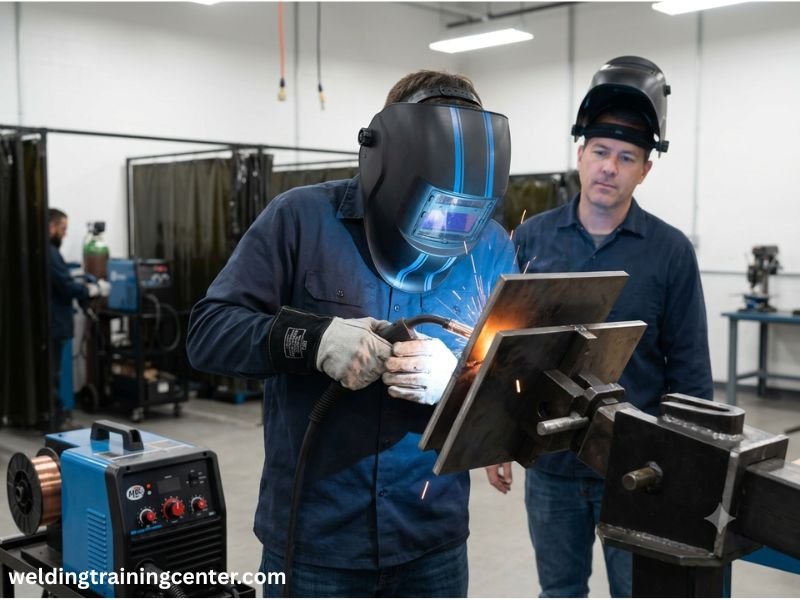
Welding certification training is useful for different types of learners, including:
Beginner Welders:
New welders can use certification training to build professional skills and prepare for entry-level welding jobs.
Experienced Welders:
Working welders may take certification training to qualify for advanced positions or move into specialized industries.
Career Changers:
People entering the skilled trades can use certification programs as a structured pathway into welding careers.
Professional Welders Seeking Advancement:
Additional certifications can help welders expand their capabilities and qualify for more specialized work.
A good welding certification training program does more than prepare someone for an exam. It helps develop the technical knowledge, confidence, and practical ability needed to succeed in professional welding environments.
Why Is Welding Certification Important?
Welding certification is important because it provides measurable proof that a welder has the skills required to meet industry expectations. While experience and practical ability are valuable, certification helps employers verify that a welder understands proper techniques, safety requirements, and quality standards.
In industries where welding affects the strength and safety of structures, equipment, and products, companies need confidence that welders can perform their work consistently. A certified welder demonstrates a commitment to professional standards and continuous skill development.
1. Improves Job Opportunities
One of the biggest benefits of welding certification is improved access to employment opportunities. Many employers prefer or require certified welders because certification reduces uncertainty during the hiring process.
Certified welders may find opportunities in industries such as:
- Construction
- Manufacturing
- Automotive
- Shipbuilding
- Aerospace
- Energy
- Metal fabrication
For example, companies working on structural projects often need welders who can demonstrate that they understand specific welding procedures and quality requirements.
Certification does not guarantee a job, but it can make a candidate more competitive by showing employers that they have achieved a recognized level of skill.
2. Demonstrates Professional Welding Skills
Welding certification shows that a welder can meet specific performance requirements under controlled testing conditions.
During certification testing, welders are typically evaluated on factors such as:
- Weld appearance
- Weld strength
- Proper technique
- Following welding procedures
- Ability to work in specific positions
This gives employers confidence that a certified welder can produce reliable results.
A welding certification also shows that a person has invested time in improving their craft rather than relying only on informal experience.
3. Creates Opportunities for Career Growth
The welding industry offers many career paths, and additional certifications can help welders move into specialized roles.
With experience and additional training, welders may advance into positions such as:
- Welding inspector
- Welding supervisor
- Welding technician
- Welding instructor
- Specialized fabrication welder
Advanced certifications can help professionals qualify for more complex projects where higher levels of skill and responsibility are required.
For example, a welder who starts with basic MIG welding skills may later pursue certifications in pipe welding, structural welding, or inspection-related fields.
4. Increases Employer Confidence
Employers need welders who can complete projects safely, efficiently, and according to required specifications. Hiring certified welders can reduce the risk of poor-quality welds, production delays, and safety issues.
Certification provides employers with confidence that a welder:
- Understands welding procedures
- Follows safety practices
- Can meet quality expectations
- Has demonstrated practical ability
This is especially important in industries where welding failures can result in expensive repairs or serious safety concerns.
5. Helps Meet Industry Requirements
Many industries follow strict welding codes and standards to maintain quality and safety. Certification training helps welders become familiar with these requirements.
Depending on the industry, welders may need knowledge of:
- Welding procedures
- Material requirements
- Inspection standards
- Quality control processes
- Safety regulations
Understanding these standards helps welders become more valuable professionals and improves their ability to work on different types of projects.
Is Welding Certification Worth It?
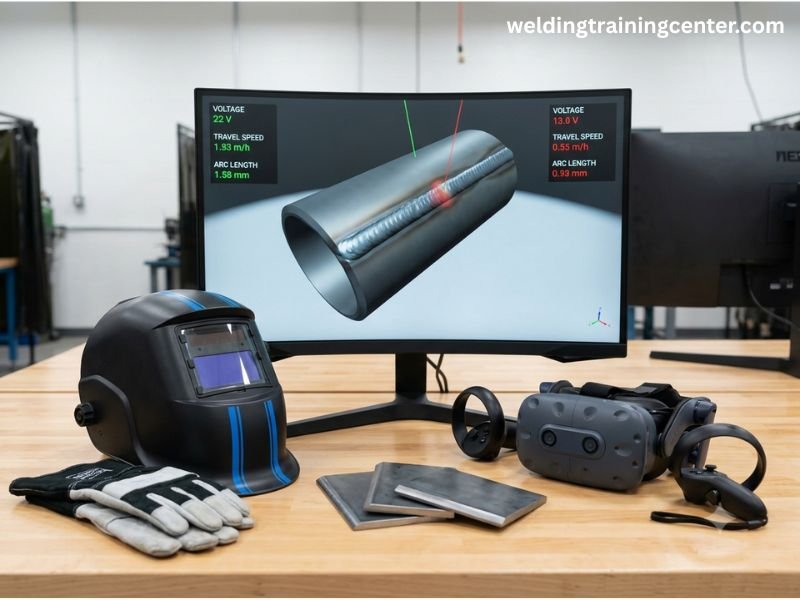
For many welders, certification is a worthwhile investment because it can improve career flexibility, increase credibility, and create opportunities for advancement.
However, certification works best when combined with:
- Strong practical skills
- Hands-on experience
- Continued learning
- Professional training
A certificate alone does not replace skill, but it provides evidence that a welder has met an established standard. For anyone serious about building a long-term welding career, certification training can be an important step toward professional growth.
Types of Welding Certifications
Welding certifications are not all the same. Different industries, welding processes, and job requirements may require different types of qualifications. The right certification depends on the type of welding work you want to perform and the career path you plan to follow.
Many certification programs are based on industry standards that evaluate a welder’s ability to produce quality welds under specific conditions, such as material type, welding process, and welding position.
Below are some of the most common types of welding certifications.
1. AWS Welding Certification
The American Welding Society (AWS) provides some of the most recognized welding certification programs in the industry.
AWS certifications are widely respected because they help demonstrate that a welder has met specific skill and knowledge requirements.
One of the most common options for welders is the Certified Welder (CW) program.
A Certified Welder qualification evaluates a welder’s ability to:
- Follow welding procedures
- Produce acceptable welds
- Work with specific welding processes
- Meet testing requirements
AWS also offers certifications for professionals working in areas such as:
- Welding inspection
- Welding supervision
- Welding quality control
- Welding education
For many welders, AWS certification can be an important credential when applying for industrial and commercial welding jobs.
2. Structural Welding Certification
Structural welding certification focuses on welding applications used in buildings, bridges, steel structures, and other large construction projects.
Structural welders typically work with materials such as:
- Carbon steel
- Structural steel
- Heavy metal components
Training for structural welding certification may include:
- Welding joints
- Welding positions
- Blueprint interpretation
- Structural welding procedures
- Weld quality requirements
Structural welding requires accuracy because welds are often responsible for supporting significant loads. A certified structural welder must demonstrate the ability to create strong and reliable welds according to project specifications.
3. Pipe Welding Certification
Pipe welding is one of the more specialized areas of welding and is commonly used in industries such as:
- Oil and gas
- Power generation
- Chemical processing
- Industrial construction
Pipe welding certification typically requires welders to demonstrate skills in challenging positions and conditions.
Training may cover:
- Pipe joint preparation
- Root passes
- Multiple welding positions
- Pipe welding techniques
- Weld inspection requirements
Because pipe systems often transport important materials under pressure, companies require welders who can meet strict quality standards.
4. MIG Welding Certification
MIG welding, also known as Gas Metal Arc Welding (GMAW), is widely used in manufacturing, automotive repair, and fabrication industries.
MIG welding certification training focuses on helping welders demonstrate their ability to produce consistent welds using this process.
Training may include:
- Machine setup
- Wire selection
- Shielding gas requirements
- Welding parameters
- Joint techniques
- Weld defect prevention
MIG certification can be useful for welders working in production environments where speed, efficiency, and consistency are important.
5. TIG Welding Certification
TIG welding, or Gas Tungsten Arc Welding (GTAW), is known for producing precise and high-quality welds. It is commonly used for applications involving stainless steel, aluminum, and other specialty metals.
TIG welding certification training often covers:
- Tungsten electrode selection
- Torch control
- Filler metal techniques
- Heat management
- Thin material welding
TIG welders are often needed in industries where appearance, precision, and weld quality are critical.
Examples include:
- Aerospace
- Automotive performance parts
- Specialized fabrication
- Precision manufacturing
6. Stick Welding Certification
Stick welding, also called Shielded Metal Arc Welding (SMAW), remains an important process in construction, maintenance, and outdoor welding environments.
Stick welding certification evaluates a welder’s ability to work with:
- Different electrodes
- Various welding positions
- Structural materials
- Challenging working conditions
Training commonly includes:
- Electrode selection
- Arc control
- Weld preparation
- Position welding
- Defect prevention
Because stick welding performs well in outdoor environments, it remains valuable for construction and industrial applications.
Choosing the Right Welding Certification
The best welding certification depends on your career goals and the industry you want to enter.
Consider:
- What type of welding work interests you
- Which industries are hiring in your area
- What welding process you want to specialize in
- Whether you prefer fabrication, construction, or industrial work
Many successful welders begin with a general certification and later add specialized qualifications as they gain experience.
Choosing the right certification path can help you develop valuable skills and create more opportunities throughout your welding career.
What Do You Learn During Welding Certification Training?
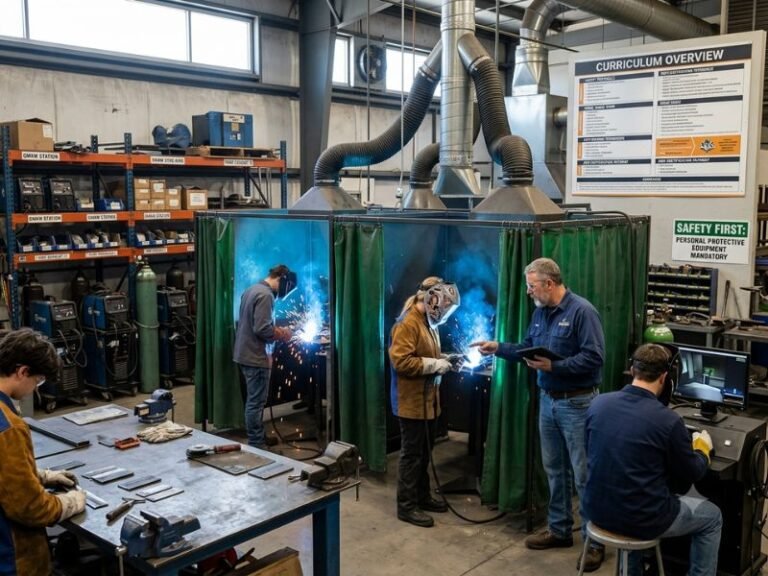
Welding certification training is designed to help students develop the technical knowledge and practical skills required to pass qualification tests and perform professional welding work. While the exact curriculum depends on the certification type, most programs cover essential areas such as safety, welding processes, technical drawings, inspection methods, and hands-on welding practice.
A strong certification training program focuses on more than just passing an exam. It helps welders develop consistent techniques and understand the standards expected in real workplace environments.
1. Welding Safety Practices
Safety is one of the first areas covered in welding certification training because welding involves several potential hazards, including heat, sparks, fumes, and electrical risks.
Students learn:
- Proper personal protective equipment (PPE)
- Welding helmet and protective clothing requirements
- Safe equipment operation
- Fire prevention procedures
- Gas cylinder handling
- Ventilation requirements
- Workplace safety practices
Professional welders must understand how to protect themselves and others while maintaining productivity. Many employers consider strong safety knowledge an essential part of being a qualified welder.
2. Different Welding Processes
Certification training typically covers one or more welding processes depending on the qualification goal.
Common processes include:
MIG Welding (GMAW)
Students learn:
- Machine setup
- Wire selection
- Shielding gas use
- Welding parameters
- Proper gun movement
- Weld quality control
MIG welding is commonly used in manufacturing, fabrication, and automotive applications.
TIG Welding (GTAW)
Training focuses on precision welding techniques, including:
- Tungsten electrode selection
- Torch control
- Filler rod handling
- Heat control
- Welding thin materials
TIG welding requires excellent control and attention to detail, making proper training especially important.
Stick Welding (SMAW)
Students learn:
- Electrode selection
- Arc control
- Welding positions
- Joint preparation
- Outdoor welding techniques
Stick welding remains widely used in construction, maintenance, and industrial projects.
3. Blueprint Reading and Welding Symbols
Many professional welding jobs require welders to understand technical drawings and welding symbols.
Certification training often teaches:
- Reading blueprints
- Understanding welding symbols
- Interpreting measurements
- Identifying joint designs
- Following project specifications
Blueprint reading helps welders understand exactly how a component should be fabricated before starting the welding process.
A welder who can interpret drawings accurately is more valuable because they can work independently and reduce errors during production.
4. Welding Procedure Knowledge
Certified welders must understand how different factors affect weld quality. Training programs teach students how to follow welding procedures and maintain consistency.
Important topics include:
- Material preparation
- Welding settings
- Heat control
- Travel speed
- Welding positions
- Proper sequence of operations
Following established procedures is especially important in industries where every weld must meet strict quality requirements.
5. Weld Inspection Basics
Understanding weld quality is another important part of certification training.
Students learn how to identify common welding problems, including:
- Cracks
- Porosity
- Undercut
- Incomplete penetration
- Excessive spatter
- Poor weld appearance
Training may also introduce basic inspection methods, such as:
- Visual inspection
- Measuring weld dimensions
- Checking weld appearance
- Understanding acceptance criteria
This knowledge helps welders produce better results and recognize potential issues before they become major problems.
6. Hands-On Welding Practice
The practical portion of welding certification training is one of the most important parts of the program.
Students practice:
- Creating test welds
- Welding different positions
- Adjusting equipment settings
- Improving consistency
- Preparing for certification tests
Instructors provide feedback on technique and help students correct mistakes before the actual qualification test.
Repeated practice builds the confidence and control needed to successfully complete certification requirements.
7. Certification Test Preparation
The final goal of certification training is to prepare students for the welding qualification test.
Training helps students understand:
- Test procedures
- Required welding positions
- Time management
- Quality expectations
- Common testing mistakes
A well-designed program allows students to practice under conditions similar to the actual test environment.
By combining technical knowledge with hands-on experience, welding certification training gives students the foundation needed to become qualified and confident welding professionals.
How Long Does Welding Certification Training Take?
The time required to complete welding certification training depends on several factors, including your current skill level, the type of certification you want, the welding process being tested, and the amount of hands-on practice you receive.
Some beginners may need several months of training to build basic welding skills, while experienced welders may only need a few weeks of focused preparation before taking a certification test.
Unlike general education programs, welding certification training is usually focused on developing specific skills needed to meet qualification requirements.
Training Time for Beginners
For someone with little or no welding experience, certification training usually takes longer because they need to build a foundation before preparing for a test.
Beginner programs commonly include:
- Welding safety
- Equipment operation
- Basic welding techniques
- Welding process fundamentals
- Material preparation
- Hands-on practice
Depending on the program structure, beginners may spend several months developing the skills needed to perform consistent welds.
During this time, students need regular practice because welding ability improves through repetition. Understanding welding theory is important, but practical experience is what builds confidence and control.
Training Time for Experienced Welders
Experienced welders may require less time because they already understand welding fundamentals and have developed practical skills.
Their certification preparation may focus on:
- Reviewing certification requirements
- Practicing specific test positions
- Improving weld consistency
- Learning industry procedures
- Completing practice tests
An experienced welder may prepare for a certification test within a few weeks, depending on the complexity of the qualification.
Factors That Affect Welding Certification Training Time
Several factors influence how quickly a person can complete certification training.
1. Previous Welding Experience
A beginner starting from zero will need more time than someone who has already worked with welding equipment.
Experience helps because the welder already understands:
- Machine operation
- Welding techniques
- Material behavior
- Common welding problems
2. Type of Welding Certification
Different certifications require different levels of skill.
For example:
- Basic MIG welding certification may require less preparation time.
- Pipe welding certification usually requires more advanced skills.
- Specialized industrial certifications may require extensive practice.
The more complex the welding application, the more preparation is generally required.
3. Amount of Practice Time
Welding is a skill that improves through repetition. Students who practice frequently usually progress faster than those who practice only occasionally.
Regular practice helps improve:
- Hand coordination
- Welding speed control
- Torch or electrode movement
- Weld consistency
A training program with more hands-on hours can help students become certification-ready faster.
4. Quality of Training Program
The quality of the welding certification training program also affects learning speed.
A good program provides:
- Experienced instructors
- Proper equipment
- Structured lessons
- Individual feedback
- Realistic practice conditions
Poor-quality training may slow progress because students receive less guidance and fewer opportunities to practice.
Can You Get Welding Certification Quickly?
Some welders can complete certification preparation quickly, especially if they already have experience. However, rushing through training is not always the best approach.
Passing a certification test requires more than completing lessons. Welders must demonstrate consistent performance and produce welds that meet required standards.
A better approach is to focus on:
- Building correct techniques
- Practicing regularly
- Understanding certification requirements
- Improving weld quality
Typical Welding Certification Training Timeline
While timelines vary, a general guide looks like this:
Complete Beginner:
- Several months of training and practice
Beginner With Some Experience:
- One to several months of preparation
Experienced Welder:
- A few weeks of focused certification preparation
The goal of welding certification training is not simply to complete a course quickly. It is to develop the skills and confidence needed to successfully pass the test and perform quality welding work in a professional environment.
How Much Does Welding Certification Training Cost?
The cost of welding certification training can vary depending on the certification type, training provider, location, program length, and the amount of hands-on practice included. Some basic certification preparation programs may cost a few hundred dollars, while comprehensive welding programs with extensive practice and testing preparation can cost several thousand dollars.
When comparing training options, it is important to look beyond the price. A lower-cost program may not provide enough equipment access, instructor support, or practice time needed to successfully prepare for certification.
Factors That Affect Welding Certification Training Cost
Several factors influence how much you will pay for certification training.
1. Type of Welding Certification
The certification you pursue has a major impact on training costs.
Basic certifications may require less preparation, while specialized certifications usually involve more advanced training.
For example:
- MIG welding certification may require shorter training.
- TIG welding certification may cost more due to the precision and practice required.
- Pipe welding certification may require extensive preparation because of its complexity.
Advanced certifications often require more instructor time, materials, and practice hours.
2. Training Program Length
The duration of the program also affects the overall cost.
Short certification preparation courses may include:
- Test requirements
- Limited practice sessions
- Basic skill evaluation
Longer programs may include:
- Complete welding instruction
- Multiple welding processes
- Extensive hands-on practice
- Career preparation
A longer program usually costs more because students receive more training time and access to facilities.
3. Equipment and Material Costs
Welding certification training requires materials and equipment that can add to the overall expense.
Additional costs may include:
- Welding rods or wire
- Metal practice materials
- Protective equipment
- Welding tools
- Testing fees
Some training facilities include these expenses in the tuition, while others charge separately.
Before enrolling, ask what is included so you can understand the total investment.
4. Location and Training Provider
Training costs can differ depending on where the facility is located and the type of organization providing the program.
For example:
- Community colleges may offer affordable welding programs.
- Private welding schools may provide specialized training.
- Industry training centers may focus on specific certifications.
The reputation, equipment quality, and instructor experience of the training provider can also influence pricing.
Ways to Reduce Welding Certification Training Costs
If the cost of certification training is a concern, there are several ways to make it more affordable.
Scholarships and Financial Assistance
Some schools and organizations provide financial support for students entering skilled trades.
Possible options include:
- Trade school scholarships
- Workforce development programs
- Educational grants
Employer-Sponsored Training
Some employers support welding certification because skilled workers are valuable in industries that depend on qualified welders.
Companies may help cover:
- Training costs
- Testing fees
- Additional certifications
This is especially common for workers already employed in manufacturing, construction, or fabrication.
Start With Basic Training
If you are completely new to welding, starting with basic welding education before certification training can save money.
Learning fundamentals first can help you:
- Understand welding concepts faster
- Require less preparation time
- Avoid unnecessary training expenses
Many successful welders build their skills gradually by learning basic techniques, gaining experience, and then pursuing certifications.
Is Welding Certification Training Worth the Investment?
For many welders, certification training is a valuable investment because it can improve career opportunities and demonstrate professional ability.
The value comes from gaining:
- Recognized qualifications
- Better job opportunities
- Increased credibility
- Specialized welding skills
However, certification should be viewed as part of a larger career development plan. The strongest candidates combine certification with hands-on experience, continuous learning, and strong workplace skills.
Choosing a quality welding certification training program can help ensure that your investment leads to real skill development and long-term career growth.
How to Choose the Best Welding Certification Training Program
Choosing the right welding certification training program is an important decision because the quality of your training can directly affect your ability to pass certification tests and develop professional welding skills.
Not every program provides the same level of instruction, equipment access, or hands-on practice. A good training program should help you understand certification requirements while giving you enough practical experience to perform confidently in a real welding environment.
Before enrolling, consider several important factors to find a program that matches your career goals.
1. Check Instructor Experience and Qualifications
The experience of welding instructors plays a major role in the quality of training you receive. A knowledgeable instructor can help you understand difficult concepts, correct mistakes, and improve your welding technique.
Look for instructors who have:
- Professional welding experience
- Industry certifications
- Experience preparing students for certification tests
- Knowledge of welding standards and procedures
Experienced instructors can provide practical advice that goes beyond textbooks. They understand common beginner mistakes and can help students develop better habits from the beginning.
2. Review the Certification Preparation Process
A strong welding certification training program should clearly explain how it prepares students for testing.
Before joining, ask:
- Which certifications does the program prepare students for?
- Does the training include practice tests?
- Are certification requirements explained?
- Will instructors evaluate practice welds?
The best programs simulate real certification conditions so students know what to expect during the actual test.
Proper preparation can improve confidence and increase the chance of successfully completing the qualification process.
3. Look for Hands-On Practice Opportunities
Welding certification is based on practical ability, so hands-on training is one of the most important factors to consider.
A quality program should provide enough time for students to practice:
- Different welding positions
- Various joint types
- Welding techniques
- Equipment adjustments
- Test-style welds
A course that focuses mainly on classroom instruction may not provide enough experience for certification success.
The more opportunities you have to practice, the more comfortable you become with controlling the welding process.
4. Evaluate Equipment and Training Facilities
The quality of the training environment can affect how effectively you learn.
A professional welding certification training facility should provide:
- Modern welding machines
- Proper safety equipment
- Individual welding workstations
- Quality practice materials
- Clean and organized workspace
Training on outdated or limited equipment may not fully prepare you for the conditions you will experience in professional welding jobs.
Whenever possible, visit the facility before enrolling and observe the workshop environment.
5. Check Program Reputation and Student Results
Researching the reputation of a training provider can help you make a better decision.
Look for information about:
- Student experiences
- Course quality
- Instructor support
- Certification success rates
- Career outcomes
Reviews from previous students can provide insight into whether the program delivers practical value.
However, focus on detailed feedback rather than only ratings. Look for comments about hands-on training, instructor guidance, and overall learning experience.
6. Consider Career Support Services
If your goal is employment, choose a program that offers career-focused support.
Some welding certification training programs provide:
- Resume assistance
- Interview preparation
- Job placement support
- Employer connections
- Career guidance
These services can be helpful for beginners entering the welding industry.
A program that focuses on career preparation can help you transition from training to professional work more effectively.
7. Compare Cost and Overall Value
While cost is an important factor, it should not be the only consideration.
A cheaper program may save money initially but provide limited practice time or fewer resources.
Compare programs based on:
- Instructor quality
- Equipment availability
- Training hours
- Practice opportunities
- Certification preparation
- Career support
The best value comes from a program that provides the skills and experience needed to succeed, not necessarily the lowest price.
Final Tips Before Enrolling
Before choosing a welding certification training program:
- Define your career goal
- Decide which welding process interests you
- Research available certifications
- Compare multiple training providers
- Ask about hands-on practice time
- Understand all costs involved
The right training program can provide the knowledge, practice, and confidence needed to become a certified welder. Taking time to choose carefully can make your investment more valuable and support long-term career growth.
Can You Get Welding Certification Without Training?
Yes, it is possible to get welding certification without completing a formal training program, but it can be challenging, especially for beginners. Welding certification tests evaluate your actual welding ability, not just your knowledge of welding concepts. To pass, you must demonstrate that you can produce quality welds according to specific requirements.
Some experienced welders earn certifications through years of hands-on work without attending a traditional welding school. However, most beginners benefit from structured welding certification training because it provides the guidance and practice needed to meet industry standards.
How Certification Without Formal Training Works
Welding certifications are generally based on performance testing. This means the main requirement is proving that you can successfully complete the required weld.
A certification test may evaluate:
- Welding technique
- Weld quality
- Proper procedures
- Welding positions
- Material handling
- Safety practices
If a welder already has significant experience and can meet these requirements, they may be able to take a certification test without completing a formal course.
However, they still need to understand the certification requirements and practice according to the testing standards.
Challenges of Getting Certified Without Training
Although possible, pursuing certification without training can create several challenges.
1. Understanding Certification Requirements
Each certification has specific rules regarding:
- Welding process
- Material type
- Thickness range
- Welding position
- Testing procedures
A beginner may struggle to understand these requirements without proper guidance.
Certification training helps students understand exactly what skills they need to develop before taking the test.
2. Developing Proper Welding Technique
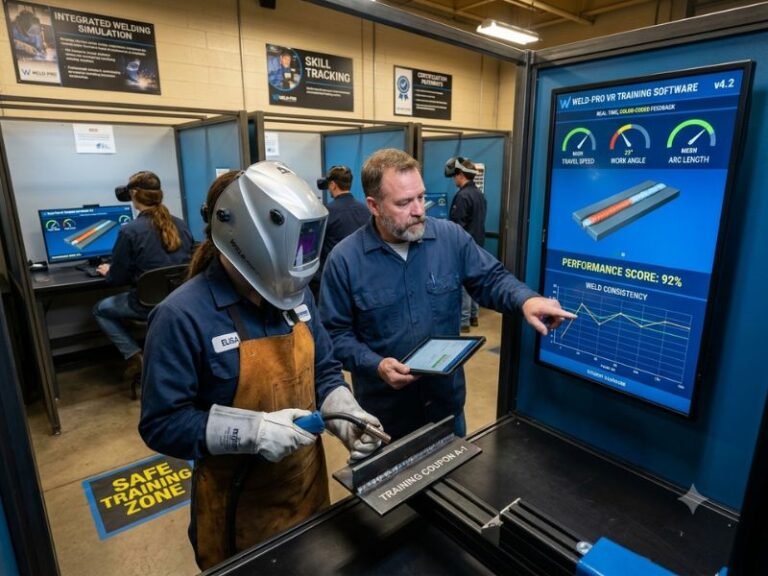
Many welding mistakes are difficult to recognize without expert feedback.
Common beginner problems include:
- Incorrect torch or electrode angle
- Poor travel speed
- Improper heat settings
- Weak weld penetration
- Excessive weld defects
An experienced instructor can identify these issues and provide corrections that improve welding performance.
3. Limited Practice Environment
Preparing for certification requires consistent practice. Without access to proper equipment and materials, it can be difficult to develop the required skill level.
Professional training programs often provide:
- Welding machines
- Practice materials
- Testing conditions
- Instructor evaluation
Without these resources, self-training may take longer.
Who Can Get Certification Without Formal Training?
Certification without attending a welding school may be realistic for:
Experienced Welders
Professional welders who already have years of experience may only need to practice specific test requirements before certification.
Skilled Fabricators
People who regularly work with metal fabrication may already have many of the skills needed for certification.
Hobby Welders With Extensive Practice
Some hobby welders develop strong skills through years of independent practice, although they may still need guidance before testing.
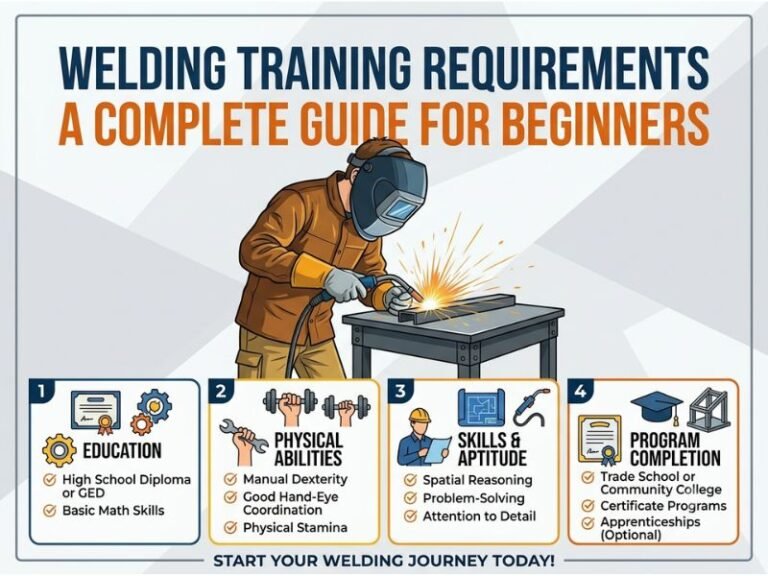
Best Path for Beginners
For beginners, the most effective approach is usually:
- Learn welding fundamentals.
- Practice with real welding equipment.
- Receive feedback from experienced welders.
- Complete welding certification training.
- Take the certification test.
This approach reduces mistakes and improves the chance of successfully passing the test.
Online welding training can also help beginners understand theory and safety before starting hands-on practice.
Should You Take Welding Certification Training?
While formal training is not always required, it can provide significant advantages.
A certification training program helps you:
- Understand testing requirements
- Practice under realistic conditions
- Improve welding technique
- Learn industry standards
- Build confidence before testing
For someone starting a welding career, certification training is often the fastest and most reliable way to develop the skills needed to succeed.
Certification proves your ability, but proper training helps you reach that level more efficiently.
Frequently Asked Questions About Welding Certification Training
What Is Welding Certification Training?
Welding certification training is a specialized program that prepares welders for professional qualification tests. It combines welding theory, safety education, hands-on practice, and test preparation to help students meet industry requirements.
Unlike basic welding courses that focus on learning general techniques, certification training is designed around specific welding standards and performance requirements.
How Long Does Welding Certification Training Take?
The time required for welding certification training depends on your experience level, the type of certification, and the amount of practice needed.
Generally:
- Beginners may need several months of training.
- Welders with some experience may need a few weeks to prepare.
- Experienced welders may only need short-term test preparation.
The most important factor is not how quickly you complete training, but whether you can consistently produce welds that meet certification standards.
Is Welding Certification Worth It?
Yes, welding certification can be valuable for many welders because it provides proof of skill and can improve career opportunities.
Certification can help you:
- Stand out to employers
- Qualify for specialized jobs
- Demonstrate professional ability
- Increase career growth opportunities
However, certification works best when combined with hands-on experience and strong welding skills.
What Certification Is Best for Welders?
The best welding certification depends on your career goals and the type of work you want to perform.
Common options include:
- MIG welding certification
- TIG welding certification
- Stick welding certification
- Structural welding certification
- Pipe welding certification
For many welders, starting with a general certification and adding specialized qualifications later is a practical career path.
Can Beginners Get Welding Certification?
Yes, beginners can work toward welding certification, but they usually need proper training and practice first.
A beginner should start by learning:
- Welding safety
- Basic welding techniques
- Equipment operation
- Different welding processes
After developing practical skills, they can prepare for certification testing.
Do You Need Welding Certification to Get a Welding Job?
Not every welding job requires certification, but many employers prefer certified welders because certification provides evidence of skill and knowledge.
Certification can be especially valuable in industries such as:
- Construction
- Manufacturing
- Pipeline welding
- Aerospace
- Shipbuilding
Requirements vary depending on the employer, location, and type of welding work.
Can Online Welding Training Prepare You for Certification?
Online welding training can help you learn important concepts needed for certification, including:
- Welding theory
- Safety procedures
- Equipment knowledge
- Certification requirements
However, most certification tests require practical welding demonstrations. Hands-on practice is still necessary to develop the physical skills needed to pass.
Conclusion: Is Welding Certification Training the Right Choice?
Welding certification training is an important step for anyone who wants to build a professional welding career. It helps transform basic welding knowledge into verified skills that meet industry expectations.
A quality certification program provides more than test preparation. It helps welders improve technique, understand safety standards, follow proper procedures, and develop confidence in their abilities.
Whether you are a beginner starting your welding journey or an experienced welder looking to advance your career, the right certification training can open new opportunities and help you become a more skilled professional.
Combining structured training, hands-on practice, and industry certification creates a strong foundation for long-term success in the welding field.