Welding Training Facility: What to Expect Before Joining
Choosing the right welding training facility can be one of the most important decisions for anyone who wants to build a career in welding. While online videos and free resources can help you understand welding basics, developing real welding skills requires hands-on practice, proper equipment, and guidance from experienced instructors. A professional training facility provides the environment where beginners can move from learning concepts to creating actual welds with confidence.
During my research into welding education and career pathways, I found that many successful welders started their journey through structured training programs that combined classroom knowledge with practical experience. The best welding facilities do not just teach students how to operate a welding machine; they focus on safety, technique, industry standards, and job-ready skills.
Welding continues to be an important trade across industries such as construction, manufacturing, automotive, energy, and metal fabrication. According to the U.S. Bureau of Labor Statistics, welding and related occupations continue to have steady demand because industries need skilled workers to build, repair, and maintain metal structures and equipment.
However, not every welding training facility offers the same quality of education. Factors such as instructor experience, available equipment, hands-on practice time, and certification preparation can greatly affect your learning experience.
In this guide, I will explain what a welding training facility offers, what programs you can expect, the benefits of professional welding training, and how to choose the right facility for your goals.
What Is a Welding Training Facility?

A welding training facility is a specialized educational center designed to teach students the knowledge and practical skills needed to become competent welders. Unlike general classrooms or online courses, these facilities provide access to real welding equipment, practice materials, and instructors who can guide students through the learning process.
The main goal of a welding training facility is to help students develop both theoretical understanding and hands-on ability. Welding is not a skill that can be mastered by reading instructions alone. It requires practice, coordination, and experience working with different metals, welding machines, and techniques.
A quality welding training facility typically combines:
- Classroom lessons
- Practical welding exercises
- Safety training
- Equipment demonstrations
- Skill assessments
- Career preparation
During classroom sessions, students learn important concepts such as welding terminology, welding symbols, metal properties, welding procedures, and industry safety standards. These lessons help students understand the science behind welding and make better decisions when working on real projects.
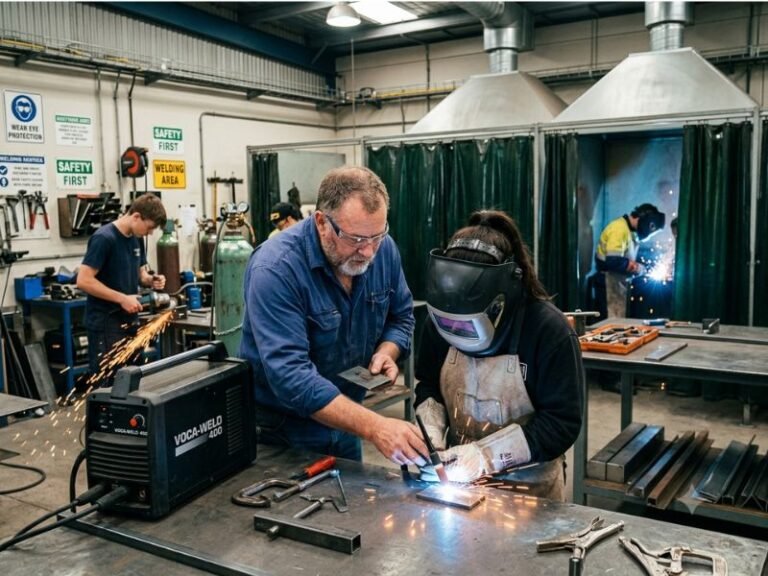
The practical training portion allows students to apply what they have learned using professional welding equipment. They practice creating welds, adjusting machine settings, preparing materials, and improving their techniques under instructor supervision.
Welding Training Facility vs Online Welding Training
Online welding training has become popular because it is affordable and convenient. Beginners can learn topics such as welding processes, safety rules, and equipment basics from home.
However, online training has limitations because students cannot physically practice welding or receive immediate feedback from an instructor.
A welding training facility provides advantages such as:
- Access to professional welding machines
- Real workshop experience
- Direct instructor guidance
- Hands-on skill development
- Opportunity to practice different welding processes
For example, a beginner may understand how MIG welding works after watching online lessons, but creating consistent weld beads requires actual practice with a welding machine.
Who Can Join a Welding Training Facility?
Welding training facilities are suitable for different types of learners, including:
- Complete beginners exploring welding careers
- Students interested in skilled trades
- Workers looking to upgrade their skills
- Professionals wanting additional certifications
- Hobby welders who want structured learning
Many facilities offer beginner-friendly programs, so previous welding experience is usually not required. Students typically start with safety fundamentals and basic techniques before moving into more advanced welding applications.
A good welding training facility provides a structured path that helps students progress from beginners to confident welders through proper instruction and repeated practice.
What Training Programs Do Welding Facilities Offer?
A professional welding training facility usually offers different programs based on a student’s experience level, career goals, and industry requirements. Some courses are designed for complete beginners, while others focus on advanced techniques, certification preparation, or specialized welding applications.
The best facilities provide a combination of classroom education and hands-on practice so students can develop both technical knowledge and practical welding skills.
1. Beginner Welding Training Programs
Beginner welding training programs are designed for people who have little or no previous welding experience. These courses focus on building a strong foundation before moving into more advanced techniques.
Common topics include:
- Welding safety procedures
- Personal protective equipment (PPE)
- Welding terminology
- Basic equipment operation
- Metal preparation techniques
- Introduction to welding processes
- Basic welding joints and positions
Students usually learn how to set up welding machines, prepare materials, and create basic welds while receiving feedback from instructors.
Beginner training is important because developing correct habits early can prevent problems later. Poor technique, unsafe practices, or incorrect machine settings can become difficult to fix if they are learned incorrectly at the beginning.
2. MIG Welding Training Programs
MIG welding, also known as Gas Metal Arc Welding (GMAW), is one of the most commonly taught welding processes because it is widely used in manufacturing, automotive repair, fabrication, and general metalwork.
A MIG welding training program usually covers:
- How MIG welding machines operate
- Wire selection and feeding systems
- Shielding gas setup
- Voltage and amperage adjustments
- Welding techniques
- Troubleshooting common problems
Students practice controlling travel speed, maintaining proper gun angle, and creating consistent weld beads.
Because MIG welding is considered beginner-friendly, many welding facilities introduce students to this process first before moving to more advanced methods.
3. TIG Welding Training Programs
TIG welding, or Gas Tungsten Arc Welding (GTAW), is known for producing precise and high-quality welds. It is commonly used for applications involving stainless steel, aluminum, and other specialty metals.
TIG welding programs typically teach:
- Tungsten electrode selection
- Torch control
- Filler rod techniques
- Heat management
- Welding thin materials
- Stainless steel and aluminum welding
Compared to MIG welding, TIG requires more coordination and control. Students need patience and practice to develop the precision required for high-quality TIG welds.
Many professional welding facilities offer TIG training for students who want to work in industries where accuracy and appearance are important.
4. Stick Welding Training Programs
Stick welding, also called Shielded Metal Arc Welding (SMAW), remains one of the most important welding processes in construction, maintenance, pipelines, and outdoor welding applications.
Stick welding training usually includes:
- Electrode selection
- Arc control
- Welding positions
- Proper starting and stopping techniques
- Outdoor welding practices
- Weld defect prevention
One major advantage of stick welding is that it performs well in challenging environments where wind or outdoor conditions may affect other welding processes.
Students interested in construction or industrial welding often benefit from learning stick welding techniques.
5. Advanced Welding Training Programs
Advanced welding programs are designed for students who already understand basic welding principles and want to improve their professional skills.
These programs may include:
- Blueprint reading
- Welding symbols
- Pipe welding
- Structural welding
- Welding inspection basics
- Welding codes and standards
- Advanced welding positions
- Certification test preparation
Advanced training helps welders meet industry requirements and qualify for specialized job opportunities.
Many professional welders continue training throughout their careers because welding technology, materials, and industry standards continue to change.
Choosing a welding training facility with multiple program options allows students to continue developing their skills as they gain experience and move toward their career goals.
What Facilities Should a Good Welding Training Center Have?
Choosing the right welding training facility is not only about finding a place that offers classes. The quality of the facility itself plays a major role in how effectively you learn welding skills. A professional training center should provide a safe learning environment, modern equipment, experienced instructors, and enough hands-on practice opportunities.
Before joining any welding program, it is important to evaluate the facility and make sure it provides the resources needed for proper skill development.
1. Modern Welding Equipment
A quality welding training facility should have a variety of welding machines and tools that allow students to practice different welding processes.
Important equipment may include:
- MIG welding machines
- TIG welding machines
- Stick welding machines
- Flux-cored welding equipment
- Plasma cutters
- Welding positioners
- Cutting and metal preparation tools
Access to different equipment helps students understand how various welding processes work and prepares them for real workplace environments.
A facility that only focuses on one type of welding may limit a student’s career opportunities. Professional welders often need to understand multiple processes because different industries require different welding methods.
For example:
- Construction companies may require stick welding skills.
- Automotive and fabrication shops often use MIG welding.
- Aerospace and precision industries may require TIG welding.
Training on industry-standard equipment also helps students become more comfortable when they enter a professional workplace.
2. Proper Safety Environment
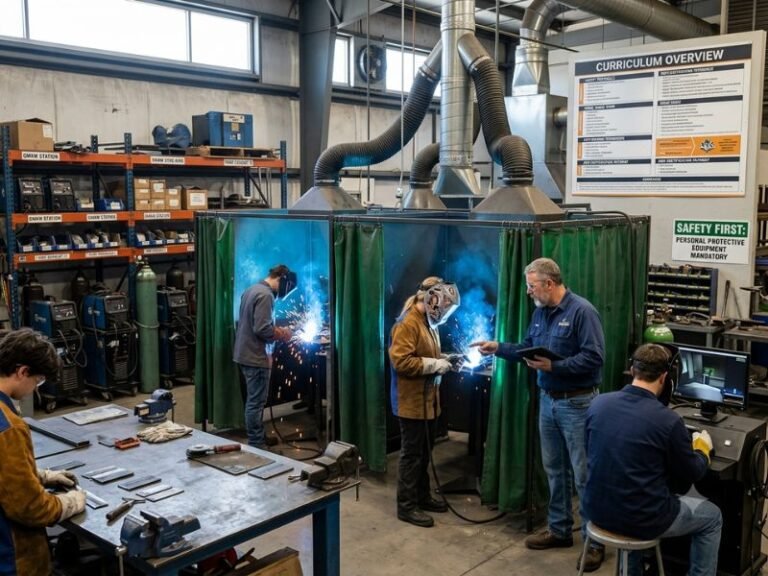
Safety should be one of the highest priorities in any welding training facility. Welding involves heat, sparks, fumes, electrical hazards, and intense light exposure, so students must learn safe practices from the beginning.
A professional facility should provide:
- Proper ventilation systems
- Fire prevention equipment
- Safe welding booths or workstations
- Emergency safety procedures
- Personal protective equipment guidance
Good facilities teach safety as part of everyday training rather than treating it as a separate topic.
Students should learn:
- How to use welding helmets correctly
- Proper protective clothing requirements
- Safe handling of gas cylinders
- How to prevent workplace accidents
- How to maintain a clean and organized workspace
Developing strong safety habits early helps students become more responsible and professional welders.
3. Experienced Welding Instructors
The quality of instructors can significantly affect your learning experience. A good welding instructor does more than explain techniques; they help students understand mistakes and improve their skills.
Experienced instructors should have:
- Professional welding experience
- Knowledge of industry standards
- Ability to teach beginners
- Understanding of welding certifications
- Practical problem-solving skills
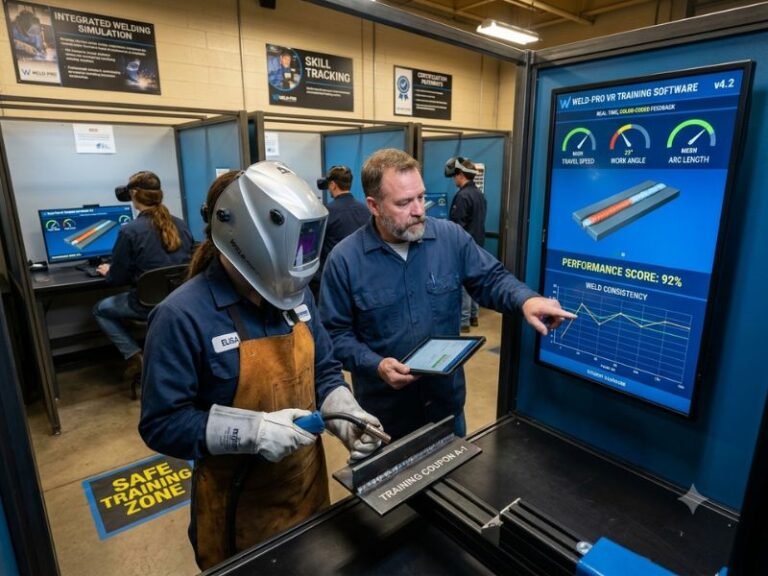
Welding often involves small details that are difficult for beginners to recognize. An instructor can identify issues such as incorrect torch angle, poor travel speed, improper settings, or weak welding technique.
Personal feedback allows students to improve faster than learning alone.
4. Enough Hands-On Practice Area
Welding is a skill developed through repetition. A good welding training facility should provide enough workspace and practice time for students to spend significant time actually welding.
Look for facilities that offer:
- Individual welding stations
- Access to practice materials
- Multiple practice projects
- Time for skill improvement
- Realistic workshop environments
A program that spends most of the time on classroom theory and very little time practicing may not provide enough experience for career preparation.
The goal of welding training is not only to understand welding concepts but also to develop the confidence and control needed to create quality welds.
5. Industry-Relevant Training Environment
The best welding training facilities try to simulate real workplace conditions. This helps students understand what professional welding jobs are actually like.
A career-focused facility may include:
- Real fabrication projects
- Industry-standard procedures
- Workplace safety practices
- Quality inspection methods
- Production-style training
Learning in a realistic environment makes the transition from training to employment much easier.
Before enrolling, consider visiting the facility if possible. Observing the workshop, equipment condition, student activity, and overall environment can help you determine whether it is the right place to develop your welding career.
Benefits of Joining a Professional Welding Training Facility
Joining a professional welding training facility provides advantages that are difficult to achieve through self-study alone. While online resources and free tutorials can help you understand welding concepts, a structured training environment helps you develop practical skills faster and with fewer mistakes.
A good facility gives students access to equipment, experienced instructors, and a learning system designed to prepare them for real-world welding work.
1. Hands-On Skill Development
The biggest advantage of a welding training facility is the opportunity to practice with real equipment. Welding is a practical trade, and skill improvement depends heavily on repetition.
During hands-on training, students learn how to:
- Set up welding machines correctly
- Control welding speed and movement
- Maintain proper torch or electrode angles
- Create stronger and cleaner welds
- Work with different metals and thicknesses
An instructor can observe your technique and provide corrections immediately. This feedback helps prevent beginners from developing bad habits that can be difficult to fix later.
Hands-on practice also builds confidence. Many beginners understand welding theory but feel uncertain when they first operate a welding machine. A professional facility provides a controlled environment where students can practice safely.
2. Faster Learning Progress
Learning welding independently can take longer because beginners often struggle to identify mistakes on their own. A professional training facility provides a structured learning path that helps students progress more efficiently.
Instead of randomly learning different techniques, students usually follow a planned curriculum that covers:
- Safety fundamentals
- Equipment operation
- Basic welding techniques
- Advanced applications
- Industry practices
Instructors can adjust training based on a student’s skill level and provide guidance on areas that need improvement.
This organized approach helps students avoid wasting time and focus on developing the skills that matter most.
3. Preparation for Welding Certifications
Many welding careers require proof of skill through certification or qualification testing. A professional welding training facility can help students prepare for these requirements.
Certification-focused training may include:
- Welding procedure practice
- Test preparation
- Weld quality evaluation
- Industry standards
- Inspection requirements
While training does not automatically guarantee certification, practicing in a professional environment increases the chances of successfully passing welding tests.
Many employers prefer candidates who can demonstrate verified welding abilities because certification provides confidence that a welder understands quality and safety requirements.
4. Better Career Opportunities
A professional welding training facility can help students prepare for employment in industries that depend on skilled welders.
Career opportunities may include:
- Manufacturing welding
- Construction welding
- Automotive fabrication
- Structural welding
- Shipbuilding
- Maintenance and repair
- Metal fabrication
Many facilities also provide career support, such as:
- Resume assistance
- Interview preparation
- Employer connections
- Job placement guidance
Building professional skills through structured training can make it easier to compete for welding jobs.
5. Learning Industry Standards
Professional welders must follow specific procedures and quality standards. A training facility introduces students to the expectations they will face in the workplace.
Students may learn about:
- Welding codes and procedures
- Quality control
- Weld inspection basics
- Workplace safety standards
- Proper documentation
Understanding these standards helps new welders become more valuable employees because they know how to produce consistent and reliable work.
6. Access to Professional Guidance
One of the most valuable benefits of joining a welding training facility is learning from experienced professionals.
Instructors can share practical knowledge gained from years of industry experience, including:
- How to solve common welding problems
- How to improve weld appearance and strength
- How to work efficiently
- How to avoid common mistakes
This type of guidance is difficult to get from online learning alone.
For anyone serious about developing welding skills, a professional training facility provides the combination of education, practice, and support needed to build a strong foundation for a successful welding career.
How Much Does Welding Training at a Facility Cost?
The cost of welding training at a facility can vary widely depending on the program type, location, training duration, equipment provided, and whether certification preparation is included. Some students may spend only a few hundred dollars for a short introductory course, while comprehensive career-focused programs can cost several thousand dollars.
Before choosing a welding training facility, it is important to understand what is included in the cost. The cheapest option is not always the best choice if it provides limited practice time or lacks experienced instructors.
Factors That Affect Welding Training Costs
Several factors influence how much you will pay for welding education.
1. Type of Training Program
Short beginner courses are usually less expensive because they focus on basic skills and welding fundamentals.
These programs may cover:
- Welding safety
- Equipment introduction
- Basic welding techniques
- Introduction to MIG, TIG, or Stick welding
Career training programs cost more because they provide more extensive education, longer practice periods, and preparation for professional welding jobs.
2. Program Length
The duration of the program is another major factor.
A short welding workshop may last:
- A few days
- Several weeks
- A few months
Longer programs generally cost more because students receive:
- More classroom instruction
- More hands-on practice
- More access to equipment
- More advanced training
However, longer programs often provide better preparation for entering the welding industry.
3. Equipment and Materials Included
Some welding facilities include materials, safety equipment, and tool usage in their tuition fees, while others require students to purchase their own supplies.
Ask whether the program includes:
- Welding materials
- Protective equipment
- Practice metals
- Machine usage fees
- Certification testing fees
Understanding these details helps you compare programs accurately.
4. Certification Preparation
Programs designed to prepare students for welding certifications are usually more expensive because they include additional training and evaluation.
Certification-focused courses may provide:
- Practice welding tests
- Industry-specific training
- Instructor evaluation
- Guidance on certification requirements
Although these programs may cost more, they can improve career opportunities by helping students meet employer expectations.
Ways to Reduce Welding Training Costs
If the cost of welding school is a concern, there are several ways to make training more affordable.
Scholarships and Financial Assistance
Some welding schools, community colleges, and organizations offer financial assistance for students entering skilled trades.
Workforce Development Programs
Many regions provide workforce training programs designed to help people develop job skills. These programs may offer free or discounted welding education.
Employer-Sponsored Training
Some companies provide training opportunities for employees because skilled welders are in demand. Entry-level workers may receive training while gaining workplace experience.
Start With Free Resources
Before paying for a program, beginners can use free welding training resources to learn basic concepts and determine whether welding is the right career choice.
Learning fundamentals beforehand can also help students get more value from paid training.
Is Welding Training Worth the Cost?
For many people, professional welding training is a worthwhile investment because it provides skills that can lead to long-term career opportunities.
A quality welding facility offers benefits that are difficult to achieve through self-learning, including:
- Hands-on practice
- Professional feedback
- Access to equipment
- Certification preparation
- Career guidance
The right training program can help beginners avoid common mistakes and develop skills that employers value.
Instead of focusing only on the lowest price, consider the overall value of the program, including instructor quality, practice opportunities, equipment availability, and career support.
How Long Does Welding Training Take?
The length of welding training depends on the type of program, your previous experience, the welding process you want to learn, and your career goals. Some beginners can learn basic welding skills within a few weeks, while becoming a professional welder capable of handling complex projects may require several months or even years of continued practice.
A welding training facility usually offers programs with different time commitments, allowing students to choose a path that matches their needs.
Short-Term Welding Training Programs
Short-term programs are designed for beginners who want to learn the fundamentals quickly or explore welding before committing to a longer course.
These programs may last:
- A few days
- Several weeks
- One to three months
Students typically learn:
- Welding safety
- Basic equipment operation
- Introduction to welding processes
- Simple welding techniques
- Basic metal preparation
Short courses are useful for hobbyists, beginners, or individuals who want to understand whether welding is the right career choice.
However, short-term training usually provides only foundational skills and may not be enough for someone seeking a full-time welding career.
Career-Focused Welding Training Programs
Career training programs are designed to prepare students for professional welding jobs. These programs usually provide more extensive classroom instruction and hands-on practice.
A typical career-focused program may take:
- Several months
- Six months to one year
Students often learn:
- MIG welding
- TIG welding
- Stick welding
- Welding positions
- Blueprint reading
- Welding inspection basics
- Industry safety standards
- Certification preparation
The longer training period allows students to practice more and develop the consistency needed for workplace welding.
Advanced Welding Training
Experienced welders may continue their education through advanced training programs. These courses focus on specialized skills required for certain industries.
Advanced training may include:
- Pipe welding
- Structural welding
- Advanced TIG welding
- Welding codes and procedures
- Specialized materials
- Welding quality control
The time required depends on the complexity of the skill and the student’s current experience level.
Factors That Affect How Quickly You Learn Welding
Not every student progresses at the same speed. Several factors influence how long it takes to become comfortable with welding.
1. Practice Time
Welding is a skill-based trade, and regular practice is one of the biggest factors affecting improvement.
A student who practices several hours every week will usually progress faster than someone who only attends occasional classes.
Consistent practice helps develop:
- Hand control
- Proper movement
- Machine adjustment skills
- Welding confidence
2. Type of Welding Process
Some welding processes have a shorter learning curve, while others require more precision.
For example:
- MIG welding is often easier for beginners to start with.
- Stick welding requires more control and technique.
- TIG welding usually takes longer because it requires greater precision.
The welding process you choose can influence your training timeline.
3. Previous Mechanical or Technical Experience
People with experience in areas such as fabrication, automotive repair, machining, or construction may learn certain concepts faster because they already understand tools, materials, and workplace practices.
However, anyone can learn welding with proper instruction and practice.
4. Quality of Training Facility
The quality of your welding training facility can significantly affect your progress.
A good facility provides:
- Experienced instructors
- Modern equipment
- Enough practice time
- Structured lessons
- Individual feedback
Poor-quality training may slow progress because students receive limited practice or unclear instruction.
How Long Before You Can Get a Welding Job?
The timeline for becoming job-ready depends on the type of welding work you want to do.
For entry-level welding positions, many students become prepared after completing a basic or career-focused training program combined with regular practice.
However, specialized welding jobs may require:
- Additional training
- Industry certifications
- More hands-on experience
- Advanced skills
The goal of a welding training facility is not just to teach students how to make a weld, but to help them develop reliable skills that meet workplace expectations.
Welding Training Facility vs Welding School: Is There a Difference?
The terms welding training facility and welding school are often used interchangeably because both provide welding education. In many cases, they offer similar programs and training methods. However, there can be differences in their focus, structure, and the type of students they serve.
Understanding these differences can help you choose the right option based on your goals, available time, and career plans.
What Is a Welding School?
A welding school is typically an educational institution that provides structured welding programs designed to prepare students for professional careers.
Welding schools often offer:
- Complete beginner-to-advanced programs
- Classroom instruction
- Hands-on laboratory training
- Certification preparation
- Career support services
These programs are usually designed for students who want to enter the welding industry as a full-time career.
A welding school curriculum may include:
- Welding safety
- Welding processes
- Blueprint reading
- Metallurgy basics
- Welding inspection
- Industry standards
- Welding certifications
The focus is often on providing a complete education that prepares students for employment.
What Is a Welding Training Facility?
A welding training facility usually focuses more on practical skill development and hands-on experience.
These facilities may provide:
- Short-term welding courses
- Skill improvement programs
- Industry-specific training
- Certification preparation
- Equipment-based practice
A welding training facility can be useful for:
- Beginners learning basic skills
- Workers upgrading their abilities
- Professionals learning new welding processes
- Hobbyists wanting structured instruction
The main focus is often developing practical welding ability through repeated practice.
Key Differences Between Welding Training Facilities and Welding Schools
| Welding Training Facility | Welding School |
| Often focused on practical skills | Usually offers complete education programs |
| May offer short-term courses | Often provides longer career programs |
| Skill improvement focused | Career preparation focused |
| Flexible training options | Structured academic schedule |
| Common for beginners and professionals | Common for students entering the trade |
Which Option Is Better for Beginners?
For someone completely new to welding, either option can work depending on the program quality.
A beginner should look for a program that provides:
- Safety training
- Hands-on practice
- Experienced instructors
- Access to different welding equipment
- Proper skill evaluation
The name of the institution matters less than the quality of training provided.
A well-equipped welding training facility can provide excellent beginner education, while a poor-quality welding school may not provide enough practical experience.
Which Option Is Better for Career Advancement?
If your goal is to become a professional welder, choose a program that offers:
- Extensive hands-on practice
- Industry-standard equipment
- Certification preparation
- Job-related training
Many employers care more about your actual welding ability and certifications than whether you attended a school or training facility.
The most important factor is whether the program helps you develop the skills needed for real welding work.
How to Choose the Best Welding Training Facility
Choosing the right welding training facility requires careful research. A good facility can help you build strong skills, while the wrong choice may waste your time and money.
Before enrolling, consider the following factors.
1. Review the Training Curriculum
A quality welding facility should have a clear curriculum that covers both theory and practical skills.
Look for programs that include:
- Welding safety
- Equipment operation
- Multiple welding processes
- Hands-on projects
- Industry standards
- Certification preparation
Avoid programs that focus only on classroom lessons without enough practical training.
2. Check Instructor Experience
The quality of instruction has a major impact on your learning progress.
Research whether instructors have:
- Professional welding experience
- Industry knowledge
- Teaching experience
- Certification background
Experienced instructors can provide valuable advice that comes from real workplace situations.
3. Visit the Facility Before Joining
If possible, visit the welding training facility before enrolling.
Pay attention to:
- Condition of welding equipment
- Cleanliness of the workspace
- Safety practices
- Number of students per instructor
- Available practice areas
A professional facility should look organized, safe, and suitable for hands-on learning.
4. Ask About Hands-On Practice Time
Because welding is a practical trade, practice time is one of the most important factors.
Ask questions such as:
- How much time will students spend welding?
- Does each student have access to equipment?
- Are practice materials included?
- Will students complete real projects?
A good program should provide enough opportunity to build confidence through repetition.
5. Check Certification and Career Support
If your goal is employment, find out whether the facility helps students prepare for industry requirements.
Look for:
- Welding certification preparation
- Testing support
- Job placement assistance
- Resume guidance
- Employer connections
Career-focused support can make the transition from training to employment easier.
Choosing the right welding training facility is an important step toward building a successful welding career. Focus on training quality, hands-on experience, instructor expertise, and career preparation rather than choosing a program based only on price.
Frequently Asked Questions About Welding Training Facilities
What Is a Welding Training Facility?
A welding training facility is a specialized center where students learn welding skills through classroom instruction and hands-on practice. These facilities provide access to welding equipment, training materials, and experienced instructors who help students develop practical skills.
Unlike online-only learning, a welding training facility allows students to practice with real machines and receive direct feedback on their welding techniques.
Can Beginners Join a Welding Training Facility?
Yes, most welding training facilities offer programs designed for complete beginners. You do not usually need previous welding experience to start learning.
Beginner programs typically start with:
- Welding safety
- Equipment basics
- Welding terminology
- Basic welding techniques
- Metal preparation
Students gradually move from simple exercises to more advanced welding applications as their skills improve.
How Much Does Welding Training at a Facility Cost?
The cost of welding training depends on factors such as program length, location, equipment access, and whether certification preparation is included.
Short introductory courses may cost less, while career-focused welding programs usually require a larger investment.
Before enrolling, check what the tuition includes, such as:
- Training materials
- Equipment use
- Practice time
- Safety gear requirements
- Certification testing preparation
Many students reduce costs through scholarships, workforce programs, or employer-sponsored training opportunities.
Do Welding Training Facilities Provide Certification?
Some welding training facilities help students prepare for certification tests, but completing a training program does not always mean you automatically receive a professional certification.
Certification usually requires:
- Passing a welding test
- Meeting industry requirements
- Evaluation by an approved examiner
A good facility can prepare you by teaching proper techniques, welding procedures, and industry standards needed for certification.
How Long Does Welding Training Take?
The length of welding training depends on the program and your goals.
Basic training may take a few weeks to several months, while career-focused programs can take six months or longer.
The time required depends on:
- Practice frequency
- Welding process being learned
- Previous experience
- Training quality
Regular hands-on practice is the most important factor in developing welding skills.
Is a Welding Training Facility Worth the Cost?
For many students, a welding training facility is a worthwhile investment because it provides benefits that are difficult to get through self-learning.
A professional facility offers:
- Hands-on experience
- Instructor feedback
- Access to equipment
- Structured learning
- Career preparation
While free resources can help you learn basic concepts, a quality training facility can help you develop practical skills faster and prepare for professional opportunities.
Conclusion: Choosing the Right Welding Training Facility
A welding training facility can provide the foundation needed to build a successful career in welding. From beginner programs to advanced skill development, these facilities help students learn through a combination of technical education and hands-on practice.
The best facility is not necessarily the cheapest option. Instead, focus on factors such as instructor experience, equipment quality, safety standards, practice opportunities, and career support.
Whether you are starting from zero or improving existing welding skills, choosing the right training environment can make a significant difference in your progress. With proper training, consistent practice, and dedication, a welding training facility can help you develop the confidence and skills needed to succeed in the welding industry.