Online Welding Training: Courses, Benefits, and Career Tips
Learning welding used to require access to a physical workshop, expensive equipment, and in-person instruction. However, the growth of online education has changed how beginners can start their welding journey. Today, online welding training allows students to learn welding fundamentals, safety practices, equipment knowledge, and different welding processes from anywhere with an internet connection.
While researching modern welding education methods, I found that many beginners use online training as their first step before investing in tools or joining a professional welding program. Digital courses, video demonstrations, and online resources help new learners understand the basics and build confidence before getting hands-on experience.
Welding continues to play an important role in industries such as construction, manufacturing, automotive repair, shipbuilding, and metal fabrication. According to the U.S. Bureau of Labor Statistics, skilled welding workers remain in demand because many industries rely on qualified professionals to build, repair, and maintain metal structures and equipment.
However, online welding training has both advantages and limitations. It can teach important concepts, but welding is ultimately a hands-on trade that requires real practice to master.
In this guide, I will explain what online welding training includes, what skills you can learn, the benefits and limitations, and how to combine online education with practical experience to build a successful welding career.
What Is Online Welding Training?
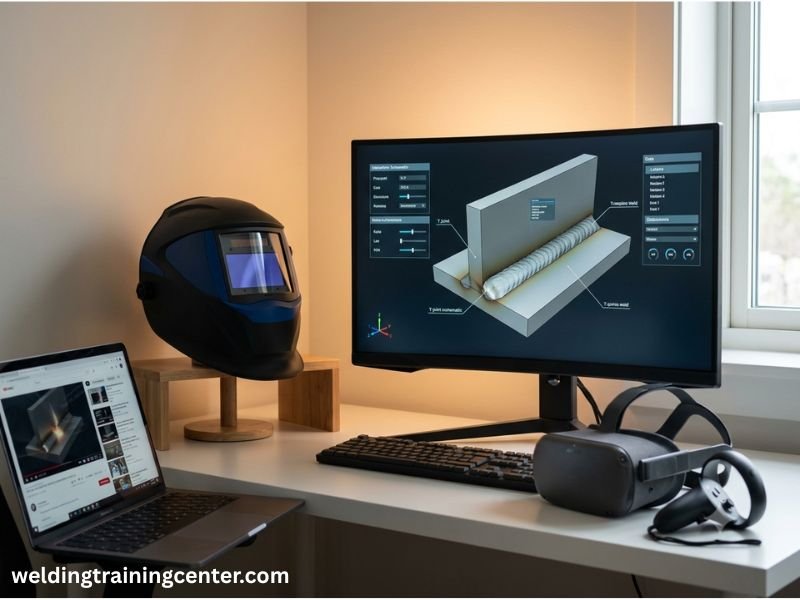
Online welding training is a digital learning method that allows students to study welding concepts, techniques, and safety practices through internet-based resources. Instead of attending a traditional classroom every day, learners can access lessons through online courses, videos, tutorials, digital guides, and virtual demonstrations.
The main purpose of online welding training is to provide beginners and experienced welders with convenient access to welding education. It helps students understand the theory behind welding processes and prepares them for hands-on practice with real equipment.
A quality online welding course usually covers topics such as:
- Welding safety procedures
- Welding terminology
- Different welding processes
- Equipment operation
- Metal preparation
- Welding techniques
- Common welding problems and solutions
For beginners, online training is often the first step toward understanding how welding works. Before using a welding machine, it is important to understand basic concepts such as heat control, welding positions, joint types, and proper safety procedures.
Online Welding Training vs Traditional Welding Training
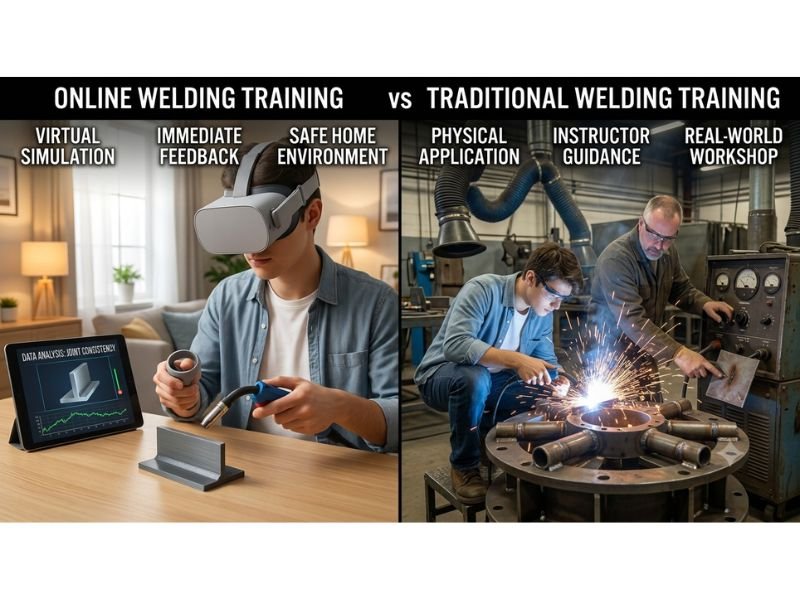
Online welding training and traditional welding classes both have advantages, but they provide different learning experiences.
Online Welding Training:
- Allows flexible learning from anywhere
- Usually costs less than in-person programs
- Lets students repeat lessons multiple times
- Provides easy access to educational materials
- Focuses mainly on theory and demonstrations
Traditional Welding Training:
- Provides access to real welding equipment
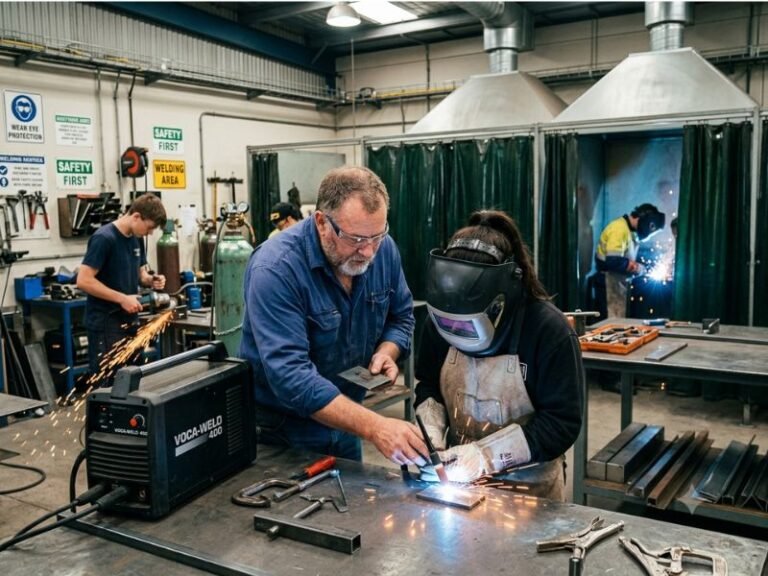
- Offers direct instructor feedback
- Allows hands-on practice
- Creates a workshop learning environment
- Helps students develop physical welding skills
For example, an online course can teach you how MIG welding works, explain machine settings, and show proper techniques. However, creating consistent weld beads and controlling the welding torch require real practice with a welding machine.
Who Can Benefit From Online Welding Training?
Online welding training is useful for different types of learners, including:
Beginners:
People with no welding experience can use online courses to understand basic concepts before purchasing equipment or joining a training program.
Students Preparing for Welding School:
Online education can help students learn terminology and processes before starting hands-on classes.
Experienced Welders:
Professionals can use online resources to learn new techniques, review welding standards, or improve specific skills.
Hobby Welders:
Individuals interested in DIY metal projects can learn safety and basic welding knowledge through online lessons.
Online welding training is a valuable educational tool, but it works best when combined with practical experience. Learning the theory first can make hands-on training more effective and help students develop welding skills more efficiently.
What Can You Learn Through Online Welding Training?
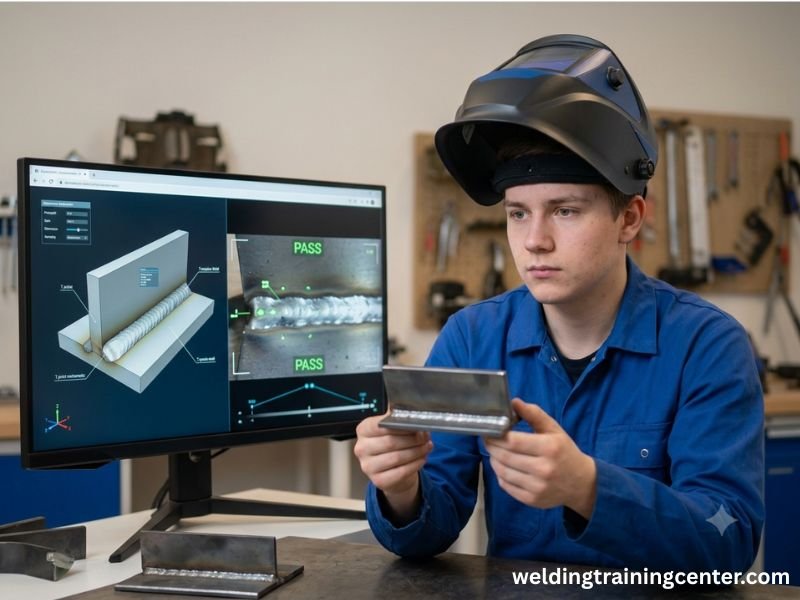
Online welding training can teach a wide range of skills, from basic welding concepts to more advanced techniques. Although practical experience is necessary to become a skilled welder, online education provides the knowledge foundation needed to understand welding processes and work more effectively in a hands-on environment.
A good online welding course should cover safety, equipment, welding methods, and problem-solving techniques. Below are some of the most important areas beginners can learn through online training.
1. Welding Safety
Safety is the first and most important lesson in any welding education program. Before learning how to create welds, students need to understand the risks involved and how to protect themselves.
Online welding training commonly teaches:
- Proper personal protective equipment (PPE)
- Welding helmet and lens requirements
- Fire prevention practices
- Welding fume awareness
- Electrical safety
- Safe handling of welding equipment
- Proper workspace setup
Welding involves intense heat, sparks, ultraviolet radiation, and potentially harmful fumes. Understanding these hazards before entering a workshop helps beginners develop safe working habits.
Many professional welders consider safety knowledge just as important as technical ability because a skilled welder must know how to produce quality work while protecting themselves and others.
2. Welding Fundamentals
Before operating a welding machine, beginners need to understand the basic principles behind the welding process.
Online training can explain important concepts such as:
- How welding creates a permanent metal joint
- How heat affects different metals
- Welding terminology
- Types of welding joints
- Welding positions
- Factors that affect weld quality
Students can learn why welding problems happen and how different settings influence the final result.
For example, incorrect heat settings can cause problems such as poor penetration, excessive spatter, or damage to thin materials. Understanding these concepts helps beginners make better decisions when they begin practicing.
3. Different Welding Processes
One of the biggest advantages of online welding training is that students can learn about multiple welding processes before choosing which area they want to practice.
MIG Welding
MIG welding, also known as Gas Metal Arc Welding (GMAW), is one of the most popular processes for beginners.
Online lessons can teach:
- How MIG machines work
- Wire feeding systems
- Shielding gas basics
- Machine settings
- Common MIG welding mistakes
MIG welding is widely used in automotive repair, fabrication, and manufacturing because it is efficient and relatively easy to learn.
TIG Welding
TIG welding, or Gas Tungsten Arc Welding (GTAW), is known for producing precise and clean welds.
Online training can explain:
- TIG equipment components
- Tungsten electrode selection
- Torch control techniques
- Filler metal use
- Applications for stainless steel and aluminum
Because TIG welding requires excellent control, online education can help students understand the process before attempting practical training.
Stick Welding
Stick welding, also called Shielded Metal Arc Welding (SMAW), is commonly used in construction, maintenance, and outdoor applications.
Online courses can cover:
- Electrode types
- Arc control basics
- Welding positions
- Common stick welding techniques
- Typical industrial applications
Understanding stick welding theory can help students prepare for hands-on practice.
Flux-Cored Welding
Flux-cored arc welding is often used for heavy fabrication and construction projects.
Online training can teach:
- How flux-cored welding works
- Equipment setup
- Advantages and limitations
- Suitable applications
Learning the differences between welding processes helps students choose the right method for their goals.
4. Welding Equipment Knowledge
Understanding welding equipment is another important skill that can be learned online.
Courses may explain:
- Welding machines
- Welding guns and torches
- Electrodes and filler materials
- Welding wires
- Gas systems
- Clamps and hand tools
- Measurement tools
Equipment knowledge helps beginners make better decisions when buying tools or preparing for practical training.
Before investing in welding equipment, understanding what each tool does can prevent unnecessary purchases and help beginners choose equipment that matches their needs.
Online welding training provides a strong foundation by teaching the knowledge behind the skill. When combined with hands-on practice, it helps beginners learn faster, avoid common mistakes, and approach welding with greater confidence.
Benefits of Online Welding Training
Online welding training has become a popular learning option because it makes welding education more accessible, flexible, and affordable. While it cannot fully replace hands-on practice, it provides many advantages for beginners and experienced welders who want to improve their knowledge.
By learning online, students can build a strong theoretical foundation before entering a workshop or investing in welding equipment.
1. Learn at Your Own Pace
One of the biggest advantages of online welding training is flexibility. Traditional classes usually follow a fixed schedule, but online courses allow students to learn according to their own availability.
This is especially helpful for:
- Working professionals
- Students with busy schedules
- Beginners learning as a hobby
- People preparing for formal welding programs
Students can pause lessons, repeat difficult sections, and review important topics whenever needed.
For example, if a beginner struggles to understand welding machine settings or joint types, they can revisit the lesson multiple times until the concept becomes clear.
This self-paced learning approach allows students to build knowledge without feeling rushed.
2. More Affordable Learning Option
Cost is one of the main reasons many beginners consider online welding training. Traditional welding programs often require tuition fees, transportation costs, and additional expenses for materials and equipment.
Online training can reduce these costs by providing access to:
- Video lessons
- Digital learning materials
- Welding demonstrations
- Technical guides
- Expert explanations
Many free and low-cost resources are available, making welding education more accessible to people who may not be ready to invest in a full training program.
However, students should remember that online training saves money mainly on education costs. Developing actual welding skills will still require access to equipment and hands-on practice.
3. Build Knowledge Before Hands-On Practice
Many beginners make the mistake of purchasing welding equipment or starting projects without understanding the basics. Online welding training helps learners prepare before working with real tools.
Before entering a workshop, students can learn:
- Welding safety requirements
- Equipment functions
- Welding terminology
- Different welding processes
- Common beginner mistakes
Having this knowledge makes practical training more effective because students already understand the basic concepts.
For example, someone who learns MIG welding theory online will have a better understanding of machine settings, wire selection, and shielding gas before practicing with a real MIG welder.
4. Access to Experienced Welders and Instructors
Online welding training gives students access to knowledge from experienced professionals who may not be available locally.
Many online courses are created by:
- Professional welders
- Welding instructors
- Industry experts
- Experienced fabricators
These instructors can share practical advice about:
- Improving welding techniques
- Avoiding common mistakes
- Selecting equipment
- Solving welding problems
Learning from experienced professionals can help beginners understand real-world welding situations beyond basic textbook information.
5. Review Lessons Anytime
Unlike traditional classroom lessons, online welding training allows students to return to learning materials whenever they need them.
This is useful because welding involves many technical details that may require repeated study.
Students can review:
- Welding procedures
- Equipment explanations
- Safety instructions
- Demonstration videos
- Troubleshooting methods
The ability to revisit lessons helps reinforce learning and improves knowledge retention.
6. Prepare for Formal Welding Training
Online welding training is also valuable for students planning to attend a welding school or training facility.
Learning basic concepts beforehand can help students:
- Understand lessons faster
- Ask better questions
- Feel more confident during practice
- Focus on improving technique
Many successful learners combine online education with hands-on training because each method provides different benefits.
Online welding training provides the knowledge foundation, while practical training develops the physical skills needed to become a capable welder.
Limitations of Online Welding Training
Although online welding training offers many benefits, it is important to understand its limitations. Welding is a practical trade that depends heavily on physical skills, equipment experience, and hands-on practice. Online education can teach the theory behind welding, but it cannot completely replace working with real tools and materials.
Understanding these limitations will help beginners create a more realistic learning plan.
1. Lack of Hands-On Experience
The biggest limitation of online welding training is the lack of physical practice. Welding requires developing muscle memory, hand control, and coordination, which can only improve through actual welding.
Online lessons can show you:
- Proper torch movement
- Electrode techniques
- Machine settings
- Welding positions
However, watching someone perform a weld is different from creating one yourself.
A beginner may understand the correct technique but still struggle with:
- Maintaining consistent travel speed
- Controlling heat
- Keeping the correct angle
- Creating strong and clean welds
These skills develop through repetition and practice with real equipment.
2. Limited Instructor Feedback
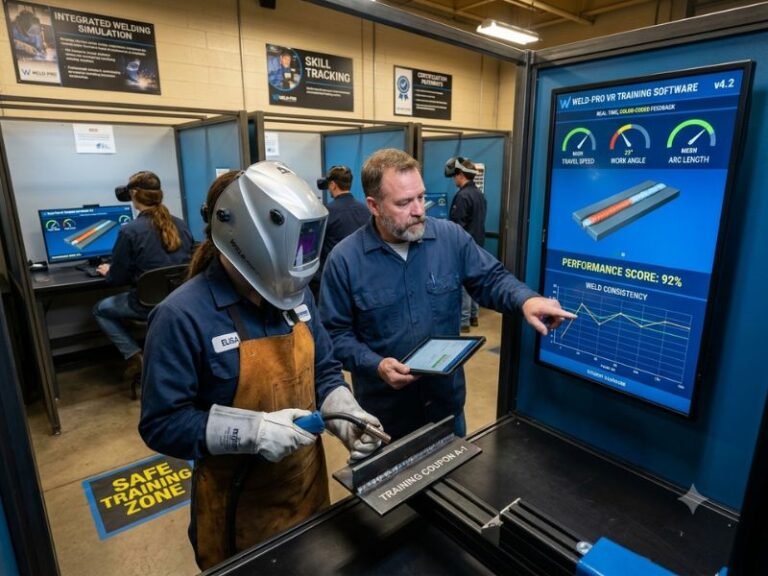
In a traditional welding class or training facility, instructors can observe your work and immediately identify mistakes.
With online welding training, feedback is often limited.
An instructor in a physical classroom can notice problems such as:
- Incorrect hand position
- Poor welding technique
- Wrong machine settings
- Unsafe working habits
Without direct feedback, beginners may continue practicing incorrectly and develop habits that are difficult to change later.
Some online courses offer virtual support or community groups, but this is usually not the same as having an instructor beside you during practice.
3. No Access to Professional Equipment
Another limitation is that online students may not have access to the same equipment used in professional welding environments.
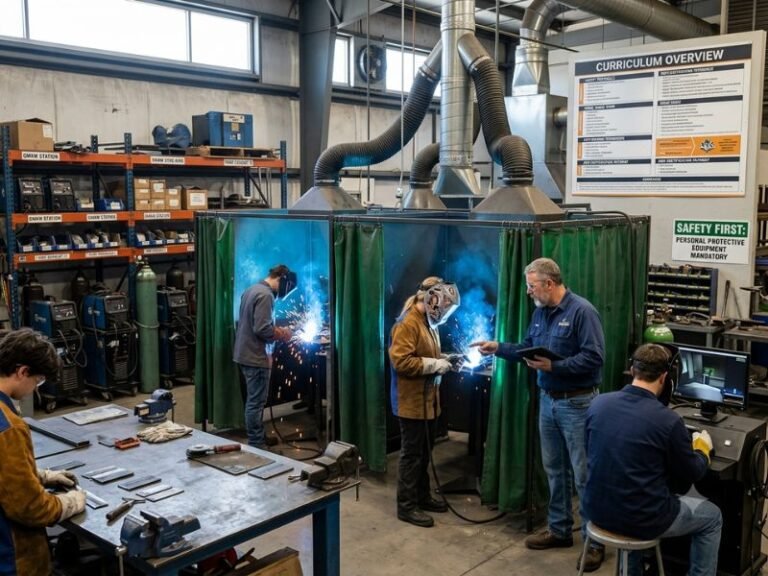
Professional training facilities often provide:
- MIG welding machines
- TIG welders
- Stick welding equipment
- Welding booths
- Cutting tools
- Industry-standard materials
Beginners learning online may need to purchase equipment or find another way to practice.
Choosing the right welding equipment can also be challenging without prior experience. Understanding machine specifications, power requirements, and suitable applications requires additional research.
4. Difficulty Learning Advanced Welding Skills
Basic welding concepts can be explained effectively online, but advanced techniques usually require direct instruction and supervised practice.
Advanced skills such as:
- Pipe welding
- Structural welding
- Welding inspection
- Complex joint preparation
- Code-compliant welding
often require professional training and evaluation.
Industries with strict quality standards need welders who can consistently produce reliable welds under specific requirements. This level of skill usually comes from extensive hands-on experience.
5. Certification Limitations
Online welding training can help students prepare for certification exams by teaching theory and procedures, but most professional welding certifications require practical testing.
Certification testing often evaluates:
- Actual welding performance
- Weld quality
- Ability to follow procedures
- Safety practices
A student may understand welding concepts online but still need practical experience before successfully passing a certification test.
The Best Approach: Combine Online Learning With Hands-On Practice
The most effective way to learn welding is to combine online education with real-world experience.
A strong learning path may look like this:
- Learn welding basics through online training.
- Study safety procedures and equipment knowledge.
- Practice with real welding equipment.
- Receive feedback from experienced welders.
- Join a welding training facility or apprenticeship program.
- Work toward certifications if needed.
Online welding training is a valuable starting point because it makes welding knowledge more accessible. However, practical experience is what transforms knowledge into real welding ability.
Online Welding Training vs Traditional Welding Classes
When choosing how to learn welding, beginners often compare online welding training with traditional welding classes. Both options have advantages, but they provide different learning experiences.
Online training focuses mainly on knowledge, demonstrations, and flexibility, while traditional classes provide direct instruction and hands-on practice. Understanding the differences can help you choose the best learning method based on your goals, budget, and available time.
| Online Welding Training | Traditional Welding Classes |
| Learn from anywhere with internet access | Attend a physical classroom or workshop |
| Flexible schedule | Fixed class schedule |
| Usually lower cost | Higher tuition and facility costs |
| Focuses on theory and demonstrations | Focuses on theory plus hands-on practice |
| Lessons can be repeated anytime | Instructor-led learning |
| Limited personal feedback | Immediate instructor guidance |
| Requires access to your own equipment for practice | Provides welding equipment and materials |
Advantages of Online Welding Training
Online welding training is a great option for people who want to start learning without a major financial commitment.
Flexibility
The biggest advantage is convenience. Students can study whenever their schedule allows, making online courses suitable for:
- Full-time workers
- Students
- Hobby welders
- Beginners exploring welding as a career
You can learn at your own pace and spend extra time on topics that are difficult to understand.
Lower Cost
Online courses are usually more affordable than traditional programs because they do not require physical classrooms, workshops, or daily instructor involvement.
Students can save money while learning:
- Welding theory
- Safety principles
- Equipment basics
- Process differences
This makes online training a good first step for people who want to explore welding before investing in a complete program.
Easy Access to Learning Materials
Online students can access educational resources from almost anywhere.
Common resources include:
- Video demonstrations
- Digital manuals
- Welding guides
- Technical explanations
- Practice recommendations
These materials can be reviewed repeatedly, which helps improve understanding.
Advantages of Traditional Welding Classes
Traditional welding classes provide benefits that online training cannot fully replace.
Hands-On Equipment Practice
The biggest advantage of in-person training is access to real welding equipment.
Students can practice using:
- MIG welders
- TIG welders
- Stick welders
- Cutting tools
- Professional workstations
This practical experience is essential because welding is a skill that improves through repetition.
Direct Instructor Feedback
Instructors can watch students weld and provide immediate corrections.
They can identify issues such as:
- Incorrect technique
- Poor machine settings
- Improper positioning
- Weak weld quality
This feedback helps students improve faster and avoid developing bad habits.
Professional Learning Environment
Traditional welding classes provide a structured environment similar to a real workplace.
Students learn:
- Industry safety standards
- Workplace procedures
- Proper equipment handling
- Quality expectations
This experience can help beginners transition into professional welding jobs.
Which Learning Method Is Better?
Neither online welding training nor traditional classes is automatically better. The right choice depends on your situation and goals.
Online Welding Training Is Better If You:
- Want to learn welding basics first
- Have a limited budget
- Need a flexible schedule
- Are exploring welding as a career
- Want to prepare before joining a training facility
Traditional Welding Classes Are Better If You:
- Want hands-on experience
- Need instructor guidance
- Are preparing for a welding career
- Need certification preparation
- Want access to professional equipment
For most beginners, the best approach is combining both methods. Online training can provide the knowledge foundation, while hands-on classes or practice develop the physical skills needed to become a capable welder.
How to Choose the Best Online Welding Training Course
With so many online welding courses available, choosing the right one can be challenging. Not every course provides accurate information, practical demonstrations, or professional-level instruction. A good online welding training course should help you build a strong foundation and prepare you for hands-on practice.
Before enrolling in any course, consider the quality of the instructor, course content, learning format, and practical value.
1. Check the Instructor’s Experience
The quality of an online welding course depends heavily on the person teaching it. Welding is a practical trade, so instructors should have real industry experience rather than only theoretical knowledge.
Look for instructors who have experience with:
- Professional welding projects
- Different welding processes
- Industry standards
- Welding equipment
- Teaching beginners
An experienced instructor can explain not only how to perform a welding task but also why certain techniques work.
For example, a good instructor will explain why changing travel speed, heat settings, or torch angle can affect weld quality.
2. Review the Course Curriculum
Before choosing a course, review the topics it covers. A complete online welding training program should include both basic concepts and practical knowledge.
Important topics include:
- Welding safety
- Welding terminology
- Welding processes
- Equipment operation
- Metal preparation
- Welding techniques
- Troubleshooting common problems
A course that only shows finished projects without explaining the fundamentals may not provide enough value for beginners.
A structured curriculum helps students build knowledge step by step instead of learning random techniques.
3. Look for Real Welding Demonstrations
Welding is a visual skill, so practical demonstrations are one of the most important parts of online training.
A quality course should show:
- Real welding projects
- Machine setup procedures
- Proper hand movements
- Welding techniques
- Common mistakes and solutions
Watching an experienced welder explain and demonstrate a process helps beginners understand what to expect when they begin practicing.
Courses that focus only on slides, presentations, or theory may not provide enough practical insight.
4. Check Student Reviews and Feedback
Before purchasing an online welding course, look at feedback from previous students.
Reviews can help you understand:
- Teaching quality
- Course organization
- Instructor communication
- Practical usefulness
- Overall learning experience
Pay attention to comments from beginners because their experience is often more relevant if you are just starting.
A large number of positive reviews does not always guarantee quality, so focus on detailed feedback rather than only ratings.
5. Consider Certification Preparation
If your goal is to become a professional welder, choose an online course that helps you understand certification requirements.
Some courses provide information about:
- Welding standards
- Testing procedures
- Welding codes
- Qualification requirements
However, remember that online training alone usually cannot replace practical certification testing.
A good online course should prepare you with knowledge, but you will still need hands-on practice before taking professional welding tests.
6. Choose a Course That Matches Your Skill Level
Different online welding courses are designed for different experience levels.
Beginners Should Look For:
- Basic safety lessons
- Equipment explanations
- Introduction to welding processes
- Simple demonstrations
Intermediate Welders May Need:
- Advanced techniques
- Welding troubleshooting
- Process improvement
- Specialized applications
Choosing a course that matches your current skill level prevents frustration and helps you progress more effectively.
7. Consider Free vs Paid Online Welding Training
Free resources can be useful for learning basic concepts, but paid courses often provide more structured content and professional instruction.
Free training may offer:
- Basic tutorials
- Short demonstrations
- General information
Paid courses may include:
- Complete lessons
- Organized curriculum
- Instructor support
- Detailed demonstrations
- Additional learning materials
The best choice depends on your goals. Beginners can start with free resources, while those serious about a welding career may benefit from a more structured program.
Choosing the right online welding training course can make your learning journey more efficient. Focus on instructor quality, practical demonstrations, complete curriculum, and how well the course prepares you for real-world welding practice.
Can You Become a Welder Through Online Training?
Online welding training can be an excellent starting point for anyone interested in learning this skilled trade, but it is important to have realistic expectations. While online courses can teach welding theory, safety, equipment knowledge, and basic techniques, becoming a professional welder requires hands-on experience with real tools and materials.
Welding is a physical skill that depends on practice, coordination, and consistency. A person can understand how welding works by studying online lessons, but developing the ability to create strong, reliable welds requires actual practice.
What Online Training Can Teach You
Online welding training can help you build a strong foundation by teaching important knowledge areas such as:
- Welding safety procedures
- Different welding processes
- Equipment operation
- Welding terminology
- Metal preparation
- Common welding problems
- Industry concepts
This knowledge is valuable because it helps beginners understand what they are doing when they begin practical training.
For example, before using a MIG welder, an online course can explain wire selection, shielding gas, machine settings, and welding techniques. This preparation can make hands-on learning easier and more productive.
What Online Training Cannot Replace
Although online education provides valuable knowledge, some aspects of welding can only be learned through practice.
Online training cannot fully replace:
- Developing hand control
- Feeling the correct welding speed
- Adjusting to different materials
- Handling real equipment
- Receiving immediate instructor feedback
Professional welders develop these skills through repeated practice and experience.
For this reason, most employers look for welders who have both technical knowledge and proven hands-on ability.
A Practical Path From Online Training to Becoming a Welder
A combination of online learning and practical experience is usually the most effective approach for beginners.
Step 1: Learn Welding Fundamentals Online
Start by studying:
- Welding safety
- Basic terminology
- Welding processes
- Equipment functions
- Common techniques
This stage helps you understand the foundation of welding before working with equipment.
Step 2: Practice With Real Welding Equipment
After learning the basics, you need hands-on practice.
Practice helps you develop:
- Proper welding movement
- Machine adjustment skills
- Weld consistency
- Confidence
You can gain experience through:
- Personal equipment
- Community workshops
- Welding training facilities
- Apprenticeship programs
Step 3: Get Feedback From Experienced Welders
Feedback is essential because beginners often cannot recognize their own mistakes.
An experienced welder can help you improve:
- Welding technique
- Equipment settings
- Weld quality
- Safety habits
Guidance from professionals can significantly speed up the learning process.
Step 4: Consider Formal Welding Training
If you want to pursue welding as a career, joining a professional welding program can provide additional benefits.
Formal training may offer:
- Structured lessons
- Advanced techniques
- Certification preparation
- Industry experience
- Career guidance
Many successful welders combine online education with traditional training to develop both knowledge and practical ability.
Step 5: Work Toward Certification
Certification can improve employment opportunities because it demonstrates that you have met specific skill requirements.
Depending on your career goals, you may pursue certifications related to:
- MIG welding
- TIG welding
- Stick welding
- Structural welding
- Pipe welding
Online training can help you prepare by teaching concepts and procedures, but certification usually requires practical testing.
Final Answer: Is Online Training Enough to Become a Welder?
Online welding training alone is usually not enough to become a professional welder. However, it is a valuable first step that can save time, reduce learning costs, and provide important knowledge before hands-on practice.
The most effective learning path combines:
- Online education for theory and fundamentals
- Hands-on practice for skill development
- Professional guidance for improvement
- Certification and workplace experience for career growth
When used correctly, online welding training can help beginners start their journey and build the foundation needed for a successful welding career.
Frequently Asked Questions About Online Welding Training
Is Online Welding Training Worth It?
Yes, online welding training can be worth it, especially for beginners who want to understand welding before investing in equipment or joining a traditional training program.
Online courses can teach important topics such as:
- Welding safety
- Equipment basics
- Welding processes
- Technical concepts
- Common welding techniques
However, online training should be considered a starting point rather than a complete replacement for hands-on education. Welding is a practical trade, and developing professional skills requires real experience with welding equipment.
The most effective approach is combining online learning with hands-on practice through a welding facility, apprenticeship, or supervised training environment.
Can I Learn Welding Online for Free?
Yes, beginners can learn many welding fundamentals through free online resources. Free videos, tutorials, articles, and educational materials can help you understand:
- Welding terminology
- Safety practices
- Different welding methods
- Basic equipment knowledge
- Common mistakes
Free resources are especially useful for exploring welding and deciding whether it is the right skill or career path for you.
However, free online training usually has limitations, including limited instructor support and no access to practical equipment. To develop real welding ability, you will eventually need hands-on practice.
Can Online Courses Teach MIG Welding?
Yes, online courses can teach many aspects of MIG welding. Beginners can learn:
- How MIG welding works
- Machine components
- Wire and gas selection
- Basic settings
- Welding techniques
- Common MIG welding problems
Video demonstrations are particularly helpful because students can observe torch movement, welding angles, and proper techniques.
However, creating consistent MIG welds requires practice with an actual MIG welder. Online lessons can explain the process, but skill development comes from repeated hands-on work.
Do Online Welding Courses Provide Certification?
Most online welding courses do not provide professional welding certification. They mainly provide education and training that helps students prepare for practical skill development.
Professional certifications usually require:
- Hands-on welding tests
- Skill evaluation
- Meeting industry requirements
- Testing through approved facilities
Some online courses may offer certificates of completion, but these are different from industry-recognized welding certifications.
If your goal is professional employment, focus on courses that help you build skills and prepare for recognized certification tests.
How Long Does Online Welding Training Take?
The time required depends on the course structure, your learning speed, and your goals.
A beginner may learn basic welding concepts within a few weeks, including:
- Safety principles
- Welding terminology
- Process differences
- Equipment knowledge
Developing practical welding ability takes longer because it requires physical practice.
Factors that affect learning speed include:
- How often you study
- Amount of hands-on practice
- Quality of training materials
- Access to experienced guidance
Consistent learning and practice are more important than completing a course quickly.
What Is the Best Online Welding Training for Beginners?
The best online welding training for beginners should focus on fundamentals before advanced techniques.
A good beginner course should include:
- Welding safety
- Basic equipment knowledge
- Introduction to welding processes
- Practical demonstrations
- Troubleshooting guidance
Beginners should avoid courses that jump directly into complex projects without explaining the basics.
A strong foundation makes future hands-on training easier and helps prevent bad welding habits.
Conclusion: Is Online Welding Training a Good Way to Start Learning?
Online welding training has made welding education more accessible than ever. Beginners can now learn essential concepts, understand different welding processes, and prepare themselves before entering a practical training environment.
While online courses cannot replace hands-on experience, they provide valuable knowledge that can make the learning process faster and more effective. Understanding welding safety, equipment, and techniques before practicing can help beginners avoid common mistakes.
The best approach is to combine online education with real-world practice. Use online welding training to build your foundation, then continue developing your skills through hands-on experience, professional guidance, and certification opportunities.
With the right learning strategy and consistent effort, online welding training can be the first step toward building a successful welding career.