Welding Books: Complete Guide with Helpful Insights and Key Facts
A beginner can spend hours comparing welding books and still end up with the wrong one a dense reference manual that assumes shop experience a thin project book.
I would choose a book differently for a first SMAW class a fabrication shop a welding certification exam or a home garage The right reference should explain the.
This guide explains the main types of welding books the subjects worth prioritizing respected titles and references to consider and a practical method for selecting a book by.
What Welding Books Usually Cover
A welding book is a structured learning or reference resource about joining metals through heat pressure or both Most books focus on one or more processes including shielded.
Good books connect theory to observable results. They explain why a weld becomes porous, why an arc wanders, how travel speed changes bead shape, and why joint preparation affects penetration. Stronger references also discuss metallurgy, welding symbols, inspection, distortion, electrical principles, shielding gases, consumables, and applicable codes.
Not every book is designed to teach complete beginners A project-centered book may assume that the reader already understands amperage polarity joint types and personal protective equipment A.
Instructional books
Instructional textbooks usually present concepts in sequence. They may begin with shop safety and equipment, then introduce processes, joint design, positions, defects, and basic exercises. This format is often the best starting point for a student because it gives terminology and context before advanced troubleshooting.
Look for clear illustrations, process comparisons, review questions, diagrams of machine controls, and explanations of setup decisions. A useful beginner text should explain what to do and why, rather than simply prescribing a setting without context.
Reference handbooks
Handbooks are designed for repeated consultation. They commonly include tables, process data, material information, electrode classifications, shielding gas guidance, welding symbols, and troubleshooting charts. A handbook may not teach hand movement as effectively as a classroom demonstration, but it can answer technical questions long after a course ends.
For experienced welders, engineers, inspectors, and supervisors, a reference book can be more valuable than a narrative tutorial. Its usefulness depends heavily on organization, indexing, diagrams, and the currency of its technical information.
Project and hobby books
Project books focus on making items such as brackets tables carts gates frames or decorative pieces They can make practice motivating especially for a reader who learns best.
Projects also vary in difficulty. A simple tack-welded fixture is not equivalent to a load-bearing trailer component. I treat project instructions as fabrication ideas unless the author clearly explains material selection, structural loads, weld sizing, and appropriate inspection.
Best Welding Book Types by Reader
The most useful book depends on the reader’s immediate goal. A student needs a progression of skills; a hobbyist often needs practical setup advice; a professional may need standards, metallurgy, or process-specific data.
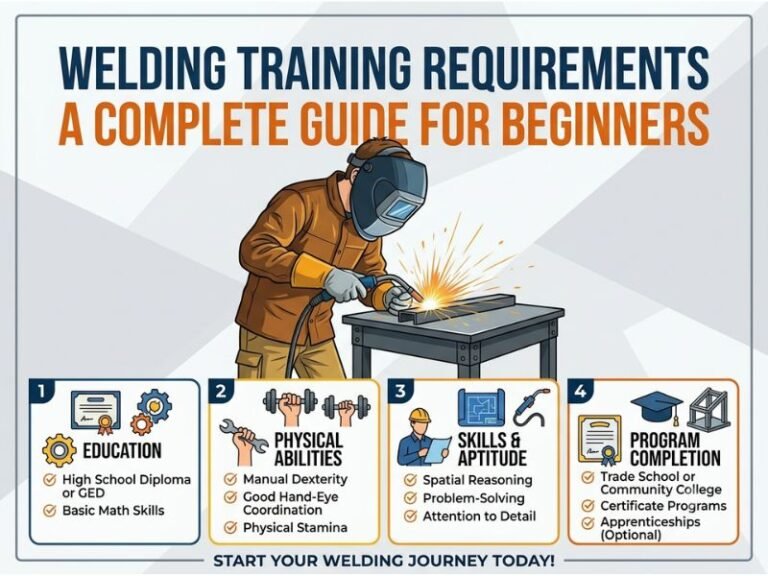
For a complete beginner
Choose an introductory textbook with substantial coverage of safety, machine controls, electrode or wire selection, joint preparation, positions, and common defects. A beginner-friendly book should define terms such as arc length, duty cycle, tack weld, root opening, fusion, penetration, and heat-affected zone before relying on them.
Photographs are helpful but diagrams often communicate more A good illustration can show torch angle electrode angle travel direction joint geometry and the relationship between the arc and.
For a welding student
A technical school student should look for a classroom textbook that follows a logical curriculum and includes exercises or review questions. The book should cover multiple processes even if the course emphasizes one, because comparing SMAW, GMAW, GTAW, and FCAW helps clarify their different strengths and limitations.
Important student topics include welding positions, joint types, weld symbols, basic metallurgy, discontinuities, destructive and nondestructive testing, electrical safety, and shop math. A student preparing for practical assessments also benefits from sections on visual inspection and consistent work habits.
For a hobbyist or home fabricator
A hobbyist usually benefits from a practical process guide that explains equipment selection, material thickness, consumables, shielding gas, joint fit-up, and troubleshooting. The book should address garage-specific concerns such as ventilation, fire-resistant work areas, cylinder storage, cable condition, and protecting nearby property from sparks.
Do not select a book solely because it contains attractive finished projects A reliable hobby reference should make clear which projects are decorative and which require engineering judgment.
For an advanced welder or inspector
Advanced readers may need specialized references on welding metallurgy, stainless steel, aluminum, pipe welding, structural steel, pressure vessels, inspection, or procedure qualification. At this level, a general beginner book may feel too shallow, while a code book or professional handbook may be more appropriate.
Advanced selection should begin with the work environment. A pipe welder may prioritize position-specific technique and metallurgy. A welding inspector may need symbol interpretation, discontinuity identification, inspection methods, and code navigation. A welding engineer may require deeper information about heat input, phase transformations, residual stress, and procedure development.
Important Topics to Compare
Book descriptions often use broad promises such as “complete” or “professional,” but the table of contents reveals whether a title fits your needs. I compare books across several technical areas before recommending one for a specific purpose.
Safety and shop practice
Safety should appear early and throughout the book, not as a short disclaimer at the end. Useful coverage includes eye and face protection, flame-resistant clothing, gloves, hearing protection, ventilation, compressed-gas handling, electrical hazards, fire prevention, hot-work permits, and the risks of welding coated or contaminated metals.
A particularly important subject is fumes. Welding fumes can contain hazardous substances depending on the base metal, coating, electrode, and process. A responsible book should encourage appropriate ventilation and hazard assessment rather than suggesting that a basic dust mask solves every exposure problem.
Process fundamentals
Each arc process has a different power source, electrode or filler arrangement, shielding method, control strategy, and range of applications. A strong book explains those relationships.
- SMAW uses a flux-coated consumable electrode and is valued for portability and outdoor capability.
- GMAW, commonly called MIG, feeds a continuous wire electrode and often supports productive work on clean material.
- GTAW, commonly called TIG, uses a nonconsumable tungsten electrode and provides precise control, especially on suitable thin or reactive materials.
- FCAW uses a tubular flux-cored wire and may be self-shielded or gas-shielded.
- Oxyfuel welding uses a fuel gas and oxygen flame and remains relevant for heating, cutting, brazing, and selected welding work.
A book does not need to teach every process in equal depth, but it should identify where each process performs well and where it introduces limitations.
Metallurgy and materials
Metallurgy explains what heat does to a metal during welding. Readers should learn about the base metal, filler metal, heat-affected zone, solidification, thermal expansion, contraction, hardness, cracking, and distortion. Even a basic explanation helps prevent poor decisions such as using an unsuitable filler or overheating thin material.
Material chapters should distinguish carbon steel, stainless steel, aluminum, cast iron, and other common alloys. They should explain that aluminum conducts heat differently from steel, stainless steel can be sensitive to contamination and excessive heat, and cast iron may require special preparation and cooling control.
Settings and variables
A useful reference explains the relationship among amperage, voltage, wire feed speed, travel speed, polarity, electrode diameter, shielding gas, arc length, and material thickness. It should make clear that published settings are starting points, not universal answers.
Machine design, joint fit-up, position, ambient conditions, surface cleanliness, and operator technique can all change the result. Tables are helpful when paired with explanations of how to adjust them. A book that presents one “correct” setting for every situation is oversimplifying the process.
Inspection and defects
Readers should be able to identify common weld discontinuities such as porosity, undercut, overlap, lack of fusion, incomplete penetration, cracks, excessive reinforcement, and distortion. The best books explain likely causes and corrective actions rather than treating appearance as the only measure of quality.
Visual inspection is important, but it cannot reveal every internal condition. More advanced references may explain dye penetrant, magnetic-particle, ultrasonic, and radiographic testing. They should also distinguish a discontinuity from a rejectable defect, since acceptance depends on the applicable specification or code.
Trusted Titles and Technical References
Several established resources appear frequently in welding education and professional settings. The best edition depends on the process, industry, and course requirements, so I would verify the edition and required title before buying.
AWS Welding Handbook
The Welding Handbook published by the American Welding Society is a major reference family rather than a small beginner manual Its volumes address broad technical subjects processes materials.
Because it is extensive, a reader should identify the relevant volume or topic instead of assuming that one book covers every need equally. AWS publications are especially relevant to readers who encounter American welding terminology, standards, inspection, and professional certification.
Modern Welding
Modern Welding is a widely used educational textbook associated with Althouse, Turnquist, Bowditch, and Bowditch. It is commonly considered for vocational and technical education because it combines process instruction, equipment information, safety, symbols, metallurgy, and shop applications.
Edition details matter. Technical textbooks are revised over time, and instructors may assign a specific version. A used copy can be economical, but I would compare its contents with the current course requirements and check whether terminology, equipment examples, and standards references are still suitable.
Welding: Principles and Applications
Welding: Principles and Applications, associated with Larry F. Jeffus, is another substantial instructional textbook. It is often considered by students and readers who want more than a quick hobby introduction. Its value lies in connecting welding principles with processes, equipment, materials, safety, and applications.
It may be more detailed than a casual reader needs, but that extra depth can make it a durable reference. I would select it when the goal is structured learning or technical school preparation rather than a single weekend project.
Lincoln Electric and manufacturer references
Manufacturer literature from companies such as Lincoln Electric can be useful for process fundamentals, consumable selection, machine operation, and troubleshooting. These resources often explain practical settings and equipment-specific terminology clearly.
Manufacturer guidance has a defined scope. It may emphasize the company’s machines, electrodes, wires, or recommended procedures, so it should be balanced with independent textbooks and the requirements of the applicable code or job specification.
Codes, standards, and specifications
A textbook is not a substitute for the governing standard. Depending on the work, relevant documents may come from the American Welding Society, American Society of Mechanical Engineers, American Petroleum Institute, American Society of Mechanical Engineers, Occupational Safety and Health Administration, or another authority and contracting organization.
Codes can define qualification, materials, procedure requirements, inspection, acceptance criteria, and documentation. They are often revised, copyrighted, and difficult for beginners to interpret without instruction. Use the current edition required by the employer, instructor, customer, or jurisdiction.
How to Choose the Right Book
I recommend narrowing the choice with five questions: What is the reader’s skill level? Which process matters most? What material will be welded? Is the goal learning, certification, projects, or reference? How current must the information be?
- Define the immediate goal. Choose differently for passing a class, learning TIG, preparing for a certification test, or building mild-steel projects.
- Check the table of contents. Confirm that the book covers safety, equipment, process fundamentals, defects, and the specific material or process you need.
- Review the publication date and edition. Older books may still explain arc behavior well, but equipment, standards, safety guidance, and terminology can change.
- Inspect sample pages. Look for readable diagrams, useful captions, clear photographs, a detailed index, and explanations that match your current knowledge.
- Compare independent and manufacturer sources. A textbook can provide broad instruction, while a manufacturer manual can clarify a particular machine or consumable.
- Match depth to available study time. A large handbook is valuable only if the reader can navigate it. A shorter textbook may be more effective for consistent early practice.
Price should not be the only deciding factor. A used textbook with missing pages, poor illustrations, or obsolete safety information may be a false bargain. On the other hand, an expensive professional handbook can be unnecessary for a beginner who needs simple process explanations.
Print, Ebooks, and Online Resources
Print books remain useful in a shop or classroom because a reader can mark pages, keep the book near a workbench, and consult it without a charged device. A durable paperback or hardback also avoids problems caused by oily gloves, glare, weak wireless service, or restricted digital access.
Ebooks are convenient for searching terms such as “undercut,” “preheat,” or “polarity.” They can reduce cost and make a large reference library easier to carry. Their limitations may include poor diagram scaling, licensing restrictions, screen fatigue, and difficulty viewing technical tables beside a welding machine.
Online videos are valuable for seeing motion, puddle control, torch angle, and machine adjustment. They also vary widely in accuracy. A confident presenter may omit ventilation, confuse a personal preference with a requirement, or demonstrate a technique that is unsuitable for a particular material or code.
I use written references for definitions, process relationships, and safety principles, then treat demonstrations as supplemental visual instruction. No book or video can replace supervised practice when a learner is developing hand control or performing safety-critical work.
How to Study from a Welding Book
Reading every page in order is not always the most effective method Start with the safety chapter and equipment overview then select one process and one material for.
Before practicing, identify the author’s recommended setup and compare it with the machine manual, consumable manufacturer’s data, course instructions, and job specification. Differences do not automatically mean that one source is wrong; they may reflect a different material thickness, joint position, transfer mode, or equipment configuration.
Study one variable at a time when possible. If a bead has poor fusion, changing amperage, travel speed, joint preparation, and electrode angle simultaneously makes the cause difficult to identify. Controlled practice produces more useful feedback than repeatedly making random adjustments.
Use the defect section after each practice session Compare the weld to the book s illustrations but remember that photographs are not a complete inspection Clean the work.
Common Mistakes When Buying Welding Books
Choosing by title alone
Words such as “complete,” “advanced,” and “professional” do not guarantee that a book matches the reader’s needs. The description and contents matter more than the title. A book focused on ornamental projects will not necessarily teach structural welding, and a metallurgy reference may not explain basic torch movement.
Ignoring the edition
An older edition may be perfectly useful for basic concepts, but it may contain outdated equipment examples, superseded standards references, or incomplete safety guidance. Check the publication date and compare the edition with a school syllabus, employer requirement, or certification preparation list.
Expecting a book to replace instruction
Welding combines visual judgment, coordination, heat management, and hazard control. Text can explain these elements, but supervised instruction can identify unsafe posture, poor ventilation, incorrect settings, and technique problems that a reader may not notice alone.
Using settings as fixed recipes
Charts provide starting points. They do not account for every joint, position, machine, surface condition, or operator. A reader who follows a chart without observing the puddle and inspecting the finished weld can create a weak or defective joint while believing the numbers guarantee quality.
Buying too many books at once
A shelf full of references can become a distraction. I would start with one clear instructional book and one reliable process or manufacturer reference. Add a specialized metallurgy, inspection, or code resource only after a specific need appears.
FAQ About Welding Books
What is the best welding book for a beginner?
The best beginner book is a clearly illustrated introductory textbook covering safety equipment process fundamentals joint preparation settings positions and common defects A technical-school text such as Modern.
Are welding books useful for learning without a class?
Yes, books can explain terminology, setup, safety principles, and troubleshooting, but they cannot provide live correction or verify that a weld is sound. Self-directed learners should combine reading with cautious practice, equipment manuals, recognized safety guidance, and qualified instruction before attempting structural or safety-critical work.
Which welding book is best for learning MIG?
Choose a process-specific GMAW or MIG guide that explains wire diameter shielding gas polarity voltage wire feed speed transfer modes gun angle travel speed contact-tip distance and common.
Are old welding books still useful?
Older books can remain useful for basic terminology, joint types, arc behavior, and traditional process explanations. Their safety instructions, equipment information, code references, and recommended practices may be outdated. Use an older title as background reading, then verify current requirements through current manuals, standards, instructors, and workplace procedures.
Should I buy a welding handbook or a beginner textbook?
Buy a beginner textbook if you need a structured introduction and a handbook if you need a searchable technical reference. Many serious learners eventually use both: the textbook builds a foundation, while the handbook supplies deeper information about materials, procedures, inspection, and applications.
Do welding books explain welding symbols?
Many instructional and professional books explain welding symbols, including reference lines, arrows, weld locations, size indications, contours, and supplementary symbols. Because symbol interpretation can depend on the applicable standard, use the book to learn the system and consult the governing specification for a real job.
Can a welding book teach aluminum or stainless steel?
Some books cover aluminum and stainless steel in dedicated chapters while others focus mostly on carbon steel Check the contents before buying The book should address cleaning heat control filler selection shielding distortion contamination.
Conclusion
The best Welding books are not simply the longest or most expensive they are the ones that match a reader s process material skill level and purpose I.