Welding Cutting and Brazing Safety Training: Practical Guide
Most welding cutting and brazing incidents are not caused by a single dramatic mistake They usually develop from several small failures an overlooked combustible poor ventilation an unsecured.
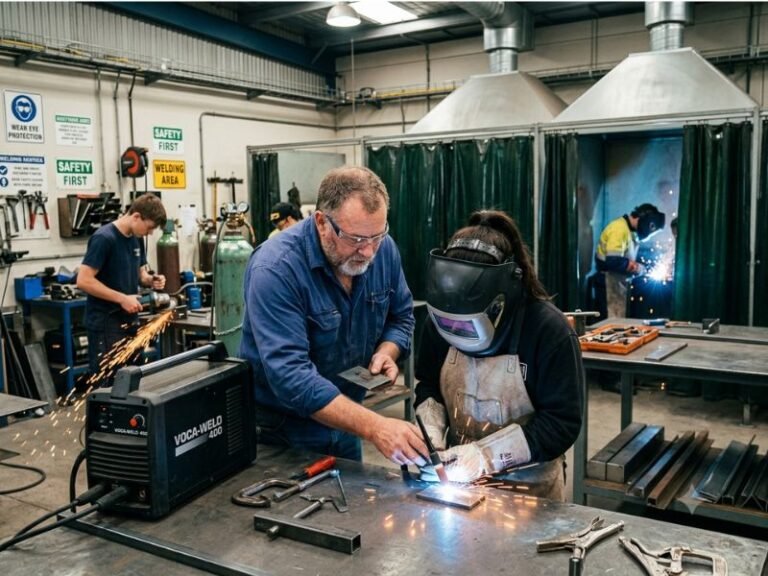
Welding cutting and brazing safety training gives employees the knowledge and practical judgment needed to control those hazards before heat, sparks, flame, fumes, or electrical energy are introduced. I consider the strongest training programs practical rather than purely classroom-based: they explain the rules, demonstrate safe setup, and require workers to recognize changing conditions.
This guide explains what the training should cover, how employers can organize it, what workers should verify before and during hot work, and how to choose a course that fits the job. It also identifies common mistakes that can make a certificate look complete while leaving important risks unmanaged.
What Welding, Cutting, and Brazing Safety Training Covers
Welding joins or cuts metal by using heat, pressure, or both. Cutting separates metal, commonly with an oxy-fuel flame, plasma arc, or other thermal process. Brazing joins metal by melting a filler metal above 840°F while the base metals remain below their melting points. Soldering is a related lower-temperature process, but it may require different controls.
Training should address both the process and the surrounding work environment. A worker may understand how to strike an arc yet still create a serious fire or exposure hazard by working beside combustible insulation. Safe performance therefore includes:
- Identifying process-specific hazards before work begins.
- Selecting, inspecting, and using the correct equipment.
- Controlling sparks, slag, flame, heat, fumes, gases, and electrical energy.
- Protecting nearby employees, visitors, and other operations.
- Responding to fires, gas leaks, electrical incidents, burns, and exposure symptoms.
- Stopping work when conditions change or required controls are missing.
In the United States employers commonly use OSHA requirements as the legal foundation Relevant provisions may include OSHA 29 CFR 1910 Subpart Q for general industry 29 CFR.
Why Hot Work Requires Structured Training
Hot work creates more than one type of danger at the same time An arc or flame can ignite nearby material damage eyesight burn skin and generate metal.
The risk also changes during a job. A task that appears safe at the start may become unsafe when sparks reach a concealed wall space, ventilation equipment stops, a cylinder is moved, or another crew brings flammable materials into the area. Training should teach workers to reassess conditions instead of treating the initial inspection as permanent permission.
I recommend treating hot work as a controlled activity with three stages: plan the job, perform the job, and monitor the area afterward. This approach is more reliable than relying on personal caution alone.
Core Hazards Covered in Training
Fire and explosion
Flames, arcs, sparks, and hot metal can ignite paper, wood, packaging, solvents, dust, insulation, vapors, and building materials. Heat can also travel through metal, openings, ducts, pipes, and wall or floor penetrations to ignite material that is not visible from the work position.
Training should explain how to remove combustibles, shield items that cannot be removed, close or protect openings, and establish a fire watch when required. Workers should understand that a fire extinguisher is not a substitute for preparation. A portable extinguisher provides an emergency response option; it does not make an uncontrolled hot-work area acceptable.
Fumes and gases
Welding and cutting can produce metal fumes, gases, and vapors. The hazard depends on the base metal, coatings, paints, plating, filler metal, flux, shielding gas, and process. Stainless steel, galvanized metal, lead-containing coatings, and other treated materials may create particularly serious exposure concerns.
Training should cover local exhaust ventilation, general ventilation, positioning, exposure assessment, and respiratory protection. A worker should never assume that a visible lack of smoke means the air is safe. Some hazardous contaminants may be difficult to see or smell.
Radiation, burns, and flying particles
Arc welding produces ultraviolet and infrared radiation that can injure the eyes and skin. “Arc eye,” or a painful eye injury caused by ultraviolet exposure, may develop after exposure even if discomfort is delayed. Sparks, slag, grinding particles, and hot workpieces create additional eye and face hazards.
Workers need the correct welding helmet or goggles, filter shade, safety glasses, protective clothing, gloves, and footwear for the process. Nearby employees require protection from arc radiation as well, usually through screens, curtains, distance, or restricted access.
Electric shock
Electric shock can occur through contact with energized parts, wet conditions, damaged cables, defective electrode holders, poor grounding, or a worker’s body completing a circuit. Training should explain how to inspect leads, connectors, holders, work clamps, power sources, and insulation.
Workers should keep clothing and gloves dry, avoid standing in water, use insulated equipment appropriately, and disconnect or lock out equipment before repairs. A ground clamp is not a general guarantee of safety; proper connections, equipment condition, and work practices all matter.
Compressed gas and cylinder hazards
Gas cylinders contain high pressure and must be handled, stored, transported, and connected carefully. Training should cover cylinder identification, valve protection caps, upright securing, separation of incompatible gases where required, leak checks, regulator selection, hose inspection, and safe movement.
Oxygen deserves special attention. Oxygen is not flammable by itself, but it strongly supports combustion. Oil, grease, contaminated gloves, and other combustible materials must be kept away from oxygen equipment. Oxygen must never be used as a substitute for compressed air, ventilation, or cleaning.
Pre-Job Planning and Hot Work Permits
A pre-job review turns general safety rules into controls for a specific location. Before starting, the person responsible for the work should identify the material being heated, the process and fuel, nearby operations, combustible construction, ventilation, access, emergency equipment, and the people who may be affected.
Many facilities use a hot work permit system. A permit commonly documents the work location, date, authorized workers, hazards, required controls, fire protection, fire-watch assignments, and approval. The exact form is less important than the quality of the inspection and the authority to stop work.
A useful pre-job sequence includes:
- Confirm that hot work is necessary and consider a colder alternative, such as mechanical fastening or prefabrication.
- Inspect the work area above, below, beside, and behind the planned operation.
- Remove combustible materials or protect them with suitable fire-resistant barriers.
- Cover or seal floor and wall openings that could allow sparks or heat to travel.
- Check ventilation and determine whether fumes could affect workers or enter occupied areas.
- Confirm that the correct extinguisher and other emergency equipment are immediately available.
- Verify equipment condition, cylinder security, electrical connections, and PPE.
- Communicate the work plan to affected employees and assign a qualified fire watch if needed.
A permit should have a clear expiration or stop-work condition. Work should be reassessed after breaks, relocations, process changes, alarms, ventilation failures, or changes in nearby materials.
Safe Equipment Setup and Inspection
Welding machines and electrical leads
Before use, workers should inspect the power source, supply cord, electrode holder, work lead, connectors, and insulation. Damaged or exposed conductors require removal from service until repaired by an authorized person. Cables should be routed to prevent crushing, trip hazards, contact with hot metal, and exposure to sparks.
Equipment should be installed and used according to the manufacturer’s instructions. The machine must have suitable ventilation and clearance, and temporary connections should not defeat protective devices. Workers should not improvise repairs with tape or continue using equipment that trips, overheats, sparks, or behaves abnormally.
Oxy-fuel equipment
Oxy-fuel systems require compatible regulators, hoses, torches, tips, flashback arrestors or check valves where required by the equipment and procedure, and sound connections. Workers should inspect hoses for cuts, burns, cracks, and signs of deterioration. Regulators and fittings must be suitable for the specific gas; oxygen equipment should never be interchanged with fuel-gas equipment.
Opening cylinder valves slowly can help prevent pressure shock and equipment damage. Workers should stand to the side of the regulator rather than directly in front of it, keep valve keys or tools available when required, and close valves when equipment is unattended or no longer in use according to site procedure.
Plasma and specialized cutting systems
Plasma cutting introduces electrical energy, compressed gas, intense arc radiation, fumes, noise, and hot slag. Training should include torch inspection, consumable condition, grounding, ventilation or water-table controls, workpiece support, and manufacturer limits. Operators should keep hands away from the cutting path and allow hot metal to cool before handling.
Personal Protective Equipment
PPE is the final layer of protection, not the first control. A hazard assessment should determine what each task requires. Typical equipment may include safety glasses with side protection, a welding helmet or cutting goggles, a face shield for certain impact or splash hazards, flame-resistant clothing, welding gloves, hearing protection, and safety-toe footwear.
Clothing should be made from materials appropriate for sparks and heat Synthetic fabrics can melt onto skin so they may be unsuitable for many hot-work tasks Clothing should cover exposed skin without loose cuffs frayed edges or pockets that can collect hot particles Workers should remove combustible contaminants from clothing and avoid carrying flammable materials into.
Lens shade selection must match the process, amperage, and applicable safety guidance. A shade that is too light may permit harmful exposure; one that is too dark can encourage unsafe positioning or poor visibility. Workers should follow the helmet and filter manufacturer’s instructions rather than choosing a shade by appearance alone.
Respirators require a separate program when they are necessary. That program may involve medical evaluation, fit testing, training, cleaning, maintenance, cartridge selection, and a written procedure. A disposable dust mask should not be presented as universal protection against welding fumes or unknown atmospheres.
Ventilation and Respiratory Protection
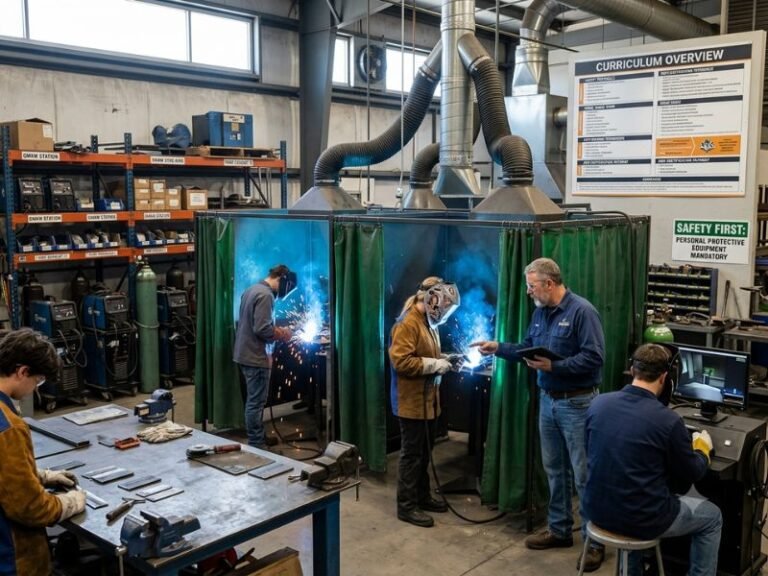
Ventilation should control contaminants at the source whenever feasible. Local exhaust hoods, movable extraction arms, and source-capture systems are generally more effective than simply opening a door. The hood should be positioned close enough to capture fumes without interfering with the arc, flame, or worker’s posture.
General dilution ventilation may support control, but it may not be adequate for hazardous coatings, confined spaces, high production rates, or materials that release particularly dangerous contaminants. Training should explain that fans can spread contaminants if positioned poorly. Exhaust should not discharge into an occupied area.
Workers should know the identity of base metals, coatings, and filler materials before heating or cutting them. Painted, plated, or coated surfaces may require removal, substitution, exposure controls, or specialized procedures. If the material is unknown, the worker should stop and obtain competent guidance rather than guessing.
Confined spaces require additional planning. A space can contain oxygen deficiency, toxic gases, flammable atmospheres, restricted egress, and heat buildup. Hot work in a permit-required confined space may require atmospheric testing, ventilation, an attendant, rescue planning, and compliance with the employer’s confined-space program. Welding training alone does not authorize entry or replace confined-space training.
Fire Watch and Post-Work Monitoring
A fire watch is a designated person who understands the hazards, has no competing duties, can communicate an alarm, and knows how to use available fire-extinguishing equipment within the limits of training. The fire watch watches the work area and adjacent spaces for ignition, smoke, smoldering material, and heat transfer.
The fire watch should have authority to stop the operation. A person who is also welding, cutting, handling materials, or leaving the area cannot reliably perform that role. The assignment may need to continue after the heat source is removed because hot slag or concealed heat can ignite materials later.
The required monitoring period depends on the site’s hazard assessment, permit procedure, applicable rules, and conditions such as combustible construction or hidden spaces. Workers should never treat the end of visible sparks as proof that the hazard has ended.
Training Methods and Competency
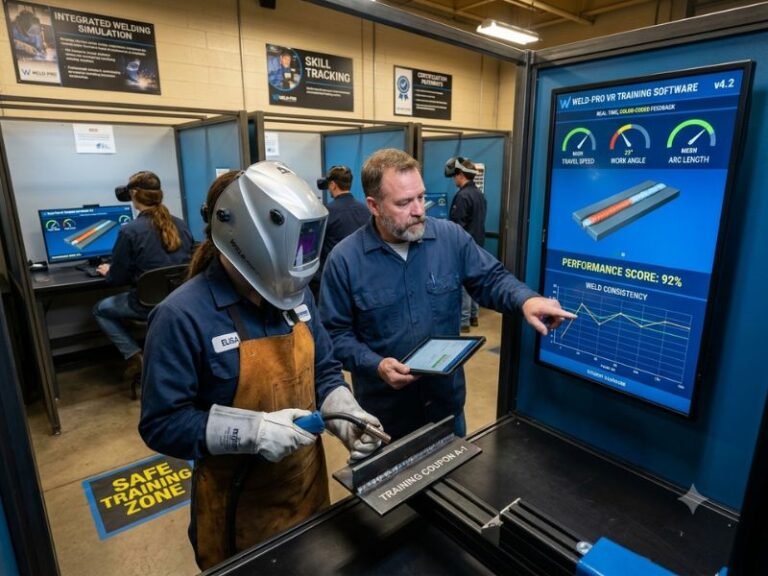
A completion certificate is useful only if the worker can apply the information. Effective training normally combines instruction, demonstration, supervised practice, and evaluation. The content should match the employee’s actual duties rather than covering unrelated processes in a generic presentation.
A solid course should include:
- Recognition of fire, explosion, fume, radiation, electrical, noise, ergonomic, and compressed-gas hazards.
- Process-specific PPE and equipment selection.
- Work-area inspection and combustible control.
- Ventilation, coatings, exposure limits, and respiratory protection procedures.
- Cylinder storage, movement, connection, and leak-response practices.
- Hot work permits, fire-watch responsibilities, and post-work inspection.
- Emergency response for burns, eye injuries, fires, gas leaks, and electrical contact.
- A knowledge check and practical observation by a qualified instructor or evaluator.
Refresher training is appropriate when a worker demonstrates unsafe performance, a process or equipment changes, an incident or near miss occurs, requirements change, or the worker has not performed the task for a significant period. I also favor short pre-task briefings because they address conditions that a previous course could not predict.
Training records should identify the worker, subject matter, instructor or provider, date, evaluation method, and any limitations. Records should be accessible to supervisors and safety personnel without being treated as a substitute for field verification.
How to Choose a Training Course
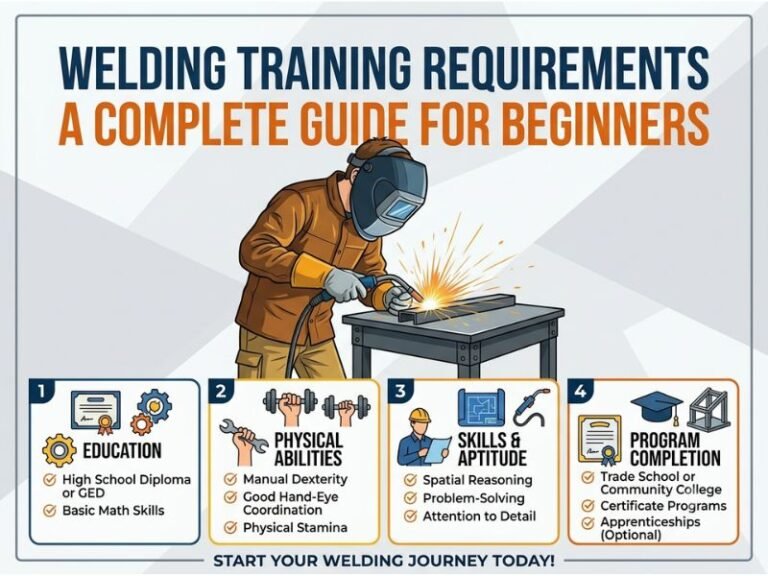
Course selection should begin with the work, not the marketing description. A basic awareness course may be suitable for an employee who works near hot work but does not operate equipment. An operator needs more detailed instruction, while a supervisor, permit issuer, or fire watch may need additional responsibilities and decision-making content.
Before selecting a provider, I would check the following:
- Does the course address welding, cutting, and brazing processes actually used at the site?
- Does it explain OSHA requirements and distinguish legal requirements from optional best practices?
- Does it include fire prevention, ventilation, cylinders, electrical safety, PPE, and emergency response?
- Is practical assessment included, or is the course only a video and quiz?
- Are instructors qualified to teach the equipment and hazards involved?
- Can the provider document completion and identify the course scope?
- Does the training account for construction, general industry, confined spaces, or other applicable settings?
Online training can efficiently deliver foundational knowledge, especially for hazard recognition and rules. It cannot by itself verify that a worker can inspect a torch, position ventilation, select equipment, or manage a site-specific hot work permit. Blended training is often more defensible when the job involves active operation or significant consequences.
Common Mistakes to Avoid
Relying on PPE alone
Gloves and a helmet do not control a combustible wall, contaminated coating, oxygen leak, or poorly ventilated space. PPE should support elimination, substitution, engineering controls, administrative controls, and safe work practices.
Using a generic checklist without inspecting hidden areas
A quick look at the floor may miss combustible material on the other side of a wall, beneath a deck, above a ceiling, or inside a pipe chase. Hot-work inspections must consider where heat and sparks can travel.
Assuming a certificate proves competence
A certificate may show that someone completed a course. It does not necessarily show that the person can set up the equipment safely or recognize a changing hazard. Supervisors should verify performance in the actual work environment.
Ignoring coatings and unknown metals
Heating an unknown painted or plated surface can create a serious exposure. Material identification and preparation must occur before the torch or arc is applied.
Leaving cylinders unsecured or connected carelessly
Cylinders can fall, valves can be damaged, and incompatible equipment can create leaks or unsafe reactions. Secure storage and correct fittings are basic controls, not optional housekeeping.
Failing to stop after conditions change
A permit, inspection, or training session cannot predict every change. Ventilation failure, a new combustible load, an alarm, weather exposure, or another crew entering the area should trigger a pause and reassessment.
Frequently Asked Questions
Who needs welding, cutting, and brazing safety training?
Anyone who performs these tasks needs process-appropriate training. Employees who prepare work areas, issue hot work permits, serve as fire watches, supervise operators, or may be exposed to the hazards also need training relevant to their responsibilities.
Does OSHA require a specific certificate for welding safety training?
OSHA rules generally focus on employer training, hazard control, and employee qualification rather than one universal welding certificate. The required content depends on the work, industry, equipment, and applicable standards. An employer should document training and verify that it addresses the actual hazards.
Is online welding safety training enough?
Online instruction can cover foundational knowledge, terminology, hazard recognition, and regulations. It may not be enough to establish hands-on competence for operating equipment, inspecting connections, setting ventilation, or managing a hot work area. A practical evaluation is important for active operators.
How often should this safety training be renewed?
Renewal timing depends on the employer’s program, applicable rules, job hazards, and training provider. Retraining should occur when equipment, processes, materials, or requirements change; after an incident or unsafe observation; or when an employee cannot demonstrate safe performance.
What is the difference between a welder and a fire watch?
A welder performs the hot-work task. A fire watch monitors the work and nearby areas for ignition, maintains communication, and initiates an alarm or response when necessary. The fire watch should not have distracting duties and must be able to stop the work.
Can a worker weld in a confined space after taking welding training?
Not automatically. Confined-space work may require separate entry training, atmospheric testing, ventilation, an attendant, rescue planning, and additional authorization. Welding training does not by itself address every confined-space hazard.
What PPE is normally needed for hot work?
Typical PPE includes safety glasses, a process-appropriate helmet or goggles, flame-resistant clothing, welding gloves, and safety-toe footwear. Face, hearing, respiratory, and other protection depends on the process and hazard assessment. PPE must be selected for the specific task rather than issued as a generic kit.
Conclusion
Safe hot work depends on preparation equipment control exposure protection fire prevention and the willingness to stop when conditions are wrong The most useful welding cutting and brazing. When I evaluate Welding cutting and brazing safety training, I apply these points to the specific situation instead of relying on a one-size-fits-all assumption.