Welding and Cutting Safety Training: Essential Information Guide
Welding and cutting can look routine after the torch is lit or the arc is established, but the most serious incidents often begin before work starts. A wrong lens, an untested cylinder, poor ventilation, or an overlooked combustible can turn a controlled task into a fire, explosion, exposure, or severe burn.
I consider Welding and cutting safety training most effective when it connects rules to decisions made at the job site. The goal is not simply to complete a course. It is to recognize hazards, select controls, use equipment correctly, and stop work when conditions change.
This guide explains what the training should cover, who needs it, how a strong program is organized, which OSHA requirements commonly apply, and how employers and workers can avoid the weaknesses of a check-the-box approach.
What welding and cutting safety training covers
Welding and cutting safety training teaches workers how to perform hot work without creating unacceptable risks to themselves, nearby employees, property, or the public. “Hot work” generally includes welding, brazing, soldering, torch cutting, heating, grinding, and other operations that produce flame, heat, sparks, or molten metal.
A complete program connects four areas:
- Hazard recognition: identifying fire, explosion, electrical, fume, radiation, noise, compressed-gas, and physical hazards.
- Risk controls: removing combustibles, isolating the work, ventilating the area, using guards, and establishing safe work procedures.
- Equipment operation: inspecting, connecting, adjusting, using, and shutting down welding machines, torches, regulators, hoses, leads, and cylinders.
- Emergency response: reacting to fire, flash injury, electric shock, gas leaks, burns, fume exposure, and other incidents.
Training must match the actual work. An employee who performs shielded metal arc welding may need different instruction from a worker who uses oxyfuel cutting, plasma cutting, or a welding process inside a tank. The location also matters. A fabrication shop, construction site, maintenance area, and confined space create different combinations of hazards.
Why this training matters
Welding and cutting combine several high-energy hazards in one task. An electric arc can cause shock, burns, ultraviolet and infrared radiation exposure, and ignition. A torch can release flammable gas and generate sparks that travel beyond the immediate work area. Hot metal can remain capable of starting a fire long after the operator stops cutting.
Fumes present another important concern. The composition of welding fumes depends on the base metal, coatings, filler metal, flux, process, and ventilation. Stainless steel, galvanized metal, painted surfaces, and contaminated materials may create especially hazardous exposures. Training should teach workers never to assume that a small job or a familiar material is automatically safe.
Many incidents also involve people who are not welding. Nearby employees can suffer eye injuries from arc radiation, burns from sparks, respiratory exposure to fumes, or injuries from fire and explosions. Effective training therefore covers the work area, not only the person holding the electrode or torch.
Who needs welding and cutting safety training?
Anyone who performs, supervises, authorizes, inspects, or works near hot work may need relevant instruction. The depth of training should correspond to the person’s responsibility and exposure.
Welders and cutting operators
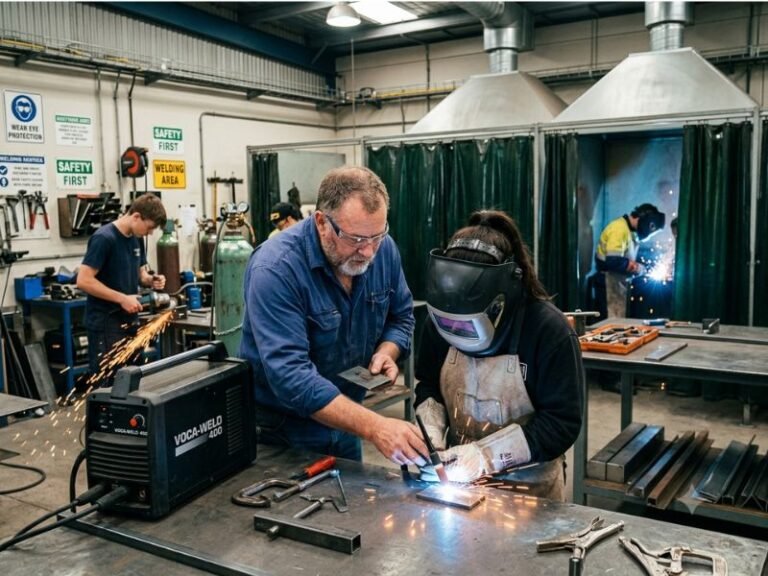
Operators need hands-on instruction for the specific processes, machines, materials, gases, and personal protective equipment they use. Training should include equipment setup, pre-use inspection, safe operating limits, shutdown, abnormal conditions, and emergency actions. A general video cannot replace task-specific qualification and supervised practice.
Fire watch personnel
A fire watch must understand the hazards created by hot work and know how to observe the work area continuously or for the period required by the employer’s procedure. The person should know how to activate an alarm, use an appropriate extinguisher when trained and authorized, identify signs of hidden fire, and stop the job when controls fail. A fire watch should not be assigned duties that prevent effective monitoring.
Supervisors and permit issuers
Supervisors need enough knowledge to evaluate the location, verify controls, enforce restricted areas, and confirm that only trained personnel perform the work. If a hot work permit system is used, the person issuing or approving the permit must understand its criteria rather than treating the form as automatic authorization.
Nearby and affected employees
Employees who may be exposed to arc flash, sparks, fumes, noise, or fire need awareness training. They should know the meaning of warning signs and barriers, the areas they must avoid, and how to report an unsafe condition.
Core hazards covered in training
Fire and explosion
Fire prevention is central to hot work training. Sparks and slag can travel through openings, fall to lower levels, enter wall cavities, or ignite dust and debris. Before work begins, the operator or supervisor should identify combustible floors, walls, ceilings, partitions, packaging, insulation, solvents, vapors, dust, and hidden spaces.
Combustible materials should be removed or protected with suitable fire-resistant covers, curtains, or shields. Openings and cracks may need to be sealed. Containers, tanks, pipes, and vessels require special attention because residues or vapors can ignite even when the container appears empty.
Training should explain when hot work is prohibited or requires additional controls. A permit, gas test, isolation procedure, or qualified specialist may be necessary in areas with flammable atmospheres, combustible dust, or process chemicals. A portable extinguisher is an important response tool, but it is not a substitute for hazard elimination and preparation.
Compressed gases
Oxygen and fuel-gas cylinders must be identified, handled, stored, and separated according to applicable requirements and employer procedures. Workers should keep cylinders upright and secured, protect valve assemblies, use the correct regulators and fittings, and keep oxygen equipment away from oil and grease.
Training should cover leak checks, hose inspection, flashback and backfire prevention, cylinder movement, valve protection, and emergency shutdown. Cylinders must not be dropped, dragged, rolled carelessly, or exposed to damaging heat. Empty cylinders still require proper handling because residual gas can create a hazard.
Workers should never use adapters or improvised connections to make incompatible equipment fit. A suspected leak, damaged hose, defective regulator, or unusual odor requires the equipment to be removed from service and evaluated by a qualified person.
Electrical shock and arc hazards
Arc-welding equipment creates shock hazards through energized parts, damaged insulation, wet conditions, poor grounding, and incorrect connections. Training should address machine grounding, electrode holders, cables, work clamps, disconnects, and inspection requirements. Workers should keep gloves and clothing dry and avoid standing in water or on conductive surfaces.
Electrical equipment should be de-energized before maintenance or repair. Lockout/tagout may apply when servicing machines or connected systems. A worker should not bypass guards, remove covers, or attempt repairs beyond the person’s training and authorization.
Radiation, burns, and flying particles
Arc welding produces ultraviolet and infrared radiation that can injure the eyes and skin. Welding screens, curtains, appropriate filter lenses, safety glasses, gloves, protective clothing, and other PPE protect both the operator and nearby personnel. Lens shade selection must match the process and current or energy level; darker is not automatically better if it prevents the operator from seeing the work safely.
Cutting and grinding can produce hot slag and flying particles. Clothing should cover exposed skin and be appropriate for the task. Synthetic garments that melt easily can increase burn severity. Loose clothing, jewelry, and long hair may also create entanglement or ignition risks.
Fumes, gases, and ventilation
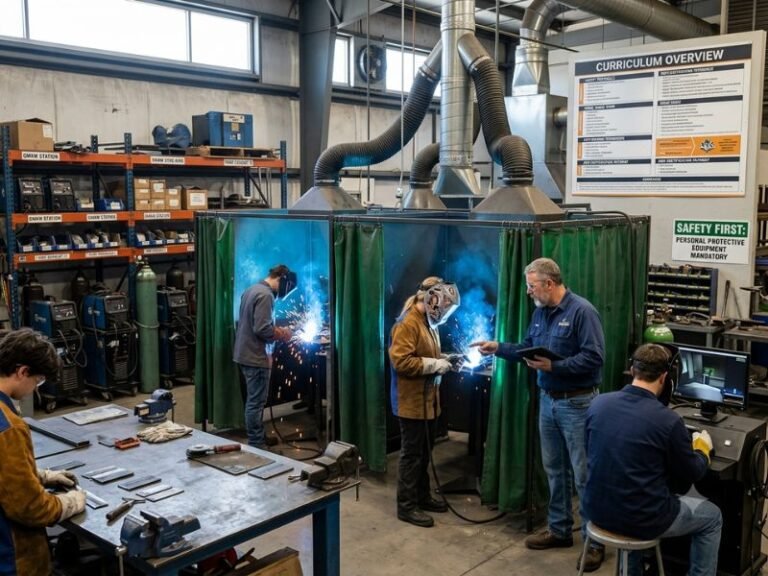
Ventilation must control airborne contaminants without spreading them into occupied areas. Local exhaust ventilation is often preferable because it captures fumes near the source. General dilution ventilation may be useful, but it may not adequately control concentrated emissions or protect workers in awkward positions.
Training should explain how to position the operator and the work so the breathing zone stays out of the fume plume. A respirator may be required when engineering or administrative controls do not adequately control exposure, but respirator use requires a compliant respiratory protection program, including medical evaluation, fit testing, selection, and training.
Workers should not weld or cut on surfaces coated with unknown materials until the coating has been identified and the hazard evaluated. Galvanized, lead-painted, stainless, cadmium-plated, and solvent-contaminated materials can require specialized controls.
Noise and ergonomic hazards
Plasma cutting, gouging, grinding, and some welding operations can produce damaging noise. A hearing conservation program may be required when exposure reaches applicable limits. Earplugs or earmuffs should complement, not replace, efforts to reduce noise at the source.
Training should also address awkward postures, heavy cylinders, repetitive movements, heat stress, and manual handling. Positioning the work at a comfortable height and using carts, lifts, or fixtures can reduce strain and improve control.
What a compliant training program should include
There is no single course that makes every hot-work situation safe. A sound program combines classroom or online instruction, site-specific orientation, equipment demonstrations, supervised practice, and evaluation.
Written procedures and hazard assessment
The employer should define how hot work is requested, reviewed, authorized, performed, monitored, and closed. Procedures should identify who can issue permits, who performs atmospheric testing, when a fire watch is required, how equipment is inspected, and what happens when conditions change.
A job hazard analysis or similar assessment should address the material, process, location, nearby operations, ventilation, combustibles, energy sources, access, and emergency arrangements. The assessment should be revisited when the job moves, the process changes, weather affects outdoor work, or new materials enter the area.
Knowledge instruction
Knowledge training commonly covers:
- Applicable OSHA requirements and company rules.
- Hot-work permits and fire prevention practices.
- Welding and cutting processes used at the site.
- Compressed-gas properties, cylinder handling, and hose connections.
- Electrical safety and equipment inspection.
- Ventilation, fumes, gases, and exposure controls.
- Eye, face, skin, hearing, respiratory, and foot protection.
- Emergency reporting, evacuation, first aid, and incident response.
Demonstration and hands-on practice
A qualified instructor or supervisor should demonstrate safe setup and shutdown. The trainee should then perform the task under observation, including inspection of equipment, connection of leads or hoses, selection of PPE, placement of screens, removal of combustibles, and response to a simulated abnormal condition.
Hands-on evaluation should measure safe behavior, not only weld appearance. A worker who makes a technically acceptable weld but ignores a gas leak or leaves an energized holder unattended has not demonstrated safe competency.
Documentation and retraining
Training records should identify the worker, training date, topics, instructor or evaluator, equipment or process covered, and any required follow-up. Records help an employer verify competence and identify gaps after an incident, near miss, audit, process change, or extended period away from the task.
Retraining is appropriate when a worker demonstrates unsafe performance, new equipment or materials are introduced, procedures change, or an evaluation shows that the original instruction was not retained. Refresher training should be based on risk and performance rather than an arbitrary certificate date alone.
OSHA standards and related requirements
In the United States, OSHA requirements for welding, cutting, and related work commonly appear in 29 CFR 1910 Subpart Q for general industry. Relevant provisions include 1910.252 for general requirements, 1910.253 for oxygen-fuel gas welding and cutting, and 1910.254 for arc welding and cutting. Construction work may involve OSHA requirements in 29 CFR Part 1926, including provisions addressing welding and cutting.
Other standards may apply depending on the exposure and workplace. Examples include:
- 29 CFR 1910.1200 for hazard communication involving chemicals and hazardous materials.
- 29 CFR 1910.134 for respiratory protection.
- 29 CFR 1910.146 for permit-required confined spaces.
- 29 CFR 1910.95 for occupational noise exposure.
- 29 CFR 1910.133 for eye and face protection.
- 29 CFR 1910.147 for control of hazardous energy during servicing.
Consensus guidance such as ANSI Z49.1, Safety in Welding, Cutting, and Allied Processes, can help employers develop procedures, but it does not replace a review of mandatory federal, state, local, fire-code, and industry requirements. State-plan jurisdictions may impose requirements that differ from federal OSHA rules.
I recommend treating standards as a framework for a site-specific program rather than as a substitute for professional judgment. A training provider should be able to explain which requirements apply to the employer’s operations and where the course has limits.
How to choose a training provider or course
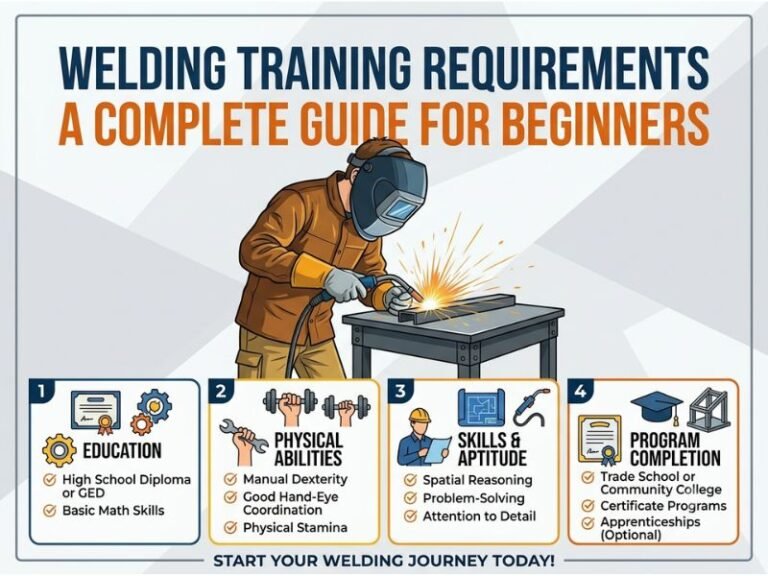
A useful course should be selected by matching content to the work, not by choosing the shortest completion time or the cheapest certificate.
Check the course scope
Ask whether the course addresses the actual processes, gases, equipment, materials, and work locations. A general awareness class may be suitable for nearby employees, while operators need deeper technical instruction and practical evaluation.
Review instructor qualifications
The instructor should understand welding and cutting hazards, applicable regulations, emergency controls, and adult learning. A credible provider should clearly state what the certificate proves and what it does not prove. Course completion alone may not qualify a worker to operate every machine or perform specialized work.
Look for assessment, not passive viewing
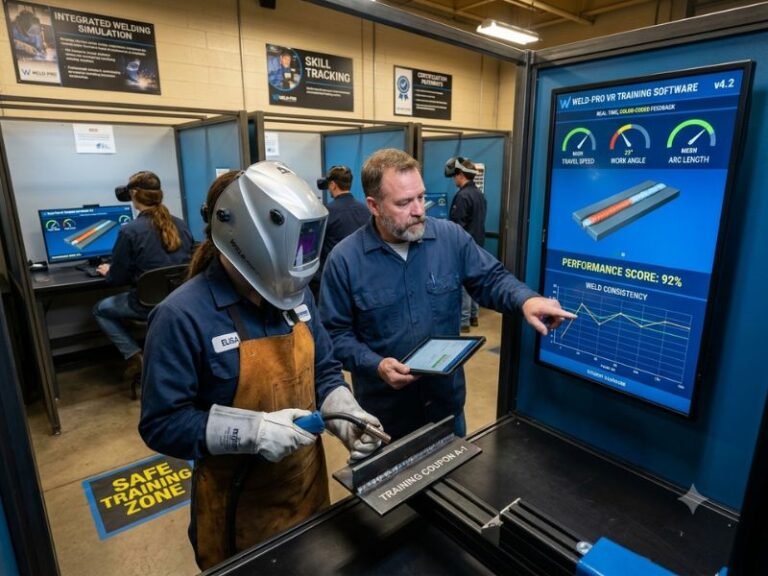
Videos and quizzes can support learning, but a serious operator program should include meaningful knowledge checks and, where appropriate, hands-on observation. Questions should test decisions such as whether to stop work, how to control a combustible, or which PPE and ventilation measures are necessary.
Confirm renewal and employer responsibilities
Ask how the provider handles refresher training, records, language access, accessibility, and changes in regulations. The employer remains responsible for evaluating the workplace and ensuring that employees can perform assigned work safely. A certificate cannot transfer that responsibility to a vendor.
Pre-job safety checklist
A short pre-job review can catch hazards that a classroom course cannot see. Before starting, the operator and supervisor should confirm the following:
- The work area has been inspected for combustibles, flammable liquids, gases, dust, openings, and concealed spaces.
- Combustibles have been removed or protected, and nearby workers have been warned or shielded.
- The ventilation system is operating and positioned to control the breathing zone.
- The equipment, leads, holders, hoses, regulators, valves, and connections are in good condition.
- Cylinders are identified, secured, upright where required, and separated or protected according to procedure.
- The correct PPE, lens shade, welding screen, gloves, clothing, and hearing or respiratory protection are available.
- Required permits, atmospheric tests, isolations, and fire-watch arrangements are complete.
- Emergency exits, alarms, communication methods, extinguishers, and first-aid resources are accessible.
The review should continue during the job. A change in wind, ventilation, materials, nearby operations, gas readings, or fire conditions can invalidate the original assessment. Stopping to reassess is a safety action, not a failure to meet production goals.
Common training mistakes
Relying on a certificate alone
A certificate may show that a worker completed a course, but it does not prove current competence in a particular task. Employers should combine training records with observation, equipment authorization, and supervisor feedback.
Using one generic course for every role
Nearby employees, fire watches, supervisors, and operators have different responsibilities. A single generic module may leave critical gaps, especially for cylinder handling, confined-space work, respiratory protection, or process-specific controls.
Ignoring the surrounding work area
Focusing only on the arc or flame misses the hazards created by sparks, heat transfer, fumes, and stored energy. Training should require a complete area inspection, including floors below, spaces behind walls, and adjacent operations.
Skipping hands-on equipment checks
Workers may understand a rule in theory but still fail to notice damaged insulation, a wrong regulator, a blocked ventilation hood, or an unsecured cylinder. Practical inspection and setup exercises reveal these weaknesses.
Failing to address nonroutine work
Maintenance, emergency repairs, outdoor work, confined spaces, elevated platforms, and work on contaminated equipment often require additional controls. A routine shop procedure should not be copied into a high-risk location without reassessment.
Frequently asked questions
Is welding and cutting safety training required by OSHA?
OSHA requires employers to provide training and safe procedures for hazards associated with welding, cutting, and related work. The exact training content depends on the operation, workplace, equipment, exposures, and applicable general industry or construction requirements. A single universal OSHA certificate is not the standard for every hot-work task.
How often should welding and cutting safety training be renewed?
Renewal depends on the employer’s program, applicable rules, job hazards, and worker performance. Retraining should occur when procedures, equipment, materials, or regulations change, after an incident or near miss, when unsafe behavior is observed, or when an evaluation shows that knowledge or skill has declined.
Does online training qualify a person to weld or cut?
Online instruction can cover awareness, hazard recognition, and knowledge requirements, but it may not establish hands-on competency for a specific process or machine. Operators generally need practical instruction, supervised performance, and employer authorization appropriate to the assigned work.
Who can serve as a fire watch?
A fire watch should be trained and authorized by the employer, understand the hazards of the job, have the means to communicate an emergency, and be able to monitor the area effectively. The person should not perform distracting duties or leave the area when the procedure requires continued watch.
Does a hot-work permit replace safety training?
No. A permit documents that specified conditions were reviewed and controls were established for a particular job and location. It does not teach equipment operation, PPE selection, fire prevention, gas handling, ventilation, or emergency response. Trained workers still need to follow the permit and stop work if conditions change.
What should a welding and cutting safety training record contain?
A record should normally include the worker’s name, training date, subjects covered, instructor or evaluator, process or equipment addressed, assessment results when applicable, and any required retraining. The employer should retain records according to applicable requirements and company policy.
Conclusion
Effective welding and cutting safety training prepares people to recognize hazards before the arc flame or sparks create an incident The strongest programs combine applicable OSHA requirements site-specific hazard assessments equipment practice PPE and ventilation controls fire prevention emergency response and documented evaluation I would judge any course by how well it changes decisions at the worksite not.