Shipyard Welder Skills and Qualifications: Overview and Key Facts
Shipyard welders need strong welding technique, blueprint literacy, physical stamina, safety discipline, and qualifications that match the vessel, process, and employer.
A rushed hiring decision can overlook a critical difference a welder may produce attractive beads in a shop but lack the procedure qualification positional control or safety habits.
Understanding shipyard welder skills and qualifications helps applicants prepare for the right jobs and helps employers evaluate ability beyond a résumé title This article explains the technical skills.
- ✓Shipyard welding requires process control, positional skill, fit-up accuracy, and the ability to follow approved procedures.
- ✓Certifications are useful only when they match the process, material, position, thickness, and governing requirements of the job.
- ✓Blueprint reading, welding symbols, inspection awareness, and documentation are part of production quality—not paperwork separate from welding.
- ✓Safety competence includes confined-space awareness, hot-work controls, respiratory protection, fall prevention, and communication.
- ✓A practical weld test and verified work history often reveal more than a broad claim of “certified welder.”
What Shipyard Welder Skills and Qualifications Actually
Shipyard welding is the joining of structural steel aluminum stainless steel pipe fittings brackets tanks and other marine components The work may involve new construction vessel repair conversion.
The job is not defined by the welding machine alone A capable shipyard welder interprets the work package confirms the joint preparation selects the approved process and consumables.

- Technical range: Employers may value experience with shielded metal arc welding, gas metal arc welding, flux-cored arc welding, gas tungsten arc welding, or submerged arc welding, depending on the production area.
- Marine fit-up: Accurate alignment, root opening, tack placement, backing, and joint cleanliness strongly affect final weld quality.
- Production judgment: Speed matters, but a fast weld that causes distortion, porosity, undercut, or rework is not productive.
- Team awareness: Shipyard welders must coordinate with fitters, riggers, electricians, painters, inspectors, and supervisors in shared work zones.
Core welding processes
SMAW commonly called stick welding remains valuable for field repairs structural work and locations where equipment access is limited It demands careful arc length travel speed electrode angle.
GMAW can provide efficient production on suitable materials and joint configurations. The welder must control wire feed speed, voltage, travel speed, shielding gas, contact-tip distance, and gun angle. Poor gas coverage, incorrect settings, drafts, or an unstable stickout can quickly produce porosity and inconsistent fusion.
FCAW is widely associated with structural production because it can offer high deposition rates and useful penetration. It may be self-shielded or gas-shielded, and each version has different operating requirements. Slag removal, polarity, gas flow, wire condition, and technique all matter.
GTAW provides precise control and is especially relevant to thin material, stainless steel, aluminum, pipe, and specialty work. It is slower and more technique-sensitive than many production processes, so hand control, tungsten preparation, shielding, and filler-metal selection are important.
Position, access, and environment
A shipyard welder may work flat, horizontal, vertical, or overhead, sometimes through a restricted opening or from a temporary platform. The same process can feel substantially different when the welder must control a molten puddle above shoulder height, reach around stiffeners, or maintain visibility while wearing protective equipment.
Marine environments also introduce wind, humidity, salt contamination, vibration, changing temperatures, and limited access for cleaning or inspection. Experienced welders adapt without improvising outside the approved procedure. When conditions cannot support quality or safety, the correct response is to stop and notify the responsible supervisor.
Technical Skills Employers Commonly Evaluate
Employers typically assess more than whether an applicant can strike an arc They look for consistent preparation stable technique safe equipment use and the ability to produce work.
The practical standard is repeatability. One good test weld may open the door, but sustained work requires the same discipline across many joints, materials, positions, and changing work conditions. Shipyard welder skills and qualifications are therefore best understood as a combination of demonstrated performance and controlled work habits.
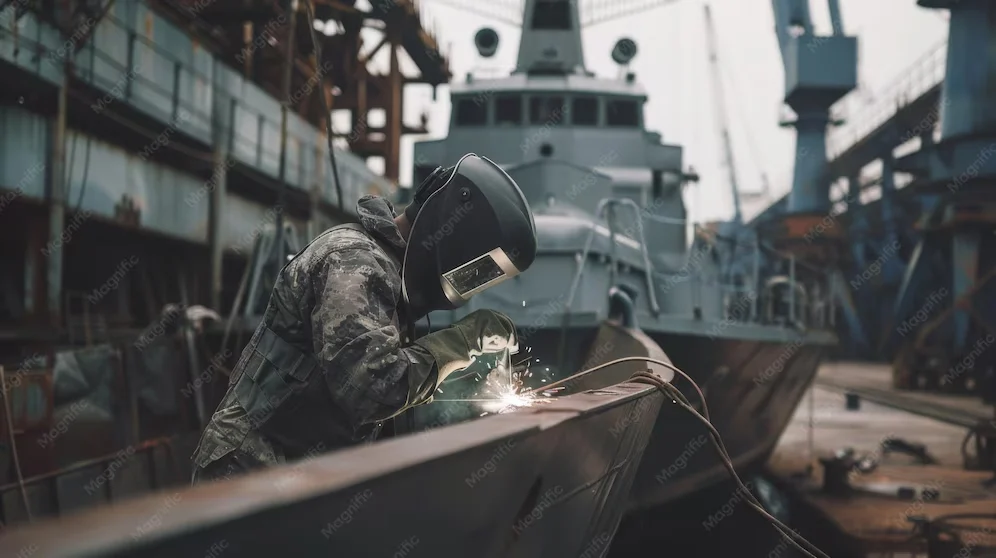
- Arc control: The bead should show controlled width, tie-in, reinforcement, and travel rather than irregular starts and stops.
- Heat management: The welder should reduce distortion and avoid overheating thin sections or damaging nearby components.
- Consumable control: Electrodes, wire, filler metal, and shielding gas must be correct, clean, and handled as required.
- Repair judgment: A welder should recognize a defect, protect the area, and follow the approved repair process instead of hiding or grinding away evidence.
Joint preparation and fit-up
Welding quality begins before the arc starts The welder should check bevel angle root face root opening alignment tack welds backing cleanliness and access Excessive gap may cause.
Shipyard work also involves variable plate and structure dimensions. A capable welder identifies whether a mismatch can be corrected by an authorized adjustment, requires fitter involvement, or must be reported. Forcing parts into position with heat or excessive force can create hidden residual stress and distortion.
Weld sequence and distortion control
Large marine structures can move as heat is added. Welders may use balanced sequences, intermittent welds where permitted, skip techniques, presetting, clamps, strongbacks, or controlled heat distribution. The correct choice depends on the engineering requirements and approved work instructions.
Distortion control is not permission to change the design. A welder should never omit required weld length, alter a joint, or add unauthorized welds merely to make a part fit. Production pressure makes communication especially important when the structure begins moving beyond expected tolerances.
Finishing and defect awareness
Cleaning between passes removes slag and contamination that could become inclusions Starts and stops should be managed so the weld ties in properly and craters should not be.
Common discontinuities include porosity undercut overlap lack of fusion incomplete penetration cracks arc strikes excessive reinforcement and dimensional distortion Not every visible irregularity has the same significance and.
Blueprint Reading, Welding Symbols, and Work Instructions
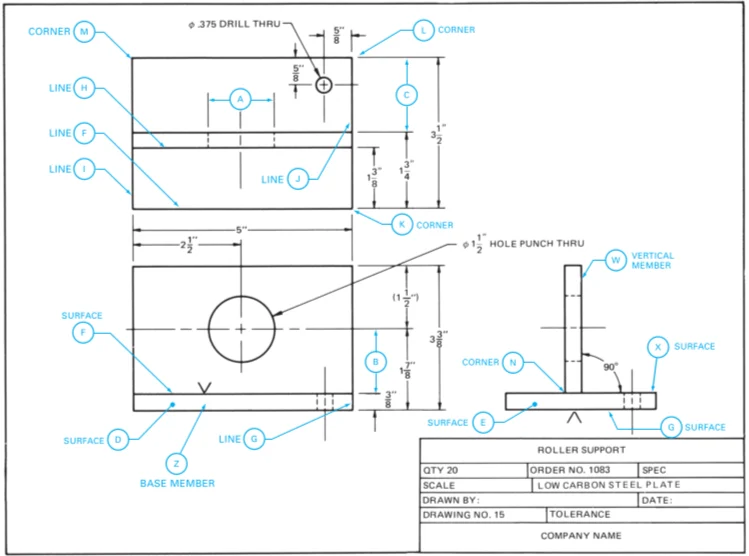
Blueprint literacy is one of the most useful qualifications in a shipyard because welders work from drawings weld maps joint details bills of material and process instructions A.
Welding symbols communicate information such as fillet or groove weld type size length location contour and whether a weld is intermittent or continuous The symbol alone may not.
- Confirm revision: Use the current drawing or work package so an obsolete dimension or weld detail is not followed.
- Identify the joint: Match part numbers, frame locations, orientation, and physical features before welding.
- Read the weld callout: Check type, size, length, side, contour, and any special finishing or inspection note.
- Resolve conflict: Stop and ask when the drawing, procedure, fit-up, or supervisor direction appears inconsistent.
Measurements that affect weld acceptance
Shipyard welders use tape measures, fillet weld gauges, bridge cam gauges, squares, levels, thermometers, and other inspection tools as appropriate. The exact tools vary by assignment, but the underlying skill is the same: verify rather than assume.
Important checks can include plate thickness joint gap alignment leg length throat dimension weld length distortion and interpass temperature A weld that looks large is not automatically strong.
Following a welding procedure specification
A welding procedure specification, or WPS, defines the qualified range and essential variables for a welding operation. Depending on the governing system, it may address base material, thickness range, process, filler metal, shielding gas, electrical characteristics, preheat, interpass temperature, position, joint design, and technique.
The welder is not expected to redesign the procedure at the work station. If the actual joint or conditions fall outside the stated range, the issue should be escalated. This distinction protects both quality and the welder’s qualification status.
Certifications, Qualification Tests, and Credentials
There is no single universal certificate that qualifies a person for every shipyard welding job Qualification is usually tied to a specific process position material group thickness or.
In the United States employers may use qualification systems associated with organizations such as the American Welding Society the American Society of Mechanical Engineers the U S Coast.
- Training certificate: Shows that a person completed instruction, but it may not prove production qualification for a particular joint.
- Welder performance qualification: Demonstrates that the welder passed a test within defined variables and ranges.
- Procedure qualification: Establishes that a welding procedure can produce acceptable results; it is not the same as an individual welder certificate.
- Employer authorization: A shipyard may require orientation, site testing, or approval even when an outside credential is current.
What a weld test may involve
A practical test can require a plate or pipe coupon in a specified position using a defined process and filler metal. The test may be inspected visually and then evaluated through bend testing, radiography, ultrasonic testing, macroetch examination, or another method required by the applicable qualification system.
Preparation matters. Candidates should arrive able to explain basic machine settings, inspect equipment, maintain safe leads and connections, clean the joint, control starts and stops, and follow the test instructions precisely. A test is designed to observe behavior as well as final appearance.
How qualification ranges work
Passing one test does not necessarily qualify a welder for all thicknesses positions materials or processes For example a qualification may cover a defined thickness range or position. This is an important consideration for shipyard welder skills and qualifications.
Qualifications can also require continuity or periodic revalidation. If a welder has not used a process for a defined period, the employer may need documentation or a retest. Good records identify the process, filler, material, position, test date, results, and continuity status rather than simply stating “certified.”
Credentials that strengthen an application
Helpful preparation may include welding school, vocational training, apprenticeship experience, blueprint classes, rigging awareness, forklift or aerial-lift training where relevant, and documented shipyard or heavy-fabrication experience. These supporting credentials do not replace a required performance test, but they can show readiness for the work environment.
Applicants should avoid listing every course as if it were a welding qualification. A clear résumé separates process experience, performance qualifications, safety training, education, and equipment familiarity. That format lets a hiring manager determine whether the candidate matches the actual opening.
Safety Skills Required in a Shipyard
Welding hazards in a shipyard extend beyond arc flash and hot metal Workers may encounter fumes compressed gases noise sparks fire hazards electrical energy suspended loads slippery decks.
Employers expect welders to use required personal protective equipment inspect equipment control ignition sources maintain housekeeping and follow permits or authorization systems Personal protective equipment is important but it is the last layer of protection Ventilation isolation.
- Hot work: Confirm authorization, remove or protect combustibles, establish fire watch requirements, and check adjacent spaces before starting.
- Confined spaces: Never enter based on appearance alone; required atmospheric testing, ventilation, attendant, communication, and rescue controls must be in place.
- Fumes and coatings: Identify coatings and materials, use appropriate ventilation or respiratory protection, and stop when the hazard is not controlled.
- Electrical and gas systems: Inspect leads, grounds, hoses, regulators, cylinders, and connections; isolate damaged equipment.
Confined-space and enclosed-area awareness
Ship tanks voids compartments and other enclosed areas can restrict ventilation and complicate rescue Welding can consume oxygen generate fumes and introduce heat into a space that may.
Communication is essential when working below decks or behind bulkheads. Workers should know how to report changing conditions, loss of ventilation, alarms, unusual odors, illness, or a fire-watch concern. If the permit conditions change, the work may need to stop until the space is reassessed.
Fire prevention and simultaneous operations
Sparks and hot slag can travel through openings cable runs drains or gaps and ignite materials outside the immediate work area Shipyards often use fire watches blankets screens.
Simultaneous operations create additional risk. A welder may be working near painting, blasting, fuel-system maintenance, lifting, or electrical work. Coordination prevents incompatible tasks from occurring together and helps other trades understand when heat, fumes, or sparks are present.
Physical and Professional Abilities
Shipyard welding can be physically demanding without being a test of unnecessary endurance Workers may climb ladders kneel crouch reach carry equipment hold awkward positions and work in.
Employers also value reliability, communication, and willingness to follow changing work priorities. A welder who communicates a fit-up problem early can prevent hours of rework. A welder who hides a mistake or ignores a hazard creates a larger problem for the entire production team.
- Body positioning: Can you reach the joint while maintaining a stable stance and controlled torch or electrode angle?
- Work endurance: Can you sustain careful technique through repeated joints without rushing late in the shift?
- Communication: Can you coordinate with a fitter, signal a rigging concern, and report a defect clearly?
- Adaptability: Can you move between approved processes, positions, or compartments without abandoning procedure requirements?
Attention to detail under pressure
Shipyard schedules can be demanding, but quality decisions cannot be reduced to speed. The best production welders develop efficient habits: they organize leads, confirm settings, prepare multiple joints when permitted, and clean as they go. Efficiency comes from reducing preventable interruptions, not from skipping inspections or safety steps.
Professional conduct also includes accurate time and production records, honest reporting of repairs, protection of finished surfaces, and respect for restricted areas. These behaviors influence whether a welder is trusted with more complex work.
Entry-Level, Experienced, and Specialized Roles
Entry-level applicants are not expected to know every shipyard process. They are generally expected to demonstrate safe behavior, basic welding ability, coachability, attendance, and a willingness to learn the employer’s procedures. A training program or apprenticeship can help build process control, blueprint reading, tool use, and workplace communication.
Experienced welders are usually judged on independent performance across positions, materials, and joint configurations. They may be expected to troubleshoot defects, support fit-up decisions, mentor newer workers, interpret complex work packages, and maintain productivity without constant supervision.
Specialized roles may involve aluminum superstructures, stainless systems, pipe, high-strength steels, cryogenic or pressure-related components, repair welding, or highly inspected military and commercial work. Specialization can increase opportunity, but it also narrows the importance of matching qualifications precisely.
| Role level | Typical evidence of readiness | Common development need |
|---|---|---|
| Entry level | Basic process control, safety awareness, clean work habits, and training or supervised practice | Consistency, blueprint interpretation, position range, and production speed |
| Journeyman or experienced welder | Documented qualifications, varied positions, reliable production quality, and defect awareness | Broader process coverage, advanced materials, or leadership skills |
| Specialty welder | Task-specific qualifications, high inspection performance, and deep material or process knowledge | Maintaining continuity, documentation, and authorization for changing projects |
Common Hiring Mistakes and Qualification Gaps
Applicants sometimes assume that years of general welding automatically satisfy a shipyard requirement. Employers may instead need a particular process, position, material, or documented test. The gap may be fixable through a retest, but it should be identified before accepting an assignment.
Employers can also make poor decisions by relying on job titles without observing technique. “Welder” can describe very different work, from repetitive flat-position production to complex overhead structural joints. A short practical evaluation, careful record review, and clear discussion of the actual task produce a fairer assessment.
- Overstating certification: Listing a broad credential without its process, position, material, or expiration details creates confusion.
- Ignoring fit-up: Testing only bead appearance misses whether the applicant can prepare and verify the joint.
- Confusing speed with skill: High deposition is not valuable when it produces distortion, defects, or repeated repairs.
- Skipping safety questions: A technically strong candidate still needs to recognize hot-work, confined-space, and fume hazards.
Warning signs during a practical test
Concern is warranted when a candidate changes machine settings without understanding why begins welding over contamination ignores a poor root opening fails to clean between passes or treats.
One imperfect bead does not always define a person’s ability. The evaluator should distinguish a correctable technique issue from a pattern of unsafe or dishonest behavior. A candidate who recognizes a problem and asks for clarification may show stronger professional judgment than one who hides it.
How to Prepare for a Shipyard Welding Job
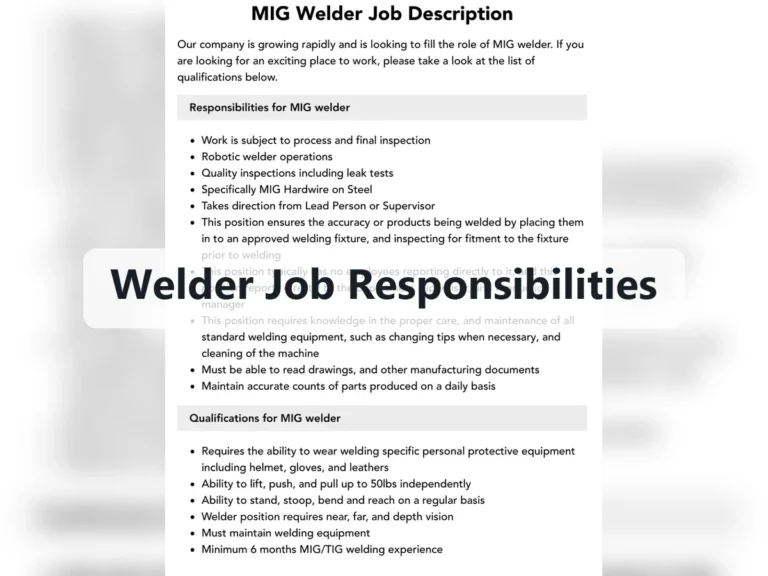
Preparation should begin by identifying the exact work rather than studying welding in the abstract Read the job description for process material position thickness shift testing physical requirements.
Practice should reproduce the likely conditions as closely as possible. If the job involves overhead structural FCAW, practicing only comfortable flat fillets will not provide useful evidence. Include joint preparation, starts and stops, cleaning, measurement, and safe setup—not just bead placement.
- Collect your records: Organize qualification tests, continuity evidence, training certificates, employer references, and process experience.
- Review fundamentals: Refresh welding symbols, joint terminology, electrode or wire identification, polarity, shielding, preheat, and defect causes.
- Practice the likely test: Use the specified process, position, material, and joint type when that information is available.
- Prepare safety knowledge: Be ready to explain hot-work controls, ventilation, confined-space limits, cylinder handling, and equipment inspection.
- Ask precise questions: Confirm what qualification standard, test coupon, tools, PPE, and documents the employer expects.
Building a useful résumé
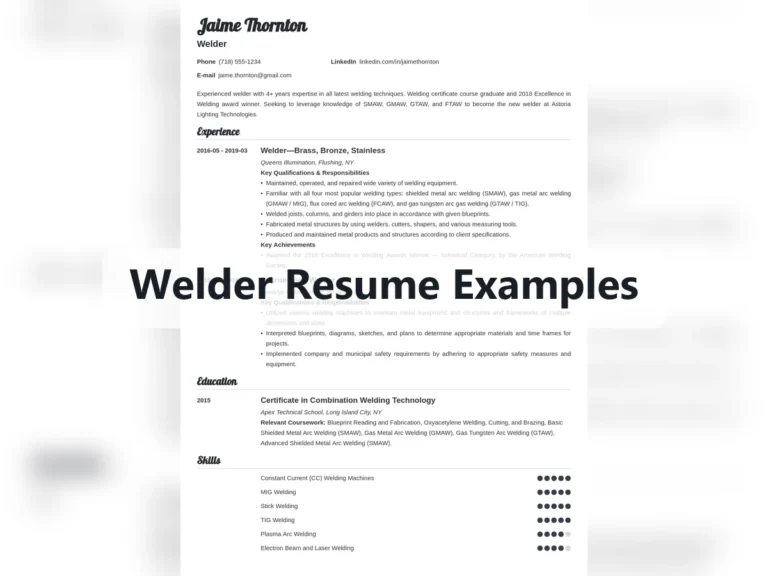
A strong résumé lists processes separately, such as SMAW, GMAW, FCAW, or GTAW, and identifies materials, positions, thicknesses, pipe experience, structural work, repair work, and inspection exposure where accurate. It should distinguish current qualifications from expired or historical experience.
Include the type of shipyard or heavy-fabrication work performed, not merely the employer name. Statements such as “assembled and welded structural plate from drawings” or “performed repair welds under documented procedures” are more informative than “did welding.” Never claim a qualification that has not been verified.
FAQ: Shipyard Welder Skills and Qualifications
Do all shipyard welders need formal certification?
Most shipyards require welders to pass an employer or project-specific performance qualification before doing production work. Formal training or an outside credential may help, but the required test and governing standard depend on the vessel, material, process, and contract.
Which welding process is most valuable for shipyard work?
There is no single best process for every yard FCAW and GMAW may be important in structural production SMAW remains useful for certain repairs and access conditions and.
Can general construction welding experience transfer to a shipyard?
It can provide a strong foundation in safety, fit-up, structural joints, and production discipline. However, the welder may still need marine-specific orientation, blueprint training, a new performance test, or experience with restricted access, vessel compartments, and shipyard