Do I Need Welding Experience to Be an Apprentice Welder: Overview
No, most apprentice welder programs do not require prior welding experience, but basic shop skills, reliability, and a willingness to learn can improve your chances.
Becoming an apprentice welder usually means entering the trade at its learning stage rather than proving that you can already weld production-quality joints Employers and training programs often.
The cause-and-effect chain is straightforward entry requirements determine whether you can apply your preparation affects whether you are selected and your performance in early training determines how quickly. This guide examines “do i need welding experience to be an apprentice welder” and explains the details that matter in practice.
- ✓Prior welding experience is commonly preferred but is not usually mandatory for an apprenticeship.
- ✓Basic math, blueprint reading, tool use, and safety awareness can strengthen a beginner’s application.
- ✓Apprentices weld under supervision and must progress through both practical training and related instruction.
- ✓Never represent practice welds, hobby work, or classroom exposure as professional production experience.
Do I Need Welding Experience to Be an Apprentice Welder?
In many cases, no. A true welding apprenticeship is designed to combine paid on-the-job training with classroom or related technical instruction, allowing a beginner to learn while working. The exact entry standard depends on the employer, union, contractor, trade association, school, or state-approved program.
Some programs accept applicants with no welding background at all Others may prefer candidates who have completed a welding class technical education course shop program or introductory qualification.
- Program definition: Confirm whether the opening is a formal apprenticeship or simply an entry-level welding job.
- Minimum requirements: Look for age, education, transportation, drug-screening, physical, and work-authorization requirements.
- Skill language: Separate “must have,” “preferred,” and “willing to train” statements in the posting.
- Training structure: Ask who supervises apprentices and how welding skills are evaluated.
Even when experience is not required, the selection process can be competitive. A company may choose the applicant who demonstrates stronger attendance, communication, tool familiarity, or mechanical reasoning over someone who has made a few unsupervised welds.
Why apprenticeships accept beginners
Welding has many variables: process, material, thickness, joint design, position, shielding gas, electrode or wire choice, machine settings, and quality requirements. A person who can make a visible bead is not necessarily prepared to weld pressure vessels, structural components, pipelines, heavy equipment, or production assemblies.
Because incorrect habits can be difficult to change, employers often prefer to teach foundational methods in a controlled way. Apprentices learn how to prepare joints, control heat, recognize defects, read procedures, use inspection feedback, and work safely around sparks, fumes, electricity, compressed gas, and hot metal.
What Employers Look for in a Beginner
When an employer considers an inexperienced applicant, the decision often centers less on finished welds and more on evidence of dependable work behavior. Welding is hands-on, but it is also a detail-driven trade in which a careless setup or missed instruction can affect quality and safety.
A hiring manager may look for punctuality steady attendance the ability to stay focused and respect for shop rules They may also evaluate whether you can handle feedback without becoming defensive An apprentice is expected to ask questions remember corrections and repeat a task carefully rather than improvise when.
- Reliability: Arrive on time, communicate clearly, and follow through on assigned work.
- Trainability: Show that you can accept correction and apply it on the next attempt.
- Mechanical interest: Familiarity with tools, equipment, or repairs can indicate useful practical instincts.
- Safety judgment: Stop and ask when a condition, procedure, or material is unclear.
Transferable experience that counts
Experience does not have to come from a welding job Construction automotive repair metal fabrication machining equipment maintenance farm work shipyard work or technical school can provide relevant.
For example a candidate who has used an angle grinder read a tape measure maintained equipment or followed lockout procedures may still be a complete welding beginner but.
Education and basic academic skills
A high school diploma or equivalent is commonly requested, although requirements vary. Apprentices may need to read work instructions, complete training assignments, calculate dimensions, understand fractions and decimals, and interpret basic drawings.
Useful preparation includes converting measurements, identifying angles, reading a simple blueprint, and understanding units such as inches and millimeters. You do not need advanced mathematics for every welding role, but weak measurement skills can lead to fit-up errors, incorrect cuts, and wasted material.
What an Apprentice Welder Actually Does
An apprentice welder is not simply placed in front of a welding machine and told to practice. Early duties may include cleaning and organizing the work area, moving materials, preparing metal, identifying parts, assisting experienced welders, learning equipment, and completing supervised weld exercises.
As competence develops the apprentice may perform more welding tasks under progressively less direct supervision The pace depends on the program the type of work the apprentice s.
- Preparation: Clean, fit, align, clamp, and tack parts according to instructions.
- Execution: Use the assigned welding process and settings under approved supervision.
- Inspection: Look for visible problems and report uncertainty instead of hiding defects.
- Documentation: Record training, production information, or inspection results when required.
This progression explains why beginners can enter the trade but cannot assume they will immediately perform every task. Welding quality is tied to the application. A weld that looks acceptable for a practice coupon may not meet the requirements for a structural, code, or safety-critical component.
Common processes beginners may encounter
Training may involve shielded metal arc welding, commonly called stick welding; gas metal arc welding, often called MIG; flux-cored arc welding; or gas tungsten arc welding, commonly called TIG. The process selected depends on the employer’s work and the materials being joined.
MIG can feel approachable because it uses a continuously fed wire but producing consistent sound welds still requires control of travel speed gun angle arc length shielding and. This distinction matters when answering “do i need welding experience to be an apprentice welder”.
Supervision and responsibility
Apprentices should know who is authorized to train, inspect, and approve their work. A responsible workplace does not leave a novice to guess about machine settings, hot-work controls, ventilation, personal protective equipment, or the acceptability of a weld.
Supervision does not remove personal responsibility. You still need to follow instructions, inspect your setup, protect nearby workers, and report unsafe conditions. If you are uncertain whether a joint, material, or procedure is correct, pausing is safer than proceeding.
Ways to Prepare Before Applying
You do not need to wait until you feel fully qualified. A small amount of targeted preparation can help you complete an application, answer interview questions, and begin training with fewer avoidable difficulties.
Start by learning the language of the trade Understand the differences among MIG TIG stick and flux-cored welding recognize common personal protective equipment and become familiar with terms.
- Build measurement confidence: Practice reading a tape measure and working with fractions, decimals, and basic geometry.
- Study safety fundamentals: Learn why ventilation, eye protection, flame-resistant clothing, gloves, and hearing protection matter.
- Gain supervised exposure: Consider a community college, technical school, workforce center, or introductory shop course.
- Prepare examples: Identify situations that show punctuality, careful work, mechanical ability, or persistence.
Should you take a welding class first?
A beginner class can be valuable, especially if you have never worked around tools or metal. It may teach machine setup, basic joint preparation, body positioning, and safe shutdown procedures. It can also help you decide whether you enjoy the heat, noise, physical demands, and repetition of shop work.
However, a class is not always necessary. If the apprenticeship provides foundational training and accepts beginners, delaying your application for months may not be useful. Apply when you meet the stated requirements, and use a class as preparation if you need confidence or if local programs strongly prefer prior instruction.
Home practice and hobby welding
Hobby welding can demonstrate initiative, but it has limits. Home equipment, materials, ventilation, and inspection standards may differ substantially from an industrial workplace. A practice weld can look smooth while containing lack of fusion, porosity, inadequate penetration, or other defects that are not visible without proper evaluation.
If you practice at home, treat safety as non-negotiable. Use appropriate ventilation and protective equipment, control fire hazards, keep combustible materials away, and follow the equipment manufacturer’s instructions. Do not weld containers, tanks, painted or coated materials, or unknown metals unless you understand the hazards and have suitable controls.
How to Apply Without Professional Welding Experience
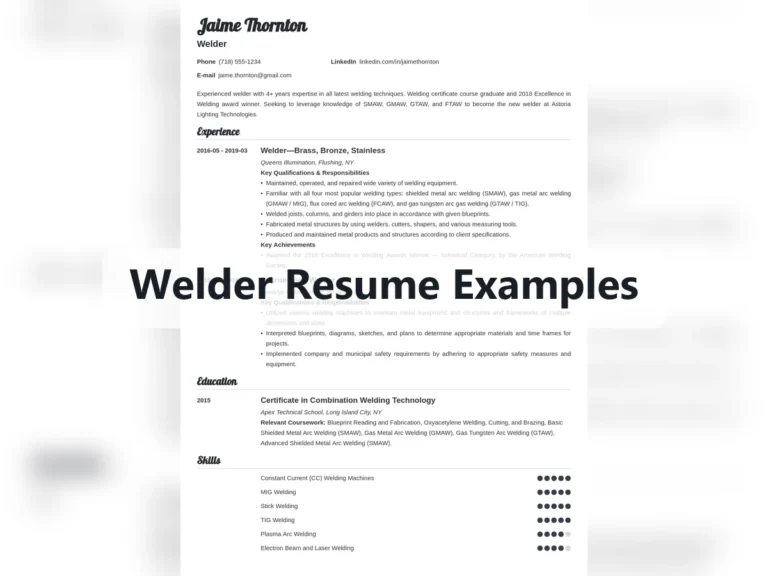
An application should make your current level clear while showing why you are ready to learn. Do not leave a blank résumé simply because you have not held a welding title. Instead, connect relevant skills to the demands of an apprenticeship.
List technical courses, shop classes, tool use, maintenance work, construction tasks, military or agricultural equipment experience, and jobs requiring careful procedures. Include measurable responsibilities when possible, such as assembling parts, reading work orders, inspecting components, maintaining equipment, or meeting attendance requirements.
- Use accurate wording: Write “introductory MIG practice” or “completed basic welding coursework,” not “advanced welder.”
- Emphasize habits: Highlight attendance, safety compliance, teamwork, and willingness to work physically.
- Show preparation: Mention relevant classes, shop projects, or trade-related certifications you actually completed.
- Match the posting: Address transportation, schedule availability, physical requirements, and required education.
How to answer interview questions
If asked about your experience answer directly You might explain that you are new to professional welding have practiced or studied the fundamentals and want structured training so.
Employers generally do not expect a beginner to know everything. They do expect honesty. Claiming experience you do not have can create a safety problem, damage trust, and place you in work beyond your ability.
Questions worth asking the program
An interview is also your opportunity to evaluate the apprenticeship. Ask what processes and materials are used, how instruction is delivered, how progress is measured, and whether apprentices rotate through different work areas.
You can also ask about the typical schedule, classroom requirements, tools or equipment you must provide, protective equipment, wage progression, and what happens if a trainee needs additional practice. Clear answers suggest an organized program; vague promises deserve closer examination.
Apprenticeship Versus Entry-Level Welder Jobs
The terms “apprentice welder,” “welder helper,” “welding trainee,” and “junior welder” can describe different arrangements. Understanding the distinction helps you avoid applying to a job that expects more skill than its title suggests. Keep these limitations in mind when considering “do i need welding experience to be an apprentice welder”.
A formal apprenticeship normally has a defined training plan, an employer or sponsor, structured related instruction, and documented progression. An entry-level job may offer on-the-job learning but may not provide the same organized curriculum or recognized completion pathway.
| Path | Typical focus | What to verify |
|---|---|---|
| Formal apprenticeship | Paid work combined with structured technical training | Sponsor, curriculum, supervision, progress standards, and completion terms |
| Welder helper | Material handling, preparation, cleanup, and assistance | Whether supervised welding is included and how advancement works |
| Entry-level welder | Production welding with limited initial responsibility | Required process experience, testing, production expectations, and inspection standards |
| Technical school program | Classroom and shop instruction before or alongside employment | Hands-on hours, equipment access, credentials, and employer connections |
None of these paths is automatically best. A formal apprenticeship can provide a strong combination of wages and training, while a helper role may be the quickest way to enter a local shop. A technical program may make sense if you need fundamental practice before seeking employment.
- Training ownership: Apprenticeships usually define who teaches and evaluates you; ordinary jobs may vary widely.
- Work expectations: A helper may prepare work while an entry-level welder may be expected to meet production targets sooner.
- Credential value: Ask what completion represents and whether the training is formally recognized.
Skills You Will Need to Build During Training
The central goal is not merely to produce a bead. You need to develop repeatable control and understand why a weld succeeds or fails. That takes practice, observation, correction, and exposure to different materials and joint conditions.
Early progress often depends on fundamentals: clean metal, correct fit-up, stable body position, consistent travel, appropriate arc length, and careful attention to the procedure. Later, apprentices may need to manage distortion, weld in difficult positions, work to drawings, and maintain quality during production.
- Joint preparation: Learn how cleaning, beveling, alignment, and root gaps affect the final weld.
- Process control: Coordinate travel speed, angle, arc length, heat input, and filler placement.
- Visual inspection: Recognize visible signs such as excessive spatter, undercut, cracks, overlap, and poor tie-in.
- Work discipline: Maintain equipment, organize materials, and follow procedures consistently.
Why appearance is not enough
A neat-looking weld is not proof of strength or compliance. Internal defects may not be visible, and acceptance can depend on specifications, inspection methods, dimensions, and the intended service of the component.
That is why apprentices should welcome destructive or nondestructive testing when it is part of training. A failed test is information about the process, not a reason to conceal the result. The productive response is to identify the cause, correct the technique, and repeat the task under supervision.
Physical and environmental demands
Welding work can involve standing, kneeling, climbing, lifting, awkward positions, heat, noise, fumes, bright arcs, and repetitive tasks. Some workplaces operate outdoors or in confined areas, while others involve production lines or large structures.
Requirements differ by job, so read the description carefully and ask for clarification during the hiring process. Being physically capable does not mean ignoring discomfort or safety controls. Proper ventilation, respiratory protection when required, fall protection, and safe material-handling practices remain essential.
Common Beginner Mistakes and How to Avoid Them
New applicants sometimes focus so heavily on proving they are motivated that they overlook the behaviors employers use to judge readiness. Motivation matters, but it must appear through preparation, honesty, and consistent follow-through.
One common mistake is applying with exaggerated claims. Another is assuming that a short online video replaces supervised instruction. A third is treating protective equipment as an inconvenience rather than part of the work process.
- Overstating skill: Be precise about whether your experience is professional, classroom-based, hobby, or none.
- Ignoring fit-up: Welding cannot compensate for poor alignment, contamination, or incorrect joint preparation.
- Skipping questions: Ask before using unfamiliar equipment, material, settings, or procedures.
- Chasing speed too early: Consistent technique and safe work come before production pace.
Another failure point is neglecting communication. If you discover a damaged part, incorrect drawing, missing material, or unsafe condition, report it promptly. In a professional shop, protecting quality and people is more important than appearing independent.
When Experience May Be Required
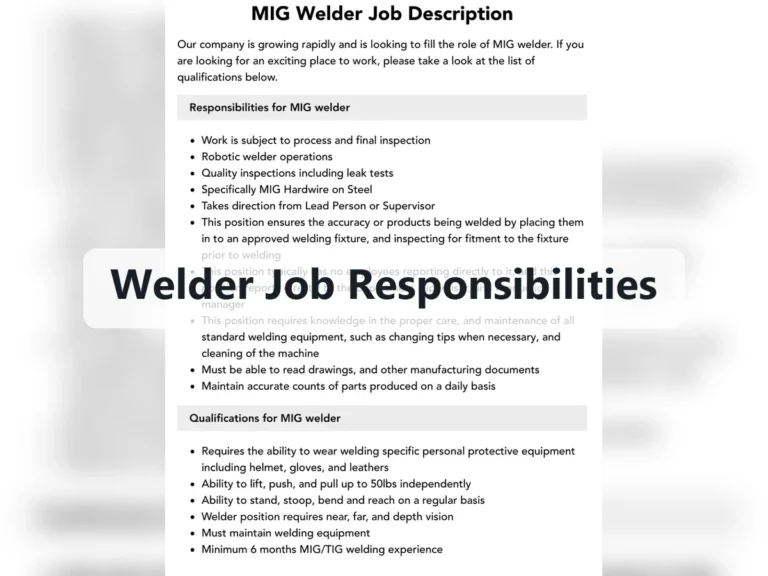
Although many apprenticeships accept beginners, some openings use the term “apprentice” for a worker who is expected to arrive with basic or intermediate welding ability. This is especially possible when the employer needs immediate production support or when the position follows a short training period.
Experience may also be required for specialized work. Employers handling code-regulated fabrication, pipe welding, pressure equipment, aerospace components, certified structural work, or unusual alloys may seek applicants who already understand a process and can pass a practical test.
- Specific time requirement: The posting states months or years of welding experience.
- Practical test: Applicants must complete a weld test before hiring.
- Immediate production language: The role emphasizes quotas, independent work, or minimal training.
- Advanced documentation: The employer expects familiarity with procedures, symbols, inspection, or code requirements.
Do not assume you are disqualified just because you lack one preferred qualification. Apply if you meet the mandatory requirements and can explain your preparation. If the employer needs a higher skill level, the conversation may still identify a helper, trainee, or future opening.
FAQ: Do I Need Welding Experience to Be an Apprentice Welder?
Can I become an apprentice welder with no experience at all?
Yes, some apprenticeships are specifically designed for beginners. You will improve your chances by demonstrating reliability, safety awareness, mechanical interest, basic measurement ability, and a willingness to accept supervision.
Is a welding certificate required before an apprenticeship?
Usually not for a beginner apprenticeship, but requirements vary. A certificate or completed introductory course may be preferred, especially when the applicant pool is competitive or the employer expects basic process familiarity.
Does hobby welding count as experience?
It counts as exposure, not necessarily professional experience. Describe the type and amount of practice accurately, and understand that workplace welding may involve different equipment, materials, procedures, inspection standards, and production expectations.
Should I apply for an apprenticeship or take school first?
Apply directly when the program accepts beginners and you meet its requirements. Consider a welding class first if you need foundational practice, want to test your interest, or are applying to programs that strongly prefer prior shop instruction.
What should I put on my résumé if I have never welded for pay?
Include relevant education, shop projects, tool use, construction or maintenance work, equipment experience, safety training, and jobs that demonstrate attendance and attention to detail. Label classroom or hobby work honestly rather than presenting it as commercial welding.
Will an apprenticeship teach me how to pass a weld test?
A structured program may prepare you for practical evaluations, but the exact training depends on the employer and work type. Ask which processes, positions, materials, and inspection standards are included before assuming a particular test is covered.
Can an employer reject me because I have no welding background?
Yes. Employers may set their own selection standards, and some openings require immediate production ability. However, rejection from one position does not mean you cannot enter the trade; a helper role, technical course, or beginner-focused apprenticeship may be a better match.
Conclusion
Do I need welding experience to be an apprentice welder? Usually, no. The purpose of many apprenticeships is to teach entry-level workers through supervised practice and related instruction, but applicants still need realistic expectations, safety awareness, dependable habits, and the ability to learn from correction.
Check whether the opening is a formal apprenticeship or an experienced “apprentice” job, prepare your measurement and shop fundamentals, and describe every skill honestly. Welding is a safety-sensitive trade, so never work beyond your training or bypass required protective equipment and supervision.
Review three local apprenticeship or trainee postings today, separate required qualifications from preferred experience, and apply to the programs that clearly accept beginners.