How Much Does a Welder Make in Texas: Full Guide and Key Facts
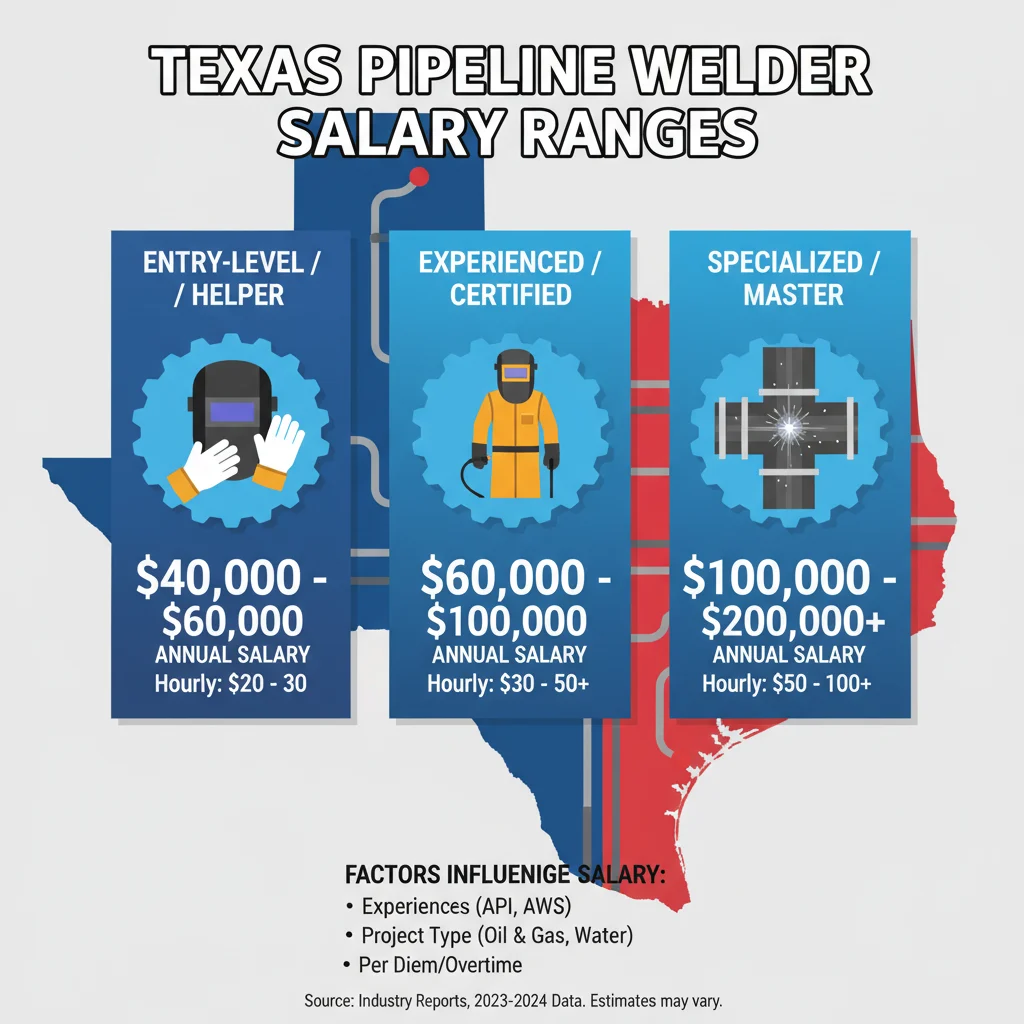
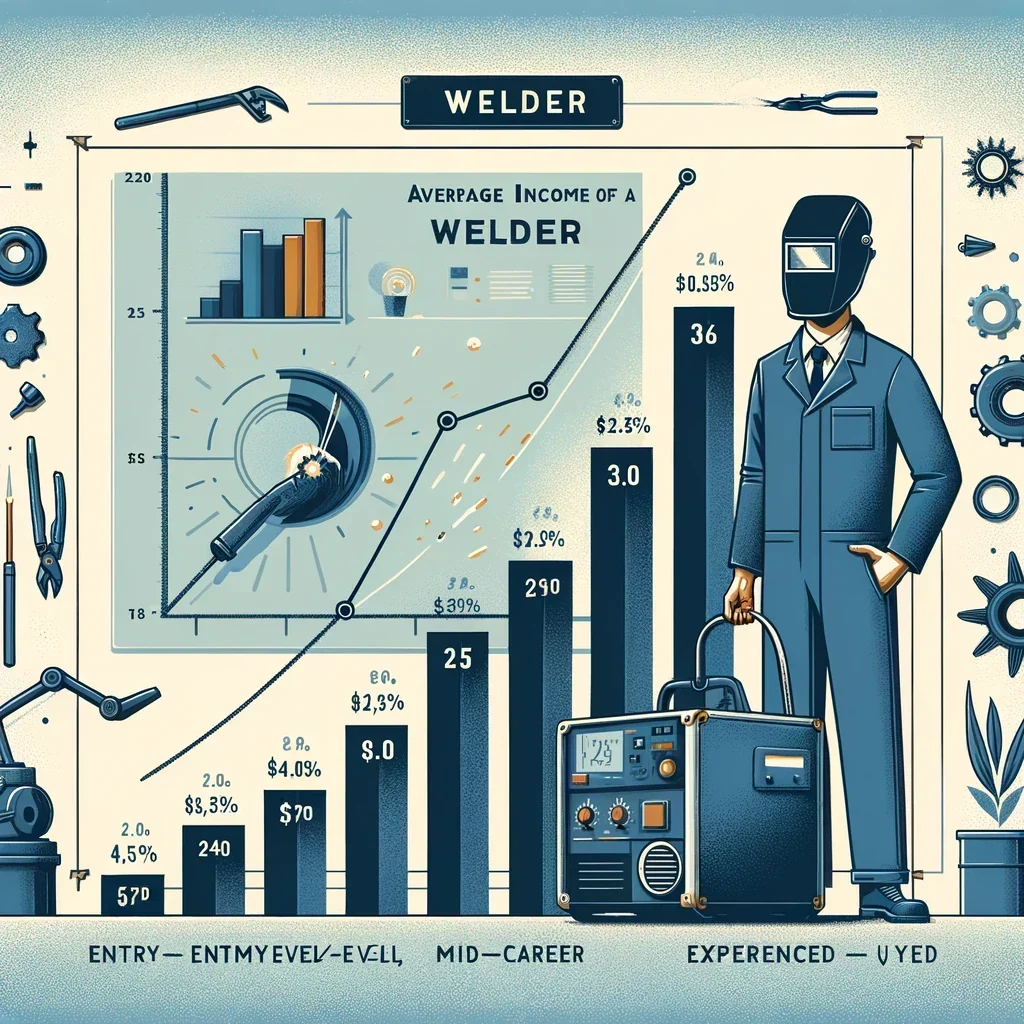
Welders in Texas commonly earn about $40,000 to $65,000 a year, while experienced, specialized, or traveling welders can earn $75,000 to $100,000 or more.
Pay can change quickly depending on where you work what you weld and whether your job includes overtime per diem travel or hazardous conditions A new shop welder.
If you are researching how much does a welder make in texas the useful answer is not one statewide number This guide compares hourly and annual pay explains.
- ✓Many Texas welding jobs fall between roughly $19 and $31 per hour, before overtime and other premiums.
- ✓Houston, the Gulf Coast, and large industrial projects often offer stronger earning potential than smaller general-fabrication shops.
- ✓Pipe, pressure-vessel, structural, underwater, and highly mobile shutdown work can pay more, but usually demands more testing, travel, or risk.
- ✓Annual salary comparisons should include overtime, per diem, insurance, retirement contributions, and unpaid travel time.
- ✓Certifications and documented weld quality can matter more than years on a résumé alone.
How Much Does a Welder Make in Texas?
Texas welders generally earn a broad range because the state has several different welding economies rather than one uniform labor market General welders in manufacturing repair and metal-fabrication.
Converted to full-time annual pay 19 per hour equals about 39 500 at 40 hours per week while 27 per hour is approximately 56 000 At 35 per.
Salary websites may show different averages because they combine different job titles and data periods One source may count only base wages for welder while another includes welding.
- Base pay: The advertised hourly rate may exclude overtime, shift differentials, bonuses, per diem, or travel allowances.
- Work schedule: Ten- or twelve-hour shifts can raise annual income substantially, but they also increase fatigue and may not continue year-round.
- Skill premium: Clean, repeatable welds on difficult materials or positions can command more than general shop experience.
- Local demand: Major construction, energy, shipbuilding, and manufacturing projects can temporarily lift wages in a specific area.
Hourly pay versus annual salary
Hourly pay is the clearest way to compare welding jobs because many welders work variable schedules. A position paying $28 per hour with regular overtime may produce more yearly income than a salaried job listed at $65,000, but the hourly job could also offer fewer guaranteed hours or less predictable employment.
Under federal overtime rules many hourly employees receive overtime for hours above 40 in a workweek although exemptions and job-specific classifications can affect eligibility Never assume that a.
Gross pay is not take-home pay
A wage of 28 per hour does not mean 28 reaches your bank account Federal income tax Social Security Medicare health insurance retirement contributions and other deductions reduce.
Per diem is another important distinction A contractor might advertise a strong weekly package that combines taxable wages with a lodging or meal allowance That amount can help.
What Determines Welder Pay in Texas?
The biggest pay differences usually come from the interaction of skill, industry, location, and work conditions. A welder who can pass a demanding procedure test and read drawings independently is more valuable than someone limited to one repetitive task, even if both have similar time in the trade.
Employers also pay for reliability Consistent attendance accurate fit-up safe work habits low rework productive travel speed and the ability to work without constant supervision can lead to.
- Process: Ask whether the job uses MIG, flux-cored arc welding, TIG, stick, submerged arc, or multiple processes.
- Material: Carbon steel, stainless steel, aluminum, chrome-moly, and nickel alloys require different techniques and may carry different premiums.
- Position and thickness: Overhead, vertical, confined, thick-wall, and critical-service welds can require more testing and precision.
- Responsibility: Layout, fit-up, blueprint reading, inspection preparation, repair, and mentoring often support a higher wage.
Experience and demonstrated ability
Entry-level welders commonly begin with basic fabrication production welding or helper duties They may have completed a technical program but still need to build speed consistency and workplace.
After the first few years employers usually look for evidence of independent performance That can include weld samples procedure qualifications inspection results experience with prints and symbols and.
Certifications and qualification tests
Certifications can improve access to jobs but their value depends on whether local employers need them A credential or qualification related to structural steel pipe pressure equipment or.
Commonly recognized paths may involve American Welding Society standards employer procedure qualifications inspection-related training or industry-specific requirements Before paying for a course review job postings in the Texas.
Industry and working conditions
Welding in a climate-controlled production facility may offer steadier hours and cleaner conditions than field welding on a construction site Field work may pay more because of weather.
Industrial shutdowns and major projects often provide intense earning periods. However, they may involve long shifts, temporary employment, layoffs between projects, and competition for the best assignments. Treat project work as a complete package: examine the duration, schedule, travel policy, lodging, insurance, and what happens when the project ends.
This distinction matters when answering “how much does a welder make in texas”.
Texas Cities and Industries With Different Pay Potential
Location strongly affects welding wages because employers compete for labor within a local industrial economy. Texas has major energy, petrochemical, transportation, construction, manufacturing, and defense markets, but it also has smaller communities where wages may be lower and living costs may differ.
Houston and the surrounding Gulf Coast are often associated with petrochemical plants refineries fabrication yards pipeline work ship-channel operations and industrial maintenance These sectors can create opportunities for.
Dallas–Fort Worth has a broad manufacturing, commercial construction, aerospace, transportation, and equipment-repair base. Jobs may include production welding, structural steel, heavy equipment repair, and custom fabrication. The market is diverse, so a stable indoor production role and a specialized field position may appear in the same city with very different compensation.
San Antonio has construction military-related manufacturing repair and industrial employers Austin and Central Texas include advanced manufacturing semiconductor-related construction commercial development and smaller fabrication operations West Texas and.
- Gulf Coast: Strong potential for industrial, pipe, refinery, shipyard, and turnaround work, often with demanding qualifications.
- Major metros: More job variety, training options, and competition, but commuting and housing costs may be higher.
- West Texas: Field and energy work can offer premiums, while distance, lodging, and project cycles affect the real benefit.
- Smaller markets: Costs may be lower and schedules steadier, but specialized openings and top-end wages may be less common.
Why the highest advertised wage may not be the best offer
Compare the complete employment package rather than the headline hourly figure. A $25-per-hour local job with health coverage, paid holidays, predictable hours, and a short commute may outperform a $34-per-hour traveling job after fuel, meals, unpaid time, and gaps between assignments.
On the other hand a contractor offering lodging transportation overtime and a dependable project can make travel financially worthwhile Request the terms in writing Clarify who pays for hotels whether per.
Specialized Welding Paths That Can Raise Earnings
Specialization can improve earning potential because difficult work is harder to staff and mistakes can be expensive The trade-off is that higher-paid roles often require more training stricter.
Pipe welding is one of the most recognized higher-skill paths in Texas particularly in industrial energy utility and mechanical-contractor work Pipe welders may need to qualify in fixed.
Structural welding can involve buildings, bridges, platforms, equipment, and large steel assemblies. The work may require outdoor exposure, elevated work, rigging awareness, and compliance with project specifications. A structural welder who can interpret drawings and perform fit-up can often access more opportunities than one limited to repetitive shop work.
- Build a process combination: Adding a useful second process, such as stick or flux-cored welding alongside MIG, may expand your job options.
- Learn the paperwork: Reading weld symbols, documenting work, and understanding inspection language can separate higher-level candidates.
- Protect your qualification: Ask how a company maintains continuity and whether long gaps can require retesting.
- Price the conditions: A premium should reflect nights, travel, confined spaces, weather, and schedule intensity—not just the title.
Industrial and pipe welding
Industrial welders may work on tanks, pressure vessels, piping systems, plant equipment, and maintenance projects. These environments frequently emphasize procedure compliance, visual inspection, nondestructive testing, and documentation. A weld that looks acceptable may still fail testing if there is porosity, lack of fusion, cracking, or another discontinuity.
Because the consequences of failure can be serious, employers may prefer workers with documented experience in the relevant material and position. Ask whether the role involves production welding, repair welding, field installation, or maintenance. Each can require a different combination of speed, troubleshooting, and precision.
Traveling and shutdown work
Traveling welders may earn more through overtime, per diem, and project premiums. Shutdowns can produce long weeks over a limited period, which makes annual income difficult to estimate. A worker may earn an impressive amount during the active project but have no paid hours afterward.
Before accepting, calculate expected net income after transportation, meals not covered by per diem, laundry, time away from home, and unpaid transition days. Also ask whether safety orientation, drug screening, welding tests, and travel to the assignment are paid. These details can materially change the value of the offer.
Underwater and other niche work
Underwater welding and specialized inspection-related work are often described as high-paying, but they are not ordinary extensions of entry-level welding. They require substantial commercial-diving preparation, medical qualification, safety training, and comfort with demanding environments. The number of available assignments may be limited, and the physical demands are significant.
Other niche areas include aerospace, exotic alloys, robotic welding support, precision TIG, rail equipment, and high-end fabrication. These paths may reward accuracy and process knowledge more than raw production speed. They can also require employer-specific training, strong documentation habits, and strict quality control.
Keep these limitations in mind when considering “how much does a welder make in texas”.
How Overtime, Benefits, and Per Diem Change Total Compensation
Two welding jobs with the same hourly wage can have very different annual values Welding employers may offer overtime shift premiums bonuses tool allowances health insurance retirement plans.
For example 26 per hour at 40 hours per week produces about 54 000 in straight-time gross pay If the worker averages ten overtime hours each week at.
- Overtime: Confirm the rate, eligibility, typical weekly hours, and whether overtime is voluntary or expected.
- Benefits: Compare employee premiums, deductibles, paid leave, retirement matching, and waiting periods.
- Per diem: Separate reimbursement from taxable wages and confirm the rules for travel days, weekends, and days off.
- Stability: Determine whether hours are guaranteed, seasonal, project-based, or dependent on customer demand.
A simple offer-comparison method
Start with guaranteed annual base pay. Add only the overtime you reasonably expect, then estimate the value of employer-paid insurance, retirement matching, paid holidays, and bonuses. Subtract recurring costs created by the job, such as extra lodging, commuting, tools, parking, or meals.
- Multiply the hourly wage by guaranteed weekly hours and the number of paid weeks.
- Estimate realistic overtime separately instead of treating maximum hours as normal.
- List benefits and waiting periods, including the employee’s share of premiums.
- Subtract job-related expenses and account for unpaid gaps between projects.
- Compare the resulting package with local living costs and your desired schedule.
This method is especially useful when comparing a permanent shop job with a contractor assignment. It also prevents a large per-diem figure from disguising a weak base wage or uncertain employment period.
How to Become a Better-Paid Welder in Texas
There is no single required route into welding. Some people begin through a high school career program, community college, trade school, employer apprenticeship, union pathway, or entry-level helper position. The fastest route is not always the cheapest, and the most expensive school does not necessarily lead to the best job.
Choose training that provides substantial hands-on practice, safe equipment use, blueprint reading, measuring, fit-up, and preparation for the tests used by local employers. Ask what percentage of training time is spent welding rather than sitting in a classroom, and whether the program has relationships with industrial contractors or fabrication employers.
- Start with fundamentals: Learn joint preparation, machine setup, weld symbols, shielding, distortion control, and safe work practices.
- Practice deliberately: Track settings, material, position, defects, and corrections instead of simply repeating beads.
- Target local demand: Review current postings before selecting a process, material, or certification.
- Document results: Keep qualification records, training certificates, supervisor references, and a clear work history.
Skills that employers notice
Blueprint reading and measurement are valuable because welders often need to understand dimensions, tolerances, symbols, and sequence. Fit-up errors can create rework even when the final bead is technically sound. Employers also value workers who can identify a problem before it becomes an expensive repair.
Quality awareness matters in every setting. Learn the causes of undercut, porosity, lack of fusion, distortion, cracking, and poor profile. You do not need to be an inspector to understand why a weld fails, but you should know when to stop, ask a question, and correct the cause.
Safety and communication are also income-producing skills. Following lockout procedures, using ventilation, controlling fire hazards, wearing proper protective equipment, and reporting unsafe conditions protect your ability to keep working. A productive welder who creates avoidable safety or quality problems may not receive the raises that technical ability alone would suggest.
Negotiating a higher wage
Negotiate with evidence rather than a general statement that you deserve more Point to relevant process experience successful tests measurable production low repair rates difficult materials lead responsibilities.
Ask whether raises are tied to skill levels, certifications, annual reviews, production targets, or project assignments. A transparent progression plan can be more valuable than a slightly higher starting rate with no path forward.
Common Mistakes When Comparing Texas Welding Jobs
Many applicants focus on the hourly number and overlook the conditions attached to it. That can lead to accepting a job that pays well on paper but produces less savings, more unpaid time, or an unsustainable schedule.
- Assuming overtime is guaranteed: Ask for typical hours and confirm whether the schedule changes with workload.
- Counting per diem as salary: Reimbursements may end when travel ends and may not increase retirement or overtime calculations.
- Ignoring test requirements: A job may advertise a high rate but require a difficult test before you are placed at that rate.
- Overlooking benefits: A low-premium health plan or retirement match can be worth thousands annually.
- Failing to price travel: Long commutes, unpaid mobilization, and time away from home reduce the practical value of a premium.
Another mistake is comparing a beginner wage with a specialist wage as though they are competing offers for the same applicant Higher rates usually reflect a combination of.
FAQ: How Much Does a Welder Make in Texas?
What is the starting pay for a welder in Texas?
Entry-level welders often start around $17 to $23 per hour, although training, location, employer demand, and the ability to pass a practical test can move the offer higher or lower. Helper and trainee roles may begin below experienced-welder rates while providing a path to advancement.
Can a welder make $100,000 a year in Texas?
Yes, but $100,000 is generally not the standard base salary for a general welder. It is more likely through specialized work, extensive overtime, travel, shutdowns, premium assignments, per diem, or a combination of those factors.
Someone targeting that income should examine how many hours and weeks are required. A temporary project with very long shifts is different from a stable $100,000 salary with year-round employment.
Do welders make more in Houston than in other Texas cities?
Houston and the Gulf Coast can offer strong welding opportunities because of industrial, petrochemical, shipyard, and energy-related work. However, not every Houston job pays more than every job elsewhere. Specialty, qualifications, schedule, commuting costs, and project timing can matter more than city limits.
Is pipe welding the highest-paying welding job in Texas?
Pipe welding is often among the better-paid common specialties, especially when it involves difficult positions, alloys, pressure systems, inspection, or industrial projects. It is not automatically the highest-paying path for every worker, and the best opportunities may require travel, testing, and irregular schedules.
How much does a welder make in Texas without certification?
A welder without formal certification can still find work in production, repair, fabrication, or entry-level positions. Pay may be lower when the employer must provide extensive training, and some industrial or structural jobs will require a performance qualification before work begins.
Practical ability can matter as much as a certificate for certain jobs, but documented qualifications expand the range of positions you can pursue.
Does a welding degree increase pay in Texas?
A degree is not usually required to become a welder, and an expensive degree alone does not guarantee higher pay. A focused technical program can be valuable when it builds hands-on skill, prepares you for employer tests, and connects you with relevant hiring employers.
For many workers, process qualifications, inspection knowledge, blueprint reading, and reliable field experience produce a faster wage benefit than additional general education.
Are Texas welding jobs paid hourly or by salary?
Most production, fabrication, construction, and field welding jobs are hourly, although supervisors, inspectors, estimators, and some specialized technical employees may be salaried. Hourly work can produce higher annual income when overtime is available, while salaried work may offer steadier pay and different benefits.
Read the offer carefully to determine overtime eligibility, expected hours, travel compensation, and whether the stated annual amount is guaranteed.
Conclusion
So how much does a welder make in Texas A realistic broad range is about 40 000 to 65 000 for many full-time roles with experienced and specialized.
Use the hourly rate as a starting point, then verify the schedule, overtime rules, benefits, testing requirements, project duration, and travel costs. Welding can provide a strong career path, but higher pay should never outweigh proper training, ventilation, protective equipment, and safe work practices.
Compare three current Texas welding offers using guaranteed base pay, realistic overtime, benefits, travel costs, and required qualifications before choosing your next step.