Skills Needed to Be a Welder: Clear Overview and Expert Insights
A welder needs safe work habits, steady hand control, welding-process knowledge, blueprint-reading ability, measurement skills, and physical stamina.
The skills needed to be a welder extend beyond making a strong bead A capable welder must prepare materials select suitable settings control heat recognize defects and protect.
A small detail can change the hiring decision an applicant who can produce a decent bead may still struggle if they cannot read a weld symbol fit parts.
- ✓Welding quality depends on preparation, fit-up, heat control, technique, and inspection—not bead appearance alone.
- ✓Safety awareness, blueprint literacy, measurement, and communication are essential workplace skills.
- ✓MIG, TIG, stick, and flux-cored welding require overlapping fundamentals but different control and setup abilities.
- ✓Practice should include position changes, joint types, material thicknesses, and defect diagnosis.
- ✓Certifications can verify performance for specific procedures, but they do not replace judgment or safe habits.
Core skills needed to be a welder
Welding joins materials by using heat pressure or both but the operator controls far more than the arc The welder prepares the joint manages the molten pool protects.
The strongest foundation is a combination of process knowledge and repeatable hand skills A person who understands why a weld fails can correct the cause someone who only.

- Joint preparation: Clean, align, bevel, and fit the parts so the weld can penetrate and fuse as intended.
- Arc and pool control: Maintain appropriate travel speed, angle, distance, and heat while watching the molten metal.
- Inspection: Identify undercut, porosity, cracking, lack of fusion, excessive spatter, and dimensional problems.
- Repeatability: Produce acceptable results more than once, including when working in awkward positions.
Hand-eye coordination and fine motor control
Welders coordinate both hands their eyes body position and sometimes a foot control One hand may guide the torch or electrode while the other feeds filler metal supports.
Good coordination helps maintain a consistent travel angle, arc length, and speed. Excessive movement can widen the bead or cause irregular fusion, while moving too slowly can add unnecessary heat and create burn-through or distortion.
Material and heat awareness
Different metals conduct and retain heat differently Thin sheet can burn through quickly while a thick joint may require preheating multiple passes or a carefully controlled sequence Aluminum.
A skilled welder watches how the material reacts. Warping, color changes, a collapsing edge, or an unstable pool can signal that the heat input, joint setup, or travel speed needs adjustment.
Position control
Flat welding is generally easier to learn because gravity helps keep the molten metal in place. Horizontal, vertical, and overhead positions demand more precise control of the puddle and often require changes in speed, amperage, bead size, or manipulation.
Position skill matters because real work rarely places every joint comfortably at waist height A welder may need.
Safety, judgment, and physical readiness
Welding creates several simultaneous hazards: intense ultraviolet and infrared radiation, hot metal, sparks, fumes, compressed gases, electrical energy, noise, and fire risk. Safety is therefore an operating skill, not a final reminder added after the technical work.
A responsible welder evaluates the workspace before striking an arc. That evaluation includes nearby combustibles, ventilation, grounding, machine condition, gas-cylinder security, protective equipment, and whether other workers could be exposed to the arc or sparks.
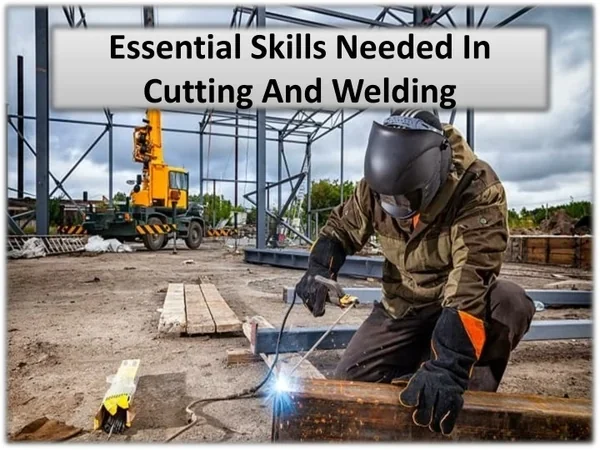
- Protective equipment: Use the correct helmet shade, safety glasses, flame-resistant clothing, gloves, footwear, and hearing or respiratory protection when required by the task.
- Fume control: Use suitable local exhaust or ventilation and follow workplace controls for coated, painted, galvanized, or contaminated material.
- Fire prevention: Remove or shield combustibles, control sparks, and follow required fire-watch procedures.
- Gas and electrical awareness: Secure cylinders, inspect hoses and connections, and keep leads and grounds in safe condition.
Hazard recognition
Welders need to recognize that a clean-looking work area may still be dangerous A tank pipe or container can contain flammable residue a coating can release hazardous fumes.
Ventilation also requires judgment. A fan that blows fumes across another worker is not necessarily effective control. Local exhaust positioned near the source may be more appropriate, while respirators require a workplace respiratory-protection program rather than casual use.
Physical stamina and body mechanics
Many welding jobs involve standing kneeling climbing lifting reaching or holding a controlled position for extended periods Physical readiness does not mean ignoring pain or forcing a posture.
Hand steadiness can decline with fatigue, heat, dehydration, or awkward positioning. Since fatigue increases the chance of poor fit-up, missed hazards, and inconsistent travel, pacing and ergonomic awareness directly support weld quality.
Professional judgment
Welders often make decisions before anyone sees the final bead. They may need to stop when the material is contaminated, the drawing is unclear, the joint cannot be accessed safely, or the supplied parts do not match the specification.
Following a procedure is important but following it intelligently matters too If a welder notices a conflict between.
Blueprint reading, measurement, and fit-up
Drawings translate design intent into a physical assembly. A welder may need to identify dimensions, material thickness, joint type, weld size, weld length, location, sequence, finish, and acceptable tolerances. These details determine how the work is prepared and inspected.
Blueprint reading is one of the skills needed to be a welder that separates basic arc operation from.
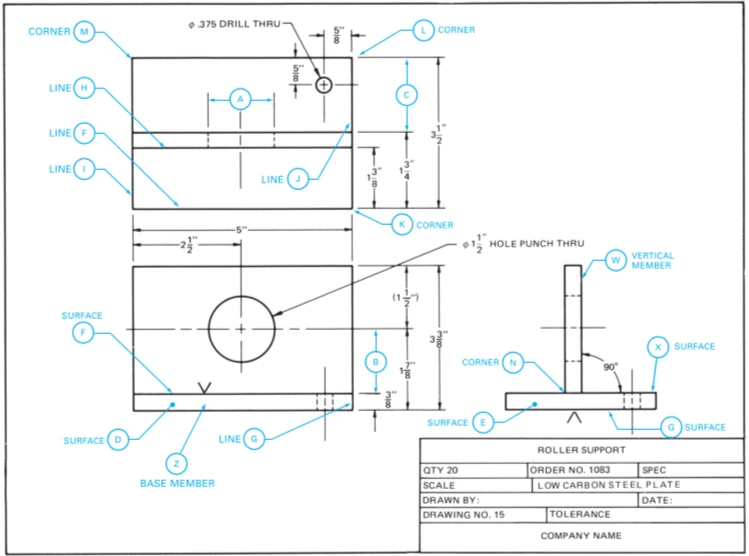
- Weld symbols: Confirm the arrow side, other side, weld type, length, pitch, size, contour, and any process or finish notes.
- Dimensions: Check measurements, tolerances, angles, hole locations, and reference points before welding.
- Material identity: Verify alloy, thickness, heat treatment, coating, and filler-metal requirements when specified.
- Assembly sequence: Understand when to tack, clamp, weld, inspect, and release restraints.
Measurement and layout
Accurate layout requires more than reading a ruler Welders may use tape measures combination squares levels angle finders.
Before welding check both individual parts and the assembled fit A part can have the correct length but still be misaligned because of an incorrect angle offset gap.
Joint design and fit-up
Common joints include butt lap corner edge and T-joints Their required preparation depends on thickness access load process and specification A groove weld may need a bevel and.
Fit-up controls how much filler and heat are needed A gap that is too small can restrict penetration a gap that is too large can cause burn-through or.
Tacking and distortion control
Tacks hold parts in position but they are also part of the final assembly strategy Tacks must be correctly placed adequately sized and free of cracks or contamination.
Heat causes expansion and contraction which can pull an assembly out of square Welders control distortion through balanced sequencing suitable tack placement clamps fixtures intermittent welds where permitted.
Welding process knowledge and technique
Employers may expect experience with one process or several The main processes encountered in many U S workplaces include gas metal arc welding gas tungsten arc welding shielded.
The skills needed to be a welder become more valuable when they transfer across processes. Arc awareness, joint preparation, safety, and inspection apply broadly, while electrode handling, torch control, shielding, and machine setup require process-specific practice.
- MIG or GMAW: Uses continuously fed wire and is often productive for shop fabrication, but requires attention to wire speed, voltage, gas coverage, and liner or tip condition.
- TIG or GTAW: Offers precise control and clean welds, but demands careful torch movement, filler feeding, surface preparation, and patience.
- Stick or SMAW: Handles outdoor work and many structural applications well, while requiring electrode-angle control, arc-length discipline, and slag removal.
- Flux-cored or FCAW: Can provide high deposition and useful penetration, but may involve slag, fumes, spatter, and different shielding requirements.
MIG technique
MIG welding is common in fabrication because the wire feeds continuously and can support efficient production. The operator must coordinate gun angle, stickout, travel speed, wire-feed speed, voltage, gas flow, and contact-tip condition.
Too much stickout can reduce effective heating and create an unstable arc Poor gas coverage can cause porosity while excessive travel speed may produce a narrow bead with.
TIG technique
TIG welding provides fine control and is frequently used where appearance, precision, or clean welds matter. It requires stable torch movement and deliberate filler-metal addition, often while the welder controls current with a foot pedal or fingertip control.
Because TIG is sensitive to contamination, cleaning and preparation are critical. Touching the tungsten to the work, dipping filler into the electrode, or allowing the torch to drift out of shielding coverage can interrupt the weld and require rework.
Stick and flux-cored technique
Stick welding requires the operator to maintain a short, controlled arc as the electrode length changes. The welder must also manage slag between passes and select electrodes suited to the material, position, and procedure.
Flux-cored welding may use self-shielded wire or external shielding gas In either case correct polarity wire selection travel angle and slag removal matter A welder who assumes all flux-cored wire behaves like solid MIG wire can create defects or.
Machine setup and troubleshooting
Setup includes checking polarity, grounding, leads, consumables, shielding gas, settings, and workpiece cleanliness. A machine display is only a starting point; the arc and bead provide feedback about whether the setup is working.
When a weld is poor change one likely variable at a time when conditions allow For example inspect gas coverage for porosity check travel speed for an irregular.
Quality control and defect diagnosis
Welders are responsible for producing work that meets a requirement, not merely work that looks attractive. Inspection may be visual, dimensional, or supported by nondestructive testing, depending on the application and employer procedure.
Visual inspection often begins with the joint and continues through the surrounding base metal Check location size profile continuity craters undercut overlap spatter arc strikes distortion and visible.
- Porosity: Small holes or gas pockets may indicate contamination, poor shielding, leaks, drafts, or incorrect technique.
- Lack of fusion: The weld may not properly bond to the sidewall or previous pass because of insufficient heat, poor angle, or excessive speed.
- Undercut: A groove at the toe can result from excessive current, long arc length, or improper travel control.
- Cracking: Cracks are serious discontinuities that require stopping, evaluation, and correction according to the applicable requirements.
Using cause-and-effect troubleshooting
Defect diagnosis starts with identifying what changed. Ask whether the problem occurs at the beginning, middle, or end of the weld; on one material or all materials; in one position or every position; and after a particular setup change.
For instance porosity that begins after moving outdoors may point toward wind disrupting shielding Inconsistent penetration only on thick sections may suggest joint preparation or heat-input issues A.
Documentation and accountability
Some workplaces require welders to record heat numbers, material traceability, machine settings, inspection results, or repair information. Accurate documentation helps supervisors and inspectors determine what was made, how it was made, and whether a problem affects other parts.
Honest reporting is part of quality. Hiding a defect can allow an unsafe part into service and make the eventual repair more expensive. A professional welder communicates early, protects questionable work from being used, and follows the approved repair process.
Communication, teamwork, and workplace habits
Welding is often collaborative. Fitters, engineers, inspectors, supervisors, material handlers, and other welders may all contribute to one assembly. Clear communication prevents incorrect assumptions about dimensions, sequence, materials, and changes to the drawing.
Workplace reliability also matters. Showing up prepared, maintaining tools, keeping a clean station, and returning equipment to usable condition demonstrate that the welder understands production beyond the arc itself.
- Clarify changes: Ask whether a revised drawing or verbal instruction supersedes the current plan before proceeding.
- Protect the workflow: Label parts, preserve orientation marks, and keep completed work separate from items awaiting inspection.
- Leave useful notes: Record unusual fit-up conditions, machine issues, or approved adjustments for the next person.
- Respect shared equipment: Clean contact surfaces, store leads properly, and report damage instead of passing it along.
Communication under pressure
Production deadlines can make people reluctant to stop. However, a brief question about a missing dimension or unsafe condition usually costs less than reworking an assembly or investigating an incident.
Good communication is specific. Instead of saying that “something looks wrong,” describe the measured gap, mismatched material, unclear symbol, or observed machine behavior. Specific information lets the responsible person make a faster decision.
Learning from feedback
Constructive feedback may concern bead profile, travel speed, preparation, housekeeping, or documentation. The useful response is to connect the feedback to a repeatable change and then verify the result on the next suitable practice piece or production joint.
Defensiveness slows development. Welding involves many variables, and even experienced operators continue refining technique when materials, procedures, and access conditions change.
Training, practice, and certification decisions
Training can begin in a community college, trade school, apprenticeship, employer program, or supervised shop. A good program combines safety, metallurgy basics, machine operation, joint preparation, blueprint reading, hands-on practice, and inspection rather than treating welding as a purely visual craft.
Practice should be structured. Repeating one comfortable flat-position bead may improve familiarity but does not prove readiness for vertical work, thin material, pipe, overhead joints, or production tolerances.
- Build fundamentals: Practice safe setup, cleaning, fit-up, tacking, arc starts, stops, and bead control before chasing speed.
- Vary conditions: Work with different joint types, thicknesses, positions, and appropriate processes under supervision.
- Inspect every coupon: Review profile, fusion, dimensions, discontinuities, and the reason for any failure.
- Keep a record: Note material, process, settings, position, results, and corrections so practice becomes measurable.
What certification proves
A welding certification or qualification test generally demonstrates performance under a defined procedure and set of conditions. The exact scope can depend on process, material, thickness, position, joint type, and other variables.
Certification can improve employability especially for structural pipe fabrication or regulated work but it is not a universal license to weld every material or component Employers may still.
Entry-level readiness
An entry-level candidate does not need mastery of every process. A realistic readiness standard is safe behavior, willingness to learn, basic machine and tool familiarity, dependable attendance, ability to follow drawings and instructions, and enough control to produce acceptable supervised work.
Training becomes more valuable when the learner can explain what they are doing. Understanding why a clean joint, correct polarity, suitable shielding, or controlled heat matters makes it easier to adapt to unfamiliar equipment.
Common mistakes that slow skill development
Many welding problems come from preparation and consistency rather than a lack of effort. Rushing to strike an arc can hide errors that should have been corrected before welding began.
Recognizing these patterns helps a learner practice deliberately and helps an employer distinguish a correctable beginner issue from a deeper reliability concern.
- Dirty material: Oil, rust, paint, mill scale, moisture, and coatings can contaminate the weld or create hazardous fumes.
- Wrong fit-up: An incorrect gap, angle, or alignment forces the operator to compensate with heat and filler.
- Chasing appearance: A smooth bead can still have poor fusion, inadequate size, or hidden defects.
- Ignoring the stop: Continuing through unstable conditions increases rework and may create a safety problem.
Overcorrecting with heat
When fusion appears poor, adding more heat may seem logical. It can instead cause burn-through, distortion, excessive penetration, or damage to heat-sensitive material. Check preparation, angle, travel speed, polarity, and access before simply increasing settings.
Inconsistent practice
Changing several variables at once makes improvement difficult to measure. A better practice session isolates a goal, such as maintaining travel speed, controlling a vertical fillet, or keeping a consistent root opening, and then reviews the result.
Neglecting the end of the weld
Crater cracks, underfill, and uneven tie-ins often occur at stops and starts. The operator needs a deliberate method for filling the crater, restarting, blending the tie-in, or using the procedure’s specified technique. Ending neatly is part of producing a complete weld.
FAQ: skills needed to be a welder
What is the most important skill for a beginner welder?
Safe, controlled consistency is the best starting point. A beginner should learn to prepare the joint, maintain a stable arc or torch, follow the procedure, and stop when conditions are unsafe or unclear.
Do welders need to be good at math?
They need practical math rather than advanced mathematics in most entry-level roles. Measuring dimensions, converting units, checking angles, calculating layout points, and understanding tolerances are common requirements.
Is blueprint reading required for every welding job?
Not every job uses detailed engineering drawings, but most professional welding work involves some combination of dimensions, symbols, sketches, work instructions, or procedure sheets. Blueprint literacy expands the types of work a welder can perform accurately.
Which welding process should a beginner learn first?
There is no single best process for every career MIG can provide a practical introduction in many fabrication settings while stick may suit structural or outdoor work and.
Can someone become a welder without certification?
Yes, some entry-level jobs provide supervised training and do not require certification at hiring. However, specific projects may require a qualified welder, and certification can demonstrate ability under defined conditions. It does not replace experience or broad process knowledge.
How long does it take to develop welding skills?
Basic machine operation can be learned relatively quickly, but dependable job performance takes longer because it involves varied materials, positions, fit-ups, inspection standards, and production conditions. Progress depends on supervised practice and the complexity of the target work.
What physical abilities does welding require?
Welding commonly requires visual concentration hand control standing kneeling reaching lifting within workplace limits and working in restricted positions Employers should evaluate essential job functions and provide appropriate.
Conclusion
The skills needed to be a welder combine technical control with preparation measurement blueprint reading safety judgment physical awareness inspection and communication Process knowledge helps but reliable results.
Certification and practice can open opportunities yet no credential removes the need to follow procedures control fumes and fire hazards and stop when conditions are unsafe Build skills.
Choose one target welding job, list its required process, materials, positions, drawings, and certification expectations, then build a supervised practice plan around those requirements.