Pipeline Welder Pay: Essential Information and Useful Advice
Pipeline welder pay commonly ranges from about $55,000 to more than $120,000 annually, with overtime, travel, union status, and skill level driving the difference.
A pipeline welder can earn a solid income but a job posting s hourly rate rarely tells the whole story Two welders with similar experience may take home.
That makes pipeline welder pay difficult to identify from a single number The cause of a high or low offer may be the weld process a code qualification.
This guide explains realistic pay ranges, the factors that change them, how pipeline welding compares with related trades, and which qualifications tend to improve bargaining power. You will also learn how to compare hourly wages with annual income, evaluate per diem and travel arrangements, spot weak offers, and decide whether a pipeline position fits your financial and lifestyle goals.
- ✓Pipeline welding income varies widely because overtime, location, union agreements, travel, and specialty qualifications can matter as much as the base rate.
- ✓Annual earnings are not the same as hourly pay; schedule reliability, unpaid time, benefits, and project gaps affect real compensation.
- ✓Pipe-position skill, code testing, repair ability, safety performance, and dependable field experience generally improve access to better assignments.
- ✓Before accepting an offer, confirm the wage basis, overtime rules, per diem, travel time, housing, benefits, testing costs, and expected project duration.
What Pipeline Welder Pay Usually Looks Like
Pipeline welding is not one uniform job category. A welder may work on cross-country transmission lines, gathering systems, refinery piping, compressor stations, distribution networks, or maintenance and repair crews. Each setting has different production targets, welding procedures, hazards, schedules, and compensation practices.
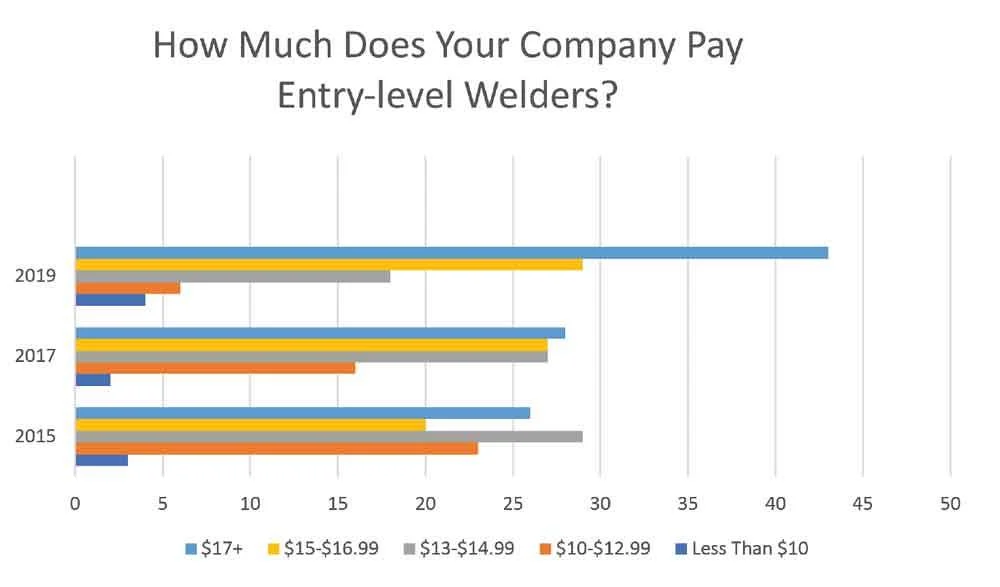
In broad U S terms entry-level or developing pipeline welders may see annualized earnings around 45 000 to 70 000 when work is steady Experienced welders who can.
These figures describe gross income before taxes and personal expenses. They may include substantial overtime, travel allowances, or long project schedules. A worker who earns $100,000 during an intense construction season may not have the same annual stability as someone earning $80,000 on a more consistent local schedule.
- Base rate: The quoted hourly wage may exclude overtime, per diem, subsistence, bonuses, and employer-paid benefits.
- Skill threshold: Passing a test for a specific welding procedure can matter more than simply adding another year of general experience.
- Project cycle: Construction work may pay well while active but can include layoffs, travel between jobs, or unpaid gaps.
- Gross versus usable income: Taxes, lodging, meals, vehicle costs, tools, insurance, and time away from home reduce the practical value of a package.
Hourly, daily, and annual compensation
Employers may describe compensation as an hourly wage a daily rate a welders scale or a total package Hourly pay is easiest to compare but it still requires context For example 38 per hour at 40 hours per week produces.
A simple annual estimate uses the regular hourly rate multiplied by expected hours, then adds overtime and other guaranteed compensation. The estimate becomes unreliable if the advertised schedule is merely “up to” a certain number of hours. Ask how many hours were actually available on comparable projects, not just how many the employer hopes to schedule.
| Pay element | What it means | Question to ask |
|---|---|---|
| Regular wage | Pay for standard scheduled hours | How many regular hours are expected each week? |
| Overtime | Premium pay for qualifying hours under the agreement or law | When does overtime begin, and is it common or occasional? |
| Per diem | Allowance intended to help cover meals and lodging while traveling | Is it paid for every day, only workdays, or only when away from a home area? |
| Benefits | Health coverage, retirement contributions, paid leave, and other noncash value | What is the waiting period and employee contribution? |
| Bonus or incentive | Additional pay tied to attendance, production, completion, or company discretion | Is it contractual, formula-based, or discretionary? |
What Determines Pipeline Welder Pay?
The strongest pay differences come from the combination of welding ability and job conditions. A welder who can produce sound, code-compliant joints in difficult positions has more value than someone who only performs routine shop work. However, technical ability must be paired with reliability, safe work habits, and the willingness to follow a project’s welding procedure specification.
Employers also pay for risk reduction. Failed radiographic or ultrasonic examinations, repair welds, delays, and rejected joints can be expensive. A welder who consistently prepares joints correctly, controls heat input, maintains cleanliness, and documents work properly can support productivity even when the wage is higher.
- Welding process: Shielded metal arc welding, gas tungsten arc welding, flux-cored processes, and combination procedures may carry different expectations.
- Position and diameter: Small-diameter pipe, large-bore work, fixed-position joints, and restricted-access welds require different levels of control.
- Code and procedure: The governing code, qualified procedure, material, wall thickness, and inspection method shape the difficulty of the work.
- Field responsibility: Fit-up awareness, preheat control, consumable handling, repairs, and job documentation can distinguish a dependable production welder.
Experience and test performance
Years in the trade help, but years alone do not determine earnings. Employers usually care about what an applicant can prove under the exact conditions of the assignment. A welder with fewer years but current, relevant test records may be more employable than a long-serving welder whose experience does not match the project.
Pipeline work often involves a practical test or a qualification tied to a specific procedure. The result may be affected by pipe size, wall thickness, welding position, backing requirements, process combination, and acceptance criteria. Passing one test does not automatically qualify a person for every pipeline job.
Keep accurate records of test dates, processes, positions, materials, and employers. Do not claim qualifications that have expired, cannot be verified, or do not apply to the procedure being used. Honest documentation protects both the welder and the contractor.
Location, demand, and working conditions
Pay often rises when a project is remote, urgent, difficult to staff, or physically demanding. Work in sparsely populated areas may require long drives, camp living, variable weather, and limited services. A metropolitan maintenance job may advertise less money but provide a shorter commute, predictable hours, and fewer personal expenses.
Regional demand changes with construction schedules, energy infrastructure investment, plant outages, and contractor availability. A temporary shortage of qualified welders can create strong offers, while a project cancellation or seasonal slowdown can quickly reduce available hours.
Union and nonunion compensation
Union work commonly uses a negotiated wage and benefit structure that separates the worker’s base wage from the total package. The package may include pension contributions, health and welfare payments, training funds, and other benefits. A nonunion employer may offer a higher direct wage but fewer benefits, or may provide more flexibility in assignments.
The right comparison is not simply union versus nonunion. Compare the complete package, including eligibility rules, dues, travel requirements, overtime, pension value, and the likelihood of continuous work. A lower taxable wage with strong employer-paid benefits may compete favorably with a higher wage that requires the worker to purchase insurance and save independently.
How Overtime, Travel, and Per Diem Change Earnings
Many attractive pipeline compensation packages depend on overtime. Ten- or twelve-hour shifts, rotating schedules, weekends, and extended project periods can produce substantial gross income. They can also increase fatigue, family disruption, transportation costs, and the chance that a worker will be unavailable for the next assignment.
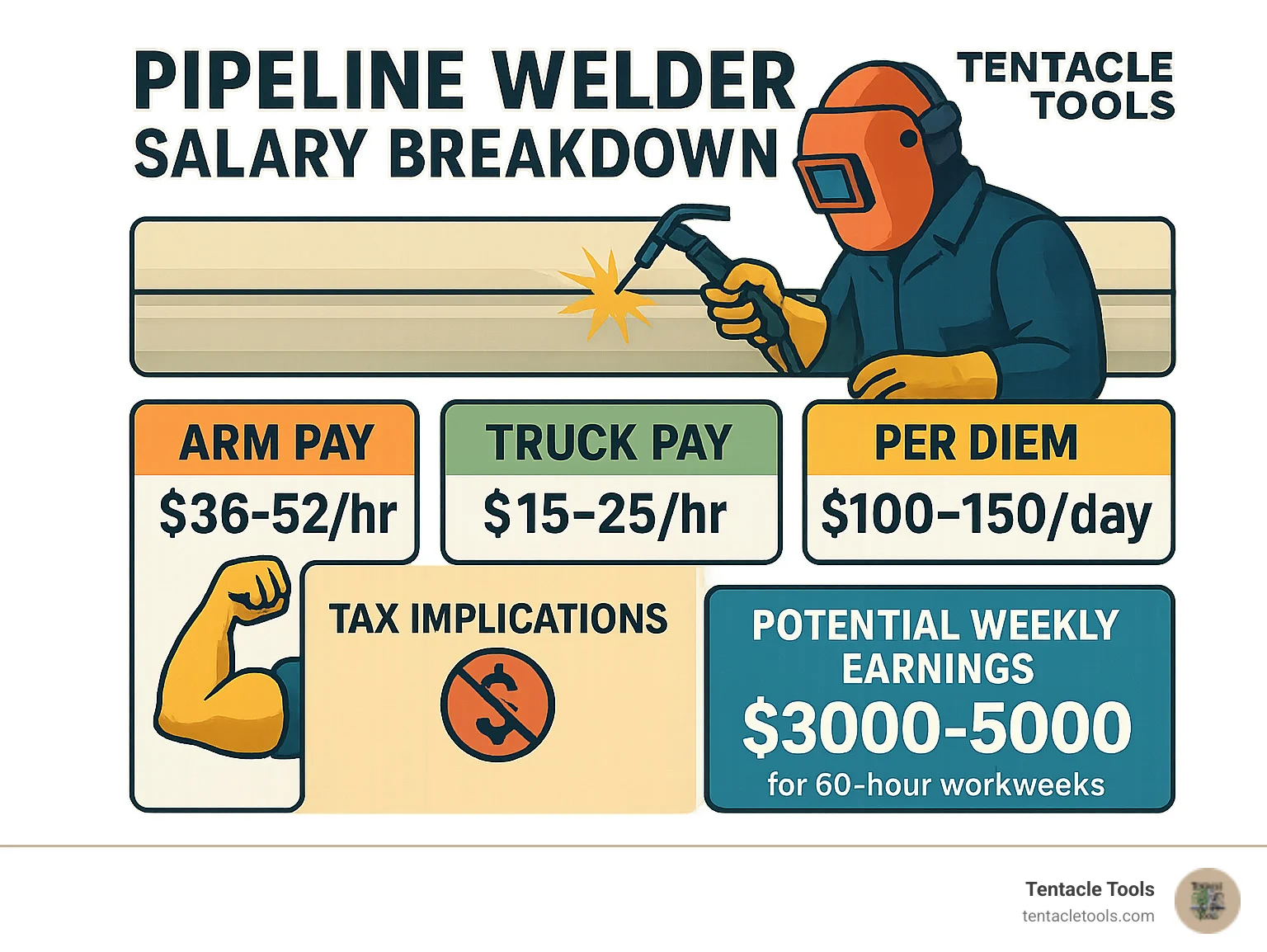
Pipeline welder pay should therefore be evaluated as a schedule, not just a rate. A $42 hourly wage with 60-hour weeks may look better than a $36 wage with 45-hour weeks, but the difference may shrink after travel, meals, lodging, unpaid preparation, and time between projects.
- Guaranteed hours: Determine whether the employer guarantees a minimum or merely describes a typical schedule.
- Overtime trigger: Confirm whether premium pay begins after a daily threshold, a weekly threshold, or under a project agreement.
- Travel treatment: Ask whether drive time, mobilization, demobilization, and travel between sites are paid.
- Allowance rules: Find out whether per diem continues during days off, weather delays, training, or waiting periods.
Per diem is not the same as wages
Per diem is generally intended to offset travel-related living costs rather than function as ordinary hourly pay. Its tax treatment can depend on how the arrangement is structured and whether the worker meets applicable requirements. Do not assume that every dollar of an allowance has the same value as taxable wages.
Ask whether the employer provides a hotel, camp lodging, or a fixed allowance. If the allowance is too low for the location, the worker may spend part of it on basic housing and food. If lodging is provided but meals are not, the daily budget may work differently than a package that provides both.
This is an important consideration for pipeline welder pay.
Travel costs and project gaps
A distant job may involve fuel, vehicle wear, flights, baggage, rental cars, or temporary housing. Some contractors reimburse these costs; others expect the worker to reach the site independently. Clarify the reimbursement process and timing before accepting, especially if you cannot afford to carry large expenses for several weeks.
Also estimate what happens when a project ends. A high weekly income is less impressive if the next assignment is uncertain and the worker must pay for return travel or remain away from home without compensation. Ask about the contractor’s typical project pipeline and whether employees are transferred to another job.
How to Compare a Pipeline Welding Offer
A useful comparison converts every offer into several views: regular hourly value, likely weekly gross income, estimated annual income, benefit value, and personal cost. This prevents a large overtime promise or per diem figure from hiding an unstable schedule.
Start with guaranteed information, then create a realistic scenario and a conservative scenario. The realistic scenario uses the hours the contractor commonly provides; the conservative scenario assumes weather delays, short weeks, project transitions, and unpaid travel. If the offer only works under perfect conditions, treat it as a riskier opportunity.
- Written rate: Get the base wage, overtime formula, shift differential, bonus terms, and allowance rules in writing.
- Expected schedule: Confirm start date, daily hours, days per week, anticipated duration, and likely shutdown periods.
- Total package: Add health insurance, retirement contributions, paid leave, and employer-paid travel support.
- Personal budget: Subtract taxes, commuting, tools, meals, lodging not covered, insurance premiums, and time away from other work.
A practical comparison example
Imagine Offer A pays 36 per hour for a projected 50-hour week and includes a modest benefit package Offer B pays 42 per hour for 40 hours provides.
Neither offer can be judged correctly without knowing overtime rules and duration. If Offer A lasts four months and Offer B lasts nine months, the lower weekly total could produce greater annual stability. The comparison must include the weeks when no paycheck arrives.
Questions to ask before accepting
- What is the exact base wage, and is it an employee wage or an independent-contractor rate?
- When does overtime begin, and how are weekends, holidays, or night shifts paid?
- How many hours were available on the last comparable project?
- What code, procedure, pipe sizes, positions, and processes must I test for?
- Who pays for testing, travel, lodging, safety training, tools, and required equipment?
- Is per diem taxable or non-taxable under the employer’s arrangement, and when is it paid?
- What happens if the project is delayed by weather, permitting, inspection, or material shortages?
- Are benefits available immediately, and what employee contributions or waiting periods apply?
Skills That Can Improve Earnings
The best way to improve earning potential is to become useful for difficult, recurring work rather than collecting credentials without a clear job application. Employers value welders who can pass relevant tests, maintain quality under production pressure, and work safely without constant supervision.
Strengthening fundamentals can have a larger payoff than chasing a job title. Consistent fit-up, arc control, travel speed, interpass cleaning, preheat awareness, and defect prevention reduce repairs. Communication with fitters, foremen, inspectors, and other welders also helps a crew avoid delays.
- Track qualifications: Maintain a clear record of tests, procedures, positions, materials, and dates.
- Build process range: Develop competence in the processes and combinations commonly requested in your target market.
- Protect quality: Learn how preparation, consumable storage, heat control, and inspection requirements affect acceptance.
- Be dependable: Attendance, punctuality, accurate reporting, and safe decisions influence whether contractors request you again.
Technical abilities employers notice
Pipe welders are often judged on more than the final bead. Reading drawings and welding symbols, understanding joint preparation, identifying material or thickness changes, and following a qualified procedure all matter. A welder who recognizes a fit-up problem early can prevent a rejected joint and protect the schedule.
Repair work can also increase value. Repairing a weld requires disciplined defect removal, correct re-preparation, careful welding, and compliance with inspection requirements. It is not simply a matter of adding metal to a visible flaw.
Credentials and training
Training can help an applicant reach the testing stage, but a certificate does not guarantee a higher wage. The strongest credentials are those recognized by employers in the target region and connected to actual work requirements. Ask contractors which tests and qualifications they need before spending money on a course.
Safety training is essential in pipeline environments because crews may work around heavy equipment, excavation, pressure systems, vehicles, flammable materials, and changing terrain. Never treat a wage premium as compensation for ignoring a hazard or rushing a required control.
Risks, Limitations, and Common Pay Mistakes
High income can conceal high exposure to physical strain, weather, injury, job insecurity, and time away from home. Welding itself involves fumes, ultraviolet radiation, heat, noise, burns, eye hazards, and ergonomic stress. Pipeline work can add remote locations, vehicle movement, excavation hazards, and changing site conditions.
Pay should never be the only reason to accept unsafe work. A responsible employer should provide appropriate procedures, training, personal protective equipment, hazard communication, and a way to stop and report unsafe conditions. Workers should follow site rules and applicable safety requirements rather than relying on informal shortcuts.
- Counting per diem as salary: An allowance may cover necessary expenses and may not remain as spendable income.
- Assuming overtime is guaranteed: A project can lose hours because of weather, inspection delays, materials, or shutdowns.
- Ignoring unpaid time: Testing, travel, mobilization, waiting, and changing sites may reduce the effective hourly rate.
- Comparing wages only: Insurance, retirement, leave, tools, and job continuity can materially change the offer’s value.
When a high rate is not a better job
A premium rate may reflect unusual risk, emergency work, an unpopular location, a short deadline, or a project that is difficult to staff. It may be worthwhile if the terms are clear and the worker can manage the conditions. It may be a poor choice if the employer cannot explain payment timing, housing, safety expectations, or project duration.
Watch for vague promises such as “six figures easily,” “unlimited overtime,” or “per diem on top” without written terms. Ask for a compensation sheet or employment agreement, and verify whether the hiring party is the actual contractor or a recruiter passing along incomplete information.
Pipeline Welder Pay FAQ
How much does a pipeline welder make per year?
Many U.S. pipeline welders earn roughly $55,000 to $100,000 in a year, while highly experienced welders with strong qualifications and heavy overtime may exceed that range. Actual income depends on project availability, location, union or nonunion terms, overtime, allowances, and time between jobs.
Do pipeline welders make more than regular welders?
They can, especially when the work requires field travel, fixed-position pipe welding, difficult qualifications, remote assignments, or extended overtime. However, a local industrial or shop welder may have steadier hours, lower expenses, and stronger benefits, so the higher hourly rate does not automatically create higher usable income.
What is the hourly rate for a pipeline welder?
Hourly rates vary by region, project, experience, and qualification. A broad working range may run from the upper $20s or $30s for developing workers to more than $50 per hour for experienced or specialized assignments, before considering overtime and benefits.
Does union membership increase pipeline welder pay?
Union membership can provide access to negotiated wage scales, benefit contributions, training, and organized hiring channels. It does not guarantee a particular annual income because work availability, dispatch rules, dues, travel, and project schedules still matter.
Can a pipeline welder earn six figures?
Yes, six-figure gross income is possible for some experienced welders, particularly with sustained overtime, premium assignments, travel, and strong qualifications. It is not a dependable baseline; a six-figure year may require long shifts and may not include the same level of work the following year.
What qualifications help a pipeline welder earn more?
Relevant pipe-position qualifications, current procedure tests, reliable field experience, repair ability, code awareness, and a strong quality and safety record can improve access to better assignments. The most valuable qualification is usually one employers actively need for their current project.
Is pipeline welding a good career financially?
It can be financially rewarding for someone who accepts travel, variable schedules, physical demands, and ongoing testing. The career is a better fit when the worker evaluates total compensation, builds an emergency fund for project gaps, and chooses employers with clear pay and safety practices.
Conclusion
Pipeline welder pay can be excellent, but the headline hourly rate is only one part of the decision. Experience, tested skill, location, overtime, union structure, travel support, benefits, project length, and personal expenses determine whether an offer is genuinely strong. Compare guaranteed compensation with realistic annual work, and treat allowances and bonuses separately from wages.
Before signing, get the pay structure, schedule, testing requirements, travel terms, per diem, benefits, and delay policies in writing. Remember that no compensation package makes unsafe work acceptable, and the most sustainable career choice balances income with health, stability, and time away from home.
Build a side-by-side offer worksheet that separates wages, overtime, allowances, benefits, expenses, and expected project gaps before comparing pipeline welder pay.