How Much Does a Welder Make a Year: Practical Information Guide
A welder in the United States typically earns about $40,000 to $60,000 per year, while specialized, experienced, or high-overtime welders can earn substantially more.
A new welder in a small fabrication shop may see a modest hourly wage while an experienced pipe underwater or industrial welder may bring home far more after.
Imagine accepting a welding job after comparing only its advertised hourly rate then discovering that the position offers inconsistent hours unpaid travel expensive certification requirements or no overtime. This guide examines “how much does a welder make a year” and explains the details that matter in practice.
This guide explains typical U S pay ranges how hourly wages convert to annual income which welding specialties tend to pay more and why some high-paying jobs come.
- ✓Many U.S. welders earn roughly $40,000 to $60,000 annually, but actual pay varies widely.
- ✓Experience, certifications, welding process, industry, location, and overtime can change earnings significantly.
- ✓Annual salary comparisons should include guaranteed hours, benefits, travel demands, and job stability.
- ✓Specialized industrial, pipe, aerospace, shipyard, and field work may pay more than entry-level shop welding.
How Much Does a Welder Make a Year
For a practical planning estimate many full-time welders in the United States fall somewhere between 40 000 and 60 000 per year before taxes Entry-level workers may earn.
These figures describe broad earning patterns rather than a promise Welding pay is usually advertised as an hourly wage and the annual amount depends on whether the worker.
- Typical middle range: A full-time welder earning approximately $20 to $29 per hour may gross about $41,600 to $60,320 annually before overtime and deductions.
- Higher potential: Specialized welders, lead workers, inspectors, and field professionals may earn considerably more when their skills are scarce or the work carries additional responsibility.
- Annual uncertainty: A high hourly rate does not guarantee high yearly income if the employer cannot provide steady hours.
Hourly pay versus annual salary
Most welders are paid hourly rather than receiving a fixed salary To estimate gross annual pay multiply the hourly rate by the number of paid hours expected in.
| Hourly wage | Approximate annual pay at 40 hours weekly | Annual pay with 5 overtime hours weekly* |
|---|---|---|
| $18 | $37,440 | About $43,290 |
| $22 | $45,760 | About $52,910 |
| $26 | $54,080 | About $62,270 |
| $30 | $62,400 | About $71,760 |
| $35 | $72,800 | About $83,720 |
*The overtime examples assume overtime is paid at 1.5 times the regular hourly rate and that all 52 weeks are worked. Actual overtime rules, schedules, and eligibility vary.
For example a welder earning 26 per hour with dependable full-time work has a base gross income of about 54 080 Five overtime hours each week could add.
What Determines a Welder’s Annual Income?
Welding income reflects more than the ability to create a clean bead Employers pay for the combination of technical accuracy production speed material knowledge safety habits reliability and.
Industry conditions also matter A manufacturer with predictable production may offer a lower hourly rate but steady hours and strong benefits while a contractor may offer a higher.
- Guaranteed hours: Ask whether the quoted rate assumes 40 hours every week or depends on production demand.
- Overtime structure: Confirm when overtime begins, whether it is voluntary, and how often it is actually available.
- Total compensation: Include health insurance, retirement contributions, paid time off, bonuses, tools, and shift premiums.
- Work requirements: Consider certification costs, protective equipment, travel, physical demands, and schedule changes.
Experience and proven skill
New welders often need time to develop consistency They may begin with basic fabrication tack welding grinding material.
Experience becomes especially valuable when a job involves tight tolerances unusual positions thick materials pressure systems or costly components Employers may pay more for someone who can interpret.
Certifications and testing
Certifications can improve access to jobs but they do not automatically create a higher salary Their value depends on whether local employers need that process position material or.
Before paying for a course or test examine job postings for the region and specialty you want Look for repeated requirements involving processes such as shielded metal arc.
Production speed and quality
Manufacturing employers often balance weld quality with throughput A welder who produces sound work quickly minimizes rework keeps a clean station and follows procedures can support both safety.
This is one reason practical tests are common during hiring. A résumé may show years of experience, but a hands-on test can reveal fit-up ability, arc control, position comfort, attention to detail, and whether the applicant follows instructions.
Welder Pay by Experience Level
Career stage is one of the clearest influences on annual earnings The progression is not automatic however Time in the trade helps but advancement usually requires broader process.
A beginner may spend the first months learning workplace safety material identification joint preparation machine setup and basic.
- Entry level: Focus on safe fundamentals, attendance, basic processes, tool care, and consistent workmanship.
- Intermediate: Build versatility, read drawings confidently, pass relevant tests, and handle more positions or materials.
- Experienced: Take on complex joints, troubleshooting, training, field work, lead duties, or quality-sensitive assignments.
- Advanced paths: Consider inspection, supervision, estimating, welding instruction, specialized contracting, or technical sales.
Entry-level welders
Entry-level pay commonly sits toward the lower end of the local market A new worker may be hired as a welder helper fabrication trainee production welder or apprentice.
The strongest early investment is not collecting every available certificate. It is learning safe setup, accurate measurement, joint preparation, drawing interpretation, and how to prevent recurring defects. These fundamentals make later training more valuable.
Mid-career welders
After gaining dependable shop or field experience a welder may qualify for better-paying work involving multiple processes difficult positions heavier materials or stricter inspection The worker may also. This distinction matters when answering “how much does a welder make a year”.
At this stage job changes can increase pay but switching employers solely for a higher rate may backfire if the new position has unstable hours or poor safety.
Senior welders and leads
Senior welders may earn more because they manage complexity rather than simply perform repetitive welds. They may review drawings, coordinate fit-up, inspect work visually, mentor employees, communicate with supervisors, or resolve issues before an inspector or customer finds them.
Lead responsibilities should be evaluated carefully Some employers add responsibility without a meaningful wage increase while others offer.
Which Welding Specialties Usually Pay More?
Specialty work tends to pay more when it combines scarce skills with difficult conditions expensive materials strict inspection or serious consequences for failure The premium compensates for training.
There is no single highest-paying specialty for every worker A lucrative niche may require years of preparation difficult.
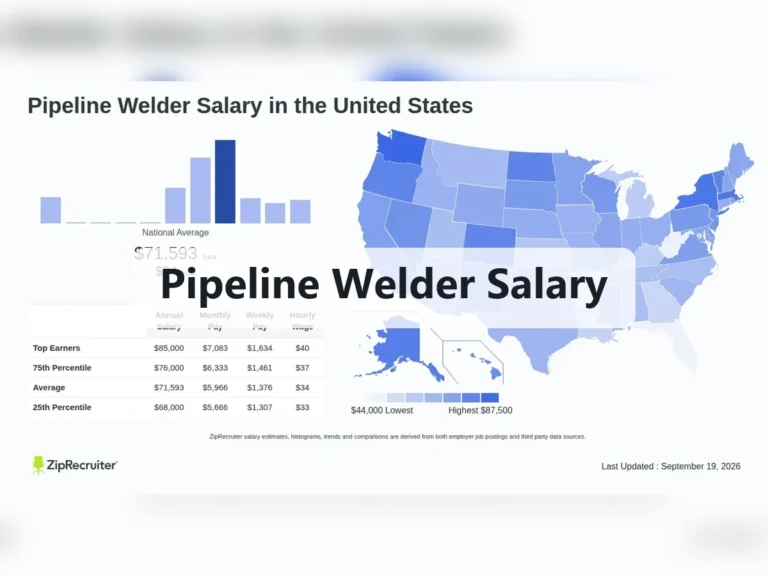
- Pipe welding: Often demands advanced position control, careful fit-up, and qualification testing for industrial or energy-related work.
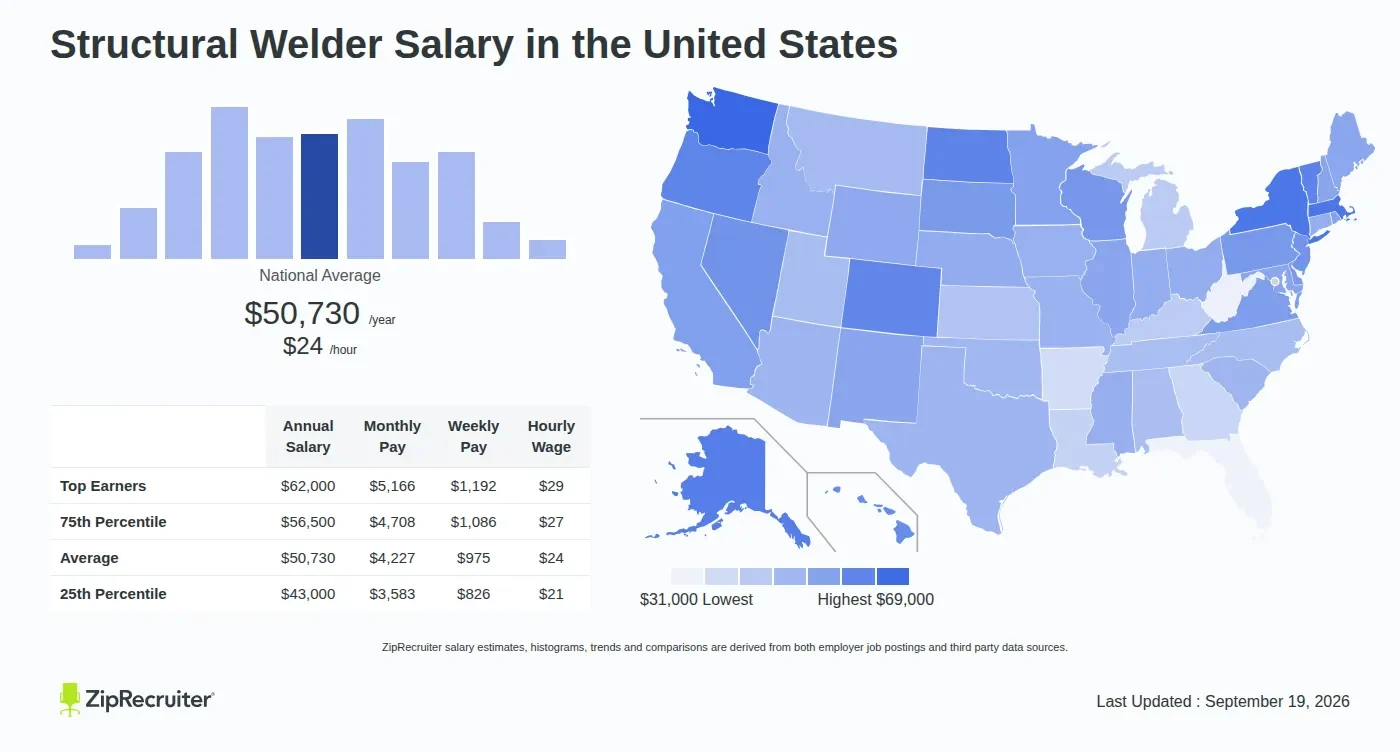
- Structural welding: Can involve construction sites, elevated work, outdoor conditions, and code-driven inspection requirements.
- Industrial maintenance: May pay well because breakdowns are expensive and work can involve urgent repairs, shutdowns, or difficult access.
- Aerospace and precision work: Emphasizes tight procedures, cleanliness, documentation, and consistency rather than simple production speed.
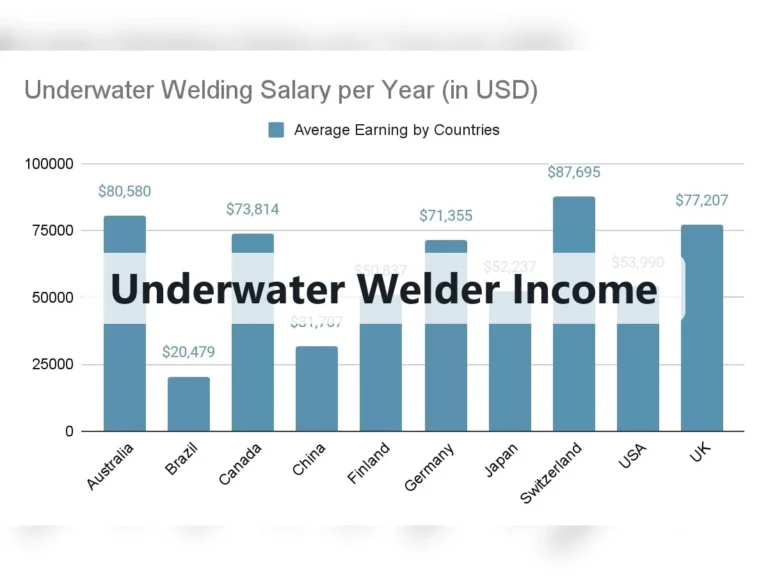
- Underwater welding: Combines commercial diving with welding and carries exceptional training, safety, and environmental demands.
Pipe and pressure-related work
Pipe welding can command higher pay because joints may be tested more rigorously and positions can be physically awkward. Workers may need to weld fixed pipe, maintain precise alignment, control heat input, and meet documented procedures.
These jobs may be found in industrial plants, refineries, utilities, construction, fabrication yards, and maintenance shutdowns. Travel and overtime can raise annual gross income, but project-based employment may make the yearly total uneven.
Field and shutdown work
Field welders work where equipment, structures, or pipelines are located rather than in a controlled shop. Outdoor temperatures, wind, rain, limited access, awkward positions, and changing job conditions can make the work more demanding.
Shutdown work may provide concentrated overtime over a short period. Before assuming it produces a high annual income, ask how many shutdowns are expected, how long they last, whether travel is paid, and what happens between projects.
Specialized manufacturing
Aerospace, transportation, medical equipment, energy equipment, and precision fabrication may reward workers who can maintain documentation and repeat exact procedures. Cleanliness, measurement, traceability, and inspection discipline can matter as much as raw welding speed.
These environments may have more stable schedules than traveling construction work, although entry requirements can be strict. A technical certificate, related manufacturing experience, or demonstrated ability to follow detailed procedures may improve competitiveness.
Where Do Welders Earn the Most?
Location affects annual pay because employers respond to local labor shortages industrial activity construction demand union coverage and.
Higher pay does not automatically mean a better financial outcome. Housing, transportation, insurance, taxes, and travel costs can absorb much of the difference. A realistic comparison looks at disposable income and work stability, not the posted wage alone.
- Industrial concentration: Regions with plants, shipyards, heavy fabrication, utilities, and construction projects may have more opportunities.
- Union and prevailing-wage work: Some projects may offer stronger wage packages, benefit structures, or formal progression.
- Living costs: Compare rent, home prices, commuting, food, and insurance before relocating for a higher rate.
- Travel compensation: Clarify mileage, lodging, per diem, drive time, and whether travel days are paid.
Urban versus rural markets
Urban areas may provide more employers and specialty opportunities, but competition and living costs can be higher. Rural regions may have fewer openings yet offer strong wages when an employer needs a specialized worker and has difficulty recruiting locally.
Remote locations can change the calculation again. An employer may offer a higher rate or per diem, but long commutes, temporary housing, and time away from family can reduce the practical value of the offer.
Union and government-related work
Union jobs may include a wage plus a benefits package funded through employer contributions. Government contractors and large infrastructure projects may also use structured wage classifications or formal advancement systems.
Do not compare only the cash wage. A nonunion job paying several dollars more per hour might provide weaker health coverage, retirement support, paid leave, or training. Calculate the estimated annual value of the entire package.
How Overtime, Shifts, and Benefits Change Annual Pay
Overtime is one of the biggest reasons two welders with similar base rates can have very different yearly earnings A worker who regularly performs ten or fifteen extra. Keep these limitations in mind when considering “how much does a welder make a year”.
Night shifts, weekend schedules, and rotating shifts may include premiums. Those premiums can raise earnings, although they may affect sleep, family routines, transportation, and long-term sustainability.
- Overtime reliability: Ask for a typical annual history rather than assuming the maximum hours will always be available.
- Shift premium: Confirm whether the premium applies to every hour, only scheduled hours, or selected shifts.
- Paid leave: Determine whether vacation, holidays, sick time, and training hours are paid.
- Benefits value: Compare insurance deductibles, retirement contributions, bonuses, and tool allowances.
Gross pay is not take-home pay
Advertised annual income usually means gross pay before federal, state, and local taxes, Social Security, Medicare, insurance premiums, retirement contributions, and other deductions. A worker earning $60,000 gross will receive less in actual paychecks.
Take-home pay also depends on filing status, state taxes, benefit elections, and overtime timing. Use the gross figure to compare offers, but build a household budget from a conservative estimate of net income.
Benefits can offset a lower hourly rate
Health insurance, retirement matching, paid holidays, disability coverage, and paid vacation can represent thousands of dollars annually. They can also reduce financial risk during illness, injury, or a temporary slowdown.
Ask for written details. “Benefits available” does not tell you the employee premium, deductible, waiting period, employer contribution, or eligibility requirements.
How to Compare Two Welder Job Offers
A job offer should be evaluated as a complete employment arrangement. The highest hourly number may be attached to a temporary assignment, mandatory travel, unpredictable overtime, or a physically demanding schedule that you cannot maintain.
Use a simple comparison that separates guaranteed compensation from possible compensation. Guaranteed compensation includes the base rate, expected regular hours, and clearly defined benefits. Possible compensation includes overtime, bonuses, per diem, production incentives, and future raises.
- Write down the base: Record hourly rate, normal weekly hours, shift, location, and employment status.
- Separate extras: List overtime, bonuses, premiums, travel pay, and per diem separately from guaranteed wages.
- Price the costs: Estimate commuting, lodging, tools, protective equipment, certification renewals, and unpaid travel.
- Check stability: Ask about layoffs, seasonal slowdowns, probation, project length, and expected start date.
- Calculate base annual wages using the hours the employer can realistically provide.
- Estimate overtime using an average, not the best week the company can describe.
- Assign a reasonable dollar value to employer-paid benefits and paid time off.
- Subtract recurring work-related costs and account for time away from home.
- Compare safety culture, advancement, training, and schedule sustainability before deciding.
For example a 25-per-hour local job with 40 dependable hours health coverage and paid holidays may be more valuable than a 31-per-hour traveling position that lasts four months.
How to Increase Your Annual Earnings as a Welder
Higher pay usually follows a combination of technical capability and business value Employers have more reason to raise wages when a worker can perform difficult work safely reduce rework support production and fill a role that.
Begin by studying the requirements for the jobs you actually want That approach is more efficient than pursuing random training If local employers repeatedly request pipe positions stainless.
- Keep a skills record: Track processes, materials, positions, tests passed, equipment used, and measurable responsibilities.
- Improve reading skills: Drawings, symbols, weld callouts, measurements, and procedures separate many capable workers from beginners.
- Protect your reputation: Attendance, safe conduct, and consistent quality strongly influence referrals and advancement.
- Ask for a path: Find out what specific skills or responsibilities lead to the next pay level.
Choose training with a target job in mind
Training is most useful when it connects to a real employment opportunity. Before enrolling, ask employers whether they recognize the program, whether the credential is required, and whether they hire people with that preparation.
Hands-on practice matters because welding is a physical skill. Classroom knowledge can explain procedures and safety, but employers also want evidence that you can produce acceptable work under realistic conditions.
Consider adjacent career paths
Welding experience can support movement into fabrication leadership, inspection, quality control, estimating, teaching, equipment sales, or welding engineering support. These paths may reduce time spent under a hood while increasing responsibility.
Each path has different education and experience requirements. Inspection may emphasize documentation and standards, while supervision requires communication, scheduling, and conflict management. Choose based on strengths rather than assuming every promotion must remain hands-on welding.
Risks and Limitations Behind Higher Welding Pay
High earnings can reflect difficult conditions rather than an easy career advantage Welding may involve fumes ultraviolet radiation heat noise heavy materials awkward positions fire hazards and demanding.
Some lucrative assignments require long shifts, travel, confined spaces, heights, or rapid project schedules. Fatigue can affect judgment and workmanship, so the value of overtime should be weighed against recovery time and personal safety.
- Do not trade safety for speed: Production pressure never makes inadequate ventilation, eye protection, or fall protection acceptable.
- Understand the environment: Ask about fumes, confined spaces, hot work permits, noise, lifting, and emergency procedures.
- Watch fatigue: Long shifts and repeated overtime can increase mistakes and injury risk.
- Verify the employer: A high wage is not compensation for a workplace that ignores basic safety practices.
Annual income can also fluctuate because of layoffs, plant shutdowns, weather, project completion, or changes in demand. Building an emergency fund and avoiding a budget based on maximum overtime can make variable welding income easier to manage.
Frequently Asked Questions About Welder Pay
How much does a welder make a year with no experience?
A beginner may earn roughly $35,000 to $45,000 annually when working full time, although local wages and job titles vary. Some workers begin as helpers or trainees and increase pay after demonstrating safe, consistent production.
Can a welder make $100,000 a year?
Yes, some welders can reach or exceed $100,000, usually through specialized industrial or pipe work, extensive overtime, travel, union or large-project compensation, or a combination of these factors. It is not a typical base salary for every welder.
What type of welder makes the most money?
Pipe, industrial, field, shutdown, specialized precision, and underwater welding can offer high earning potential. The best-paid option depends on demand, qualifications, location, overtime, and the willingness to accept travel or challenging conditions.
Does certification increase a welder’s salary?
Certification can improve earning potential when it qualifies you for work employers urgently need. It does not guarantee a raise by itself, so confirm that the credential is relevant to local job openings before investing time and money.
Do welders get paid hourly or by salary?
Many welders are paid hourly, with overtime and shift premiums calculated separately. Lead workers, supervisors, inspectors, estimators, and some specialized professionals may receive a salary or a different compensation structure.
Is welding a good-paying career?
Welding can be a solid-paying career for people who develop reliable technical skills and choose a market with steady demand. The work may be physically demanding, and earnings can depend heavily on overtime, travel, and conditions.
How much does a welder make a year after five years?
After five years a capable welder may earn more than an entry-level worker often moving toward the middle.
Conclusion
So, how much does a welder make a year? A realistic U.S. range for many full-time workers is about $40,000 to $60,000 before taxes, with lower entry-level earnings and higher potential for specialized, experienced, traveling, or overtime-heavy work.
The most useful comparison is not the headline wage. Check guaranteed hours, benefits, overtime history, certification requirements, safety conditions, travel costs, and advancement opportunities before deciding whether an offer supports your financial and personal goals.
Compare three local welding job postings by base wage, dependable hours, benefits, specialty requirements, and work conditions before choosing your next training or employment step.