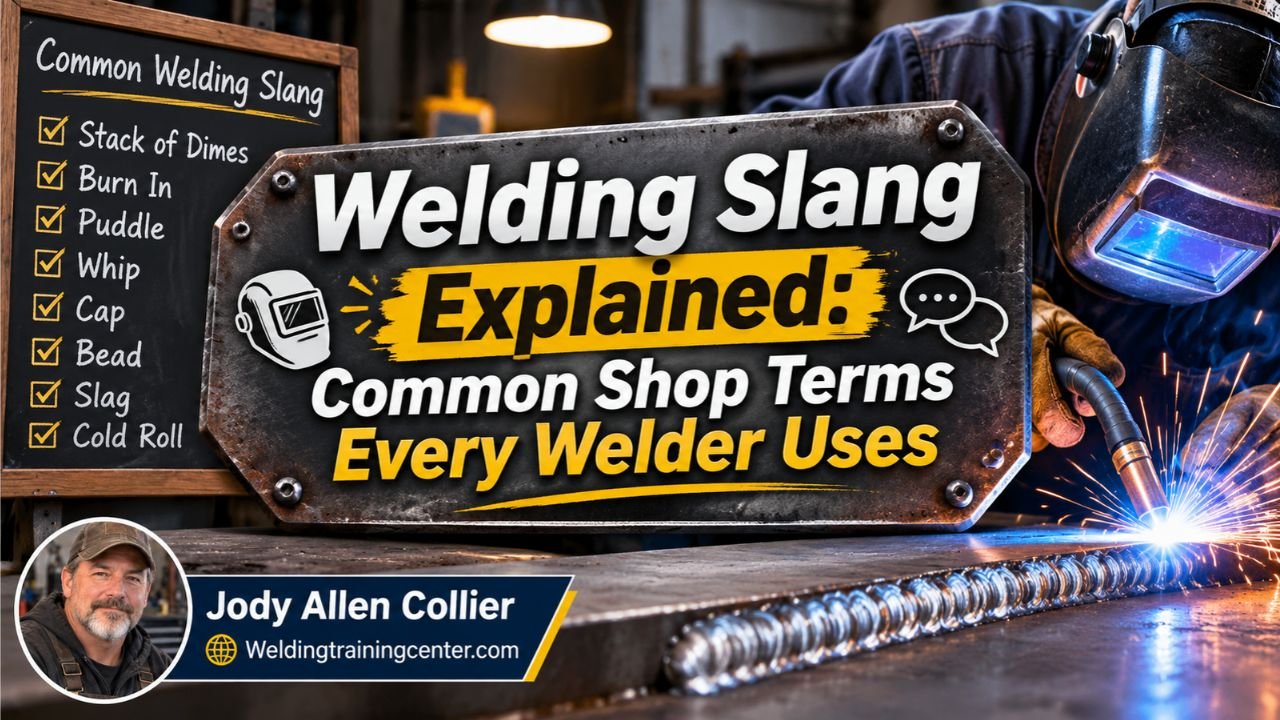
Welding Slang Explained: Common Shop Terms Every Welder Uses
Welding slang is the informal shorthand welders use for tools, weld shapes, defects, techniques, and everyday shop work. The same term can mean different things from one crew to the next, so context matters.
Have you heard someone call a weld a “stack of dimes” and wondered if they were praising it or describing a problem? Or has a coworker used a shop term that made everyone else nod while you quietly tried to decode it?
I once took “bird nest” as a joke about a messy workbench, then learned the welder was talking about tangled wire in a MIG feeder. I lost a little time tracing the wrong problem, and the wire was still snarled in the machine. It’s a common mix-up, not a dumb one.
I wrote this as a plain-language guide for anyone starting out, changing shops, or trying to make sense of what a crew says during a job. The goal is to explain familiar terms without pretending that every shop uses them the same way.
Knowing the lingo helps you follow instructions, ask better questions, and catch a real weld problem sooner. Miss the meaning, and you could confuse a cosmetic comment with a defect that needs attention.
Set aside about nine minutes, and you’ll be able to:
- Decode common names for weld shapes, defects, and processes.
- Tell casual shop talk apart from formal welding terms.
- Ask what a crew means when a slang term isn’t clear.
- Recognize when a slang label points to a safety or quality concern.
Welding Slang: What Common Shop Terms Mean
Welding slang gives a crew quick names for weld features, equipment problems, and work habits, but it isn’t a standardized dictionary. Use the surrounding task and the speaker’s explanation to work out what a term means before you act on it.
A weld bead is the visible line of deposited metal left by a pass. A pass is one trip along the joint with the welding arc or flame, and shops often use casual names for the bead’s shape or the job stage.
| Shop term | Common meaning | What to clarify |
|---|---|---|
| Stack of dimes | A bead with regular, overlapping ripples | Is the crew describing appearance or a required finish? |
| Puddle | The small pool of molten metal during welding | Is the concern puddle control, size, or movement? |
| Root pass | The first weld pass at the root, or deepest part, of a joint | What joint prep and penetration are required? |
| Cap | The final pass or top surface covering a weld | What profile or finishing standard applies? |
| Hot pass | A pass made after the root pass, often to add or improve weld metal | Does the procedure define the sequence and settings? |
| Tie-in | The point where a new pass or bead joins existing weld metal | Does the joint need more fusion or smoother blending? |
| Undercut | A groove melted along the weld toe that isn’t filled with weld metal | Is the groove within the job’s acceptance limits? |
| Porosity | Small gas pockets trapped in weld metal | Is the weld surface hiding pores, or are they visible? |
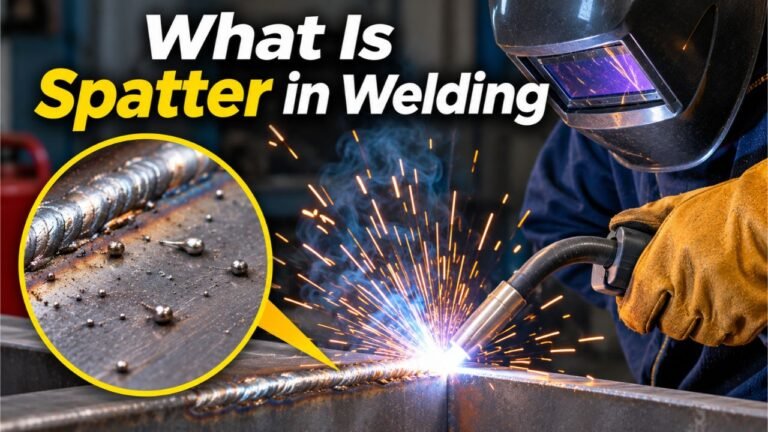
| Spatter | Small droplets of metal scattered around the weld | Is cleanup the only concern, or is the weld itself affected? |
| Bird nest | Tangled welding wire, often around the feeder or drive rolls | Where did the wire jam, and what caused it? |
| Booger weld | A rough, lumpy weld, usually said as criticism | Is the weld actually defective, or just unattractive? |
These are common uses, not universal definitions. A shop may use “hot pass” in a specific way under its welding procedure, while another crew may use the phrase more loosely.
The terms for weld appearance can be especially slippery. “Pretty,” “clean,” or “stacked” might be praise for a neat surface, but appearance alone can’t tell you if the weld has proper fusion or meets the job requirements.
If someone says your bead has “cold lap,” they may mean weld metal has flowed onto the base metal without fusing properly. The formal term lack of fusion describes a failure to bond between weld metal and the base material, or between weld passes. Ask what they observed, because slang can blur important distinctions.
How do you know if “bad weld” means ugly or unsafe? Ask which feature concerns the speaker, then check the drawing, welding procedure, or inspection criteria for that job.
A “booger weld” may look lumpy, but a rough-looking bead and a weld defect aren’t automatically the same thing. A qualified inspector or supervisor can judge the actual weld against the requirements; a nickname can’t.
People also use colorful names for mistakes, such as “bird poop” for tiny, irregular deposits or a “worm track” for a narrow, winding mark. Those labels can be useful in casual conversation, but they don’t replace a clear description of the location and defect.
If a term affects how a joint is prepared or welded, get the specific instruction. A quick “Do you mean the root pass or the cap?” can save you from doing the wrong work twice.
Weld Defects, Techniques, and Shop Talk
The most useful welding slang points to something you can identify, but a casual label still needs a clear explanation before it guides a repair. Terms for weld defects, surface appearance, and equipment trouble often overlap.
A stack of dimes weld has regular ripples that resemble overlapping coins. The phrase usually praises the bead’s appearance, especially on TIG welds, but it doesn’t prove the weld meets a strength, penetration, or inspection requirement.
Terms such as “wash” or “tie-in” usually describe how a bead blends into the surrounding metal. “Wash” can refer to a smooth-looking transition at the weld edge, while “tie-in” points to the connection between weld passes or between a bead and the base metal. Ask which location the welder means if the instruction isn’t clear.
A weld’s root, face, and toe each describe different areas. The root is the deepest part of the joint, the face is the exposed surface, and the toe is where the weld face meets the base metal.
You may hear “burn-through” when too much heat creates a hole through the material. “Blow-through” is often used in a similar way, though some shops distinguish the terms. In either case, don’t assume a quick patch is acceptable; the repair needs to follow the job’s procedure.
Slang also describes the way someone welds. “Running hot” means using more heat or a hotter setting than the speaker expects, while “cold” may refer to low heat input or poor fusion. Those words are vague by themselves, since actual heat and results depend on the process, material, joint, and settings.
I once heard “turn it down” during a weld, then realized the speaker was reacting to the puddle rather than asking for a specific amperage change. I stopped and asked what result they wanted before touching the controls. That short pause was cheaper than guessing at a setting.
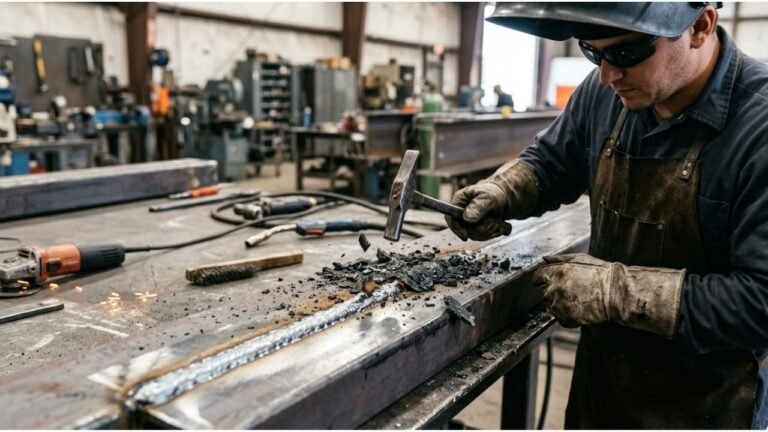
If a coworker says “clean your toes,” they may mean remove residue or improve the weld edges, but ask which cleanup step they want. A toe is the edge of a weld face, and a slag layer is the cooled residue left by some processes, such as stick welding. A wire brush or chipping tool may suit one job, while another surface needs a different approved method.
Could “sugaring” mean a bad bead? In TIG welding stainless steel, “sugaring” commonly refers to a rough, grainy oxidation condition on the back side of a weld, often tied to inadequate shielding. It isn’t just a surface-style complaint; confirm the material, purge setup, and procedure before carrying on.
Shop shorthand also overlaps with process names and technical initials. If a crew starts tossing around process terms, a clear primer on how welding works can help connect the slang to what the arc and filler metal are doing.
Pro Tip: When a term is new, repeat it back in plain language: “By bird nest, you mean the wire tangled at the feeder?” That catches a mismatch before you start pulling parts apart.
How to Use Welding Slang Without Guessing
Welding slang is handy for quick conversation, but clear instructions matter more when you’re changing a machine, repairing a weld, or working to a written procedure. Treat slang as a starting point, then confirm the exact feature, location, and action.
Use this short process when someone gives you an unfamiliar shop term:
- Ask what part they mean. Is the comment about the bead, the joint root, the equipment, or the finished surface?
- Ask what they want done. Do they want a weld stopped, cleaned, adjusted, repaired, or inspected?
- Check the written requirement. Use the drawing, welding procedure, work instructions, or inspection criteria when the term affects quality.
- Repeat the instruction back. Say what you’ll do in plain words so both of you know the same thing.
- Stop before a risky change. Don’t adjust equipment or make a repair based on a phrase you don’t understand.
That last step matters around pressure, electricity, fumes, and hot metal. Welding equipment can cause burns, electric shock, fire, and harmful fume exposure, so follow the manufacturer’s instructions and your shop’s safety rules instead of relying on a nickname or quick guess.
Some slang is playful, but some terms can embarrass or insult a worker. “Greenhorn” is often used for a new person, and “farmer weld” is sometimes a put-down for a rough weld or improvised repair. Those labels don’t tell you whether the weld is sound, and they can shut down the very questions that prevent mistakes.
I’d rather hear someone ask what a term means than pretend to understand it. A good crew makes room for that question, because a two-second clarification beats a full shift spent fixing a misunderstanding.
The same idea applies to written notes and work orders. Use the formal name for a defect or instruction when accuracy matters, then add the familiar shop term only if it helps the crew recognize what you’re talking about.
Welders also use abbreviations as shorthand, but acronyms and slang aren’t quite the same thing. A quick reference to common welding abbreviations can help when a note uses letters instead of a spoken nickname.
| If you hear… | Ask… | Why it helps |
|---|---|---|
| “Clean that up” | Which area needs cleaning, and with what method? | Cleanup can mean slag removal, spatter removal, or surface prep. |
| “Run it hotter” | Which setting or weld result needs to change? | The phrase doesn’t name a specific control or target. |
| “That’s cold” | What sign of poor fusion or heat input are you seeing? | A vague label shouldn’t be the sole basis for a repair. |
| “Cap it” | What cap profile or finish does the job require? | A final pass still has to meet the drawing or procedure. |
| “Make it stack” | Is the ripple pattern a finish preference or a job requirement? | Appearance and weld quality aren’t interchangeable. |
A clean-looking bead can still have a hidden problem, while a less decorative weld can meet its acceptance criteria. For a closer look at the ripple pattern behind the familiar phrase, read about a stack of dimes weld.
Important Tip: If you’re unsure whether a comment refers to a defect, don’t grind or reweld until you know the repair method is allowed. Removing weld metal can change the joint, and repair work may need approval or inspection.
- Welding slang is informal, and terms can shift between shops.
- Ask what feature someone means before changing a setting or repairing a weld.
- Use the written procedure and inspection criteria for quality decisions.
FAQs About Welding Slang
What does stack of dimes mean in welding?
“Stack of dimes” describes a weld bead with even, repeated ripples that resemble overlapping coins. Welders often use the phrase to praise the bead’s appearance, especially on TIG work. The ripple pattern alone doesn’t prove the weld has proper fusion, penetration, or acceptance under a specific job’s inspection rules.
What does bird nest mean in a welding shop?
“Bird nest” usually means welding wire has tangled, often near the feeder or drive rolls on a MIG machine. The phrase describes a wire-feed problem, not a weld defect. Stop the feed and follow the machine instructions before clearing the tangle, since the cause may involve how the wire moves through the system.
Is welding slang the same in every shop?
No, welding slang can vary by region, process, employer, and crew. One shop’s nickname may be unfamiliar somewhere else, and similar words may point to different conditions. If a term affects a weld, setting, or repair, ask for the exact location and action rather than relying on the slang alone.
What does cold lap mean in welding?
“Cold lap” commonly describes weld metal that has flowed onto the base metal without bonding properly. The formal term may be lack of fusion, depending on the condition. Since acceptance depends on the job’s requirements, have the weld assessed against its procedure or inspection criteria instead of judging by the nickname.
Should I use welding slang in a work order?
Use the formal defect or process name in a work order whenever accuracy matters. You can add a familiar shop term in parentheses if it helps coworkers identify the feature, but don’t let slang stand in for location, condition, or repair instructions. Clear notes make handoffs safer and reduce back-and-forth.
Make Shop Talk Work for You
Welding slang can make a busy shop feel easier to follow, but knowing the word isn’t the same as knowing the requirement. Treat nicknames as quick clues, not final instructions, especially when someone is talking about a defect, a machine setting, or a repair.
My preference is simple: ask what the speaker means, name the feature in plain terms, and check the job’s written requirements when quality or safety is involved. That keeps conversation relaxed without turning a vague phrase into a costly guess.
The next time an unfamiliar term comes up, pause and ask for the location and the action. You’ll learn the crew’s vocabulary while keeping the work clear, and that’s a pretty good trade.