Mobile Welding Training Trailer: Key Facts and Helpful Guidance
A welding class can be difficult to schedule when students live far from a campus a company needs several employees trained at once or a school lacks enough.
A Mobile welding training trailer is more than an enclosed trailer carrying machines. It is a portable instructional environment designed to support supervised welding education in places that may not have a permanent lab. The trailer may include welding booths, power distribution, ventilation, consumables, safety equipment, classroom space, and storage.
I will explain how these trailers work what equipment they commonly contain how to choose one and which limitations deserve attention before buying renting or commissioning a unit The goal is to help a school workforce program contractor or employer make a practical.
What a Mobile Welding Training Trailer Is
A mobile welding training trailer is a towable facility built or modified for hands-on welding instruction. It usually contains several workstations where learners can practice processes such as shielded metal arc welding, gas metal arc welding, flux-cored arc welding, or gas tungsten arc welding under instructor supervision.
The trailer can serve different audiences A community college may use it for rural outreach A contractor may use it for employee onboarding or process-specific practice A workforce.
The central value is access. Instead of requiring every learner to travel to a permanent welding lab, the lab travels to the learner. That flexibility can reduce travel barriers, make training available at satellite locations, and help an organization test demand before investing in a building.
Training trailer versus demonstration trailer
These terms are sometimes used interchangeably but the capabilities can differ substantially A demonstration trailer may have one or two machines a display area and enough room for.
I would define the unit by its intended teaching workload, not by its label. Ask how many students can weld at the same time, which processes can operate concurrently, and how long the trailer can support instruction before power, gas, or consumables become limiting factors.
Why Organizations Use Portable Welding Labs
Permanent welding labs require significant floor space, electrical service, exhaust systems, fire controls, and ongoing maintenance. A portable unit does not eliminate those requirements, but it packages many of them into an asset that can serve more than one location.
- Workforce access: Training can reach rural communities, remote worksites, and areas with limited technical education.
- Employer training: A contractor can provide supervised practice near an active workforce without sending every employee away for an extended period.
- Enrollment growth: A school can add instructional capacity while planning a permanent expansion.
- Recruitment: A trailer can support career fairs, career-and-technical education events, and introductory welding demonstrations.
- Flexible scheduling: The unit can move between locations according to course demand.
- Emergency or temporary use: A trailer can provide training after a facility renovation, relocation, or equipment failure.
Portability is valuable only if deployment is realistic. A trailer that requires an oversized tow vehicle, a large generator, a paved setup area, and complicated permitting may be less flexible than expected. I recommend evaluating the complete operating plan before treating mobility as the main benefit.
Core Components and Features
The best trailer designs balance usable teaching space with safe operation. Every added feature consumes weight, floor area, electrical capacity, or maintenance time, so equipment should match the curriculum.
Welding booths and workstations
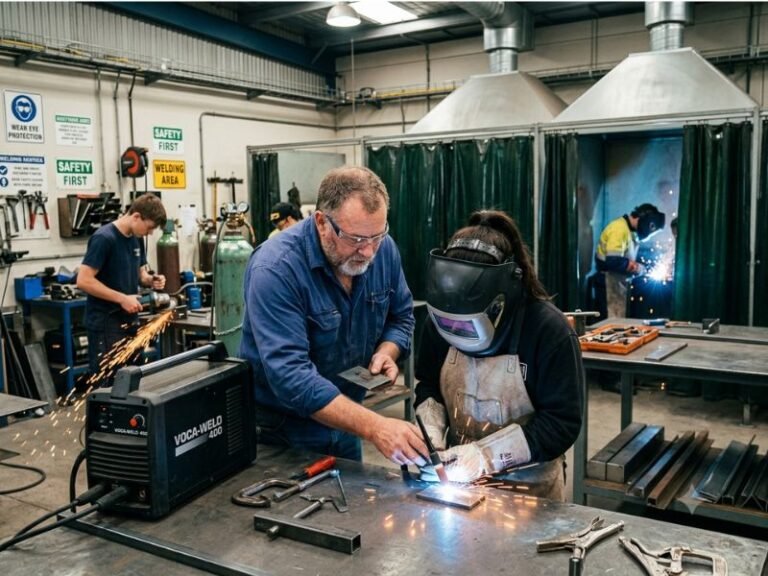
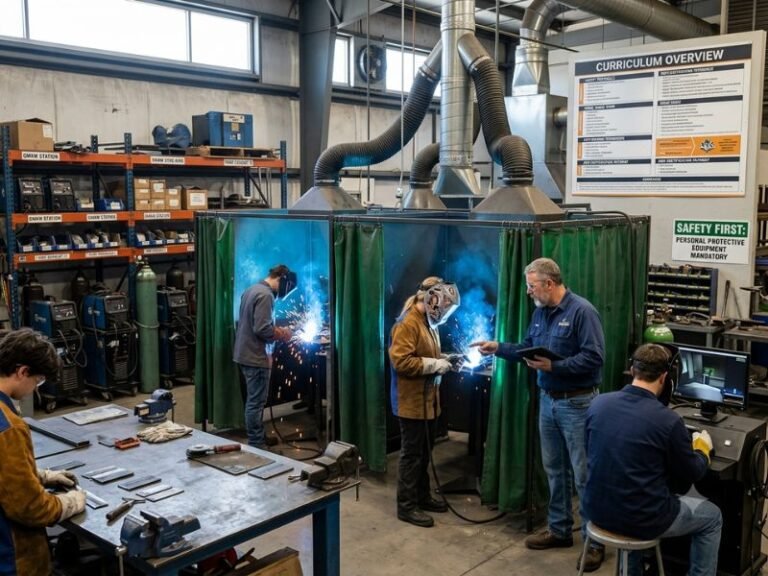
Each booth should give a learner enough room to position a workpiece, manipulate a torch or electrode holder, and maintain safe separation from nearby students. Booth partitions help control arc flash, sparks, and interference between learners. Heavy-duty tables, ground connections, screens, and adjustable fixtures make the stations more useful for varied exercises.
Booth design also affects instructor visibility. A completely enclosed station may improve light control but make coaching and supervision harder. I favor layouts that allow an instructor to observe technique without entering every booth and that leave a clear path for emergency access.
Welding power sources
The machines should reflect the processes taught. A basic unit may focus on SMAW, commonly called stick welding. A more versatile trailer may include machines for GMAW, FCAW, and GTAW, along with the appropriate feeders, torches, regulators, foot controls, and accessories.
Power-source selection should account for duty cycle, amperage range, input voltage, portability, and service support. A machine rated for several processes is not automatically the best instructional choice if changing configurations takes too long or if students cannot easily understand the controls.
Electrical distribution
Portable training trailers may use shore power, a generator, or both. The electrical system can include a distribution panel, disconnects, receptacles, circuit protection, cord storage, and generator connections. It must be designed for the combined demand of welding machines, lighting, ventilation, compressors, chargers, and classroom electronics.
Electrical planning should be performed by qualified professionals and checked against applicable codes. A single outlet or extension cord arrangement is not an adequate substitute for a properly engineered distribution system. Voltage drop, connector condition, grounding, and generator sizing all affect safety and machine performance.
Ventilation and fume control
Welding produces fumes and gases that require effective control. A trailer may use source-capture arms, flexible extraction hoses, filtered systems, general exhaust fans, make-up air, or a combination of these methods. The most useful arrangement captures fumes close to the arc without obstructing the student’s work.
General air movement alone may not control contaminants adequately. The design should account for booth placement, door positions, airflow direction, filter maintenance, and the materials being welded. I would ask for documentation describing the ventilation approach rather than accepting a claim that the trailer is “fully ventilated.”
Shielding gas and consumable storage
Gas cylinders need secure mounting, suitable regulators, protected valves, and a storage arrangement that prevents movement during transport. Storage should separate full and empty cylinders where practical and protect electrodes, wire, tungsten, and other consumables from moisture or damage.
Consumable storage is an operational detail that is easy to underestimate. If wire, electrodes, coupons, and grinding supplies are scattered around the trailer, setup takes longer and trip hazards increase. Cabinets, labeled bins, and inventory controls can improve both safety and class efficiency.
Safety equipment
A training trailer should make safe behavior easy to follow. Common provisions include welding helmets, safety glasses, gloves, flame-resistant clothing, hearing protection, fire extinguishers, first-aid supplies, welding screens, emergency lighting, and clearly marked exits. The exact equipment depends on the course and local requirements.
Personal protective equipment should fit the user and match the process. Shared helmets and gloves require inspection, cleaning, and replacement procedures. I would also include a dedicated location for damaged equipment so a defective item cannot return unnoticed to a student workstation.
How a Portable Welding Class Operates
A successful trailer program begins before the trailer arrives. The host site needs a level setup area, adequate clearance, vehicle access, parking, student access, and a plan for power and gas. The operator should identify nearby combustible materials, overhead obstructions, uneven ground, weather exposure, and emergency vehicle access.
Site setup
The trailer is positioned stabilized and connected to its approved power source Gas cylinders are secured ventilation is checked welding leads and extension systems are arranged and fire.
Student orientation
Students should receive an orientation before striking an arc. That briefing normally covers fire prevention, hot-metal handling, electrical hazards, cylinder safety, fumes, personal protective equipment, grinding, emergency shutdown, and reporting procedures. A short demonstration can show how to inspect a helmet, connect a work lead, position extraction, and shut down equipment.
Skill instruction
Lessons often progress from equipment identification and joint preparation to bead placement, tacking, fillet welds, groove welds, and process-specific exercises. The instructor can demonstrate a technique, assign a controlled practice task, inspect the result, and adjust settings or body position.
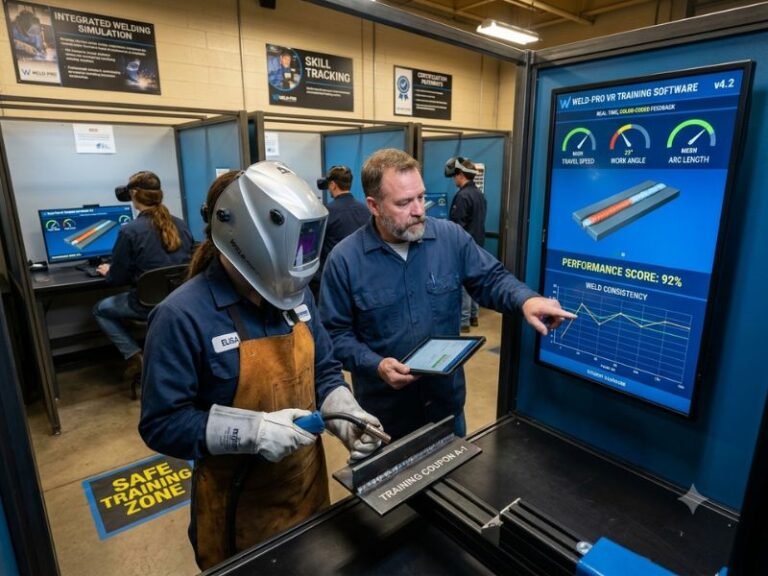
The trailer supports hands-on learning, but it does not replace a qualified instructor. Students need feedback on arc length, travel speed, work angle, torch manipulation, fit-up, cleanliness, and visual weld quality. If the trailer is overcrowded, the practical advantage of mobile instruction can disappear.
Shutdown and relocation
At the end of a session hot work areas should be checked for smoldering material Machines are shut down according to manufacturer instructions gas valves are closed leads.
Choosing the Right Trailer Design
The right configuration depends on the teaching mission. I would start with the curriculum and student count, then select equipment. Starting with a trailer shell or a list of attractive features often leads to costly compromises.
| Training need | Useful design priorities |
|---|---|
| Introductory demonstrations | Clear viewing area, one or two machines, strong presentation space, basic safety equipment |
| Small recurring classes | Multiple booths, dependable power, fume extraction, consumable storage, instructor visibility |
| Employer process training | Machines and fixtures matched to production work, flexible coupons, rapid setup, documentation |
| Multi-location workforce program | Durable construction, transport security, broad power compatibility, inventory control, service support |
| Advanced certification preparation | Process-specific equipment, appropriate joint configurations, measurement tools, inspection resources |
Capacity and workflow
Count more than welding machines. Count booths, seats, storage positions, gas connections, instructor sightlines, and students who can work safely at the same time. A trailer may technically hold eight machines but have adequate ventilation or aisle space for only four active welders.
Consider the complete student workflow: receive an assignment, collect material, prepare the joint, weld, cool the workpiece, clean it, receive feedback, and store or discard it. A layout that supports this sequence will outperform a crowded design with a higher equipment count.
New, used, or custom-built
A new custom trailer can match a specific program, but design and fabrication take time and require careful coordination. A used unit may cost less, yet its ventilation, wiring, flooring, brakes, and equipment condition need thorough inspection. A converted cargo trailer may be economical for demonstrations but unsuitable for repeated full-class instruction.
Before buying used request maintenance records equipment model numbers electrical documentation trailer service history and evidence of prior modifications Look for water intrusion corrosion overloaded circuits damaged floors.
Safety, Compliance, and Risk Control
Safety is the most important evaluation category because a training trailer combines hot work, electricity, compressed gases, fumes, moving vehicles, and a changing work environment. Requirements may involve federal workplace rules, state or local regulations, fire authorities, electrical standards, trailer regulations, and manufacturer instructions.
I would treat compliance as a documented design task rather than a final inspection surprise. Ask which authority has jurisdiction at each operating location and whether the trailer will be used by a school, public agency, private employer, or contractor. The answer can affect training records, emergency planning, insurance, and inspection responsibilities.
Fire prevention
The setup area should be cleared of combustible debris and materials that sparks can ignite. Curtains and screens should be suitable for welding environments, and extinguishers should be accessible and properly maintained. Hot work should stop if the trailer cannot provide safe separation from nearby vehicles, buildings, vegetation, or stored materials.
Fume and exposure control
Material selection matters. Coatings, galvanized surfaces, stainless steel, and unknown metals can create additional exposure concerns. Students need instruction on cleaning, identification, ventilation use, and when respiratory protection may be required. A fan switched on after welding begins is not a complete exposure-control program.
Transportation safety
All interior equipment must be secured before movement. Cylinders, machines, tables, screens, tools, and loose metal can become dangerous projectiles during braking or a collision. The tow vehicle must have the correct capacity, hitch arrangement, brake controller, and electrical connection for the trailer.
Drivers should understand turning clearance, backing procedures, tire inspection, load distribution, and weather limitations. A trailer that is safe when parked can still create serious risk if it is poorly loaded or towed beyond its rated capacity.
Power, Space, and Weather Limitations
Mobility does not mean unlimited operation. The host site may lack sufficient electrical service, and a generator may introduce noise, fuel handling, exhaust, and maintenance requirements. Ask whether all planned machines can run simultaneously or whether instruction must rotate between stations.
Interior space is another constraint. Welders need room for posture changes, workpiece handling, ventilation positioning, and safe movement. Heat can build quickly in a compact trailer, especially during summer classes. Cold weather can affect ventilation, comfort, gas behavior, batteries, and the handling of water-based materials.
Rain and wind may interrupt setup or make outdoor access unsafe. Doors and awnings can provide some protection, but they do not turn every location into a controlled indoor shop. I recommend creating a weather cancellation or relocation policy before scheduling a mobile course.
Noise also deserves attention. Welding, grinding, generators, and ventilation fans can affect neighboring classrooms, businesses, or residences. A host agreement should address operating hours, parking, fuel storage, waste removal, and complaints.
Budgeting and Ongoing Costs
The purchase price is only one part of the financial decision. A realistic budget should include the trailer, machines, ventilation, generator or electrical connections, welding booths, PPE, gas equipment, consumables, tow vehicle compatibility, insurance, registration, maintenance, inspections, and instructor labor.
Recurring costs may include fuel, cylinder rental or delivery, wire and electrodes, filters, grinding discs, replacement lenses, gloves, machine service, tires, brakes, batteries, and trailer repairs. Frequent relocation increases wear on doors, jacks, wiring, suspension, and interior mounts.
Utilization is a useful financial measure. Estimate how many training days the trailer will support each year, how many students can attend per session, and which programs will use it. A unit that serves several locations may justify a larger investment than one used for occasional demonstrations.
I also recommend budgeting for downtime. If a critical machine or ventilation component fails, instruction may stop while parts are ordered. Keeping essential spare items, maintenance records, and a service relationship can protect the program from avoidable interruptions.
Common Mistakes to Avoid
- Buying for appearance: A polished exterior does not prove that the trailer has adequate power, ventilation, capacity, or safe interior layout.
- Ignoring towing requirements: Confirm loaded weight, tongue weight, braking, hitch rating, and tow-vehicle capacity.
- Underestimating ventilation: Basic fans may not provide effective source capture for the planned processes and materials.
- Overloading the floor plan: More machines are not helpful if students cannot move, work, or receive supervision safely.
- Using generic equipment: Select machines, leads, regulators, and fixtures that support the actual curriculum.
- Forgetting consumables: A class can lose valuable time if coupons, wire, electrodes, gas, or grinding supplies are unavailable.
- Skipping site assessments: Every host location needs a check for power, access, clearance, fire risk, weather, and emergency response.
- Treating orientation as optional: First-time welders need clear instruction before operating equipment.
- Failing to document maintenance: Portable assets move frequently and need consistent inspections, service records, and inventory checks.
- Assuming certification is automatic: A trailer can support test preparation, but certification depends on the applicable procedure, examiner, testing organization, and governing requirements.
Questions to Ask a Builder or Seller
A detailed conversation with the builder can reveal more than a brochure. I would ask for answers in writing and compare the answers with the intended operating plan.
- How many students can weld simultaneously under the stated ventilation and power design?
- Which welding processes and material thicknesses does the equipment support?
- What input power is required, and can the trailer operate from shore power, a generator, or both?
- How are cylinders restrained during transport and during class operation?
- What type of fume extraction is installed, and how are filters inspected or replaced?
- What is the loaded trailer weight, tongue weight, and recommended tow-vehicle capacity?
- Which components are proprietary, and how readily are replacement parts available?
- What documentation is supplied for wiring, ventilation, equipment manuals, and maintenance?
- What warranty applies to the trailer structure, electrical system, ventilation, and welding machines?
- Can the layout be modified if enrollment, curriculum, or power availability changes?
Request a walk-through with the trailer configured for actual instruction. Open cabinets, inspect cable routing, check aisle width, observe ventilation placement, and confirm that students can work without blocking emergency exits. A drawing or photograph may hide practical problems that become obvious during a physical review.
FAQ: Mobile Welding Training Trailers
How many students can a mobile welding training trailer hold?
Capacity depends on booth count floor area ventilation electrical service instructor visibility and the curriculum A trailer may accommodate several learners for hands-on work but the safe operating.
Can a mobile welding training trailer teach multiple welding processes?
Yes if it has compatible power sources feeders torches regulators gas connections consumables and ventilation for the planned processes A multi-process trailer may teach SMAW GMAW FCAW and.
Does a mobile welding training trailer need a generator?
Not always. Some trailers connect to a suitable shore-power supply at the host site. A generator can improve location flexibility, but it adds weight, fuel, noise, exhaust, maintenance, and electrical planning requirements. The power strategy should be based on the combined load of welding machines, ventilation, lighting, and support equipment.
Can the trailer be used for welding certification tests?
It may support testing if the equipment, materials, procedures, inspection conditions, and authority requirements are appropriate. Certification rules vary by application and governing organization. Before scheduling a test, confirm whether the trailer meets the required procedure, test position, material specification, supervision, and inspection arrangements.
What is the most important feature in a welding training trailer?
There is no single feature for every program, but effective fume control, safe electrical design, usable workstations, and adequate instructor visibility are foundational. A trailer with advanced machines is not a good training environment if students cannot breathe comfortably, move safely, or receive timely feedback.
Should an organization buy or rent a mobile welding training trailer?
Buying may make sense when training demand is steady several locations need service and the organization can handle maintenance and transportation Renting or partnering with an established training.
Conclusion
A Mobile welding training trailer can expand access to practical welding education but its value depends on more than portability The trailer needs a curriculum-appropriate equipment package effective.