MIG Welder Employment: Essential Information and Useful Advice
MIG welder employment includes fabrication, manufacturing, construction, repair, and maintenance jobs that require safe, consistent wire-feed welding and the ability to read work instructions.
The surprising part is that employers are rarely hiring for the welding process alone. A candidate may produce an acceptable bead during a skills test and still lose the job because they cannot interpret a drawing, control distortion, inspect a joint, or work safely around production equipment.
That context changes how to approach a career search MIG technically called gas metal arc welding GMAW is valued because it can be productive and repeatable but the.
This guide explains where MIG welders work what employers usually expect how pay and job quality vary which qualifications improve access to better positions and how to prepare.
- ✓MIG welding jobs range from repetitive production work to custom fabrication, field repair, and structural projects.
- ✓Employers evaluate safety, blueprint reading, fit-up, inspection, reliability, and problem-solving alongside bead appearance.
- ✓Pay depends on industry, location, shift, materials, certifications, overtime, and the complexity of the work.
- ✓A targeted résumé and deliberate weld-test preparation can matter as much as general welding experience.
What MIG Welder Employment Actually Includes
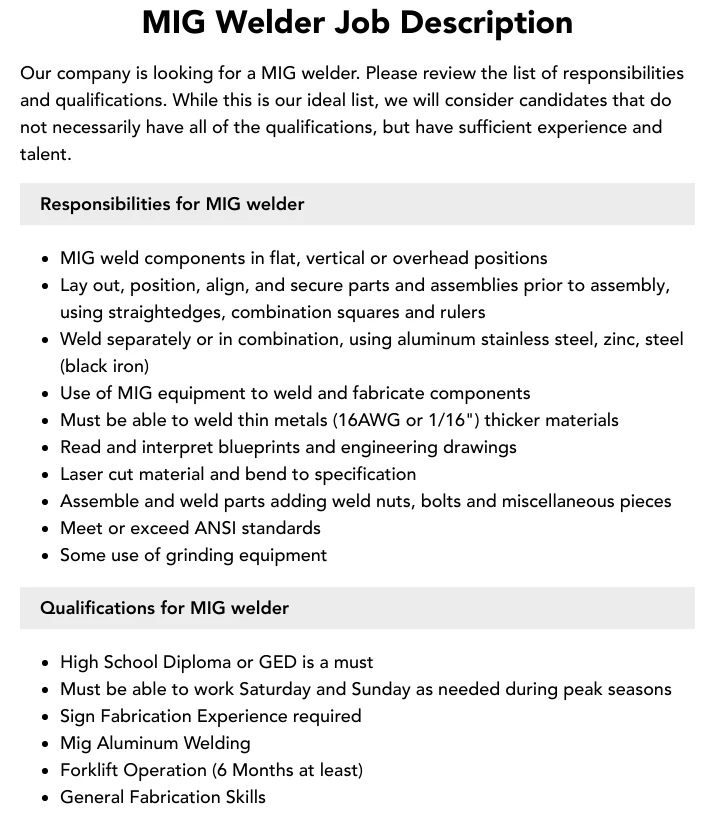
MIG welder employment is not one standardized occupation. The same process may be used to build agricultural equipment, weld vehicle components, assemble pressure-rated parts, repair heavy machinery, or join structural steel. Each setting changes the acceptable tolerances, welding positions, inspection methods, pace, and consequences of an error.
In a production shop a welder may repeat a small number of joints hundreds of times while following a documented work instruction In a fabrication shop the work.
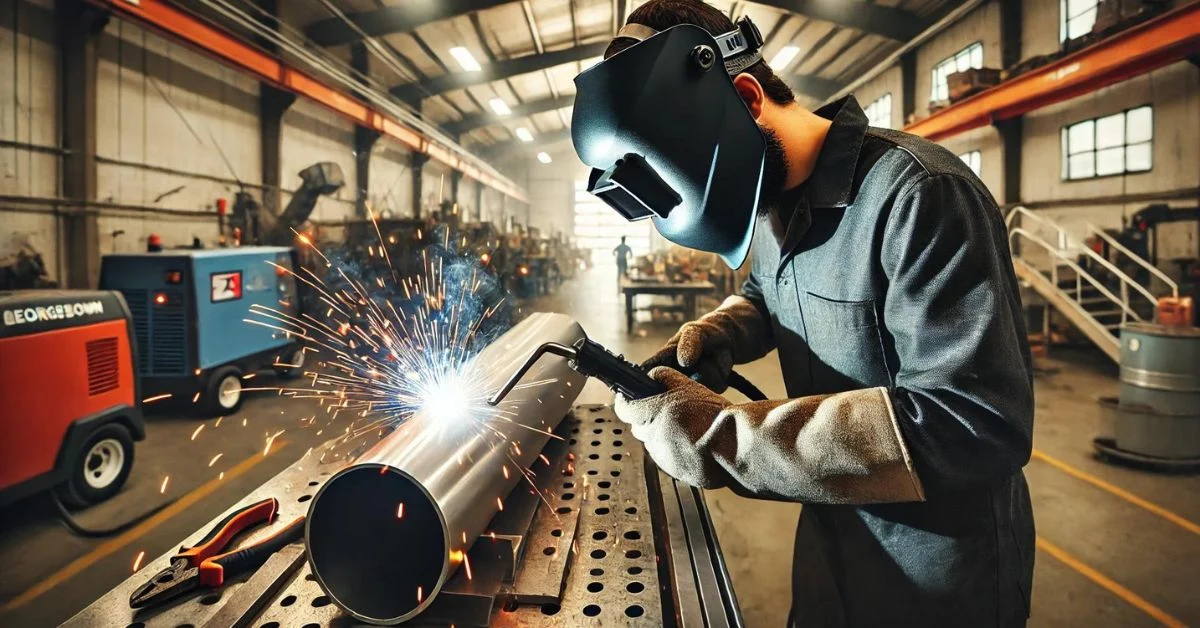
- Joining: Welding carbon steel, stainless steel, aluminum, or coated components with the specified wire and shielding gas.
- Preparation: Cleaning surfaces, removing contamination, setting joint gaps, beveling edges, and confirming fit-up before welding.
- Verification: Checking dimensions, weld size, visual quality, and compliance with drawings or a welding procedure.
- Production support: Moving material, maintaining equipment, recording work, and correcting recurring defects.
Job titles can also be misleading. “MIG welder” might describe a dedicated operator, while “welder-fitter,” “fabricator,” “maintenance welder,” or “combination welder” may require broader skills. Read the duties rather than relying on the title, especially when a posting mentions FCAW, stick welding, TIG, blueprint interpretation, or mechanical assembly.
Production welding versus fabrication
Production welding rewards consistency, pace, attendance, and the ability to follow a defined process. Fixtures may control part location, and supervisors may measure output closely. This can be a useful entry point, although repetitive work may offer less variety and may require long periods in one position.
Fabrication welding usually demands more judgment. You may need to determine how to sequence welds, prevent distortion, hold dimensions, and adapt to imperfect material. The work can build a broader skill base, but it may also involve heavier lifting, changing priorities, and greater responsibility for fit-up.
Shop, field, and maintenance settings
Shop jobs generally provide controlled access to power, ventilation, fixtures, and material-handling equipment. Field and maintenance roles can pay more when they involve travel, difficult conditions, emergency response, or specialized equipment, but they may require irregular schedules and stronger independent decision-making.
Before applying, compare the physical environment with your preferences and limitations. Ask whether the job involves overhead welding, confined spaces, outdoor work, heavy components, rotating shifts, noise, fumes, or frequent overtime.
Skills Employers Look for Beyond the Bead
A visually attractive weld is important but it does not prove that the joint is correctly sized fused located or suitable for service Hiring managers often look for.
Entry-level candidates are not expected to know everything. They are expected to recognize limits, ask useful questions, follow instructions, and avoid hiding mistakes. A careful beginner can be more employable than a fast worker who ignores contamination, skips checks, or changes settings without understanding the effect.
- Process control: Select appropriate voltage, wire-feed speed, polarity, gas flow, travel speed, and technique for the assignment.
- Fit-up awareness: Recognize how joint gap, alignment, tack placement, and restraint influence penetration and distortion.
- Drawing literacy: Read dimensions, weld symbols, notes, material callouts, and revision information.
- Work discipline: Follow lockout, housekeeping, inspection, material-traceability, and reporting requirements.
Technical abilities that transfer across jobs
Most employers value the ability to make sound adjustments rather than memorize one machine setting A change in material thickness joint position wire diameter gas mixture or contact-tip condition can require a different setup The correct response.
Useful supporting abilities include plasma or oxyfuel cutting, grinding, tack welding, basic layout, caliper or tape-measure use, and safe operation of hoists or other approved material-handling equipment. Mechanical aptitude is especially valuable when parts must be assembled before welding.
Soft skills that affect hiring decisions
Welding often occurs within a sequence. If one person leaves a part out of square, fails to identify a damaged fixture, or does not communicate a defect, several downstream operations can be affected. Employers therefore notice punctuality, clear communication, cooperation, and the willingness to accept corrective feedback.
Attendance can be a decisive issue in production environments. A strong résumé cannot compensate for repeated lateness when a line, crew, or scheduled lift depends on one person being ready at a specific time.
Qualifications, Training, and Certifications
There is no single nationwide credential that makes a person eligible for every MIG welding job. Requirements depend on the employer, product, industry, contract, and applicable code or quality system. Some companies train entry-level workers, while others require documented experience or a successful test before the first shift.
Trade school community college apprenticeship training adult education and employer-based instruction can all provide a foundation The best choice depends on budget schedule access to practice equipment and.
- Training record: Keep certificates, course names, dates, and the processes or materials covered.
- Weld tests: Understand that a test may qualify you only for a particular process, position, material, thickness, or procedure.
- Safety credentials: Maintain any employer-required training for respiratory protection, fall protection, powered equipment, or confined spaces.
- Evidence of range: Document experience with wire sizes, base metals, positions, drawings, and inspection practices when accurate.
What certification can and cannot do
A welding certification or qualification can demonstrate that you passed a defined test under stated conditions. It does not automatically prove competence in every job or replace current practice. Employers may still administer their own test because their equipment, procedures, materials, and quality expectations differ.
Do not list a certification vaguely. State the process and scope when you know them, and never imply that a school completion certificate is the same as a performance qualification. Honest detail builds more confidence than an inflated credential list.
Building experience without overstating it
New welders can describe supervised shop projects, school work, nonproduction practice, and related fabrication tasks. Explain what you actually did: prepared joints, followed a procedure, checked dimensions, performed visual inspection, or worked with a specific material. Avoid claiming independent responsibility if an instructor or lead made the critical decisions.
For experienced workers, quantify useful scope without inventing numbers. Mention types of assemblies, typical material ranges, positions, inspection methods, equipment, and whether you supported fitting, repair, or final assembly.
How to Find and Evaluate MIG Welder Employment
A productive search starts with the kind of work you want, not just the word “MIG.” Search related titles such as production welder, structural welder, welder-fitter, fabrication welder, maintenance welder, welding machine operator, and combination welder. Read each description for process requirements and working conditions.
Industry can be a helpful filter Transportation equipment may emphasize repeatability and fixtures construction may emphasize mobility and code-related work agricultural and heavy-equipment shops may require thick material.
- Required process: Check whether the job is truly GMAW or also expects FCAW, SMAW, GTAW, cutting, or fitting.
- Material: Look for carbon steel, stainless, aluminum, galvanized material, high-strength steel, or mixed production.
- Schedule: Confirm shift, overtime expectations, weekend work, travel, and any seasonal variation.
- Physical demands: Review lifting, standing, climbing, overhead work, heat, noise, fumes, and protective equipment.
Questions to ask before accepting an offer
A job title and hourly rate do not tell the whole story Ask what percentage of the day is welding versus fitting grinding assembly or material movement Clarify.
Also ask about probationary status, shift differential, overtime calculation, benefits eligibility, paid training, advancement, and the normal progression from entry-level work. These details help you compare offers on total value rather than base pay alone.
Recognizing a poor fit
Warning signs include vague duties pressure to ignore safety controls unclear pay terms unpaid required work or a refusal to explain the weld test A demanding job is. This is an important consideration for mig welder employment.
Be cautious when a posting promises unusually high pay while requiring broad responsibilities that are not reflected in the title or training plan. Verify the schedule, travel, classification, and actual work location before sharing sensitive personal information.
Pay, Career Paths, and Long-Term Value
Welding compensation varies widely across the United States. Local labor markets, union coverage, industry, shift, overtime, travel, scarcity of skilled workers, and the consequences of defects can all influence the offer. Comparing one wage to a national average without adjusting for these factors can produce a misleading conclusion.
Entry-level production work may provide steady hours and a clear learning environment. More advanced roles may offer higher pay because they involve difficult positions, code work, specialized alloys, field service, inspection responsibility, supervision, or the ability to troubleshoot complex defects.
- Skill scope: Multiple processes, fitting, reading drawings, and independent setup usually broaden advancement options.
- Work conditions: Nights, travel, remote locations, hazardous environments, or urgent repairs may affect total compensation.
- Quality responsibility: Work subject to documented procedures, inspection, and traceability can require greater control and accountability.
- Total package: Consider benefits, paid time off, retirement contributions, training, differential pay, and commuting costs.
Common advancement routes
A typical path may move from trainee or production welder to experienced welder, welder-fitter, lead, welding inspector, supervisor, estimator, or quality technician. Some welders specialize in field repair, structural work, pressure-related fabrication, automation support, or robotic welding programming.
Advancement is not always a promotion away from welding. Becoming the person who can handle difficult materials, diagnose defects, set up equipment, or train others can increase responsibility and bargaining power while keeping hands-on work central.
Manual welding and automation
Robotic welding changes some tasks but does not eliminate the need for skilled people. Automated cells still require loading, fit-up, fixture control, parameter verification, troubleshooting, maintenance coordination, and inspection. Manual welders who understand why a process works can often adapt more easily to automation-related roles.
Automation may reduce repetitive manual welding in one facility while increasing demand for workers who can handle variable assemblies, repairs, low-volume fabrication, and process support. Building basic digital and measurement skills is therefore a useful complement to welding practice.
Preparing for the Application and Weld Test
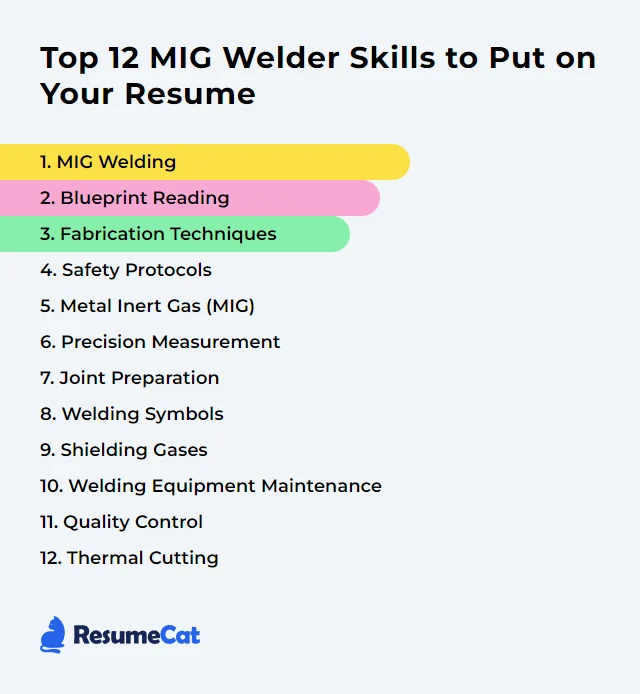
Your résumé should make relevant ability easy to verify. Put welding processes, materials, positions, equipment, drawing experience, inspection tasks, and related fabrication skills near the top. Use plain language and distinguish training from paid production experience.
A brief application can still be specific. “Experienced with MIG welding” is weaker than a truthful description such as “GMAW on carbon-steel assemblies, including joint preparation, tack-up, visual inspection, and dimensional checks.” Specificity helps an employer decide whether to invite you without forcing them to interpret general claims.
- Match the posting: Highlight the exact process, material, shift, and supporting skills requested.
- Prepare examples: Be ready to explain a defect, a difficult fit-up, a safety decision, and a time you learned a new task.
- Bring documentation: Have accurate training records, certifications, references, and work authorization information available as requested.
- Practice safely: Use approved equipment, ventilation, protective clothing, and supervision appropriate to your experience.
What a weld test may assess
A test can evaluate setup material preparation tack placement travel control bead profile fusion starts and stops cleanliness and adherence to instructions It may also include a fit-up.
Do not chase appearance by hiding defects with excessive grinding. A clean, consistent result made within the stated requirements is more persuasive than a polished surface that conceals poor technique or incorrect dimensions.
Handling a mistake during testing
If you notice a problem, stop when it is safe and report it clearly. Explain what you observed and ask whether the part should be repaired, restarted, or evaluated as-is. Concealing an error can raise a larger concern about judgment than the original mistake.
Use the same approach on the job: isolate the issue, protect the work, notify the responsible person, and follow the documented correction process. Quality systems exist partly to prevent one uncertain decision from becoming a costly failure.
Safety and Quality Expectations
MIG welding produces intense light, heat, fumes, sparks, and electrical hazards. The risk changes with the base metal, coatings, ventilation, work position, surrounding materials, and enclosure. Employers should provide required controls and training, but each worker must use them correctly and speak up when conditions are unsafe.
Protective clothing should cover exposed skin without creating new hazards, and eye and face protection must be appropriate for the work. Keep combustibles away, inspect leads and connections, secure gas cylinders, and use ventilation or respiratory protection according to the hazard assessment and workplace procedures.
- Fumes: Do not assume ordinary mild steel is harmless; coatings, paints, galvanizing, stainless alloys, and contaminants can change exposure risks.
- Fire prevention: Control sparks and hot metal, inspect the opposite side of partitions, and follow hot-work rules.
- Electrical safety: Keep equipment, cables, gloves, and work areas dry and in good condition.
- Confined spaces: Never treat a small or enclosed area as ordinary shop work; required permits, atmospheric checks, rescue planning, and ventilation may apply.
Quality problems that commonly appear
Porosity can result from contamination inadequate or excessive gas flow leaks drafts or poor technique Lack of fusion may relate to insufficient heat input an unfavorable angle excessive.
Diagnosis should begin with the requirement and the evidence, not a random adjustment. Check material cleanliness, wire condition, gas delivery, liner and contact tip, polarity, fit-up, settings, and technique in a logical order. If the work is governed by a procedure, do not change essential variables outside authorized limits.
Common Mistakes in a MIG Welding Job Search
Many candidates undersell themselves by naming only the machine process. Others overstate their ability by listing every welding method they have briefly tried. Both approaches make it harder for an employer to judge fit and can create problems during a practical test.
Another common error is accepting the first attractive wage without checking the schedule, physical demands, actual duties, or opportunity to learn. A slightly lower starting rate may be worthwhile if it provides structured training, stable hours, benefits, and access to increasingly valuable work.
- Ignoring the full duty list: A “welder” role may be mostly fitting, grinding, assembly, or repair.
- Confusing familiarity with qualification: Brief exposure to aluminum or stainless does not equal production proficiency.
- Failing to ask about testing: Arriving unprepared for a position, material, or process can create an avoidable mismatch.
- Overlooking ergonomics: Repeated awkward positions, lifting, and heat exposure can affect long-term sustainability.
How to make a stronger decision
Rank your priorities before interviewing: income, schedule, location, benefits, variety, advancement, physical demands, and technical growth. Then compare each offer against those priorities rather than letting one number dominate the decision.
Be equally realistic about your current level. If you need more practice with fit-up, drawings, aluminum, overhead work, or inspection, identify that gap and seek a role or training plan that addresses it instead of hiding it.
FAQ About MIG Welder Employment
Is MIG welding experience enough to get hired?
It can be enough for some entry-level production roles, especially when the candidate demonstrates safe habits, reliable attendance, and basic process control. More advanced jobs may require fitting, blueprint reading, multiple processes, code-related qualifications, or documented experience.
Do I need a welding certification for a MIG job?
Not always. Some employers train and test candidates internally, while others require a specific performance qualification or certification connected to the work. Ask which credential, process, position, and material the employer actually requires.
What should I put on a MIG welder résumé?
List accurate experience with GMAW equipment, base metals, positions, wire sizes, joint types, drawings, fit-up, inspection, fabrication tools, and safety practices. Separate classroom or personal practice from paid production work and avoid claiming qualifications you cannot document.
Are MIG welding jobs physically demanding?
Often, yes. Demands may include prolonged standing, lifting, awkward positions, grinding, heat, noise, protective equipment, and repetitive motion. The level varies greatly by product and facility, so ask about the actual parts, fixtures, lifting aids, and work positions.
Can a MIG welder move into higher-paying work?
Yes. Developing fitting, drawing interpretation, troubleshooting, additional processes, inspection knowledge, and leadership skills can open paths into specialized welding, field service, quality, supervision, or automation support.
How should I prepare for a MIG welding interview?
Review basic process control, joint preparation, weld defects, safety, measuring, and drawing symbols. Prepare concise examples showing how you handled a defect, followed instructions, worked with a team, and learned a new task.
What if I fail an employer’s weld test?
Ask what specifically missed the requirement and whether retesting or training is available. Treat the result as useful information about a technical gap, but also consider whether the test’s process, material, or position differed substantially from your recent experience.
Conclusion
MIG welder employment can provide a practical entry into manufacturing, fabrication, construction, maintenance, and specialized technical work, but the strongest candidates offer more than a steady bead. They understand preparation, fit-up, drawings, quality, communication, and the safety controls that make production sustainable.
Compare jobs by duties, schedule, physical conditions, training, total compensation, and future skill development. The main limitation is that no résumé or general certification guarantees success in an employer-specific test, so keep practicing within safe conditions and be precise about what you can do.
Choose three target job postings, list their repeated requirements, and tailor your résumé and practice plan to the skills they genuinely share.