How Hot Does a TIG Welder Get: Complete Guide and Practical Tips
A TIG welding arc is extraordinarily hot: the plasma column can reach roughly 11,000°F (about 6,100°C), although its effective temperature varies with current, shielding gas, arc length, and welding conditions. The tungsten electrode itself is also extremely hot, but it is designed to resist melting rather than become the main heat source.
If you are asking how hot does a tig welder get, the most useful answer depends on which part of the process you mean. The arc, molten weld pool, tungsten electrode, torch, workpiece, and welding machine all reach different temperatures.
How hot does a TIG welder get?
The TIG welding arc can reach approximately 11,000°F, or around 6,100°C, in the hottest central region. This is not a fixed operating temperature displayed by the welder. It is an estimated plasma temperature that changes as the electrical arc and shielding environment change.
The molten metal in the weld pool is cooler than the center of the arc but it remains hot enough to melt the base material Common steel stainless.
The TIG machine does not become 11,000°F. That extreme temperature exists in a very small, concentrated region of the arc. The power source may become warm during operation, and the torch, cables, collet, tungsten, workpiece, and surrounding metal can become dangerously hot, but they do not reach the arc’s peak temperature under normal conditions.
Where the heat is located
The arc
A TIG arc is an electrical discharge through ionized shielding gas. The arc creates a narrow, intense heat source between the tungsten electrode and the workpiece. The highest temperature occurs inside the plasma column, especially near the center of the arc.
Because the arc is concentrated, TIG welding can place substantial heat into a small area. This makes the process useful for precise welds and thin materials. It also means a short exposure can cause severe burns, melt metal, damage coatings, or ignite nearby materials.
The weld pool
The weld pool is the small area of base metal and filler metal that has melted. Its actual temperature depends on the material, current, travel speed, heat loss, and welding position. The pool must be hot enough to remain liquid, but it is not the same temperature as the central arc.
A larger weld pool does not necessarily mean that the arc is hotter. It may indicate higher amperage, slower travel, excessive arc length, preheated material, or poor heat control. The pool also continues to hold heat after the arc moves away, so recently welded metal can remain hazardous even when it no longer glows.
The tungsten electrode
Tungsten has an exceptionally high melting point of about 6,192°F (3,422°C). That resistance to melting allows a TIG electrode to carry an arc without being consumed like a wire electrode in other welding processes.
However, “nonconsumable” does not mean “unaffected by heat.” The tungsten can become red-hot, deform, crack, contaminate the weld, or melt if the amperage is too high for its diameter, the shielding gas is inadequate, the electrode touches the pool, or the wrong current and polarity are used.
The torch and workpiece
The ceramic cup helps direct shielding gas around the arc but it is not a heat shield that makes the torch safe to touch The torch head collet body cup and cable connection can heat during extended.
The workpiece may stay hot well after welding stops. Thick metal can retain heat internally, while thin sheet metal may cool more quickly. Aluminum can be especially deceptive because it often does not show the same visible color change as steel at comparable danger levels.
What controls TIG arc temperature?
Amperage
Amperage is one of the most important controls. Increasing current generally increases arc energy and allows the welder to melt more base metal. It can also enlarge the weld pool, increase penetration, and raise the heat transferred into the workpiece.
Amperage is not a direct thermometer for the arc. A lower-current arc can still be intensely hot at its center, while a higher-current setting mainly increases the arc’s capacity to transfer heat. The practical result is more melting and a greater heat-affected area.
Arc length
A shorter, properly controlled arc usually concentrates heat more effectively. A long arc spreads the energy over a wider area, can make the arc less stable, and may increase shielding problems. Excessive arc length can also produce a broader, less controlled weld pool and allow atmospheric contamination.
Arc length should generally match the electrode diameter and the joint requirements. Holding the torch farther away does not make TIG welding safer; it often makes the process less efficient and less precise.
Shielding gas
Pure argon is common for TIG welding because it supports a stable arc and provides effective shielding for many metals. Helium or an argon-helium mixture can produce a hotter, more penetrating arc and may be useful for certain aluminum, copper, or thick-material applications.
Gas flow rate, cup size, drafts, leaks, and torch position also affect shielding. Poor coverage allows oxygen, nitrogen, or moisture to enter the arc area. That contamination can damage the tungsten and weld, even though it does not necessarily mean the arc temperature has increased.
Polarity and current type
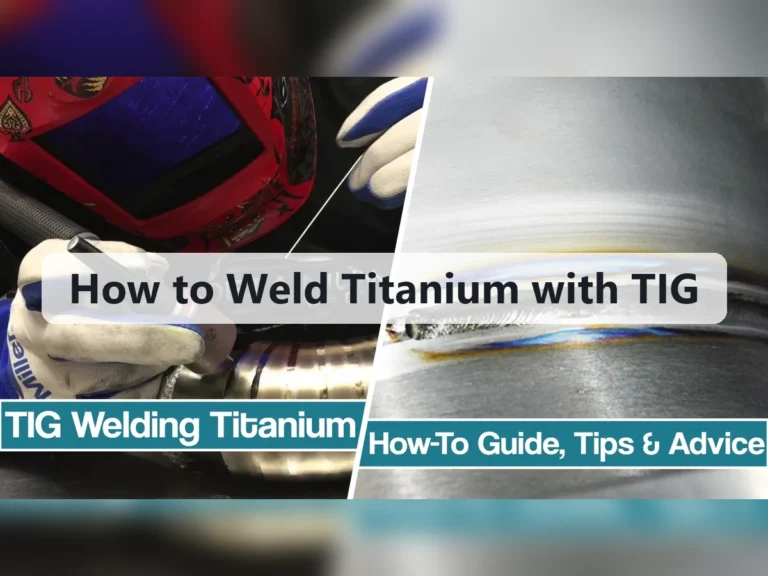
Direct current electrode negative, commonly called DCEN, places much of the arc’s heat into the workpiece and is widely used for steel, stainless steel, nickel alloys, and titanium. AC TIG is commonly used for aluminum and magnesium because its alternating action helps manage the oxide layer on the material.
Changing polarity changes how heat is distributed between the tungsten and the workpiece. If the torch setup is incorrect, the electrode may overheat quickly or the weld may lack proper penetration. The machine manual and the material’s welding procedure should determine the correct current type and polarity.
Travel speed and material thickness
Moving slowly leaves the arc over one area longer and increases heat input. Moving quickly reduces the time available to melt the joint and can produce inadequate fusion. Thick parts, high thermal conductivity metals, and large joints can pull heat away from the arc, while thin parts can overheat quickly.
Preheating also changes the result. A preheated workpiece may require less arc energy to establish a fluid weld pool, but the entire part may remain hot for a longer period. Heat control should consider both the arc and the total thermal condition of the material.
How hot is the metal after TIG welding?
Metal does not need to glow to cause a serious burn. The weld pool is visibly molten, but nearby metal can be hot enough to injure skin while appearing dark. Copper, aluminum, and stainless steel may spread heat away from the joint differently, so appearance is not a reliable temperature gauge.
A simple rule is to treat the torch, electrode, filler rod end, workpiece, fixture, and weld area as hot until they have cooled completely. I would not rely on a glove, a quick visual check, or a brief pause to decide whether metal is safe to handle.
Temperature-indicating products or a suitable infrared thermometer can help with process control, but an infrared reading may be affected by surface condition, reflectivity, emissivity, and viewing angle. A shiny metal surface can produce an inaccurate reading. For safety, assume recently welded metal is hot unless its temperature has been verified appropriately.
Practical ways to control TIG heat
- Set amperage for the material and thickness instead of using more current than the joint needs.
- Keep a consistent, short arc length to concentrate the heat.
- Adjust travel speed so the weld pool stays fluid without becoming excessively wide.
- Use pulsed TIG when appropriate to alternate peak and background current and limit average heat input.
- Use properly sized tungsten, cup, and shielding-gas flow for the application.
- Allow pauses between welds when distortion or overheating is a concern.
- Use heat sinks, clamps, or backing methods when the joint design permits them.
- Let the workpiece cool naturally in a controlled area rather than touching or quenching it without considering distortion and material requirements.
Pulse settings deserve careful adjustment. A high peak current can produce strong arc action, while a lower background current allows the pool to cool between pulses. Pulse frequency, peak time, and background current all affect the result. Pulse TIG can reduce average heat input, but it does not make the arc harmless or eliminate the need for heat management.
Safety around TIG welding heat
The arc can cause severe eye injury and skin burns through ultraviolet and infrared radiation. Use a properly rated welding helmet, flame-resistant clothing, welding gloves, and footwear that covers exposed skin. The helmet shade must be suitable for the selected amperage and process.
Keep combustible materials away from the welding area. Sparks, hot filler metal, and glowing particles can travel farther than expected, even though TIG usually creates less spatter than some other welding processes. Provide suitable ventilation, especially when welding coated, painted, galvanized, or contaminated material.
Do not touch the tungsten, torch cup, filler rod end, or workpiece immediately after welding. Mark or isolate hot metal so another person cannot accidentally handle it. A fire watch may be necessary when welding near structures, floors, walls, insulation, or other materials that can ignite or retain heat.
Electrical safety matters as well. The arc is powered by potentially hazardous welding current, and wet conditions increase risk. Inspect the torch, cables, connections, and ground clamp before use. Follow the equipment manufacturer’s instructions, and never treat the low-voltage appearance of the arc as proof that contact is safe.
FAQ: TIG welding temperature
Is a TIG arc hotter than a MIG arc?
Both TIG and MIG arcs reach extremely high temperatures, and the exact comparison depends on current, shielding gas, arc length, and operating conditions. TIG concentrates heat precisely, while MIG transfers filler metal continuously. It is more useful to compare heat input and control for the specific joint than to rely on one universal arc-temperature number.
Can TIG welding melt tungsten?
Yes. Tungsten can melt or become damaged when amperage is excessive, the electrode is too small, shielding gas is disrupted, the electrode touches the weld pool, or the current and polarity are unsuitable. A damaged or contaminated tungsten should be regr and properly prepared before welding continues.
How hot does a TIG torch get?
The torch temperature varies with amperage, duty cycle, torch design, cooling, and welding time. An air-cooled torch can become very hot during prolonged work. A water-cooled torch manages torch-head heat more effectively, but its cup, electrode, and nearby workpiece can still be hot enough to burn skin.
How long does TIG-welded metal stay hot?
There is no single cooling time. Thickness, material, joint size, ambient temperature, airflow, and heat input all matter. Thin metal may cool relatively quickly, while thick parts and fixtures can remain dangerous for many minutes or longer. Handle every recently welded part cautiously until it has been checked and confirmed cool.
Does a higher TIG amperage always mean a hotter arc?
Higher amperage generally increases the arc’s heat-transfer capability, melting rate, and penetration. It does not provide a complete temperature measurement because arc length, shielding gas, polarity, travel speed, and material also affect the process. Higher amperage usually means more heat entering the workpiece, even when peak arc temperature is not directly known.
Conclusion
The clearest answer to how hot does a tig welder get is that the arc can reach about 11,000°F (6,100°C), while the weld pool, tungsten, torch, and workpiece reach different temperatures. Control amperage, arc length, shielding, polarity, and travel speed, and treat every recently welded component as dangerously hot until it has cooled.