Friction Stir Welding Training: Key Facts and Helpful Guidance
Friction stir welding can look deceptively simple: a rotating tool travels along a joint, softening metal without melting it. The difficult part is controlling the many variables that determine whether the finished weld is strong, repeatable, and suitable for production.
Friction stir welding training helps engineers, welders, technicians, inspectors, and manufacturing leaders understand those variables before costly trial-and-error begins. The right instruction connects machine operation with metallurgy, joint design, parameter development, inspection, and workplace safety.
I will explain what effective training should cover, who benefits from it, how to compare course options, and which mistakes can undermine learning. The goal is to help a prospective trainee or employer choose instruction that leads to dependable process control rather than a certificate alone.
What Is Friction Stir Welding Training?
Friction stir welding training is structured instruction in the principles, equipment, setup, operation, inspection, and troubleshooting of the friction stir welding (FSW) process. Unlike conventional fusion welding, FSW joins materials in the solid state. A rotating, nonconsumable tool generates frictional heat and mechanical stirring while moving along the joint line.
The tool normally has a shoulder and a projecting pin, also called a probe. The shoulder contacts the surface, while the pin penetrates into the material. Heat softens the workpiece without typically reaching its melting point. Pressure and tool motion then consolidate the plasticized material behind the tool.
Training can range from a short awareness course to extensive hands-on qualification. A basic class may explain equipment, terminology, applications, and safety. A technical program may include fixture design, parameter selection, tool wear, metallurgical effects, destructive testing, nondestructive examination, and production documentation.
Good instruction does not treat FSW as a simple machine recipe. It teaches how material grade, thickness, joint configuration, tool geometry, tilt angle, rotation speed, travel speed, axial force, and thermal conditions interact. That relationship is central to making sound decisions when a weld does not perform as expected.
Why the Process Requires Specialized Instruction
FSW avoids many problems associated with melting and resolidifying a weld pool, including some forms of porosity, solidification cracking, and distortion. It can produce efficient joints in aluminum alloys and other suitable materials. However, solid-state welding introduces its own process-control challenges.
The tool must maintain appropriate contact and penetration while moving through the joint. Too little heat or insufficient material flow can cause a tunnel, void, lack of consolidation, or an incomplete joint. Excessive heat may damage the tool, alter the material condition, increase distortion, or create an undesirable microstructure.
Operators also need to distinguish a visible surface that looks acceptable from an internally sound weld. A weld may have a smooth crown and still contain a subsurface flaw. Training therefore links visual observations with process data and inspection results instead of relying on appearance alone.
Another challenge is fixturing. The workpiece must resist lifting, separation, and lateral movement under the substantial forces generated by the tool. Poor restraint can produce inconsistent penetration, surface defects, joint mismatch, or machine instability. A course that omits workholding leaves a major practical gap.
Who Should Take FSW Training?
The most suitable course depends on a person’s role and the decisions that person must make. An operator needs different depth from a welding engineer, but both need a clear understanding of process limitations.
- Machine operators learn setup, tool loading, workholding, program execution, monitoring, shutdown, and immediate response to abnormal conditions.
- Welding technicians often need deeper practice with parameter trials, tool changes, joint preparation, measurement, and troubleshooting.
- Manufacturing engineers benefit from instruction in process windows, fixture concepts, cycle planning, automation, and production validation.
- Materials and metallurgical engineers study heat flow, microstructure, hardness changes, precipitate behavior, and the effect of processing on mechanical properties.
- Quality engineers and inspectors need to understand likely defect locations, qualification records, inspection methods, and acceptance criteria.
- Design engineers learn how joint geometry, thickness transitions, access, load direction, and material selection affect FSW feasibility.
- Supervisors and managers gain enough process knowledge to evaluate equipment, staffing, qualification needs, and production risk.
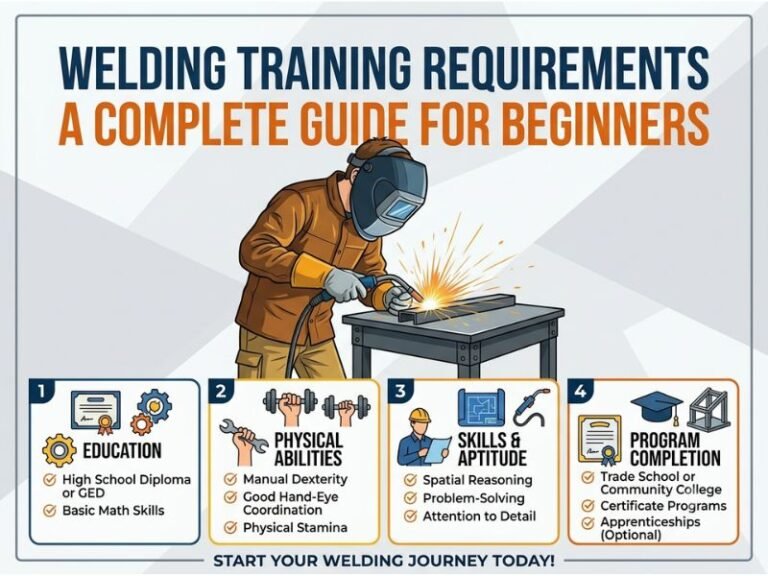
Prior welding experience is helpful but not always mandatory. FSW training should state its prerequisites clearly. A beginner may need foundational instruction in engineering drawings, measurement, machine safety, and welding terminology before entering an advanced process-development course.
Core Topics a Strong Course Should Cover
Process principles and terminology
Instruction should explain the roles of the rotating tool, shoulder, probe, advancing side, retreating side, weld line, start and exit regions, heat-affected zone, thermomechanically affected zone, and stir zone. These terms allow technical teams to describe a weld condition precisely.
The course should also explain how FSW differs from fusion welding. The material is softened and stirred rather than intentionally melted, so the dominant variables are heat generation, plastic flow, consolidation, and cooling. That distinction affects tool design, defect formation, and inspection.
Machine operation and setup
Hands-on instruction should cover machine axes, spindle operation, tool installation, workpiece alignment, plunge or start methods, travel direction, programmed motion, and controlled exit strategies. Trainees should understand how a machine applies axial force and how sensors or controls may monitor torque, position, temperature, or force.
Setup also includes checking tool condition, confirming the correct program, verifying clearances, securing the workpiece, and inspecting the joint before welding. A disciplined pre-run checklist prevents simple mistakes from becoming damaged tooling or rejected parts.
Materials and joint design
Aluminum alloys are widely associated with FSW, but training should not imply that every alloy behaves the same way. Temper, thickness, thermal conductivity, surface condition, and material pairing can change the process response. Some applications use dissimilar materials, but those joints require careful attention to tool compatibility and material flow.
Common joint types include butt, lap, T, and certain corner configurations. Each geometry changes access, support, tool engagement, and load transfer. Trainees should learn how joint gaps, mismatch, edge preparation, and thickness variation influence weld quality.
Parameters and process windows
Important parameters include spindle rotation speed, travel speed, tool tilt, plunge depth or shoulder engagement, axial force, tool geometry, and workpiece temperature. No single setting is universally correct. A usable parameter window is developed for a particular material, thickness, joint, machine, tool, and fixture.
A useful course teaches relationships rather than isolated numbers. Increasing rotation speed may increase heat generation, but the effect depends on tool geometry, travel speed, contact conditions, and heat dissipation. Increasing travel speed can reduce heat input per unit length, yet it may also affect material flow and consolidation.
Parameter development should include planned trials and documented observations. Trainees should record settings, machine behavior, visual results, section findings, and mechanical test results. This creates traceability and helps separate a repeatable process from a one-time successful weld.
Tooling and fixturing
Tool selection is one of the most important technical subjects. Shoulder diameter, probe length, probe profile, material, surface features, and wear resistance all influence friction, heat generation, and material movement. Probe length must suit the joint thickness and backing arrangement without causing excessive penetration.
Fixturing must support the workpiece close to the weld path while allowing the tool to reach the joint. It should control gaps and movement, tolerate process forces, and avoid interfering with the shoulder or machine travel. Training should show how inadequate support can mimic a parameter problem.
Defects and troubleshooting
Common FSW problems include voids, tunnels, lack of bonding, surface grooves, excessive flash, kissing bonds, root flaws, joint-line remnants, thinning, and termination defects. The exact appearance and cause can vary, so trainees should avoid diagnosing a defect from one visual symptom alone.
A structured troubleshooting method begins with the defect’s location and repeatability. The operator can then review tool condition, alignment, plunge depth, force, speed, temperature, material preparation, and fixture support. Changing several variables at once makes the result difficult to interpret.
What Hands-On Practice Should Include
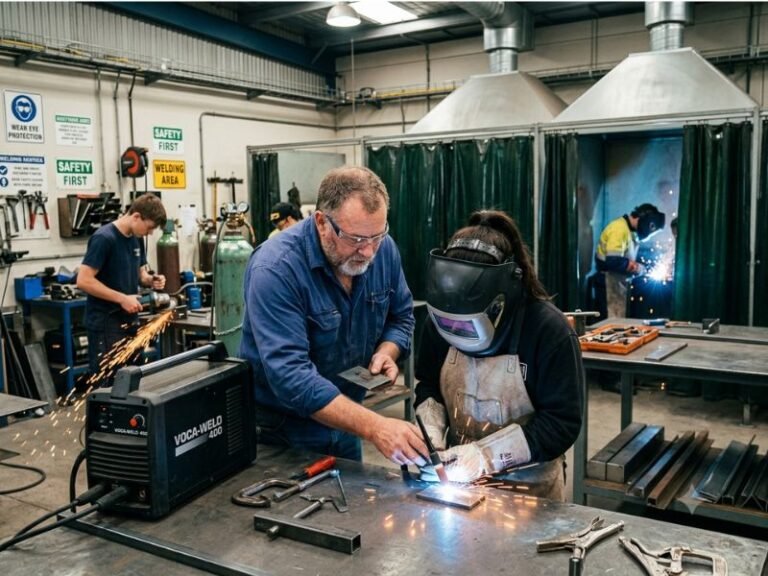
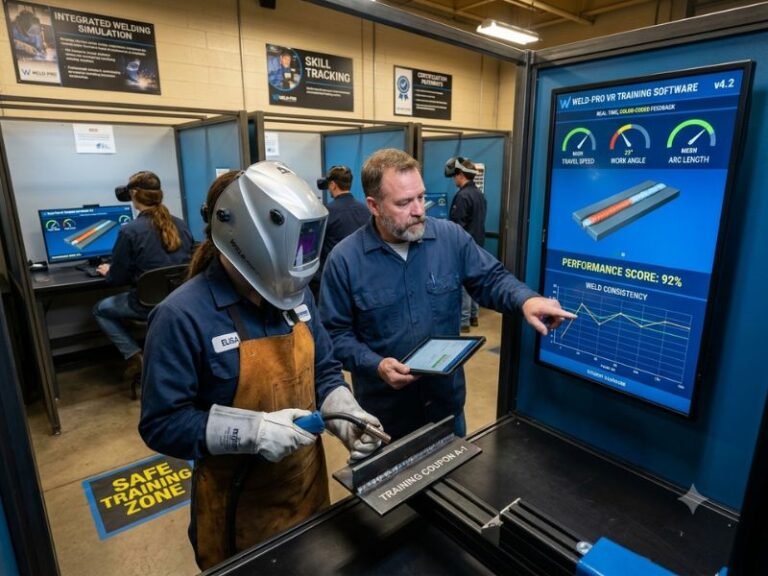
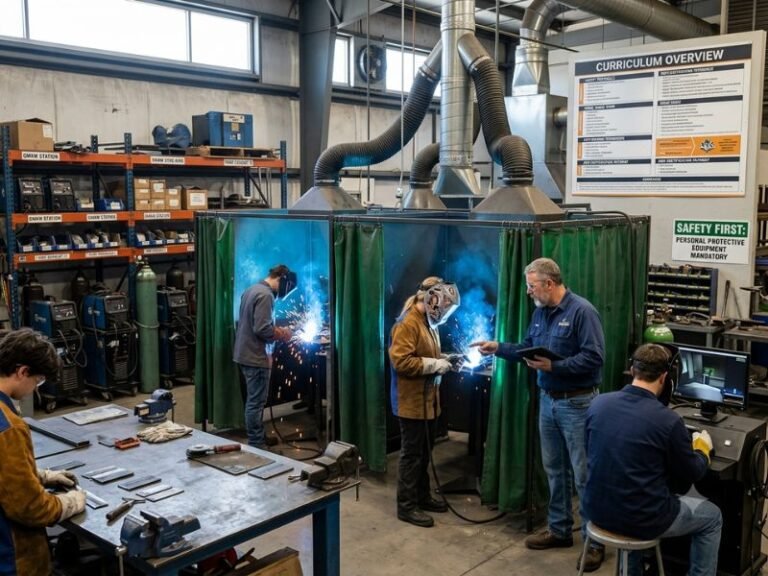
Classroom explanation is valuable, but FSW is a process where physical setup and machine behavior matter. I would give strong preference to a course that provides supervised practice on equipment resembling the machines used in the intended workplace.
Useful exercises may include:
- Identifying machine controls, tooling, guarding, fixtures, and emergency stops.
- Preparing and measuring materials before loading them into the fixture.
- Aligning a butt joint and checking gap, mismatch, and backing support.
- Installing a tool and verifying probe length, shoulder condition, and clearances.
- Running a controlled weld while monitoring force, torque, position, sound, and surface appearance.
- Comparing welds produced with different rotation speeds, travel speeds, or tool positions.
- Sectioning sample welds or reviewing macrographs to connect surface appearance with internal structure.
- Documenting results in a parameter or weld record.
- Responding to a simulated abnormal condition, such as tool wear, excessive flash, loss of support, or an interrupted weld.
Hands-on practice should include a debrief. The instructor should explain not only whether a weld passed or failed, but why the result occurred and how the next trial should be planned. That reasoning is more transferable than memorizing a successful machine setting.
Safety Requirements in FSW Training
FSW does not create a conventional arc, but it is not automatically low risk. The rotating tool, high forces, hot workpiece, chips, sharp edges, noise, fumes from coatings or contaminants, and unexpected machine movement all require controls.
Training should cover machine guarding, interlocks, emergency stops, lockout and tagout, safe loading, tool handling, hot-surface awareness, eye and face protection, hearing protection, and appropriate clothing. Loose items, gloves near rotating machinery, and improvised fixture adjustments can create serious hazards.
Surface coatings and contaminants deserve specific attention. Paint, lubricants, sealants, and cleaning chemicals may generate fumes or affect the weld. Material safety data, ventilation requirements, and site-specific procedures should be part of the training rather than an afterthought.
A competent instructor also explains what to do after a tool breakage, collision, unexpected movement, or abnormal noise. The correct response is usually to stop safely, isolate the hazard, preserve relevant information, and follow the site’s reporting and inspection procedure.
Qualification, Certification, and Records
Course completion and personnel qualification are not always the same thing. A certificate may show that a person attended instruction, while a qualification process may require demonstrated ability under specified conditions and documented evaluation.
Employers should ask what the credential actually represents. Does it verify attendance, written knowledge, practical performance, weld samples, or compliance with a particular company or industry procedure? The answer affects how the credential can be used.
Training records should identify the course content, instructor or provider, dates, equipment used, assessment method, and any limitations. For production work, the employer may also need procedure qualification records, approved welding procedures, operator authorization, inspection results, and records of continued competency.
Applicable requirements can vary by industry, customer, material, part criticality, and governing code or specification. Aerospace, transportation, pressure-related, and structural applications may impose different documentation and inspection expectations. A training provider should not promise universal certification without identifying the relevant standard or authority.
How to Choose a Training Provider
I recommend evaluating a provider against the actual production problem rather than choosing solely by course length or brand recognition. A technically strong program should make its scope, prerequisites, equipment, assessment, and learning outcomes easy to verify.
Questions worth asking
- Does the instructor have relevant FSW process and manufacturing knowledge?
- Will trainees use real FSW equipment or only view presentations?
- Which materials, thicknesses, joint types, and tool designs are included?
- How much time is dedicated to parameter development and troubleshooting?
- Are safety procedures specific to the equipment used?
- What inspection and testing methods are demonstrated?
- Is the final credential attendance-based, examination-based, or performance-based?
- Can the provider tailor instruction to a company’s material, machine, and joint design?
- What documentation does the employer receive after completion?
Training delivered at a company site can be useful when a team needs consistent procedures on its own machine. A public class may offer broader exposure to equipment and applications. Online instruction can efficiently cover theory, but it is rarely enough by itself for someone expected to set up and operate an FSW machine.
Cost should be evaluated alongside practical value. Travel, machine access, sample materials, testing, tooling, and production downtime may affect the total investment. A short course that omits the skills required for independent work may cost less initially while extending the learning curve.
Common Training Mistakes to Avoid
Learning parameters without understanding the process
Copying settings from another weld can fail because the other application may use a different alloy temper, thickness, tool, fixture, backing plate, or machine. Training should teach how to establish a process window and recognize when an existing procedure is not transferable.
Ignoring the fixture
A poor fixture can create movement, gaps, vibration, and inconsistent support. If the fixture is treated as a secondary detail, trainees may adjust welding parameters to compensate for a mechanical problem. That approach often produces unstable results.
Judging quality by surface appearance alone
A smooth surface is encouraging but not conclusive. Internal defects, weak interfaces, or root problems may require macro examination, radiography, ultrasonic testing, or another suitable method. The appropriate inspection method depends on the application and governing requirements.
Changing several variables at once
Unplanned experimentation makes cause and effect unclear. A better approach changes one major variable at a time when practical, records the result, and uses defined acceptance criteria. Designed experiments may be appropriate for more advanced process development.
Skipping material preparation
Oil, dirt, burrs, poor fit-up, excessive gap, and inconsistent thickness can affect weld formation. Cleaning and dimensional checks should be standardized. The process should not be expected to correct careless preparation.
Confusing attendance with readiness
A person may understand the theory and still need supervised practice before independent operation. Employers should define what “qualified” means for each task and verify that the trainee can perform it safely and consistently.
How Employers Can Build a Training Path
A practical workforce plan often begins with a skills assessment. Identify who needs awareness, who will operate the machine, who will develop procedures, and who will inspect or approve welds. Assigning the same course to every role can leave operators overburdened and engineers underprepared.
A staged path may include foundational safety and terminology, equipment orientation, supervised operation, parameter development, inspection, documentation, and periodic reassessment. New operators can begin with simple, representative joints before moving to difficult materials or production-critical parts.
After formal instruction, workplace mentoring is important. A qualified supervisor or process engineer can review setup checklists, first-piece results, parameter records, and responses to deviations. Early production should include closer oversight than routine work performed after competence is demonstrated.
Refresher training is useful after long periods away from the equipment, major machine changes, new materials, revised procedures, recurring defects, or safety incidents. A record of continuing competence supports both quality control and workforce planning.
Frequently Asked Questions About Friction Stir Welding Training
Is prior welding experience required for friction stir welding training?
Not always. Introductory courses may accept beginners, but machine safety, measurement, drawings, and basic manufacturing knowledge are helpful. Advanced process-development or inspection courses usually require relevant technical experience.
How long does FSW training take?
Duration depends on the objective. An awareness class may be brief, while operator qualification or process-development training requires more time for setup, supervised welds, testing, and evaluation. The syllabus and practical assessment matter more than the number of classroom hours alone.
Does a course certificate qualify someone to operate an FSW machine?
Not necessarily. A certificate may confirm attendance or completion of an assessment, but the employer must determine whether the person meets site safety rules, equipment authorization requirements, and any applicable customer or industry qualification criteria.
Is online friction stir welding training enough?
Online learning can explain principles, terminology, safety concepts, and parameter relationships. It normally cannot replace supervised practice with tooling, fixturing, machine controls, inspection, and abnormal-condition response. A blended program is often more suitable for operational roles.
What materials are commonly covered in FSW training?
Many courses emphasize aluminum alloys, but coverage varies. Some programs address magnesium, copper, titanium, steels, thermoplastics, or dissimilar combinations. Trainees should confirm that the course includes the materials and thicknesses relevant to the intended application.
What should an operator learn first?
Safety, machine controls, workholding, tool identification, joint preparation, and the approved operating procedure should come first. Parameter changes and troubleshooting should follow only after the operator can set up and run the machine in a controlled manner.
How is FSW weld quality evaluated?
Evaluation may combine visual inspection, dimensional checks, macrosectioning, mechanical testing, ultrasonic testing, radiography, or other methods. The correct combination depends on the material, joint, part function, customer requirements, and applicable specification.
Can one FSW procedure be used for every part?
No. A procedure developed for one material, thickness, joint, tool, machine, and fixture may not transfer directly to another application. Any change should be reviewed and validated according to the employer’s quality system and applicable requirements.
Conclusion
Effective Friction stir welding training combines solid-state welding theory with machine practice, tooling, fixturing, safety, inspection, and disciplined troubleshooting. I would judge a program by the competence it develops, not by its certificate alone. The strongest choice is instruction that matches the intended equipment and materials, includes supervised hands-on work, explains qualification limits, and gives trainees a reliable method for producing and evaluating consistent welds.