Deep Sea Welder Life Expectancy: Key Facts and Helpful Guidance
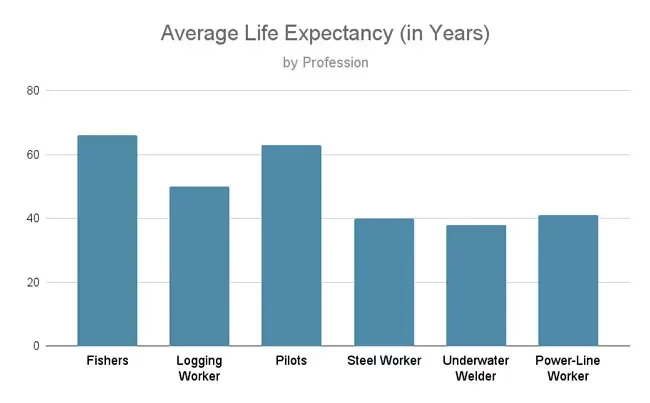
There is no reliable fixed lifespan for deep sea welders; outcomes depend on dive exposure, safety practices, health, work history, and access to medical care.
A diver can look strong highly trained and completely comfortable stepping onto a workboat while carrying risks that are invisible from the surface Conversely a long career in.
That distinction matters when people search for deep sea welder life expectancy The job combines underwater construction industrial welding heavy equipment pressure changes cold noise confined spaces electrical.
This article explains what can and cannot be concluded about longevity which hazards have lasting effects why accident risk and chronic health risk are different and how experienced.
- ✓There is no scientifically dependable “average lifespan” for all deep sea welders.
- ✓Fatal incidents are an immediate risk, while pressure, noise, cold, vibration, and repetitive strain can create long-term health problems.
- ✓Training, conservative dive planning, reliable surface support, medical surveillance, and a strong safety culture can materially change risk.
- ✓A diver’s personal exposure history is more useful than a job title when assessing future health and career length.
What Deep Sea Welder Life Expectancy Really Means
The phrase life expectancy sounds precise but it is often used to ask several different questions Someone may want to know whether underwater welding is fatal how long.
For an individual no honest calculation can predict a specific age at death from occupation alone A commercial diver who performs occasional harbor inspection has a different exposure.
- No universal number: Occupational categories are too broad to produce a dependable lifespan estimate for every underwater welder.
- Two kinds of risk: A sudden diving accident and a gradual occupational illness must be assessed separately.
- Exposure is decisive: Depth, bottom time, breathing gas, decompression profile, environment, and task frequency change the risk picture.
- Career length is not lifespan: A diver may leave underwater work because of physical limits, family priorities, or finances while remaining healthy for decades.
It is also important to separate mortality from morbidity. Mortality concerns death; morbidity concerns illness, injury, disability, pain, hearing loss, neurological symptoms, or reduced quality of life. A career can be survivable yet still produce health problems if exposure controls and medical follow-up are poor.
Public discussions often magnify dramatic stories A fatality may receive attention because it is unusual and emotionally powerful while years of safe work early detection of hearing damage.
Why Underwater Welding Is Physically Demanding
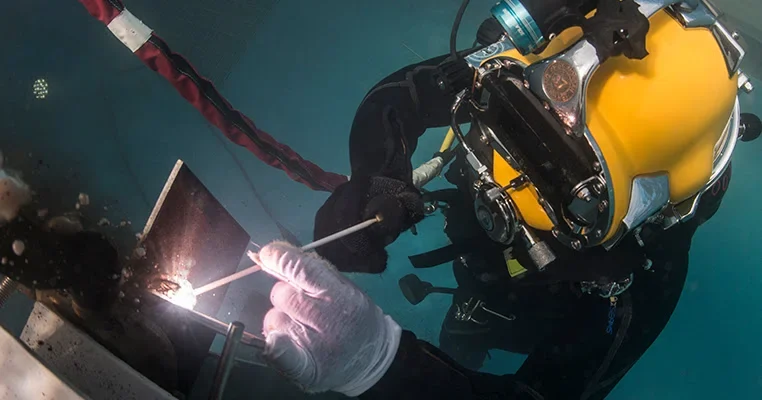
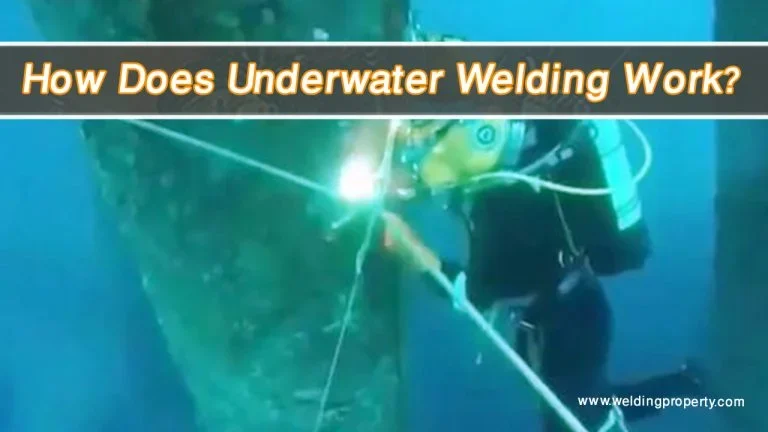
Underwater welding is usually part of a larger commercial diving operation not an isolated activity performed by a person simply holding a welding torch underwater The diver may.
Water conducts heat away from the body far faster than air and the diver often works in bulky protective equipment that restricts movement Currents suspended sediment entanglement hazards.
- Pressure exposure: Depth and changing pressure affect gas behavior and decompression requirements.
- Cold stress: Heat loss can reduce dexterity, judgment, endurance, and the ability to respond quickly.
- Restricted visibility: Poor visual feedback increases the chance of tool contact, positioning errors, and missed hazards.
- Electrical and thermal energy: Welding current, hot metal, sparks, and equipment faults require disciplined controls.
Pressure and decompression are not the same as “deep water”
Pressure-related risk depends on more than a single depth number The breathing gas time spent at depth ascent procedure repetitive exposures physical exertion and individual susceptibility all influence.
Decompression illness can involve joints, skin, lungs, the inner ear, or the nervous system. Symptoms may appear during ascent, after surfacing, or after a delay. Pain, unusual fatigue, numbness, weakness, dizziness, difficulty walking, shortness of breath, confusion, or visual changes should never be dismissed as ordinary tiredness after a shift.
Electrical hazards require a complete system, not just a careful diver
Wet welding uses specialized equipment and procedures intended to control current, polarity, insulation, grounding, and switching. The diver cannot personally compensate for defective power systems, damaged cables, poor communication, inadequate supervision, or an unsafe worksite.
Contact with energized equipment, unexpected current, entanglement, or loss of breathing supply can become life-threatening quickly. Good operations therefore rely on pre-dive checks, reliable surface control, communication, emergency planning, and a team that has the authority to stop work.
Confined spaces and structures add hazards unrelated to the weld
Ship hulls, intake tunnels, dams, caissons, tanks, and offshore structures may contain sharp edges, unstable materials, trapped gas, suction, debris, moving machinery, or limited escape routes. A diver can be injured by the worksite even when the welding equipment is functioning correctly.
The practical lesson is that underwater welding should be assessed as commercial diving plus industrial construction. Looking only at the welding arc understates the number of systems that must work together for a safe dive.
Short-Term Fatality Risk Versus Long-Term Health Risk
People asking about deep sea welder life expectancy often focus on whether the occupation causes early death. The more useful analysis separates immediate event risk from accumulated health effects. These risks overlap, but the prevention strategy is different for each.
A sudden incident may involve a lost air supply entanglement entrapment equipment failure uncontrolled ascent structural collapse electrical contact fire or a problem on the surface that delays.
- Acute events: Prevention depends on hazard identification, equipment reliability, communication, supervision, and emergency response.
- Cumulative exposure: Prevention depends on dose reduction, recovery, medical surveillance, protective equipment, and early reporting.
- Hidden progression: Hearing loss, joint problems, sleep disruption, and stress may worsen gradually without an obvious workplace accident.
- Transferable controls: A disciplined dive plan protects against both immediate emergencies and unnecessary repeated exposure.
Possible long-term effects
Repeated decompression stress has been associated with concerns involving the nervous system, inner ear, lungs, and bones. Musculoskeletal problems may arise from lifting, awkward positions, heavy equipment, boat motion, and repetitive tool use. Cold exposure and fatigue can compound those burdens.
Noise from compressors, vessels, hydraulic systems, underwater tools, and surface operations can contribute to hearing damage. Hearing protection is complicated underwater, but diver communication systems, equipment maintenance, exposure limits, and post-dive hearing assessment can still be important parts of a health program.
There may also be indirect effects. Irregular schedules, long rotations, night work, disrupted sleep, and time away from family can affect mental health and recovery. Stress may lead some workers to ignore symptoms, use alcohol or medications poorly, or return to demanding work before healing.
Why “no accident” does not always mean “no problem”
A diver who completes every assignment without a reportable accident may still develop shoulder pain tinnitus reduced exercise tolerance sleep problems or neurological symptoms These issues can be.
For that reason an occupational medical evaluation should consider the whole exposure history rather than asking only whether the diver has ever been bent or injured A qualified.
What Changes Risk From One Diver to Another
Two people with the same job title may have very different long-term risk. One may work in shallow inland environments with short bottom times and excellent surface support. Another may spend extended periods offshore, perform repetitive deep exposures, work in poor weather, or move between employers with inconsistent safety systems.
Personal choices matter, but they should not be used to blame workers for hazards controlled by employers. A diver can be highly disciplined and still face unacceptable risk if a company cuts corners, ignores fatigue, maintains equipment poorly, or pressures the team to continue after conditions change.
- Exposure pattern: Review depth, bottom time, repetitive dives, saturation work, breathing gases, and decompression practices.
- Work environment: Consider currents, visibility, temperature, confined spaces, vessel traffic, structure stability, and weather.
- Safety system: Look for competent supervision, maintained equipment, clear stop-work authority, and realistic emergency drills.
- Personal health: Track cardiovascular fitness, hearing, sleep, mental health, medication use, and previous decompression or orthopedic problems.
Training and experience
Experience can improve hazard recognition and task efficiency, but experience is not immunity. Familiarity sometimes creates overconfidence, especially when a diver has completed many routine jobs without trouble. Effective experience includes knowing when a plan no longer fits the conditions and being willing to stop.
Training should match the work. A person qualified for one form of commercial diving may need additional preparation for saturation operations, mixed-gas work, contaminated water, confined spaces, offshore construction, or specialized welding tasks. Credentials alone do not guarantee that an employer’s actual operation is safe.
This is an important consideration for deep sea welder life expectancy.
Medical fitness and lifestyle
Cardiovascular health, lung function, balance, hearing, vision, joint mobility, and mental readiness all affect underwater performance. Fitness is not about appearance; it is about whether the body can tolerate exertion, pressure changes, cold, equipment loads, and an emergency response.
Smoking, uncontrolled high blood pressure, poor sleep, obesity, heavy alcohol use, and untreated anxiety or depression can increase risk or impair judgment. A diver should discuss these issues candidly with a physician rather than conceal them to preserve a job. Temporary restrictions may be safer than a preventable emergency.
Employer culture and economic pressure
Safety culture is visible in ordinary decisions: whether pre-dive meetings are meaningful, whether defective equipment is removed, whether maintenance records are complete, and whether workers can report symptoms without retaliation. A company that treats delays as failures may unintentionally encourage risk-taking.
Pay premiums can make dangerous work attractive, but higher wages do not make an unsafe dive acceptable. Before accepting a position, ask who controls the dive plan, how fatigue is managed, what medical support is available, and how the company handles a worker who refuses an unsafe assignment.
How to Assess a Commercial Diving Career Realistically
Career decisions should not rely on dramatic internet claims or a single reassuring anecdote A better approach is to compare the actual work controls medical requirements and exit.
Think in terms of risk management over a career The goal is not to prove that every dive is safe no industrial occupation can make that promise The.
- Clarify the work: Ask whether the position involves inland, offshore, saturation, salvage, inspection, construction, or emergency repair.
- Review the program: Understand supervision, decompression procedures, maintenance, rescue capability, and medical support.
- Estimate the whole cost: Include training, travel, unpaid downtime, insurance, hearing care, rehabilitation, and retirement savings.
- Build an exit path: Develop surface-based skills such as inspection, project coordination, welding supervision, or technical instruction.
Questions to ask before accepting a job
- What types of dives make up most of the schedule, and how often do depth and bottom time change?
- Who prepares and approves the dive plan?
- What is the procedure for reporting fatigue, symptoms, equipment defects, or unsafe conditions?
- How are emergency response, rescue, recompression, and evacuation handled?
- How are dive logs, medical records, hearing checks, and exposure histories maintained?
- What happens when weather, current, visibility, or equipment conditions make the planned task unsuitable?
Vague answers are useful information. A professional operation should be able to explain its systems without suggesting that questions show weakness or a lack of commitment. Workers should also confirm applicable U.S. training, medical, and workplace requirements through the relevant employer and regulatory authorities rather than relying on informal promises.
Planning for a shorter underwater career
Many divers eventually move into surface roles. This is not necessarily failure; it can be a deliberate way to preserve health while using hard-earned knowledge. Welding inspection, nondestructive testing, dive supervision, estimating, project management, equipment service, safety coordination, and instruction may provide alternatives, depending on qualifications and local opportunities.
Financial planning matters because underwater work can be cyclical. An emergency fund, appropriate insurance, retirement contributions, and documented medical records help a diver make decisions based on health and safety instead of immediate financial pressure.
Medical Monitoring and Warning Signs
Regular health monitoring is one of the most practical ways to protect a long diving career. The appropriate program depends on the person’s age, duties, medical history, exposure, and applicable workplace requirements. A physician experienced in occupational or diving medicine can interpret symptoms in context.
Do not self-diagnose a pressure-related condition or assume that a symptom will disappear after sleep. Prompt evaluation is especially important after a dive when symptoms are new, unusual, progressive, or associated with a change in ascent, equipment, breathing gas, or physical workload.
- After diving: Unusual joint pain, numbness, weakness, dizziness, imbalance, confusion, breathing difficulty, or unexplained skin changes.
- During work: Repeated headaches, unusual fatigue, reduced concentration, chest symptoms, or difficulty tolerating ordinary exertion.
- Hearing and balance: Persistent ringing, muffled hearing, ear pressure, vertigo, or trouble understanding communication.
- Musculoskeletal: Pain or weakness that limits equipment handling, climbing, lifting, finning, or emergency movement.
Emergency symptoms require emergency medical attention, not a routine appointment. The diver should provide the care team with the dive profile, timing of symptoms, breathing gas, decompression procedure, relevant medications, and any equipment or environmental problems.
Keep an accurate exposure record
A personal log can include date, location, maximum depth, bottom time, breathing gas, decompression schedule, unusual events, symptoms, sleep, and recovery. It should not replace official records, but it can reveal patterns that are easy to miss across multiple employers.
Records are also valuable if a diver later changes jobs, seeks specialized medical advice, files an insurance claim, or transitions to a surface occupation. Accurate information helps a clinician distinguish an isolated event from repeated exposure.
Recovery is part of risk control
Sleep hydration nutrition conditioning and recovery time are not luxuries in physically demanding work Fatigue slows reaction time and reduces the ability to solve problems under pressure A diver who is technically qualified may still be temporarily unfit for a task because of illness poor sleep medication.
Good recovery planning includes honest communication. Workers should report symptoms and fatigue before a dive, while supervisors should treat that information as a safety input rather than a challenge to authority.
Common Myths About Underwater Welding Longevity
Myths make this topic harder because they replace a complicated risk profile with a memorable slogan. Some claims exaggerate danger; others minimize it. Both can lead people to make poor career or health decisions.
- “Every underwater welder dies young”: This is an unsupported generalization; individual exposure and safety systems vary substantially.
- “Modern equipment removes the danger”: Equipment reduces specific hazards but cannot eliminate pressure, structure, weather, fatigue, or human error.
- “A fit diver has nothing to worry about”: Fitness helps performance but does not cancel equipment failures or unsafe work practices.
- “Leaving the trade means damage is inevitable”: Divers leave for many reasons, including planned career progression, family needs, economics, or preference.
Myth: the deepest dive is automatically the most dangerous
Depth is important, but it is not the only variable. A shallow dive in contaminated water near suction, moving machinery, or an unstable structure can be extremely hazardous. Conversely, a deeper operation may have extensive planning, specialized equipment, and experienced support.
The right question is not simply “How deep?” It is “What hazards are present, how much exposure occurs, and how effectively are they controlled?”
Myth: experience makes a diver safe by itself
Experience improves judgment when it remains open to new information. It becomes dangerous when routine success encourages shortcuts. A senior diver may recognize problems earlier, but may also be more exposed over time or more willing to accept familiar hazards.
Strong teams combine experience with checklists, independent verification, maintenance discipline, and a workplace where anyone can stop the operation.
FAQ: Deep Sea Welder Life Expectancy
Does underwater welding shorten a person’s life?
It can expose a worker to serious hazards, but there is no reliable basis for saying that underwater welding automatically shortens everyone’s life. The effect depends on accident exposure, cumulative pressure and physical stress, medical fitness, safety management, and non-work health factors.
What is the biggest threat to a deep sea welder’s lifespan?
There is no single threat for every diver. Immediate risks may include entrapment, loss of breathing supply, uncontrolled ascent, structural failure, electrical contact, or inadequate rescue. Long-term concerns can include hearing damage, musculoskeletal injury, pressure-related illness, fatigue, and sleep disruption.
Can a commercial diver work safely into older age?
Some people remain active for many years, while others leave underwater work earlier because of medical findings, injury, changing tolerance, or personal priorities. Age alone does not decide fitness, but medical standards and physical demands become increasingly important.
Is saturation diving worse for life expectancy than ordinary commercial diving?
Saturation diving involves distinctive pressure, decompression, isolation, schedule, and environmental demands. It should not be compared with ordinary commercial diving using a simple “safe or unsafe” label. The operation’s procedures, equipment, exposure pattern, and medical support determine much of the practical risk.
Does underwater welding cause infertility or other permanent damage?
Broad claims are not a sound way to assess an individual. Potential reproductive or other health concerns should be discussed with a qualified physician who understands the diver’s exposures, medications, heat and pressure conditions, and personal medical history.
How can a diver protect long-term health?
Use appropriate training, follow the dive plan, maintain equipment, report symptoms promptly, manage fatigue, protect hearing where feasible, attend required medical evaluations, and keep accurate exposure records. A strong employer safety culture is equally important.
When should a diver stop working underwater?
A diver should stop and seek medical or supervisory guidance when experiencing concerning symptoms, loss of fitness, medication effects, unresolved injury, unusual fatigue, or a condition that could impair emergency performance. Permanent career decisions should be made with qualified medical and financial advice rather than fear or pressure.
Conclusion
There is no trustworthy single number for deep sea welder life expectancy The occupation carries real immediate and cumulative hazards but a job title cannot predict an individual.
The major limitation is that general information cannot evaluate a particular diver’s fitness or future risk. Anyone working at depth, experiencing post-dive symptoms, or considering a commercial diving career should consult an appropriately qualified diving or occupational-health professional and review the actual operation—not just its pay or reputation.
Write down your dive exposure history, current symptoms, medical concerns, and employer safety questions, then review them with a qualified diving-medicine clinician before your next major career or work decision.