Can You TIG Weld Titanium: Key Facts and Helpful Explanations
Yes, titanium can be TIG welded, but a careless process can quickly produce weak, brittle, or contaminated joints. The essential issue is not whether the arc can melt titanium; it is whether the weld remains fully protected from oxygen, nitrogen, moisture, and surface contamination while it cools.
If you are asking, can you tig weld titanium, the practical answer is yes—with the right shielding, cleanliness, equipment, joint preparation, and technique. Titanium is weldable, but it gives you much less room for error than common steels or stainless steel.
Can You TIG Weld Titanium?
TIG welding is one of the preferred methods for joining titanium because it provides precise control over heat input and filler metal. The process uses a nonconsumable tungsten electrode and an inert shielding gas, usually argon, to protect the molten weld pool from the atmosphere.
Titanium reacts strongly with oxygen, nitrogen, and hydrogen when it is hot. That reaction can occur not only in the liquid weld pool but also in the heated metal immediately behind and beside the arc. A weld may look acceptable on the surface while containing contamination that reduces ductility and service life.
For that reason, successful titanium TIG welding depends on maintaining inert-gas coverage until the weld cools below its critical reaction range. A normal TIG torch shield may not protect the entire heated area, so titanium work often requires a trailing shield and, for tubing or enclosed parts, an internal argon purge.
Why Titanium Is Difficult to Weld
Titanium’s high strength-to-weight ratio makes it useful in aerospace, motorsports, medical equipment, chemical processing, and other demanding applications. The same material characteristics that make it valuable also make welding more sensitive.
Atmospheric contamination
Hot titanium readily absorbs gases from the atmosphere. Oxygen and nitrogen can harden the weld and heat-affected zone, making the joint less ductile and more likely to crack or fail under stress. Hydrogen can contribute to embrittlement and other weld problems.
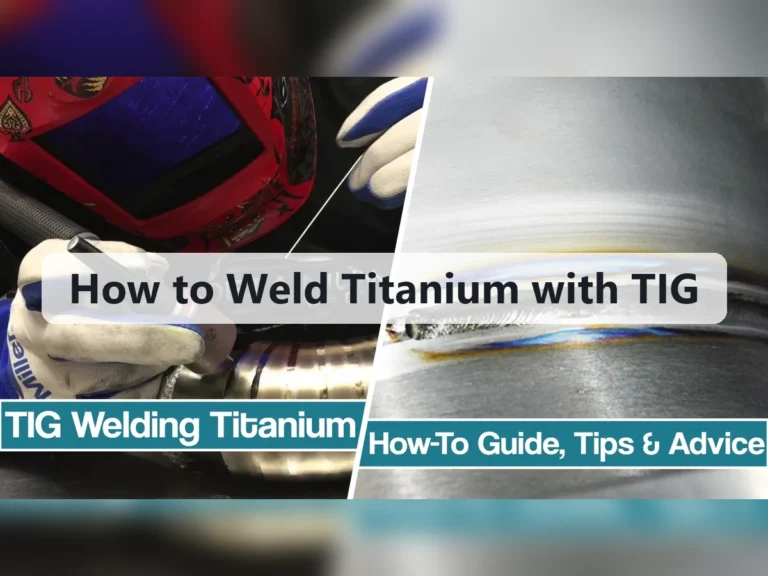
Contamination is often visible as a change in weld color. A clean, well-protected titanium weld may appear bright silver or straw-colored. Dark blue, purple, gray, chalky white, or a rough, crystalline appearance indicates increasing oxidation or contamination. Color is not a complete qualification method, but it is an important warning sign.
Heat control
Titanium does not conduct heat as efficiently as many common metals. Heat can remain concentrated near the weld, increasing the risk of distortion, excessive penetration, and a broad contaminated heat-affected zone. Excessive amperage, a slow travel speed, or an oversized weld can create unnecessary problems.
Cleanliness
Oil, fingerprints, paint, marker residue, shop dust, and particles from carbon-steel tools can contaminate the joint. Even a small amount of dirt can cause porosity or discoloration. Titanium should be cleaned immediately before welding and handled with clean gloves after preparation.
Equipment and Shielding Requirements
A standard TIG power source can weld many titanium parts if it provides stable DC output and accurate control. Most titanium TIG welding uses direct current electrode negative (DCEN), which concentrates heat effectively in the workpiece and supports a stable arc.
Useful equipment includes:
- A TIG machine with stable DC output, high-frequency arc starting, and precise amperage control.
- A properly sharpened tungsten electrode, commonly a thoriated, ceriated, or lanthanated type selected according to shop practice and machine settings.
- A clean torch with an appropriate ceramic cup and gas lens for smooth shielding flow.
- High-purity argon supplied through clean hoses, fittings, and regulators.
- A trailing shield large enough to cover the cooling weld and adjacent hot metal.
- A purge setup for the inside of titanium tubing, boxes, or other enclosed sections.
- Clean stainless steel or titanium brushes and lint-free wipes reserved for titanium.
Shielding gas coverage matters more than simply turning up the flow rate. Excessive gas flow can create turbulence, which pulls room air into the shielding envelope. A gas lens, suitable cup size, steady torch position, and protection from drafts usually produce better coverage than high flow alone.
For tubing and enclosed components, purge the back side with argon before striking the arc and continue purging while the weld cools. Without internal protection, the root may oxidize even when the outside of the weld looks clean.
Preparing Titanium for TIG Welding
Preparation should begin with the base metal, tools, and work area. Keep titanium away from grinding dust, carbon-steel wire brushes, and dirty work surfaces. If a tool has been used on steel or other metals, do not assume it is suitable for a critical titanium joint.
Clean the joint
Remove oil and grease with a clean solvent that leaves no residue. After degreasing, use a dedicated stainless steel brush or an approved abrasive method to remove surface oxides. Brush only the area that will be welded, and avoid touching the cleaned joint with bare hands.
Allow solvent residue to evaporate fully before welding. Titanium should be dry, bright, and free of visible discoloration. If the material has heavy scale, embedded contamination, or an unknown coating, remove it rather than trying to weld through it.
Fit and tack the parts
Use close, consistent fit-up with minimal gaps appropriate for the joint design. Large gaps require more filler and heat, increasing the chance of distortion and contamination. Tacks should receive the same shielding protection as the final weld and should be clean and free of cracks.
Plan the weld sequence so the parts remain aligned without forcing them together during welding. Clamps and fixtures should be clean and should not obstruct the torch, trailing shield, or purge path.
Basic Titanium TIG Welding Technique
Set the machine for DCEN and choose amperage based on the titanium thickness, joint type, tungsten size, and filler diameter. Use the lowest practical heat input that produces complete fusion. Exact settings vary by material and equipment, so a test coupon is preferable to relying on a generic chart.
- Clean the joint, filler rod, tungsten, and nearby surfaces.
- Position the work so the torch and trailing shield can move smoothly.
- Start the internal argon purge when the joint requires back-side protection.
- Allow the shielding gas to cover the work area before initiating the arc.
- Use a short, controlled arc and keep the tungsten centered over the joint.
- Add filler smoothly without withdrawing the rod from the shielding envelope.
- Move at a consistent speed and avoid unnecessary weaving.
- Maintain shielding over the weld after stopping until the metal cools sufficiently.
Keep the torch angle relatively shallow and avoid lifting the torch too far from the work. The trailing shield should remain close enough to cover the solidifying bead without touching the hot metal. A long arc, excessive travel distance, or abrupt torch movement can expose the weld to air.
Feed filler from the front or side of the puddle while keeping its end inside the argon coverage. If the filler rod leaves the protected area and is reintroduced, its contaminated end can carry impurities into the weld. Clean filler is especially important for autogenous-looking, high-quality joints.
How to Judge Weld Quality
Inspect the weld after it has cooled. A good titanium TIG weld is generally smooth, consistent, and free of visible porosity, cracks, craters, and heavy oxidation. Silver to light straw coloration is commonly considered a favorable visual indication, although acceptance criteria depend on the application and governing specification.
Gray, dark blue, purple, white, or powdery weld areas suggest inadequate shielding, dirty material, excessive heat, or poor post-weld gas coverage. Do not automatically grind away a discolored surface and assume the joint is sound. Contamination may extend below the visible surface.
Porosity can result from moisture, oil, dirty filler, leaks in the gas system, turbulence, or inadequate purge. Cracking may be linked to contamination, excessive restraint, an unsuitable procedure, or poor joint preparation. If a weld appears heavily oxidized, the safest response for a critical part is to stop and evaluate the procedure rather than continue over it.
Visual inspection is useful but does not prove internal integrity. Safety-critical, pressure-containing, aerospace, or regulated work may require qualified procedures and additional nondestructive or destructive testing. Follow the applicable drawing, code, material specification, or employer procedure.
Common Titanium TIG Welding Mistakes
- Using ordinary shop tools: Steel particles or abrasive residue can become embedded in the titanium surface.
- Relying on the torch cup alone: The weld may oxidize as it cools outside the primary gas stream.
- Skipping the back purge: Tubing roots can become heavily contaminated from the inside.
- Increasing gas flow too much: Turbulence can draw air into the shielding area.
- Touching cleaned metal: Finger oils and moisture can cause porosity or discoloration.
- Using a long arc: Greater distance reduces shielding effectiveness and makes heat control harder.
- Reusing dirty filler: A contaminated rod can introduce defects into an otherwise clean weld.
- Stopping gas immediately: The cooling bead may oxidize after the arc is extinguished.
- Welding in a draft: Air movement can disrupt argon coverage even when the gas system is functioning correctly.
Safety and Practical Limits
TIG welding titanium requires the same basic electrical, ultraviolet radiation, compressed-gas, and fume precautions as other welding work. Use appropriate eye and skin protection, ventilation, fire prevention, and gas-cylinder handling practices. Titanium dust and grinding particles also require care; avoid creating or dispersing combustible metal dust.
Do not weld an unknown titanium alloy or a part that may contain trapped liquids, coatings, or hazardous residues. Material identification matters because different titanium grades and joint designs may require different filler metals and qualified procedures.
For a noncritical repair or fabrication project, a skilled TIG welder can often produce a sound titanium weld after practicing on matching scrap. For aircraft components, implants, pressure systems, racing parts, or other high-consequence applications, use an experienced titanium welder and an approved welding procedure.
FAQ
Can you TIG weld titanium without a trailing shield?
It is possible to make an arc on titanium without one, but a trailing shield is usually needed for reliable, high-quality results. The torch shield protects the active weld pool, while the trailing shield protects the bead and heat-affected area as they cool. Without that extra coverage, oxidation can occur behind the torch.
What shielding gas is used for titanium TIG welding?
High-purity argon is the common choice for both torch shielding and back purging. The gas must be clean, the lines must be leak-free, and the flow must be smooth rather than excessively forceful. Helium may be used in some procedures, but the correct gas depends on the application and qualified process.
What color should a titanium TIG weld be?
A bright silver to light straw appearance generally indicates effective protection. Blue, purple, gray, white, or powdery discoloration indicates increasing oxidation or contamination. Color alone cannot certify a weld, but a heavily discolored bead deserves inspection and may need to be removed and rewelded.
Can titanium tubing be TIG welded?
Yes. Titanium tubing is commonly TIG welded, but the inside of the tube must usually be protected with an argon purge. The purge should begin before welding and continue while the root cools. Poor internal shielding can ruin the root even when the outside bead looks acceptable.
Can you TIG weld titanium with a regular TIG welder?
Many DC TIG welders can weld titanium if they provide stable current control and high-frequency starting. The torch, gas lens, trailing shield, purge equipment, clean tools, and operator technique are equally important. An AC-only setup is not the normal choice for titanium TIG work.
Conclusion
So, can you tig weld titanium? Yes, but success depends on disciplined cleanliness, DC TIG settings, high-purity argon, complete torch and trailing-shield coverage, and an internal purge when needed. If the weld becomes heavily blue, gray, white, or chalky, treat that appearance as a warning that the process needs correction before the joint is accepted.