Underwater Welder Lifespan — Service Life, Wear, and Maintenance
An underwater welder may work safely for decades, but career length varies widely with diving exposure, health, training, equipment condition, and job hazards.
The first warning may be a small one a glove that stays damp inside a cable jacket with a shallow cut or a helmet that no longer seals.
People use the phrase underwater welder lifespan to mean two different things how long the worker can remain in the occupation and how long tools consumables and protective.
This guide separates career longevity from equipment service life explains the exposures that accelerate wear and shows how to judge whether a component is repairable or should be.
- ✓Career longevity depends more on cumulative exposure, medical fitness, work conditions, and safe practices than on a fixed age limit.
- ✓Welding helmets, cables, gloves, regulators, and dry suits usually have separate service lives and should not be treated as one package.
- ✓Saltwater, abrasion, pressure cycling, contamination, heat, and poor drying are major causes of premature equipment failure.
- ✓Inspection records and manufacturer or employer requirements should control repair-versus-replacement decisions.
What Underwater Welder Lifespan Actually Means
There is no universal expiration date for an underwater welder A person s working life is shaped by physical capacity medical clearance type of diving workload and willingness.
Commercial divers may work in harbors shipyards dams bridges offshore structures pipelines or salvage operations Each environment creates a different combination of depth current visibility temperature contaminants and.
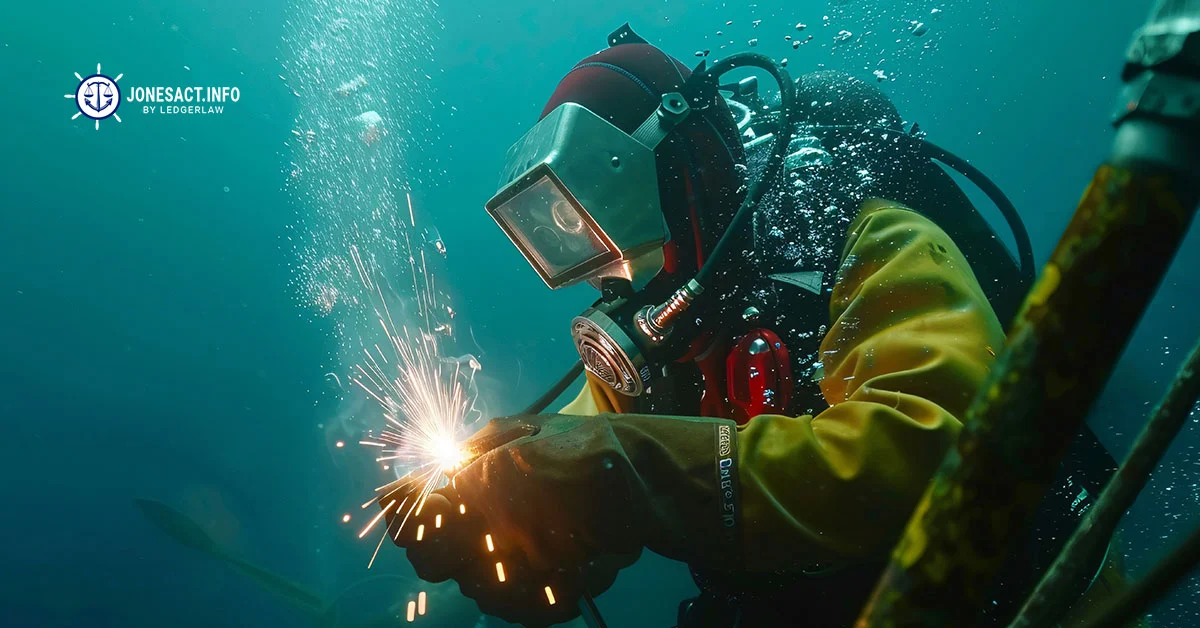
- Two timelines: Career longevity concerns the worker; service life concerns helmets, suits, leads, regulators, tools, and other equipment.
- No fixed cutoff: Age alone does not determine whether a diver can continue, but medical fitness and formal clearance remain essential.
- Exposure matters: Repeated pressure changes, cold, heavy exertion, contaminated water, and poor recovery can accumulate over time.
- Records matter: Dive logs, maintenance records, inspection findings, and incident reports provide better evidence than appearance alone.
Career longevity versus equipment service life
A person may leave underwater welding because of a medical restriction a change in family priorities a desire for less hazardous work or declining tolerance for travel and.
Conversely a helmet or welding lead can become unsafe long before the worker is ready to change occupations Treating familiar gear as good enough because it worked last.
Why estimates are so variable
Service life is affected by frequency of use storage conditions repair quality compatibility of replacement parts and the intensity of each job Two visually similar helmets may age.
Manufacturers may publish inspection guidance, replacement criteria, or limitations for specific parts. Employers and commercial diving contractors may impose stricter rules. Where requirements conflict, the more conservative applicable rule and the responsible diving supervisor’s direction should govern.
How Long Can a Commercial Diver Continue Working?
Commercial diving is physically demanding even before welding begins The diver must manage breathing equipment buoyancy tools communications thermal protection umbilical forces and task concentration while working in.
A sustainable career usually depends on whether the diver can recover between assignments maintain sound judgment under stress and meet required medical and occupational standards A person may.
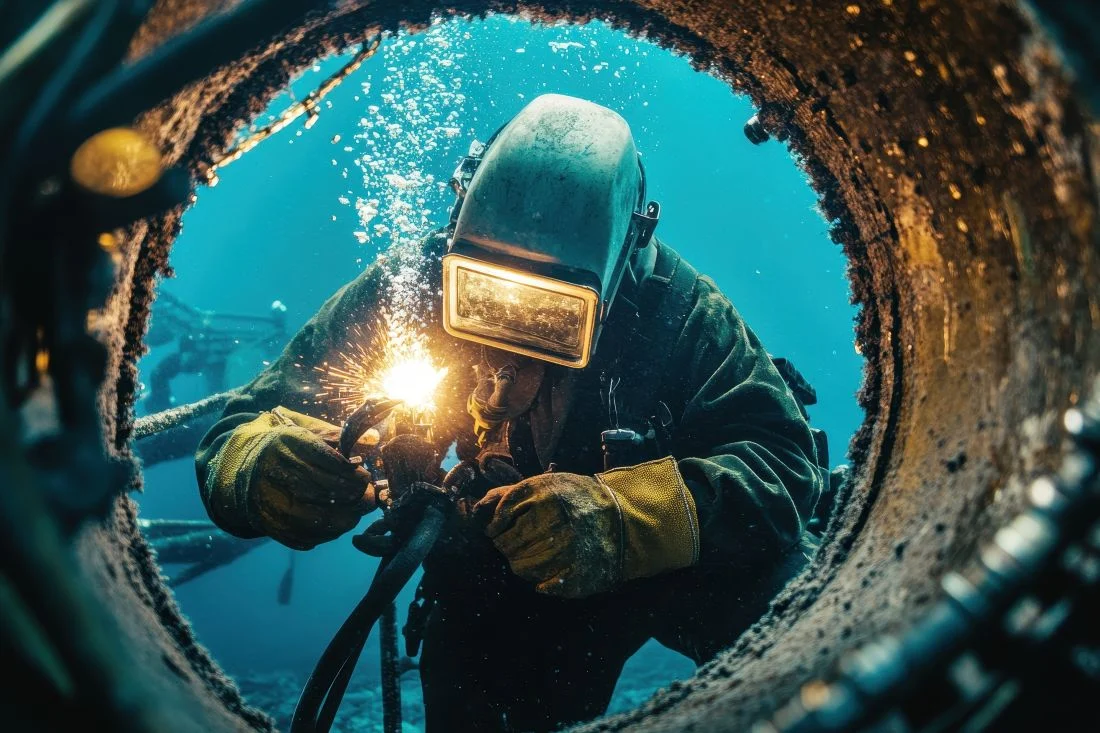
- Medical fitness: Required examinations and professional evaluation are more meaningful than informal self-assessment.
- Work profile: Shallow inland work, offshore saturation work, inspection, construction, and salvage place different demands on the body.
- Recovery capacity: Sleep, hydration, nutrition, conditioning, and adequate time between demanding assignments influence reliable performance.
- Career flexibility: Teaching, inspection, supervision, and project coordination can extend a diver’s industry career without identical exposure.
Physical demands that can shorten a career
Cold stress increases fatigue and reduces dexterity, which can affect welding quality and emergency response. Heavy suits and tools add strain to the shoulders, back, hips, and knees, while currents and umbilical tension force the diver to stabilize the body continuously.
Repetitive pressure exposure is another consideration It does not mean that every experienced diver will develop a specific injury but it reinforces the need for disciplined dive planning.
Health decisions should be conservative
Hearing changes, breathing difficulty, unexplained dizziness, persistent pain, reduced exercise tolerance, or difficulty equalizing pressure deserve professional attention before the next job. Medication, illness, sleep deprivation, and alcohol or drug use can also affect judgment and physical performance even when equipment is in perfect condition.
Fitness training should support the actual work rather than encourage unnecessary extremes. Aerobic conditioning, functional strength, mobility, and injury prevention may help, but exercise cannot substitute for an occupational medical evaluation or a formal return-to-dive decision.
Career paths that reduce exposure
Experience gained underwater can remain valuable above the surface. Senior divers often move toward dive supervision, inspection, quality control, safety management, estimating, training, or project coordination. These roles may preserve technical knowledge while reducing the frequency of deep, cold, contaminated, or high-risk dives.
This is not a universal retirement plan. Some workers prefer field operations, and some jobs still require periodic diving. The practical point is that a long career in the industry does not require every year to contain the same amount or type of underwater welding.
What Shortens Underwater Welding Equipment Service Life?
Equipment wears through a combination of chemical attack, mechanical damage, heat, pressure, contamination, and neglect. Underwater welding adds electrical demands, so a defect that might be inconvenient in ordinary fabrication can become a shock or drowning hazard in the water.
Saltwater is especially aggressive because it promotes corrosion of exposed metals and electrical connections. Freshwater is not automatically harmless: mud, biological growth, industrial contaminants, temperature changes, and abrasive particles can damage seals, valves, connectors, and fabric.
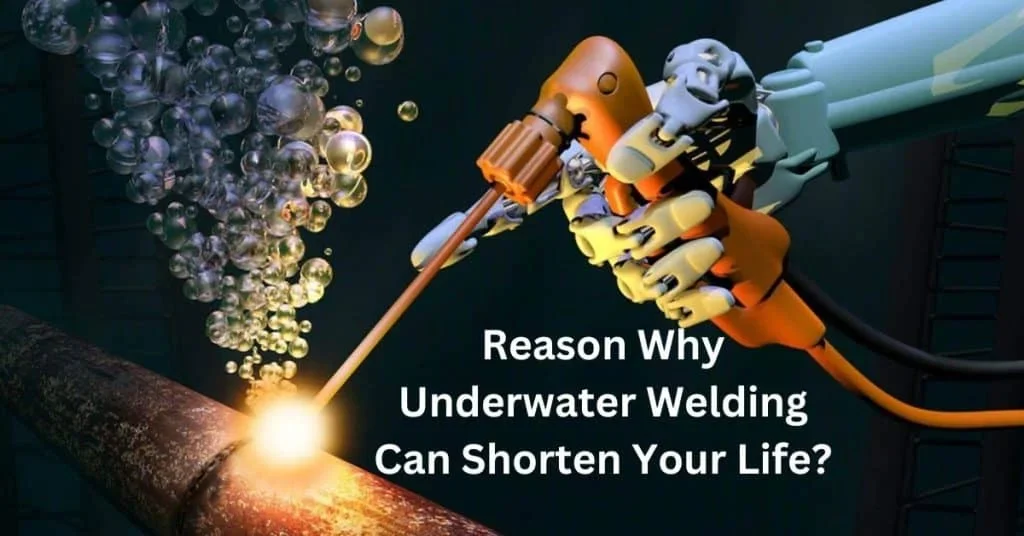
- Salt and contamination: Corrosion and residue can attack connectors, fasteners, valves, and metal hardware.
- Abrasion: Rocks, structure edges, vessel movement, and umbilical drag can cut or weaken protective layers.
- Pressure cycling: Repeated changes in depth can stress seals, housings, lenses, and other components.
- Heat and sparks: Welding spatter and hot work can damage gloves, suits, cables, and nearby protective materials.
Helmet, mask, and communications components
A diving helmet is not merely a face shield Its shell neck dam visor exhaust system breathing connections communications valves and seals work together to support breathing and environmental protection A cracked.
Clean the helmet using the method approved for its materials, inspect it after every job, and store it in a way that prevents impact and deformation. Do not improvise with unapproved adhesives, hardware, sealants, or replacement valves. A quick patch may hide damage or interfere with a component’s intended operation.
Umbilicals, welding leads, and connectors
Umbilicals and welding leads are exposed to bending, pulling, twisting, abrasion, heat, and contamination. Damage may appear as cuts, flattened areas, exposed conductors, stiff sections, swollen insulation, loose fittings, or corrosion at connectors. An intact outer jacket does not prove that internal conductors are sound.
Route and handle leads to reduce sharp bends and dragging. Keep connectors clean and protected, prevent unnecessary strain at termination points, and use only inspection and testing procedures appropriate to the equipment. Never continue using a lead because the defect is “only cosmetic” unless a qualified inspection confirms that conclusion.
Suits, gloves, boots, and thermal protection
A dry suit with a failed seal can allow water intrusion, accelerate heat loss, and complicate movement. A wetsuit can lose insulating performance as materials compress, tear, or degrade. Gloves must balance dexterity with protection from cuts, heat, chemicals, and electrical hazards; no glove is equally effective in every task.
Inspect seams, seals, zippers, valves, soles, and high-contact areas. Rinse appropriate items after exposure, dry them fully away from damaging heat or sunlight, and store them without sharp folds or crushing. Repairs should preserve the suit’s intended barrier and be tested before critical work.
Regulators and breathing systems
Regulators, hoses, valves, and breathing-gas connections require disciplined inspection because a breathing-system problem can become an emergency before the diver reaches the surface. Salt deposits, contamination, impact, age-related material changes, and unauthorized servicing can affect performance.
Follow the component manufacturer’s service instructions and the employer’s inspection program. Do not judge a regulator by how it feels during a brief topside check alone; breathing resistance, free-flow behavior, hose condition, and valve function may require qualified testing. This is an important consideration for underwater welder lifespan.
Estimating Service Life Without Guesswork
There is no reliable single number for how many years underwater welding equipment lasts. Instead, serviceability is determined by condition, use history, inspection results, repairability, and whether the item still meets its intended safety function.
The phrase underwater welder lifespan can therefore be misleading when applied to gear. A helmet may remain structurally sound while its communications or seals need replacement, while a relatively new cable may require immediate removal after an abrasion incident.
- Condition: Look for cracks, cuts, corrosion, deformation, stiffness, leaks, exposed conductors, and missing hardware.
- Function: Confirm that breathing, communications, electrical insulation, seals, valves, and closures operate correctly.
- History: Review depth exposure, contamination, impact, repairs, storage, and previous inspection findings.
- Compliance: Compare the item with applicable manufacturer, employer, and commercial diving requirements.
A practical inspection record
A useful record identifies the equipment, date, user or job, inspection performed, defect found, corrective action, and person responsible for approval. Include unusual events such as a hard impact, entanglement, unexpected electrical behavior, contamination, or water intrusion.
Photographs can help document changes, but they do not replace hands-on inspection or functional testing. A record that says “looks okay” provides little decision value; a record that identifies the seal condition, connector state, cable jacket, communication test, and cleaning status is much more useful.
Repair or replace?
Repair may be reasonable when the manufacturer or qualified service organization allows it the damage is clearly understood replacement parts are correct and post-repair testing verifies performance Replacement.
Cost should be considered, but it should not be the deciding factor for life-support, electrical-protection, or pressure-related components. The most expensive option is often an incident caused by extending the life of a part that was already beyond confident inspection.
Maintenance Practices That Extend Useful Life
Maintenance cannot make worn equipment new, but it can slow avoidable deterioration and reveal defects before a dive. The best program is routine, documented, compatible with the materials, and specific to the equipment rather than based on a generic rinse-and-store habit.
Cleaning is important, yet aggressive cleaning can also cause damage. Incorrect solvents may attack seals and plastics; excessive pressure can force water into connectors; high heat can deform fabric, rubber, and insulation. Use approved methods and allow parts to dry fully before storage.
- After each job: Rinse and clean appropriate equipment, inspect damage, dry it thoroughly, and report defects immediately.
- Before storage: Protect connectors, loosen damaging tension, avoid compression, and keep gear in a clean, dry, controlled location.
- Before the next dive: Check fit, seals, communications, valves, cables, fasteners, and task-specific protective equipment.
- At scheduled intervals: Complete qualified servicing, testing, calibration, and replacement of consumable or time-sensitive parts.
Cleaning and drying
Rinse salt and sediment from equipment as soon as practical after use, paying attention to joints, threads, buckles, connectors, and areas where moisture can remain trapped. Follow the material’s cleaning instructions instead of assuming that a household chemical is safe.
Dry equipment in moving air and shade when appropriate. Direct sunlight, heaters, vehicle exhaust, and hot storage rooms can accelerate aging of rubber, adhesives, coatings, and plastics. Do not pack damp gloves, suits, or soft components into closed containers for extended periods.
Storage and transport
Transport cases should prevent impact, crushing, and contact between sharp hardware and soft protective materials. Cables should be coiled according to their construction rather than kinked into tight loops, and helmets should be supported so that seals and valves are not bearing unnecessary weight.
Inventory control also helps. If equipment is shared, label defects clearly and separate items awaiting inspection from items approved for use. A replacement part sitting beside serviceable gear can be installed accidentally unless the status is unmistakable.
Maintenance mistakes that create new damage
Common mistakes include tightening fittings beyond their intended torque, using incompatible lubricants, bending hoses sharply, storing wet gear, repairing electrical insulation with ordinary tape, and mixing parts from different systems without approval. Another mistake is cleaning away evidence of a defect before documenting it.
When in doubt, stop using the item and ask the responsible supervisor or qualified service provider. A short delay is preferable to discovering a hidden failure underwater.
Recognizing When Equipment Should Leave Service
Removal from service is appropriate when a defect could affect breathing, buoyancy, electrical isolation, communications, pressure integrity, thermal protection, or the diver’s ability to escape an emergency. The decision should be made before the equipment returns to the water, not after a failure confirms the concern.
Some damage is obvious, while some requires testing. A cable may pass a casual visual check but fail insulation testing; a helmet may look clean but have a compromised valve; a dry suit may appear intact while a seam leaks under pressure or movement.
- Electrical warning: Exposed conductor, cracked insulation, unexplained arcing, overheating, or intermittent power requires immediate attention.
- Breathing warning: Free flow, unusual resistance, damaged hose, contamination, or valve malfunction is not a minor inconvenience.
- Barrier warning: Cracked lenses, failed seals, leaking suits, torn gloves, or damaged neck dams reduce protection.
- Communication warning: Intermittent or unclear communications can impair task coordination and emergency response.
Incident-based inspection
Any equipment involved in an impact, entanglement, uncontrolled descent, unexpected current, electrical fault, contamination event, or suspected pressure problem deserves inspection beyond the normal post-dive routine. Record what happened while details are fresh, including depth, duration, water conditions, task, and visible symptoms.
Do not return gear to service simply because it worked for the remainder of the dive. Some damage worsens slowly, and a component may fail only under the next combination of load, pressure, heat, and movement.
Planning a Long Underwater Welding Career
A long career is less about finding a magic age or equipment number and more about controlling exposure while preserving skill. Choose employers that treat maintenance, dive planning, medical evaluation, fatigue management, and stop-work authority as normal parts of the job rather than obstacles to production.
Ask how the company handles equipment inspections, emergency readiness, training, decompression planning, contaminated water, and repair approval. The answer reveals more about sustainable work than a promising hourly rate alone.
- Track exposure: Keep accurate records of dives, depths, conditions, tasks, incidents, and training.
- Protect recovery: Treat sleep, hydration, conditioning, and medical follow-up as work requirements.
- Build alternatives: Develop inspection, supervision, fabrication, technical, or management skills alongside welding.
- Use stop-work authority: Do not enter the water with questionable equipment, unclear instructions, or conditions beyond the plan.
Choosing safer work patterns
Work location and task selection can influence cumulative wear Repeated exposure to cold contaminated water strong current heavy lifting deep operations or prolonged bottom time may be more.
Rotating tasks can reduce repetitive strain when the project allows it. Clear communication with the supervisor can also identify whether a problem is a training issue, an equipment issue, a schedule issue, or a reason to stop the operation.
Skills that preserve employability
Underwater welders benefit from skills beyond electrode handling, including inspection methods, drawing interpretation, rigging awareness, corrosion understanding, documentation, communication, and emergency procedures. These capabilities can create options when a diver needs less exposure or wants to move into leadership.
Continuing education should be relevant to the work and recognized by the employer or applicable commercial diving framework. Training does not eliminate risk, but it can improve hazard recognition and decision quality.
Underwater Welder Lifespan FAQ
Is there a maximum age for an underwater welder?
There is not one universal age at which every underwater welder must stop. Continued work depends on required medical fitness, physical capability, training, employer standards, and the demands of the specific assignment.
How many years does underwater welding equipment last?
Equipment has no dependable blanket lifespan. A component’s service life depends on design, use frequency, exposure, maintenance, storage, damage history, and inspection results. Critical parts should be replaced or serviced according to approved requirements, not an informal age estimate.
Does saltwater reduce underwater welder lifespan?
Saltwater can accelerate corrosion and damage electrical connections, fasteners, valves, and other metal components. Thorough rinsing, drying, inspection, corrosion control, and correct storage can reduce the effect, but they cannot reverse structural damage or justify continued use of failed equipment.
Can a diver keep working after an equipment failure?
Only after the failure is reported, the equipment is removed from service as necessary, and the responsible qualified person determines that the cause has been corrected and the system is safe. Continuing because the failure seemed temporary can expose the diver to a repeat event under worse conditions.
Which equipment usually needs the most frequent attention?
Items exposed to bending, abrasion, contamination, heat, or frequent handling usually need close attention. These commonly include umbilicals, welding leads, connectors, gloves, suit seals, regulators, communications components, and helmet valves.
Can maintenance extend a commercial diving career?
Good maintenance can reduce avoidable equipment failures and support safer work, but it cannot eliminate physical exposure, medical limitations, fatigue, or the hazards of the job. A sustainable career also requires appropriate workload, recovery, medical oversight, training, and conservative decisions.
What is the clearest sign that a part should be replaced?
The clearest sign is a defect that affects a critical safety function or cannot be confidently evaluated and repaired through an approved process. Exposed conductors, compromised breathing components, failed seals, cracked structural parts, and unexplained performance changes should be treated seriously.
Conclusion
Underwater welder lifespan is not governed by one number A diver s career may remain viable for many years when medical fitness recovery training work selection and safety.
The major limitation is that no article can approve a dive, diagnose a diver, or declare a damaged component safe. Use qualified medical and equipment professionals, follow applicable commercial diving requirements, and treat uncertainty as a reason to pause rather than improvise.
Review your last dive and equipment records today, flag any unresolved defect or unusual exposure, and obtain a qualified inspection before the next underwater welding job.