Argon Welder Vacancy: Essential Information and Useful Advice
An argon welder vacancy usually refers to a TIG welder job requiring precise work with argon shielding gas, suitable training, and verified hands-on experience.
Finding an argon welder vacancy is only the first step. The title may describe a TIG welding position in manufacturing, aerospace, automotive repair, construction, pipe fabrication, or maintenance, but the actual work can differ substantially between employers.
The decision is rarely as simple as choosing the listing that mentions the highest hourly rate A clean-looking job advertisement can hide rotating shifts difficult materials production quotas.
That difference between appearance and actual condition matters when you compare vacancies You need to inspect what the employer means by argon welding which metals and thicknesses are.
- ✓Argon welding generally means TIG or GTAW work performed with argon shielding gas.
- ✓The most important vacancy details are material, thickness, weld position, inspection standard, schedule, and employment terms.
- ✓A strong application shows measurable welding ability rather than relying only on a generic job title.
- ✓Never begin work without appropriate training, personal protective equipment, ventilation, and employer safety procedures.
What an Argon Welder Vacancy Usually Means
In most United States job listings argon welder is an informal description for a TIG welder TIG stands for tungsten inert gas and is also called gas tungsten.
The welder may add filler metal by hand although some joints can be made without filler when the fit-up and material allow it TIG is valued for control.
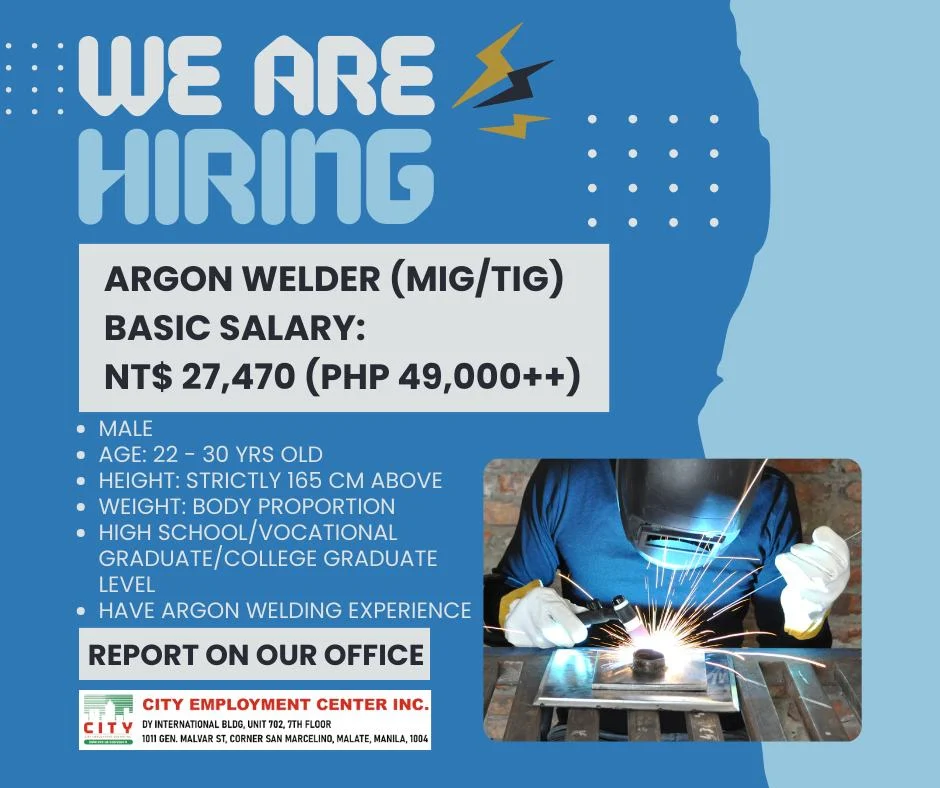
- Job-title variation: Employers may advertise the same work as TIG welder, GTAW welder, precision welder, stainless-steel welder, or fabricator-welder.
- Process clarity: Confirm whether the position involves TIG only or also MIG, stick, flux-cored, brazing, grinding, fitting, or machine operation.
- Quality expectations: A decorative weld is not automatically a sound weld; the employer may require leak-tight, code-compliant, or inspected joints.
Some companies use “argon welder” because applicants recognize the gas more readily than the formal process name. That wording does not necessarily indicate advanced work, and it does not tell you whether the job is entry-level, highly specialized, or mainly repetitive production.
Common industries and work settings
Typical workplaces include metal fabrication shops, food and beverage equipment manufacturers, medical-device suppliers, aircraft and aerospace contractors, custom automotive shops, breweries, clean-room equipment manufacturers, and industrial maintenance departments. A welder may work indoors at a bench, on large assemblies, in a controlled production cell, or at customer sites.
The surrounding work can be as important as the arc time. You may be expected to read drawings, select tungsten and filler, set gas flow, tack parts, operate a bandsaw, use hand tools, clean welds, document inspections, or move heavy components safely.
How TIG differs from other welding work
| Process or role | Typical strength | What to clarify in the vacancy |
|---|---|---|
| TIG/GTAW | Precise, clean welds and control of heat input | Materials, thickness, positions, purge requirements, and inspection |
| MIG/GMAW | Faster production on many common metals | Whether TIG is occasional or the primary process |
| Stick/SMAW | Versatility for field and heavier work | Outdoor work, travel, and weld-position demands |
| Welder-fabricator | Combines welding with fitting and assembly | Blueprint reading, layout, cutting, and dimensional tolerances |
How to Read an Argon Welder Vacancy Before Applying
A job advertisement should be treated as a starting document, not a complete description of the work. Read beyond the first paragraph and separate requirements into process, material, quality, physical, schedule, and employment categories.
For example TIG experience preferred may mean the company will train a dependable entry-level applicant or it may mean the hiring manager expects a person who can weld.

- Materials and thickness: Look for aluminum, stainless, carbon steel, copper alloys, thin sheet, tubing, or heavy plate.
- Joint and position: Identify butt, lap, fillet, socket, pipe, overhead, vertical, or all-position work.
- Quality language: Note visual inspection, pressure testing, radiography, dye penetrant, dimensional checks, or customer specifications.
- Schedule and location: Confirm shift, overtime, travel, indoor or outdoor work, and the actual facility location.
Experience requirements that deserve careful reading
One year of experience can mean very different things An employer may accept school-lab practice supervised shop work or related fabrication experience while another may require production TIG.
Pay attention to verbs. “Assist,” “train,” and “learn” suggest a development role. “Produce,” “qualify,” “inspect,” “repair,” and “work independently” suggest that the employer expects immediate performance.
When the wording is vague, prepare a short question for the recruiter instead of guessing.
Requirements that are easy to underestimate
Precision welding often involves sitting or standing in one position for long periods working through magnification manipulating a torch and filler with both hands and maintaining concentration under bright light and heat Fine motor control vision appropriate for.
Some vacancies also require lifting, climbing, kneeling, working in confined areas, or wearing a respirator or other protective equipment. These are legitimate job conditions that should be discussed honestly and evaluated against your ability to work safely.
Skills Employers Look for in TIG and Argon Welding Jobs
Employers generally want evidence that you can control the arc, protect the weld, prepare the joint, and recognize defects before a part moves forward. A polished bead helps, but reliable results come from the entire process: fit-up, cleaning, settings, torch angle, travel speed, filler control, and post-weld inspection.
For an argon welder vacancy, employers may also assess whether you understand gas coverage rather than simply knowing how to open a cylinder valve. Incorrect flow, leaks, drafts, poor cup selection, or an improperly prepared tungsten can cause porosity and contamination even when the operator appears experienced.
- Process control: Set amperage, polarity, pulse, pre-flow, post-flow, and other machine controls appropriate to the job.
- Joint preparation: Clean oxides, oils, paint, and other contaminants; maintain fit-up and control gaps.
- Manual coordination: Keep a stable torch, consistent arc length, and controlled filler addition.
- Quality awareness: Identify undercut, lack of fusion, porosity, tungsten inclusion, cracking, distortion, and inconsistent penetration.
Blueprints, symbols, and measurements
A capable welder may need to interpret weld symbols, dimensions, tolerances, material callouts, revision blocks, and assembly views. The ability to measure accurately with a tape, caliper, square, angle gauge, or other shop tool can prevent a good weld from being placed on a defective assembly.
If the position involves pipe or pressure-related components, the employer may also expect familiarity with root gaps, purge arrangements, sequence control, and inspection documentation. Do not claim code qualification unless you understand what was tested, under which conditions, and whether the qualification remains current for the employer’s work.
Soft skills that affect production quality
TIG welding rewards steady attention, but commercial work also depends on communication. A welder who reports a poor fit-up, damaged equipment, uncertain drawing revision, or unusual material condition early can prevent costly rework.
Dependability matters because a fabrication cell may be organized around one person’s output. Employers commonly value clean work habits, respectful teamwork, accurate time records, willingness to learn, and the judgment to stop when a condition is unsafe or unclear.
Qualifications, Certifications, and Weld Tests
There is no single qualification that automatically makes someone suitable for every TIG position. Employers may consider trade school, community-college training, apprenticeship experience, military or industrial experience, documented work history, and practical performance. A certificate can support your application, but it does not replace process-specific ability.
Many companies use a hands-on weld test because it shows how you prepare material, set up equipment, manage the puddle, and respond to a real joint. The test may be simple and representative of daily work, or it may be designed to verify a particular procedure and position.
- Process record: State the TIG/GTAW work you have actually performed, including torch work, filler use, and materials.
- Production context: Describe whether you worked from drawings, repaired parts, built assemblies, or produced repeat components.
- Inspection experience: Mention visual checks, dimensional inspection, pressure testing, or non-destructive testing only when accurate.
- Training details: List relevant courses, apprenticeships, safety training, and certifications with dates or status where useful.
How to prepare for a weld test
- Ask what material, thickness, joint type, position, and process the test will use.
- Review the basic setup for that material, including polarity, tungsten preparation, filler selection, and shielding requirements.
- Practice clean preparation and consistent starts, stops, tie-ins, and crater control.
- Arrive ready to follow instructions rather than forcing a familiar technique onto an unfamiliar procedure.
- Inspect the finished weld honestly and be prepared to explain how you would improve it if a defect appears.
A test is not only a technical exam. It also shows whether you follow shop rules, organize tools, ask useful questions, protect equipment, and respond constructively to feedback. This is an important consideration for argon welder vacancy.
Pay, Schedule, and Employment Trade-Offs
Compensation for TIG welding varies by region, industry, experience, material, shift, union or nonunion setting, inspection demands, and local labor conditions. A vacancy with a higher advertised rate may require nights, extensive overtime, travel, difficult positions, or a scarce qualification.
Compare the complete offer rather than the headline number. Ask whether the listed rate is base pay, whether overtime is frequent or optional, whether differentials apply, and whether benefits begin immediately or after a waiting period.
- Hours: Confirm regular shift, overtime expectations, weekend work, mandatory extra hours, and schedule stability.
- Employment status: Distinguish permanent, temporary, contract-to-hire, seasonal, and project-based work.
- Benefits: Ask about health coverage, retirement plans, paid time off, holidays, and tool or boot allowances.
- Advancement: Look for higher-level qualifications, lead roles, inspection training, fitting work, or paid development.
Production speed versus precision
Some roles prioritize repeatable output, while others involve low-volume custom assemblies where fit-up and appearance receive more attention. Neither environment is automatically better. Production work can build consistency and speed; custom work can develop problem-solving and broad fabrication judgment.
Ask how performance is measured. A fair expectation may involve documented quality and reasonable output, while an unexplained quota can create pressure to rush setup, skip cleaning, or accept defects. Quality and safety should not be treated as optional in pursuit of speed.
Building a Strong Application for an Argon Welder Vacancy
Your resume should make it easy for a hiring manager to see what you can do without forcing them to interpret vague phrases. Replace “experienced welder” with specific, truthful details about processes, materials, joint types, equipment, drawings, inspections, and production settings.
Use the language of the posting when it accurately describes your background. If the advertisement says GTAW and you have called it TIG, include both terms once so automated screening and human readers can connect your experience.
- Lead with relevance: Put TIG/GTAW, target materials, and years or level of practical experience near the top.
- Show outcomes: Explain that you produced repeat assemblies, repaired components, reduced rework, or met documented quality requirements only when supportable.
- Separate skills: Distinguish welding, fabrication, inspection, machine operation, safety, and software abilities.
- Keep claims precise: Do not list certifications, code qualifications, or alloys you have not actually worked with.
A useful application summary
A concise summary might state that you are a TIG/GTAW welder experienced with stainless tubing and sheet fabrication, able to read shop drawings, prepare joints, perform visual inspection, and work safely in a production environment. Adjust the wording to your real history rather than copying a generic profile.
A portfolio can help when the employer permits it. Use your own photographs or approved examples, remove confidential information, and explain the material, process, and your role. A photograph alone cannot prove internal soundness, but it can show cleanliness, fit-up, consistency, and the type of work you understand.
Interview Questions and Verification Checks
Interview preparation should work in both directions. The company is evaluating your skills, while you are deciding whether the vacancy offers safe conditions, realistic expectations, and work that matches your goals.
Be ready to explain how you handle contamination, porosity, distortion, tungsten damage, inconsistent penetration, and a poor fit-up. Strong answers describe a logical diagnosis rather than blaming the machine or the material immediately.
- Daily work: What percentage of the shift is TIG welding, and what other duties are included?
- Quality system: How are welds inspected, documented, and reviewed when they fail?
- Training: Is there an orientation, supervised qualification, or progression plan for new hires?
- Equipment: What machines, positioners, fixtures, ventilation, and consumables are provided?
Questions that reveal the real job
Ask what materials and thicknesses are most common, whether the work is repetitive or custom, and how often welders change processes. Clarify whether you will fit and tack parts, perform grinding, move assemblies, read customer drawings, or work inside vessels or confined areas.
You can also ask why the position is open and how long the previous person stayed. The answer may reveal growth, expansion, seasonal demand, turnover, or a difficult schedule. No single answer proves a workplace is good or bad, but patterns deserve attention.
Safety, Equipment, and Common TIG Problems
Argon itself is nonflammable but it can displace oxygen in poorly ventilated areas and create an asphyxiation hazard Welding also produces intense ultraviolet radiation fumes heat sparks electrical.
Use the required helmet shade, gloves, protective clothing, hearing protection, eye protection, respiratory controls, and footwear. Inspect cylinders, regulators, hoses, leads, torches, and work clamps before use, and secure cylinders according to site procedures.
- Ventilation: Use adequate local exhaust or other approved controls, especially with stainless steel, coated material, or confined work.
- Fire prevention: Remove or shield combustibles and follow hot-work permit and fire-watch requirements where applicable.
- Gas awareness: Check connections and leaks safely; never use oxygen as a substitute for shielding gas.
- Material preparation: Treat painted, plated, oily, or unknown materials as potential exposure hazards until properly assessed.
Visible symptoms and likely causes
| Symptom | Possible causes to investigate | First sensible check |
|---|---|---|
| Porosity | Leaks, drafts, contamination, poor coverage, or incorrect flow | Inspect gas path, joint cleanliness, cup, and workplace airflow |
| Black or gray contamination | Dirty material, poor shielding, excessive heat, or tungsten contact | Clean the joint and regrind or replace contaminated tungsten |
| Undercut | Excessive current, travel speed, arc length, or poor torch angle | Review settings and maintain a shorter, steadier arc |
| Inconsistent penetration | Variable travel, fit-up, heat input, or surface condition | Check joint gap, technique, and machine output |
Why appearance can mislead
A shiny, uniform bead may still have incomplete fusion, insufficient penetration, trapped contamination, or a dimensional problem. Conversely, a less attractive weld may be acceptable in a specific noncritical application if it meets the drawing and inspection requirements.
That is why professional welding decisions depend on the applicable procedure, material, joint design, inspection method, and customer requirement—not appearance alone. If you are unsure whether a weld is acceptable, stop and ask the qualified supervisor or quality representative.
Recognizing Fake or Poor-Quality Job Listings
Welding vacancies can attract scams because applicants may be willing to relocate buy tools or accept rapid placement Be cautious when a recruiter promises unusually high pay without.
Verify the company through an independently located official website or phone number, not only contact details supplied in an unsolicited message. A legitimate employer should be able to explain the worksite, hiring entity, job duties, pay structure, and interview process without demanding sensitive financial information prematurely.
- Upfront payment: Do not pay to receive a job, reserve a position, or obtain ordinary hiring materials.
- Pressure tactics: Be wary of demands to accept immediately without an interview, skills discussion, or written terms.
- Vague location: A listing that avoids naming the facility or employment company deserves additional verification.
- Unrealistic promises: Extremely high pay with no experience requirement may signal a scam or hidden conditions.
FAQ About an Argon Welder Vacancy
Is an argon welder the same as a TIG welder?
Usually, yes. In common job-listing language, an argon welder generally means a person who performs TIG or GTAW welding using argon shielding gas. Confirm the process because some employers use the term loosely.
Can I apply for an argon welder vacancy without certification?
Sometimes. A vacancy may accept proven hands-on ability, trade-school training, or related fabrication experience instead of a formal certificate. Read whether certification is required or preferred, and ask whether the employer conducts its own weld test.
What materials might an argon welder work with?
Common materials include stainless steel, aluminum, carbon steel, nickel alloys, and other metals selected for the product. The vacancy should identify the actual materials and thicknesses; if it does not, ask before accepting an interview or test.
What should I bring to a TIG welding interview?
Bring an accurate resume, training or certification records if requested, work authorization documents when appropriate, and a concise description of your process experience. Do not bring confidential drawings or photographs from a previous employer.
How can I tell whether the advertised pay is realistic?
Compare the rate with the required process, material, location, shift, overtime, inspection demands, and employment status. Ask whether the number is base pay, includes a shift differential, or depends on a temporary assignment or specific qualification.
What happens during a TIG weld test?
You may be given a specified material, thickness, joint, position, and procedure to follow. The evaluator may assess preparation, settings, torch control, filler technique, weld appearance, dimensions, and compliance with instructions.
Is argon welding safe?
It can be performed safely when proper training, ventilation, protective equipment, hot-work controls, and cylinder-handling procedures are used. Risks include fumes, radiation, fire, electrical energy, heat, and oxygen displacement, so never bypass workplace controls.
Conclusion
The best argon welder vacancy is not necessarily the one with the most attractive title or highest advertised rate. Judge the full opportunity: TIG process requirements, materials, joint positions, quality standards, schedule, physical demands, safety controls, training, benefits, and the credibility of the employer.
Use a specific resume, prepare for a practical test, verify every qualification claim, and ask direct questions before accepting terms. Remember that weld appearance alone cannot establish quality, and no job is worth ignoring ventilation, protective equipment, or a condition you cannot perform safely.
Before applying, highlight the vacancy’s process, materials, weld test, schedule, and safety requirements, then compare each point with your verified skills and priorities.