How Thick of Metal Can a 110v MIG Weld: Key Facts and Guidance
A typical 110V MIG welder can handle mild steel up to about 1/8 inch in a dependable single pass. With proper joint preparation, multiple passes, and a machine operating near its maximum output, some models can weld 1/4-inch steel, but that is near the practical limit for most 110V units.
If you are asking how thick of metal can a 110v mig weld, the useful answer depends on the welder’s amperage, duty cycle, wire size, material type, joint design, and available electrical power. The thickness printed on a machine’s specifications is a maximum guideline, not a guarantee of full penetration in every joint.
How thick can a 110V MIG welder weld?
For ordinary mild steel, these ranges are a practical starting point:
| Steel thickness | Typical result with a 110V MIG welder |
|---|---|
| 20 to 16 gauge | Generally easy with correct settings |
| 14 to 1/8 inch | Reliable range for most machines |
| 3/16 inch | Possible with good preparation and technique |
| 1/4 inch | Possible on some machines with beveling and multiple passes |
| Over 1/4 inch | Usually impractical for a 110V MIG welder |
The most dependable general answer is 1/8-inch steel. A capable 110V welder may fuse thicker material, but a visible bead does not necessarily mean the joint has adequate penetration or strength.
Why the welder’s amperage matters
MIG welding thickness is closely tied to available amperage. Most 110V MIG welders produce approximately 90 to 140 amps at their maximum setting, although the exact output varies by model. More amperage generally allows more heat to enter the joint and increases penetration.
Small 110V machines are usually designed for light fabrication, automotive sheet metal, repairs, brackets, small frames, and home projects. They are not intended to replace a higher-output 220V welder for heavy structural work.
A machine rated for 140 amps may list a maximum steel thickness of 1/4 inch. That rating normally assumes favorable conditions, including clean steel, the correct wire, adequate voltage, proper travel speed, and a joint prepared for penetration. It does not mean the welder will produce a full-strength weld on every 1/4-inch joint.
Maximum output is not continuous output
Check the machine’s duty cycle as well as its maximum amperage. Duty cycle describes how long a welder can operate at a stated output during a 10-minute period before it needs to cool.
For example, a welder might produce its highest amperage for a short period but require a substantial cooling interval. When welding thick steel, that limitation can interrupt the process and make it harder to maintain consistent heat between passes.
A 110V circuit also limits performance. Extension cords, long cable runs, undersized wiring, and shared circuits can cause voltage drop. The welder may still run, but its arc can become unstable and its actual output may be lower than expected. I would use a properly rated circuit and follow the manufacturer’s electrical requirements before judging the machine’s capacity.
What thickness can be welded in one pass?
For many 110V MIG welders, 1/8-inch mild steel is a realistic upper limit for a strong, clean single-pass weld. Thinner material can usually be welded with less heat and a lower setting, while 3/16-inch steel may require a slower, carefully controlled pass.
A one-pass weld on 1/4-inch steel is less dependable. The bead may look acceptable on the surface while leaving unfused metal below it. This is especially likely on a square butt joint, where the arc cannot reach deeply enough into the full material thickness.
Joint design changes the result. A fillet weld on a lap or corner joint may join thick pieces without requiring the arc to penetrate the entire thickness of both pieces. A butt joint that must be fully fused through the material is more demanding.
Single-pass limits versus total weld size
Weld thickness and base-metal thickness are not the same thing. A 110V MIG welder may deposit several passes to build a larger weld, but each pass still has a practical penetration limit. Adding passes can increase the weld’s total size, but it cannot correct poor fusion at the root of the joint.
For thicker steel, I would prepare the joint first. A V-shaped bevel, a small root opening, and a sound root pass can allow additional passes to fill the joint. The exact preparation depends on the material, joint type, welding position, and the procedure recommended for the application.
How joint preparation affects thickness
Clean, well-prepared metal is easier for a 110V MIG welder to penetrate. Remove paint, rust, mill scale, oil, and other contamination from the weld area. Contamination can create porosity, arc instability, and poor fusion.
For 3/16-inch or 1/4-inch steel, a bevel is often more useful than simply increasing the machine’s settings. Beveling removes some material from the joint edges, giving the arc access to the root. The welder can then deposit weld metal in controlled layers instead of trying to melt the entire thickness at once.
Fit-up also matters. An excessive gap may cause burn-through, while no gap can prevent the arc from reaching the root. Clamp the pieces securely, use short tack welds, and confirm that the joint remains aligned before completing the weld.
When a joint is too thick for a practical single pass, use multiple passes only when the application allows it. Clean slag and spatter between passes if using flux-cored wire, and remove any visible contamination before continuing.
Wire, gas, and polarity choices
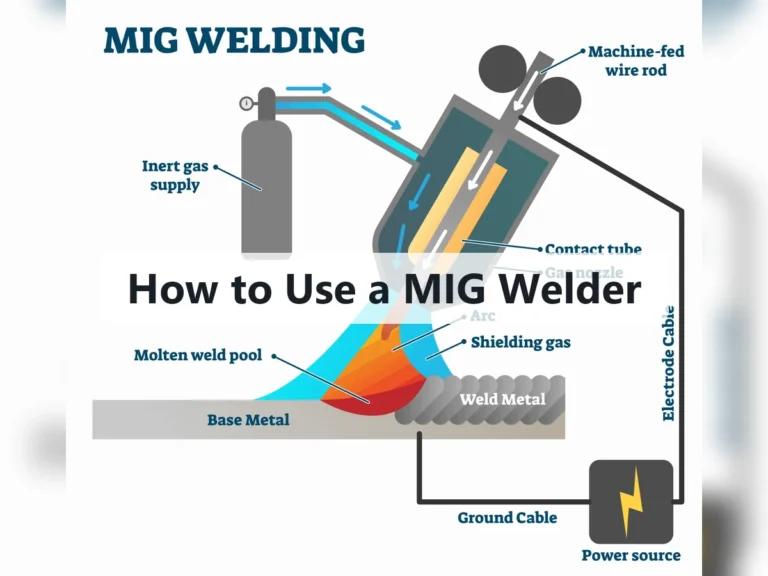
A 110V MIG welder’s usable thickness range depends partly on the welding process and consumables.
- Solid MIG wire with shielding gas: Common for clean mild steel and controlled indoor work. It generally produces a smooth arc and low spatter.
- Flux-cored wire: Often provides better performance outdoors or on less-than-perfect steel, depending on the wire. It may also offer useful penetration, but it creates slag that must be removed.
- Wire diameter: Small machines commonly use .023-inch wire for thin sheet and .030-inch wire for general mild-steel work. Larger wire can deposit more metal but may exceed the machine’s recommended output range.
- Polarity: Solid wire normally uses electrode-positive polarity, while some self-shielded flux-cored wires require electrode-negative polarity. Follow the wire manufacturer’s instructions.
For solid wire, a standard argon-and-carbon-dioxide shielding-gas blend is commonly used on mild steel. Gas flow must be sufficient for coverage but not so high that it creates turbulence. Wind can disturb shielding gas and cause porosity, so flux-cored wire may be more suitable outdoors when the specific wire is rated for that use.
Settings and technique for thicker steel
Use the manufacturer’s chart as the starting point for voltage, wire-feed speed, wire diameter, and material thickness. The correct setting is a coordinated combination; turning only one control to its maximum is not a substitute for a matched setup.
For thicker material, several technique details become important:
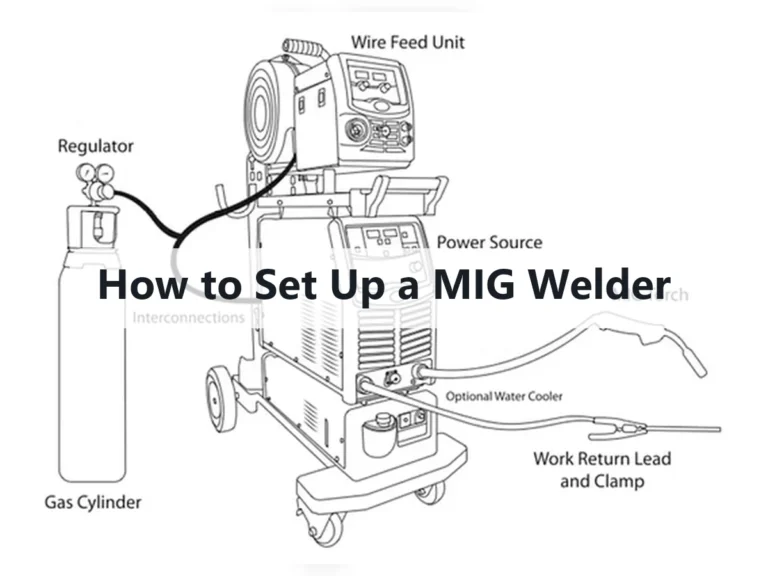
- Keep the work clamp on clean metal and place it close to the joint.
- Hold a consistent contact-tip-to-work distance, usually based on the wire manufacturer’s guidance.
- Use a controlled travel speed. Moving too quickly reduces heat and penetration; moving too slowly can cause excessive buildup or burn-through at the edges.
- Use a slight work angle and travel angle appropriate for the joint.
- Pause briefly at the toes of a fillet weld if needed, but avoid excessive heat buildup.
- Allow the machine to cool when its duty cycle requires it.
Short-circuit MIG, which is common on compact 110V welders, is useful for thinner material but has limited penetration compared with higher-amperage transfer modes. A 110V machine may not support the voltage and wire-feed range needed for more advanced transfer methods.
Steel thickness by material type
Mild steel
Mild steel is the easiest common material for a 110V MIG welder. A realistic working range is thin sheet through 1/8 inch, with 3/16 inch possible when the machine and joint preparation are suitable. Reaching 1/4 inch generally requires beveling, multiple passes, and careful inspection.
Stainless steel
Stainless steel can be welded with a compatible MIG wire and shielding gas, but it requires good heat control. Excessive heat can distort the workpiece and affect its corrosion resistance. A 110V welder may handle thin stainless material, but its practical thickness limit can be lower than its mild-steel rating.
Aluminum
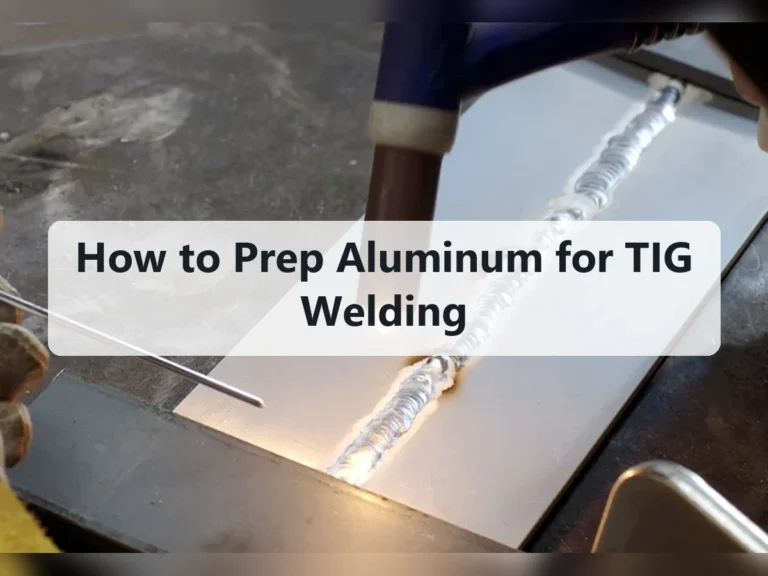
Aluminum requires more heat because it conducts heat rapidly and has an oxide layer with a higher melting point than the base metal. Many small 110V MIG welders are not equipped with a spool gun or the wire-feeding system needed for reliable aluminum welding. If the machine is aluminum-capable, expect a more limited thickness range than for mild steel unless the manufacturer specifically provides an aluminum procedure.
How to verify whether a weld is adequate
Do not judge a thick-metal weld by appearance alone. A wide, smooth bead can still have incomplete fusion, lack of penetration, undercut, porosity, or internal defects.
For a noncritical project, inspect the weld for continuous fusion at both edges, an even profile, and the absence of cracks, pinholes, trapped slag, and severe undercut. A test coupon made from the same material and prepared with the same joint design can help you tune the settings before welding the actual part.
A destructive test, such as bending or breaking a test coupon, provides more useful information than visual inspection alone. For structural, load-bearing, pressure-containing, safety-related, or code-regulated work, use an appropriate qualified welding procedure and inspection method instead of relying on a small welder’s maximum thickness claim.
Always wear the required protective equipment, provide ventilation, remove flammable materials, and verify that the workpiece is safe to weld. Galvanized, painted, or coated metal can release hazardous fumes when heated.
FAQ
Can a 110V MIG welder weld 1/4-inch steel?
Sometimes, but usually not as a simple one-pass weld. A suitable 110V machine may weld 1/4-inch mild steel with a beveled joint, multiple passes, correct wire and gas, and a properly powered circuit. For dependable full penetration or production work, a higher-output welder is generally the better choice.
Can a 110V MIG welder weld 1/8-inch steel?
Yes. 1/8-inch mild steel is within the practical range of most 110V MIG welders. Use the manufacturer’s settings, clean the joint, maintain a steady travel speed, and confirm that the machine is not connected through an inadequate extension cord.
What is the thickest metal a 110V MIG can weld
For many models, about 1/8 inch is a dependable single-pass limit on mild steel. Some machines can make a useful single-pass weld on 3/16-inch material, but the result depends on amperage, joint design, wire, fit-up, and technique.
Does a 110V MIG welder need multiple passes for thick
It may. Multiple passes can fill a beveled joint in 3/16-inch or 1/4-inch steel, but they do not guarantee root penetration. The root must fuse properly before additional weld metal is added.
Is a 110V MIG welder strong enough for structural steel?
A 110V welder may be suitable for some light, noncritical fabrication, but its maximum thickness rating does not automatically qualify it for structural steel. Structural work requires the correct procedure, materials, joint design, welder qualification, and inspection requirements for the project.
Conclusion
For most users, the practical answer to how thick of metal can a 110v mig weld is 1/8-inch mild steel reliably, with 3/16 inch possible and 1/4 inch near the upper edge when joint preparation and technique are excellent. Use the welder’s amperage and duty-cycle specifications as limits, prepare thicker joints with a bevel when appropriate, and verify penetration rather than trusting bead appearance alone.