How Much Does a MIG Welder Cost: Key Facts and Helpful Guidance
A MIG welder typically costs $200 to $2,000, while a complete setup can range from about $350 to more than $3,000.
The uncertainty usually begins when two machines that look similar carry very different prices One may be a compact 120-volt unit intended for occasional home repairs while another.
That is why the signs separating a genuinely good value from an underpowered or incomplete purchase matter more than a single sticker price This guide explains how much. This guide examines “how much does a mig welder cost” and explains the details that matter in practice.
- ✓A basic MIG welder may cost $200 to $500, but a usable gas-shielded setup often costs more after accessories.
- ✓Midrange machines commonly offer better duty cycles, voltage control, wire-feeding consistency, and service support.
- ✓Material thickness and available electrical power matter more than maximum advertised amperage alone.
- ✓Flux-cored welding can reduce initial costs, but it does not replace gas-shielded MIG for every job.
- ✓Budget for safety equipment, consumables, and setup costs before comparing machine prices.
How Much Does a MIG Welder Cost
The broad answer depends on whether you are buying only the power source or a complete welding system A low-cost machine may include a torch and ground clamp.
For most buyers the useful comparison is not cheap versus expensive It is whether the welder can produce a stable arc at the required output feed wire consistently.
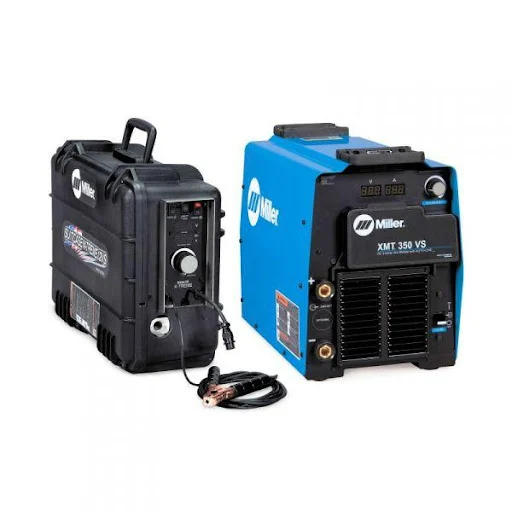
- Entry level: Expect roughly $200 to $500 for compact machines, often with limited output, shorter duty cycles, and fewer controls.
- Midrange: About $500 to $1,200 commonly buys stronger construction, broader adjustment ranges, better feeding, and more usable duty cycle.
- Professional: Around $1,200 to $2,500 or more may provide high output, advanced controls, industrial durability, and serviceable components.
- Complete setup: Add approximately $150 to $800 or more for gas equipment, consumables, protective gear, and electrical or workshop needs.
Entry-level machines: $200 to $500
Entry-level MIG welders appeal to homeowners, beginning fabricators, and people who need to complete occasional repairs. Many run on ordinary 120-volt household power and can handle lighter steel, sheet metal, small trailers, brackets, and hobby projects when used within their limits.
The trade-off is usually limited output and duty cycle Some inexpensive machines are flux-cored-only or support MIG operation only after you purchase a regulator and connect shielding gas.
A low price is reasonable when the workload is light and the material is thin. It becomes a false economy if you expect long welds, frequent production, aluminum work, or reliable performance at the upper end of the machine’s range.
Midrange machines: $500 to $1,200
Midrange welders are often the practical sweet spot for serious home workshops and small businesses. They commonly offer 120- and 240-volt input, smoother adjustment, better arc starts, stronger wire feeding, and enough output for a wider range of steel thicknesses.
Some include multi-process functions such as stick or DC TIG Those features can add flexibility but they should not distract from the quality of the MIG system itself.
At this level, the purchase price can be justified by reduced frustration and greater consistency. A stable arc produces fewer defects, and a robust machine may remain useful as your skills and projects expand.
Professional and industrial machines: $1,200 and above
Professional equipment is designed for heavier use, higher duty cycles, repeatable settings, and serviceability. Some machines exceed $2,500, particularly when they provide high amperage, advanced pulse programs, integrated cooling, specialized aluminum capability, or compatibility with automated systems.
These welders make financial sense when downtime has a cost or when the job requires long periods of operation They are often excessive for a homeowner who welds.
Price alone does not guarantee better welds. Operator technique, joint preparation, correct wire and gas, and proper settings still determine results. The additional money primarily buys capacity, consistency, durability, and support.
What Is Included in the Purchase Price?
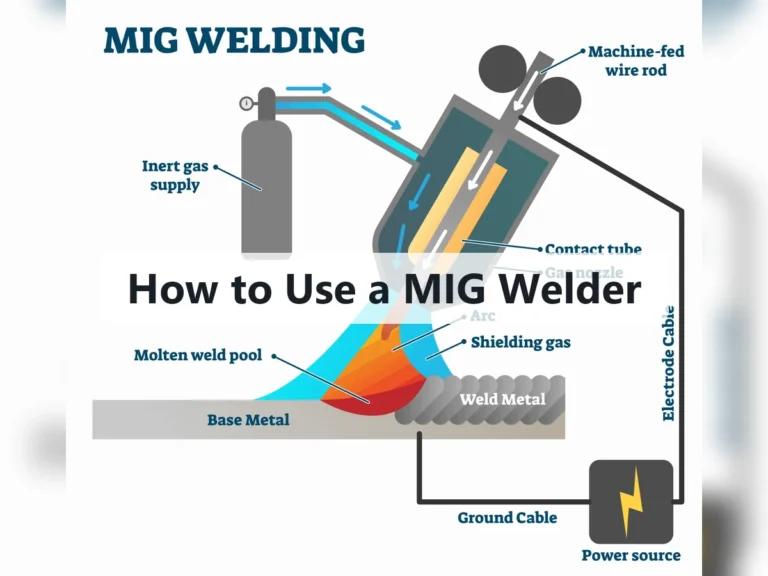
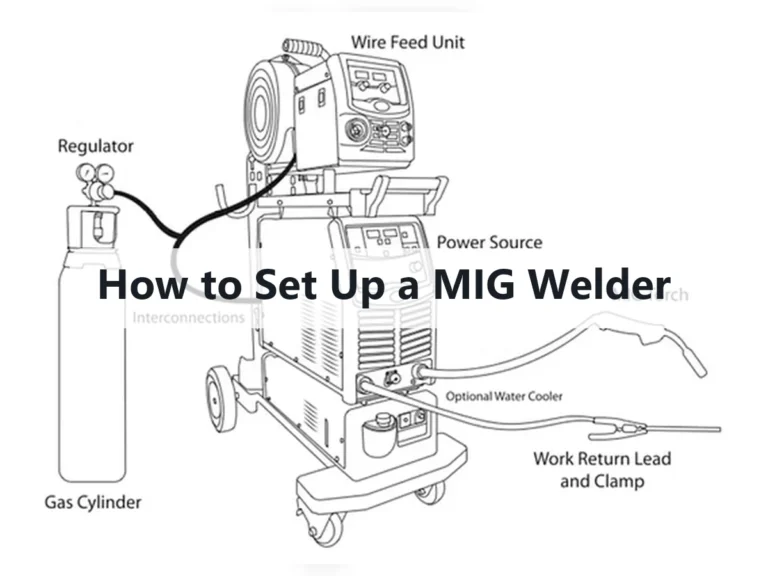
Before comparing listings identify exactly what the seller means by MIG welder A true gas-shielded MIG setup needs more than a power source It needs a welding gun.
Some packages include a regulator and starter wire; others include only the machine and basic leads. Gas cylinders are frequently sold separately, and cylinder ownership or exchange arrangements can add a recurring cost. Delivery charges may also be significant because welders are heavy.
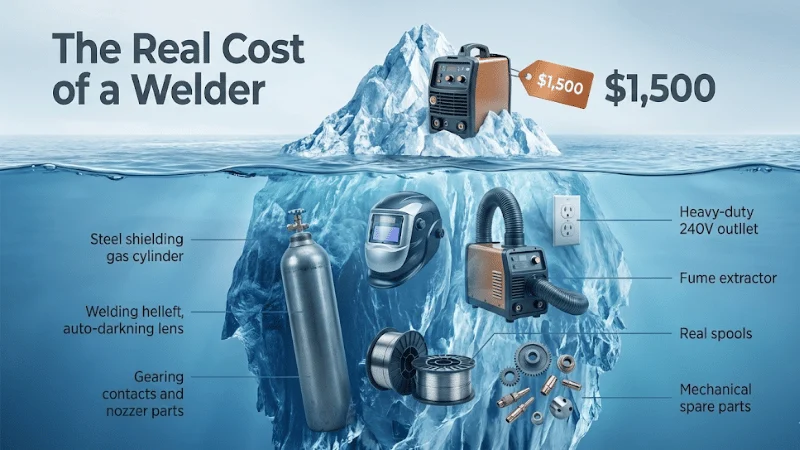
- Package contents: Confirm whether the gun, ground clamp, regulator, hose, contact tips, and spool adapter are included.
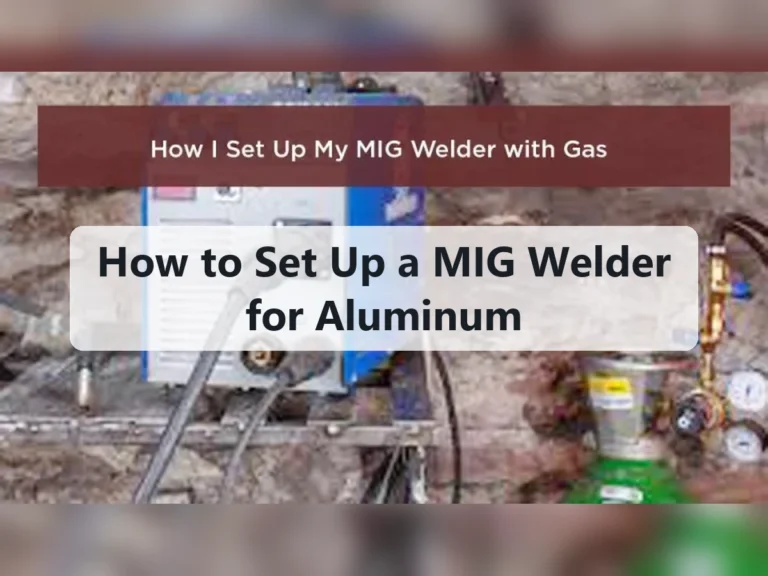
- Gas compatibility: Check that the machine has the correct connection and setup for the shielding gas you intend to use.
- Wire size: Verify that the drive rolls and liner support the wire diameter required for your projects.
- Electrical needs: Review plug type, input voltage, breaker requirements, and extension-cord limitations before purchase.
Common equipment costs beyond the welder
A realistic budget should separate one-time equipment from items that need regular replacement A basic regulator and hose may cost tens to more than a hundred dollars depending.
Wire is a recurring expense Solid steel wire is widely used with an argon-carbon-dioxide blend while flux-cored wire may be used with or without external shielding gas depending.
Protective equipment belongs in the initial budget rather than being treated as optional. A properly rated welding helmet, gloves, jacket or protective clothing, safety glasses, hearing protection, and suitable boots help protect against ultraviolet radiation, sparks, hot metal, fumes, and impact hazards.
Gas versus flux-cored operation
Flux-cored welding can lower the initial setup cost because self-shielded wire does not require a gas cylinder or regulator It is useful outdoors and in conditions where wind.
Gas-shielded MIG is often preferred for clean indoor fabrication and thinner material It can be easier to learn because the weld puddle is visible without removing slag but.
When asking how much does a mig welder cost, decide first whether you need a gas-capable system or only a flux-cored machine. Calling every wire-feed welder a MIG welder can make price comparisons misleading.
Which Features Actually Raise the Price?
Manufacturers charge more for capability that solves a real workload problem The most important features are not always the ones highlighted in large lettering on a product box.
Focus on the relationship between output, duty cycle, input power, controls, and the materials you will weld. A modest machine that operates comfortably within its range can outperform a powerful machine that is difficult to configure or cannot be supplied with adequate electricity.
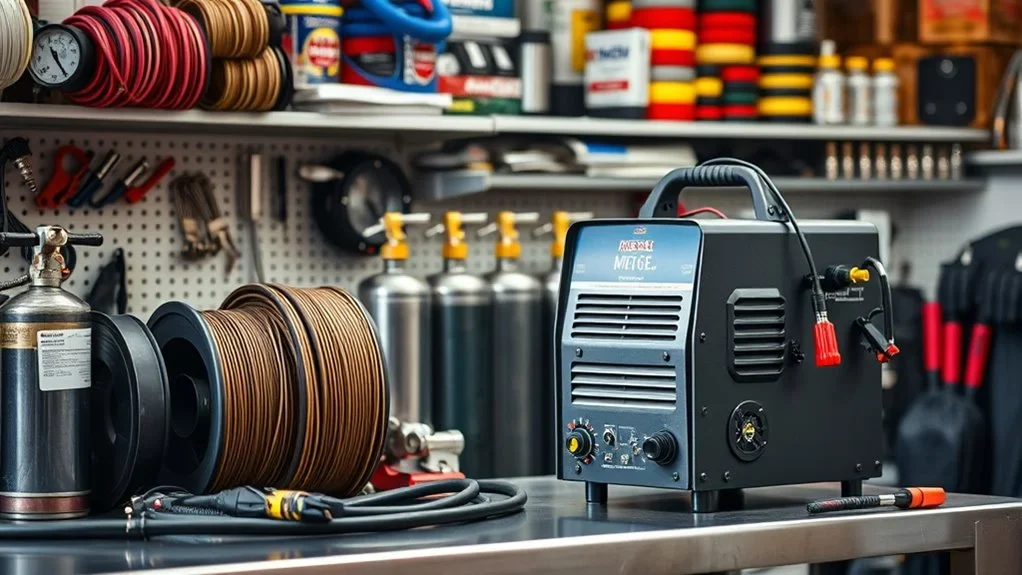
- Dual-voltage input: Provides flexibility between household circuits and higher-output 240-volt service, when properly installed.
- Duty cycle: Indicates how long the welder can operate within a defined period before cooling is required.
- Wire-drive quality: Helps maintain steady wire speed and reduces feeding problems, especially with longer guns or softer wire.
- Control system: Independent voltage and wire-speed adjustments offer more tuning freedom than a few preset selections.
Amperage and material thickness
Amperage affects the thickness and type of material a welder can join, but the advertised maximum is not a complete capability statement. Welding position, joint design, number of passes, base-metal type, wire diameter, and required penetration all matter.
Thin sheet metal needs precise low-end control to avoid burn-through Heavier steel may require more amperage multiple passes beveling or a different process If your projects range from.
Manufacturers may publish recommended thickness ranges, but those figures should be treated as planning guidance rather than a guarantee for every joint. Read the operating specifications and consider the thickness you weld most often, not the thickest object you might encounter once.
Duty cycle and cooling
Duty cycle describes the percentage of a standard test period during which a welder can operate at a stated output before it needs to cool A higher duty.
For example a machine with a low duty cycle may work well for intermittent hobby projects but repeatedly shut down during fabrication Thermal protection prevents damage yet frequent. This distinction matters when answering “how much does a mig welder cost”.
Manual, synergic, and advanced controls
Basic machines may require you to adjust voltage and wire speed separately. That arrangement offers control but requires practice. Synergic systems coordinate settings based on material, wire diameter, and gas selection, making setup faster for many users.
Advanced machines may add inductance control, arc-length adjustment, pulse modes, memory programs, or digital displays. These features can improve repeatability, especially when several operators use the same equipment. They do not eliminate the need for correct polarity, clean metal, suitable wire, and sound technique.
Multi-process capability
A multi-process welder can combine MIG, flux-cored, stick, and sometimes TIG functions in one cabinet. It can be an economical choice when you need occasional access to several processes and have limited storage space.
There are compromises A dedicated MIG machine may provide a better wire-drive system or more convenient controls at the same price TIG functions may be limited and some.
How Does Electrical Power Affect the Total Cost?
Input power is one of the most overlooked parts of a welder budget. Compact 120-volt machines are convenient, but their output may be limited. Higher-output welding commonly benefits from 240-volt service, which may require a properly installed receptacle, breaker, wiring, and panel capacity.
Electrical work should be evaluated by a qualified professional when the installation is outside your knowledge or local requirements. Never defeat grounding features, use damaged cords, or assume a household outlet can safely support a machine because the plug fits.
- 120-volt convenience: Useful for light work and portability, but often limited at higher output.
- 240-volt capacity: Supports heavier welding on compatible equipment but may require installation expenses.
- Extension cords: Long or undersized cords can cause voltage drop, heating, and unreliable operation.
- Generator use: Requires checking generator output, waveform suitability, and the welder’s input requirements.
When a 120-volt welder is enough
A 120-volt model can be suitable for occasional work on thin steel, small repairs, light brackets, and hobby fabrication. It is easier to move and may fit workshops where a 240-volt circuit is unavailable.
Its limits become clear when you need sustained output deep penetration or thick material You may compensate with beveling and multiple passes but that increases time and may.
When 240 volts is worth planning for
If you regularly weld heavier steel or expect to expand into fabrication, a 240-volt-capable machine may offer better long-term value. Dual-voltage equipment provides flexibility, but its maximum performance still depends on the higher-voltage supply.
Include installation in your comparison. A seemingly inexpensive welder can become a larger project when the shop needs a new circuit, ventilation improvements, a suitable work area, or additional fire protection.
How Much Does a MIG Welder Cost to Own Over Time?
The initial purchase is only the beginning. Ownership costs include wire, shielding gas, tips, liners, nozzles, drive rolls, maintenance, electricity, replacement guns, and occasional repairs. Consumable use rises with longer welds, poor settings, excessive spatter, and repeated rework.
Gas efficiency depends on the correct flow rate and a leak-free system. Too little gas can expose the weld to contamination, while excessive flow can create turbulence that also harms shielding. Keep the cylinder secured upright and inspect hoses and connections regularly.
- Clean the liner: Replace or clean a contaminated liner when wire feeding becomes rough or inconsistent.
- Inspect the tip: Change tips that are worn, obstructed, oversized, or fused to the wire.
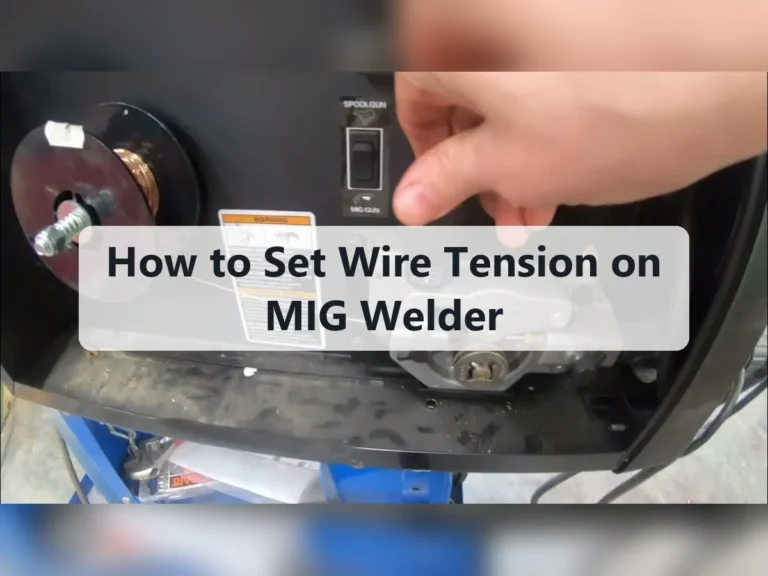
- Check the drive rolls: Use the correct groove and pressure so the wire feeds without slipping or deforming.
- Protect the spool: Store wire dry and covered because moisture and contamination increase feeding and weld problems.
Repairability and warranty
A low-cost machine may be economical even if replacement is more practical than repair. A professional unit may cost more initially but offer replaceable components, authorized service, technical support, and a longer useful life.
Review warranty terms before purchase. Pay attention to coverage exclusions, registration requirements, service locations, and whether accessories carry different coverage. A nearby support network can matter more than a small price difference if the machine is essential to your work.
The cost of poor weld quality
Inconsistent wire feeding or an unstable arc can lead to wasted wire, grinding time, damaged parts, and rework. For paid fabrication, those losses may outweigh the original machine savings quickly.
Still, expensive equipment cannot compensate for dirty base metal, incorrect polarity, poor fit-up, contaminated gas, or an inappropriate wire selection. Training and setup discipline remain part of the total value equation.
How Should You Choose a MIG Welder for Your Work?
Start with the projects you perform most often. List the base metals, typical thicknesses, weld lengths, available power, working location, and whether appearance or production speed matters. This prevents a dramatic but unnecessary specification from controlling the purchase.
Then compare machines within a realistic budget that includes the complete setup. The right choice is usually the least expensive welder that comfortably handles your normal work with room for reasonable growth.
- Home repairs: A compact 120-volt machine may be adequate for occasional thin and medium-gauge work.
- Automotive projects: Prioritize low-amperage control, clean starts, and compatibility with small wire sizes.
- General fabrication: Consider dual-voltage input, stronger duty cycle, and a broad adjustment range.
- Daily production: Prioritize durability, service support, wire-feed consistency, and output at your working amperage.
A practical buying sequence
- Identify the thickest and thinnest material you routinely weld, along with the metals and joint types involved.
- Determine whether 120-volt power is sufficient or whether your work justifies 240-volt capability.
- Choose between gas-shielded MIG, self-shielded flux core, or a machine that supports both.
- Compare duty-cycle ratings and controls at the output you will actually use.
- Price the gun, regulator, cylinder, wire, tips, helmet, clothing, and electrical setup separately.
- Check warranty terms, replacement parts, technical support, and seller reputation before ordering.
- Reserve part of the budget for practice material and consumables rather than spending every dollar on the machine.
Common buying mistakes
One mistake is selecting by maximum amperage alone. Another is assuming a “MIG-ready” listing includes gas equipment. Buyers also overlook the cost of a cylinder, choose an unsuitable wire diameter, or purchase a machine whose plug does not match the workshop circuit.
It is also easy to overbuy. A large industrial welder may be awkward, expensive, and inefficient for brief home repairs. Match capacity to actual use, then leave enough margin that the machine is not operating at its limits every time.
- Ignoring duty cycle: A high peak output does not mean the machine can weld continuously at that level.
- Forgetting polarity: Incorrect polarity can create poor penetration, excessive spatter, or an unusable arc.
- Skipping ventilation: Welding fumes and coatings can create serious hazards even in a small project.
Safety Costs and Operating Considerations
Safety is part of the purchase decision, not an optional add-on. Welding creates intense light, heat, sparks, fumes, electrical hazards, and hot workpieces. The work area needs suitable ventilation, a stable surface, fire-resistant surroundings, and a way to control sparks and hot metal.
Remove flammable materials from the work zone and inspect the area before and after welding. Coatings, galvanized materials, solvents, and enclosed spaces present additional risks. Do not weld containers or confined areas unless the hazards have been professionally evaluated and controlled.
- Eye protection: Use a properly rated welding helmet and wear safety glasses beneath it.
- Skin protection: Cover exposed skin with suitable gloves, clothing, and footwear to reduce arc and spark injuries.
- Fume control: Use effective ventilation and avoid welding unknown coatings or contaminated metal.
- Fire prevention: Keep combustibles away, control sparks, and monitor the area after hot work ends.
A bargain machine cannot make an unsafe workspace acceptable. If the setup lacks ventilation, electrical protection, or fire control, spend money on correcting those conditions before upgrading welding output.
Frequently Asked Questions About MIG Welder Cost
Is $200 enough for a MIG welder?
$200 may buy a basic wire-feed machine, particularly a compact flux-cored model. It may not cover the regulator, cylinder, gas hose, protective equipment, wire, or electrical improvements needed for a complete gas-shielded MIG setup.
What is a reasonable budget for a beginner?
A beginner should often plan for roughly 400 to 800 for a practical starter setup depending on whether the machine supports gas what safety gear is already available.
Is an expensive MIG welder worth it for home use?
It can be worthwhile if you weld frequently, need better low-end control, use thicker material, or want a machine that can grow with your projects. For occasional repairs, a well-supported midrange or entry-level machine may offer better value than professional equipment.
Does a MIG welder require a gas cylinder?
A gas-shielded MIG process requires shielding gas and therefore a cylinder, regulator, and hose. A self-shielded flux-cored process does not use external gas, although the appropriate wire and polarity must be selected for that process.
Is a 120-volt MIG welder cheaper to operate?
It may cost less to install and can be convenient for light work but it is not automatically cheaper to operate If it struggles with your material extra passes and rework can offset the.
What is the most important feature to compare?
Compare usable performance at your typical material thickness and amperage. Duty cycle, wire-feed quality, low-end control, input voltage, support, and included accessories are usually more informative than maximum amperage by itself.
How much does a MIG welder cost with all necessary accessories?
A basic complete setup may total about $350 to $800, while a capable midrange setup can reach $800 to $1,500 or more. Professional equipment, larger cylinders, electrical upgrades, and extensive safety or ventilation improvements can push the total above $3,000.
Conclusion
How much does a mig welder cost The machine itself may range from about 200 to more than 2 500 but a realistic purchase includes wire gas equipment.
Do not judge a welder by price or peak amperage alone. Confirm what is included, compare duty cycle at your working output, plan for safe ventilation and electrical service, and choose enough capacity for normal projects without paying for capability you will rarely use.
Write down your typical material thickness, available voltage, and complete accessory list, then compare total setup cost—not just the welder’s sticker price.