Welder Fabricator Salary: Practical Guide and Important Details
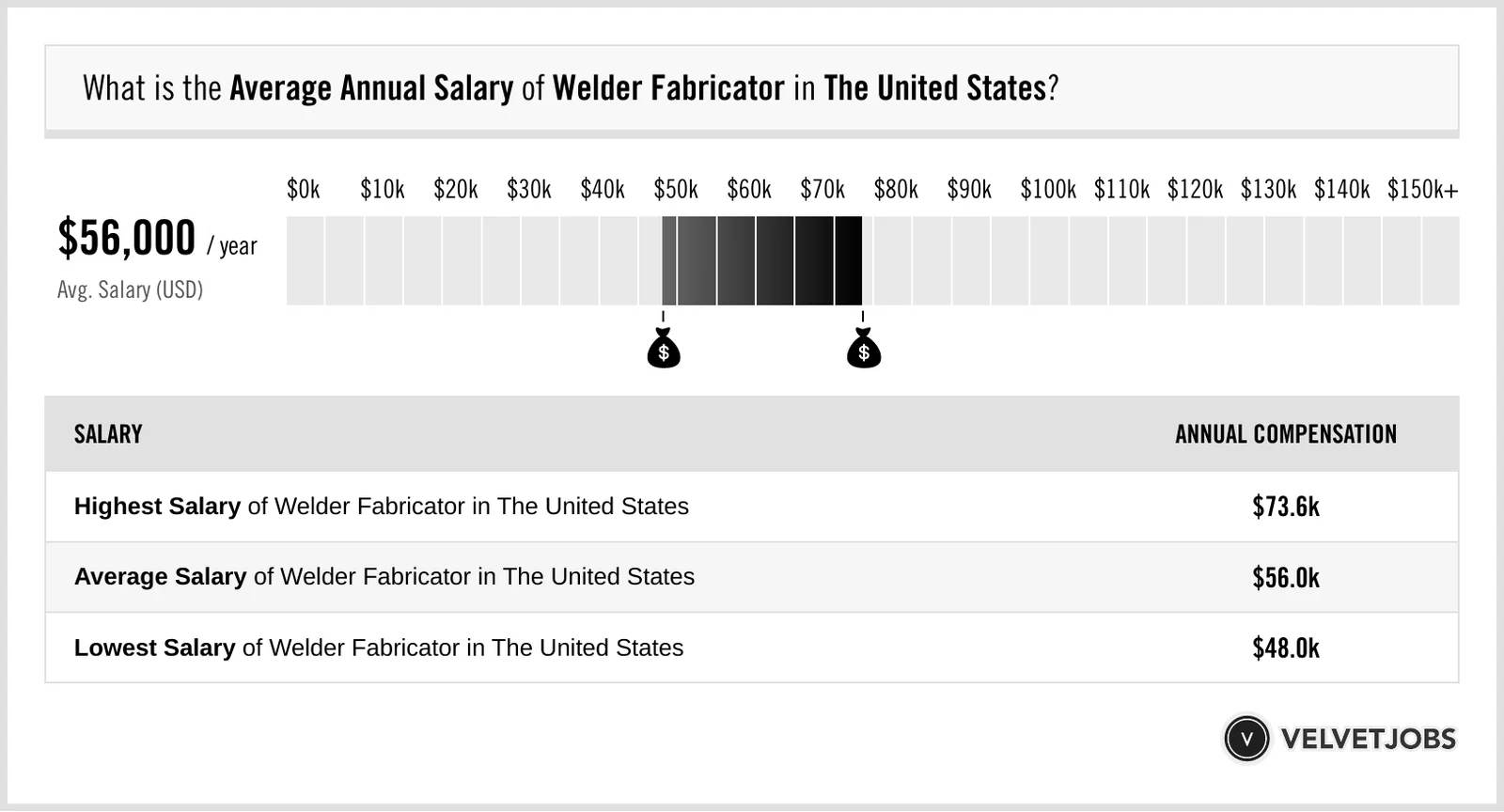
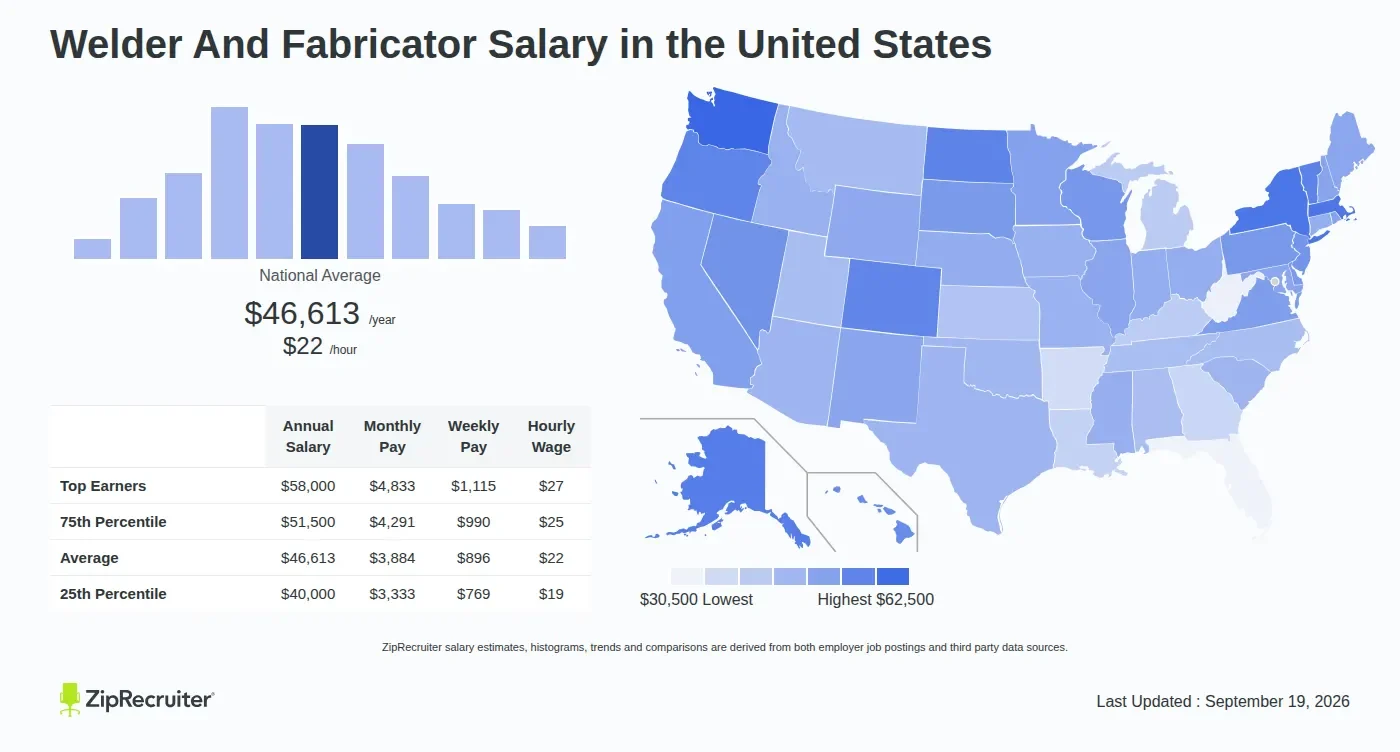
A welder fabricator in the United States commonly earns about $40,000 to $70,000 per year, with higher pay for specialized skills, overtime, and leadership.
The exact welder fabricator salary depends less on the job title than many applicants expect. Location, welding process, materials, industry, shift schedule, certifications, and the ability to read drawings can move pay substantially in either direction.
Many people assume that years on the shop floor automatically produce a large pay increase Experience matters but employers usually pay more for measurable responsibility passing difficult weld.
This guide explains realistic pay ranges how hourly wages translate into annual income which specialties tend to pay more and why advertised compensation can be misleading It also.
- ✓Most U.S. welder fabricators fall within a broad middle range, but specialty work and location create major differences.
- ✓Hourly pay, overtime, per diem, bonuses, benefits, and travel requirements must be evaluated together.
- ✓Blueprint reading, fit-up, inspection knowledge, code work, and multiple welding processes usually improve mobility.
- ✓The best-paying role is not always the best offer when schedule, safety, commute, and stability are considered.
Welder Fabricator Salary: What the Numbers Usually Mean
Salary data for this occupation is difficult to reduce to one precise figure because welder fabricator combines several related jobs A production welder may repeat one operation while.
For a practical U S estimate entry-level workers often see roughly 18 to 24 per hour capable mid-career workers commonly fall near 24 to 35 per hour and.
- Use a range, not one number: Job titles and occupational classifications vary, so compare duties and requirements before comparing pay.
- Separate base pay from total compensation: Overtime, shift premiums, insurance, retirement contributions, and paid leave can materially change the offer.
- Check the schedule: A high hourly rate may depend on nights, weekends, extensive overtime, or long periods away from home.
Hourly pay versus annual salary
At 40 hours per week for 52 weeks, a $20 hourly wage equals about $41,600 in straight-time annual pay. At $25 per hour, the equivalent is $52,000; at $30, it is $62,400; and at $35, it is $72,800. These calculations assume full-time work with no unpaid gaps.
Actual earnings can differ because fabrication shops may have seasonal slowdowns, shutdowns, weather interruptions, mandatory overtime, or fluctuating project schedules. An hourly employee who works consistent overtime may earn more than a salaried employee with a higher-sounding title, but the hourly worker may also have less predictable income.
Why salary websites disagree
Online estimates may combine welders, fitters, welding inspectors, and manufacturing technicians. One source may report base wages, another may include bonuses, and another may estimate a percentile from job advertisements rather than verified payroll data.
Treat an online figure as a starting point The strongest comparison uses several local job postings the employer s stated pay band the exact shift and the total.
What Determines Welder Fabricator Salary?
Pay is usually a reflection of the problems a worker can solve safely and independently. Employers pay more when a fabricator can interpret drawings, select a workable sequence, control distortion, recognize defects, and produce consistent results without constant supervision.
Two people with the same number of years may therefore receive different offers. One may mainly perform repetitive MIG welds on mild steel, while the other may fit complex stainless assemblies, calculate dimensions, document inspections, and repair defects without delaying production.
- Process range: MIG, TIG, stick, flux-cored, and submerged arc experience can expand the jobs you qualify for.
- Material knowledge: Stainless steel, aluminum, carbon steel, high-strength steel, and specialty alloys require different techniques and controls.
- Production responsibility: Fit-up, layout, distortion control, inspection, and rework prevention often distinguish higher-level roles.
- Work environment: Confined spaces, field construction, shipyards, shutdowns, and remote projects may pay premiums but carry added demands.
Experience and independence
Experience is valuable when it creates reliable independence. A new worker may need help identifying joint details, setting parameters, positioning parts, and interpreting a weld symbol. A more experienced worker can often organize the job, identify a problem before welding, and explain the correction clearly.
Employers may reward experience more quickly when it is documented through increasingly difficult work. Keep a private record of processes, materials, thicknesses, positions, equipment, inspection requirements, and responsibilities. This gives you concrete evidence during reviews and interviews.
Welding processes and materials
GMAW commonly called MIG is widely used in production because it can be efficient and repeatable It may provide steady employment but repetitive production work is not automatically.
FCAW and SMAW are important in structural heavy equipment construction repair and field environments Aluminum and stainless work may require additional preparation and process control The premium comes from the combination of skill quality expectations liability and the difficulty of replacing a qualified.
Fabrication skills beyond the weld
Fabricators who can measure accurately, read shop drawings, use a tape and layout tools, operate saws or plasma equipment, and understand tolerances are often more versatile than workers limited to welding alone. Tack quality and fit-up can determine the final result before the main weld begins.
Computer-aided design familiarity, CNC equipment, weld documentation, inspection records, and basic production planning can also improve advancement opportunities. These skills may lead toward lead fabricator, welding technician, estimator, quality coordinator, or supervisor positions.
How Location, Industry, and Schedule Change Pay
Geography affects wages because employers compete within local labor markets and because living costs, project funding, and industrial activity differ by region. A high nominal wage does not necessarily provide more purchasing power if housing, transportation, and insurance costs are also much higher.
Industrial concentration matters as well. Areas with shipyards, energy facilities, defense manufacturing, transportation equipment, large construction projects, or major agricultural and mining operations may offer more specialized openings. Rural shops can still pay well when they need a scarce skill, but the number of employers may be smaller.
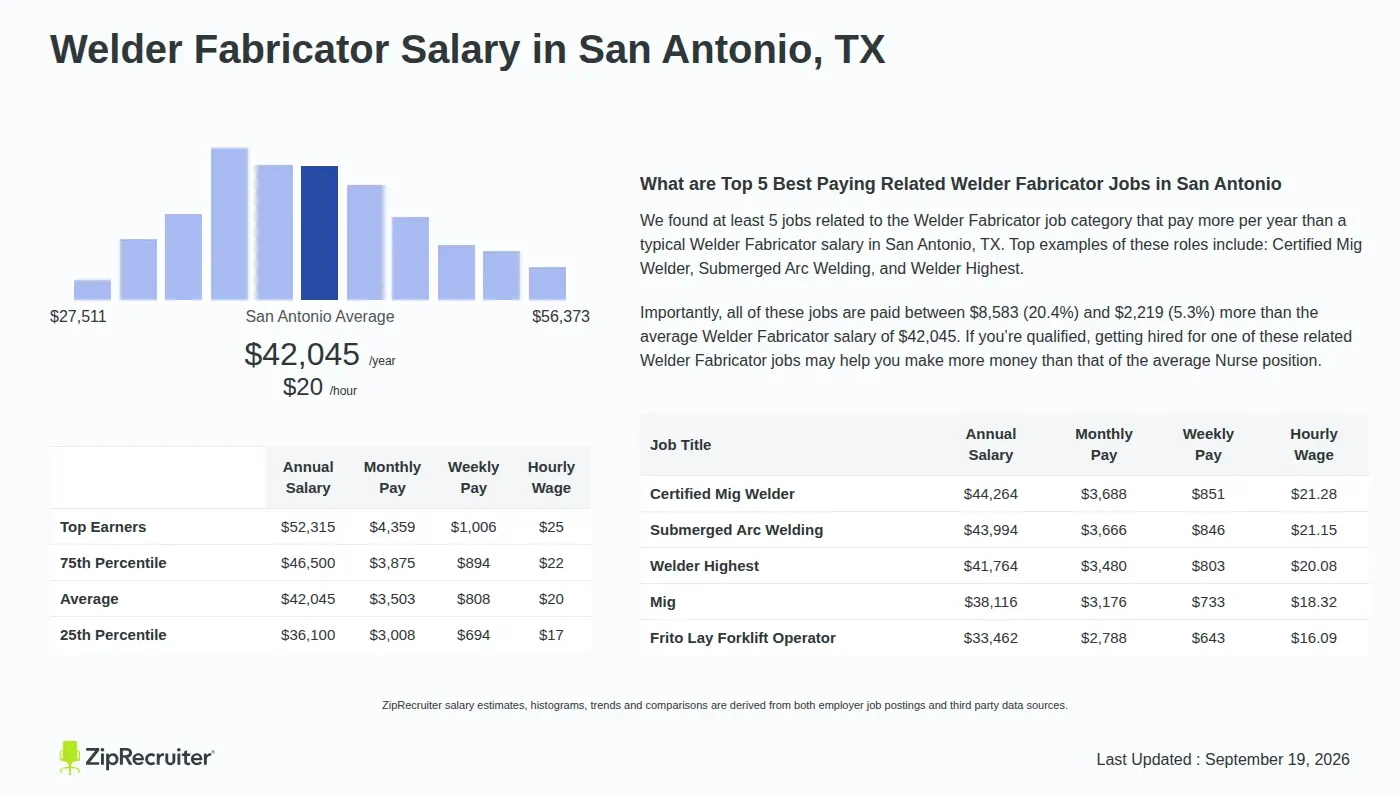
- Shop versus field: Shop work may offer cleaner conditions and steadier routines; field work may add travel, weather exposure, per diem, and premium pay.
- General manufacturing versus specialty production: High-volume work may emphasize speed, while aerospace, pressure, or defense work may emphasize documentation and strict procedures.
- Day shift versus nights: Shift differentials can raise earnings, but confirm whether the premium applies to every hour and whether the schedule is permanent.
Industries that may pay more
Higher compensation is often associated with work where mistakes are expensive, access is difficult, or qualification requirements are strict. Examples include heavy structural fabrication, shipbuilding, industrial maintenance, power-related work, pressure equipment, transportation equipment, and certain defense or aerospace operations.
These jobs may require drug screening, background checks, security procedures, physical examinations, travel, overtime, or documented qualifications. A premium is worthwhile only if you can meet the requirements and tolerate the working conditions.
Travel, per diem, and prevailing wage
Travel jobs may advertise an attractive weekly amount that combines taxable wages, overtime, lodging, mileage, and per diem. Ask for each component separately. Per diem is intended to offset expenses and should not be treated as ordinary wage income when comparing permanent jobs.
Publicly funded projects may use wage schedules that set different rates for base pay and fringe benefits. Confirm how much is paid as cash, how much goes toward benefits, and whether the rate applies to your classification and location. A recruiter should be able to explain the breakdown in writing.
Cost-of-living reality
Compare an offer against housing, commute distance, fuel, tools, meals, insurance premiums, and unpaid travel time. A $4 hourly increase can disappear if it requires a long commute, temporary housing, or frequent vehicle repairs.
Use a simple monthly comparison: expected gross pay, taxes, benefits deductions, commuting costs, housing changes, and realistic overtime. This produces a more useful picture than comparing headline wage rates alone. This is an important consideration for welder fabricator salary.
Qualifications That Can Increase Earnings
There is no single credential that guarantees a higher welder fabricator salary. Credentials are most valuable when they match the work an employer actually sells. A certification for a process or position that the shop never uses may add little bargaining power.
Employers generally value demonstrated quality, safe work habits, reliable attendance, and the ability to meet production requirements. Certifications support that evidence, but they do not replace sound technique or experience.
- Match training to demand: Look at local postings before paying for a course or test.
- Build process depth: Become dependable in one core process, then add a complementary process or material.
- Learn drawings and symbols: Fabricators who understand tolerances and joint details can solve more than a narrowly assigned welding task.
- Document results: Record qualification tests, inspection experience, reduced rework, and responsibilities you have taken on.
Certifications and qualification tests
Many employers conduct their own weld tests or require qualifications tied to a particular procedure. A general credential may demonstrate knowledge, while a performance qualification shows that you can produce an acceptable weld under defined conditions.
Before enrolling, ask whether the employer pays for testing, whether the qualification belongs to the company or follows you, what positions and materials are covered, and how continuity or renewal is handled. Read the terms carefully rather than assuming every certificate has the same employment value.
Blueprint reading and fit-up
Blueprint reading is one of the most practical ways to move beyond repetitive work. Learn to identify dimensions, tolerances, section views, weld symbols, material callouts, revision information, and notes that affect sequence or inspection.
Fit-up skill is equally important. Correct gaps, alignment, tack placement, joint preparation, and clamping reduce distortion and prevent defects. A worker who can prepare a job correctly may save more time than one who simply welds quickly.
Inspection and quality awareness
You do not need to become an inspector to benefit from quality knowledge. Understanding visual inspection, common discontinuities, distortion, porosity, undercut, incomplete fusion, and repair procedures helps you prevent avoidable failures.
Traceability and documentation are especially important in regulated or contract work. Workers who can follow a procedure, record required information, and communicate a nonconformance professionally are often trusted with more sensitive assignments.
Comparing Job Offers and Total Compensation
A job offer should be evaluated as a package, not just as an hourly number. A lower base wage can be competitive if it includes strong health coverage, retirement contributions, paid holidays, predictable hours, tool allowances, and a short commute.
Conversely, a high wage can be less attractive if benefits are expensive, overtime is mandatory, layoffs are common, or the employer expects workers to supply costly equipment. Get important details in writing before resigning from another position.
| Compensation item | Questions to ask | Why it matters |
|---|---|---|
| Base wage | Is this the starting rate, a range, or a probationary rate? | Reveals what you can actually earn immediately. |
| Overtime | How often is it available, required, or canceled? | Separates dependable income from optimistic projections. |
| Shift premium | Which hours qualify and can the schedule change? | Shows whether the advertised premium is realistic. |
| Benefits | What are employee premiums, deductibles, waiting periods, and employer contributions? | Allows a fair total-compensation comparison. |
| Time off | How are holidays, vacation, sick time, and shutdowns handled? | Unpaid closures can reduce annual earnings. |
Questions to ask the employer
- What percentage of the work is welding, fitting, layout, grinding, repair, or machine operation?
- Which processes, materials, positions, and thicknesses are used most often?
- What is the normal schedule, and how much overtime occurred in the previous year?
- Is the position permanent, project-based, seasonal, or tied to a contract?
- Who supplies tools, protective equipment, welding hood components, and work clothing?
- How are performance reviews and wage increases handled?
Recognizing misleading compensation
Be cautious when a posting highlights “up to” pay without explaining the conditions. The maximum may require extensive overtime, travel, a rare qualification, or a temporary project. Ask what a typical employee in the exact role earned during a normal month.
Also check whether salary means exempt annual pay or simply an annualized hourly estimate. Exempt status can change overtime eligibility and should be discussed with the employer. Do not rely on a verbal promise that a raise will happen after training unless the timing and criteria are documented.
Career Paths and Ways to Raise Your Pay
A welding career can develop in several directions. Some workers become highly specialized hands-on fabricators; others move toward supervision, quality, estimating, inspection, maintenance, or technical sales. The best path depends on whether you prefer production, problem-solving, travel, people management, or more office-based work.
Advancement usually comes from combining technical ability with reliability and communication. A lead worker who cannot organize materials or explain a drawing may struggle, while a technically solid worker who communicates clearly can become valuable in coordination roles.
- Lead fabricator: Coordinates assignments, checks fit-up, supports less experienced workers, and helps maintain workflow.
- Welding inspector or quality technician: Focuses on procedures, documentation, visual checks, and compliance requirements.
- Maintenance or field technician: Diagnoses equipment and structural problems where repair judgment is important.
- Estimator or supervisor: Uses shop knowledge to plan labor, materials, schedules, and customer commitments.
A practical 12-month development plan
Start by identifying the jobs in your area that pay more than your current role. Compare their required processes, materials, equipment, certifications, and schedule. Select one or two gaps that are realistic to close within a year rather than collecting unrelated credentials.
- Ask your current supervisor which skills would justify a higher-level assignment.
- Practice drawing interpretation, measurement, fit-up, and weld-quality checks on real work.
- Request exposure to a second process, new material, inspection task, or complex assembly.
- Keep records of completed qualifications, difficult repairs, productivity improvements, and reduced rework.
- Review local openings and request a wage discussion when your responsibilities have clearly expanded.
Negotiating without overreaching
Use evidence rather than a general request for more money. Explain the processes you perform, the equipment you operate, the inspections you pass, the shifts you can cover, and the responsibilities you handle without supervision.
If the employer cannot increase base pay, ask about a written review date, certification reimbursement, a shift premium, tool support, paid training, additional vacation, or a path to a defined classification. A specific agreement is more useful than a vague promise of future advancement.
Safety, Physical Demands, and Long-Term Value
Pay should never be evaluated without considering exposure and sustainability. Welding and fabrication can involve fumes, ultraviolet radiation, heat, noise, sparks, heavy materials, awkward positions, electrical hazards, compressed gases, and moving equipment. Proper ventilation, protective equipment, training, housekeeping, and safe lifting practices are essential.
Higher pay may reflect genuine additional risk or unpleasant conditions, but money does not remove the hazard. Ask how the employer controls fumes, handles respiratory protection, trains workers, maintains equipment, and reports injuries. A workplace that treats safety as a production obstacle may not be worth a modest wage premium.
- Control the environment: Confirm ventilation, fume control, fire prevention, and safe storage of cylinders.
- Protect hearing and vision: Use the required eye, face, hearing, and respiratory protection for the task.
- Respect fatigue: Long shifts and repetitive awkward work can increase mistakes and injury risk.
- Ask about training: You should know emergency procedures, equipment rules, and hazard controls before starting unfamiliar work.
Physical demands and career longevity
Consider whether the job requires frequent kneeling, climbing, lifting, reaching, grinding, or working in heat. Ergonomics, job rotation, mechanical lifting aids, and reasonable recovery time can make a major difference over a long career.
A position that develops inspection, planning, programming, or leadership skills may offer more options if continuous heavy production work becomes difficult. Career growth is not only about earning more this year; it is also about preserving employability.
FAQ: Welder Fabricator Salary
What is a good starting welder fabricator salary?
For many U.S. markets, approximately $18 to $24 per hour is a realistic starting range, though local demand and prior experience can change it. A beginner with blueprint, fit-up, or formal training may qualify above the lowest entry rate.
Can a welder fabricator make over $70,000 a year?
Yes, but annual income above $70,000 often depends on specialty work, overtime, travel, shift premiums, union or contract rates, or supervisory responsibility. A high annual total may not represent normal straight-time pay.
Does TIG welding always pay more?
No. TIG can pay more when it involves difficult materials, precise tolerances, sanitary work, pressure applications, or demanding inspection. A production TIG position with limited responsibility may pay less than a skilled structural or field role.
Do certifications increase welder fabricator salary?
They can, particularly when they match an employer’s procedures and customer requirements. Certification is most useful when paired with proven fit-up, drawing interpretation, quality, and production skills.
Is fabrication experience worth more than welding experience?
Neither is automatically worth more. Fabrication can broaden your value because it includes layout, measurement, fit-up, and assembly, while specialized welding may command a premium for difficult processes or materials. The stronger profile combines both.
How much does location affect pay?
Location can significantly affect wages because industrial demand, labor shortages, cost of living, and project funding differ by market. Compare local offers after accounting for housing, commuting, benefits, and schedule rather than using a national average alone.
Should I accept a salaried fabricator position?
Compare the annual salary with the hours actually expected, overtime eligibility, benefits, paid time off, and job stability. A salaried title is not automatically better if it requires frequent unpaid overtime or removes protections available to hourly workers.
Conclusion
A realistic welder fabricator salary is shaped by more than years of experience. Process range, materials, fit-up ability, drawing literacy, quality awareness, industry, location, schedule, and total benefits all influence what an offer is truly worth. The safest comparison separates dependable base pay from overtime, travel allowances, and uncertain bonuses.
Focus on skills that solve expensive problems: accurate layout, sound welds, low rework, inspection readiness, and reliable work under demanding conditions. Before accepting a position, verify duties, schedule, safety controls, benefits, and advancement terms in writing.
Compare three local job postings by base wage, total compensation, required skills, and actual schedule, then choose one specific qualification or fabrication skill to pursue next.