Heat-Affected Zone in Welding: What HAZ Is and Why It Matters
The heat-affected zone, or HAZ, is the part of a workpiece next to a weld that gets hot enough to change but doesn’t melt. Those heat-driven changes can make the metal harder, softer, less tough, or more likely to crack, depending on the material and how the weld is made.
Have you ever looked at a weld that seems solid and wondered if the metal right beside it could still be the weak spot? Or had a part warp or crack even though the bead itself looked clean?
I once rushed a repair on a thick bracket attached to thinner plate, and the metal beside my weld came out rougher than I expected. I had to grind back and redo the work, which was a pain; this is a common mistake, not a dumb one.
I wrote this to make the HAZ easier to spot and understand, whether you’re learning to weld, checking a finished joint, or trying to prevent a repair from failing. You don’t need a metallurgy class to make better choices, but knowing what happens beside the bead can save you from a weak joint, extra cleanup, and a nasty surprise later.
You’ll get a plain explanation of the HAZ, what changes inside it, and practical ways to limit problems. The whole read takes about 9 minutes, and you’ll leave knowing how to:
- Tell the HAZ apart from the weld metal.
- Recognize why different metals respond differently to heat.
- Adjust your process without guessing at a critical repair.
- Spot when a qualified welding professional should take over.
What Is Heat Affected Zone in Welding?
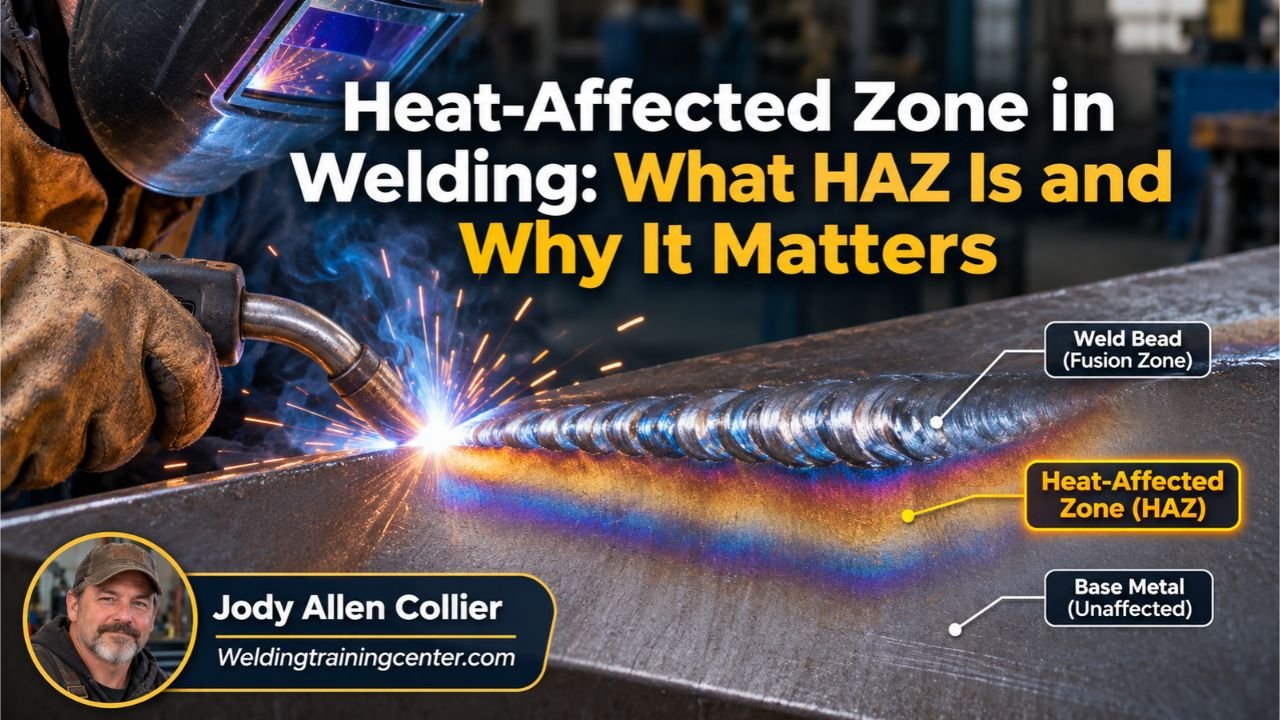
The heat-affected zone is the base metal next to a weld that didn’t melt but did reach a high enough temperature for its structure or properties to change. The zone forms during welding’s fast heating and cooling cycle, so its size and behavior depend on the metal, joint, and welding conditions.
A weld cross-section has three broad areas: the weld metal, which melted and solidified; the HAZ, which got hot but stayed solid; and the base metal, which remained far enough away to avoid significant heat-driven changes. The HAZ sits beside the fusion boundary, where molten weld metal met unmelted base metal.
The difference between melting and solid-state change matters. The HAZ hasn’t fused into the weld, so a sound-looking bead doesn’t tell you exactly how the nearby metal will perform. If you’re sorting out how the arc melts and joins metal, the basic welding process helps connect the heat source to the finished joint.
A useful way to think about the HAZ is as a strip that experienced a different temperature history from the rest of the part. It isn’t a neat, marked band you can always see with your eyes, and it doesn’t have one uniform structure from edge to edge.
The fusion zone is the melted area that becomes the weld bead. The HAZ is beside it, and the two terms aren’t interchangeable; understanding fusion in a weld makes that boundary easier to identify.
How wide is a HAZ? There’s no single standard width for every weld. A narrow, quick-moving heat source can produce a different thermal pattern from a slower, broader one, while thick or highly conductive parts can carry heat away differently from thin parts.
The HAZ isn’t automatically a defect. A properly made weld can have a HAZ that performs as required, while a poor welding procedure can leave the nearby metal too hard, too soft, brittle, distorted, or prone to cracking.
What Changes Inside the HAZ?
The HAZ changes because different parts of the metal reach different peak temperatures and then cool at different rates. Those changes can affect hardness, toughness, strength, corrosion resistance, and the part’s shape, but the result depends heavily on the alloy.
The HAZ is better understood as several neighboring regions than as one uniform strip. The names and exact boundaries vary by material, but steel welds are often discussed in terms of how close each region is to the fusion line.
| HAZ area | What happens | Possible concern |
|---|---|---|
| Near the fusion boundary | The metal reaches the highest temperature without melting. In some steels, grains grow larger. | Reduced toughness or a hard, brittle structure under certain conditions. |
| Farther from the weld | The metal reaches a lower peak temperature, which can still change its structure. | Local changes in strength or hardness. |
| Transition toward base metal | Heat has less effect as distance from the weld increases. | Properties gradually return toward those of the original material. |
In carbon steel, the heating and cooling cycle can create a harder region, particularly when the steel’s chemistry and cooling conditions favor hardening. Hardness alone doesn’t tell you the full story, but excessive hardness can raise the risk of cracking in the right conditions.
Other steels can respond in different ways. Some high-strength steels can lose strength in a softened HAZ, while certain stainless steels may face a greater risk of corrosion near a weld if the material and welding practice make them susceptible. Aluminum alloys can also soften near a weld because heat changes the effects of prior strengthening treatments.
What matters most is the specific metal and how the part will be used. A small change near a decorative bracket may be acceptable, while the same type of change in a pressure-containing or heavily loaded part may need qualified review and inspection.
I once focused so hard on getting a smooth bead that I treated the nearby metal as an afterthought. The repair reminded me that the edge beside the weld deserves attention too, especially when a part will take repeated loads.
A weld can also leave residual stress, which means locked-in stress remains after the metal cools. Uneven heating and contraction can pull the part out of shape or add stress around the joint; welding residual stress is one reason distortion and cracking can happen even after the arc has stopped.
A visible HAZ isn’t always easy to identify, and color alone isn’t a reliable measure of its properties. On some metals, heat tint can show where the surface got hot, but it doesn’t tell you the exact hardness, toughness, or strength of the metal underneath.
How Can You Control HAZ Problems?
You control HAZ problems by choosing a suitable welding procedure, managing heat, and matching the process to the material and joint. The goal isn’t always to make the HAZ as small as possible; it’s to keep the weld and nearby metal within the requirements for the job.
Start with the welding procedure specification, often shortened to WPS, if the work has one. A WPS gives approved ranges and steps for a particular job, such as process, filler metal, preheat, and travel speed, and it takes priority over a general rule of thumb.
If no formal procedure applies, use the material maker’s guidance and the welding machine’s instructions. For critical structures, pressure equipment, or repairs where failure could hurt someone, don’t guess at the procedure; bring in a qualified welding professional.
These habits help keep heat under control:
- Identify the base metal. Check markings, paperwork, or material records before choosing filler or settings. A similar-looking alloy can react differently to welding heat.
- Prepare the joint properly. Remove dirt, oil, paint, and other contamination as required for the metal and job. Clean edges and a suitable joint fit reduce avoidable problems.
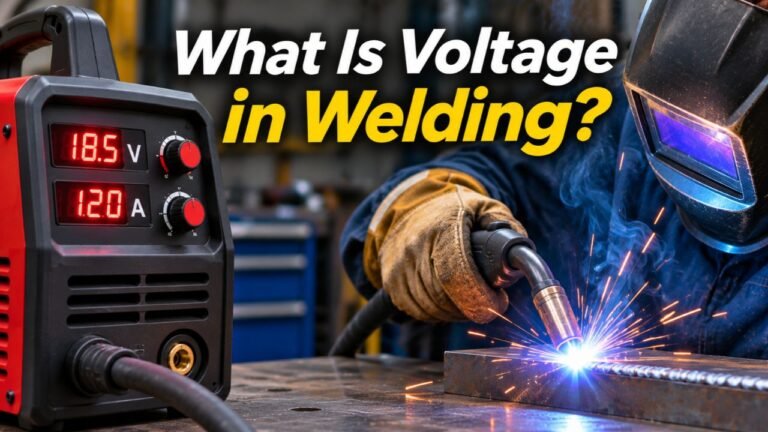
- Use the approved settings and technique. Current, voltage, travel speed, electrode or wire choice, and bead placement affect the weld’s thermal cycle.
- Follow preheat and interpass requirements. Preheat means warming the material before welding; interpass temperature is the temperature between weld passes. Use stated limits rather than adding heat because it feels reassuring.
- Let the part cool as directed. Don’t quench or force-cool a weld unless the procedure specifically calls for it. Rapid cooling can change the metal’s behavior.
A useful estimate of gross arc energy per inch, often called heat input, is voltage × amperage × 60, divided by travel speed in inches per minute. If the arc runs at 24 volts and 200 amps while moving at 10 inches per minute, the calculation is 28,800 joules per inch, or 28.8 kilojoules per inch; the heat input formula lays out the calculation and its limits.
That number is a process estimate, not a guarantee of HAZ width or weld quality. Some calculations apply a process efficiency factor, and the right method depends on the procedure and code being used, so follow the specified calculation rather than comparing numbers from different methods as if they were identical.
Can you shrink the HAZ just by turning down the heat? Not safely as a blanket rule. If you reduce power too much or move too fast, you can create poor fusion or an undersized weld, so the setting has to suit the joint and the required weld size.
Pro Tip: When a joint needs multiple passes, follow the stated interpass temperature limit and avoid lingering in one spot. Repeated local heating can change the thermal cycle, even when each bead looks tidy.
Look for signs that the part needs closer review, such as cracks, unexpected distortion, or a change in hardness where the material’s requirements are known. Those signs don’t prove the HAZ is the cause, but ignoring them can leave a problem hidden under a clean-looking bead.
Important Tip: Don’t judge a critical weld by appearance alone. Some HAZ problems need qualified inspection or testing, and the right inspection method depends on the material, joint, and acceptance requirements.
FAQs About What Is Heat Affected Zone
Is the heat-affected zone part of the weld?
No, the heat-affected zone isn’t part of the melted weld metal. The HAZ is the base metal beside the weld that became hot enough to change while remaining solid. The fusion zone melted and then solidified, so a cross-section has distinct weld metal, HAZ, and unaffected base-metal areas.
Is the heat-affected zone always weaker?
No, the heat-affected zone isn’t always weaker than the original metal. Welding heat can harden or soften some materials, and other changes can affect toughness or corrosion resistance. Whether those changes matter depends on the alloy, welding procedure, joint loading, and requirements for the finished part.
Can you see the heat-affected zone?
Sometimes, surface color or texture changes can suggest where welding heat reached the metal, but visible appearance doesn’t reveal exact HAZ boundaries or properties. Some HAZs are hard to distinguish without testing. For a critical part, use the inspection method required for the job rather than relying on color.
Does every welding process create a heat-affected zone?
Yes, common fusion-welding processes create a heat-affected zone because they heat the base metal beside the area being melted. The zone’s size and effects vary with the process, material, joint, and welding conditions. Some solid-state joining methods work differently, so the details depend on the joining process.
Can post-weld heat treatment fix HAZ problems?
Sometimes, post-weld heat treatment can reduce residual stress or change metal properties, but it isn’t a cure-all. The right treatment depends on the alloy, part, and job requirements, and an unsuitable treatment can cause new problems. Use a qualified procedure instead of heating a finished part by guesswork.
Make the HAZ Part of Your Weld Plan
The HAZ is a normal result of welding, not a flaw by itself. What matters is whether the heat-driven changes suit the material and the job, and that takes more than judging the bead’s shape or color.
I’d put material identification and the approved procedure ahead of trying to make the weld look perfect. A neat bead is satisfying, but a reliable joint also depends on what happened just outside it.
For a routine repair, start by checking the base metal, cleaning the joint, and following suitable settings and temperature limits. If the part carries serious loads or failure could put someone at risk, stop before experimenting and ask a qualified welding professional to review the procedure. That’s the clearest next step when the consequences matter.