Pipeline Welding Training: Complete Guide and Practical Tips
A pipeline weld may look like a narrow band of metal, but it can determine whether a high-pressure system remains safe for decades. A single joint may involve thick-wall pipe, changing weather, limited access, strict inspection, and procedures that leave little room for improvisation.
Pipeline welding training prepares a welder for that environment by combining process control, code awareness, hands-on practice, and qualification testing. I consider it more demanding than learning to make attractive welds on shop plate because the work requires repeatable results in difficult positions and under project-specific rules.
This guide explains what the training includes, which welding processes and credentials matter, how to choose a program, what qualification tests involve, and how to build job-ready skills without overlooking safety or documentation.
What Pipeline Welding Training Covers
Pipeline welding training is structured instruction for welding pipe used in transmission gathering distribution process water and related infrastructure A complete program develops more than torch or electrode.
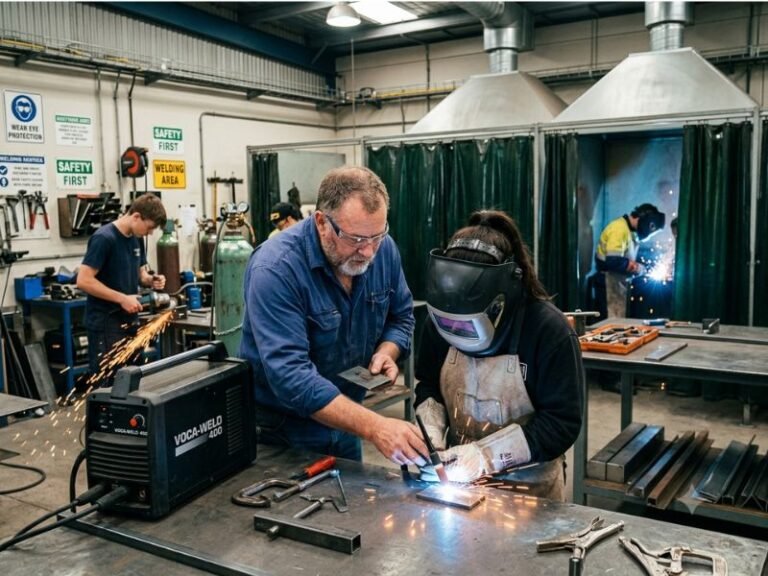
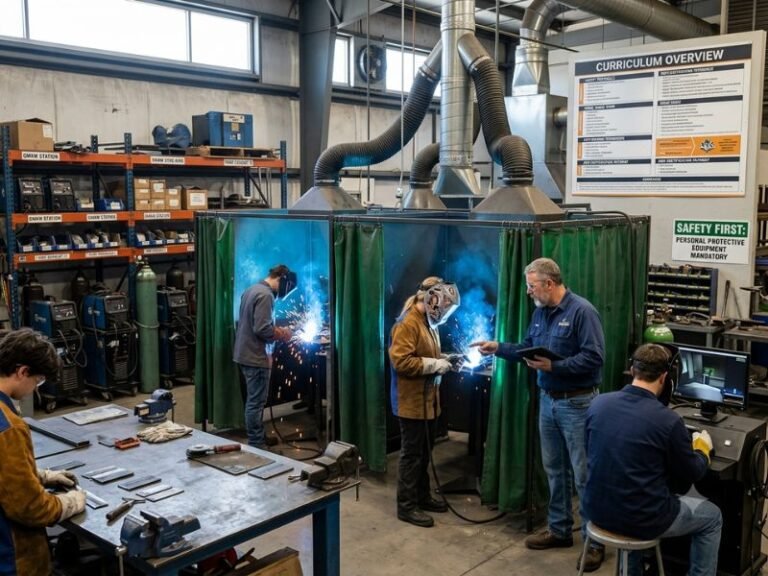
Most programs combine classroom instruction with supervised shop or field practice. The exact balance varies. An entry-level course may focus on basic arc control and pipe positions, while an advanced course may concentrate on production welding, tie-ins, repair procedures, automatic welding equipment, or code qualification.
Typical subject areas include:
- Worksite safety, hazard communication, hot-work controls, and personal protective equipment
- Pipe identification, wall thickness, diameter, joint design, and fit-up
- Welding symbols, drawings, welding procedure specifications, and related records
- Shielded metal arc welding, gas tungsten arc welding, flux-cored arc welding, or gas metal arc welding
- Root passes, hot passes, fill passes, cap passes, and interpass cleaning
- Pipe welding positions, including fixed-position work such as 5G and 6G
- Preheat, interpass temperature, heat input, and hydrogen control
- Visual inspection and common nondestructive testing methods
- Welder performance qualification and practical test preparation
- Production speed, repair avoidance, traceability, and quality documentation
The goal is not simply to complete a course. The goal is to become capable of following an approved procedure consistently and to qualify for the type of pipe work an employer actually performs.
Why Pipeline Welding Is Different
Pipe welding presents geometric and access problems that do not appear in the same way on flat plate As a welder moves around a fixed pipe gravity changes.
Field work adds additional variables Wind can disturb shielding gas Cold temperatures can affect preheat and hydrogen management Mud rain poor lighting cramped excavation and long shifts can.
Pipeline work also depends heavily on repeatability. A weld can look acceptable while containing lack of fusion, incomplete penetration, slag inclusion, porosity, undercut, or cracking. Radiographic testing, ultrasonic testing, magnetic particle testing, or other inspection methods may reveal defects that visual inspection cannot confirm.
For that reason, I would judge a program by how well it teaches controlled production habits, not by how quickly it lets a student deposit metal. Good training connects every action—cleaning, fit-up, amperage, travel speed, bead placement, and inspection—to the final integrity of the joint.
Core Skills a Pipeline Welder Must Build
Joint preparation and fit-up
Before striking an arc, the welder must inspect the pipe ends, bevel, root face, root opening, alignment, and cleanliness. Small variations in these conditions can change penetration and bead shape. Training should include the use of fit-up tools, clamps, gauges, grinders, and measuring equipment.
A strong program also teaches the limits of acceptable mismatch and the importance of removing oil, moisture, paint, rust, and other contaminants. Fit-up is not a task to rush through before the “real” welding begins. It is one of the main controls on weld quality.
Root-pass control
The root pass establishes the internal profile of the joint. The welder must control arc length, electrode or torch angle, travel speed, and puddle size while maintaining penetration without excessive burn-through. Root technique may differ substantially between open-root welding, consumable inserts, and mechanized processes.
Students should practice starting and stopping, tie-ins, keyholing where applicable, and correcting minor irregularities without creating additional defects. A root pass that is inconsistent around the circumference often causes problems in later passes and may fail internal inspection.
Pass sequencing and interpass cleaning
Filler and cap passes must be placed according to the qualified procedure Training covers bead overlap sidewall fusion crater filling slag removal and inspection between passes With stick.
Interpass temperature is another key control. Welding too cold can reduce fusion or increase cracking risk in some materials; welding too hot can change the weld profile and material properties. A student should learn to use the specified measurement method rather than guessing from appearance.
Position and body control
Pipe welding requires stable body positioning, deliberate movement, and the ability to maintain a consistent working angle while moving around the joint. Training should include 1G, 2G, 5G, and 6G practice when those positions match the intended work. The exact qualification range depends on the governing code and test configuration.
I also look for instruction on ergonomics. Awkward posture can cause uneven travel, fatigue, and avoidable mistakes. Learning how to reposition safely, manage leads and hoses, and maintain a clear view is part of production skill—not a separate convenience.
Welding Processes Used in Pipeline Work
Shielded metal arc welding
Shielded metal arc welding (SMAW), often called stick welding, remains important for many pipeline applications because it is portable and does not require an external shielding-gas supply. Different electrodes support root, fill, and cap work, and low-hydrogen practice may be required for certain materials and procedures.
Stick welding demands disciplined arc-length control, proper electrode storage and handling, and thorough slag removal. It can be highly effective in remote locations, but it is not automatically the best process for every project.
Gas tungsten arc welding
Gas tungsten arc welding GTAW commonly called TIG offers precise control and clean welds It may be used for critical root passes stainless steel high-alloy materials or applications.
Flux-cored and gas metal arc welding
Flux-cored arc welding (FCAW) and gas metal arc welding (GMAW) can support higher deposition rates and production efficiency. They may be used in shop fabrication, controlled field environments, or mechanized and automated systems. Their performance depends on correct wire selection, shielding, contact-tip condition, settings, and protection from wind.
Mechanized and automated welding
Large pipeline projects may use mechanized or automated systems to improve consistency and productivity. A welder or operator still needs to understand joint tracking, parameter verification, consumable management, equipment setup, and visual quality checks. Automation does not remove the need for welding knowledge; it changes where that knowledge is applied.
A beginner should not select a course based only on the number of processes advertised. I would first compare the processes used by local contractors and the type of qualification test required for the jobs being pursued.
Codes, Procedures, and Qualifications
Pipeline welding is governed by project specifications regulations and standards rather than by one universal credential In the United States relevant work may involve standards such as API.
A course should teach the difference between a welding procedure specification WPS and a welder qualification A WPS describes how the weld is to be made including variables.
Training may prepare a student for a performance test but the school does not automatically make the student qualified for every pipeline job Qualification is tied to variables and a governing standard Changes in pipe diameter wall thickness material.
Commonly requested credentials may include:
- A welder performance qualification record for a specific code or procedure
- Safety training such as OSHA-related instruction, site orientation, or hot-work training
- Employer or contractor qualification under a project-specific welding procedure
- Inspection-related training for personnel moving toward quality-control roles
- Additional credentials for rigging, confined spaces, equipment operation, or pipeline access
I recommend asking an employer which qualifications are actually recognized before paying for a course. A certificate with a familiar-sounding name may have limited value if it does not match the contractor’s code, test, or hiring requirements.
How a Typical Training Program Works
Classroom and orientation
Instruction usually begins with safety, equipment, materials, drawings, procedures, and terminology. Students learn how to identify hazards around electricity, compressed gases, fumes, fire, excavation, heavy equipment, and stored energy. Pipeline sites may also involve traffic, environmental controls, and remote-work logistics.
Shop practice
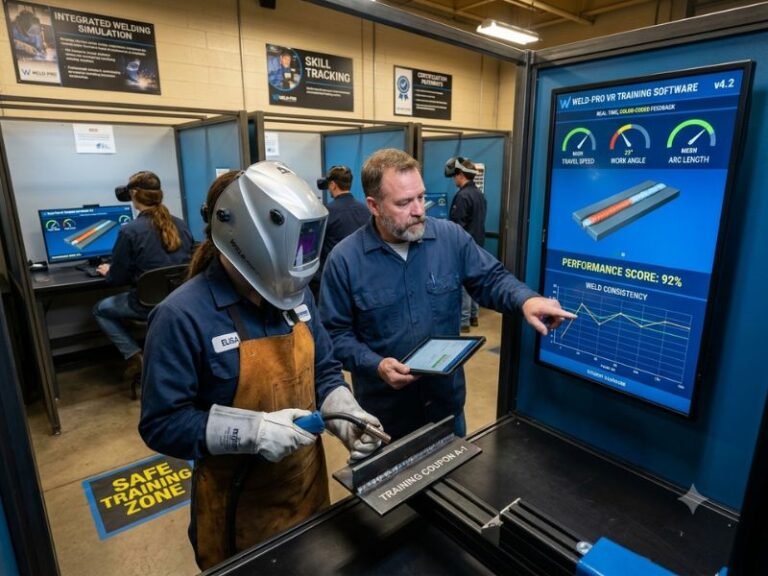
Students then spend substantial time making practice joints. A useful progression may start with beads and fillet welds, move to open-root pipe, and advance through increasingly difficult positions and material thicknesses. Practice should include deliberate feedback from an instructor rather than repeated welding without diagnosis.
Students often need more practice on starts, stops, tie-ins, overhead sections, and cap appearance than on the easiest portion of a joint. A training log can help track electrode type, settings, position, defect patterns, and corrective actions.
Testing and documentation
Near the end of a course, the student may complete a formal test coupon. The coupon can receive visual examination and, depending on the standard, radiographic, ultrasonic, bend, tensile, or other testing. The result should be documented in a qualification record that identifies the applicable variables and limitations.
Failure is useful only if the instructor explains the cause. A student who merely repeats a failed test without understanding the defect may pass once and continue producing unreliable work. I would ask how the program handles repairs, retesting, and individualized coaching.
How to Choose a Pipeline Welding School
Start by defining the job target. A person seeking structural fabrication work may need different training from someone targeting cross-country transmission lines, gas distribution, refinery piping, or shop-based pipe fabrication.
Then compare programs using practical questions:
- Which codes and welding procedures does the course teach?
- Which processes, pipe sizes, wall thicknesses, and positions are practiced?
- How much time is spent welding rather than listening to lectures?
- Are instructors qualified to teach the listed processes and tests?
- Are consumables, pipe coupons, machines, booths, and safety equipment readily available?
- Does the program offer a documented performance qualification or only a school completion certificate?
- Are test fees, consumables, retests, and certification paperwork included in the price?
- Does the school provide realistic information about employers, travel, physical demands, and entry-level pay?
Class size matters. A crowded lab can limit arc time and make feedback difficult. Equipment condition matters as well. Machines do not need to be new, but they should be maintained, properly grounded, and suitable for the work being taught.
Job placement claims deserve careful review. I would ask for the names of hiring partners, the kinds of jobs graduates obtain, and whether placement means a direct job, an interview, or a temporary referral. A reputable school should explain limitations instead of promising employment.
Preparing for a Welder Qualification Test
Preparation begins with the test requirements, not with a favorite welding technique. Obtain the test description and identify the pipe diameter, wall thickness, material, process, position, filler metal, backing condition, and inspection method. Practice under conditions that resemble the actual test.
Before welding, inspect the coupon and confirm:
- Bevel angle, root face, and root opening
- Alignment and internal cleanliness
- Electrode or wire classification and condition
- Machine polarity, amperage, voltage, and wire-feed settings
- Preheat and interpass requirements
- Lighting, ventilation, leads, ground connection, and personal protective equipment
During the test maintain a steady sequence Clean each pass completely watch the puddle rather than only the arc and avoid changing settings without a reason allowed by.
Do not treat the test as a performance for speed. Production employers value acceptable welds made at a sustainable pace. I would rather see a controlled, repeatable weld than a fast coupon that depends on risky shortcuts.
Safety and Physical Demands
Pipeline welding can involve intense heat, ultraviolet radiation, fumes, noise, fire hazards, electrical energy, heavy pipe, moving equipment, and difficult terrain. Depending on the job, a welder may work outdoors, in excavations, from elevated platforms, or in confined spaces. Site-specific training and permits remain necessary even after trade-school instruction.
Core safety practices include using the correct lens shade and protective clothing, inspecting leads and holders, securing gas cylinders, controlling sparks, testing for atmospheric hazards when required, and keeping flammables away from hot work. Respiratory protection decisions should follow the employer’s hazard assessment and applicable requirements rather than personal assumptions.
Physical preparation also matters. The work can involve kneeling, crouching, climbing, carrying equipment, and holding stable positions for long periods. Hydration, hearing protection, eye protection, rest, and safe lifting reduce preventable injuries. A welder who ignores fatigue may lose fine motor control before noticing the problem.
Never weld on a line, vessel, or container that has not been properly isolated, cleaned, and authorized for hot work. Training provides principles, but only the responsible employer and qualified site personnel can determine whether a specific job is safe to begin.
Common Mistakes New Pipeline Welders Make
Chasing appearance instead of fusion
A shiny cap is not proof of a sound weld. Excessive focus on bead cosmetics can distract from sidewall fusion, root penetration, heat control, and defect prevention. Visual appearance matters, but it is only one part of quality.
Ignoring fit-up
Trying to compensate for a poor root opening or severe mismatch with extra heat rarely produces a reliable result. The better response is to stop, correct the fit-up within authorized limits, and confirm that the joint still matches the procedure.
Using the wrong consumable practices
Low-hydrogen electrodes may require controlled storage and exposure limits. Wire and shielding gas must match the procedure. Damp electrodes, contaminated wire, poor gas coverage, and incorrect polarity can create defects that are wrongly blamed on technique.
Moving too fast
Fast travel can cause inadequate penetration, narrow beads, and poor sidewall fusion. Slow travel can create excessive reinforcement, burn-through, or overheating. The correct speed is the one that produces the required profile and fusion within the qualified parameters.
Failing to read the procedure
Guessing settings from memory is dangerous in code-controlled work. A WPS is not a suggestion. It defines the approved range and controls that must be followed. If the joint condition does not fit the procedure, the welder should ask for direction rather than silently improvising.
Practicing only in the easiest position
Flat-position practice can build basic control, but it does not prepare a person for fixed pipe. A serious program gradually introduces vertical, overhead, and angled sections so the student learns how gravity changes the puddle.
Career Path and Continuing Development
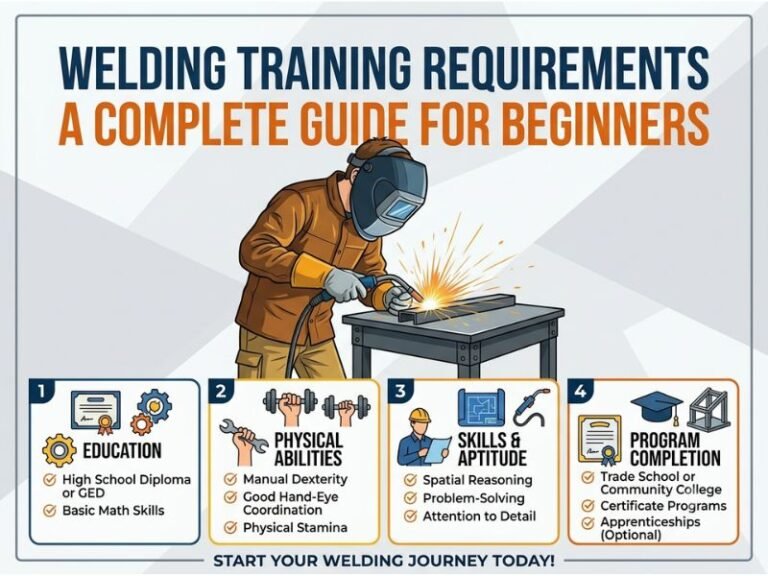
Many people enter pipeline welding through a trade school, community college, union apprenticeship, employer trainee program, or supervised helper position. There is no single route that fits every contractor. Basic math, blueprint reading, mechanical ability, reliable attendance, and a willingness to travel can improve a beginner’s prospects.
Entry-level workers may start as helpers, fitters, tack welders, or apprentice welders before qualifying on production joints. Progress depends on demonstrated skill, available projects, safety performance, and the employer’s requirements. A qualification test is valuable, but it does not replace jobsite judgment or a record of dependable work.
Experienced welders can develop into lead welders, welding foremen, inspectors, welding procedure specialists, instructors, or quality-control personnel. Additional study may involve metallurgy, inspection methods, automated welding, documentation, or supervisory skills.
Keep personal records of qualifications, training dates, processes, positions, and employers, while recognizing that a qualification may lapse or require continuity under a particular code. Ask the employer how continuity, renewal, and requalification are managed.
Pipeline Welding Training FAQ
How long does pipeline welding training take?
There is no universal duration. Short introductory courses may teach fundamentals, while job-focused programs can take several weeks or longer and include multiple processes and qualification tests. The right length depends on prior welding experience, the target process, pipe positions, and the employer or code requirements.
Do I need experience before starting pipeline welding training?
Not always. Beginner programs teach safety and basic welding before moving to pipe. However, prior experience with an arc, grinder, measurements, and shop safety can make the transition easier. Advanced qualification courses generally assume that the student already has reliable welding fundamentals.
What is the most important pipe welding position to learn?
Fixed-position 6G is often considered one of the most demanding practice positions because the pipe is set at an angle and cannot be rotated. It develops control across multiple welding orientations. The most useful position for employment still depends on the contractor’s work and the qualification test being offered.
Which welding process is best for pipeline work?
No single process is best for every pipeline job. SMAW is portable and common in field conditions; GTAW provides precise root control; FCAW and GMAW can improve productivity in suitable environments; and mechanized systems support consistent production. The project procedure, material, access, weather, and inspection requirements determine the appropriate process.
Does a welding school certificate qualify me for pipeline employment?
A school certificate may show course completion, but it does not necessarily equal a contractor-accepted welder qualification. Employers may require a test under API 1104, ASME Section IX, AWS requirements, or a project-specific procedure. Confirm exactly what document the program provides and whether local employers recognize it.
Can I qualify as a pipeline welder without traveling?
Possibly, but travel is common in some pipeline sectors because projects move between locations. Distribution, fabrication, maintenance, and shop-based pipe work may offer more local opportunities. Ask employers about travel, per diem, rotation schedules, and whether the job involves remote or outdoor conditions before choosing a training path.
What should I bring to pipeline welding training?
Follow the school’s equipment list. Typical items may include approved welding clothing, gloves, safety glasses, a welding hood, hearing protection, work boots, hand tools, and layout or cleaning tools. Do not assume that personal equipment is acceptable until the instructor verifies its condition and required specifications.
Conclusion
Effective Pipeline welding training combines safe work habits pipe fit-up process control fixed-position practice code awareness inspection knowledge and a qualification that matches the intended job I would.