Orbital Welding Training: Clear Overview and Expert Insights
Orbital welding can look deceptively simple from a distance a welding head travels around a tube while the machine follows programmed settings In practice producing a clean repeatable.
Orbital welding training helps welders technicians engineers and supervisors understand that entire system I find the most useful training is neither purely classroom-based nor limited to machine operation.
The explanation below covers what orbital welding training includes, who benefits from it, how courses are structured, what equipment and qualifications matter, and how to choose a program that fits a real production environment.
What Is Orbital Welding?
Orbital welding is an automated welding process in which a welding torch or welding head rotates around a fixed, generally cylindrical workpiece. The most common application is joining tubes or pipes, especially where consistent weld quality is required around the complete circumference.
Many orbital systems use the gas tungsten arc welding GTAW process also called tungsten inert gas or TIG welding The system may control travel speed amperage arc length.
Automation improves repeatability but it does not eliminate the need for skilled judgment The operator still has to select suitable parameters prepare the joint verify material and dimensions.
What Orbital Welding Training Covers
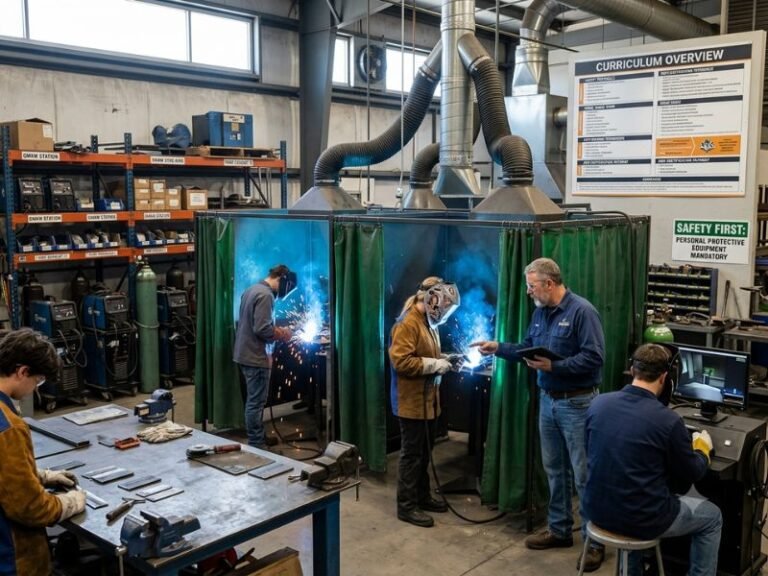
A well-designed course explains both the technology and the decisions surrounding it. The exact curriculum varies by provider, machine brand, industry, and material, but most credible programs cover several core areas.
Process fundamentals
Students learn how an arc forms, how heat enters the joint, and how the welding current interacts with travel speed. They also study the role of tungsten electrodes, shielding gases, arc starts, pulse functions, and crater termination.
These topics matter because orbital welding is sensitive to small changes Excessive heat can cause burn-through distortion discoloration or unacceptable internal profiles Insufficient heat can create incomplete fusion.
Tube and joint preparation
Training usually addresses tube cutting, facing, squareness, cleaning, fit-up, and alignment. The ends must be prepared consistently because the machine cannot compensate for every gap, mismatch, burr, or contamination problem.
Common preparation points include:
- Cutting the tube without crushing or excessively deforming it.
- Facing the ends so the joint is square and uniform.
- Removing oil, oxide, marker residue, and other contaminants.
- Maintaining the specified root gap or close-fit condition.
- Checking wall thickness, outside diameter, material, and joint alignment.
- Using clean tools that will not transfer carbon steel or other contamination to stainless steel or high-purity components.
Machine operation and programming
A learner should understand how to install the weld head, position the electrode, connect cables and gas lines, load a program, and verify the machine before striking an arc. Training may include manual program creation, parameter editing, program storage, and controlled changes for different tube sizes or wall thicknesses.
Programs often divide the weld into segments or levels. Current, pulse timing, travel speed, and wire feed can change during the rotation to account for heat buildup and the changing position of the arc. Understanding those changes is more valuable than memorizing a single program.
Shielding and purge control
Shielding gas protects the molten weld pool and hot metal from atmospheric contamination. Internal purging is particularly important when welding stainless steel, nickel alloys, titanium, and components used in sanitary, semiconductor, pharmaceutical, food, or high-purity systems.
Training should explain gas selection flow control leak checks purge time venting and the effect of excessive flow More gas is not automatically better Turbulent flow can draw.
Who Benefits From Orbital Welding Training?
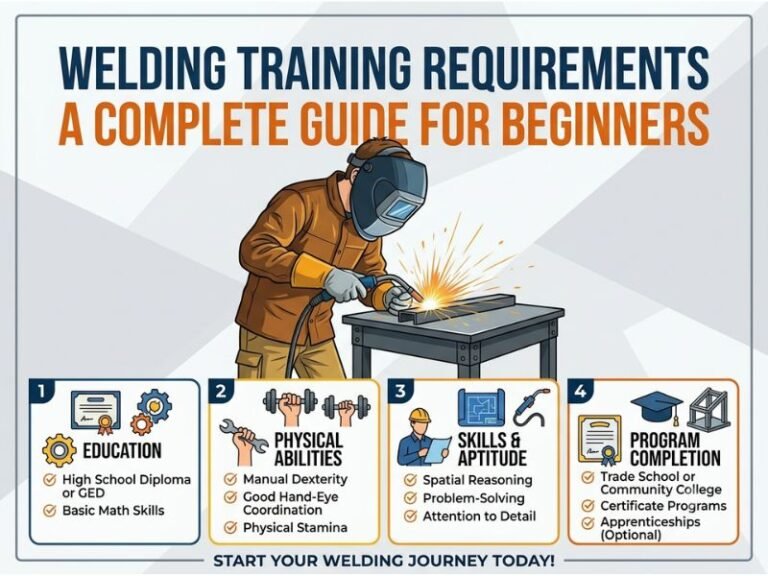
Orbital training is useful for more than experienced welders. The right level depends on the learner’s responsibility and existing background.
Welders and welding operators
Experienced TIG welders often adapt well because they already understand arc behavior, tungsten preparation, fit-up, and heat control. However, manual welding skill does not automatically equal orbital competence. The operator must learn programming, machine setup, weld-head alignment, and process documentation.
Newer welders may also benefit, provided the course includes foundational GTAW instruction. A short machine-specific class cannot replace basic welding knowledge if the student does not understand arc length, contamination, joint fit-up, or weld defects.
Welding engineers and technicians
Engineers and technicians may attend to develop procedures, qualify weld schedules, investigate failures, or support production. Their training often emphasizes parameter development, data recording, weld procedure qualification, and integration with quality systems.
Inspectors, supervisors, and quality personnel
Inspection and production staff benefit from recognizing process-related defects and understanding the limits of visual inspection. A supervisor who knows how purge quality, tube alignment, and heat input influence the weld can make better decisions about rework, operator qualification, and process control.
Maintenance and service personnel
Maintenance technicians may need specialized instruction for weld-head servicing, cable inspection, cooling systems, motor alignment, calibration, and troubleshooting. This training is different from operator training, although the two roles overlap in smaller facilities.
Typical Orbital Welding Training Formats
Training format should match the intended outcome. A general overview may be adequate for someone evaluating automation, while a production operator needs repeated practice on the actual equipment and materials.
Classroom or online instruction
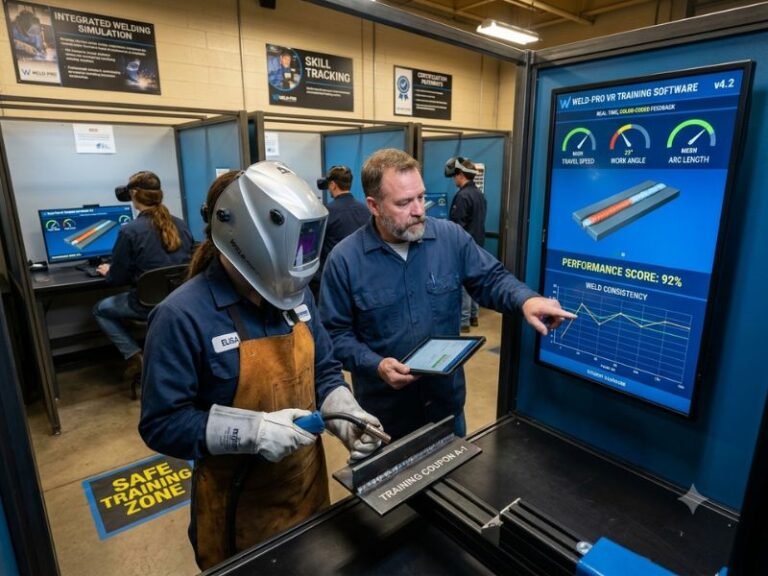
Classroom and online lessons can explain process theory, terminology, safety, weld defects, and basic programming logic. They are convenient for foundational knowledge and can reduce the amount of time spent on introductory material during hands-on sessions.
The limitation is that theory alone cannot develop torch positioning, fit-up discipline, gas setup habits, or the judgment needed to identify an unstable process. I would treat online learning as preparation or supplemental education rather than a complete substitute for practical training.
Hands-on equipment training
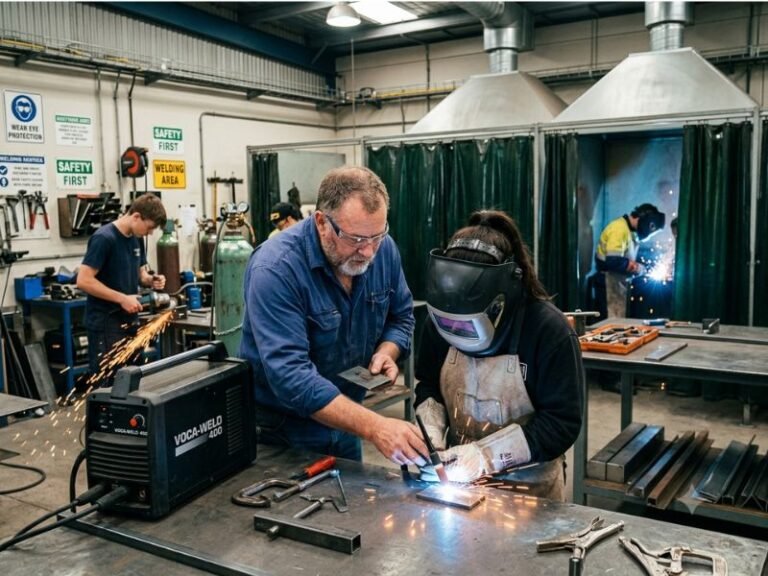
Hands-on instruction places the learner in front of an orbital power supply, weld head, tube fixture, purge system, and related accessories. Students typically set up joints, enter or adjust programs, perform welds, and inspect the results.
This format is strongest when the equipment resembles the machines used at work. Different manufacturers may use different menus, weld-head designs, cooling arrangements, and programming methods. The underlying welding principles transfer, but the operator interface and maintenance procedures may not.
On-site company training
On-site training can use actual production materials, joint designs, work instructions, and quality requirements. It may reveal problems that a generic course would not address, such as limited access, awkward tube assemblies, unusual wall thicknesses, or inconsistent incoming material.
The facility must still provide suitable training time. If production pressure prevents learners from practicing setup, programming, and defect correction, the course may become a demonstration rather than a qualification-building exercise.
Manufacturer or distributor training
Equipment manufacturers and distributors often provide machine-specific instruction. This is valuable for operation, software, accessories, preventive maintenance, and troubleshooting. I would confirm whether the course also addresses welding metallurgy, joint preparation, inspection, and procedure control rather than focusing only on button-by-button operation.
Skills Developed During Training
Effective training builds a chain of decisions from the drawing or specification to the finished weld.
- Material identification: confirming tube alloy, wall thickness, diameter, and heat-treatment requirements.
- Joint preparation: producing clean, square, repeatable ends with the required fit-up.
- Equipment setup: selecting the correct weld head, collet, electrode, torch position, and cooling arrangement.
- Program selection: choosing an approved schedule or developing parameters within documented limits.
- Gas management: setting shielding and purge flow, checking connections, and allowing adequate stabilization time.
- Weld monitoring: observing arc behavior, sound, color, penetration indicators, and machine alarms.
- Inspection: identifying undercut, lack of fusion, porosity, oxidation, burn-through, concavity, excess reinforcement, and other unacceptable conditions.
- Documentation: recording material, operator, program, machine, gas settings, inspection results, and nonconformance information.
The best programs also teach controlled troubleshooting. For example, a dark internal weld on stainless steel may point to inadequate purge, a leak, poor venting, contamination, or excessive heat. Changing amperage without investigating the gas system could hide the real cause and create another defect.
How an Orbital Weld Is Normally Produced
The exact sequence depends on the equipment and specification, but a typical orbital weld follows a disciplined workflow.
- Review the requirements. Confirm the material, dimensions, joint design, applicable code or customer specification, inspection method, and approved welding procedure.
- Prepare the tube. Cut and face the ends, remove contamination, verify dimensions, and create the specified fit-up.
- Install the workpiece. Align the tubes in the weld head or fixture and prevent movement during the cycle.
- Prepare the electrode and torch. Check tungsten condition, electrode extension, torch centering, collet selection, and cooling connections.
- Establish gas protection. Connect shielding and purge lines, check for leaks, set flow, and purge the internal volume as required.
- Load or create the program. Verify current, pulse, travel, rotation direction, wire feed if applicable, segment timing, and termination settings.
- Run the weld. Monitor the arc, machine status, gas supply, and any visible signs of instability.
- Inspect and document. Evaluate the weld using the required visual, dimensional, radiographic, borescope, dye penetrant, or other inspection method.
Training should make clear that a weld program is not a universal recipe. The same nominal tube size can behave differently because of alloy, wall thickness, joint gap, heat sinking, purge volume, electrode condition, or actual machine calibration.
Equipment Used in Orbital Welding
A complete orbital setup normally includes more than a power source. Common components include a programmable power supply, orbital weld head, collets or tube clamps, tungsten electrode, shielding-gas system, internal purge equipment, cables, cooling equipment, fixtures, and inspection tools.
The power supply controls the welding sequence and stores programs. The weld head provides controlled rotation around the tube. Collets hold the workpiece and help establish repeatable alignment. Some weld heads are designed for narrow tube ranges, while others accommodate larger diameters or special access conditions.
Cooling is important during extended cycles or high-duty applications. A liquid-cooled weld head may protect internal components and stabilize operation, but it adds hoses, fluid maintenance, and leak-control requirements. Training should include equipment inspection and safe shutdown procedures, not only normal production operation.
Useful supporting tools may include a tube facer, precision measuring tools, purge monitors, gas flow meters, borescopes, weld gauges, cleaning supplies, and data-recording systems. The equipment list should reflect the actual product and quality requirements instead of being selected solely by machine price.
How to Choose an Orbital Welding Training Course
I would evaluate a course against the work the learner must perform afterward. A polished certificate has limited value if the instruction does not match the materials, machines, and standards used in the job.
Check the technical scope
Look for clear coverage of GTAW fundamentals, joint preparation, shielding and purging, programming, weld-head setup, defects, inspection, safety, and documentation. Ask how much time is spent welding rather than listening to presentations.
Match the equipment
If a facility uses a particular brand or weld-head family, machine-specific training can shorten the learning curve. For general skill development, training on another system may still be useful, but the learner should receive additional familiarization before working independently.
Consider the materials and applications
Training for thin-wall stainless tubing may not prepare someone for heavy-wall alloy pipe, reactive metals, pharmaceutical systems, or high-purity semiconductor work. Confirm that the course uses similar alloys, dimensions, joint designs, and purge expectations.
Ask how competence is evaluated
A meaningful course should include practical evaluation. Depending on the role, that may involve setting up a joint, selecting or entering parameters, completing a weld, explaining a defect, or producing a test coupon for inspection.
Also ask what the certificate means. Course attendance, machine authorization, employer qualification, and formal welder qualification are not necessarily the same thing. The certificate should describe the training completed without implying approvals it does not provide.
Certification, Qualification, and Standards
Orbital welding training and welder qualification are related but distinct. Training teaches knowledge and skills. Qualification demonstrates that a person or procedure meets a defined requirement under specified conditions.
Applicable requirements may come from an employer customer engineering specification industry code or quality system The governing document can determine acceptable materials joint designs process variables test methods visual criteria and records Commonly referenced standards vary by industry so a course provider should avoid.
A facility may need separate approval for the welding procedure, equipment calibration, operator performance, and inspection process. A trained operator still has to follow the approved procedure and work within the qualified range. If a parameter must change beyond that range, the change may require engineering review or requalification.
For a job search, a recognized training certificate can show initiative and basic preparation. Employers may still require hands-on testing, documented production experience, or qualification on a specific material and process. I recommend asking the employer or quality manager which records carry practical value before paying for a course.
Safety and Quality Controls
Orbital welding combines electrical energy, intense ultraviolet radiation, hot metal, compressed gases, rotating machinery, and potentially hazardous fumes. Training should include appropriate protective equipment, ventilation, electrical safety, gas-cylinder handling, fire prevention, and machine-specific lockout procedures.
Automation does not make the work risk-free. An operator can still be exposed while positioning a hot workpiece, changing a tungsten electrode, handling shielding-gas connections, or reaching near a moving weld head. A clear work area and controlled access are essential.
Quality control begins before the arc starts. Material traceability, cleanliness, calibration status, approved programs, purge verification, and fit-up records can prevent defects more effectively than final inspection alone. Inspection remains important, but it should not be the only control in the process.
For high-purity systems, internal surface condition may matter as much as the external appearance. A weld that looks acceptable from the outside can still have oxidation, incomplete penetration, internal undercut, or contamination. The required inspection method should reflect the service risk and product specification.
Common Orbital Welding Training Mistakes
Learning only the machine controls
Memorizing menu commands without understanding heat input, gas coverage, or joint preparation creates operators who can start a cycle but struggle when conditions change. Training should explain the process behind every major setting.
Ignoring preparation consistency
Inconsistent facing, gaps, alignment, or cleaning can produce variable results that appear to be programming problems. Students should practice preparation repeatedly, not treat it as a minor preliminary task.
Changing several variables at once
If current, travel speed, pulse timing, and gas flow all change together, it becomes difficult to identify the cause of improvement or failure. A controlled troubleshooting method changes one relevant variable at a time whenever production conditions allow.
Relying on appearance alone
A smooth, shiny bead is encouraging but does not prove acceptable penetration, internal profile, or mechanical performance. Training should connect visual indications with the inspection method required for the application.
Skipping documentation
Unrecorded adjustments make it difficult to reproduce a good weld or investigate a bad one. Program numbers, material details, operator identity, gas settings, inspection results, and approved changes should be recorded according to the facility’s quality system.
Career Value of Orbital Welding Skills
Orbital welding skills can support work in industries that value repeatable tube and pipe joints. Examples include pharmaceutical and biotechnology equipment, food-processing systems, semiconductor manufacturing, aerospace components, power generation, chemical processing, medical-device production, and specialized fabrication.
The strongest career profile combines manual GTAW fundamentals with automated-process knowledge. Employers often value people who can prepare a joint, run a qualified program, recognize a defect, maintain clean work practices, and communicate clearly with engineering and quality personnel.
Experience with documentation and process discipline is also important. Orbital welding frequently operates within tightly controlled manufacturing systems, where traceability and repeatability matter as much as speed. A person who understands why records, calibration, and procedure limits exist can become useful beyond the welding station.
Orbital Welding Training FAQ
How long does orbital welding training take?
Course length depends on the learner’s background, the machine, the materials, and the required qualification. A short introductory class may cover basic operation, while a more complete program requires additional practice in preparation, programming, troubleshooting, inspection, and documentation. The course should be judged by demonstrated competence rather than duration alone.
Do I need TIG experience before taking orbital welding training?
TIG experience is strongly helpful because orbital systems commonly use GTAW principles. A beginner can learn orbital welding, but foundational instruction in arc control, tungsten handling, shielding gas, contamination prevention, and weld defects may be necessary first. Machine-specific instruction is not a replacement for basic welding skill.
Can orbital welding training qualify me as a welder?
Training can prepare a person for a qualification test, but it does not automatically qualify the welder for every job. Qualification depends on the applicable code, employer, customer, material, procedure, test coupon, and inspection requirements. Confirm the exact credential and test process with the responsible quality organization.
Is online orbital welding training enough?
Online training can explain terminology, theory, safety, programming concepts, and defect causes. It cannot fully develop hands-on setup, tube preparation, purge practices, machine operation, or weld evaluation. For production work, online lessons are best combined with supervised practical training on comparable equipment.
What should I practice first in orbital welding training?
Start with clean, square tube preparation and repeatable fit-up. Then practice weld-head alignment, gas setup, electrode positioning, approved program selection, and inspection. Building reliable preparation habits early makes later troubleshooting much more productive.
What causes poor orbital weld results most often?
Frequent causes include contamination, incorrect fit-up, poor alignment, inadequate purge, gas leaks, improper electrode preparation, unsuitable parameters, heat buildup, and unverified material or wall thickness. A systematic inspection of preparation, equipment, gas, and program settings is more effective than immediately increasing or reducing amperage.
Does orbital welding eliminate the need for a skilled operator?
No. Automation controls the programmed motion and process variables, but a skilled operator still prepares the joint, verifies the setup, monitors the cycle, recognizes abnormal conditions, evaluates results, and follows the applicable procedure. Automation improves consistency only when the inputs and controls are sound.
Conclusion
Good Orbital welding training combines welding fundamentals machine operation joint preparation purge control programming inspection safety and documentation I would choose a program that provides practical evaluation on.