Oil and Gas Welding Training: Key Facts and Helpful Guidance
Many people assume oil and gas welding is simply ordinary welding performed around pipelines, tanks, or drilling equipment. In practice, the weld is only one part of the job. Documentation, material control, inspection, safety procedures, code requirements, and the consequences of failure all shape how the work is planned and accepted.
Oil and gas welding training helps an aspiring welder build the technical skill and job discipline required for energy-sector fabrication, construction, maintenance, and repair. The best programs do more than demonstrate how to strike an arc; they prepare students to interpret specifications, qualify procedures, produce sound welds, and work safely around hazardous systems.
I will explain what this training includes, which welding processes and credentials matter, how to choose a program, what employers typically look for, and which mistakes can slow a new welder’s progress. The goal is to help a prospective student compare options and select training that supports a realistic career path.
What Oil and Gas Welding Training Covers
Oil and gas welding training is specialized instruction for welding components used in upstream, midstream, and downstream operations. These may include gathering lines, transmission pipelines, storage tanks, pressure vessels, process piping, structural supports, refinery equipment, and offshore systems.
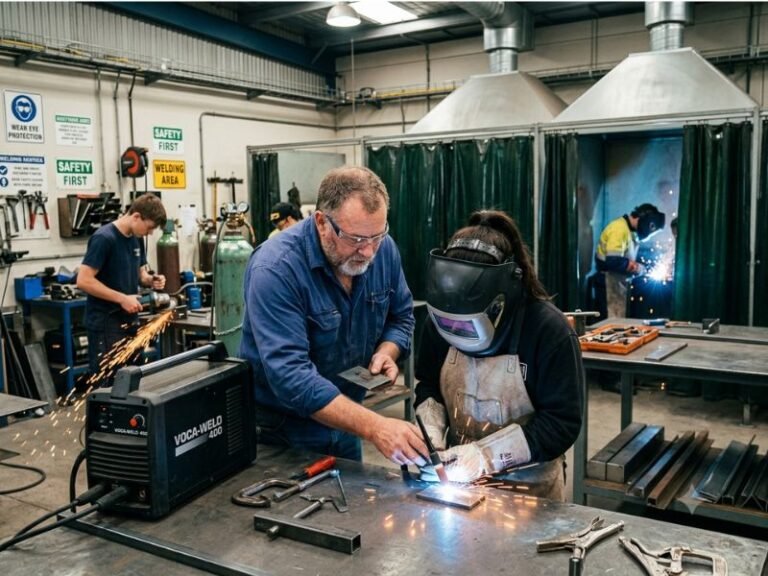
The training usually combines classroom instruction, hands-on practice, welding theory, inspection awareness, and workplace safety. Students learn how to create a joint that meets an approved welding procedure specification rather than relying only on appearance or personal technique.
Typical subject areas include:
- Reading blueprints, isometric drawings, weld symbols, and piping layouts
- Joint design, fit-up, alignment, root gaps, bevels, and tack welds
- Base-metal identification and filler-metal selection
- Shielded metal arc welding, gas tungsten arc welding, gas metal arc welding, and flux-cored arc welding
- Pipe positions, including fixed-position work such as 5G and 6G
- Preheating, interpass temperature control, and post-weld heat treatment concepts
- Welding procedure specifications and welder performance qualifications
- Visual inspection, weld discontinuities, and nondestructive examination methods
- Hot work, confined spaces, fall protection, fire prevention, and hazardous-energy controls
- Quality records, traceability, repair procedures, and turnover documentation
The exact curriculum varies by school and employer. A short introductory course may focus on basic pipe technique, while an advanced program may prepare experienced welders for procedure-specific qualification tests. I recommend checking the practical hours and test preparation, not just the course title.
Why the Work Requires More Than Welding Skill
Energy infrastructure often contains flammable products, pressurized fluids, corrosive chemicals, or equipment that must remain reliable for long periods. A poor weld can create leakage, shutdowns, environmental damage, fire risk, or a serious safety incident. That is why employers evaluate a welder’s process control and judgment along with bead appearance.
Oil and gas projects also depend on controlled documentation. A welder may need to follow a specific procedure, use an approved electrode or wire, record heat-treatment information, and identify the weld for later inspection. Even a technically attractive weld can be rejected if the wrong material, consumable, procedure, or documentation was used.
Welding procedure specifications, commonly called WPSs, define important variables such as the welding process, base materials, filler metal, electrical settings, joint design, position, preheat, and shielding requirements. A welder performance qualification demonstrates that a person can deposit an acceptable weld under defined conditions. These are related but different: a WPS controls the method, while a performance qualification evaluates the welder.
Core Welding Processes
Shielded metal arc welding
Shielded metal arc welding, or SMAW, uses a flux-coated consumable electrode. It remains important for field pipe work because the equipment is relatively portable and can perform in locations where wind or access makes gas-shielded processes difficult.
Training emphasizes arc length, travel speed, electrode angle, slag removal, starts and stops, and control of the root, hot, fill, and cap passes. Common electrode choices depend on the approved procedure and material. Students must learn that an electrode cannot be substituted casually because moisture condition, strength, hydrogen control, and storage may affect weld quality.
Gas tungsten arc welding
Gas tungsten arc welding, or GTAW, uses a nonconsumable tungsten electrode and a separate filler rod when filler is needed. It offers precise control and is often used for root passes, stainless steel, alloy materials, and applications where internal weld quality is especially important.
The process demands careful coordination of torch movement, filler addition, shielding gas, tungsten preparation, and heat input. It is slower to learn than some other methods, but strong GTAW fundamentals can improve a welder’s ability to control critical root work.
Flux-cored and gas metal arc welding
Flux-cored arc welding, or FCAW, and gas metal arc welding, or GMAW, can provide productivity advantages in fabrication and construction. Depending on the wire and procedure, these processes may use external shielding gas, self-shielding wire, or both types across different applications.
Students need to understand wire-feed speed, voltage, inductance where applicable, contact-tip-to-work distance, gas flow, gun angle, and travel speed. Outdoor conditions can disturb shielding gas, while incorrect settings can cause porosity, lack of fusion, excessive spatter, or an unacceptable profile.
Pipe positions and progression
Pipe welding courses often progress from easier positions to more demanding fixed-position work. In a 6G test, the pipe is fixed at an angle, requiring the welder to manage changing body position, gravity, access, and heat control around the joint.
Position training is not merely a test requirement. Field welders may work in trenches, racks, elevated platforms, cramped process areas, or locations where the pipe cannot be rotated. A program that provides repeated practice on fixed pipe is generally more relevant than one centered only on flat plate.
Codes, Standards, and Qualifications
The governing standard depends on the project, component, owner, jurisdiction, and service conditions. A training provider may introduce standards from organizations such as the American Welding Society, the American Society of Mechanical Engineers, the American Petroleum Institute, and the American Society of Mechanical Engineers’ Boiler and Pressure Vessel Code.
Relevant examples can include:
- AWS standards used for welding qualification, fabrication, and structural or general welding requirements
- ASME Section IX for qualification of welding procedures and welders in covered applications
- API standards used in parts of the petroleum, pipeline, and facility sectors
- API 1104, which addresses welding of pipelines and related facilities
- Owner specifications, project procedures, and regulatory requirements that add conditions beyond a general code
These references do not all serve the same purpose, and a certificate from a school is not automatically a code qualification. A student should ask exactly what the program’s final test qualifies the student to do, under which standard, for which process, material, position, and thickness range.
Qualification can also be limited. Passing a test on carbon-steel pipe with SMAW does not automatically qualify someone for stainless steel GTAW, pressure-vessel work, orbital welding, or every pipeline procedure. The range of qualification depends on the test variables and the applicable code.
Safety Training for Oil and Gas Welders
Safety instruction should be integrated into practical welding rather than treated as a short orientation at the end of the course. Welding in energy facilities may involve sparks, ultraviolet radiation, fumes, compressed gases, heavy components, elevated work, confined spaces, and equipment that has not been properly isolated.
Hot-work controls
Hot work requires a controlled area, removal or protection of combustible materials, suitable fire extinguishers, ventilation, and an approved permit process where the site requires one. A fire watch may be necessary during and after the work, depending on the conditions and site rules.
A welder must also understand that a vessel, line, or tank can remain dangerous even after it appears empty. Purging, gas testing, isolation, lockout/tagout, and authorization by qualified site personnel are critical controls. Welding on unknown or improperly prepared equipment is never a reasonable shortcut.
Personal protection and exposure control
Required personal protective equipment may include a properly rated helmet, safety glasses, flame-resistant clothing, welding gloves, hearing protection, protective footwear, and respiratory protection when required by the hazard assessment. Ventilation and fume control are equally important; a helmet does not protect the welder from every airborne contaminant.
Training should also cover cylinder handling, hose inspection, grounding, electrical safety, arc-flash awareness, grinder safety, housekeeping, and emergency response. I would favor a program that explains why each control matters and gives students a chance to apply it in realistic shop conditions.
Typical Training Path
Start with fundamentals
Many students begin with basic welding, industrial maintenance, or a technical-school course. The first stage usually develops safe equipment setup, hand control, joint preparation, basic metallurgy, and visual inspection habits.
A strong foundation reduces the risk of learning advanced pipe work with poor habits. Students should become comfortable identifying defects, adjusting settings methodically, and stopping work when conditions are unsafe or unclear.
Move into pipe and structural practice
After the fundamentals, students can focus on pipe diameter, wall thickness, joint configuration, and welding position. Practice should include root passes, controlled fill, cap appearance, tie-ins, repairs, and cutting or grinding techniques that do not damage the base material.
Work may include carbon steel first, followed by stainless steel or alloy materials if the program and career goal justify it. The right sequence depends on the student’s current ability and the requirements of local employers.
Prepare for qualification testing
Qualification preparation should resemble the actual test environment. Students need to understand test plate or pipe dimensions, permitted processes, cleaning rules, time limits, inspection methods, and the consequences of an out-of-range variable.
Some qualifications involve visual examination, while others may include bend testing, radiographic testing, ultrasonic testing, or other examination methods. The school should clearly explain which evaluations are included and whether test fees or retakes are separate.
Build jobsite readiness
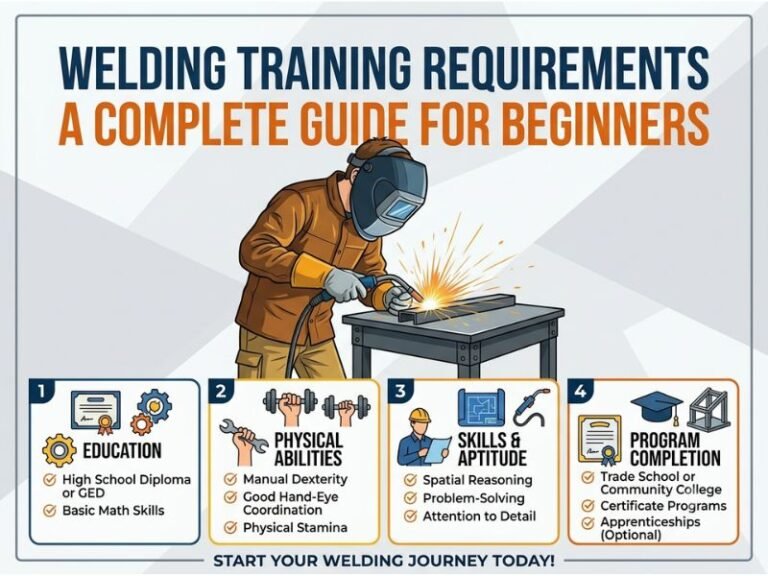
Technical ability is only part of employability. A new welder also needs reliable attendance, clear communication, tool care, physical stamina, accurate paperwork, and the ability to follow a supervisor’s instructions. Many industrial jobs require drug screening, background checks, site orientations, medical clearance, travel, or additional safety training.
Entry-level work may begin in a fabrication shop, maintenance department, contractor crew, or helper role before progressing to more demanding field assignments. This is not a failure of training; it is often how a welder develops production speed and jobsite judgment under supervision.
How to Choose a Training Program
I would compare programs using evidence rather than marketing language. A course described as “oil and gas welding” may offer excellent pipe training, or it may provide only a general overview. The following questions can reveal the difference.
- How many hours are devoted to hands-on welding?
- How much practice involves fixed-position pipe?
- Which processes, materials, diameters, and positions are covered?
- Are instructors qualified and actively familiar with industrial welding requirements?
- Does the program teach WPS use, fit-up, inspection, and documentation?
- Which qualification tests are available, and which code or standard applies?
- Are examination, certification, consumables, and retest costs included?
- Are safety training and site-readiness topics taught in practical settings?
- Can students inspect the shop, equipment, ventilation, and class size before enrolling?
- Does the school provide employer connections without guaranteeing a job?
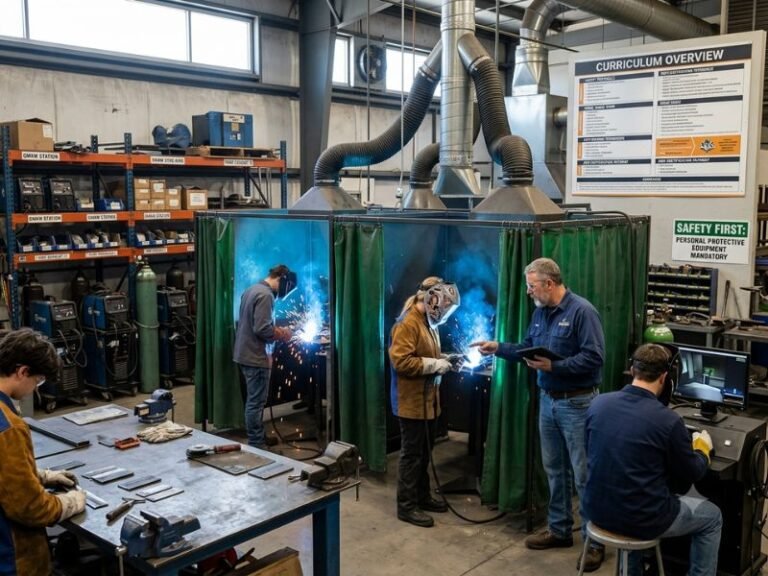
Equipment access matters. If a class has many students sharing a few booths, a low advertised price may not compensate for limited arc time. I would also ask whether students practice on clean, properly prepared joints and on realistic assemblies rather than repeating only easy flat welds.
Online, Trade School, or Employer Training?
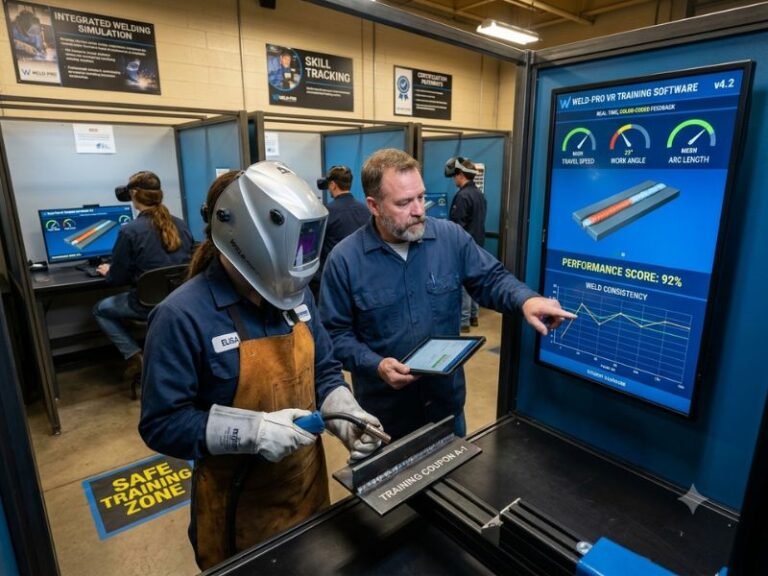
Online learning can be useful for terminology, welding theory, code awareness, safety concepts, blueprint reading, and exam preparation. It cannot replace supervised arc time, controlled fit-up practice, or an in-person performance qualification.
Trade schools and community colleges commonly provide structured shop access, broader technical education, and a progression from beginner to advanced work. Their schedules may be less flexible, but the added instruction can benefit someone who needs a complete foundation.
Private welding schools may offer intensive programs focused on pipe and qualification testing. Before enrolling, verify the school’s test procedures, instructor access, equipment availability, and recognition by employers in the region where you plan to work.
Employer or contractor training can be highly specific to a company’s procedures and equipment. It may be an efficient path for an existing employee, but it may not provide broad qualifications that transfer easily to another employer. I would ask whether the resulting records belong to a recognized qualification system or only document internal training.
Common Mistakes to Avoid
Choosing a certificate over real ability
A printed certificate does not prove that a welder can consistently produce acceptable work. Hiring managers may evaluate weld samples, qualification records, work history, safety behavior, and references. Look for training that produces measurable skills and documented qualifications.
Ignoring fit-up and preparation
Many defects begin before the arc starts. Incorrect bevels, uneven root gaps, contamination, poor alignment, and weak tacks can make a sound weld difficult or impossible. Students should treat cleaning, measurement, and fit-up as part of welding rather than as someone else’s responsibility.
Chasing every process at once
Learning SMAW, GTAW, FCAW, and GMAW simultaneously can create shallow skill across all four. A better approach is usually to develop one useful process to a dependable level, then add another that matches the target job. The best sequence depends on local demand and the student’s strengths.
Practicing only appearance
A smooth cap can still hide lack of fusion, incomplete penetration, slag inclusions, or excessive heat input. Training should connect visible technique to internal weld quality and examination results. Welders should learn to diagnose defects rather than simply grind them away.
Underestimating documentation
Missing weld numbers, incorrect consumable records, incomplete inspection reports, and unapproved procedure changes can delay a project. Careful documentation shows that a welder understands quality control, not just equipment operation.
Taking shortcuts around safety
Skipping ventilation, welding near combustibles, using damaged leads, bypassing isolation, or entering a confined space without authorization can have severe consequences. Production pressure never makes an unsafe condition acceptable.
Career Options and Work Settings
Training can support several career directions. A welder may work in pipe fabrication, refinery maintenance, pipeline construction, gas processing, storage facilities, power-related industrial work, shipyards, offshore construction, or equipment repair. The daily work, travel requirements, schedule, and qualification expectations differ substantially by sector.
Shop fabrication often offers controlled conditions and repeatable assemblies. Field construction may provide more varied work but can involve weather, travel, elevated locations, remote camps, and changing access conditions. Maintenance work may require rapid assessment, shutdown schedules, and strict control of existing equipment.
Advancement may lead toward welding inspection, welding supervision, quality control, welding procedure coordination, or specialized processes. Additional education in metallurgy, inspection, engineering technology, or safety can support those options, although each position has its own requirements.
Pay and employment prospects depend on location, experience, industry cycle, overtime, travel, union status, qualifications, and the employer’s needs. I would treat broad salary promises cautiously and research current openings in the specific region and sector being targeted.
Frequently Asked Questions
What is the main purpose of oil and gas welding training?
Its main purpose is to prepare welders to produce code- or procedure-compliant joints in energy-sector applications while following strict safety, inspection, and documentation requirements. It combines welding technique with jobsite discipline.
Do I need prior welding experience?
Not always. Beginner programs teach equipment safety and basic processes, while advanced pipe or qualification courses may require prior practice. Before enrolling, check the stated prerequisites and ask whether the course is designed for beginners or experienced welders.
Which welding process should I learn first?
There is no universal answer. SMAW is valuable for many field applications, while GTAW can be important for controlled root work and specialty materials. The best first process depends on local employers, the target sector, and the student’s current skill.
Is a 6G qualification required for every oil and gas welding job?
No. Qualification requirements depend on the employer, project, code, material, process, and position. A 6G test is widely recognized as demanding pipe-position practice, but it does not automatically qualify a welder for every job or process.
Does completing a welding course guarantee employment?
No. Training can improve readiness, but employment also depends on skill consistency, available work, qualifications, safety record, attendance, mobility, interviews, and experience. A school should describe job connections honestly rather than promise a placement.
How can I verify whether a qualification is useful?
Ask for the exact standard, test variables, examination method, issuing organization, expiration or continuity rules, and employers that recognize it. Then compare those details with current job postings and the requirements of the contractors you want to approach.
Can online training qualify me as an oil and gas welder?
Online instruction can teach theory and safety, but it generally cannot replace hands-on performance evaluation. Most practical qualifications require an in-person test under defined conditions and inspection by an appropriately authorized person or organization.
What should I bring to a welding training program?
Requirements vary, but students may need work clothing, safety boots, eye protection, gloves, hearing protection, and personal tools. Confirm the school’s list before buying equipment because helmet specifications, clothing rules, and supplied tools differ.
Conclusion
Effective Oil and gas welding training develops far more than arc control. It teaches a welder to interpret procedures, prepare joints, control heat, recognize defects, document work, and protect people and equipment in demanding environments. I recommend comparing hands-on hours, pipe-position practice, qualification details, instructor support, and safety instruction before choosing a program. A focused course paired with disciplined practice can provide a credible foundation for entering and advancing in the energy-sector welding field.